Best Time to Visit Oaxaca Coast: Month-by-Month Guide (2026)
The best time to visit the Oaxaca coast for most travelers is November through April, when skies are clearer, Huatulco’s bays are calmer, and Puerto Escondido is easier for beach time and first-timer planning. October and November are the best value months if you want greener scenery, lower prices, and sea-turtle season without the heaviest summer rain. If you are coming specifically for big surf, the sweet spot shifts to July through September.
The Oaxaca coast is not one place. It is five distinct destinations spread across roughly 130 kilometers of Pacific shoreline, connected by the new Highway 135D that cuts the old Oaxaca City drive down to about 3.5 to 4 hours. Puerto Escondido, Huatulco, Mazunte, Zipolite, and Puerto Ángel each fit different travelers, and that changes what the “best time” actually means.
The timing of your trip decides whether you get cleaner snorkeling water, whale-watching season, beginner-friendly surf, sea turtle arribadas, or cheaper rainy-season stays. This guide breaks that down month by month for the full Oaxaca coast.
The Oaxaca Coast: Five Areas, One Route
Before the timing breakdown, a quick orientation:
| Area | Character | Best For |
|---|---|---|
| Puerto Escondido | Surf town, backpackers + intermediates | Surfing, whale watching, bioluminescence, turtles |
| Puerto Ángel | Small fishing village | Budget travel, local feel, rocky coves |
| Zipolite | Mexico’s famous clothing-optional beach | Relaxed beach culture, budget travelers |
| Mazunte | Eco-village, turtle sanctuary | Sea turtles, organic cosmetics, yoga retreats |
| Huatulco | Nine bays, marina, airport | Snorkeling, diving, resort/mid-range comfort |
The new Highway 135D connects Oaxaca City to the coast in 3.5–4 hours (was 7–8 hours on the old mountain road). Puerto Escondido and Huatulco each have airports with connections to Mexico City. Driving the coastal highway between Puerto Escondido and Huatulco takes about 1.5–2 hours.
30-Second Answer
If you want the best all-around beach trip, go between November and April. If you want the best mix of lower prices, greener scenery, and turtle season, aim for October or November. If you care most about surf at Zicatela, go in July through September, but expect more rain and rougher ocean conditions elsewhere.
| Priority | Best Months |
|---|---|
| Best overall conditions | November–April |
| Driest, most reliable weather | December–March |
| Best value with good conditions | October–November |
| Big surf at Zicatela | July–September |
| Intermediate surf | November–February |
| Beginner surf | March–June |
| Whale watching off Puerto Escondido | December–March |
| Sea turtles nesting | June–November (mass events Aug–Nov) |
| Bioluminescence at Manialtepec | July–October (peak: Aug–Sept) |
| Huatulco snorkeling/diving | November–May |
| Avoid for most travelers | Late June–September (heavier rain, rougher sea) |
Best Time by Trip Goal
| If your priority is… | Go then | Why |
|---|---|---|
| Calm swimming and easiest beach weather | December–March | Driest stretch, cleaner water, lower storm risk |
| Lower prices without full rainy-season tradeoffs | October–November | Lush landscapes, lighter crowds, still strong wildlife season |
| Huatulco snorkeling and bay-hopping | November–May | Best water clarity and calmer coves |
| Whale watching from Puerto Escondido | December–March | Humpbacks pass the coast in winter |
| Sea turtles and bioluminescence | August–November | Peak wildlife window, especially around Escobilla and Manialtepec |
| Learning to surf near Puerto Escondido | March–June | Smaller, more forgiving waves at beginner beaches |
| Watching expert surf at Zicatela | July–September | Biggest South Pacific swells |
12-Month Climate Table
Conditions apply broadly to Puerto Escondido; Huatulco runs 1–2°C warmer, Mazunte/Zipolite similar.
| Month | High °C | Low °C | Rain (mm) | Sea Temp °C | Sargassum | Crowds | Overall |
|---|---|---|---|---|---|---|---|
| January | 30 | 20 | 5 | 26 | None | High | ★★★★★ |
| February | 31 | 20 | 3 | 26 | None | High | ★★★★★ |
| March | 32 | 21 | 5 | 27 | None | Med-High | ★★★★★ |
| April | 33 | 22 | 10 | 27 | None | Med | ★★★★☆ |
| May | 33 | 23 | 30 | 28 | None-Low | Low-Med | ★★★★☆ |
| June | 32 | 23 | 80 | 28 | Low | Low | ★★★☆☆ |
| July | 31 | 23 | 120 | 28 | Low | Low | ★★★☆☆ |
| August | 31 | 23 | 140 | 29 | Low | Low | ★★★☆☆ |
| September | 30 | 23 | 160 | 29 | Low | Very Low | ★★★☆☆ |
| October | 31 | 22 | 80 | 28 | None-Low | Low | ★★★★☆ |
| November | 31 | 21 | 25 | 27 | None | Med | ★★★★★ |
| December | 30 | 20 | 8 | 26 | None | High | ★★★★☆ |
Surf Seasons by Beach
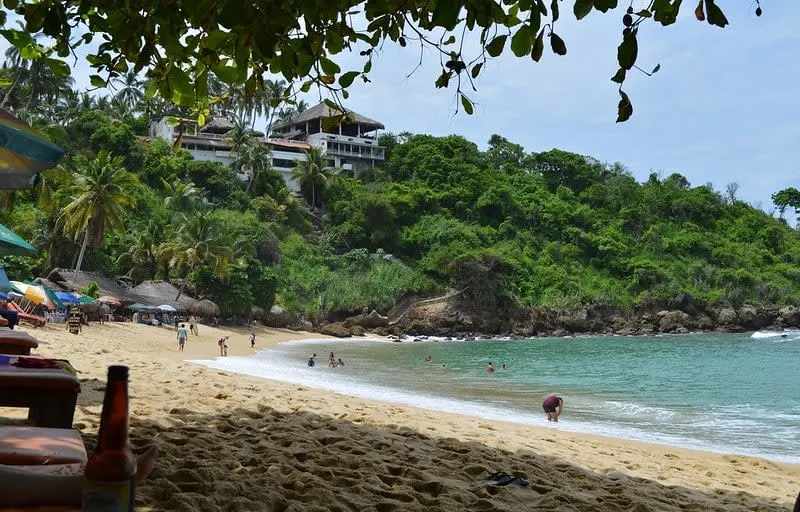
Zicatela — The Mexican Pipeline
Zicatela is the most famous surf break in Mexico and one of the most powerful beach breaks in the world. It’s not a swimming beach for regular visitors — the shore break can kill even strong swimmers.
Surf calendar:
- July–September: Expert season. South swells arrive from Pacific storms, producing 3–5 meter faces with hollow tubes. The Escondido Classic surf competition typically runs August. Crowds of international big-wave surfers.
- November–February: Intermediate season. Swells average 1.5–2.5 meters. Cleaner conditions, more consistent lineups.
- March–June: Smaller waves, better for learning. Still not a swimming beach, but far less intimidating.
Carrizalillo — The Safe Alternative
A sheltered cove about 10 minutes from central Puerto Escondido, protected by cliff walls that tame the Pacific swell. Year-round safe swimming. This is where non-surfers should go. The water is clear, the waves are manageable (gentle 0.5–1m), and the cove is beautiful.
Small surf school operates here in the gentler months (March–June) for beginners.
La Boquilla / Bacocho
North of central Puerto Escondido. Gentle beach break, good for beginners and longboarders. Works better November–May when southwest swells are weaker.
Huatulco Bays — Calm Water, Nine Options
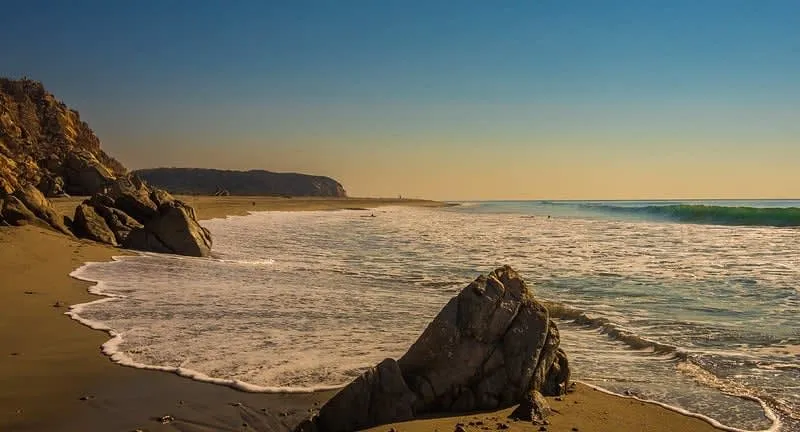
Huatulco’s nine bays are not surf beaches — they’re naturally protected coves, ideal for snorkeling, diving, and calm swimming. Conditions are best November through May when Pacific swell and wind are minimal. The water clarity peaks in the dry season: 10–15 meter visibility for snorkeling and diving.
In summer, afternoon winds can roughen the bays and occasional swells make some coves less calm. The bays never get as dramatic as open Pacific beaches, but dry-season Huatulco is noticeably more pleasant.
Sea Turtle Seasons
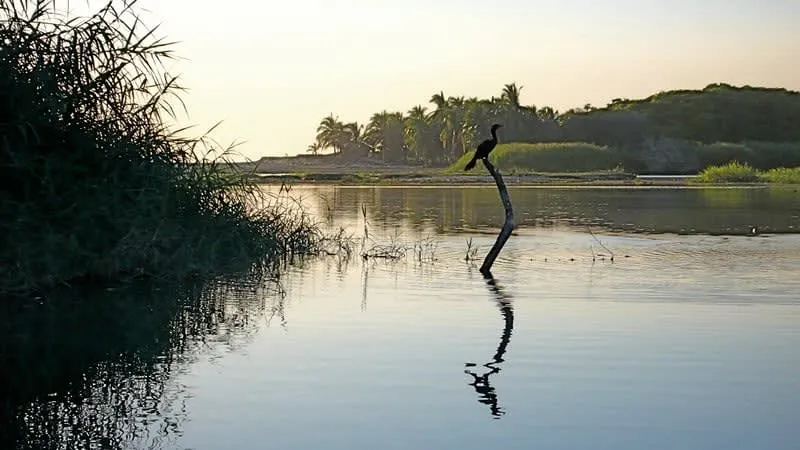
The Oaxaca coast is critical habitat for olive ridley sea turtles, with two distinct experiences available to visitors:
Playa Escobilla — Mass Arrivals (Arribadas)
Playa Escobilla, approximately 75 kilometers east of Puerto Escondido, hosts one of the largest sea turtle nesting events on Earth. During peak months (August–November), tens of thousands — sometimes hundreds of thousands — of olive ridley turtles come ashore in a single night.
Calendar:
- June–November: Individual nesters arrive throughout the season
- August–November: Mass arrival events (arribadas) — the big spectacle
- September–October: Peak of peak. The largest arrivals typically happen in these months
Access requires permits and is managed through regulated nighttime tours from Puerto Escondido. Book through established operators — this is not a beach you show up to independently during nesting season.
Mazunte — Centro Mexicano de la Tortuga
The turtle sanctuary in Mazunte accepts visitors year-round with daily tank feeding and release programs. Less dramatic than an Escobilla arribada but accessible any month and educational.
Mazunte the town itself is worth a stop regardless of season — small organic cosmetics industry (Body Shop helped set it up in the 1990s), beachfront restaurants, and one of the Oaxaca coast’s most laid-back atmospheres.
Bioluminescence: Manialtepec Lagoon (July–October)
Laguna Manialtepec, 15 kilometers west of Puerto Escondido, contains dinoflagellates (microscopic plankton) that produce blue-green light when disturbed. This phenomenon exists year-round, but the concentration peaks July through October.
Best months: August and September produce the most reliable brightness. July and October are good. November through June the bioluminescence is present but noticeably dimmer.
Best conditions: New moon or crescent moon nights (the less ambient light, the brighter the effect). Cloudy nights also work well.
How to do it: Tours run from Puerto Escondido at night, typically including a boat or kayak ride across the lagoon and a bird-watching component during the daytime component of the tour. Kayaking tours where you paddle and disturb the water yourself produce a better experience than motorized boats. Cost: approximately 350–500 MXN per person.
The lagoon also has excellent bird watching (crocodiles, herons, roseate spoonbills) that can be done as a daytime tour year-round.
Huatulco Bay Conditions by Month
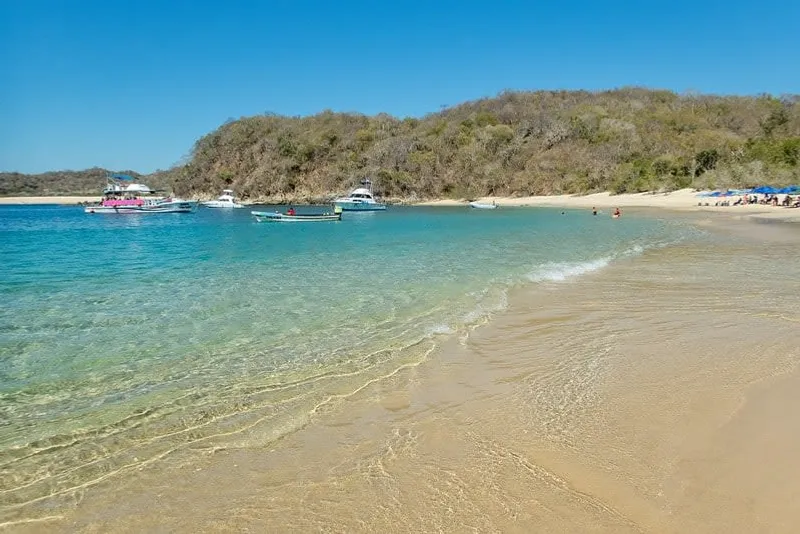
Huatulco is the most resort-oriented point on the Oaxaca coast — with an airport, marina, international hotels, and the nine-bay national park that protects some of the Pacific coast’s best snorkeling and diving.
November–May: Ideal. Clear water, calm bays, 10+ meter snorkeling visibility. Snorkeling and diving operators run full schedules. The marine park (Parque Nacional Huatulco) is at its most accessible.
June–October: Rougher conditions in some bays, particularly those facing southwest. La Entrega and Santa Cruz bays are the most protected and stay swimmable year-round. The national park reef system is still accessible with experienced guides, but dive schools reduce schedules.
Water temperature: 26–29°C year-round — no wetsuit needed for snorkeling.
Common First-Timer Mistakes
- Assuming the whole coast has the same conditions. Huatulco’s bays and Zicatela behave very differently on the same day.
- Booking a summer beach trip without checking your actual goal. July to September is excellent for surf and wildlife, not ideal for calm-swim beach days.
- Treating Zipolite and Mazunte like resort destinations. They are smaller, looser, and less polished than Huatulco.
- Forgetting that the best month for Oaxaca City is not always the best month for the coast. The coast is hotter, wetter, and more humid year-round.
- Planning late-afternoon outdoor activities in rainy season. Mornings are the safer bet from June through October.
Rainy Season Reality on the Oaxaca Coast
The rainy season pattern on the Oaxaca coast is more forgiving than the name suggests:
The rhythm:
- Mornings: Clear and often excellent — best for beach time
- 2–5pm: Rain arrives, usually thunderstorms rather than constant drizzle
- Evening: Often clears, cooler and pleasant
Temperature: 28–32°C every month of the year. The coast doesn’t get cold.
What changes in rainy season:
- The Pacific swell picks up — better for surfing, rougher for casual swimming
- Humidity climbs (but it’s already humid)
- Some coastal roads (dirt access roads to smaller beaches) get muddy
- Sea turtle season in full swing
- Bioluminescence at peak
- Prices drop 30–40% at most hotels
- Crowds drop significantly — Huatulco especially empties out
What doesn’t change:
- The coast stays hot and tropical
- Carrizalillo is still swimmable (it’s sheltered from swell)
- Huatulco’s protected bays remain calmer than open beaches
- Food, restaurants, services — all operating normally
What to Pack by Season
Dry Season (November–April)
- Light tropical clothes — it’s 28–32°C every day
- Reef-safe sunscreen (mandatory in Huatulco national park, and strong year-round)
- Light layers for evenings — it cools slightly after sunset
- Rash guard for snorkeling/surfing
- Beach shoes for rocky Zipolite, Mazunte shorelines
Rainy Season (May–October)
- Waterproof sandals or quick-dry shoes
- Packable rain jacket or poncho — afternoon rains are heavy, umbrellas catch wind
- Everything in dry bags for beach days
- Reef-safe sunscreen — UV is still intense between rain
- Insect repellent — more mosquitoes in wet season, particularly inland from the coast
Book Tours on the Oaxaca Coast
From turtle tours to Huatulco snorkeling, Manialtepec bioluminescence, and surf lessons — Viator lists vetted operators for the full Oaxaca coast:
Browse Puerto Escondido and Oaxaca coast tours on Viator →Travel Insurance
The Oaxaca coast has strong currents, remote stretches, and rainy-season road conditions. Before you go, make sure your policy covers emergency medical care and evacuation, especially if you are surfing, driving long coastal stretches, or staying far from larger clinics.
Final Recommendations
Beach holiday, best conditions: December–February. Dry, clear, calm Pacific at Huatulco bays, no sargassum, 10+ meter visibility for snorkeling. Expect peak prices.
Value + wildlife: October–November. Rainy season is ending, sea turtles are still nesting at Escobilla, bioluminescence is fading but still good, crowds are minimal, prices drop. One of the best-value windows on the coast.
Surfing: July–September for expert Zicatela swells. November–February for intermediate conditions. March–June for learning.
All of the above (sea turtles + bio + surf + warmth): August–September. Rainy season at its most intense but also most spectacular — build in buffer for afternoon plans and embrace mornings.
For the full destination guide on Puerto Escondido, see our Puerto Escondido travel guide.
For calmer resort-style beach planning, see our Huatulco travel guide and best beaches in Oaxaca.
If you are deciding between seasons on the state level, read best time to visit Oaxaca and our broader Oaxaca travel guide.
For logistics, see Oaxaca to Puerto Escondido, Puerto Escondido travel guide, and best time to visit Puerto Escondido.
For Mexico-wide timing, see best time to visit Mexico.