Best Beaches in Oaxaca 2026: Pacific Coast Guide
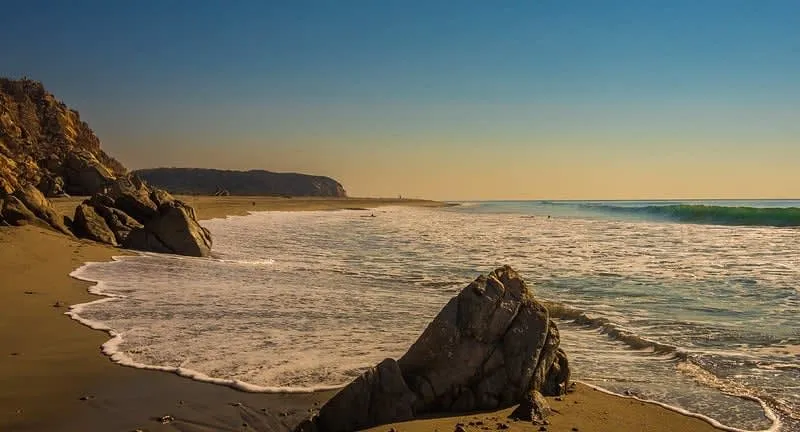
Oaxaca’s Pacific coast is one of Mexico’s best-kept travel secrets — and unlike most of Mexico’s popular beach destinations, it has zero sargassum. The beaches here face open Pacific Ocean, which means clear blue water, consistent surf, sea turtles nesting in the sand, and bioluminescent lagoons that glow electric blue at night.
This guide covers every significant beach on the Oaxacan coast, with honest safety information, what each one is actually good for, and how to plan your time. Skip the generic lists — here’s what the coast is really like.
Why Oaxaca’s Coast Is Different
Most Mexico beach guides lump the Caribbean coast and the Pacific coast together. They’re completely different oceans.
The Pacific advantage:
- No sargassum. The sargassum seaweed problem is a Caribbean phenomenon. Cancún, Tulum, and Playa del Carmen all deal with seaweed washing ashore. Oaxaca’s Pacific beaches have none.
- Warmer water November–April. Sea temperatures along the Oaxacan coast range from 27–30°C during the dry season — warmer than a lot of Caribbean beaches in winter.
- World-class surf. Zicatela in Puerto Escondido is one of the top 5 surf breaks on Earth. The “Mexican Pipeline” draws professional surfers from around the world.
- Sea turtle nesting. Playa Escobilla sees mass turtle arrivals (called arribadas) from June through November — up to 100,000 turtles in a single night.
- Bioluminescence. Laguna Manialtepec near Puerto Escondido glows bright blue during the rainy season when disturbed. Kayaking through it at night is extraordinary.
- Humpback whales. December through March, humpbacks pass close to shore during migration.
Getting There: Updated Information
Old travel guides say the drive from Oaxaca City to the coast takes 7–8 hours. That was before the new highway.
Highway 135D (the autopista/toll road) cut the drive to about 3.5 hours. The toll costs around 250–300 MXN but saves 4 hours of winding mountain road. If you’re renting a car, take 135D without question.
Without a car:
- Colectivo vans depart from Oaxaca City’s second-class terminal to Puerto Escondido. Journey time: around 4 hours via 135D. Cost: 200–280 MXN.
- ADO bus connects Oaxaca City to Puerto Escondido (first class, comfortable, around 5–6 hours via a different route). Cost: 350–450 MXN.
- Flight: Oaxaca City airport has connections to Puerto Escondido airport (OAX to PXM, around 45 minutes).
Puerto Escondido Beaches
Puerto Escondido is the main hub of the Oaxacan coast. Most travelers base themselves here and explore the surrounding area. The town has four main beaches, and they serve very different purposes.
Zicatela — Surfers Only
⚠️ Do not swim at Zicatela. People die here every year.
Zicatela is the “Mexican Pipeline” — a world-famous beach break that produces hollow, powerful waves up to 6 meters (20 feet) in height. It’s consistently ranked among the top surf breaks on the planet, and the annual Punta Escondida surf contest brings professional surfers from around the world.
The current at Zicatela is brutally strong. Rip currents pull swimmers out fast, the shore break is violent, and even experienced swimmers get in serious trouble. Lifeguards are present but drownings still happen. If you’re not a confident surfer, stay out of the water and stay back from the shore break.
For surfers: intermediate to advanced only. Beginners will get hurt. Rent boards at the surf shops along the main drag.
What it’s good for: watching incredible surf, beach bars, the social scene. The sand is long and dramatic, the cafés and restaurants lining it are some of the best in town, and the energy during a good swell is electric.
La Punta — Calm, Social, Good for Beginners
La Punta sits at the south end of Zicatela beach but feels like a different world. The reef here breaks the big swell and creates much calmer conditions — this is where you actually get in the water.
La Punta has a distinctly laid-back vibe: hammocks, surf lessons, yoga studios, and beachfront cafés. Beginners take surf lessons here. Families swim here. It’s the social hub of Puerto Escondido’s backpacker/surf crowd.
Water conditions: generally calm, small waves ideal for learners. Still check for currents — this is still the Pacific.
Carrizalillo — Safest Swimming in Puerto Escondido
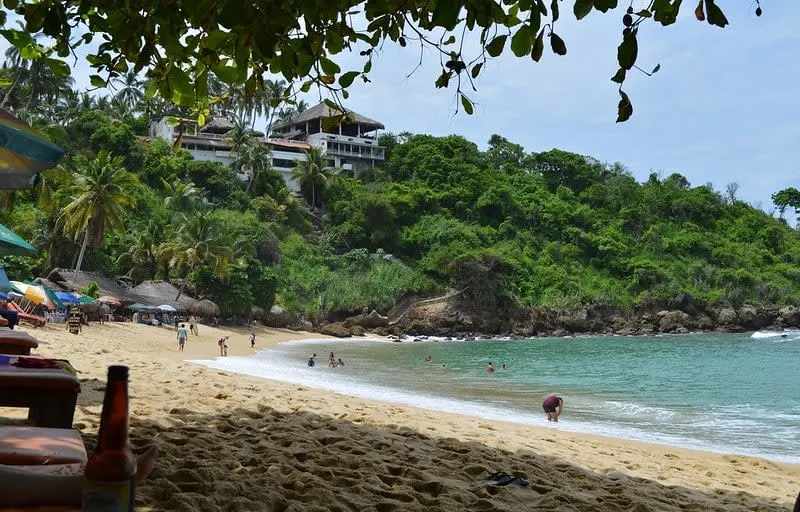
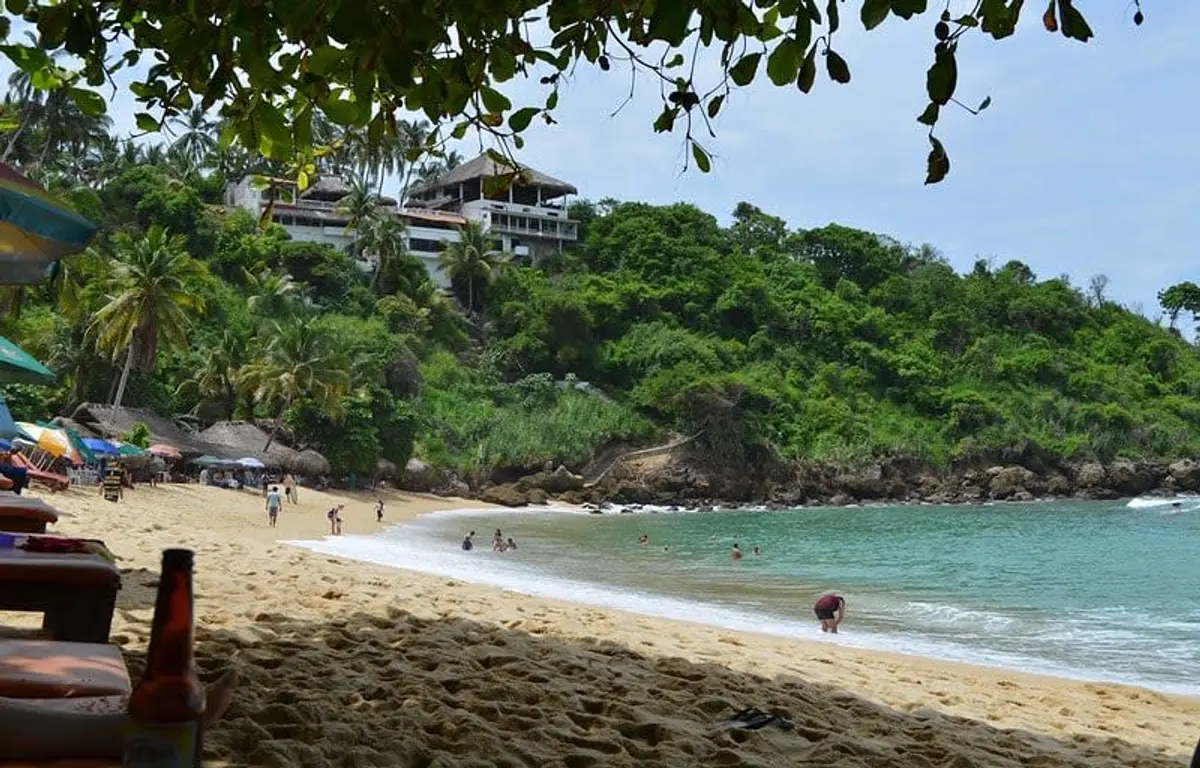
Carrizalillo is a protected cove accessed by around 170 steps down from the clifftop. That walk keeps the crowds lighter. The cove’s geography creates very calm, clear water — this is the safest swimming beach near Puerto Escondido.
The water is warm and clear, with good snorkeling on the rocks at the edges of the cove. Sun loungers and umbrellas are available for rent. There’s a small beach club at the bottom with food and drinks.
The verdict: Carrizalillo is where you actually swim in Puerto Escondido. Save Zicatela for watching surf; come here for the water.
Playa Principal — The Town Beach
Playa Principal is the main bay right in front of Puerto Escondido town. It’s not a swimming beach — the boats use it, fishermen launch here, and it’s more utilitarian than scenic. But it’s a good place to watch the local fishing scene, eat fresh seafood at the restaurants facing it, and get a sense of the actual town rather than the tourist bubble.
The adoquín (pedestrian street) running behind Playa Principal is where most of the restaurants, bars, and shops are clustered.
Mazunte
Mazunte sits about 30km east of Puerto Escondido along a beautiful coastal road. It was once a town built entirely on slaughtering sea turtles — Mexico’s largest turtle processing plant operated here until 1990. When the government banned turtle hunting, the town had to reinvent itself.
It did so remarkably. Mazunte is now home to:
- Cosméticos Naturales CMDPE — Mexico’s first community-owned cosmetics cooperative, making body products from plant oils. You can visit the store and factory.
- The Mexican Turtle Center — a sea turtle research and conservation center you can tour.
- A beach that’s calm, beautiful, and far less crowded than Puerto Escondido.
The vibe in Mazunte is genuinely laid-back — slower than Puerto Escondido, more hippie, with small posadas and open-air restaurants. The beach itself has moderate surf and some currents; swim where locals are swimming.
Zipolite
Zipolite is Mexico’s only legal nude beach, a designation it has held since the 1970s when hippies, artists, and free spirits discovered this stretch of coast. The beach is about 3km long and has three distinct sections: the main beach in the center, Playa del Amor at the far end (most clothing-optional), and a stretch near the rocks that’s calmer.
Respect the nudist culture here — this is not a curiosity to photograph. The beach has been a safe, accepting space for decades. Keep your phone away unless you want genuine hostility.
Safety note: Zipolite has historically been one of Mexico’s more dangerous swimming beaches due to strong shore currents. Since a volunteer lifeguard program was established (largely funded by foreign visitors), drowning rates have dropped significantly. Swim only in the central section where lifeguards are present. The beach is not recommended for children or non-confident swimmers.
The town of Zipolite behind the beach has a strong backpacker/alternative culture — cheap posadas, vegetarian restaurants, hammock bars. Budget travelers love it.
San Agustinillo
Between Mazunte and Zipolite, San Agustinillo is the family-friendly beach in this stretch of coast. The bay is more protected, currents are gentler, and the water is calmer than either neighbor. It’s a small beach with a village behind it — not much infrastructure, but exactly right if you want calm water and authenticity without the party scene.
Snorkeling off the rocks at the ends of the beach can be good. Whale sightings from shore are common December through March.
Huatulco
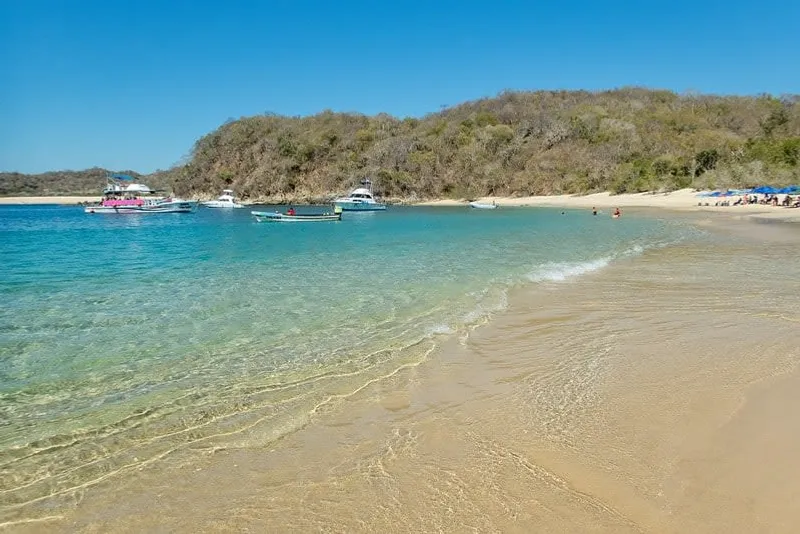
Huatulco is a different category of destination — it’s a planned resort town set within a national park. The Bahías de Huatulco National Park protects 9 bays and 36 beaches along 35km of coastline. The park status means development is limited, the water is exceptionally clean, and boat traffic to remote beaches is regulated.
The most accessible bays:
- Tangolunda Bay — the main hotel zone, most resort development
- Chahué Bay — the marina, good restaurants, public beach
- Santa Cruz Bay — the main town beach, boat tours depart here
The more remote bays (Maguey, Organo, San Agustín) require a boat and are worth it — crystal water, white sand, near-empty on weekdays.
Huatulco is better organized than Puerto Escondido and suits travelers who want comfortable hotels, reliable restaurants, and calmer waters. It lacks the wild energy of PE but makes up for it with sheer beauty and accessibility to pristine beaches.
Playa Escobilla: Sea Turtle Mass Arrivals
Playa Escobilla, 70km northwest of Huatulco, is one of the most remarkable natural events you can witness in Mexico: the arribada (mass arrival) of Olive Ridley sea turtles.
From June through November — peaking in August and September — turtles come ashore to nest in massive numbers. Not one or two turtles. Not dozens. In a single night, over 100,000 turtles can arrive simultaneously to lay eggs in the same stretch of sand. The beach literally moves.
How to visit: Guided night tours operate from Puerto Escondido and Huatulco during peak season. The beach is managed by SEMARNAT and access is restricted to protect the turtles. You cannot just drive up. Book through a reputable operator that works with the official reserve.
When: Peak arrivals are July–September. Even in the off-season, individual turtles nest year-round.
Chacahua National Park
For those who want true remoteness, Chacahua National Park sits about 80km west of Puerto Escondido. The park encompasses a coastal lagoon and beach system where almost no one goes.
Getting there requires a boat across the lagoon (no road reaches the beach). The reward: a wild, undeveloped beach backed by mangroves, excellent birding in the lagoon, and a small fishing village with basic accommodation. There’s a small crocodile nursery in the village.
Practical: Get a colectivo from Puerto Escondido to El Zapotalito on the lagoon edge, then hire a boat. Half-day trips and overnight stays are both possible.
Beach Safety Matrix
| Beach | Swimming | Surfing | Families | Solo Swimmers |
|---|---|---|---|---|
| Zicatela | ❌ Never | ✅ Advanced+ | ❌ | ❌ |
| La Punta | ✅ Calm | ✅ Beginner | ✅ | ✅ |
| Carrizalillo | ✅ Best | 🟡 Mild | ✅ | ✅ |
| Playa Principal | 🟡 Caution | ❌ | 🟡 | 🟡 |
| Mazunte | 🟡 Moderate | ❌ | 🟡 | 🟡 |
| Zipolite | 🟡 Center only | ❌ | ❌ | 🟡 |
| San Agustinillo | ✅ Good | ❌ | ✅ | ✅ |
| Huatulco bays | ✅ Most bays | ❌ | ✅ | ✅ |
Best Beach by Travel Style
| Travel Style | Best Beach |
|---|---|
| Serious surfer | Zicatela |
| Surf beginner | La Punta |
| Safe swimming | Carrizalillo |
| Family with kids | San Agustinillo or Huatulco |
| Wildlife / turtles | Playa Escobilla (guided tour) |
| Remote / off-grid | Chacahua |
| Resort / comfortable | Huatulco Tangolunda |
| Hippie / alternative | Zipolite |
| Authentic fishing village | Mazunte |
| Couples | Carrizalillo or Huatulco Maguey Bay |
Season Guide
November–April: Dry Season The main tourist season. Skies are clear, rain is rare, and the surf at La Punta and Carrizalillo is at its most swimmable. Puerto Escondido fills up around Christmas and Semana Santa (Easter week) — book accommodation well in advance for those periods. Water temperatures peak around 28–30°C.
May–October: Rainy Season Rain arrives — usually afternoon and evening storms, not all-day downpours. Surf gets bigger at Zicatela (if you’re a surfer, this can be a feature, not a bug). The big upside: this is when Laguna Manialtepec’s bioluminescence is at peak intensity. Night kayak tours through the glowing lagoon are genuinely one of the most extraordinary nature experiences in Mexico. Turtle arrivals at Playa Escobilla peak July–September.
Getting Around the Coast
From Puerto Escondido, colectivos (shared vans) run east along the coastal road to Mazunte, Zipolite, and San Agustinillo for 30–60 MXN. Taxis are also available for direct service. Scooter and bicycle rentals exist in PE for the most independent exploration.
For Huatulco (70km from PE), take a shared van or bus — direct services operate from Puerto Escondido’s bus terminal.
Book Oaxaca Tours
Viator has a strong selection of Oaxaca coast experiences — sea turtle night tours at Escobilla, bioluminescence kayak at Manialtepec, snorkeling at Huatulco bays, and surf lessons at La Punta. Browse options and read verified reviews before booking.
Browse Oaxaca coast tours on Viator →
Travel Insurance for Mexico
Pacific currents, remote beaches, and outdoor adventures make travel insurance worth having. travel insurance covers emergency medical, evacuation, and trip interruption at reasonable rates.
travel insurance
Where to Stay on the Oaxaca Coast
Puerto Escondido has the widest range of accommodation — from budget hostels on Zicatela (around 200–350 MXN per dorm bed) to boutique hotels on the cliffs above Carrizalillo (2,000–5,000 MXN per night). Zicatela is the surf/backpacker zone; the Rinconada and Carrizalillo areas are more comfortable and quieter. Playa Principal and the adoquín are convenient for restaurants and transport but noisier.
Mazunte and Zipolite have small posadas, eco-lodges, and cabañas. Expect modest facilities, beautiful natural settings, and prices from 400–1,500 MXN per night. Most places are cash only. Neither town has ATMs, so bring cash from Puerto Escondido.
Huatulco has the widest range of resort-style accommodation — international chains in Tangolunda, smaller boutique options in La Crucecita (the main town), and budget guesthouses in Santa Cruz. Prices range from 800 MXN for a basic room to 5,000+ MXN for resorts.
Booking tip: During Semana Santa (Easter week) and the Christmas–New Year period, accommodation across the entire coast fills weeks in advance and prices double. Book early or avoid those weeks.
What to Eat on the Oaxacan Coast
Coastal Oaxacan food is its own cuisine — different from the mole-and-tlayuda image of Oaxaca City. Here’s what to look for:
Pescado zarandeado — whole fish rubbed with achiote and spices, cooked over wood embers on a grill basket. The iconic coastal Oaxacan dish. Find it at restaurants on Playa Principal and the Huatulco bays.
Ceviche de camarón — shrimp ceviche made with fresh catch, lime, tomato, coriander, and serrano chile. Available everywhere on the coast.
Tlayudas — large, crunchy tortillas with refried beans, Oaxacan cheese (quesillo), and meat or vegetables. Not a coast-specific dish but ubiquitous and delicious.
Tejate — a pre-Columbian drink made from cacao, maize, and mamey sapote seed. Served cold by women in traditional dress in Oaxacan markets. Not technically coastal, but Oaxacan.
Mezcal — Oaxaca produces the best mezcal in Mexico. The coast is full of mezcalerías. Try it straight in a clay cup (copita) before mixing it with anything.
The freshest seafood is at the beach restaurants (palaps) on Playa Principal in Puerto Escondido and at the Huatulco bay restaurants accessed by boat. Prices are higher for the scenery — the best value ceviche is at the local market near the bus terminal.
Day Trips from Puerto Escondido
Beyond the beaches themselves, the Puerto Escondido area has excellent day trips:
Laguna Manialtepec (bioluminescence): 14km west of PE, this coastal lagoon produces intense bioluminescence during the rainy season (May–October). Night kayak tours are available from Puerto Escondido. Even in the dry season, birding in the mangroves is excellent — over 200 bird species including pink roseate spoonbills.
Nopala waterfalls: Inland from PE, accessible by car (about 1 hour). A series of turquoise waterfalls and swimming holes in the hills above the coast.
Chacahua National Park: The most remote day trip option — full day or overnight. Boat through the lagoon, wild Pacific beach, small fishing community.
Oaxacan coffee farms: The mountains above the coast produce exceptional coffee. Several farms near San José del Pacífico (on the route back to Oaxaca City) offer tours.
Practical Information
Money: ATMs exist in Puerto Escondido (a couple near the adoquín and by the banks). In Mazunte and Zipolite there are no ATMs — withdraw before you go. Many restaurants and accommodations are cash only throughout the coast.
Phone signal: Good in Puerto Escondido. Limited or non-existent in Chacahua and remote parts of the coast.
Medical facilities: Puerto Escondido has a hospital and a pharmacy. Mazunte and Zipolite have only basic first aid. For anything serious, Puerto Escondido or Huatulco (which has better facilities for a resort destination).
Electric outlets: Standard Mexican plugs (same as North American). No adapters needed for North American devices.
Transport between towns: Colectivos run east from Puerto Escondido to Mazunte/Zipolite/San Agustinillo frequently (every 30–60 minutes, cost: 30–60 MXN). Flag them on the main coastal road or find them at the colectivo station near PE’s market.
Related Guides
- Puerto Escondido Travel Guide — full breakdown of the town, where to stay, what to eat
- Oaxaca Travel Guide — combining the coast with Oaxaca City
- Best Time to Visit Puerto Escondido — month-by-month breakdown
- Oaxaca City to Puerto Escondido — transport options in detail
- Things to Do in Puerto Escondido — beyond the beach