Guelaguetza 2026 Oaxaca: Dates, Tickets & Free Events
What Is Guelaguetza?
Guelaguetza 2026 in Oaxaca takes place on Monday, July 20 and Monday, July 27, with morning and afternoon performances at the Cerro del Fortín auditorium. This guide compares paid ticket sections, free Guelaguetza events, Donají ballet dates, hotel timing, and when to buy before the best seats sell out.
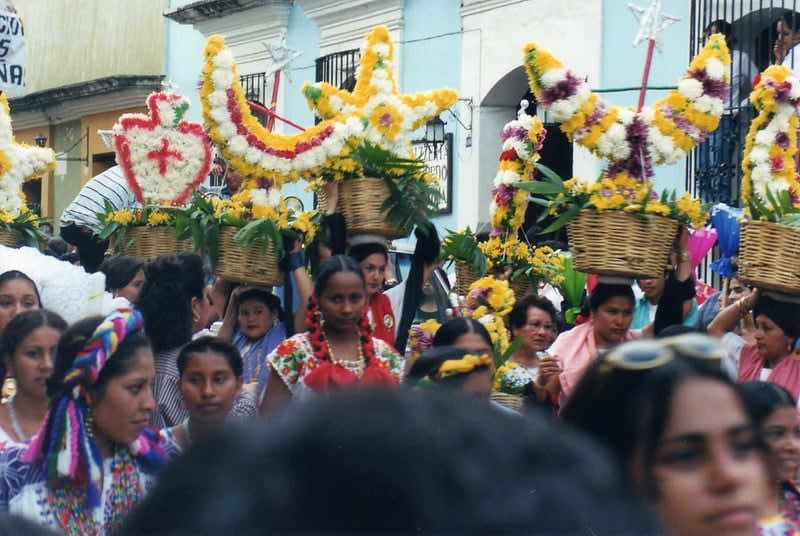
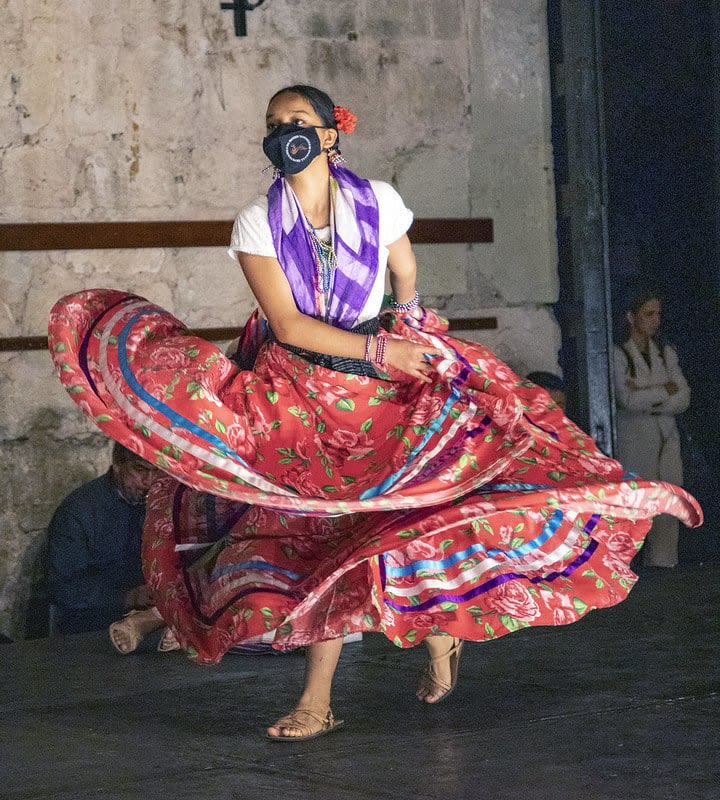
Guelaguetza is Oaxaca’s most important cultural celebration — and the largest Indigenous folk festival in Latin America. Every July, delegations from Oaxaca’s 8 regions descend on the capital in traditional dress to perform regional dances, music, and rituals that have been passed down for centuries.
The name comes from the Zapotec word guendaliza, meaning “to cooperate” or “to offer.” In practice, it describes a system of communal reciprocity — neighbors helping neighbors — that has defined Oaxacan social life since pre-Hispanic times.
Over 300,000 people attend each year. Tickets for the Cerro del Fortín auditorium sell out in hours. Hotels book up six months in advance. If you’re planning to attend Guelaguetza 2026, this guide covers everything: the exact 2026 dates, ticket prices, how to get in for free, what each performance includes, and how to plan your visit around the full festival week.
Guelaguetza 2026 at a glance:
| Detail | Info |
|---|---|
| Main shows | July 20 and July 27, 2026 |
| Sessions each day | Morning 10 AM + Afternoon 5 PM |
| Venue | Guelaguetza Auditorium, Cerro del Fortín, Oaxaca City |
| Donají ballet | Sundays July 19 and July 26, ~7–8 PM |
| Section A tickets | ~1,600–2,000 MXN ($80–100 USD) |
| Section B tickets | ~1,300–1,600 MXN ($65–80 USD) |
| Free options | Guelaguetza Popular (various dates/venues) |
| Booking window | Tickets go on sale mid-May via superboletos.com |
Guelaguetza 2026 Dates and Schedule
The main event is known as Los Lunes del Cerro — Mondays on the Hill. The traditional rule places performances on the two Mondays following July 16, adjusted for the Benito Juárez commemoration calendar.
For 2026, the schedule is:
| Event | Date | Time | Venue |
|---|---|---|---|
| Donají ballet performance 1 | Sunday, July 19 | ~7–8 PM | Guelaguetza Auditorium |
| Main show — Lunes del Cerro 1 | Monday, July 20 | 10 AM + 5 PM | Guelaguetza Auditorium |
| Donají ballet performance 2 | Sunday, July 26 | ~7–8 PM | Guelaguetza Auditorium |
| Main show — Lunes del Cerro 2 | Monday, July 27 | 10 AM + 5 PM | Guelaguetza Auditorium |
| Guelaguetza Popular events | Various dates, July 14–27 | Various | Community venues |
Morning vs. afternoon session: Both show the same delegations but differ in energy. The morning session (10 AM) has stronger sunlight — bring a hat — and photographers often prefer it. The afternoon session (5 PM) has better shade and a livelier crowd atmosphere as the day builds. Both are equally “authentic”; your choice depends on tolerance for direct sun.
The Donají ballet is a separate ticketed event (around 400–450 MXN / $20 USD) that retells the Zapotec legend of Donají, a princess who sacrificed herself for her people. It’s performed in the same auditorium on the two Sundays. Many visitors attend both the ballet and at least one Monday show.
Guelaguetza Tickets: Prices, Sections, and How to Buy
The auditorium has three ticket sections:
| Section | Location | Price (approx 2026) | USD equiv. | Shade? |
|---|---|---|---|---|
| Section A | Lower rows, center | 1,600–2,000 MXN | $80–100 | Partial (morning) |
| Section B | Mid-tier seating | 1,300–1,600 MXN | $65–80 | Partial |
| Section C | Upper rows (free zone) | Free | Free | No |
Section C is officially free but has very limited capacity. To get in, you must line up at the auditorium gate by 4–5 AM. The gates open around 6 AM. Bring food, water, and something to sit on. If you’re not a morning person, plan for Section A or B.
How to Buy Guelaguetza Tickets
Tickets go on sale each year in mid-May through superboletos.com. They typically sell out within 24–48 hours of going on sale.
Practical steps:
- Create a superboletos.com account in advance
- Set a calendar reminder for the May on-sale date (announced via Oaxaca state tourism channels)
- Have your payment method ready — credit/debit card
- Expect a per-ticket service fee added at checkout
- Print or download your e-ticket; mobile tickets are accepted
Can you buy tickets in person? Some tickets are sold at the Secretaría de Turismo office in Oaxaca City. Lines form before the office opens. Online is significantly easier.
Resellers and tours: If official tickets sell out, Viator Guelaguetza tours often include auditorium access in package deals with guides and transport. These cost more but guarantee entry.
The Free Guelaguetza: Alternatives to the Official Shows
Many visitors don’t realize that the Guelaguetza experience extends far beyond the ticketed auditorium events. The Guelaguetza Popular (also called Guelaguetza Magisterial y Popular) runs throughout the festival period at multiple venues and is free.
Free Guelaguetza options:
| Event | Venue | Entry | Notes |
|---|---|---|---|
| Guelaguetza Magisterial y Popular | UABJO sports complex or teachers’ auditorium | Free | Run by SNTE teachers union, organized protest of commercialization |
| Guelaguetza Popular in villages | Zaachila, San Antonino Castillo Velasco, Cuilápam de Guerrero | Free | Community-run, more intimate, July 14–27 |
| Auditorium Section C | Cerro del Fortín | Free | Very limited; requires 4–5 AM arrival |
| Street performances | Oaxaca City center, Macedonio Alcalá | Free | Spontaneous and organized throughout July |
The village Guelaguetzas — particularly in Zaachila (Sunday market town) and San Antonino (known for embroidery and flowers) — offer a different experience from the main auditorium shows. Smaller audience, more local families, closer to the dances. Worth combining with the Tlacolula Sunday market and the Valley circuit day trip.
What Happens at Guelaguetza: The 8 Regions
Guelaguetza showcases Oaxaca’s 8 geographic and cultural regions. Each region sends one or more delegations, each in distinct traditional dress, to perform dances and sometimes distribute regional gifts to the crowd.
| Region | Location | Known For |
|---|---|---|
| Cañada | Northeast Oaxaca | Cuicatec and Mazatec dances, intricate huipiles |
| Costa | Pacific coast | African-influenced music, coastal energy, coconut-based foods |
| Istmo | Southeast Oaxaca (Zapotec heartland) | Flor de piña (women balance pineapples on their heads while dancing), Tehuantepec velvet dress |
| Mixteca | Western Oaxaca | Mixtec headdresses, rabbit and deer dances |
| Papaloapan | Northern lowlands | Jarabe Mixteco, marimba, pineapple gifts |
| Sierra Juárez | Northern highlands | Pine forest communities, traditional wool textiles |
| Sierra Sur | Southern highlands | Chatino and Zapotec mountain communities |
| Valles Centrales | Around Oaxaca City | Jarabe Oaxaqueño, the “home region” that anchors the show |
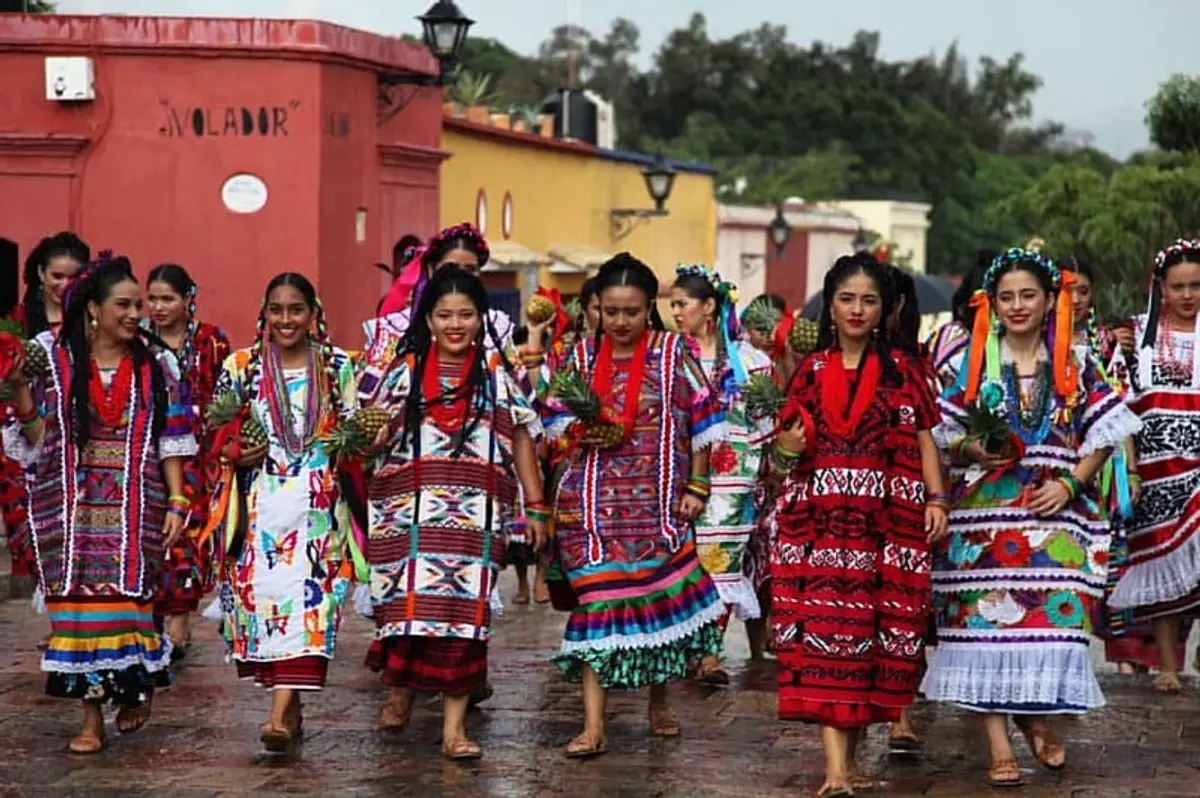
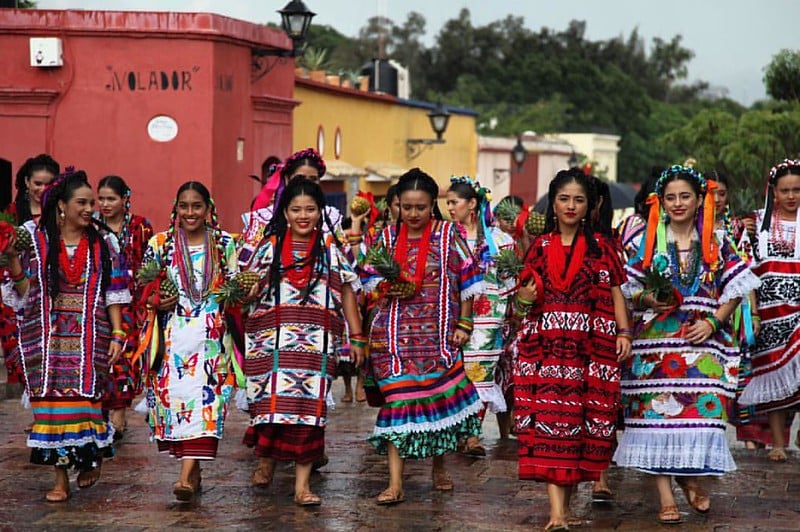
The flor de piña from the Istmo is the image most people associate with Guelaguetza — dancers in embroidered Tehuantepec dress balancing pineapples on their heads while moving in formation. It’s performed by the Istmo delegation and typically comes mid-show, drawing the loudest applause.
The gift-throwing tradition: At the end of each delegation’s performance, dancers often throw regional products into the crowd — corn, fruit, textiles, mezcal. Lower sections are in range. It’s chaotic and genuinely fun.
How to Get to the Guelaguetza Auditorium
The auditorium sits on Cerro del Fortín, a hill about 1.5 km from the Oaxaca City center (Zócalo). On show days, vehicle access is restricted and traffic is severe.
Getting there:
| Method | Cost | Notes |
|---|---|---|
| Walking | Free | ~25–35 min from Zócalo, uphill. Doable in the morning. Harder for afternoon heat. |
| City bus (Route “Fortín”) | ~12 MXN | Departs from Crespo Street. Long lines on show days — leave very early. |
| Yellow taxi | 50–100 MXN | Book the return before you go in — taxis fill up post-show |
| Organized tour | Included | Tours handle logistics and often include a guide who explains the dances |
| Private transfer | 150–250 MXN | Book via your hotel the night before |
Arrive 60–90 minutes before the show, especially for morning sessions. The auditorium fills quickly, views of Oaxaca City are spectacular before the show begins, and the hawkers selling food and crafts along the approach path are worth the extra time.
Where to Stay During Guelaguetza
Hotels in Oaxaca City sell out completely for July 20 and 27. Rates double or triple. Book at least 4–6 months in advance — by April 2026 for the July shows.
Best areas to stay:
- Historic center (within 8 blocks of Zócalo): Optimal for walking to most Guelaguetza events. Book early. See our guide to the best hotels in Oaxaca for specific picks at every budget.
- Jalatlaco neighborhood: 5 minutes from the Zócalo, quieter streets, excellent boutique guesthouses.
- Colonia Reforma / Colonia Noche de Rábanos: A 10–15 minute walk or taxi from the center; sometimes has availability when the center is full.
If Oaxaca City is booked: Consider basing yourself in Tlacolula (30 km away, ADO bus 45 min) or Mitla (45 km). Both have guesthouses and offer a very different, non-tourist rhythm.
Planning Your Guelaguetza Trip: Full Festival Week
The official shows are two days, but the cultural calendar around them runs for weeks. A well-planned 4–5 day trip captures far more than just the auditorium.
Sample 4-day Guelaguetza itinerary (arrival Friday July 17):
| Day | What to do |
|---|---|
| Friday | Arrive, settle in, walk Macedonio Alcalá, mezcal bar crawl (La Clandestina, In Situ, Mezcalogia) |
| Saturday | Monte Albán morning (open 8 AM, shuttle 65 MXN), Mercado 20 de Noviembre lunch, Donají ballet evening |
| Sunday | Tlacolula Sunday market + Valley circuit (El Tule, Teotitlán del Valle, Mitla), evening back in city |
| Monday (July 20 or 27) | Main Guelaguetza show — morning session arrives 8 AM, show 10 AM. Afternoon: rest, Mercado, explore Jalatlaco neighborhood |
Valley circuit day trip: A rental car from Oaxaca City (RentCars lets you compare local options) gives you the flexibility to combine Monte Albán, Hierve el Agua (book ahead — limited vehicles), and the mezcal palenques of Santiago Matatán in one long day. Note: Hierve el Agua can close unpredictably June–October due to a community dispute between San Isidro Roaguía and San Lorenzo Albarradas — check recent reports before making it a centerpiece of your trip.
The History Behind Guelaguetza
The modern festival dates to 1932, when the state government organized a celebration around the July 16 feast of the Virgen del Carmen. But the roots go much deeper.
Pre-Hispanic Zapotec communities climbed Cerro del Fortín each July to honor Centéotl, the corn goddess, with dances and offerings. The hill was a sacred site long before a Spanish auditorium was built on it. The festival essentially fused Catholic calendar dates with ancient agricultural ritual — corn was planted in spring and harvest began in fall, with July the peak of the growing season.
The word guelaguetza itself describes the cooperative labor system (tequio) that Indigenous Oaxacan communities use for collective work — planting, building, celebrating. By bringing delegations together from all 8 regions, the festival enacts that cooperation at a state level: you bring what you have, we share what we are.
The commercialization tension is real: the teachers’ union (SNTE) has long run a parallel “Guelaguetza Popular” in protest of privatizing and ticketing what they see as a public cultural heritage. Both events have genuine value.
What to Do Beyond the Auditorium
July in Oaxaca City (beyond the main shows):
- Noche de Rábanos (December 23): Not July, but if you’re planning Oaxaca in December, this radish-carving festival is singular. Different trip, worth knowing.
- Mezcal palenques in Santiago Matatán: 200+ registered distilleries, 50 km from the city. Go weekday mornings for the quietest tastings.
- Tlacolula Sunday market: Best weekly market in the Central Valleys — mole paste, chapulines, Zapotec textiles, mezcal by the liter. 30 km, ADO bus or rental car.
- Teotitlán del Valle: The weaving village — natural dye workshops where you can watch cochineal and marigold turn wool into rugs. Buy direct from the weaver, not the Oaxaca shops.
- Oaxacan mole trail: The city has dozens of restaurants serving all 7 moles. Start with mole negro at Casa Oaxaca or Marco’s Comida Típica; end with coloradito at Itanoní.
- Guelaguetza week street events: Alebrije parades, calendar of free concerts, mezcal tastings throughout the city.
See our complete guide to things to do in Oaxaca and Oaxaca 7-day itinerary for a full trip plan built around the festival.
Guelaguetza FAQ
Can I buy Guelaguetza tickets outside Mexico? Yes. Superboletos.com accepts international credit cards. Buy the moment they go on sale (mid-May) — they sell out fast regardless of where you’re buying from.
Is Guelaguetza appropriate for children? Yes. It’s colorful, energetic, and doesn’t require sitting still for long in any one spot. The free Section C requires a very early wake-up, which can be tough with young kids. Paid sections are more manageable. Read our guide to visiting Oaxaca with kids for practical logistics.
What should I wear? Light layers — July mornings on the hill are pleasant, afternoons get warm, evenings cool quickly. Sun protection is essential for morning shows (hat, sunscreen, sunglasses). Bring a light jacket or layer for the 5 PM session.
Can I visit Guelaguetza as a day trip from Cancún or Mexico City? Technically yes — OAX has daily flights from MEX (1 hr, 700–2,500 MXN) and from CUN via MEX. But Oaxaca during Guelaguetza week is a 3–5 night experience, not a day trip. The auditorium shows alone are 3+ hours; the city’s energy during that week is the point.
What does the Guelaguetza gift-throwing include? It depends on the delegation: Papaloapan throws pineapples and corn; Istmo throws tuppers of mole paste and mezcal mini-bottles; Mixtecos may throw hand-woven textiles. Section A is most in range. Lower Sections B and C catch items too.
More Oaxaca Planning
- Oaxaca Travel Guide 2026 — full destination overview
- Things to Do in Oaxaca — 30 activities, ruins, mezcal, crafts
- Best Hotels in Oaxaca 2026 — boutique colonial picks, Guelaguetza-week strategy
- Day Trips from Oaxaca City — Monte Albán, Hierve el Agua, mezcal palenques, market circuit
- Oaxaca 7-Day Itinerary — full week trip structure
- Day of the Dead in Oaxaca — the other must-attend Oaxaca festival