Riviera Maya Travel Guide 2026: The Honest 130km Caribbean Breakdown
The Riviera Maya is a 130km Caribbean coastline in Quintana Roo, Mexico, running from Puerto Morelos (just south of Cancun) to Punta Allen — home to the Mesoamerican Barrier Reef, 7,000+ cenotes, and some of the most photographed beaches in the world.
The problem? Most guides describe the Riviera Maya like it’s one destination. It’s not. Cancun’s Hotel Zone, Playa del Carmen’s 5th Avenue scene, Tulum’s overpriced beach clubs, Cozumel’s dive sites, and Bacalar’s inland lagoon are all radically different experiences. Pick the wrong base and you’ll spend your week in transit.
This guide breaks it down by zone, tells you what each area is actually like in 2026, and gives you the numbers to plan without surprises.
The Riviera Maya by Zone: Which Base Is Right for You?
The 130km corridor naturally divides into five distinct zones. Here’s the honest breakdown:
| Zone | Vibe | Daily Budget | Best For |
|---|---|---|---|
| Cancun Hotel Zone | All-inclusive resort strip | $150–400+/day | Families, spring breakers, first-timers who want easy |
| Puerto Morelos | Low-key fishing village | $80–150/day | Couples, slow travel, cleaner beaches than Cancun |
| Playa del Carmen | Cosmopolitan beach town | $100–250/day | Everyone — best all-around base |
| Akumal / Solimán Bay | Mid-coast quiet zone | $120–200/day | Snorkelers, sea turtle watchers, families |
| Tulum | Eco-chic, expensive, overhyped | $200–600+/day | Instagram, yoga retreats, those who’ve planned well |
| Bacalar | Inland freshwater lagoon | $60–130/day | Budget travelers, nature lovers, off-the-beaten-path |
| Cozumel (island) | World-class diving | $80–180/day | Divers, snorkelers, peaceful island life |
Cancun: Gateway + Party Zone
Cancun is where most flights land and where most first-time visitors stay. The Hotel Zone (Zona Hotelera) is a 22km barrier island of mega-resorts with private beach access — convenient but expensive and disconnected from actual Mexico. Downtown Cancun is cheaper, more authentic, and perfectly safe during the day.
Unique to Cancun: San Miguelito Mayan ruins are literally inside the city (free, often overlooked). The lagoon side of the Hotel Zone is calm, blue-green, and sargassum-free year-round — more so than the ocean side.
Reality check: The Hotel Zone is great for an all-inclusive week. It’s not the base you want if you plan to explore the rest of the Riviera Maya — transit to everywhere else starts here.
Puerto Morelos: The Best-Kept Secret on the Coast
Sandwiched between Cancun and Playa del Carmen, Puerto Morelos is a fishing village that somehow avoided mass development. The reef here is 500m from shore and protected as a national marine park — one of the healthiest coral systems on the coast.
Why it works: Calmer beach than Cancun, less sargassum than PDC, half the price of Tulum, and 30 minutes from Cancun Airport. Cenote Boca del Puma (18km inland) and El Jardín del Edén are close. The weekly artisans’ market draws quality craft sellers.
Reality check: Small — limited nightlife, restaurants, and things to do for a full week. Better as a base for day-tripping than for nightlife.
Playa del Carmen: Best All-Around Base
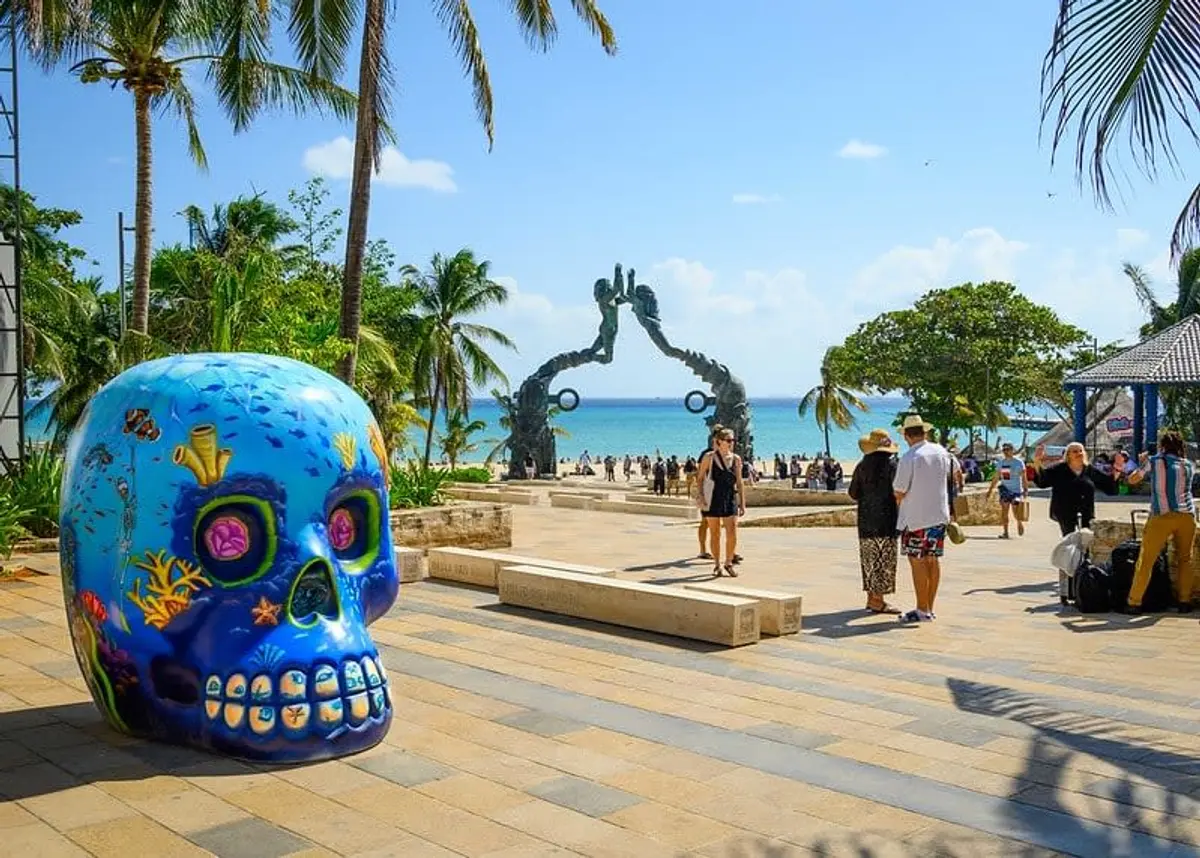
Playa del Carmen is the Riviera Maya’s urban hub — a real city of 300,000 with excellent restaurants, nightlife, infrastructure, and easy access to everything. From here: Cozumel is a 30-minute ferry ride, Tulum is 63km south, Chichen Itza is 160km by ADO bus. Colectivos running up and down Highway 307 make everywhere reachable on a budget.
5th Avenue (La Quinta Avenida): 20 blocks of pedestrianized street lined with restaurants, bars, shops, and pharmacies. Better for a long evening stroll than serious shopping. The beach at Mamitas and Playa 12 is lively; quieter beaches are 10 minutes south toward Puerto Morelos.
Sargassum: PDC faces east = affected April–October. Cozumel (west coast, 30-min ferry) solves this completely.
Reality check: The best base for most travelers doing the Riviera Maya circuit. Not ideal if you want all-inclusive (Cancun) or off-grid jungle (Tulum). Uber currently lists service in Playa del Carmen, but colectivos and registered taxis are often more predictable for corridor trips.
Akumal & Solimán Bay: The Mid-Coast Sweet Spot
Akumal (“Place of the Turtles” in Mayan) is the best place in Mexico to snorkel with wild sea turtles. Hawksbill and loggerhead turtles feed year-round in the bay’s seagrass beds, 50m from shore. No boat needed — just wade in with a snorkel.
Solimán Bay (10km south of Akumal) is one of the Riviera Maya’s least-known stretches — a protected bay with almost no current, crystal water, and very few tourists. Cenote Tankah is 200m from the beach.
Chemuyil, just south of Akumal, is another hidden bay with a halocline (fresh-saltwater mixing zone) visible by snorkeling and almost no crowds. See our full Chemuyil guide.
Reality check: Limited in accommodation options and restaurants — perfect for a few nights, not a week-long base.
Tulum: Expensive, Overhyped, Still Worth a Night or Two
Tulum is the Riviera Maya’s luxury-gone-wild experiment. The cliff-top Mayan ruins are genuinely dramatic (the only sea-facing ruins in Mexico). The cenotes nearby (Gran Cenote, Dos Ojos, Cenote Angelita) are world-class. And the jungle road connecting the beach zone to downtown has a certain look that’s been photographed 40 million times.
What nobody tells you: the Beach Zone is expensive, and transport can still be awkward even though Uber currently lists service in Tulum; live driver availability and pickup conditions vary, while taxi fares should be confirmed before the ride. Tulum’s southeast-facing beaches can receive heavy sargassum, so check current beach conditions rather than assuming a clear shoreline.
When Tulum is worth it: Day trips from Playa del Carmen (63km, 1hr colectivo, 25 MXN). You get the ruins at 8 AM before crowds, the cenotes, and Gran Cenote without paying $400/night to sleep nearby. Or: budget travelers can stay in Tulum Pueblo (downtown) for $40–80/night and commute to beach by colectivo.
Reality check: Tulum as a whole trip is best for those who’ve already done Cancun/PDC. As a first-time Riviera Maya destination, start in PDC or Cancun and do Tulum as a day trip.
Bacalar: The Freshwater Lagoon Alternative
Bacalar is 320km south of Cancun but worth including in any extended Riviera Maya itinerary. The Lagoon of Seven Colors sits 3km from the Caribbean coast and has some of Mexico’s clearest water — seven distinct shades of blue visible from kayak. No sargassum, no salt, no current. The stromatolites (living 3.5-billion-year-old microbes) are one of handful of living stromatolite sites on Earth.
Budget travelers love it: accommodation from $20/night, meals for $5–8, lake transport by sailboat or kayak. The contrast with Tulum pricing is extreme.
The Mesoamerican Barrier Reef: Why This Coast Looks Like This
The Riviera Maya’s turquoise, calm, clear water isn’t random. The Mesoamerican Barrier Reef runs 700km from Mexico’s Yucatan Peninsula down to Honduras — the world’s second-largest coral reef system after Australia’s Great Barrier Reef. It sits 300–800m offshore along most of the Riviera Maya, acting as a natural breakwater that flattens waves and keeps the water crystal clear.
The best places to experience the reef:
- Cozumel: The main event. Palancar Reef, Santa Rosa Wall, and Columbia Wall are some of the clearest dive sites in the Caribbean. Full Cozumel guide.
- Puerto Morelos: Protected national marine park, 500m offshore, snorkeling accessible year-round.
- Akumal: Shallower reef, sea turtles everywhere.
- MUSA (Museo Subacuático de Arte): 500 underwater sculptures installed 4–8m deep near PDC and Cancun — snorkeable or diveable.
The 7,000 Cenotes: Underground Swimming Holes
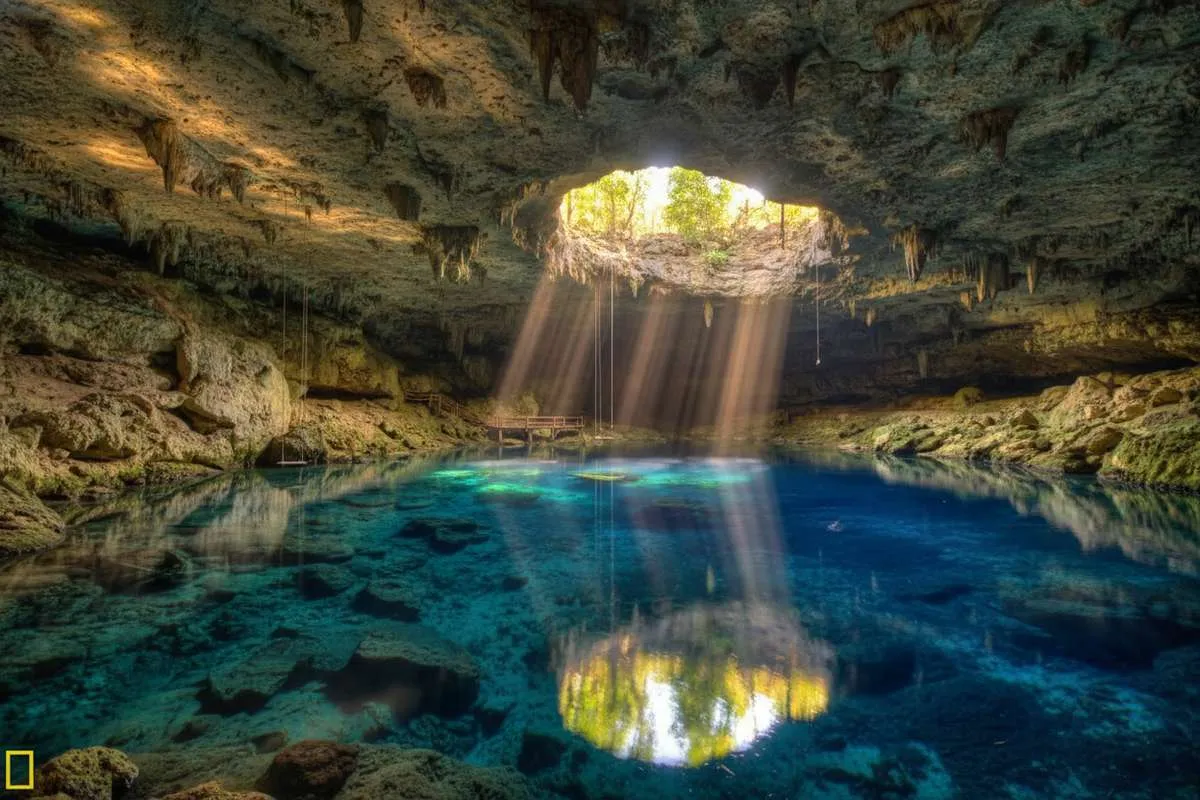
The Yucatan Peninsula has no rivers above ground — all freshwater moves through an underground network of flooded limestone caves. Where the roof collapses, you get a cenote: a natural skylit pool of fresh, filtered water. There are over 7,000 in the Yucatan, with the highest concentration between Playa del Carmen and Tulum.
| Cenote | Type | From PDC | Entry Fee | Best For |
|---|---|---|---|---|
| Gran Cenote | Open + cave | 63km south | 480 MXN | Snorkeling, stunning visuals |
| Cenote Dos Ojos | Cave system | 80km south | 600 MXN | Diving, 2-cave circuit |
| Cenote Angelita | Deep open | 80km south | By dive shop | Halocline dive (hydrogen sulfide layer) |
| Chaak-Tun | Near PDC | 15km south | 450 MXN | Stalactite cavern |
| Río Secreto | Cave river | 14km south | 1,200 MXN | Guided cave walk with stalactites |
| El Jardín del Edén | Open | 25km north (Puerto Morelos) | 150 MXN | Budget, accessible, family-friendly |
| Cenote Azul | Open | 25km north | 150 MXN | Large, less crowded, great for swimming |
Key rule: Follow the individual cenote’s skin-product policy. Some allow biodegradable products after showering; others prohibit all sunscreen, repellent, makeup, and lotion before swimming. Arrive product-free and use a rash guard or hat between swims.
See the full Best Cenotes in the Riviera Maya — 20 cenotes ranked by zone (Cancun, PDC, Tulum, Valladolid) — or Best Cenotes in Mexico for the national guide.
Sargassum: The Real Story
Sargassum is Atlantic brown seaweed that rides Caribbean currents onto east-facing beaches. Since 2011, sargassum arrivals have intensified dramatically due to warming Atlantic temperatures and nutrient runoff from the Amazon basin. It’s not going away.
What you actually need to know:
| Zone | Sargassum Risk | When | Mitigation |
|---|---|---|---|
| Cancun Hotel Zone north | Low–Moderate | Apr–Oct | North-facing hotels best |
| Puerto Morelos | Low–Moderate | Apr–Oct | Often cleaner than Cancun |
| Playa del Carmen | Moderate–High | May–Sep | Mamitas Beach clubs clean daily |
| Akumal | Moderate | May–Aug | Sheltered bays fare better |
| Tulum Beach | High | Apr–Oct | SE-facing = worst on coast |
| Cozumel west coast | Very Low | Year-round | Protected from open Atlantic |
| Bacalar (lagoon) | None | Year-round | Freshwater lagoon |
The Cozumel solution: If you’re planning a Riviera Maya trip in May–September and want guaranteed beach quality, base yourself in PDC and take the 30-minute ferry to Cozumel for beach days. The west coast beaches (Playa Palancar, Playa Chen Río) are consistently clean because the island shelters them from Atlantic sargassum currents.
UNAM (Mexico’s national university) publishes weekly sargassum forecast maps — Google “UNAM sargassum forecast” and check within 2 weeks of your trip. Also: ask your hotel directly, day-before, rather than relying on months-old travel advice.
Getting Around the Riviera Maya
Maya Train (Tren Maya)
The Maya Train opened in 2024 and connects the entire Riviera Maya corridor. The relevant section for most travelers: Cancun Airport → Puerto Morelos → Playa del Carmen → Tulum. Runs hourly, modern air-conditioned cars, tickets at station.
| Route | Duration | Price |
|---|---|---|
| Cancun Airport → Playa del Carmen | ~50 min | 120 MXN (~$6) |
| Playa del Carmen → Tulum | ~40 min | 100 MXN (~$5) |
| Cancun Airport → Tulum | ~90 min | 180 MXN (~$9) |
Note: Station locations matter. Tulum’s Maya Train station is in the western part of the city — still 10–15 minutes from downtown and 30 minutes from the Beach Zone by taxi. Check the station location against your accommodation before committing.
ADO Bus
ADO runs Mexico’s best intercity bus network. Air-conditioned, on-time, assigned seats. Book at the station or online at ado.com.mx.
- Cancun → PDC: ~1hr, 200–250 MXN
- PDC → Tulum: ~1hr, 200–280 MXN
- Cancun → Tulum: ~2–3hr, 250–380 MXN (direct from CUN airport)
See the complete Cancun to Tulum transport guide for all 6 options including Maya Train, colectivo route, car rental, and shuttle comparisons. If you’re arriving by air, see the Cancun Airport transportation guide for hotel zone, PDC, and Tulum transfer options. For the journey in reverse — PDC to Cancun or direct to CUN Airport — see the Playa del Carmen to Cancun guide. Moving between Tulum and PDC? See the Tulum to Playa del Carmen guide.
Colectivos (Best for Budget Travelers)
Colectivos are shared white vans running constantly up and down Highway 307. Flag them down at the side of the road or at the official colectivo stops (next to most ADO stations). They go anywhere along the highway — just tell the driver your stop.
- PDC → Tulum:
1hr, 50–60 MXN ($2.50–3) - PDC → Akumal: ~30min, 30–40 MXN
- PDC → Puerto Morelos: ~25min, 25–30 MXN
The colectivo between Playa del Carmen and Tulum is the Riviera Maya’s best-kept budget secret. It’s the way locals travel.
Ferry to Cozumel and Isla Mujeres
- PDC → Cozumel: Ultramar and Winjet ferries, 30 minutes, every 60–90 minutes, 200–260 MXN each way. No need to reserve.
- Cancun → Isla Mujeres: Gran Puerto ferry, 15–25 minutes, every 30 minutes, 90–200 MXN. Isla Mujeres guide.
- Cancun → Holbox: Bus to Chiquila (2.5hr) + ferry (25 min). Holbox guide.
Rental Car
A car unlocks: Cobá ruins (still climbable, unlike Chichen Itza and Tulum), remote cenotes, Akumal direct, Sian Ka’an biosphere, day trips to Bacalar without a tour. Budget 600–1,200 MXN/day including basic insurance.
Tip: Pick up and drop off at Cancun Airport (CUN) — largest selection, most competitive prices. See our car rental Mexico guide for avoiding insurance traps.
When to Visit: Month-by-Month
| Month | Weather | Sargassum | Crowds | Prices |
|---|---|---|---|---|
| Jan–Feb | 25°C, sunny, no rain | Low | High | High |
| March | 27°C, sunny | Low–Moderate | Peak (spring break) | Highest |
| April | 28°C, occasional rain starts | Moderate, rising | Moderate | Drops post-spring break |
| May | 30°C, humid, afternoon showers | Moderate–High | Low | Low |
| June | 31°C, daily rain, muggy | High | Low | Low |
| July–Aug | 32°C, daily rain, hot | High | Moderate (school vacation) | Medium |
| September | 31°C, hurricane risk | High | Lowest | Lowest |
| October | 30°C, hurricane tail | Moderate | Low | Low |
| November | 27°C, rain ends | Low | Low–Moderate | Low–Moderate |
| December | 25°C, dry, perfect | Low | High (Christmas week) | High |
Best overall: November–December and January–February. Dry, warm, calm sea, lower sargassum, beautiful light.
Best value: May and November. Shoulder season with good conditions and 30–40% lower accommodation prices.
Avoid (unless budget is the priority): September. Hurricane season peaks, sargassum at worst, and even then prices aren’t dramatically lower than October–November.
Riviera Maya Day Trips: What’s Reachable
| Destination | From PDC | How | Cost |
|---|---|---|---|
| Chichen Itza | 2hr west | ADO bus or colectivo | 200 MXN bus + 646 MXN entry |
| Cobá ruins | About 1.5hr west | Colectivo + colectivo | Confirm transport; INAH: 210 MXN foreign / 105 MXN Mexican |
| Valladolid | 2hr west | ADO bus | 230 MXN — best Chichen Itza base |
| Sian Ka’an Biosphere | 1.5hr south | Tour or rental car | $80–120 per person for tour |
| Akumal sea turtles | 35min south | Colectivo | 30 MXN + 120 MXN snorkel rental |
| Cozumel | 30min ferry | Ferry from PDC | 200 MXN each way |
| Isla Mujeres | Ferry from Cancun | Cancun → Puerto Juárez | 120 MXN each way |
| Bacalar | 2.5hr south | ADO bus | 350 MXN — worth an overnight |
Riviera Maya vs Caribbean: Honest Comparison
| Criterion | Riviera Maya | Caribbean Islands |
|---|---|---|
| Flight from US East Coast | 3–4.5hr | 3–5hr |
| Beach quality (Nov–Apr) | Excellent | Excellent |
| Beach quality (May–Oct) | Sargassum risk | Sargassum risk (same currents) |
| Cenotes | Unique — nowhere else in Caribbean | None |
| Mayan ruins | Yes — world class | Limited |
| Food scene | Excellent — Mexican + Yucatecan | Limited, expensive |
| Budget travel | Very possible ($50–80/day) | Difficult ($150+/day) |
| Language barrier | Low — English widely spoken in tourist zones | Low |
| Safety | Level 2 (same as France) | Varies by island |
The Riviera Maya has one massive advantage over Caribbean islands: you get Caribbean-quality water AND world-class ruins AND cenotes AND excellent Mexican food. No island can match that combination.
Budget Breakdown 2026
| Category | Budget | Mid-range | Luxury |
|---|---|---|---|
| Accommodation (per night) | $25–55 (hostel/guesthouse in PDC or Tulum Pueblo) | $80–180 (boutique hotel) | $300–800+ (Tulum beach club hotel) |
| Food (per day) | $15–25 (tacos, markets, local restaurants) | $35–60 (mix of restaurants) | $80–200+ (beach club dining) |
| Transport | $5–10 (colectivos) | $15–30 (ADO buses, Uber) | $50–100+ (private transfers) |
| Activities (per day avg) | $20 (cenotes + sites) | $40–60 (guided tours, snorkel) | $100–200 (dive packages, tours) |
| Daily total | $65–110/day | $170–270/day | $530–1,100+/day |
Where budget travelers save most: Base in Playa del Carmen downtown (not hotel zone). Eat at the Mercado Municipal (25–60 MXN per meal). Use colectivos for all transport. Visit cenotes independently rather than by tour (half the price). Avoid Tulum Beach Zone hotels entirely — instead visit Tulum on a $2.50 colectivo day trip from PDC.
Biggest expense spike: Tulum Beach Zone accommodation is 4–10x the price of equivalent quality in Playa del Carmen. If you don’t need to wake up at the beach club, staying in Tulum Pueblo and colectivo-ing to the beach saves $200+/night.
Where to Stay in the Riviera Maya
Best all-around base: Playa del Carmen. Central location, all transport links, real city amenities, best food scene, ferry to Cozumel.
Best for all-inclusives: Cancun Hotel Zone or the stretch between Puerto Morelos and PDC (called “the Mayan Riviera hotel zone”) — 30+ mega-resorts with direct beach access. See our full Best All-Inclusive Resorts in Mexico guide for a zone-by-zone comparison.
Best for a quiet beach couple: Puerto Morelos or Akumal — calm, smaller, reef snorkeling minutes away.
Best for diving: Cozumel — stay on the island, roll out of bed to the pier.
Best for budget: Tulum Pueblo or Playa del Carmen downtown. Hostels from $20/night.
Best for eco-luxury: Sian Ka’an biosphere buffer zone — ecolodges within the UNESCO reserve.
Safety in the Riviera Maya
The tourist corridor from Cancun to Tulum is safe by any reasonable measure — millions of tourists visit annually without incident. Quintana Roo is Level 2 (Exercise Increased Caution), the US State Department’s second-lowest advisory level.
Practical safety rules:
- Use Uber (Cancun/Tulum) or registered taxis (PDC) — not unmarked cars
- In PDC: taxis have a fixed zone tariff posted in the window — agree to price before entering
- Don’t walk isolated beaches at night
- Cenote tours: only book with registered operators (SETUR Quintana Roo has a list)
- Carry a copy of your passport, leave the original in your hotel safe
- Travel insurance: Travel insurance is worth considering here, especially emergency medical and evacuation coverage.
Read our full Is Mexico Safe guide for state-by-state context, or the Mexico Travel Advisory 2026 for current US State Department ratings.
Getting to the Riviera Maya
Fly into Cancun Airport (CUN) — the Riviera Maya’s main international gateway. Direct flights from most US cities (3–4.5hr), Canada, Europe (London, Madrid, Frankfurt all have direct routes), and across Latin America.
From CUN:
- To Cancun Hotel Zone: ADO bus ($50 MXN), Shuttle ($300–500 MXN), Taxi ($350–500 MXN)
- To Playa del Carmen: ADO bus (~70 min, 230 MXN), Maya Train (~50 min, 120 MXN), Shuttle (~60 min, $25 USD)
- To Tulum: ADO bus (~2hr, 350 MXN), Maya Train (~90 min, 180 MXN), Shuttle (~2hr, $35–50 USD)
Fly into Tulum Airport (TQO) — opened 2024. Connects to select US and Canadian cities (United, American, Air Canada have seasonal routes). Good option if you’re starting in Tulum.
Riviera Maya Itinerary Ideas
7 Days — Full Riviera Maya Circuit
- Day 1–2: Playa del Carmen (arrive, settle, beach, 5th Ave)
- Day 3: Cozumel day trip (ferry + west coast beach + snorkel)
- Day 4: Chichen Itza early (7:30 AM arrival) → Valladolid → return
- Day 5: Tulum (colectivo, ruins at 8 AM, Gran Cenote, beach lunch)
- Day 6: Cenote circuit (Dos Ojos or Azul + Río Secreto)
- Day 7: Isla Mujeres (bus to Cancun, ferry out and back) or Akumal sea turtles
10 Days — Deep Dive
Add 3 nights in Cozumel (stay on the island for diving) and 1 night in Valladolid. Consider extending to Bacalar if you have a 12th day.
5 Days — Focused
Base in PDC. Cozumel day trip. Tulum + cenote day trip. Chichen Itza day trip. Beach day. That’s your 5 days sorted.
See our full 10 Days in Mexico Itinerary and 7 Days in Yucatan for detailed day-by-day breakdowns.
Riviera Maya Practical Info
Currency: Mexican peso (MXN). Most tourist businesses accept USD but give worse exchange rates. Use pesos — withdraw from ATMs in town (not airport ATMs which charge extra fees).
Language: Spanish is primary. English is widely spoken in tourist zones — Cancun, PDC, and Tulum have better English coverage than most Mexican cities.
Health: Do not drink untreated tap water; use purified water supplied by your accommodation or buy sealed drinking water. Cenote skin-product rules vary by operator, so arrive product-free and shower as directed. Altitude is sea level throughout—no acclimatization is needed.
Connectivity: SIM cards from Telcel or AT&T Mexico give the best coverage for $25–40 USD/month. Most hotels, restaurants, and even colectivo stops have WiFi.
Electrical: Same as US/Canada (110V, Type A/B plugs). No adapter needed for North American devices.
Quick Links: Riviera Maya Deep Dives
- Cancun Travel Guide 2026 — Hotel Zone vs downtown, beaches, day trips
- Playa del Carmen Travel Guide — neighborhoods, 5th Avenue, cenotes
- Things to Do in Playa del Carmen — 28 best activities, cenotes, Cozumel ferry, beach clubs
- Tulum Travel Guide 2026 — ruins, cenotes, beach zone reality
- Cozumel Travel Guide — diving, snorkeling, west vs east coast
- Things to Do in Cozumel — 25 best activities: Palancar Reef, San Gervasio, Punta Sur, beach clubs
- Isla Mujeres Travel Guide — Playa Norte, whale sharks, golf cart circuit
- Holbox Island Travel Guide — bioluminescence, flamingos, no cars
- Bacalar Travel Guide — Lagoon of Seven Colors, stromatolites, budget haven
- Things to Do in Bacalar →
- Best Time to Visit Bacalar → — sailing season, bioluminescence, lagoon clarity by month
- Valladolid Yucatán Guide — best Chichen Itza base, cenote circuit
- Best Cenotes in Mexico — 27 cenotes ranked by type and access
- Best Time to Visit Tulum
- Best Time to Visit Playa del Carmen — sargassum calendar, cenote clarity by season, wildlife timing
- Best Time to Visit Playa del Carmen — sargassum guide, Cozumel escape strategy, month-by-month
- Best Time to Visit Cancun — month-by-month sargassum + crowds + prices
- Best Time to Visit Yucatan — regional weather and wildlife calendar
- Is Mexico Safe? — honest state-by-state safety guide
More Riviera Maya Guides
- Day Trips from Playa del Carmen — 14 excursions: Cozumel, Tulum, Chichen Itza, Akumal, Cobá & more
- Day Trips from Tulum — 15 excursions: Coba, Gran Cenote, Akumal, Sian Ka’an, Chichen Itza from Tulum
- Day Trips from Cancun — 15 excursions from the northern hub
- Things to Do in Tulum — 25 best Tulum activities ranked
- Best Cenotes in Mexico — 27 cenotes ranked across all regions
- Cancun vs Playa del Carmen 2026 → — Hotel Zone all-inclusives vs walkable 5th Avenue town
- Cancun vs Tulum — which destination fits your trip
- Playa del Carmen vs Tulum — detailed comparison for Riviera Maya visitors
Book Your Riviera Maya Trip
Tours & Activities
The Riviera Maya has some of the most varied tours in Mexico: Chichen Itza early-entry trips, cenote diving packages, whale shark tours (Isla Mujeres, June–September), Sian Ka’an biosphere boat tours, and Coba zip-lines.
Browse Riviera Maya Tours on Viator →
Car Rental
A rental car is worth it for 3+ days — unlocks Coba, remote cenotes, and flexibility along the 130km strip.
Compare Riviera Maya Car Rentals →
Travel Insurance
Medical care in tourist zones is private and expensive. Travel insurance is worth considering here, especially a policy with emergency medical treatment and evacuation coverage.