Best Things to Do in Bacalar, Mexico 2026: Lagoon Tours, Los Rápidos & Cenotes
The best things to do in Bacalar, Mexico are getting out on the Lagoon of Seven Colors, floating or kayaking Los Rápidos, swimming Cenote Azul, seeing the stromatolites, and ending the day on a dock or beach club at sunset. Most first-timers need 2 to 3 days: one lagoon-tour day, one Los Rápidos or cenote day, and one slower town-and-sunset day. Bacalar is not a nightlife destination or a beach town, it is a water-and-relaxation destination with a few genuinely worthwhile history and day-trip add-ons.
If you are still planning the broader trip, pair this page with our Bacalar travel guide, best time to visit Bacalar, hotels in Bacalar, Cancún to Bacalar transport guide, and Tulum to Bacalar transport guide.
Bacalar in 30 Seconds
| If you want… | Do this first | Why |
|---|---|---|
| The classic first trip | Boat or sail tour on the lagoon | You get the color gradients, Canal de los Piratas, stromatolites, and the easiest all-in-one Bacalar day |
| The most fun half day without a tour | Los Rápidos | It is the easiest way to float, swim, and see the lagoon’s clearer southern section |
| A relaxed swim base with food and docks | A balneario or beach club | Best if you want easy water access without organizing a boat |
| The best sunrise activity | Kayak or paddleboard | The water is calmest before 8 AM |
| A land-based backup | Fort San Felipe | Best non-water activity in town |
| A quick add-on south of town | Cenote Azul | Easy swim stop if you have a car or taxi |
Best Bacalar plan by trip style
- First-timers: lagoon boat tour, Los Rápidos, Fort San Felipe, sunset dock
- No car: boat tour, town docks, Fort San Felipe, one taxi run to Cenote Azul or Los Rápidos
- Couples: private sailboat, boutique lakefront hotel, sunset dock, longer lunch on the water
- Families: public docks, gentle boat tour, Fort San Felipe, Cenote Azul restaurant area
- One-night stop: sunrise swim or kayak, one lagoon tour, leave the next morning
Should you do a boat tour or Los Rápidos first?
If this is your first time in Bacalar, do the lagoon boat or sail tour first. It covers the wider Lagoon of Seven Colors, the Canal de los Piratas, and the stromatolite zone in one outing. Choose Los Rápidos first only if you already know you want a more stationary float-and-swim day instead of a broader sightseeing day.
Activity Overview
| # | Activity | Category | Cost (approx.) | Best Time |
|---|---|---|---|---|
| 1 | Catamaran / sailboat tour | Water | $40–75 USD/person | Nov–Apr |
| 2 | Los Rápidos | Water/Relaxation | 150–250 MXN | Year-round |
| 3 | Kayak the Seven Colors | Water | $5–8 USD/hour | Year-round |
| 4 | Stromatolites by kayak or boat | Nature/Science | Included in most tours | Year-round |
| 5 | Fort San Felipe | History | 65 MXN (~$3) | Year-round |
| 6 | Cenote Azul | Swimming | 50–100 MXN | Nov–Apr |
| 7 | Stand-up paddleboarding | Water | $10–15 USD/hour | Nov–Apr (calm mornings) |
| 8 | Balneario / beach club day | Relaxation | 50–400 MXN | Year-round |
| 9 | Wakeboard cable park | Water sport | 300–450 MXN/session | Year-round |
| 10 | Swim off the public docks | Swimming | Free | Year-round |
| 11 | Sunset from the malecón | Sightseeing | Free | Year-round (daily) |
| 12 | Canal de los Piratas kayak | Water/History | Included in kayak rental | Year-round |
| 13 | Cenote Esmeralda | Swimming | Free | Year-round |
| 14 | Snorkeling in the canal | Water | $10–20 USD/gear rental | Nov–Apr |
| 15 | Birdwatching on the lagoon | Wildlife | Free–$20 tour | Nov–Apr (migration) |
| 16 | Cycling the lagoon road | Active | 80–150 MXN/day rental | Nov–Apr |
| 17 | Fresh fish lunch on the water | Food | 150–300 MXN | Year-round |
| 18 | Fort San Felipe museum | Culture/History | Included with fort entry | Year-round |
| 19 | Night kayak (bioluminescence) | Nature | $25–40 USD | Jun–Oct (peak) |
| 20 | Fishing with local guides | Nature | $30–60 USD/trip | Year-round |
| 21 | Chetumal day trip | Culture | 30–40 MXN by colectivo | Year-round |
| 22 | Mahahual Caribbean beach | Beach | 130–200 MXN by colectivo | Nov–Apr |
| 23 | Dzibanche Maya ruins | History/Archaeology | 75 MXN (~$4) + transport | Nov–Apr |
| 24 | Bacalar town market | Food/Culture | Free | Saturday mornings |
| 25 | Overwater hammocks / sunset dock time | Relaxation | Free–included at some hotels | Year-round |
The Water Activities
1. Catamaran / Sailboat Tour — The Essential Bacalar Experience
If you do one thing in Bacalar, it’s this. Full-day tours on the Lagoon of Seven Colors typically include:
- Sailing (or motoring) through the central canal with color-gradient views from above the boat
- Stop at the stromatolite zone — a genuinely rare natural phenomenon (details below)
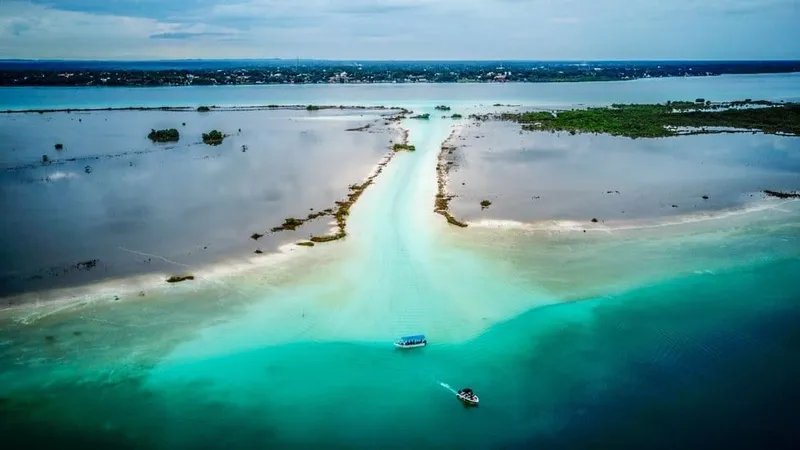
- Swimming in the Canal de los Piratas — the narrow channel with pirate history
- Stop at Cenote Azul — the large open-air swimming cenote 5km south of town
- Lunch on board (fresh fish, ceviche, rice, watermelon) prepared by the crew
- Return at sunset with the colors at their most dramatic
Cost: 800–1,500 MXN/person ($40–75 USD) for group tours. Private catamaran hire: 4,000–8,000 MXN for up to 8–10 people (worth splitting in a group).
Where to book: Walk to the Muelle Municipal (town dock on Calle 1) the evening before or morning of. Multiple operators compete for passengers — prices are negotiable, especially for larger groups. No need to book online; walk-up is the normal process.
Catamaran vs. “pirate ship”: The wooden motorized piratas boats are cheaper and more social (20–30 passengers, party atmosphere). Private catamarans are quieter and more scenic. Both go the same places.
2. Los Rápidos — Best for a Half-Day Float
If you want a half-day Bacalar plan without committing to a full boat tour, Los Rápidos is usually the best answer. It is a mangrove-lined narrow section of the lagoon south of town where you can float, swim, and see stromatolites in very clear water.
Why people love it:
- Easier than organizing a full lagoon day
- Better for a relaxed dock-and-water afternoon
- A strong option if you are staying in town and want one memorable water stop beyond the main docks
Typical cost: around 150 MXN entry, sometimes more if you add lockers, food, or transport.
Important reality check: Los Rápidos is not a replacement for the big lagoon views from a boat or sail tour. It is the better choice for a float-and-swim day, not for a complete first overview of Bacalar.
3. Kayak the Seven Colors Gradient
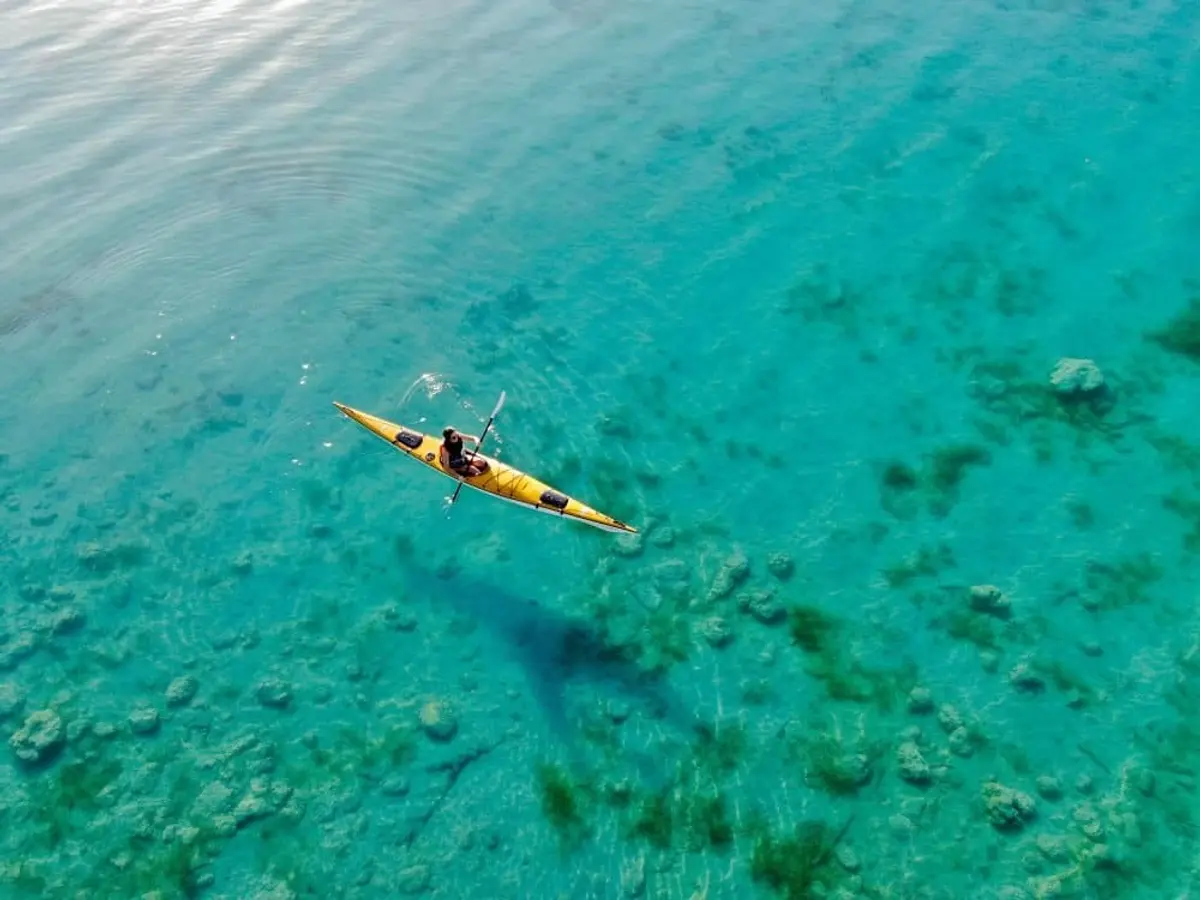
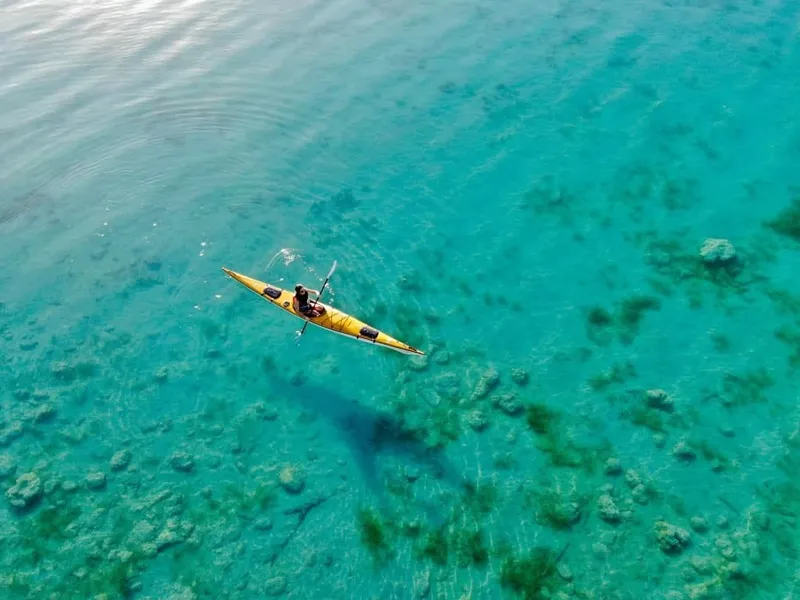
One of the few truly free Bacalar experiences (beyond kayak rental) is paddling out from the town docks and watching the water change color beneath you as depth increases. In a kayak you can see this in minutes — paddle 50 meters from the shallow turquoise shore into the deeper channel, and the water beneath shifts to deep teal, then green-blue, then navy.
Rental: 100–150 MXN/hour from multiple operators along the Avenida 7 waterfront. No advance booking required.
Best time: Sunrise. The lagoon is mirror-calm before 8 AM and the color gradients are most visible in direct overhead light. By 11 AM, afternoon winds develop and chop reduces visibility.
Route suggestion: Paddle north from the town dock, then into the Canal de los Piratas (the narrow channel), then south toward the stromatolite zone. Full loop: 2–3 hours at a leisurely pace.
4. Stromatolites: Swimming With Earth’s Oldest Living Organisms
This is Bacalar’s strangest, most extraordinary secret — the one thing most tourists completely miss.
In the southern lagoon near the Puerto Pequeño channel, there’s an active colony of stromatolites — layered structures built by cyanobacteria (blue-green algae). These same microorganisms produced Earth’s first oxygen atmosphere 3.5 billion years ago. Modern living stromatolites exist in fewer than 12 locations worldwide. The Great Barrier Reef in Australia has some. Shark Bay in Western Australia. The Bahamas. And Bacalar.
The structures look like grey-brown cauliflower-shaped rocks just below the surface of the water. They’re underwhelming visually. The awe is conceptual: what you’re looking at is essentially unchanged from the life forms that made it possible for every plant and animal on Earth to exist.
Rules: Look, photograph, do not touch. A single handprint can damage years of microbial growth. The colony is protected.
How to visit: Most full-day catamaran tours stop here. Alternatively, kayak south from town (45–60 minutes) to the Puerto Pequeño zone — ask rental operators to point you toward the exact location.
5. Stand-Up Paddleboarding at Sunrise
Bacalar’s lagoon on a calm morning is an ideal stand-up paddleboard environment — flat water, warm temperature (28–30°C), no current, and color gradients visible through the clear water directly below you.
Rental: 150–250 MXN/hour from waterfront operators. Most open by 7–8 AM.
Tip: Go before 9 AM. By mid-morning, wind picks up across the open lagoon and standing paddleboarding becomes significantly harder. The early morning calm is legitimate — take advantage of it.
6. Balneario / Beach Club Day
If you do not want to book a boat and you do not want to head straight to Los Rápidos, a balneario or beach club is the easiest Bacalar day. You pay for dock access, shade, loungers, food, and direct lagoon entry.
Best for: couples, families, remote workers doing a slower stop, and anyone who wants a swim base with bathrooms and lunch already solved.
Typical cost: roughly 50 to 400 MXN depending on how basic or polished the place is.
Good fit: arrive late morning, swim, order lunch, read in a hammock, stay for sunset. This is one of the simplest ways to enjoy Bacalar well.
7. Wakeboard Cable Park
Bacalar has a cable wakeboard park — a motorized overhead cable system that pulls wakeboarders across a defined section of the lagoon at consistent speeds, eliminating the need for a boat and making it accessible for beginners.
Located on the southern waterfront, roughly 10 minutes walk from the town center. Cost: Approximately 300–450 MXN for a 20-minute session, with equipment rental included.
Works for: complete beginners who’ve never been on a board (the shallow-water entry zone makes it safe to practice), and experienced riders who want the lake conditions without boat noise. Most other activities in Bacalar are passive — this one requires actual physical effort.
8. Swim Off the Public Docks (Free)
The town has several public malecones (waterfront areas) with docks extending into the lagoon. Entry is free. The water at the town docks is 1–3 meters deep over white calcium carbonate sand — the color is luminescent turquoise, and visibility is 5–8 meters.
Many travelers spend entire days at the public docks: swim, lie on the dock, swim again, repeat. This is legitimate Bacalar activity.
Best dock areas: Along Avenida 7 near the town center. Look for the restaurants with overwater terraces — the docks in front of them are generally public access.
Sunset from the docks: The town docks face west across the lagoon. At sunset, the water turns amber-gold, the color shifts in the lagoon, and the opposite shore disappears in haze. It happens every night and it’s one of the genuinely great free experiences in Mexico.
9. Canal de los Piratas Kayak
The narrow channel connecting different sections of the lagoon was used by British buccaneers raiding the Spanish colonial coast from their Belize base throughout the 17th–18th centuries. Today kayakers paddle through it under overhanging jungle canopy, where the water narrows to 10–15 meters and the colors shift under the trees.
The canal is part of most boat tours, but kayaking it independently is better — slower, quieter, closer to the water. Ask kayak rental operators for the route.
10. Night Kayaking for Bioluminescence
From June through October (peak in July–September), the lagoon develops bioluminescent plankton — dinoflagellates that emit blue light when disturbed. Paddle a kayak at night, dip your hand in the water, and the disturbed plankton glows.
The phenomenon is more subtle than the famous bioluminescence in Puerto Escondido or Holbox — Bacalar’s lagoon is freshwater, and freshwater bioluminescence is less intense than saltwater. But on a dark, moonless night, it’s clearly visible.
Tours: Several operators offer night kayak tours with guide, 25–40 USD/person. Alternatively, rent a kayak in the evening (some operators allow this) and paddle out independently — but only do this if you’re comfortable with dark water navigation.
Fort & History
9. Fort San Felipe de Bacalar
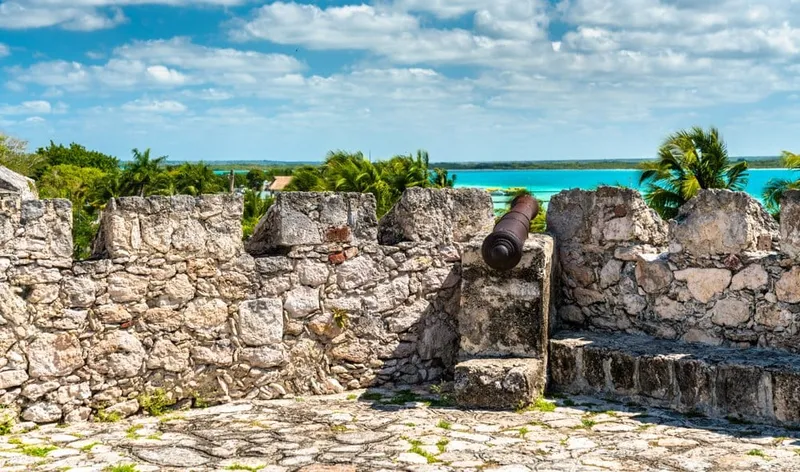
Built in 1733 to defend the Spanish colonial coast against British pirates raiding from present-day Belize, Fort San Felipe is one of the better-preserved colonial fortresses in Mexico. It’s compact — a square fortification with four bastions, cannons overlooking the lagoon, and thick stone walls.
The history is more complex than “Spanish vs. pirates.” The fort was captured by Maya rebels during the Caste War of Yucatán (1848) — one of the largest indigenous uprisings in Mexican history — and held by Maya fighters for 40 years before federal forces recaptured it in 1901.
The museum inside covers both the pirate era and the Caste War with historical artifacts, weapons, and period maps. More substance than most small fort museums.
Entry: 65 MXN (~$3 USD). Open Tuesday–Sunday. The views from the battlements are the best elevated perspective of the lagoon in town — worth the entry fee for the photos alone.
Walking distance: 5–10 minutes from the town center, on a promontory on Avenida 3.
Cenotes Near Bacalar
10. Cenote Azul
Located 5 km south of Bacalar town on the main highway, Cenote Azul is one of Mexico’s largest open-air cenotes — roughly 70 meters in diameter and up to 90 meters deep in the center. Unlike Tulum’s cave cenotes, this is a sky-facing swimming hole with limestone edges and cliff jumps (3m and 6m platforms).
The water is turquoise, clear, and cold relative to the lagoon (cenote water stays at a fairly constant 24–26°C year-round). A restaurant sits on the rim serving fresh fish, ceviche, and cold drinks — you can eat and watch other swimmers below.
Entry: 50–100 MXN (varies, sometimes free with a food purchase at the restaurant). Restaurant meals: 150–300 MXN/plate.
Getting there: Taxi from Bacalar town, 80–120 MXN one-way. Alternatively, flag down a colectivo on the highway heading toward Chetumal and ask for the cenote. Most catamaran tours stop here as part of the day.
Note: The deep center section drops to 90 meters. The edges are safe and shallow. The cliff jumps are for confident swimmers only.
11. Cenote Esmeralda (Free)
A smaller, less-visited cenote located just south of the town center, accessible by a short walk through residential streets. The water is clear, slightly cooler than the lagoon, and it’s usually empty except for a few locals.
Entry: Free (donations appreciated). No facilities.
Why go: When the main docks are busy with tourists, Cenote Esmeralda offers a quieter, more local alternative. Ask at your accommodation for the exact location — it’s not well-signposted but residents know it.
Day Trips from Bacalar
12. Mahahual: Caribbean Beach Day (2.5 hours)
Bacalar is a freshwater lagoon — there are no ocean beaches. If you want Caribbean saltwater and reef snorkeling, Mahahual is the nearest option: a small beach town on the Costa Maya, 110 km east across the Yucatan Peninsula.
Mahahual has a soft white sand beach, the Mesoamerican Barrier Reef just offshore (excellent snorkeling and diving), a mellow malecón with seafood restaurants, and almost none of the development of Tulum or Playa del Carmen. It also receives cruise ships — avoid the 10 AM–4 PM window if a ship is in port (check online).
Getting there: ADO bus from Bacalar toward Mahahual, or colectivo from the Bacalar highway junction, roughly 130–200 MXN each way. The journey takes 2–2.5 hours. Car rental makes this much easier — 40 minutes driving from Bacalar via Federal Highway 307.
13. Dzibanche Maya Ruins (Quintana Roo’s Best-Kept Secret)
Dzibanche is a large Maya archaeological site approximately 80 km northwest of Bacalar — one of the least-visited major ruin sites in Mexico, despite having several impressive pyramids and a jungle setting that rivals Palenque in atmosphere.
Why it’s underrated: Most Yucatán-bound tourists head straight for Chichen Itzá or Tulum. Dzibanche sees a fraction of the visitors. The Temple of the Owl (33 meters high) can be climbed. Howler monkeys are common in the surrounding jungle. You may have the entire site to yourself.
Entry: 75 MXN (~$4 USD).
Getting there: Requires a car or a negotiated taxi (200–300 MXN one-way from Bacalar). No direct ADO service. Often combined with nearby Kinichna and Kohunlich ruins into a day trip.
14. Chetumal: Mexico’s Overlooked Belize Gateway City
Chetumal, the capital of Quintana Roo, sits 40 km south of Bacalar — 30–40 minutes by colectivo (30–40 MXN from the Bacalar highway junction). Most travelers skip it entirely, which is a mistake.
What’s worth seeing:
- Museo de la Cultura Maya — one of the best Maya museums in Mexico. Three floors covering Maya cosmology, writing, mathematics, and regional sites. 90 MXN entry.
- Malecón of Chetumal Bay — a long waterfront promenade overlooking the shallow bay. Good seafood restaurants.
- Mercado Ignacio Manuel Altamirano — the local market for fresh produce, regional food, and interaction with actual Quintana Roo daily life (not the tourist version).
- Border town character — Chetumal has a Caribbean port-city personality distinct from the tourist corridor further north. Belizean goods in the market, significant Creole cultural influence, distinctly different from Cancún-area tourism.
Day trip logistics: Colectivo from Bacalar, 30–40 MXN, 40 minutes. Stay 4–5 hours, return by bus. Easy.
Food & Culture
15. Fresh Fish at a Waterfront Restaurant
The signature Bacalar meal: mojarra (a cichlid fish historically from the lagoon, now mainly farmed locally or sourced from the coast), served grilled or fried with rice, black beans, tortillas, and fresh salsa. Simple, excellent when done right.
Budget eats: The restaurants and taco stands on the block behind the main waterfront strip. Cochinita pibil tacos, fish ceviche, and agua fresca for 80–150 MXN/meal. Same quality as the waterfront for 30–40% less.
Waterfront restaurants: More expensive (200–400 MXN/plate), quality has improved substantially since 2020 as the tourist demographic has shifted upscale. Worth it once for the lagoon view.
The produce market (Mercado Municipal, behind the main plaza): small, local, best for breakfast pastries and fruit.
16. Saturday Artisan Market
Every Saturday morning, Bacalar’s town plaza hosts a small artisan market — local crafts, regional food products (honey, hot sauces, dried spices), handmade clothing, and hammocks. Starts around 8 AM, typically winds down by 1 PM.
What to buy: Locally-produced Yucatecan honey (the dark, intense melipona variety if you can find it), handmade hammocks (Bacalar has several hammock artisans — prices start around 500 MXN and worth every peso for a quality piece), and regional hot sauces.
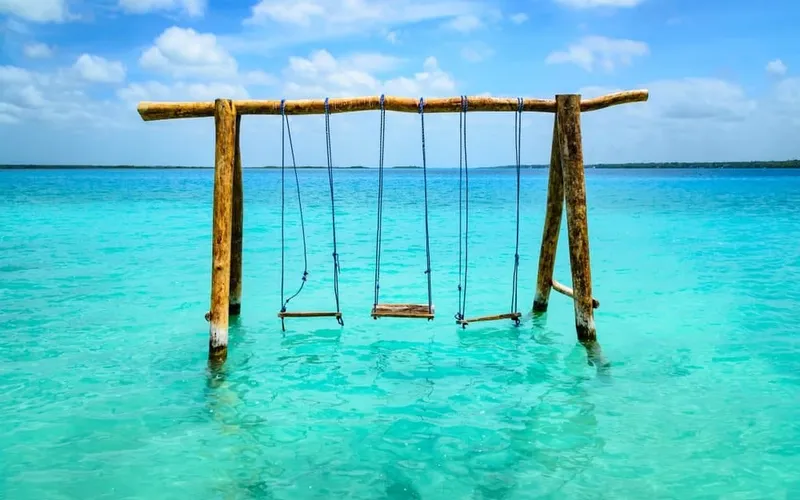
17. Overwater Hammock Time
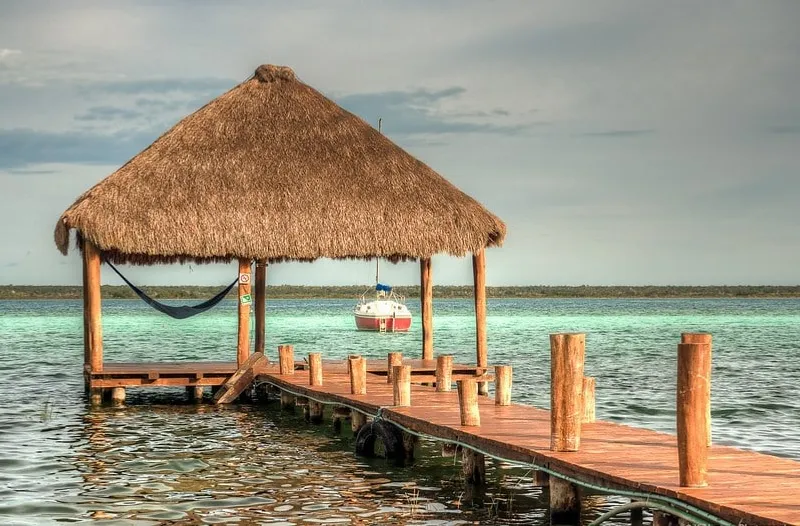
Several hotels and guesthouses in Bacalar have overwater hammock platforms — wooden docks extended into the lagoon with hammocks hanging over the water. Some are hotel-guest-only, some are accessible to day visitors (ask, or order something from the bar).
This is not ironic. Lying in a hammock suspended over turquoise water is one of the legitimately good experiences in Mexico. The Instagram version and the real version happen to be the same thing here.
18. Yucatecan Cooking Class
Several cooks in Bacalar offer small-group cooking classes focused on Yucatecan food: cochinita pibil (slow-cooked pork in achiote paste, traditionally buried in a pit), papadzules (egg tacos in pumpkin seed sauce), and poc chuc (grilled pork with sour orange). Most classes use a home kitchen and include a market visit.
Cost: Approximately 600–1,200 MXN ($30–60 USD) per person for 2–3 hour sessions. Ask at your accommodation or check local community boards for current operators. The market-to-table format is the most informative version.
Nature & Wildlife
19. Birdwatching on the Lagoon
The lagoon and its surrounding jungle are a significant bird habitat — location data shows over 150 species in the Bacalar area. Of particular interest:
- Jabiru stork (Mexico’s largest flying bird, wingspan 2.4m) — occasional sightings in the marshes south of town
- Roseate spoonbill — distinctive pink wading birds in the shallow lagoon edges
- Boat-billed heron — bizarre large-billed heron, easiest to spot at dusk from the docks
- Yucatan jay — bright blue/black bird endemic to the Yucatan Peninsula
- Mangrove swallow — common in the canal areas
Best time: November–February during migration. A kayak is the best birdwatching platform — low profile, quiet, and allows access to the mangrove edges that motorboats disturb.
20. Fishing with Local Guides
The lagoon holds various fish species — mojarra, bass, and occasional larger catches. Several local guides offer fishing trips by rowboat or small motor launch, typically in the early morning or late afternoon hours.
Cost: 30–60 USD for a 2–3 hour trip with equipment. Ask at the town dock or your accommodation.
Note: Most fishing is catch-and-release or catch-and-cook (some guides will take you back to a restaurant to have your catch prepared). The fishing is more about the lagoon experience at dawn than world-class sport fishing — set expectations accordingly.
Active & Adventure
21. Cycling the Lagoon Road
The road running south from Bacalar town along the lagoon toward Cenote Azul is flat, quiet (by Mexican road standards), and offers views of the water through the trees. Cycle from town to Cenote Azul: approximately 5 km, easily done in 20 minutes.
Rentals: 80–150 MXN/day from shops in the town center. Several cafés along the route make logical rest stops.
Extension: Continue south of Cenote Azul toward the Bacalar/Chetumal highway junction (another 10 km, slightly more traffic) to reach more remote lagoon viewpoints.
22. Snorkeling in the Canal de los Piratas
The canal’s clear, shallow water (2–5 meters in most sections) makes for decent snorkeling — not Caribbean reef snorkeling, but freshwater visibility, small freshwater fish, and the unusual experience of snorkeling a pirate route.
Equipment rental: Several operators along the waterfront rent basic snorkel gear (mask, fins) for 50–100 MXN. The canal sections near the town are the easiest access.
What you’ll see: Freshwater cichlids (mojarras), turtles (occasional), aquatic plants swaying in the gentle current. Clear visibility down to the white sand floor.
Photography
23. Golden Hour Photography (Self-Guided)
Bacalar is one of the most photographable places in Mexico — the color gradients, the overwater docks, the fort, the jungle-lagoon edge. The light is best at:
- Sunrise (6–7 AM): Mirror-calm lagoon, no tourists, golden light reflecting off the turquoise water. Best from the town docks or a kayak.
- Sunset (5:30–6:30 PM): The western exposure of the lagoon catches full sunset. The fort’s battlements are a good elevated position.
- Drone photography: Legal in Mexico with a drone registered with AFAC. The lagoon’s color gradients are dramatically visible from above — the seven colors are most vivid in aerial photos. Fly low over the canal section for the best color variation.
Best photo spots:
- The town dock extending over turquoise water — classic composition
- Fort San Felipe battlements with lagoon behind — historical angle
- Canal de los Piratas from a kayak — jungle-framed water
- Cenote Azul cliff edge — swimmers, clear water, limestone
24. Bacalar Pueblo (Town Center Walk)
The town itself is worth 1–2 hours of walking: a small central plaza, a 19th-century church (Iglesia de San Joaquín), brightly painted low buildings in various states of renovation and ruin, and a local commercial strip that still caters more to residents than tourists.
The contrast is interesting — the main waterfront street (Avenida 7) has fully gentrified in the past five years: boutique cafés, international restaurants, overwater cocktail bars. Walk three blocks inland and you’re in a different Bacalar: auto parts shops, tortillerías, tiendas selling local produce. Both are real.
25. Watch the Sunset Every Single Night
This is not filler. The Bacalar sunset — from the western-facing docks, with the lagoon stretching 42 km south, the colors shifting from turquoise to amber to pink-purple as the light dies — happens every evening and it’s consistently among the best sunsets in Mexico.
No cost. No booking. No planning. Show up at the malecón or any dock facing west at 5:30 PM, sit down, and watch. The other 24 activities in this guide are optional. This one is mandatory.
Bacalar Budget Guide
| Category | Budget | Mid-Range | Comfort |
|---|---|---|---|
| Accommodation | $25–55/night | $80–160/night | $180–400/night |
| Food | $10–20/day | $25–50/day | $60–120/day |
| Activities | $15–30/day | $40–80/day | $80–200/day |
| Transport (local) | $5–10/day | $10–20/day | $20–40/day |
| Daily total | $55–115 | $155–310 | $340–760 |
Reality check: Bacalar is still significantly more affordable than Tulum, but prices are rising each year. The budget range above is accurate for 2026 — in 2028, the mid-range numbers will likely look like the current budget numbers. This is a destination that rewards visiting sooner rather than later.
Best Time to Visit Bacalar
| Month | Weather | Crowds | Prices | Verdict |
|---|---|---|---|---|
| Nov | 27°C, dry | Low–medium | Mid | ✅ Excellent |
| Dec | 26°C, dry | High | Peak | Good (if booked ahead) |
| Jan | 25°C, dry | High | Peak | Good (if booked ahead) |
| Feb | 26°C, dry | Medium | Mid-high | ✅ Best balance |
| Mar | 28°C, dry | Medium | Mid | ✅ Excellent |
| Apr | 30°C, dry | Low | Low | ✅ Good value |
| May | 31°C, occasional rain | Low | Low | Good (early) |
| Jun | 32°C, humid, some rain | Low | Low | 🌧️ Hot but bioluminescence begins |
| Jul–Sep | 33°C, humid, afternoon storms | Low | Low | 🌧️ Hot, humidity, bioluminescence peak |
| Oct | 30°C, improving | Low | Low | Good value, improving conditions |
Best overall: February and March. Dry season, pleasant temperature, smaller crowds than December, affordable shoulder pricing.
For bioluminescence: July–September (hot and humid, but worth it for the night kayak experience).
Getting to Bacalar
From Cancún: ADO bus, 330–380 MXN, ~3.5–4 hours. Buses every 1–2 hours from Cancún terminal.
From Playa del Carmen: ADO bus, 250–280 MXN, ~2.5–3 hours.
From Tulum: ADO bus, 180–220 MXN, ~1.5–2 hours. Or drive (170 km, 1.5 hours via Highway 307).
From Chetumal: Colectivo from central market, 30–40 MXN, 40 minutes. Nearest airport (CTM) for flights from Mexico City.
By car: Highway 307 south from Cancún runs the entire Riviera Maya. Driving gives you flexibility for Mahahual and Dzibanche day trips. Compare rental car prices for the Cancún–Bacalar route →
Where to Stay in Bacalar
| Type | Price Range | Best For |
|---|---|---|
| Town guesthouses | $25–55/night | Budget, local atmosphere |
| Mid-range lakefront | $80–160/night | Best value, dock access |
| Boutique lakefront | $180–400+/night | Overwater platforms, quiet, romantic |
| Hammock hostels | $10–20/bunk | Budget travelers, social |
Book in advance for December–March — Bacalar’s accommodation fills up and prices spike during peak season. February and March can be sold out 4–6 weeks ahead at good properties.
Getting Around Bacalar
The town center is entirely walkable (15 minutes from the fort to the south docks on foot). For Cenote Azul and day trips:
- Taxis: Fixed rates within town, 80–120 MXN to Cenote Azul.
- Bicycle rental: 80–150 MXN/day — best for the lagoon road.
- Colectivos: Shared vans on Highway 307 toward Chetumal stop at Cenote Azul and the Bacalar junction.
- No Uber.
Useful Links
- Bacalar Travel Guide → — full guide with the seven colors science, history, and getting there
- Cancun to Bacalar: 4 Ways to Get There → — ADO bus, Maya Train, rental car, and why it’s never a day trip
- Tulum to Bacalar: 4 Ways to Get There → — 200km south, ADO bus 180–260 MXN, 2 hours direct
- Hotels in Bacalar →
- Tulum Travel Guide →
- Things to Do in Tulum →
- 7 Days in Yucatan Itinerary →
- Cancun vs Tulum →
- Riviera Maya Travel Guide →
- Day Trips from Cancun →
- Mexico Entry Requirements →
- Is Mexico Safe? →
- Best Time to Visit Bacalar → — sailing season, bioluminescence timing, prices by month
- Best Time to Visit Mexico →