Best Time to Visit Bacalar: Best Month, Weather, Prices & Lagoon Clarity
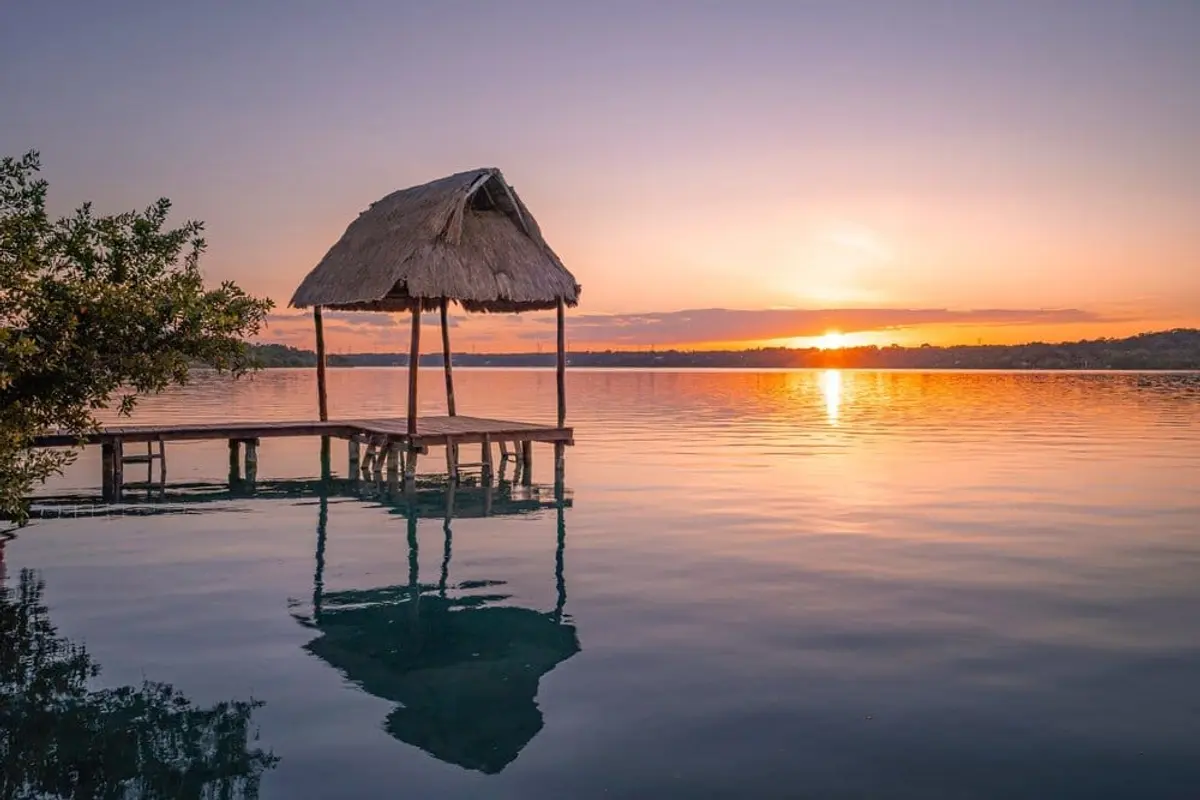
Bacalar is a 42-kilometer freshwater lagoon in Quintana Roo, Mexico, fed by underground cenote systems and known for water clarity that shifts from bright turquoise to deep navy. Unlike the Caribbean coast, Bacalar has no sargassum, so the real timing question is not seaweed, it is which month gives you the best mix of clear lagoon water, dry weather, manageable crowds, and hotel prices.
The best time to visit Bacalar is February through April, and February is the best single month for most travelers. You get the clearest lagoon colors, the lowest rain risk, reliable sailing tours, and lower prices than the December holiday peak. November is the best value month, while May, June, and October are the best shoulder-season picks if you can live with some rain.
Bacalar in 30 Seconds
- Best month to visit Bacalar: February
- Best overall season: February through April
- Best weather and lagoon color: November through April
- Best value month: November
- Cheapest months: May, June, September, and October
- Worst month for most travelers: September
If you want the easiest first trip, book February, March, or early April. If you want stronger value and can live with afternoon storms, aim for November, May, or October instead. Pair this guide with my full Bacalar travel guide, things to do in Bacalar, and best hotels in Bacalar once you lock your dates.
What Is the Best Month to Visit Bacalar?
February is the best month to visit Bacalar for most travelers. The lagoon is usually at its clearest, humidity is still manageable, sailing tours run reliably, and you avoid both December holiday pricing and the heavier Easter crowds that can hit late March or early April.
If February does not work, use this shortcut:
- Choose March if you want the same dry-season conditions with slightly warmer water.
- Choose November if you care more about value than absolute best weather.
- Choose May or October if cheaper hotel prices matter more than perfect lagoon color.
- Skip September unless budget is your only priority.
Best Month to Visit Bacalar by Trip Goal
| Trip Goal | Best Months | Why |
|---|---|---|
| First trip to Bacalar | February, March | Safest mix of clear water, dry weather, and reliable tours |
| Cheapest decent-value trip | May, October | Noticeably lower room rates without September-level weather risk |
| Best lagoon photos | February, March, early April | Lowest haze and strongest Seven Colors effect |
| Best for sailing | November to March | Trade winds and fewer storm cancellations |
| Best for a romantic trip | November, February, March | Pretty light, calmer town, and strong hotel value outside holiday peaks |
| Best for bioluminescence | August, September | Warmest water and strongest dinoflagellate activity |
At a Glance: Bacalar by Month
| Month | Weather | Lagoon Clarity | Sailing | Bioluminescence | Crowds | Prices | Rating |
|---|---|---|---|---|---|---|---|
| January | ☀️ Perfect | ⭐⭐⭐⭐⭐ | ✅ Daily | ❌ Faint | High | Peak | ⭐⭐⭐⭐ |
| February | ☀️ Perfect | ⭐⭐⭐⭐⭐ | ✅ Daily | ❌ Faint | High | High | ⭐⭐⭐⭐⭐ |
| March | ☀️ Warm | ⭐⭐⭐⭐⭐ | ✅ Daily | ❌ Faint | Moderate | High | ⭐⭐⭐⭐⭐ |
| April | ☀️ Hot | ⭐⭐⭐⭐ | ✅ Daily | ❌ Faint | Moderate | Moderate | ⭐⭐⭐⭐ |
| May | 🌤️ Hot/humid | ⭐⭐⭐ | ✅ Most days | 🌟 Building | Low | Low | ⭐⭐⭐ |
| June | 🌧️ Rainy | ⭐⭐⭐ | ⚠️ Weather-dependent | 🌟 Active | Low | Low | ⭐⭐⭐ |
| July | 🌧️ Rainy | ⭐⭐⭐ | ⚠️ Weather-dependent | 🌟🌟 Strong | Low | Low | ⭐⭐⭐ |
| August | 🌧️ Humid | ⭐⭐ | ⚠️ Weather-dependent | 🌟🌟 Peak | Low | Low | ⭐⭐⭐ |
| September | 🌧️ Hurricane risk | ⭐⭐ | ⚠️ Frequently cancelled | 🌟 Active | Minimal | Lowest | ⭐⭐ |
| October | 🌤️ Transitional | ⭐⭐⭐ | ✅ Most days | 🌟 Fading | Low | Low | ⭐⭐⭐ |
| November | ☀️ Excellent | ⭐⭐⭐⭐ | ✅ Daily | ❌ Faint | Moderate | Moderate | ⭐⭐⭐⭐ |
| December | ☀️ Perfect | ⭐⭐⭐⭐⭐ | ✅ Daily | ❌ Faint | Peak | Peak | ⭐⭐⭐⭐ |
Dry Season (November–April): When the Lagoon Is at Its Best
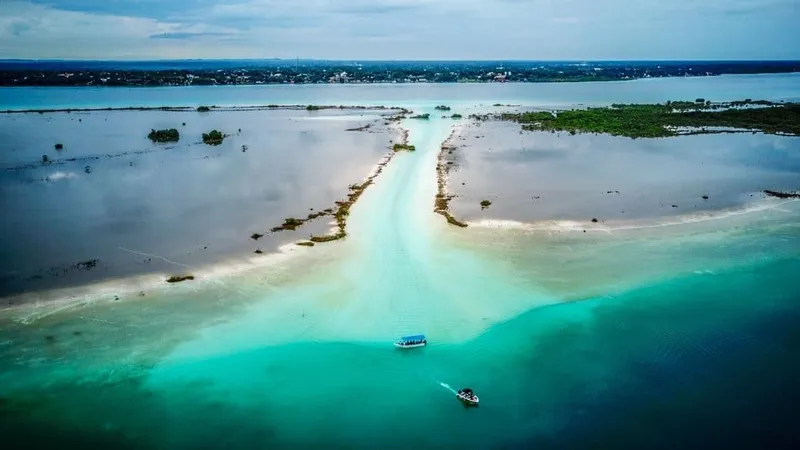
Dry season is the clear winner for Bacalar. The lagoon’s legendary seven colors are most intense when humidity is low and light penetrates cleanly through the water column — conditions that only exist from November through April.
November is the insider’s pick. Hurricane season has just ended, crowds haven’t built yet, prices are 30-40% lower than December, and the lagoon is transitioning to its clearest dry-season condition. Sailboat operators are back to daily schedules. Water temperature: 26-28°C. Expect occasional light showers in early November — by the second week, these are rare.
December through January brings peak conditions and peak everything else: Christmas and New Year crowds fill Bacalar’s small hotel stock weeks in advance, prices spike to their highest of the year, and the town center — normally calm — gets genuinely busy. If this is your only window, book accommodation 8-10 weeks ahead. The lagoon itself is pristine and the weather is as good as it gets.
February and March are the best months overall. Prices drop 20-30% from December peaks, crowds thin appreciably (Semana Santa excepted), and the lagoon is at maximum clarity. Sailing tours run daily with calm conditions. March is particularly special: the dry-season northeast trade wind creates ideal sailing conditions on the lagoon’s wide open stretches, and the 2026 Easter crowds won’t arrive until late March 29.
April is still excellent weather-wise (28-32°C) but heat builds noticeably and Easter week (Semana Santa, March 29–April 5 in 2026) brings the year’s second largest crowd surge. Prices during Semana Santa match December levels. Skip those specific 8 days or book far in advance.
When Is the Lagoon Clearest?
Bacalar’s lagoon clarity depends on two factors: rainfall (which carries sediment) and phytoplankton blooms (which thrive in warm, humid summer months). Neither affects the lagoon like they would an ocean — there’s no sargassum and no tidal turbidity — but both create seasonal visibility differences.
Best clarity: November–May — the post-summer algae have died back, rainfall is minimal, and the calcium carbonate sediment glows white through 6-8 meters of water. On clear noon days in February-March, you can see the lagoon floor in 8-10 meter sections of the Zone of Silence (La Zona del Silencio).
Reduced clarity: June–October — elevated temperatures (30-32°C) trigger phytoplankton and algae blooms. The water greens slightly in the shallower northern sections. The deep blue still looks stunning, but the intense turquoise “Caribbean postcard” effect is less pronounced. For swimming, the water remains warm and pleasant. For photography of the seven-color gradient, results are less dramatic.
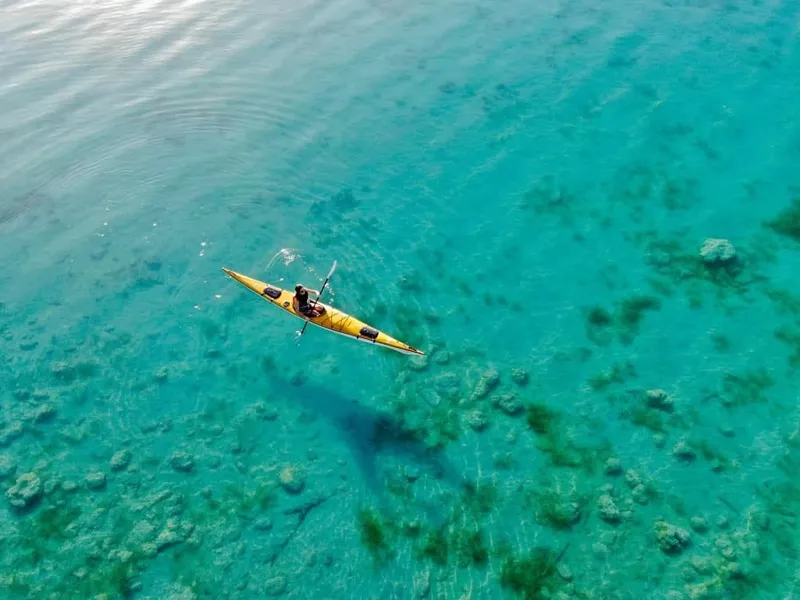
Stromatolite visibility: The stromatolite colonies near Puerto Pequeño are visible year-round by kayak or paddleboard. Water clarity is best November-April. Do not touch them regardless of season — these are among fewer than 12 active stromatolite sites on Earth.
Sailing Season: When Tours Run Best
Sailboat tours on the Bacalar Lagoon are the experience most people come for. A half-day catamaran circuit stopping at the Zone of Silence, Cenote Azul, Cenote Cocalitos, and the stromatolites typically runs 800-1,200 MXN ($40-60 USD) per person.
| Season | Sailing Conditions | Tour Availability | Winds | Notes |
|---|---|---|---|---|
| Nov–Feb | ⭐⭐⭐⭐⭐ Excellent | Daily, multiple operators | NE trade winds, 12-18 knots | Best sailing window; consistent afternoon breeze |
| Mar–Apr | ⭐⭐⭐⭐⭐ Excellent | Daily, multiple operators | NE trade winds, 10-15 knots | Slightly lighter winds than peak winter |
| May | ⭐⭐⭐⭐ Good | Daily (most operators) | Variable, 8-12 knots | Occasional morning calm; afternoon breeze builds |
| Jun–Aug | ⭐⭐⭐ Variable | Weather-dependent | Gusty, 5-20+ knots | Afternoon thunderstorms cancel tours 2-3 days/week |
| Sep–Oct | ⭐⭐ Unreliable | Intermittent | Storm risk | September = lowest reliability; October improves |
| November | ⭐⭐⭐⭐ Good-excellent | Resuming daily | Transitional | First reliable sailing weeks of season |
Key rule: Bacalar sailboat operators will not go out in lightning — and in July-August, afternoon thunderstorms build over the lagoon 2-3 days per week. Book morning tours (departure 9-10 AM) to catch the window before afternoon convective storms. Tours booked for afternoon slots in summer face frequent last-minute cancellations.
Bioluminescence in Bacalar
Bacalar’s lagoon produces bioluminescence during the warmer months, created by dinoflagellate plankton (primarily Pyrocystis fusiformis). Unlike Holbox — where bioluminescence requires guided kayak tours to reach the lagoon — at Bacalar you can sometimes see it directly from swimming docks after dark during peak months.
Season: June through October, peaking in August and September.
Best conditions: New moon nights (no competing light), after 9 PM, away from town dock lights. The lagoon’s southern sections, away from the town’s resort lighting, show the strongest effect.
How to see it: Some sailboat operators offer nighttime tours in August-September specifically for bioluminescence (600-800 MXN per person). Alternatively, kayak from your hotel dock after 10 PM on new moon nights in August — the wake of your paddle will glow blue.
Realistic expectation: Bacalar bioluminescence is real but subtler than Holbox’s peak. The lagoon has more light pollution from the growing hotel strip, and the phenomenon is stronger in Holbox’s protected lagoon environment. If bioluminescence is your primary goal, plan for Holbox in August-September.
Weather by Month
| Month | Avg High | Avg Low | Rain Days | Humidity | Water Temp | Hurricane Risk |
|---|---|---|---|---|---|---|
| January | 28°C / 82°F | 18°C / 64°F | 4 | Low | 24°C | ❌ None |
| February | 29°C / 84°F | 19°C / 66°F | 3 | Low | 24°C | ❌ None |
| March | 31°C / 88°F | 21°C / 70°F | 3 | Low | 26°C | ❌ None |
| April | 33°C / 91°F | 23°C / 73°F | 5 | Moderate | 27°C | ❌ None |
| May | 34°C / 93°F | 24°C / 75°F | 8 | High | 28°C | ❌ Minimal |
| June | 33°C / 91°F | 24°C / 75°F | 14 | Very High | 30°C | ⚠️ Watch |
| July | 33°C / 91°F | 24°C / 75°F | 15 | Very High | 31°C | ⚠️ Moderate |
| August | 33°C / 91°F | 24°C / 75°F | 16 | Very High | 32°C | ⚠️ Moderate |
| September | 32°C / 90°F | 23°C / 73°F | 17 | Very High | 31°C | 🔴 Highest |
| October | 31°C / 88°F | 22°C / 72°F | 12 | High | 30°C | ⚠️ Fading |
| November | 29°C / 84°F | 20°C / 68°F | 6 | Moderate | 27°C | ❌ Negligible |
| December | 28°C / 82°F | 18°C / 64°F | 5 | Low | 25°C | ❌ None |
Bacalar sits 200km inland from the Caribbean coast, which provides some protection from direct hurricane impacts versus coastal Tulum or Cancún. However, named storms still bring heavy rain, strong winds, and lagoon chop to the Bacalar area. Tropical Storm Earl (2022) dropped 200mm of rain in 48 hours. For weather certainty, November through April remains the safe window.
Prices by Season
Bacalar’s accommodation market is bifurcating: budget guesthouses that existed in 2021-2022 are converting to boutique hotels, while demand grows faster than supply. Prices have risen 40-60% since 2020.
| Period | Budget Hostel | Mid-Range Hotel | Lagoon-Front Boutique | Notes |
|---|---|---|---|---|
| Dec 20–Jan 5 | $40-60/night | $120-180/night | $200-400/night | Fully booked weeks out |
| Jan 6–Mar | $30-45/night | $90-140/night | $160-280/night | Best price/experience ratio |
| Apr (ex-Semana Santa) | $30-45/night | $80-130/night | $140-240/night | Good value window |
| Semana Santa (Mar 29–Apr 5, 2026) | $45-70/night | $130-200/night | $220-400/night | Book 8+ weeks ahead |
| May–Jun | $25-35/night | $60-100/night | $100-180/night | Shoulder season deals |
| Jul–Sep | $20-30/night | $50-80/night | $80-150/night | Lowest prices, highest risk |
| Oct–Nov | $25-40/night | $70-110/night | $120-200/night | Value window before peak |
Booking lead times: Lagoon-facing properties in December-March need 6-10 weeks minimum. Town-center guesthouses: 2-3 weeks. The overwater floating cabañas that Bacalar is known for sell out within 24-48 hours of their booking windows opening for December.
Bacalar vs Tulum vs Cancún: Timing Comparison
| Factor | Bacalar | Tulum | Cancún |
|---|---|---|---|
| Sargassum | ❌ Never (it’s a lagoon) | 🔴 Bad Apr-Oct | 🟡 Seasonal |
| Hurricane risk | ⚠️ Lower (200km inland) | 🔴 Direct coast | 🔴 Direct coast |
| Peak crowds | Dec-Jan, Semana Santa | Dec-Mar, July | Dec-Mar, July |
| Best value month | February-March | November | May |
| Year-round swimming | ✅ Always calm | 🟡 Sargassum varies | 🟡 Sargassum varies |
| Most expensive month | December | December | December |
| Best off-season | May-June | October-November | September-November |
| Booking difficulty (peak) | Very Hard | Very Hard | Hard |
The fundamental Bacalar advantage over both Tulum and Cancún: you never have to think about sargassum. The lagoon’s freshwater-dominated chemistry makes it structurally impossible. What you’re managing instead is rain frequency and hurricane risk. If you are choosing between bases, compare Bacalar vs Tulum before you book.
Best Time by Travel Style
| Travel Style | Best Months | Why |
|---|---|---|
| Sailing & water sports | November–March | Trade winds, daily tours, calm water |
| Photography (seven colors) | December–March | Maximum clarity, intense dry-season light |
| Budget traveler | May, October-November | 40-60% cheaper than peak with acceptable conditions |
| Bioluminescence | August–September | Peak dinoflagellate season |
| Avoiding crowds | May–June, October | Town is quiet, tours run, prices low |
| Honeymoon / romance | February–March | Best combination of weather, beauty, and manageable crowds |
| Stromatolite kayaking | November–April | Highest water clarity for viewing the colonies |
| Cenote swimming | Year-round | Cenote Azul and Cenote Cocalitos swimmable every month |
| Absolute best deal | October | Hurricane season ending, prices still low, conditions improving |
| First-time visitor | February | Safest choice across all variables |
Dry Season Month-by-Month Breakdown
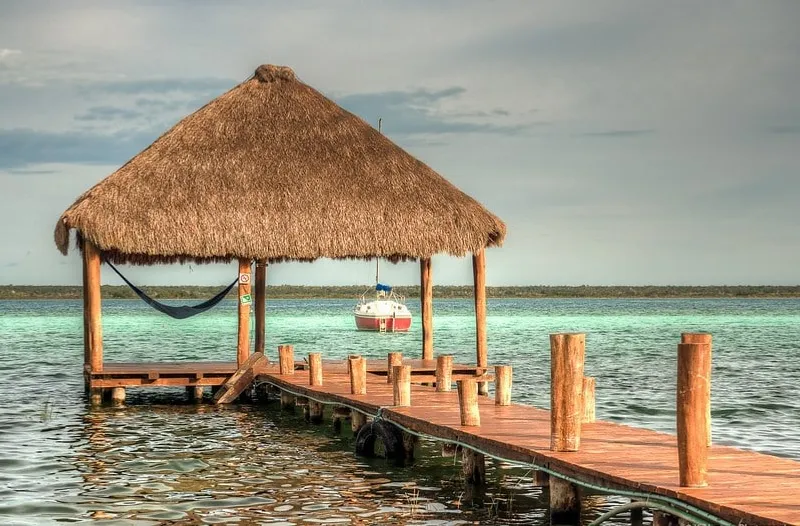
November: The season restarts. Operators who closed for hurricane season reopen. Water clarity rebuilds from September-October rains. Crowds are thin — this is the best-value dry season month. Average temperature: 29°C. Mosquitoes are still present from the wet season but declining.
December: The most beautiful and most crowded month. Christmas week (Dec 20-Jan 5) brings peak prices and a full town. Lagoon is pristine. Book accommodation by October or accept expensive options. The week of December 8-20 before the holiday rush is excellent — near-peak conditions at below-peak prices.
January: Prices drop on January 6 (Día de Reyes) and stay lower for the rest of the month. The lagoon is at peak clarity. Cool mornings (18-19°C low) make sunrise paddleboarding ideal. This is excellent value after the holiday surge exits.
February: The best single month to visit Bacalar. Stable dry weather, strong trade winds for sailing, peak lagoon clarity, and prices 20-30% below December. Book 6-8 weeks ahead for lakefront properties.
March: Near-identical to February. The March equinox (March 21) marks the symbolic end of winter but conditions remain excellent through the end of the month. Semana Santa 2026 begins March 29 — if your trip includes that week, book now (6+ weeks out) and expect Tulum-level pricing.
April: Still good weather (28-33°C) but heat starts to build. Semana Santa week (March 29–April 5 in 2026) is the most crowded and expensive week of the year after Christmas. Outside that week, April offers solid conditions with thinning crowds as spring break ends.
Common Timing Mistakes Travelers Make
- Booking Semana Santa without realizing how busy Bacalar gets. Around Easter, Bacalar loses its quiet-lagoon feel and prices jump hard.
- Assuming rainy season means nonstop rain. Most wet-season days stay usable in the morning, but afternoon boat plans are fragile.
- Choosing September just because it is cheapest. It is the cheapest for a reason, and for most travelers it is a false economy.
- Booking a lagoon-front stay too late for dry season. The best waterfront rooms go fast from December through March.
- Treating Bacalar like the Riviera Maya. Bacalar rewards slower trips, sunrise swims, and weekday stays more than nightlife-heavy weekend plans.
Rainy Season: What You’re Actually Risking
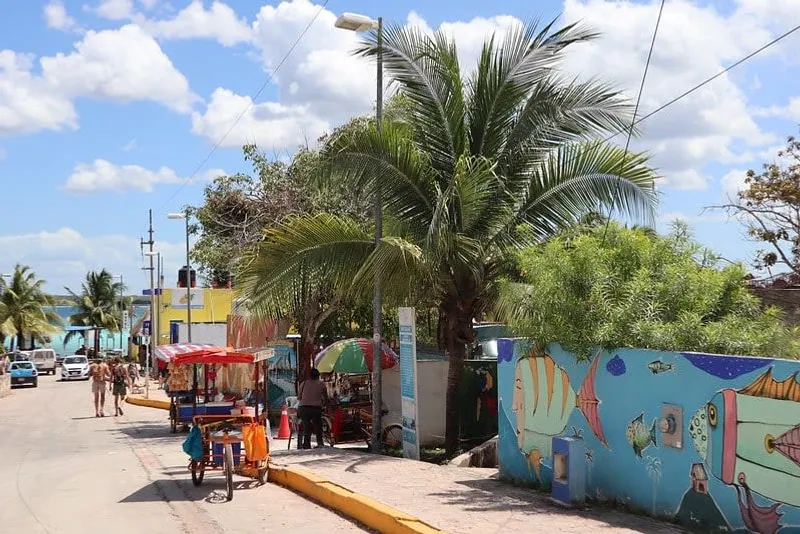
The rainy season (June–October) at Bacalar is not catastrophic — it’s manageable with adjusted expectations:
What actually happens: Afternoons bring convective thunderstorms that typically last 1-2 hours. Mornings are usually clear. You can still do morning sailing tours, kayak before noon, and swim whenever the lightning clears. The lagoon doesn’t look as Instagram-perfect in overcast light.
What’s worse than it sounds: Mosquitoes. The lagoon’s edges, particularly the shallow northern bays, breed mosquitoes heavily in humid months. Bring repellent, wear long sleeves after sunset, and stay in properties with screens and fans. The town’s open-air restaurant culture becomes less pleasant.
The upside: The lagoon is 3-4°C warmer (30-32°C), bioluminescence is active, prices are 40-60% lower, and you’ll share the lagoon with far fewer people. If budget is paramount and you’ll keep expectations realistic, May-June or October are genuine value windows.
September: just don’t. The combination of hurricane risk, daily storms, many closed hotels, and minimal tourism infrastructure makes September the one month to genuinely avoid.
Fort San Felipe and Land Activities: Season Matters Less

Some Bacalar activities are less weather-dependent:
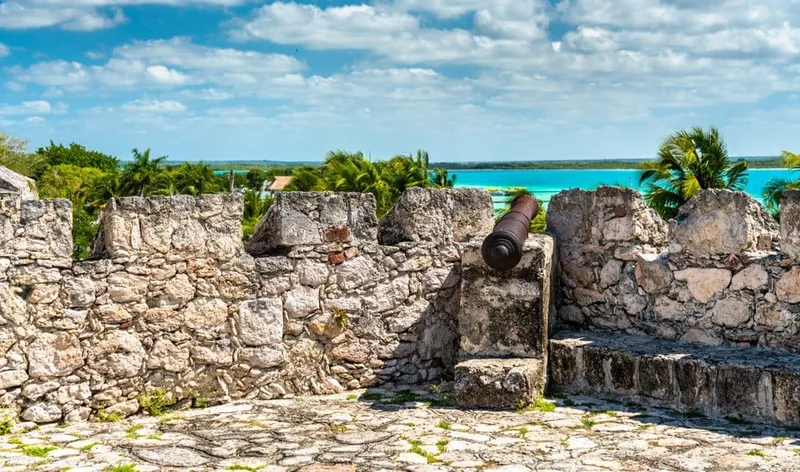
- Fort San Felipe (1729): Open year-round, 50 MXN entry. Morning visits recommended in summer heat. Takes 1-2 hours.
- Cenote Azul: Swimmable year-round. Water stays 24-26°C regardless of season. Best visited before 11 AM in dry season before tour buses arrive.
- Cenote Cocalitos: Reachable by kayak from town or boat tour stop. Year-round. The lily pads and cenote are actually more visually lush during the rainy season.
- Mahahual Caribbean beach day trip: 100km east. Best December-April (sargassum arrives May-October on that stretch of coast). A natural complement to a Bacalar dry-season trip.
- Chetumal day trip: 40km south. Best November-April; the Mayan Mundo Maya museum and Laguna Milagros are good half-day additions to a Bacalar trip.
What to Pack by Season
Dry Season (November–April):
- Light layers for cool November-January evenings (17-19°C nights)
- Reef-safe sunscreen — the lagoon’s clear water reflects UV intensely
- Light hiking shoes for Fort San Felipe
- Sandals/water shoes for boat tours
Rainy Season (May–October):
- Rain jacket (not umbrella — winds make umbrellas useless in thunderstorms)
- DEET mosquito repellent (30%+ concentration)
- Quick-dry clothes
- Power bank (July-September power outages more frequent than Caribbean coast)
- Rash guard if swimming in open lagoon areas
Getting to Bacalar: Transport Is Year-Round
Bacalar’s transport options don’t change meaningfully by season. ADO buses run year-round from Cancún (330-380 MXN, 3.5-4 hours), Playa del Carmen (250-280 MXN, 2.5-3 hours), and Tulum (180-220 MXN, 2 hours). The Cancún-Chetumal Maya Train route, once complete, will add a direct rail connection — check current status before your trip.
Driving: Cancún to Bacalar via Highway 307 is 300km, approximately 3.5 hours. Highway 307 is well-paved year-round. In September-October, watch for flooding at low points after heavy rain.
See the Bacalar Travel Guide for complete transport details, accommodation recommendations, and what to do once you arrive. If you are still deciding on logistics, these route guides help too: Cancún to Bacalar, Tulum to Bacalar, and Bacalar to Tulum.
More “Best Time to Visit” Guides
Planning a longer trip? See these seasonal guides for nearby destinations:
- Best Time to Visit Tulum — sargassum calendar and crowd guide
- Best Time to Visit Playa del Carmen — sargassum by month and beach comparison
- Best Time to Visit Cozumel — bull shark season and diving visibility
- Best Time to Visit Holbox — whale shark and bioluminescence timing
- Best Time to Visit the Yucatán — full peninsula seasonal guide
- Best Time to Visit Mexico — national month-by-month guide