Best Time to Visit Cozumel: Best, Cheapest, and Worst Months in 2026
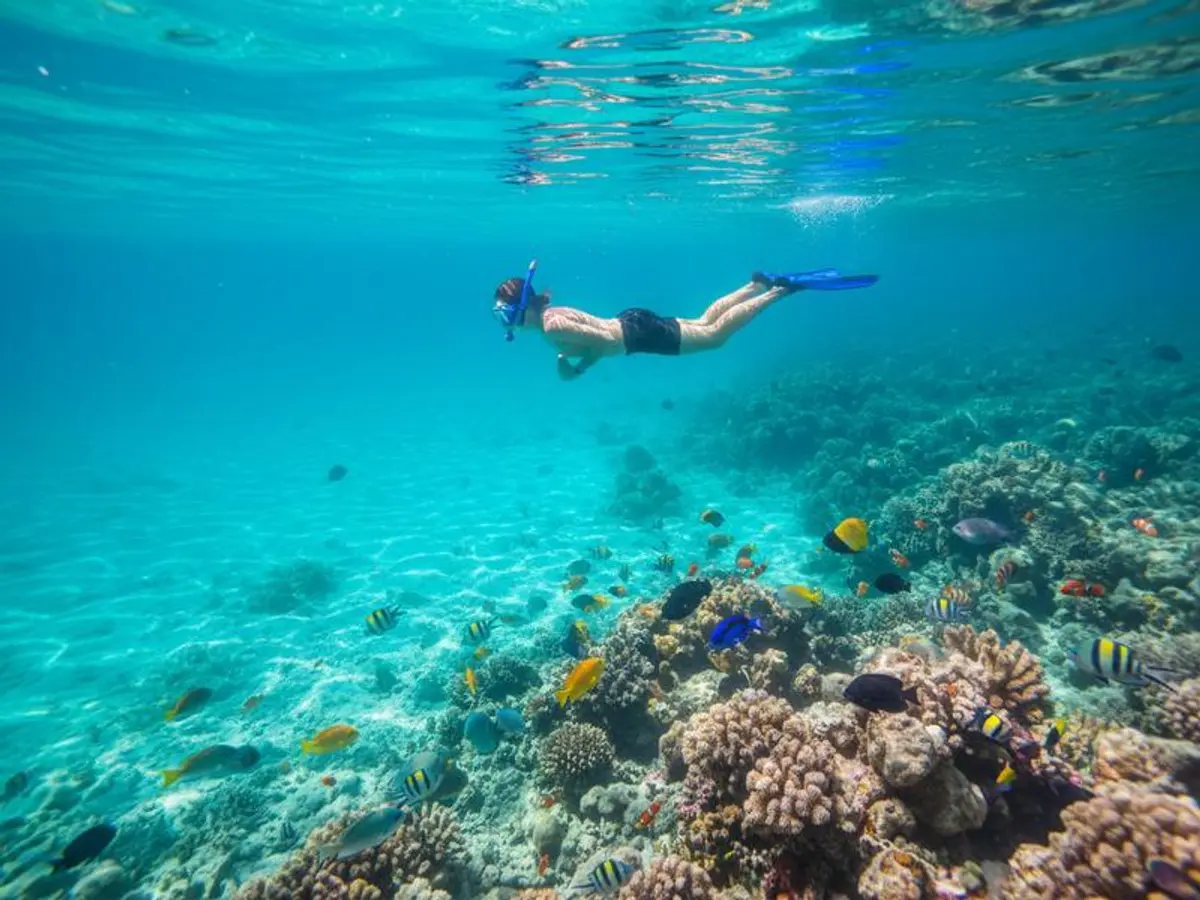
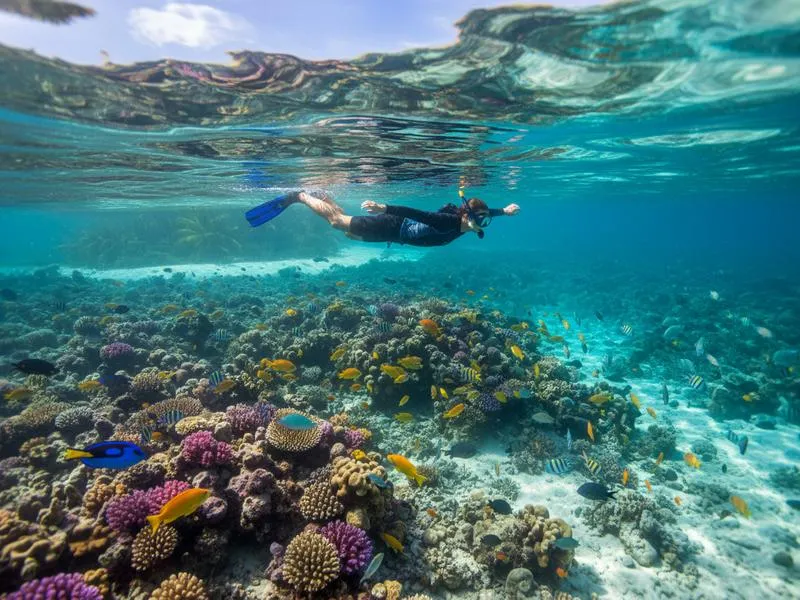
The best time to visit Cozumel is November or February if you want the strongest mix of clear water, dry weather, and easy snorkeling or diving. May is the best budget month, and September is the worst month because hurricane risk is highest.
Cozumel is a 49-kilometer island off Mexico’s Yucatan Peninsula on the Mesoamerican Barrier Reef. Unlike Playa del Carmen, Cancún, or Tulum, Cozumel’s west-facing shore is structurally protected from most sargassum, which makes it one of the most reliable Caribbean beach and dive trips in Mexico.
If you only remember one rule, make it this: skip September unless you’re comfortable gambling with hurricane season.
Cozumel in 30 Seconds
| If you want… | Go in… | Why |
|---|---|---|
| Best overall weather + water clarity | November or February | Dry season, calm seas, excellent visibility |
| Best value | May | Lower hotel rates, lighter crowds, still good water |
| Bull shark diving | January-February | Peak aggregation and strongest visibility |
| Lowest prices | September | Cheap for a reason, hurricane risk is highest |
| Best month to avoid | September | Storm risk, closures, rough seas |
At a Glance: Cozumel by Month
| Month | Weather | Diving | West Coast Beach | Crowds | Prices | Rating |
|---|---|---|---|---|---|---|
| January | ☀️ Perfect | Excellent | ✅ Clear | High | High | ⭐⭐⭐⭐ |
| February | ☀️ Perfect | Excellent | ✅ Clear | High | High | ⭐⭐⭐⭐⭐ |
| March | ☀️ Hot & dry | Very good | ✅ Clear | Very high | Peak | ⭐⭐⭐⭐ |
| April | ☀️ Hot | Good | ✅ Clear | Very high | Peak | ⭐⭐⭐ |
| May | 🌤️ Warm | Good | ✅ Clear | Low | Lower | ⭐⭐⭐⭐ |
| June | ⛅ Warm/rainy | Good | ✅ Clear | Low | Low | ⭐⭐⭐ |
| July | 🌧️ Humid | Fair | ✅ Clear | Moderate | Low | ⭐⭐⭐ |
| August | 🌧️ Humid | Fair | ✅ Clear | Moderate | Low | ⭐⭐⭐ |
| September | ⛈️ Hurricane | Variable | ✅ Clear* | Very low | Lowest | ⭐ |
| October | 🌤️ Improving | Good | ✅ Clear | Low | Low | ⭐⭐⭐ |
| November | ☀️ Perfect | Excellent | ✅ Clear | Moderate | Moderate | ⭐⭐⭐⭐⭐ |
| December | ☀️ Perfect | Excellent | ✅ Clear | High | High | ⭐⭐⭐⭐ |
*West coast sargassum-free year-round — see below for the full explanation.
Why Cozumel’s West Coast Is Always Clear
This is the single most important thing to know about timing your trip: sargassum does not affect Cozumel’s west coast.
Atlantic current and wind patterns push seaweed from open ocean onto east-facing shores — which is why Tulum, Playa del Carmen, and Cancún’s Hotel Zone beach face a sargassum season from roughly April through October. Cozumel’s western shore faces the protected inner Caribbean, not the Atlantic. Sargassum deposits on the island’s east coast, which faces the open ocean, but tourists rarely swim there — the waves are rough and there are no facilities.
The practical result: when your PDC hotel messages you that “sargassum is manageable this week,” Cozumel’s dive shops are operating in 25-meter visibility with no seaweed in sight.
Peak Season: November–April (Dry Season)
The dry season brings the clearest water, calmest seas, and most reliable sunshine. This is when Cozumel performs at its best — and when it’s most expensive.
November: Best Value of the Year
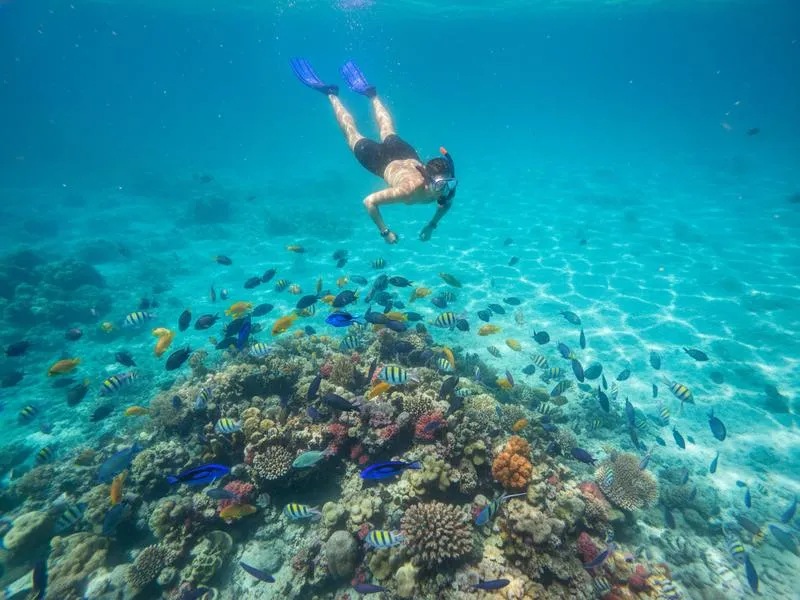
November is the secret. Hurricane season statistically ends by early November, prices drop 25-40% from December levels, and conditions are nearly identical to the peak months. The bull sharks begin arriving (see Wildlife section below). Crowds are light compared to what’s coming. Water temperature sits at a comfortable 27-28°C.
The only catch: early November still carries a small hurricane risk (the season officially ends November 30). Check forecasts before booking and consider travel insurance — travel insurance covers Caribbean hurricane disruption.
December–January: Peak Holiday Season
The Christmas-to-New-Year window is Cozumel’s absolute peak: prices at maximum, dive boats fully booked weeks in advance, and the island buzzing with visitors. The conditions justify it — 30-40 meter visibility, bull sharks in full force by January, sea temperature around 26-27°C, and almost zero rain.
Book Christmas week accommodation 2-3 months ahead. Dive operators fill fast.
January highlight: After January 6 (Día de Reyes), prices drop sharply. January 7-31 is one of the best-value windows of the year — peak diving conditions at significantly lower prices than the holiday period.
February: The Prime Month
February consistently delivers the best combination of conditions, wildlife, and weather. The bull shark aggregation peaks. Water clarity is exceptional. Carnival (Mazatlán and Veracruz celebrate it big in mid-February) draws visitors away from Cozumel, keeping crowds surprisingly manageable.
For serious divers, February is the month to plan around. Book dive packages rather than day-by-day to secure guide availability.
March–April: Spring Break & Easter
March brings spring break in waves — US college students arrive in force from mid-March through early April. The conditions remain excellent, but dive boats are more crowded, some sites see reduced visibility from boat traffic, and beach clubs charge peak prices. Semana Santa (Easter week — March 29 to April 5 in 2026) adds Mexican domestic travel to the mix.
If you’re visiting in late March or April, book everything at least 6-8 weeks ahead. Particularly if diving — PADI instruction has limited slots in spring break season.
Ley Seca (Good Friday): Alcohol sales are banned island-wide on Good Friday (April 3, 2026). Stock up Thursday.
Shoulder Season: May–June (Pre-Hurricane, Pre-Crowd)
May: Underrated Month
May is genuinely excellent and largely overlooked. Spring break crowds have gone home, prices drop 20-30% from April, the dry season holds through most of the month, and sea turtle nesting begins at Punta Sur’s beach (May-October season). Water temperature rises to 27-28°C — ideal for snorkeling.
The trade-off: occasional brief showers begin in late May, and diving visibility drops slightly from the March-April peak (still 20-25m, excellent by any standard).
June: Whale Shark Season Starts — But Not Here
A common misconception: whale sharks are at Holbox Island and Isla Mujeres from June through September, not at Cozumel. If whale shark swimming is a priority, Cozumel isn’t the base for that — plan a day trip to Holbox or Isla Mujeres from Cancún.
What June does offer in Cozumel: lower prices, sea turtle nesting underway, bioluminescence starting to activate in some lagoons, and diving conditions that remain solid before the summer plankton bloom reduces visibility further.
Low Season: July–October
July–August: Hot, Humid, But Functional
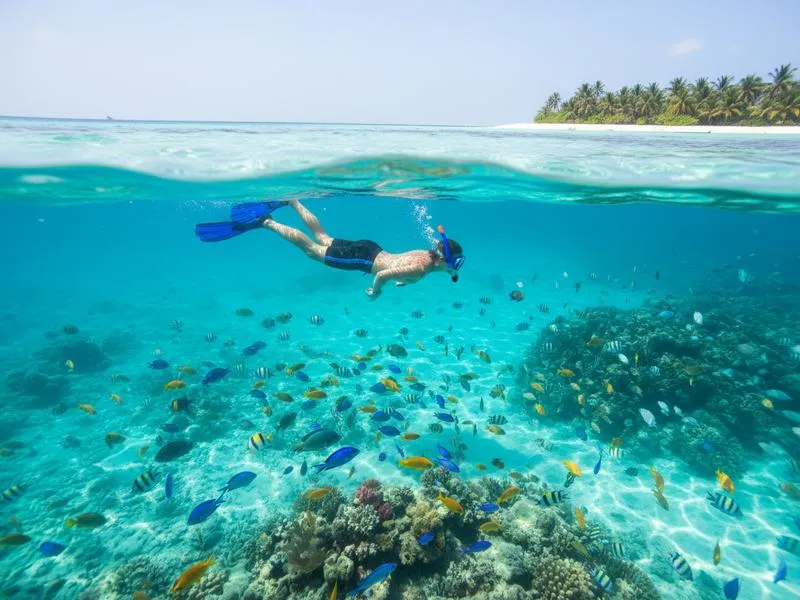
The Caribbean rainy season brings afternoon showers (typically 2-4 hours, then sunshine returns) rather than all-day rain. Mornings are usually clear — important since most diving and snorkeling is in the morning. Temperatures hit 32-35°C, humidity is high, and the water reaches 29-30°C (warm but not uncomfortable).
Diving visibility drops to 15-20 meters as plankton blooms increase — still good by global standards, but noticeably less than dry season. Sea turtle nesting continues through October; night turtle tours at Punta Sur are available from certified operators.
Prices in July-August are 30-40% below peak season — good value if you’re budget-conscious and don’t need the best visibility.
September: Skip It
This is the only month we’d genuinely recommend avoiding. September is peak Atlantic hurricane season. Hurricane Wilma (October 2005) made Category 5 landfall and caused catastrophic damage. Hurricane Emily (July 2005) hit Cozumel directly. The island is in a high-risk corridor.
Prices hit their lowest point in September — but that’s not a deal worth taking. Many restaurants close, dive operators reduce operations, and a developing storm can trap you on the island. Book elsewhere.
October: Cautiously Good
Hurricane risk drops sharply after mid-October. The second half of October is increasingly popular with divers who know the timing: prices are still low (lowest of the dry season approaches), conditions are beginning to improve, and by late October the bull sharks start arriving early.
Monitor NOAA hurricane forecasts. If clear, late October is a genuine opportunity. The Art Walk in San José del Cabo (not Cozumel, but worth noting for Baja trips) signals the start of shoulder season across Mexico’s coastal destinations.
Wildlife Calendar
| Species | Season | Best Spot | Notes |
|---|---|---|---|
| Bull sharks | November–March | Playa del Carmen north tip / Cozumel north | Peak Jan-Feb, dozens aggregate |
| Sea turtles (nesting) | May–October | Punta Sur beach | Night tours with certified guides |
| Nurse sharks | Year-round | Palancar, Colombia | Common on reef dives |
| Eagle rays | Year-round (peak Dec-Mar) | Santa Rosa Wall, Palancar | Often in large groups |
| Whale sharks | June–September | Isla Mujeres / Holbox — NOT Cozumel | Day trip from Cancún required |
| Hawksbill turtles | Year-round | Palancar Gardens, El Cielo | Common on dives and snorkel |
| Moray eels | Year-round | Most reef sites | Often visible in crevices |
| Spotted eagle rays | October–March | Columbia Shallow | Seasonal aggregations |
Diving Conditions by Month
Visibility by Month
| Month | Visibility | Water Temp | Conditions |
|---|---|---|---|
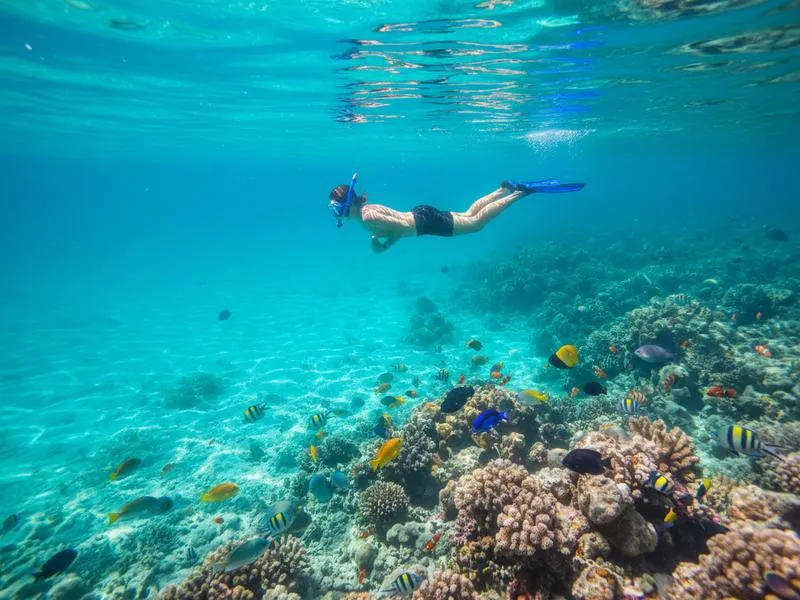
| November–April | 25-40m | 26-27°C | Excellent — current-swept channels active |
| May–June | 20-28m | 27-28°C | Very good — calm, pre-plankton |
| July–August | 15-22m | 29-30°C | Good — afternoon plankton reduces clarity |
| September–October | 15-25m | 29°C | Variable — storm-stirred water possible |
Bull Shark Diving (November–March)
This is Cozumel’s most extraordinary seasonal offering. Bull sharks, typically considered the most aggressive shark species, aggregate in significant numbers around Cozumel’s northern reefs for mating and feeding season. Dives typically involve descending to 15-25 meters and kneeling on sand while a certified shark-feeding divemaster manages proximity.
Seeing 20-40 bull sharks in a single dive is normal in January and February. The experience is controlled and has a strong safety record — but it’s genuinely adrenaline-inducing. Most dive operators offer this as a specialty dive requiring Open Water certification minimum.
Book ahead: Bull shark dives sell out 1-2 weeks in advance in January and February.
Sea Turtle Nesting (May–October)
Punta Sur Ecological Park beach is a protected nesting site for hawksbill and loggerhead sea turtles. Night tours with certified biologist guides are available June through September — you can watch females come ashore to lay eggs, or see hatching events. Entry to Punta Sur costs 220 MXN ($11 USD).
Cozumel vs. Playa del Carmen vs. Cancún: Best Month Comparison
| Month | Cozumel | Playa del Carmen | Cancún Hotel Zone |
|---|---|---|---|
| Dec–Feb | ✅ Ideal | ✅ Ideal | ✅ Ideal |
| March | ✅ Excellent | ✅ Good | 🟡 Crowded (spring break) |
| April | 🟡 Crowded | 🔴 Sargassum begins | 🔴 Sargassum + spring break |
| May–Jun | ✅ Quiet, good | 🔴 Sargassum moderate | 🔴 Sargassum building |
| Jul–Aug | 🟡 Hot/rainy | 🔴 Sargassum peak | 🔴 Sargassum peak |
| September | 🔴 Hurricane | 🔴 Hurricane | 🔴 Hurricane |
| October | 🟡 Improving | 🟡 Improving | 🟡 Improving |
| November | ✅ Best value | ✅ Good | ✅ Good |
Cozumel outperforms both for April through September specifically because the west coast is sargassum-free. This is a structural advantage, not just a good year.
Weather by Month
| Month | Avg High | Avg Low | Rain Days | Humidity | Water Temp |
|---|---|---|---|---|---|
| January | 29°C (84°F) | 22°C | 3 | Low | 26°C |
| February | 29°C (84°F) | 22°C | 2 | Low | 26°C |
| March | 31°C (88°F) | 23°C | 2 | Low-medium | 27°C |
| April | 32°C (90°F) | 24°C | 3 | Medium | 27°C |
| May | 32°C (90°F) | 25°C | 6 | Medium | 28°C |
| June | 33°C (91°F) | 26°C | 12 | High | 29°C |
| July | 33°C (91°F) | 26°C | 14 | High | 29°C |
| August | 33°C (91°F) | 26°C | 14 | High | 30°C |
| September | 32°C (90°F) | 25°C | 16 | High | 29°C |
| October | 31°C (88°F) | 24°C | 10 | Medium | 28°C |
| November | 30°C (86°F) | 23°C | 5 | Low-medium | 27°C |
| December | 29°C (84°F) | 22°C | 4 | Low | 26°C |
Prices by Season
| Period | Hotel Range | Notes |
|---|---|---|
| Christmas–New Year (Dec 20–Jan 3) | $120-350/night | Peak of peak — book months ahead |
| January 7–February | $90-220/night | Excellent diving at reasonable prices |
| March–April (Spring Break) | $110-280/night | Price premium + busy |
| May | $70-180/night | Best shoulder value |
| June–August | $60-160/night | Low season savings |
| September | $45-120/night | Cheapest — not recommended |
| October | $60-150/night | Late Oct is the sleeper value window |
| November | $80-200/night | Best overall value month |
Best Time by Travel Style
| Travel Style | Best Month | Why |
|---|---|---|
| First-time divers | November–February | Best visibility, instructors less rushed |
| Bull shark diving | January–February | Peak aggregation |
| Snorkeling only | November–May | Maximum visibility, calm seas |
| Budget travel | May or November | Good conditions at reduced prices |
| Sea turtle nesting | June–August | Night tours with biologist guides |
| Avoiding crowds | May or November | Shoulder season sweet spots |
| Families | November–March | No rain, calm water, clear snorkel |
| Honeymooners | November or February | Romantic without spring break chaos |
| Advanced divers | December–February | Bull sharks + best wall visibility |
| Day trip from PDC | Any dry season month | 35-min ferry, west coast always clear |
Best Time for Key Activities
| Activity | Best Season | Notes |
|---|---|---|
| Palancar Wall diving | November–April | 30-40m visibility |
| Bull shark dives | November–March | Peak January–February |
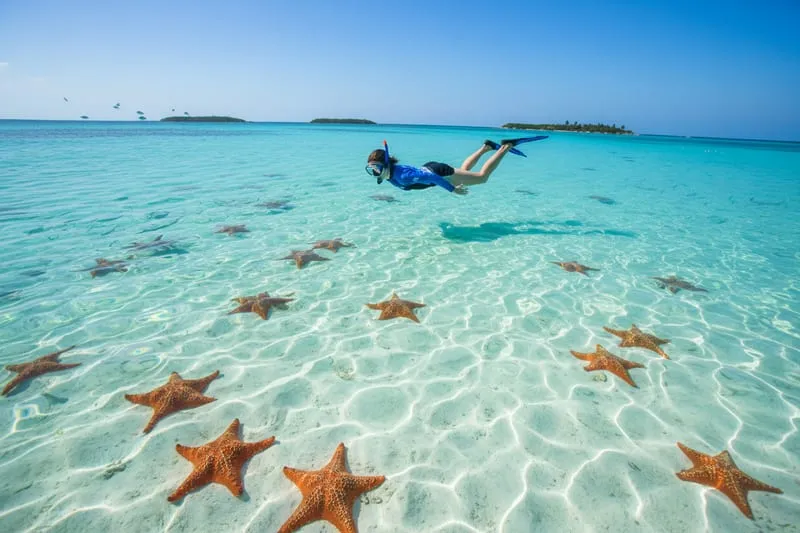
| El Cielo starfish snorkel | Year-round | Works in any conditions |
| Santa Rosa Wall | November–March | Best current conditions |
| Sea turtle night tour | June–September | Punta Sur, guided only |
| San Gervasio ruins | Year-round (morning) | Heat manageable before noon |
| East coast road trip | November–April | Safer driving, no storm surge |
| Punta Sur lighthouse | Year-round | Crocodile lagoon always accessible |
| San Miguel food/nightlife | Year-round | Best vibe October–April |
| PADI certification | November–April | Best visibility for skills development |
Getting There: Ferry vs. Flight Timing
Ferry from Playa del Carmen: 35-45 minutes, 250-280 MXN (~$13-14 USD) each way. Runs roughly every 90 minutes, 6 AM–10 PM. In peak season (December–April), book the return ferry loosely — boats run frequently and rarely sell out except Christmas week.
CZM Airport direct flights: Multiple US cities (Dallas, Houston, Chicago, Atlanta) offer direct flights. Flying directly avoids the PDC transfer entirely — useful if you’re spending 3+ nights on the island. Check prices: sometimes direct CZM flights are cheaper than CUN + ferry when factoring in transfer time and cost.
From Cancún: Take ADO bus from CUN airport to PDC (232 MXN, 1 hour) then ferry. Or arrange a private transfer from Cancún to the PDC ferry pier (1-1.5 hours, $50-70 USD).
Common Timing Mistakes to Avoid
- Assuming Cozumel has the same sargassum problem as Playa del Carmen or Tulum. The west coast usually stays clear even when the mainland is messy.
- Booking September just because the hotel is cheap. This is the one month where the discount usually reflects real weather risk.
- Planning bull shark dives outside winter. November through March is the real window, with January and February strongest.
- Treating spring break like a normal shoulder-season trip. March and early April can be much busier than first-timers expect.
- Waiting too long to book Christmas, New Year, or Easter week. Cozumel is small, and the best hotels and dive boats fill quickly.
Practical Planning by Month
Book these in advance regardless of month:
- Bull shark dives (November–March): 1-2 weeks minimum, up to a month in January-February
- PADI certification courses: 3-5 days, limited instructor slots
- Christmas week accommodation: 2-3 months minimum
- Easter week: 6-8 weeks minimum
Travel insurance: Given the hurricane risk from June through October, travel insurance that covers trip interruption and medical care is worth having for any summer or fall Cozumel trip.
Rental vehicles: Golf carts are the standard way to explore the island — 600-900 MXN/day. Book through your hotel or → RentCars for scooter/car options. Prices barely fluctuate seasonally.
Viator tours: → Browse Cozumel tours — bull shark dives, snorkel tours, Punta Sur combo trips, and night turtle tours all available.
Related Guides
- Cozumel Travel Guide 2026 — comprehensive island overview
- Things to Do in Cozumel — 25 activities ranked
- Best Time to Visit Playa del Carmen — the sargassum guide
- Best Time to Visit Cancún — Hotel Zone timing
- Best Time to Visit Tulum — southeast sargassum reality
- Riviera Maya Travel Guide — full 130km coast breakdown
- Best Time to Visit Mexico — national month-by-month overview