Things to Do in Cozumel 2026: 25 Best Activities, Diving & Day Trips
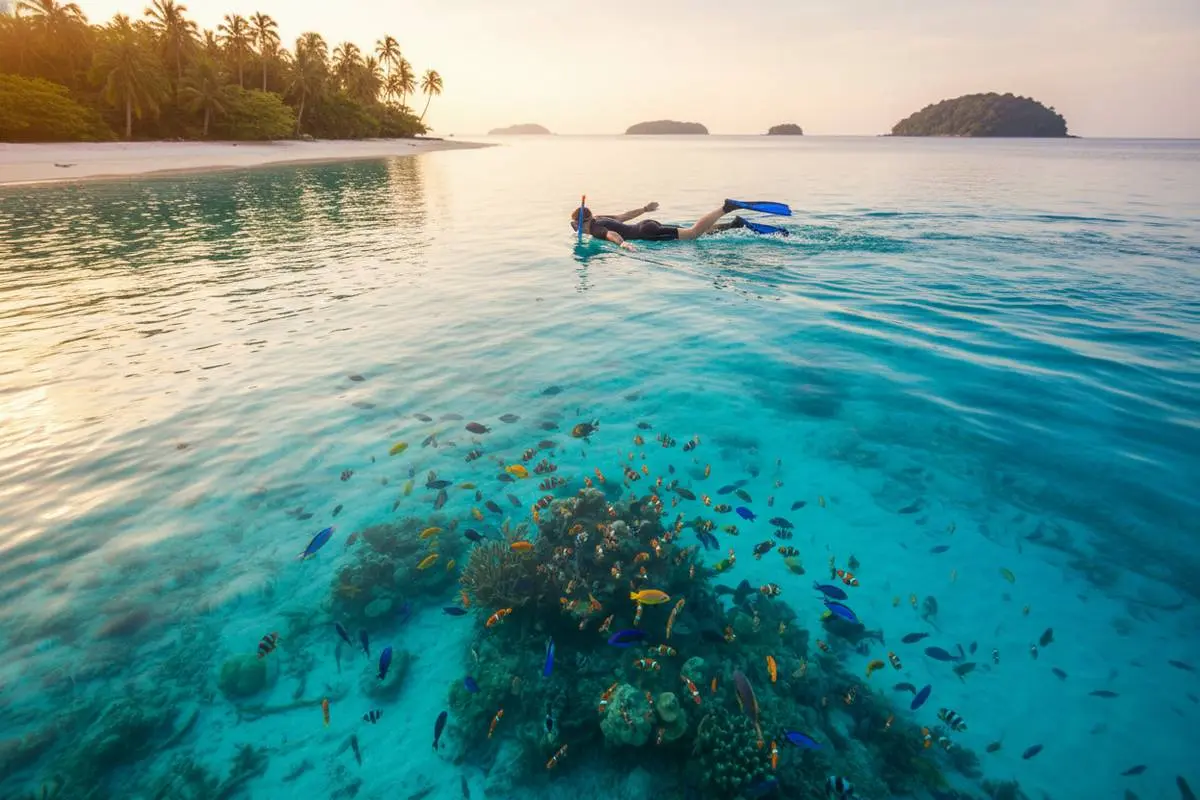
Cozumel is a 49-kilometer-long island off Mexico’s Yucatan Peninsula — home to some of the world’s best scuba diving on the Mesoamerican Barrier Reef, a Maya ruins site dedicated to the fertility goddess Ixchel, a crocodile lagoon, sea turtle nesting beaches, and a downtown waterfront that functions well as a day-trip base. The island sees over 3 million cruise ship passengers per year, plus significant independent traveler traffic drawn specifically by the reef.
This guide covers the 25 best things to do in Cozumel — organized by category, with honest cost information, timing tips, and the context most guides skip.
Things to Do in Cozumel: Quick Overview
Updated for 2026, this Cozumel guide prioritizes the island’s highest-value activities instead of listing every possible tour. If you only have one day in Cozumel, choose one reef activity, one inland or south-island stop, and a short walk through San Miguel. Divers should book Palancar or Santa Rosa Wall first, snorkelers should choose El Cielo or Colombia Shallows, and non-water travelers should build the day around San Gervasio, Punta Sur, the east coast road, and a west-coast beach club.
Cozumel in 30 Seconds
| Best for | Top Cozumel pick | Time needed | Typical cost |
|---|---|---|---|
| First-time snorkelers | El Cielo starfish snorkel | 2-3 hours | $25-40 |
| Certified divers | Palancar Reef or Santa Rosa Wall | Half day | $50-80 per dive |
| History | San Gervasio Maya ruins | 2-3 hours | $12-15 |
| Nature | Punta Sur Ecological Park | Half day | $16-18 |
| Cruise passengers | Snorkel tour + San Miguel walk | 4-6 hours | $30-60 |
| Beach day | West-coast beach club | Half day | $25-90 |
Activity Overview
| # | Activity | Category | Cost (USD) | Time |
|---|---|---|---|---|
| 1 | Palancar Reef scuba diving | Diving | $50–80/dive | 2 dives = half day |
| 2 | Santa Rosa Wall drift dive | Diving | $50–80/dive | Half day |
| 3 | Columbia Wall (advanced) | Diving | $60–90/dive | Half day |
| 4 | PADI Open Water Certification | Diving | $400–550 | 3–4 days |
| 5 | Palancar Caves cavern dive | Diving | $60–90/dive | Half day |
| 6 | El Cielo starfish snorkel | Snorkeling | $25–40/tour | 2–3 hrs |
| 7 | Colombia Shallows snorkel | Snorkeling | $30–45/tour | 2–3 hrs |
| 8 | 3-site snorkel combo tour | Snorkeling | $35–50/tour | 3–4 hrs |
| 9 | San Gervasio Maya Ruins | History | $12–15 | 2–3 hrs |
| 10 | Cozumel Museum of the Island | History | $5 | 1.5 hrs |
| 11 | Punta Sur Ecological Park | Nature | $16–18 | Half day |
| 12 | East coast Carretera drive | Nature | Scooter $35–45/day | 1–2 hrs |
| 13 | Playa Chen Rio (east coast) | Beach | Free | Half day |
| 14 | Mr. Sanchos Beach Club | Beach Club | $30–60 day pass | Half day |
| 15 | Paradise Beach Club | Beach Club | $25–50 day pass | Half day |
| 16 | Playa Mia Grand Beach Park | Beach Club | $40–70 all-inclusive | Full day |
| 17 | San Miguel downtown walk | Culture | Free | 1–2 hrs |
| 18 | Mercado Municipal food hall | Food | $5–10 | 1 hr |
| 19 | Fresh lobster dinner | Food | $25–45 | 1.5 hrs |
| 20 | Sportfishing (half day) | Adventure | $120–200/person | 4–5 hrs |
| 21 | Kayaking + paddleboarding | Adventure | $20–35/hr | 2–3 hrs |
| 22 | Glass-bottom boat tour | Adventure | $30–45/person | 1.5–2 hrs |
| 23 | ATV island tour | Adventure | $60–90/ATV | 3–4 hrs |
| 24 | Sunset catamaran cruise | Experience | $55–80/person | 2–3 hrs |
| 25 | Sea turtle encounter (May–Oct) | Nature | $40–70/tour | 2–3 hrs |
Scuba Diving: The Reason Most People Come
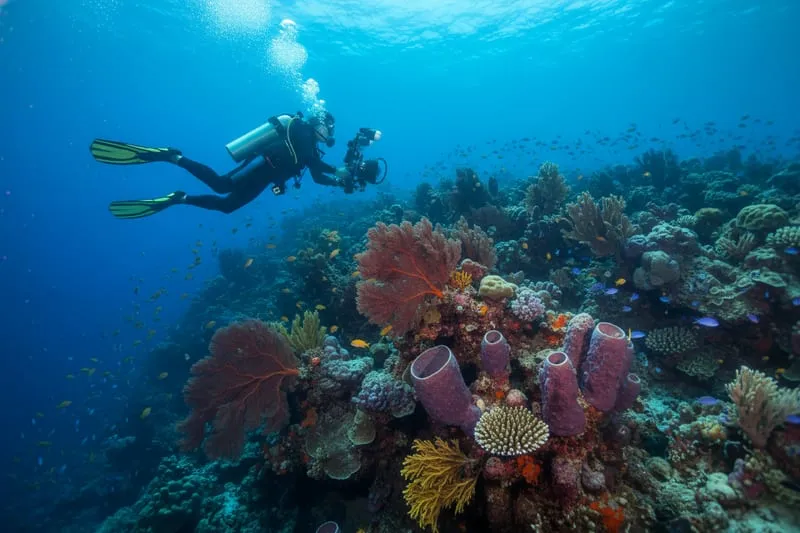
Cozumel’s diving reputation is not marketing. The Mesoamerican Barrier Reef — the second-largest coral reef system on earth — runs along the island’s western coast, and Cozumel’s specific section has three qualities that make it exceptional: extraordinary visibility (30–40 meters on good days), consistent west-to-east currents that enable effortless drift diving, and minimal boat traffic pollution compared to other Caribbean sites.
1. Palancar Reef — The Signature Dive
Palancar is Cozumel’s most famous site and justifiably so. It’s actually a series of systems: Palancar Gardens (shallow, 10-20m, enormous coral heads ideal for photography), Palancar Caves (cavern sections, intermediate), and Palancar Deep (wall dropping past 40m, advanced). The Gardens section is also Cozumel’s best snorkel site — 3-8m depth with visibility that seems impossible.
Cost: ~$50–80 USD for a 2-tank dive including equipment. Most dive operators run two-tank morning trips (departures 8–9 AM).
2. Santa Rosa Wall — The Drift Dive
Santa Rosa is one of the top 10 drift dives in the world. The current carries you effortlessly along a wall covered in black coral, sponges, sea fans, and the constant movement of reef fish. Eagle rays and sea turtles are common sightings. Depth range 10-30m, suitable for Open Water certified divers.
Tip: Book with an operator who checks the current before going — Santa Rosa requires a real current to deliver the experience. Zero-current days are disappointing.
3. Columbia Wall — Advanced Divers Only
Columbia Wall is the most dramatic Cozumel site for experienced divers: a vertical drop to 70+ meters, with tunnels, overhangs, and the widest variety of marine life on the island. Not appropriate for new Open Water divers. Requires Advanced or Rescue certification with logged deep dives.
4. PADI Open Water Certification
Cozumel is one of the best places in the world to get certified. The conditions are ideal (calm, warm, exceptional visibility), the reef provides motivation, and competition among dive shops keeps prices competitive.
Cost: $400–550 USD for PADI Open Water (3.5–4 days: 1 pool session, 4 open water dives). Shops to consider: Dive House, Deep Blue, Studio Blue — compare prices and group size (smaller = better). Complete your eLearning (online theory) before arriving to save a day.
5. Night Diving at Palancar
Cozumel’s reef transforms at night. Octopus emerge, sleeping parrotfish glow in their mucus cocoons, and the bioluminescence in the water lights up around your fins. Not something most guides mention — ask your dive operator about night dives specifically (usually $50–70 USD, 1 tank, departs 6–7 PM).
Snorkeling: World-Class Without Getting Certified
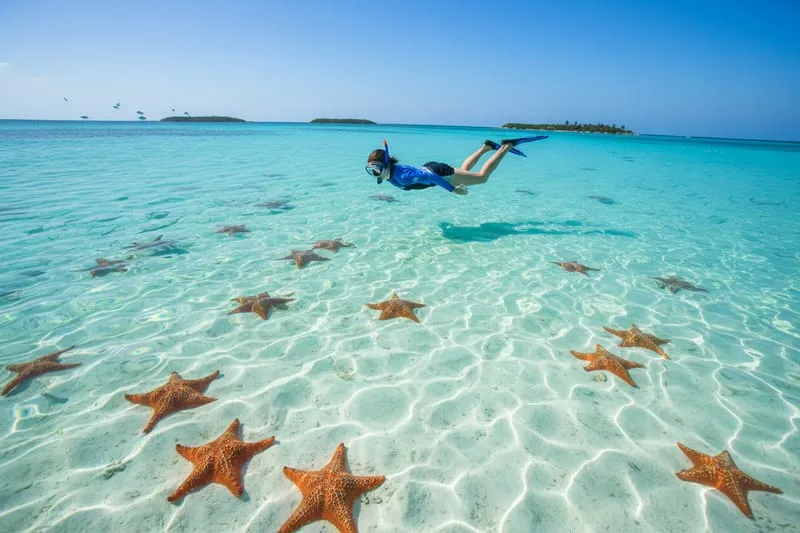
Cozumel’s west coast snorkeling is some of the best in Mexico. Water clarity of 20-30+ meters makes snorkel sites feel like aquariums. No strong currents in the shallow snorkel zones. Water temperature 26–29°C year-round.
6. El Cielo (The Sky) — Best for First-Timers
A shallow sandy lagoon (3–5m depth) carpeted in large starfish and gentle reef fish. The name refers to what you see looking up through the water: a blue sky effect. No current, no waves, completely calm. This is the snorkel site to take non-swimmers or anxious snorkelers — the conditions are as gentle as any in the Caribbean.
Cost: $25–40 USD as part of a combo snorkel tour (most tours include 2–3 sites). El Cielo by boat from the pier takes 15-20 minutes.
Important: Do not pick up or disturb the starfish. They are a protected species and stressed animals are visibly lighter in color. Multiple operators have been cited for allowing tourists to handle them — choose one that doesn’t.
7. Colombia Shallows — Coral Garden Snorkel
The shallow section above the deeper Palancar system. Coral heads, tropical fish in extraordinary numbers, and the chance of spotting a sea turtle or nurse shark in the shallower zones. Depth 3–10m. Better for experienced snorkelers comfortable in open water.
8. Three-Site Combo Snorkel Tour
Standard offering from most operators: 3 sites in 3–4 hours, usually El Cielo + Colombia Shallows + one additional site. Equipment and guide included. Departs from the pier area or from beach access points.
Book independently: Buy snorkel tours at the pier from local operators (Aqua Safari, Fury Cozumel, Blue Magic) at $35–50 USD. Cruise ship excursion versions of identical tours often cost $80–120 USD. The boats and reefs are the same.
San Gervasio Maya Ruins
9. San Gervasio — Cozumel’s Only Ruins Site
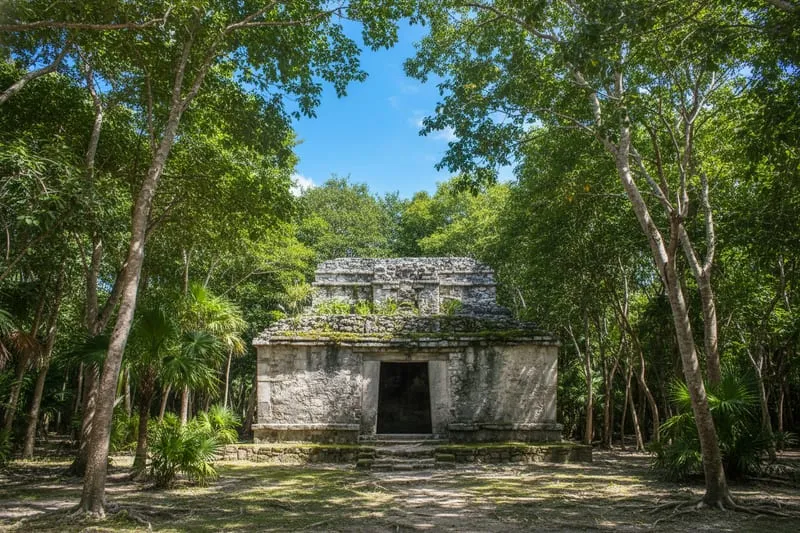
San Gervasio is the only Maya archaeological site on Cozumel, and it has a compelling backstory: this was one of the most important pilgrimage sites in the Maya world, dedicated to Ixchel — goddess of fertility, medicine, the moon, and weaving. For centuries, Maya women from across the Yucatan Peninsula made the ocean crossing to Cozumel to seek Ixchel’s blessing, particularly for fertility and safe childbirth.
The site covers 6 structures spread across jungle pathways: the main temple complex (Las Manitas — marked by handprint petroglyphs), the El Cedral structure, Ka’na Na’ah, and the Nohoch Na temple with its arched doorway. Not Chichen Itza in scale, but historically significant and genuinely atmospheric.
Practical details:
- Entry fee:
180–200 MXN ($10–11 USD) at the gate, plus 70 MXN parking - Hours: 8 AM – 4 PM daily
- Time needed: 1.5–2.5 hours including the full loop
- Getting there: 7 km north of San Miguel. Taxi: 150–200 MXN each way. Rented scooter: park at the entrance.
- Guide: Unofficial guides wait at the entrance (200–400 MXN) and add significant context — recommended.
Tip: Visit mornings before the cruise ship taxis arrive. By 10:30 AM the site becomes crowded. 8–9 AM is peaceful.
10. Museo de la Isla de Cozumel
Located on Cozumel’s main waterfront avenue (Rafael Melgar), this two-floor museum covers the island’s natural history (reef ecosystems, endemic species), pre-Hispanic history (Maya, Spanish contact), and the colonial/modern period. Small but well-curated. Entry: ~$7 USD. 1–1.5 hours.
Punta Sur Ecological Park
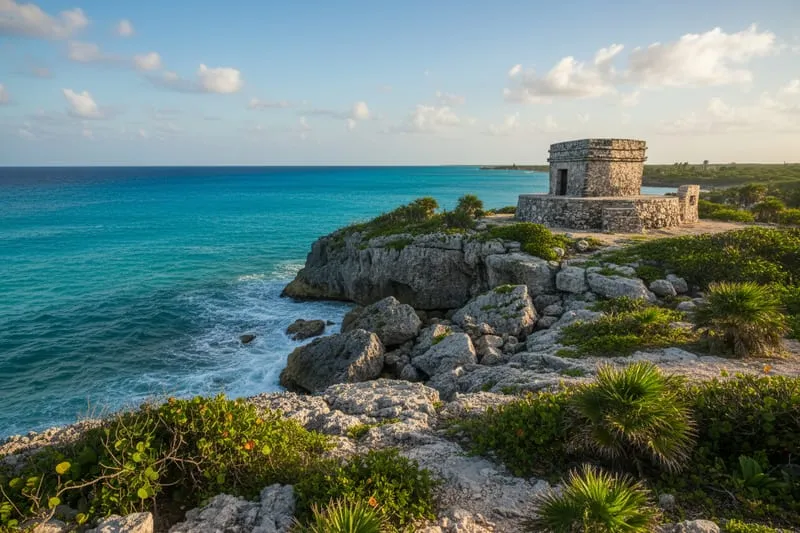
11. Punta Sur — Cozumel’s Wild Southern Tip
Punta Sur is Cozumel’s largest undeveloped area — 1,000+ hectares of mangroves, lagoons, and Caribbean coast — and one of the most undervisited attractions on the island. Entry: ~$16–18 USD.
What’s inside:
Colombia Lagoon (crocodile lagoon): Take the boat tour across the lagoon where American crocodiles (2–3 meters) rest on banks or float near the mangrove edge. Morning tours have the best sightings.
El Caracol Maya Lighthouse: A small circular Maya structure built to produce a sound through wind holes when the northeast wind blows — functioned as an acoustic lighthouse for canoes navigating the reef passage. 1,000 years old and still acoustically functional on the right days. The observation deck above has one of the best views in Cozumel: reef, open Caribbean, and the lagoon behind.
Sea turtle nesting (May–October): Punta Sur’s beaches are primary nesting sites for hawksbill and loggerhead turtles. Dawn visits during nesting season (check with the park) sometimes offer the chance to watch nesting females or hatchlings.
Frigate bird colony: The Faro Celarain lagoon area hosts a colony of magnificent frigate birds. The males’ red throat pouches inflate during breeding season (December–April).
Practical: Rent a scooter for the day ($35–45 USD) — Punta Sur is 19 km from the cruise pier. First bus tour to Punta Sur departs late morning; arrive at 8 AM by scooter and have the crocodile lagoon almost to yourself.
East Coast Drive
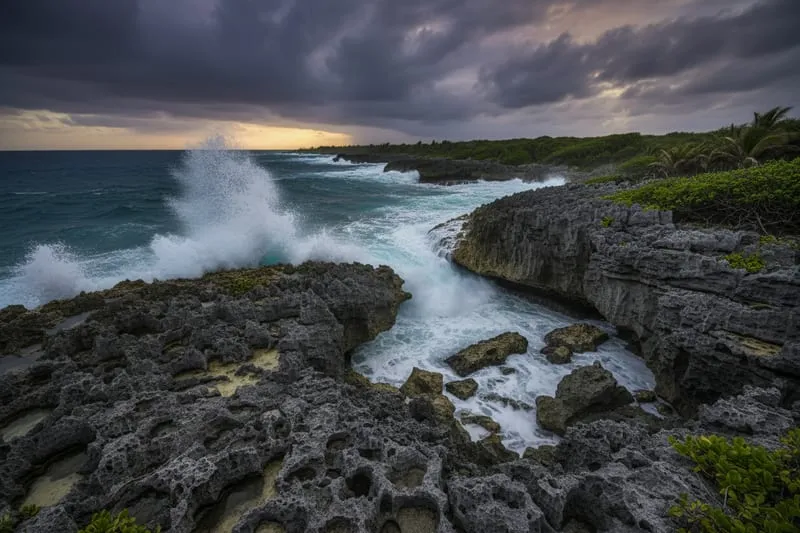
12. East Coast Carretera — Raw Cozumel
The Carretera Costera runs 45 km along Cozumel’s eastern Atlantic coast. No hotels. No beach clubs. Strong waves and rip currents (most spots not safe for swimming). What it delivers is a completely different version of the island: wild, undeveloped, and surprisingly dramatic for the Caribbean.
The east coast is best done by scooter — you cover the full distance in 1–2 hours with stops. Playa Chen Rio (km 23) is the exception — a protected rocky cove where swimming is relatively safe, with a small restaurant (fish tacos, beer). The only reliable east-coast swimming spot.
Playa Bonita has a small beach bar with hammocks. Mezcalito’s at the north end of the east coast road is an institution — cold beer, fresh fish, zero pretension, open to the Atlantic.
13. Playa Chen Rio
The east coast’s only reliable swimming beach. Protected rocky cove breaks the Atlantic swell. Calm enough for adults and older children. Small restaurants serve fresh fish and cold drinks. Free entry; parking available.
Beach Clubs
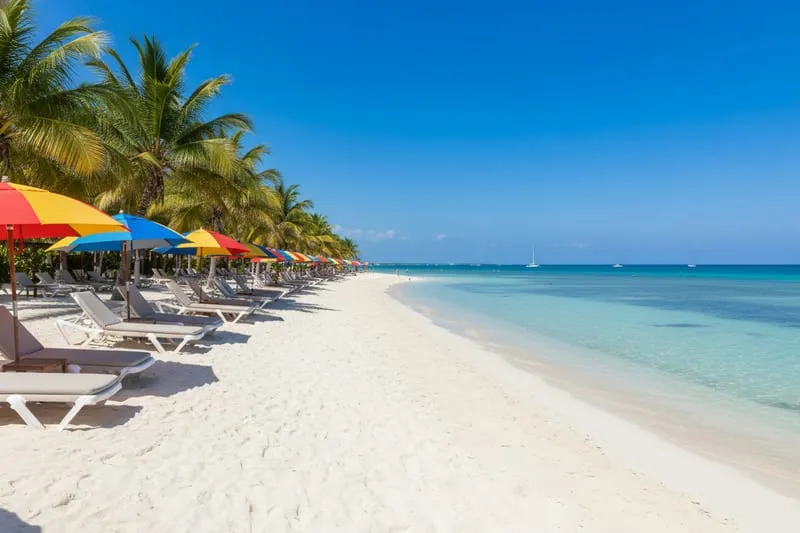
Cozumel’s west coast beach clubs are on the sargassum-free protected side of the island. The water is genuinely, reliably clear and calm — this is what the Caribbean is supposed to look like.
14. Mr. Sanchos Beach Club
The most popular beach club in Cozumel. Snorkel gear, kayaks, paddleboards, and a pool included with the day pass. All-inclusive add-on available. Shuttle from the pier. Day pass: $35–55 USD (covers food/drink credit); all-inclusive: $65–90. Busy on cruise ship days; arrive early for chairs.
15. Paradise Beach Club
Good balance between value and facilities. Trampolines in the water, hammocks, snorkel equipment rental, friendly staff. Less crowded than Mr. Sanchos on most days. Day pass: $25–45 USD minimum consumption.
16. Playa Mia Grand Beach Park
The largest beach park on the island — waterslides, trampolines, kayaks, snorkeling, beach volleyball, pool. Best option for families with children or cruise passengers who want an activities-focused day. All-inclusive day pass: $55–80 USD. Located 5 km from the pier.
San Miguel de Cozumel: Town Life
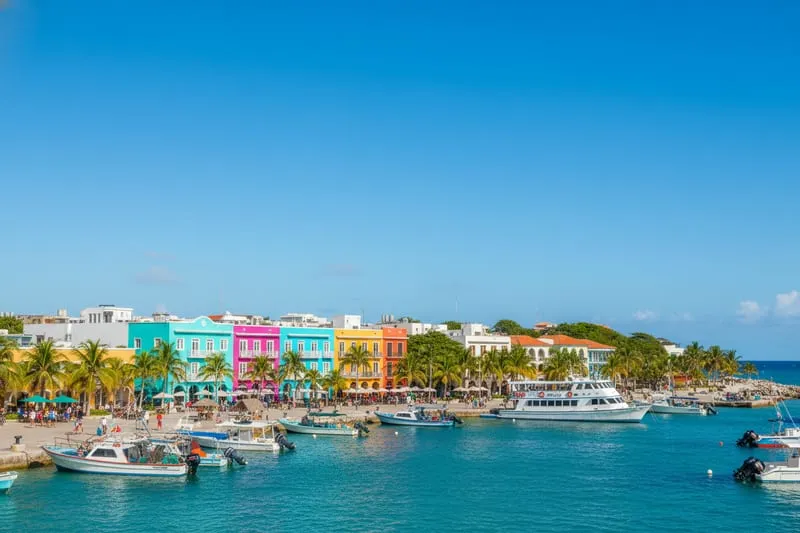
17. San Miguel Waterfront Walk
San Miguel is Cozumel’s only town and it functions as one. The main waterfront avenue (Rafael Melgar) runs along the cruise pier and has dive shops, restaurants, and the small ferry terminal. Two blocks inland is the real town: Benito Juárez park (the main plaza), the church, and the neighborhood life that continues regardless of how many cruise ships are in port.
The waterfront sculpture walk runs south from the pier — 20+ bronze figures by local artist Octavio González. Free. Takes 30 minutes at a stroll.
Evenings: The plaza fills up. Street food vendors set up. Families walk. The transformation from tourist infrastructure to local town happens quickly once you’re 3 blocks from the waterfront.
18. Mercado Municipal
Cozumel’s indoor market — local produce, prepared food stalls, fresh juice, and a genuine glimpse at how Cozumelenses actually eat. Fish tacos: 30–50 MXN. Breakfast: $3–6 USD. Two blocks from the waterfront, consistently overlooked by cruise passengers who eat at pier restaurants.
Food Guide
19. Fresh Lobster — November to July
Cozumel has a lobster fishing community, and the season (November–July) means fresh lobster at prices that would be remarkable anywhere else: $20–40 USD for a full lobster dinner at a local restaurant. Avoid the off-season (August–October) — frozen or imported.
Recommended: El Capi Navegante (local institution, no frills), Cocina 1980 (cheaper, authentic), or ask any local for the current favorite market-to-table spot.
20. Fish Tacos at Local Spots
The pier restaurants are overpriced tourist traps. Two blocks inland, fish tacos (grouper, mahi, marlin) cost 30–60 MXN each — $1.50–3 USD. The Mercado Municipal has the best breakfast fish tacos. For dinner, La Choza has served consistent Yucatecan food for decades at honest prices.
Adventure Activities
21. Sportfishing
Cozumel is a serious sportfishing destination. The deep water just offshore holds mahi-mahi, sailfish, marlin, wahoo, and tuna depending on season. Half-day: $120–200 USD per person (private boat). Full-day: $200–350 USD. Best months: March–July for mahi-mahi and sailfish; November–February for wahoo and tuna. Book through Albatros Charters or Cozumel Fishing online — avoid booking from pier hawkers.
22. Kayaking and Paddleboarding
The protected west coast is ideal for kayaking — flat water, high visibility, and you can see the reef below in 3-6m of water. Most beach clubs include kayak rental in their day pass. Independent rental: $15–25 USD per hour. The stretch between the cruise pier and Playa Palancar (15 km) can be done in 3–4 hours by experienced kayakers.
23. ATV Tour
Several operators offer ATV tours covering the cross-island highway and parts of the east coast. 3–4 hours, ~$60–90 USD per ATV (seats 2). Dusty in dry season, wet in rainy season. Worth it if you want to cover more ground than a scooter allows and prefer guided context over independent exploration.
24. Sunset Catamaran Cruise
Multiple operators run 2–3 hour catamaran sunset cruises along Cozumel’s west coast: open bar, snorkel stop at a reef, music. $55–80 USD per person. The west-facing coast delivers reliable sunset conditions. Book through certified operators (Fury Cozumel or similar) rather than hawkers on the pier.
25. Sea Turtle Encounter (May–October)
During nesting season, several operators run responsible turtle snorkel tours to see hawksbill and green turtles in their natural habitat — not handled, not disturbed, observed in the water. $40–70 USD, 2–3 hours, morning departures. Check that operators follow Mexican marine wildlife regulations (no touching, minimum approach distance). The Punta Sur beaches and the south coast are the primary turtle habitat.
Free Activities in Cozumel
| Activity | Cost | Notes |
|---|---|---|
| San Miguel waterfront walk | Free | Sculpture garden + promenade |
| Benito Juárez Plaza (main square) | Free | Evening people-watching |
| Rafael Melgar waterfront browse | Free | Restaurants, dive shops, local life |
| East coast drive viewpoints | Scooter rental only | Playa Bonita, Mezcalito’s |
| Playa Chen Rio beach | Free | East coast, entry free; food costs |
| Church of San Miguel Arcángel | Free | Simple colonial church in the plaza |
| Watch cruise ships dock/depart | Free | Ships arrive 7–8 AM from the pier |
Seasonal Activity Calendar
| Month | Best Activities | Notes |
|---|---|---|
| Jan–Feb | Diving, whale sharks (north tip), beach clubs | Dry season, excellent visibility |
| Mar–Apr | Diving, snorkeling, spring break crowds | Busiest months; book ahead |
| May–Jun | Sea turtle nesting begins, sportfishing | Shoulder season, good value |
| Jul–Sep | Turtle nesting peak, lobster season | Rainy season; hurricane risk Sep |
| Oct | Whale shark season begins, lobster | Transitional; fewer tourists |
| Nov–Dec | Best diving visibility, whale sharks, lobster | Ideal season begins |
Budget Guide
| Budget | Daily Cost | Accommodations | Activities |
|---|---|---|---|
| Budget | $60–100 USD | Hostel or guesthouse in San Miguel | Snorkel tour + 1 dive, self-guided ruins |
| Mid-range | $120–200 USD | Small hotel or Airbnb | 2 dives/day + beach club |
| Dive intensive | $180–300 USD | Dive resort (tank fills included) | 2–3 dives/day, all gear, guided |
| Luxury | $300–500+ USD | Boutique beachfront hotel | Private dive charters, fine dining |
Getting Around Cozumel
| Transport | Cost | Best For |
|---|---|---|
| Scooter rental | $35–45 USD/day | East coast drive, Punta Sur, flexibility |
| Taxi (in San Miguel) | 80–150 MXN ($4–8) | Short hops in town |
| Taxi to Punta Sur | 200–300 MXN each way | If no scooter |
| Golf cart rental | $50–70 USD/day | Families, slower pace |
| Bicycle rental | $15–20 USD/day | Central San Miguel area only |
No Uber in Cozumel. Official taxis (labeled, with meters) are the only option in town. Negotiate the fare before getting in if the meter isn’t running.
Getting to Cozumel
From Playa del Carmen: Passenger ferry (Ultramar or Winjet) from the PDC pier. Journey: 35–45 minutes. Frequency: roughly every 60–90 minutes, first departure ~6 AM. Cost: 250–280 MXN ($13–14 USD) each way. No cars on the passenger ferry.
By air: Cozumel International Airport (CZM) has direct flights from several US cities including Houston (United), Dallas (American), and Chicago (United) — bypassing Cancún entirely. Check CZM vs. CUN on price before booking.
By cruise ship: Cozumel is one of the busiest cruise ports in the Western Hemisphere — over 3 million cruise passengers per year. Walk off the ship and you’re in San Miguel.
Where to Stay
Most independent travelers stay in San Miguel de Cozumel (central, walkable, ferry access). Dive resorts are located on the south and northern sections of the west coast with direct water access and on-site tank fills.
For a full breakdown of Cozumel hotels by type and budget, see the Cozumel Travel Guide.
Internal Links
Nearby destinations:
- Playa del Carmen Travel Guide — ferry access, best mainland base
- Things to Do in Playa del Carmen — day trip options from PDC
- Riviera Maya Travel Guide — full 130km Caribbean breakdown
- Cancún Travel Guide — regional hub, 1.5 hrs from PDC ferry
- Things to Do in Cancún — what to do in the mainland hub
- Cozumel vs Isla Mujeres — island comparison
- Isla Mujeres Travel Guide — the other great Yucatán island
- Tulum Travel Guide — 90 min south of PDC
- Things to Do in Tulum — ruins, cenotes, and more
- Best Beaches in Mexico — Cozumel’s west coast makes the list
Useful planning links:
- Is Mexico Safe? — safety context for first-timers
- Mexico Travel Tips — 25 essential tips
- Best Time to Visit Cozumel — bull sharks, diving visibility by month & hurricane reality
- Mexico Packing List — what to pack for reef destinations
- Best Mexican Cenotes — mainland cenotes accessible from PDC
- Day Trips from Cancún — Cozumel as a day trip option
- Cancún vs Tulum — which Caribbean base is right for you
- Best All-Inclusive Resorts in Mexico — resort options in the region
Ricardo Sanchez is a Mexican travel writer who has dived Cozumel’s reef multiple times. All costs in USD based on 2026 rates; MXN prices converted at ~19:1.