Best Time to Visit Playa del Carmen in 2026
The best time to visit Playa del Carmen is February for weather and low sargassum, November for value, and September only if the lowest hotel prices matter more than beach conditions.
30-second answer: February is the best month to visit Playa del Carmen for most travelers because it usually gives you dry weather, warm water, low sargassum risk, and busy but manageable crowds. November is the smartest value month. September is usually the worst month because it combines storm risk, sticky weather, and weak beach payoff. If you are coming in summer, the smartest move is to keep Playa del Carmen as your base for food, cenotes, and day trips, then use Cozumel for your clearest-water beach days.
Best, Cheapest, and Worst Month to Visit Playa del Carmen
| Question | Short answer | Why |
|---|---|---|
| Best month overall | February | Dry weather, warm sea, low sargassum risk, and busy but manageable crowds |
| Cheapest month | September | Lowest hotel prices, but that discount comes with hurricane-season risk |
| Worst month for most travelers | September | Humidity, storm risk, and weak beach payoff make it the hardest month to justify |
| Best month for clear beaches | January | Lowest seaweed risk before spring buildup starts |
| Best value month | November | Better beach odds than summer, lighter crowds, and lower rates than winter peak |
If your trip is beach-first, choose January, February, or early March. If your trip is budget-first, choose November before dropping all the way into September. If your question is really about sargassum season in Playa del Carmen, assume the main buildup runs from April through October, with June through August usually the hardest stretch.
Best Playa del Carmen Month by Trip Goal
| Trip goal | Best month | Why it usually wins |
|---|---|---|
| Best weather overall | February | Dry, warm, swimmable, and usually cleaner than spring or summer |
| Clearest beaches | January | Lowest sargassum risk before the seasonal buildup starts |
| Best value without major tradeoffs | November | Lower prices, lighter crowds, and better beach odds than summer |
| Cheapest month | September | Lowest rates, but only worth it if you accept storm risk |
| Best month for nightlife energy | March | Spring break and packed beach clubs, but crowds are intense |
| Best month for cenotes and day trips | May | Hot weather, lower prices, and easier logistics before peak summer mess |
If you are choosing between the two months most people compare, February beats April for beach quality, while November beats September for value.
At-a-Glance: Playa del Carmen by Month
| Month | Weather | Sargassum | Crowds | Prices | Best For |
|---|---|---|---|---|---|
| January | ☀️ Dry, 27°C | ✅ Low | Low–Medium | Medium | Value + clear beaches |
| February | ☀️ Dry, 27°C | ✅ Low | Medium | Medium | Best all-round month |
| March | ☀️ Hot & dry, 29°C | ✅ Low–building | Very High | High | Spring break, clear water |
| April | ☀️ Hot & dry, 30°C | ⚠️ Building | Low–Medium | Low–Medium | Semana Santa, post-break value |
| May | ☀️ Hot, 31°C | ⚠️ Moderate | Low | Low | Budget travel, warm water |
| June | 🌧️ Wet starts, 31°C | 🔴 High | Low | Low | Whale sharks (nearby), cenotes |
| July | 🌧️ Afternoon rain, 31°C | 🔴 High | Medium | Low–Medium | Whale sharks, Holbox day trip |
| August | 🌧️ Afternoon rain, 31°C | 🔴 Worst month | Low | Low | Cenotes, budget travel |
| September | 🌧️ Hurricane risk, 30°C | 🔴 High | Very Low | Lowest | Budget only — hurricane month |
| October | 🌧️ Tapering off, 29°C | ⚠️ Tapering | Low | Low | Locals’ secret, value |
| November | ☀️ Clearing up, 28°C | ✅ Low–clear | Low | Low–Medium | Value, sea turtles ending |
| December | ☀️ Dry, 27°C | ✅ Low | Peak (Dec 20+) | Peak (Dec 20+) | Early Dec = sweet spot |
Best Time to Visit Playa del Carmen in 30 Seconds
| If you care most about… | Go in… | Why |
|---|---|---|
| Best overall month | February | Dry weather, warm water, low sargassum risk, and manageable crowds |
| Clearest beaches | January to early March | Lowest seaweed risk before the spring buildup |
| Best value without bad tradeoffs | November or early December | Lower hotel rates, lighter crowds, and beach conditions that usually recover well |
| Lowest prices | September | Cheapest month, but the weather and storm risk make it a poor first choice |
| Whale shark add-on trips | July to September | Best season for tours via Isla Mujeres or Holbox |
| Family travel | January, February, or November | Easier logistics, calmer beaches, fewer party crowds |
| Spring break energy | Mid-March | Beach clubs and nightlife are at full volume |
If you want the cleanest beach trip, aim for January, February, or the first half of March. If you want the smartest value play, choose November or December 1 to 19. If you are traveling in summer, build your itinerary around cenotes, day trips, and the Cozumel ferry, not just Playa del Carmen beach days.
For a broader Riviera Maya seaweed read before booking, check the Mexico sargassum forecast for 2026 and the live Sargassum Checker.
Sargassum: The Question That Defines Your Trip
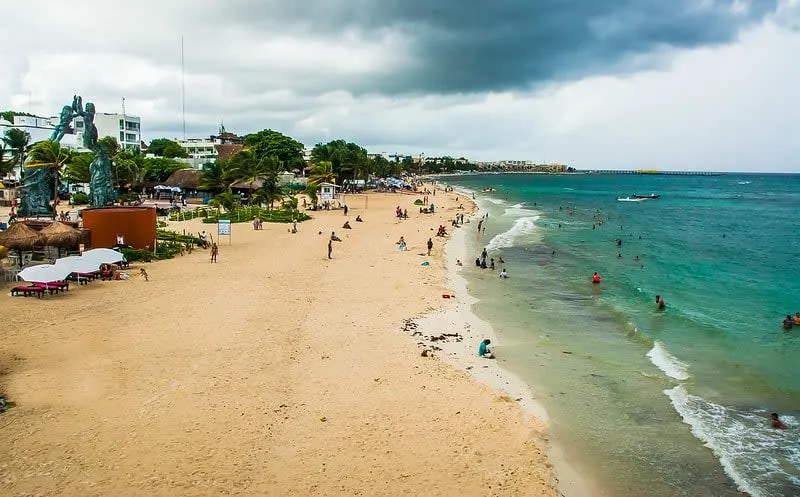
Sargassum is Atlantic brown seaweed that washes onto Caribbean coastlines in Mexico. Playa del Carmen’s beaches face east-southeast — directly into the Atlantic drift path — which makes PDC moderately to heavily affected from April through October, with June through August typically the worst months.
What sargassum actually means in practice:
- At low levels: a strip of seaweed at the waterline, raked daily by hotels. Barely noticeable.
- At moderate levels: smells sulfurous, murky water near shore, beach width reduced. Tolerable.
- At high levels: thick brown carpet covering the waterline, strong rotten-egg smell, swimming unpleasant.
The PDC sargassum escape: The Cozumel ferry from PDC pier takes 40 minutes and costs 250 MXN each way. Cozumel’s west-coast beaches face the lagoon between the island and the mainland — they almost never get sargassum. This is why Cozumel is included in almost every savvy PDC itinerary, regardless of season.
Monitoring sargassum: Before each beach day June–September, check mexsea.io or the Facebook group “Red de Monitoreo del Sargazo en México” for live Quintana Roo conditions. Conditions change week to week.
Dry Season (December–May): The Preferred Window
December: Two Very Different Trips
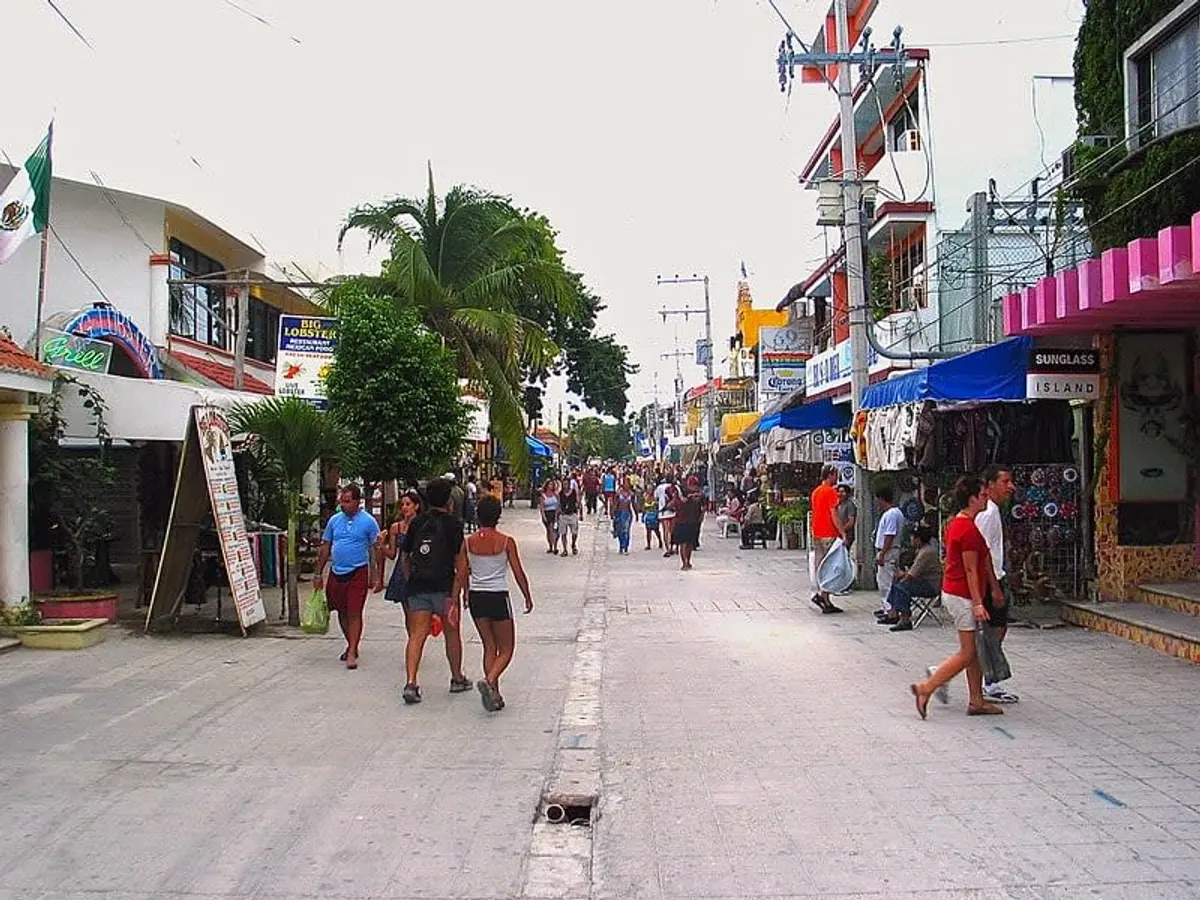
December splits in half. December 1–19: some of the best-value days in the region — clear water, low crowds, warm weather (27°C), and rooms available without premium pricing. 5th Avenue is lively but not overwhelming. Cenotes are uncrowded. Excellent month for independent travelers.
December 20–31: a different story. Prices spike 50–100% as the Christmas-New Year rush arrives. 5th Avenue becomes gridlocked with pedestrian traffic. Book accommodation months in advance for this window. The beach energy is festive and fun if crowds don’t bother you — but it’s the most expensive week of the year.
Wildlife: December marks the beginning of sea turtle hatching season winding down (Akumal, 30 min south by colectivo). Caribbean waters are clear and warm at 27°C.
January: Best Value of Winter
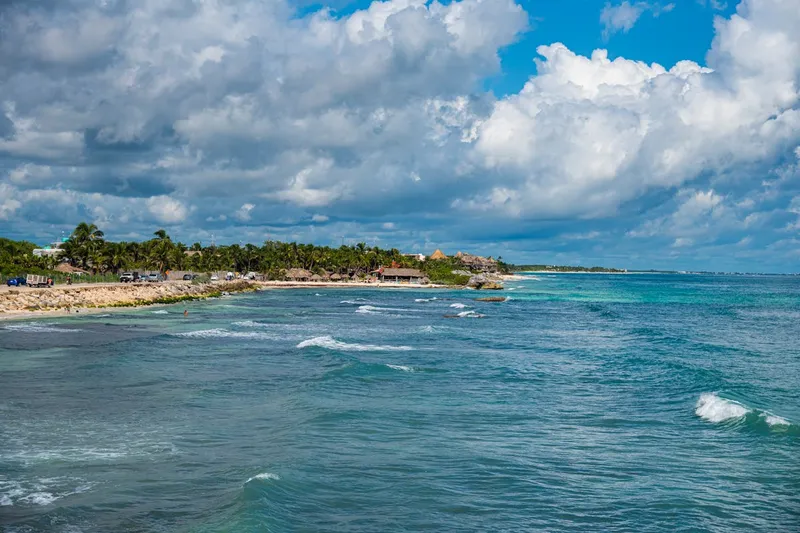
January 2–19 is arguably the best-value window in the entire year — clear water, virtually no sargassum, comfortable temperatures (27°C), and prices 20–30% lower than Christmas week. The post-holiday quiet means you actually get a sun lounger on the beach. 5th Avenue is busy but not chaotic.
January 20 onward, crowds build as North American winter vacation packages kick in.
Wildlife: Bull shark diving at Cozumel runs November through March — this is one of the world’s top dive experiences, and January is peak. The sharks are attracted by natural sardine spawning; expert dive operators run the trips. No handling or feeding — observation only.
February: Best All-Round Month
February is the most consistently excellent month to visit PDC. Dry weather, warm seas (26–27°C), very low sargassum risk, comfortable air temperatures (27°C), and the beach-and-pool scene is in full swing. The Riviera Maya is popular but not overwhelming. Accommodation is available at reasonable rates with decent advance booking.
Carnival: Cozumel runs one of Mexico’s better regional Carnivals in February (date shifts annually but usually second weekend). 40-minute ferry ride, worth the day trip.
Valentine’s Day: PDC restaurants pull out the stops. Booking ahead required for anywhere on 5th Avenue.
March: Spring Break Reality
March 1–14 is still excellent — shoulder season pricing, dry weather, beaches at their cleanest before sargassum builds.
Mid-March onward: spring break. US and Canadian universities break from mid-March, and PDC’s 5th Avenue becomes noticeably more chaotic — louder, more crowded, higher drink prices at beach clubs. If you’re on spring break, this is exactly what you booked. If you’re not, be aware of what you’re walking into. Mamitas Beach Club and Coco Bongo-style venues operate at full capacity.
Sargassum starts building in March but usually remains low. You may see traces at the waterline, but nothing like August.
Semana Santa (Easter Holy Week, 2026: March 29–April 5): The biggest domestic travel week in Mexico. Roads busy, Tulum and PDC get packed with Mexican families. Book 2–3 months ahead for this week. Good Friday brings Ley Seca (no alcohol sales) in some municipalities — check locally.
April: Post-Spring Break Sweet Spot
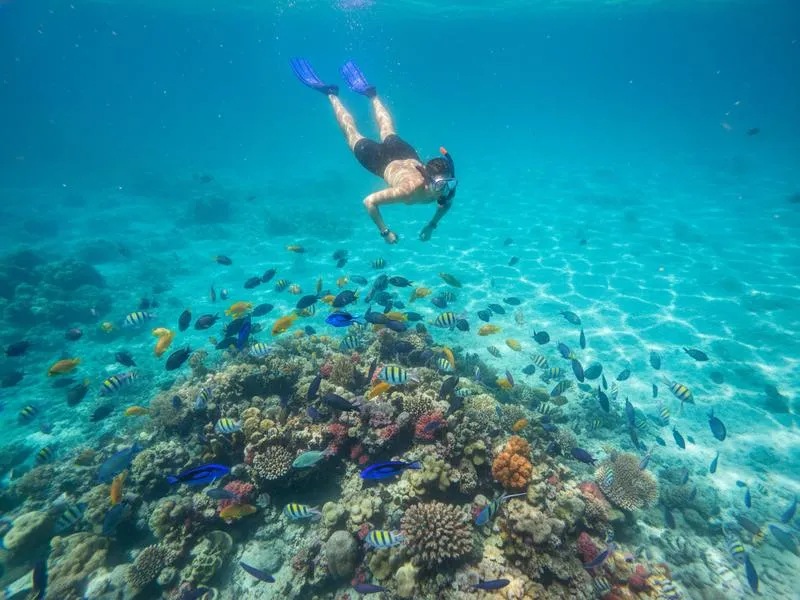
After spring break clears (mid-April) and post-Semana Santa, PDC enters a pleasant lull. Weather is still dry and hot (30°C), prices drop noticeably, and the beach scene calms down. Sargassum is building but usually still manageable in early April.
A practical April strategy: do your beach days on Cozumel (take the ferry) and use PDC as your activity and dining base. Cenotes, 5th Avenue, day trips to Akumal, and Tulum all benefit from fewer crowds.
May: Best Budget Month (Pre-Sargassum Window)
May is the last month of the dry season before sargassum peaks and rain arrives. Temperatures hit 31°C — hot, but breezy from the northeast. Sargassum is typically moderate (better than June–August). Accommodation prices are genuinely low. 5th Avenue restaurants have capacity. Cenote Chaak-Tun (2 km from PDC center) has minimal queues.
Weather stays dry through May, though late May can see the first scattered afternoon showers announcing the rainy season.
Wet Season (June–November): Honest Assessment
June: Whale Shark Season Opens (Nearby)
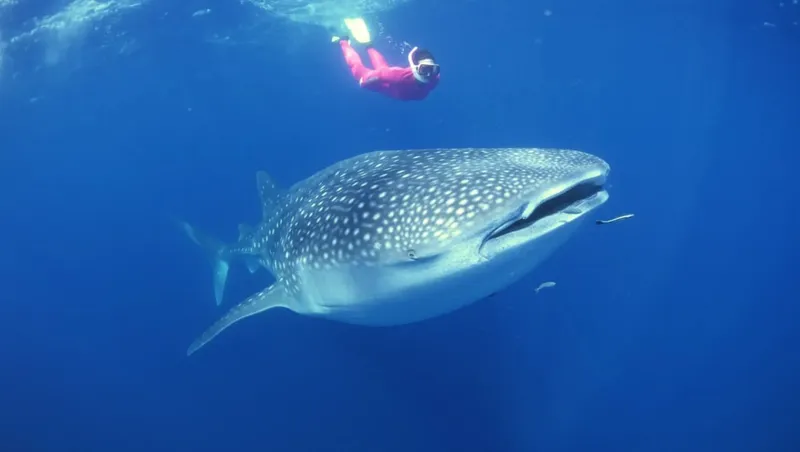
June marks the start of sargassum season proper and the arrival of afternoon thunderstorms — typically 1–2 hours of rain in the late afternoon, leaving mornings clear. Temperatures stay at 31°C.
The big June draw: whale shark season opens. Isla Mujeres and Holbox are the main aggregation zones (1.5–2 hours from PDC). Operators run tours from PDC pier directly. This is the world’s largest whale shark aggregation — 400–800 sharks peak August–September, but June is excellent with good visibility and smaller groups per tour.
Cenotes become the smart beach alternative. Chaak-Tun, Río Secreto, and Azul cenote are underground — weather-proof, 24°C water year-round, no sargassum ever. June–October actually sees more tourist interest in cenotes for exactly this reason.
July: Peak Whale Sharks, Afternoon Rains
July is the sweet spot for whale shark day trips (Holbox or Isla Mujeres). Sargassum is at its heaviest on PDC’s main beaches. Mornings are clear and dry; afternoon rain arrives reliably from around 3 PM. If you structure your days around morning activities and cenotes/5th Avenue in the afternoon, July works surprisingly well.
Hotel prices are moderate — not lowest of the year, as whale shark tourism drives some demand.
August: Sargassum Peak — Manage Expectations
August is typically the worst sargassum month in PDC. Heavy beach coverage, strong sulfur smell on the beach, murky swimming conditions near shore. This is when the Cozumel ferry becomes essential rather than optional.
The flipside: prices are low, CDM nightlife is quieter, and cenotes are at their best (warm season, high water from rains). Bioluminescence is active in some nearby lagoons. If clear beaches matter to you, use August as your cenote, ruin, and culture trip — not a beach holiday.
Pro tip for August in PDC: Book your Cozumel snorkeling or diving trip early in the week, cenotes mid-week, and 5th Avenue dining in the evenings. The beach itself is a bonus, not the plan.
September: Avoid Unless Budget-First
September is hurricane season, minimum tourist activity, and lowest prices of the year. Not recommended for first-time visitors. The genuine hurricane risk is concentrated in September–October, and a direct hit can mean days of closed beaches, flooded 5th Avenue, and disrupted flights.
If you’re flexible and budget-focused, September prices can be 40–50% below December. But the calculus rarely makes sense for a once-in-a-year vacation.
October: Locals’ Secret Month
October is the best-kept secret on the Riviera Maya. Hurricane risk decreases significantly after October 1. Sargassum is tapering. Temperatures are cooling slightly (29°C). Prices haven’t recovered yet — you’re paying wet-season rates but getting near-dry-season weather. By mid-October, PDC’s beaches are often noticeably cleaner.
Día de Muertos preparation: October is when Oaxacan and Mexican cultural events begin ramping up. PDC has a small but genuine Día de Muertos atmosphere in late October–early November.
November: Best Transition Month
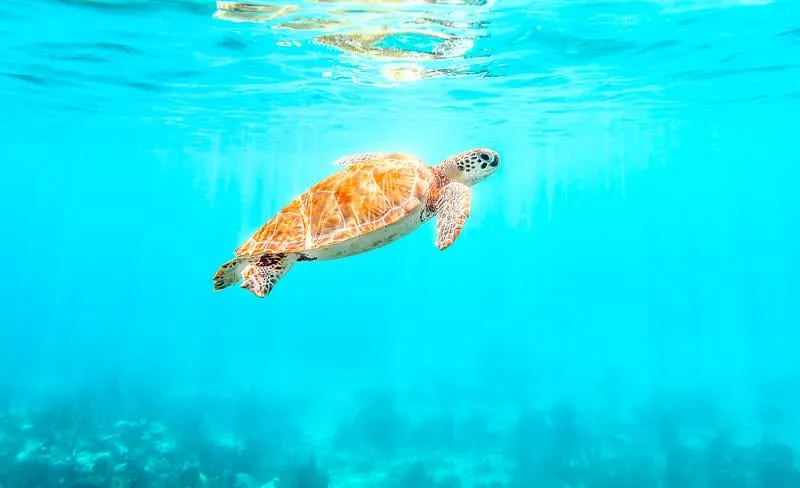
November is underrated. Sargassum has largely cleared. Rain drops to occasional showers. Crowds haven’t arrived yet. Prices are low. Temperatures are comfortable (28°C). The Caribbean shifts to its most photogenic shade of turquoise — clear water, low wind.
Sea turtles: Akumal, 30 minutes south by colectivo, has green sea turtles in its bay year-round. Sea turtle nesting season runs June–November, so November is the final weeks. Snorkel gear rental on the beach is 150–200 MXN — no tour needed.
5th Avenue in November is pleasant for walking, dining, and shopping without summer heat or spring break crowds. This is the month when long-stay digital nomads and slow travelers show up for exactly this reason.
Cenotes: The Weather-Proof Alternative
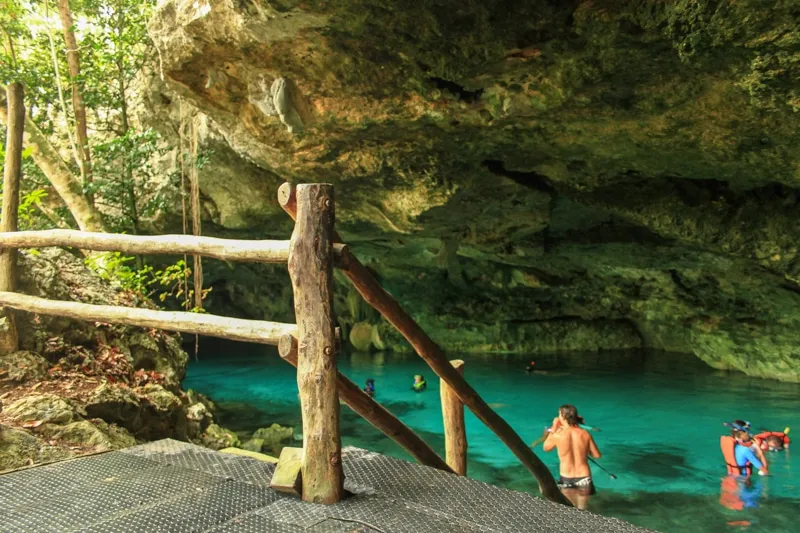
PDC’s greatest advantage over Cancún and Tulum is cenote access. Three excellent cenotes are within 30 minutes:
| Cenote | Distance from PDC | Entry | Water Type | Best For |
|---|---|---|---|---|
| Chaak-Tun | 2 km (walk or bike) | 600 MXN | Cavern + open | Photos, families |
| Río Secreto | 12 km | 1,100 MXN | Underground river | Adventure, couples |
| Cenote Azul | 25 km (colectivo) | 100 MXN | Open cenote | Budget swimming |
| Dos Ojos | 35 km | 450 MXN | Cavern/open | Diving, snorkeling |
| Gran Cenote | ~65km (near Tulum) | 500 MXN | Open, cave-like | Snorkeling, first-timers |
Underground cenotes (Chaak-Tun, Río Secreto, Dos Ojos) are completely weather-independent. No sargassum, no rain effect, no temperature variation. Water is 24°C year-round. This means the worst sargassum month (August) doesn’t affect your cenote experience at all.
Wildlife Calendar
| Wildlife | Season | Where | From PDC |
|---|---|---|---|
| Whale sharks | Jun–Sep (peak Aug) | Isla Mujeres, Holbox | Day trip, 1.5–2 hrs |
| Sea turtles (Akumal) | Jun–Nov | Akumal beach | 30 min (colectivo) |
| Bull sharks (diving) | Nov–Mar | Cozumel | 40 min (ferry) |
| Manatees | Year-round | Laguna de Bacalar | 3.5 hrs south |
| Flamingos | Year-round | Río Lagartos / Celestún | Day trip, 3 hrs |
| Humpback whales | Dec–Mar | Gulf of Mexico / Holbox | Day trip |
PDC vs Cancún vs Tulum: Timing Comparison
| Factor | PDC | Cancún | Tulum |
|---|---|---|---|
| Best months | Dec–May | Dec–May | Nov–Apr |
| Sargassum exposure | Moderate-high Apr-Oct | Moderate Apr-Oct | Worst Apr-Oct (SE-facing) |
| Sargassum escape | Cozumel ferry (40 min) | Cozumel (55 min ferry) | Cozumel (1.5 hr) or Playa Norte |
| Spring break impact | High (March) | Very high (March) | Medium (quieter) |
| Hurricane risk | Moderate Sep-Oct | Moderate Sep-Oct | Moderate Sep-Oct |
| Base for cenotes | ✅ Best access (Chaak-Tun 2km) | Poor access | ✅ Good (Gran Cenote, Dos Ojos) |
| Uber | ❌ No (colectivos) | ✅ Yes | ❌ No (bikes/taxi) |
| Price range | Medium | Medium | Highest |
Key point: PDC outperforms Cancún as a base for cenotes, day trips, and independent transport. It undercuts Tulum significantly on price. Neither PDC nor Tulum has Uber — colectivos are the standard.
Common First-Timer Mistakes
Most Playa del Carmen timing mistakes come from planning the trip as if every month offers the same beach experience.
- Booking July or August for pure beach days. Summer can still be fun, but it works better as a cenote, food, diving, and day-trip trip than a sit-on-the-main-beach-all-week trip.
- Treating March as a normal shoulder month. Early March is excellent. Mid-to-late March can feel completely different once spring break crowds arrive.
- Assuming Cancún and Playa del Carmen behave the same way. Playa del Carmen usually gets worse sargassum than Cancún’s more protected Hotel Zone beaches.
- Ignoring Cozumel as the backup plan. The ferry is the easiest way to save a summer Riviera Maya trip when mainland beach conditions disappoint.
- Overpaying for late December. December 1 to 19 is a much smarter buy than Christmas week unless you specifically want holiday crowds.
Shoulder Season: The Smartest Tradeoff
The pages ranking well for this topic all lean on the same point: travelers are not just choosing weather, they are choosing a balance of beach quality, price, and crowd level. In Playa del Carmen, that balance usually lands in November, early December, late April, and May.
Why shoulder season works so well here:
- Hotel rates usually drop well below Christmas and February winter-sun pricing.
- Restaurants on 5th Avenue feel lively without the shoulder-to-shoulder crush of spring break.
- Cenotes, ferry lines, and day-trip pickups move faster.
- You still get plenty of swimmable, beach-friendly days, even if conditions are not as perfect as January or February.
The tradeoff is simple. Late April and May bring hotter afternoons and rising sargassum risk. November and early December bring the best value after the wettest months, but one cold front or windy week can rough up the sea. For most travelers who want a practical answer instead of a fantasy one, shoulder season is the most efficient time to visit Playa del Carmen.
Best Time by Travel Style
| Travel Style | Best Month(s) | Why |
|---|---|---|
| Beach + clear water | Jan–early Mar, Nov | Lowest sargassum risk, dry weather, easier beach days |
| Budget travel | May, Oct–Nov | Lower hotel rates, manageable crowds, good cenote weather |
| Whale shark snorkeling | Jul–Sep | Day trips to Isla Mujeres or Holbox |
| Cenote diving/snorkeling | Year-round | Underground = no weather effect |
| Families with kids | Jan–Feb, Nov | Calm beaches, manageable crowds |
| Diving | Nov–Mar | Bull sharks at Cozumel, clear visibility |
| Romance / honeymoon | Feb, Nov | Quiet beaches, beautiful light |
| Spring break / nightlife | Mar | 5th Avenue at maximum energy |
| Food & culture | Oct–Nov | Día de Muertos, local energy |
| Digital nomad | Oct–Nov, Jan–Feb | Best value, Wi-Fi reliable, uncrowded |
Prices by Season
| Period | Price Level | Hotel Range (mid-range) | Notes |
|---|---|---|---|
| Dec 20–Jan 5 | 🔴 Peak | $150–280/night | Book 3–4 months ahead |
| Jan 6 – Feb 28 | 🟡 High-medium | $100–180/night | Best value in winter |
| Mar 1–28 | 🟡 High | $120–200/night | Spring break premium |
| Mar 29–Apr 5 | 🔴 Peak | $150–250/night | Semana Santa |
| Apr 6 – May 31 | 🟢 Low | $70–130/night | Best budget window, dry weather |
| Jun – Aug | 🟢 Low | $60–110/night | Sargassum risk |
| Sep | 🟢 Lowest | $50–90/night | Hurricane risk |
| Oct | 🟢 Low | $60–100/night | Best hidden gem timing |
| Nov | 🟢 Low–medium | $75–130/night | Increasingly popular |
Weather by Month
| Month | High | Low | Rain Days | Sea Temp | Humidity |
|---|---|---|---|---|---|
| January | 27°C | 20°C | 3–4 | 26°C | Low |
| February | 28°C | 20°C | 3–4 | 26°C | Low |
| March | 29°C | 21°C | 4–5 | 27°C | Low–medium |
| April | 30°C | 22°C | 5–6 | 28°C | Medium |
| May | 31°C | 23°C | 7–8 | 29°C | Medium |
| June | 31°C | 24°C | 12–14 | 30°C | High |
| July | 31°C | 24°C | 13–15 | 30°C | High |
| August | 32°C | 24°C | 13–15 | 30°C | High |
| September | 31°C | 24°C | 14–16 | 30°C | Very High |
| October | 30°C | 23°C | 10–12 | 29°C | High |
| November | 28°C | 21°C | 6–8 | 28°C | Medium |
| December | 27°C | 20°C | 4–5 | 27°C | Low |
Rain during the wet season typically falls as afternoon/evening thunderstorms — mornings stay dry. This makes morning activities (cenotes, ruins, beach) viable June–November if you plan accordingly.
What to Pack by Season
Dry Season (Dec–May):
- Light clothing, swimwear
- Light sweater for evenings December–February (22°C nights)
- Rash guard and hat for cenote days; follow each operator’s sunscreen and shower rules
- Water shoes for cenotes
Wet Season (Jun–Nov):
- Quick-dry clothing
- Packable rain jacket or poncho (afternoon storms)
- Mosquito repellent (DEET or lemon eucalyptus)
- Anti-humidity hair products (optional but appreciated)
- Still bring reef-safe sunscreen — UV is intense year-round
Frequently Asked Questions
What is the best time to visit Playa del Carmen to avoid sargassum? December through March offers the lowest sargassum risk. April marks the building phase, and June–August is typically worst. However, conditions vary year to year — some Aprils are clear, some Decembers have traces. If clear beaches are essential and you’re visiting in summer, take the Cozumel ferry (40 min, 250 MXN each way) — Cozumel’s west coast almost never has sargassum regardless of season.
Is March a good time to visit Playa del Carmen? For weather and beaches, yes — March is dry season, clear water, and comfortable temperatures. However, mid-to-late March is spring break season, and PDC’s 5th Avenue gets very crowded with US university students. If you want the beaches and weather without spring break energy, go early March or April. Semana Santa (Easter Holy Week, March 29–April 5 in 2026) is another peak domestic travel week — book months ahead.
Does Playa del Carmen get hurricanes? Yes, though direct hits are relatively rare. The risk period is June through November, peaking in September–October. Notable recent events: Hurricane Wilma in 2005 caused significant damage; there have been near-misses since. September is the highest statistical risk and lowest tourism month for this reason. Travel insurance with hurricane coverage is strongly recommended for any Quintana Roo trip June–November.
Are cenotes better in a certain season? Underground cenotes (Chaak-Tun, Río Secreto, Dos Ojos) are identical year-round — 24°C water, zero weather effect, no sargassum ever. Open-air cenotes may have slightly higher water levels in the wet season (June–November) from rainfall feeding the aquifer — visibility and water quality remain excellent. Crowds at cenotes dip significantly May–October (lower tourism), making this period better for photos and uncrowded swimming.
Is November or December better for Playa del Carmen? November wins on price and tranquility — low crowds, clearing sargassum, comfortable 28°C weather, and hotel rates 30–40% below Christmas. December 1–19 is similar and adds festive atmosphere to 5th Avenue. December 20 onward: Christmas peak pricing and maximum crowds. For best value in the transition season, November slightly edges early December.
Plan Your Trip
- Playa del Carmen Travel Guide 2026 — Complete destination overview, neighborhoods, transport
- Things to Do in Playa del Carmen — Best activities ranked for first-timers
- Best Hotels in Playa del Carmen — Where to stay by budget and travel style
- Day Trips from Playa del Carmen — Cozumel, Tulum, Chichén Itzá, and more
- Playa del Carmen to Cozumel — Ferry logistics for clear-water beach days
- Best Time to Visit Cozumel — Sargassum-free west coast, diving, and bull shark season
- Best Time to Visit Tulum — Similar seaweed season, different travel style
- Best Time to Visit Cancún — More protected beaches and different crowd patterns
- Riviera Maya Travel Guide — Full 130 km corridor breakdown
- Best Beaches in Mexico — Regional comparison including sargassum reality
- Mexico Packing List 2026 — What to pack for Quintana Roo
Bottom Line
If you want Playa del Carmen at its most reliable, go in January, February, or early March. If you want the best value, go in November or early December. If you are choosing a summer trip anyway, treat Playa del Carmen as a Riviera Maya base, not a flawless beach destination every day, and use Cozumel plus cenotes to stay ahead of the seaweed.