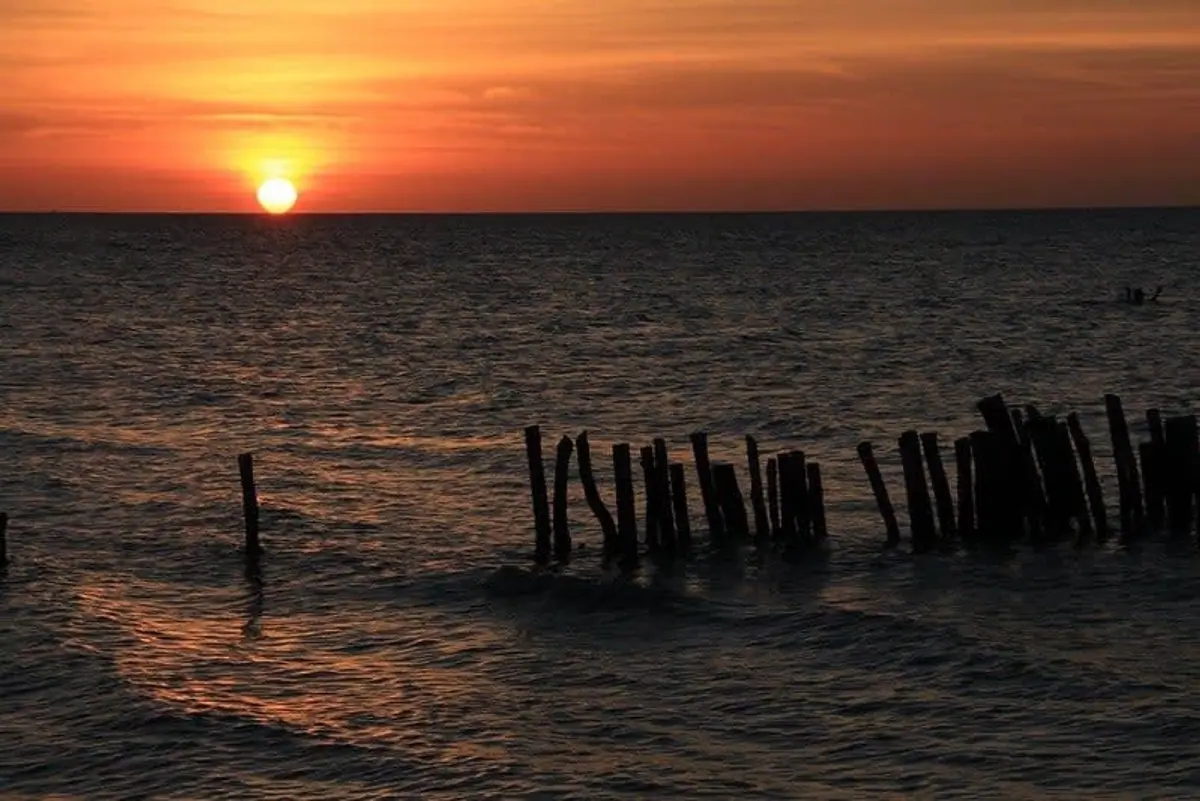
Best Time to Visit Holbox: Weather & Whale Sharks
The best time to visit Holbox is March for dry beach weather, July for whale sharks, August for bioluminescence, and November for lower prices after storm season.
Isla Holbox is a 42km car-free island off the north coast of the Yucatán Peninsula, and timing matters here more than in most Mexico beach destinations. The same summer months that bring whale sharks and strong bioluminescence also bring more humidity, jellyfish, rougher ferry crossings, and the year’s highest hotel rates.
Quick answer: visit March or early April if you want the best weather, easy ferry crossings, and the prettiest beach conditions. Visit July if you are specifically searching for the best month for whale sharks in Holbox. Visit August if bioluminescence is your main priority. If your exact question is what months are whale sharks in Holbox, the answer is June to September, with July and August the safest months to plan a dedicated wildlife trip. Visit November if you want the clearest value play after hurricane season, and choose February if you want dry weather plus lower rates than Christmas and spring break.
The real tradeoff is simple: Holbox’s best wildlife season is not its best weather season. If you want the postcard version of Holbox, come in late winter or spring. If you want the signature wildlife experiences, accept summer humidity, occasional rough seas, more seaweed, and higher prices.
The other useful shortcut is this: Holbox is often a smarter summer beach pick than Tulum or Playa del Carmen because it is usually less affected by sargassum in Mexico, even when the wider Caribbean coast is messy. But it is not a guaranteed seaweed-free island, which is why the safest clean-beach window is still roughly December through April.
Best Holbox Month by Trip Goal
| If you want… | Best month | Why |
|---|---|---|
| The overall best balance | March | Sunny weather, low humidity, no jellyfish, easy ferry crossings, and fewer crowds than summer |
| The best beach weather | March or early April | Warm water, cleaner-looking beaches, and low-stress logistics before the wettest months |
| Whale sharks | July | Peak sightings, daily departures, and the strongest odds of multiple encounters |
| Bioluminescence | August | Warm water, dark-sky summer nights, and stronger glow than spring |
| Best value after storm season | November | Prices soften, crowds stay low, and weather usually improves fast |
| Cheap dry-season trip | February | Post-holiday drop, dry weather, and quieter hotels |
| Families | January or February | Easier weather, calmer logistics, and no jellyfish season |
| First trip to Holbox | March or early April | Holbox feels easy, pretty, and low-stress without rainy-season caveats |
Best Time to Visit Holbox by Search Intent
| Search intent | Best answer | Short version |
|---|---|---|
| Best weather | January to April | Dry season, calmer ferries, lower humidity |
| Best month overall | March | Best mix of weather, prices, and easy logistics |
| Cheapest time | February | Better-value hotels without hurricane-season downside |
| Whale shark season | June to September | July and August are the safest bet |
| Worst time to visit | September | Highest hurricane risk and least reliable conditions |
| Best for bioluminescence | August to September around the new moon | Warm water and darker skies |
One important Holbox note: unlike much of the Riviera Maya, Holbox is usually a better bet during sargassum season because the island faces different currents. You can still get some seaweed, but Holbox is generally less affected than Playa del Carmen or Tulum in the same months.
What Month Is Best for Whale Sharks and Bioluminescence in Holbox?
This is where most travelers get stuck, because the answer depends on whether you care more about wildlife or beach conditions.
| Search question | Best month | Short answer |
|---|---|---|
| What month is best for whale sharks in Holbox? | July | Peak sightings, daily departures, and the strongest odds of multiple encounters |
| What months are whale sharks in Holbox? | June to September | July and August are the safest bet for booking a dedicated trip |
| What month is best for Holbox bioluminescence? | August | Warm water, darker summer skies, and stronger glow than spring |
| When is Holbox bioluminescence best? | August to September | Aim for a new-moon trip if the glow is your main reason to go |
| What is the cleanest-weather month? | March | Best mix of beach conditions, easy ferries, and lower hassle |
If you want a one-trip answer, this is the easiest way to decide: March for beaches, July for whale sharks, August for bioluminescence.
Whale Shark Season in Holbox by Month
If your trip is mainly about whale sharks, these are the months that matter most.
| Month | How good is it? | What to expect |
|---|---|---|
| June | Good | Season is active, boats run, and conditions can still feel easier than peak summer |
| July | Best month | Peak sightings, full tour schedule, and the strongest odds of multiple encounters |
| August | Excellent | Still peak, but heat, jellyfish, and summer humidity are more noticeable |
| September | Riskier | You can still see whale sharks early in the month, but storms and rougher seas become a bigger gamble |
The cleanest decision is this: book July if whale sharks are the main reason for the trip, choose late June if you want a little less crowd pressure, and avoid building the whole trip around late September.
Best Time to Visit Holbox if You Care About Seaweed or Hurricane Risk
This is the part the top-ranking Holbox timing pages keep leaning on, and it matters because whale shark season overlaps with the months when Holbox gets trickier.
| If you care most about… | Best window | Why | Main tradeoff |
|---|---|---|---|
| The clearest water and least seaweed risk | December to April | Drier weather, cleaner-looking beaches, and calmer ferry crossings | No whale sharks yet |
| Whale sharks with the lowest weather risk | Late June to July | Season is active, and you avoid some of September’s storm downside | Prices and humidity jump |
| Bioluminescence plus lower hotel rates | Late August to early September | Strong glow and shoulder-season pricing can overlap | You must watch tropical weather closely |
| Avoiding hurricane disruption | January to April | Lowest storm risk and easiest logistics | Higher winter rates around holidays |
| Cheapest realistic beach trip | February or early November | Lower prices without betting on peak-rainy-season luck | Not the best wildlife window |
The simplest rule is this: Holbox has two best seasons, not one. Pick dry season if beaches and smooth logistics matter most. Pick summer only if whale sharks or bioluminescence are the reason for the trip.
If you are deciding whether Holbox still makes sense in summer, compare Holbox Island Travel Guide, Cancún to Holbox, and Swim With Whale Sharks in Mexico before you lock the dates.
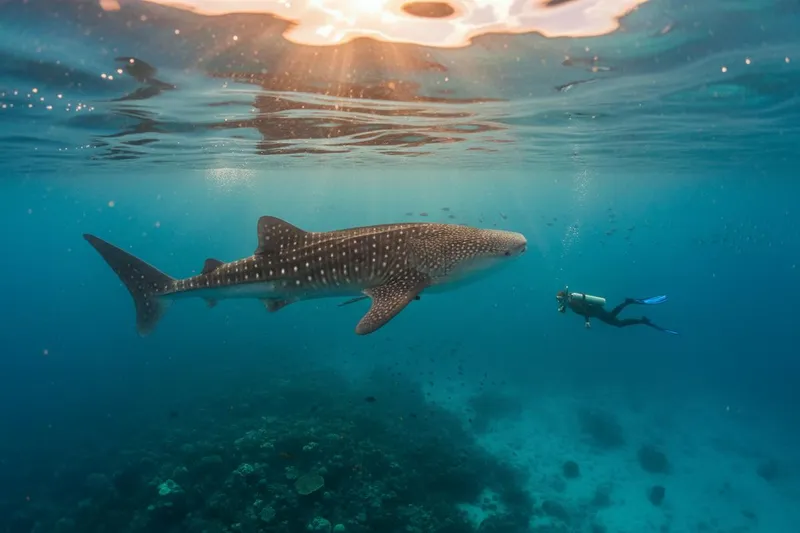
At a Glance: Holbox by Month
| Month | Weather | Whale Sharks | Bioluminescence | Jellyfish | Flamingos | Crowds | Prices | Rating |
|---|---|---|---|---|---|---|---|---|
| January | ☀️ Perfect | ❌ None | ❌ Faint | ❌ None | ✅ Good | Low | Low | ⭐⭐⭐⭐ |
| February | ☀️ Perfect | ❌ None | ❌ Faint | ❌ None | ✅ Good | Low | Low | ⭐⭐⭐⭐ |
| March | ☀️ Warm | ❌ None | ❌ Faint | ❌ None | ✅ Best | Moderate | Moderate | ⭐⭐⭐⭐⭐ |
| April | ☀️ Hot | ❌ None | ❌ Faint | ❌ Rare | ✅ Good | Moderate | Moderate | ⭐⭐⭐⭐ |
| May | 🌤️ Hot/humid | ⚠️ Starting | 🌟 Building | ⚠️ Starting | ✅ Good | Low | Moderate | ⭐⭐⭐⭐ |
| June | 🌧️ Rainy | ✅ Active | 🌟 Active | ⚠️ Present | ✅ OK | High | High | ⭐⭐⭐⭐ |
| July | 🌧️ Rainy | ✅ Peak | 🌟🌟 Strong | ⚠️ Present | ✅ OK | Peak | Peak | ⭐⭐⭐⭐⭐ |
| August | 🌧️ Humid | ✅ Peak | 🌟🌟 Peak | ⚠️ Present | ✅ OK | Peak | Peak | ⭐⭐⭐⭐⭐ |
| September | ⛈️ Hurricanes | ⚠️ Ending | 🌟 Strong | ⚠️ Present | ✅ OK | Low | Drops fast | ⭐⭐ |
| October | 🌤️ Improving | ❌ None | 🌟 Active | ❌ Fading | ✅ Good | Low | Low | ⭐⭐⭐ |
| November | ☀️ Good | ❌ None | ❌ Fading | ❌ None | ✅ Good | Low | Low | ⭐⭐⭐⭐ |
| December | ☀️ Perfect | ❌ None | ❌ Faint | ❌ None | ✅ Good | High → Low | High → Low | ⭐⭐⭐ |
Best Time to Visit Holbox by Trip Goal
If you’re comparing months, start with the reason you’re going. Most Holbox trips fit one of these buckets:
| Your priority | Best window | Why it works | Tradeoff |
|---|---|---|---|
| Best overall first trip | March to early April | Dry weather, blue water, easy ferry conditions, and very few seasonal annoyances | No whale sharks yet |
| Whale sharks above all | July to mid-August | Strongest odds of sightings and the widest choice of daily tours | Highest prices, jellyfish, and humidity |
| Beach vacation with the least hassle | January to March | Low rain, comfortable nights, and swimmable beaches without summer chaos | Less nightlife and no summer wildlife |
| Lowest prices with decent weather | Late January to early March | Better-value hotels without hurricane-season risk | Some windy days, especially in March |
| Bioluminescence trip | August to September new moon | Warm lagoon water and the year’s strongest glow | Hurricane-season monitoring matters |
| Birdwatching and flamingos | March to May | Punta Mosquito is especially good and mornings are clearer | Midday heat climbs by May |
This is the simplest way to decide: if Holbox is your one big beach stop, choose spring. If it’s a wildlife mission, choose summer and plan around the weather instead of fighting it.
The Holbox Timing Paradox
Holbox operates on the opposite schedule from most Mexico beach destinations. At Cancún or Tulum, peak season is December-April: perfect weather, no hurricanes, no sargassum (well, no sargassum at Cancún). At Holbox, this same period is quiet season — warm and beautiful, but no whale sharks and faint bioluminescence.
The activity peaks are inverted:
- Peak for wildlife: June-August (whale sharks, strong bioluminescence, flamingo breeding season)
- Peak for weather: December-April (perfect sunshine, low humidity, no rain)
The implication: if you’re coming primarily for whale sharks, you’ll pay high-season prices and accept afternoon rain showers and jellyfish in the water. If weather is your priority, come in March — you’ll have near-empty beaches, half the price, and no jellyfish, but no whale sharks.
Neither answer is wrong. They’re different trips.
Whale Shark Season: June–September
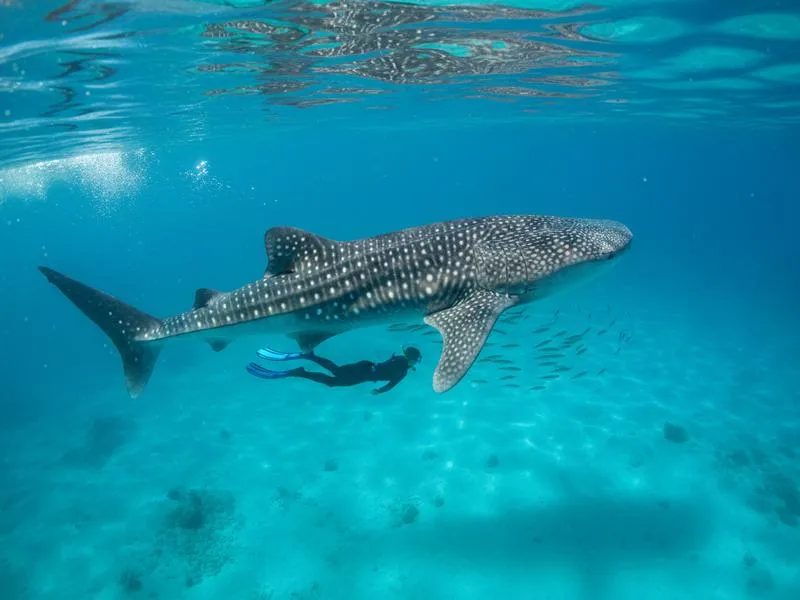
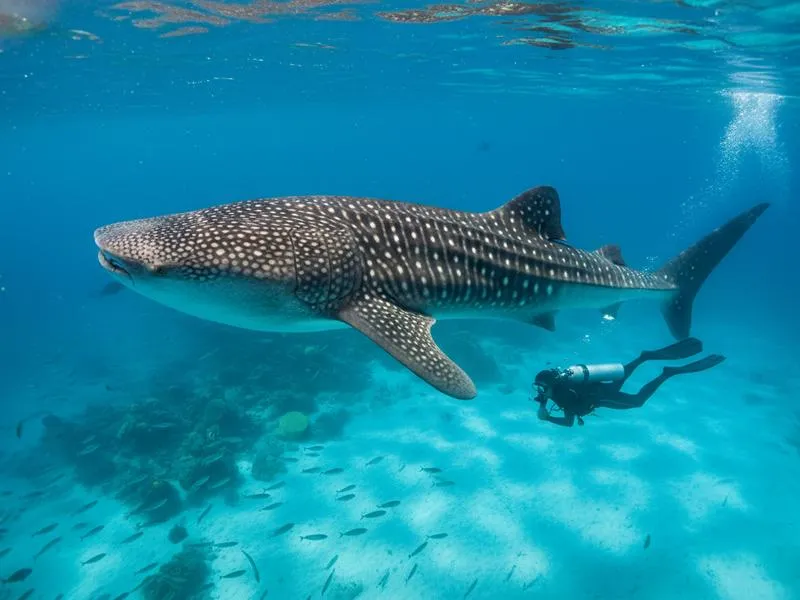
The whale sharks that gather near Holbox are a phenomenon with few parallels anywhere on earth. The aggregation near Cabo Catoche — the northeastern tip of the Yucatán Peninsula, a 45-minute boat ride from Holbox — is one of the world’s largest and most accessible. In peak weeks, 400-800 sharks gather to feed on fish eggs (specifically snook, tuna, and little tunny eggs) just below the surface.
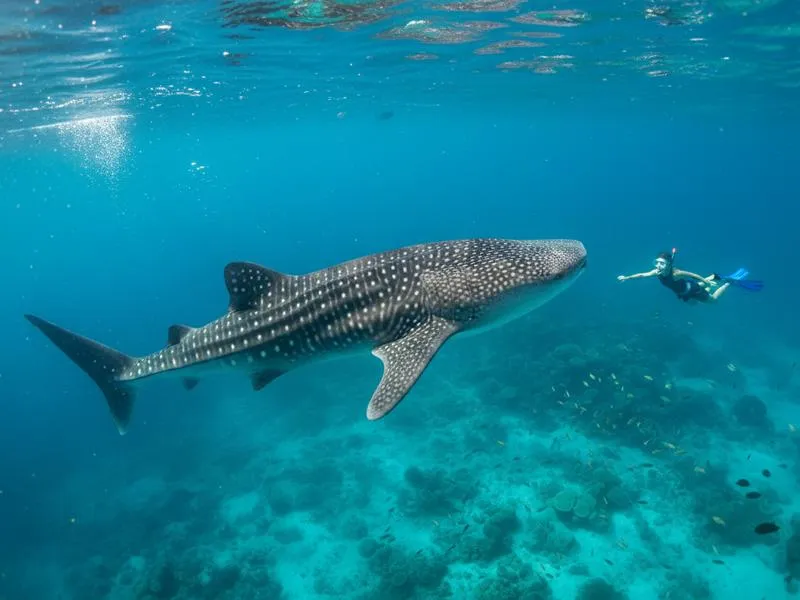
Whale Shark Month-by-Month
| Month | Activity | Notes |
|---|---|---|
| May | ⚠️ Scouting | First sightings begin; tours not yet reliable |
| June | ✅ Active | Season fully open; smaller groups, calmer seas |
| July | ✅ Peak | Maximum shark density, 400-800 individuals |
| August | ✅ Peak | Continues at peak; highest tour demand |
| September | ⚠️ Winding down | Numbers drop mid-September; hurricane risk |
| October onwards | ❌ Gone | Whale sharks move on; season closed |
Key facts:
- Tours depart from Holbox or nearby Chiquila (mainland port) daily during season
- Cost: 2,000-2,800 MXN ($100-140 USD) per person, including gear, wetsuit, guide
- Groups limited by regulation: 8 snorkelers + 2 guides per whale shark at one time
- You enter the water individually in a line and drift past the shark — no touching
- Average encounter: 2-3 sharks per tour, 15-30 minutes of water time total
- Morning departures (7-9 AM) have calmer seas; book ahead in July-August
Booking tip: July and August tours can sell out 3-5 days ahead. Book when you arrive on Holbox, not on arrival day.
Bioluminescence: June–October
Holbox’s bioluminescence is caused by Pyrocystis fusiformis — microscopic dinoflagellates that emit blue-green light when disturbed. The effect is at its most intense in warm, calm, dark water.
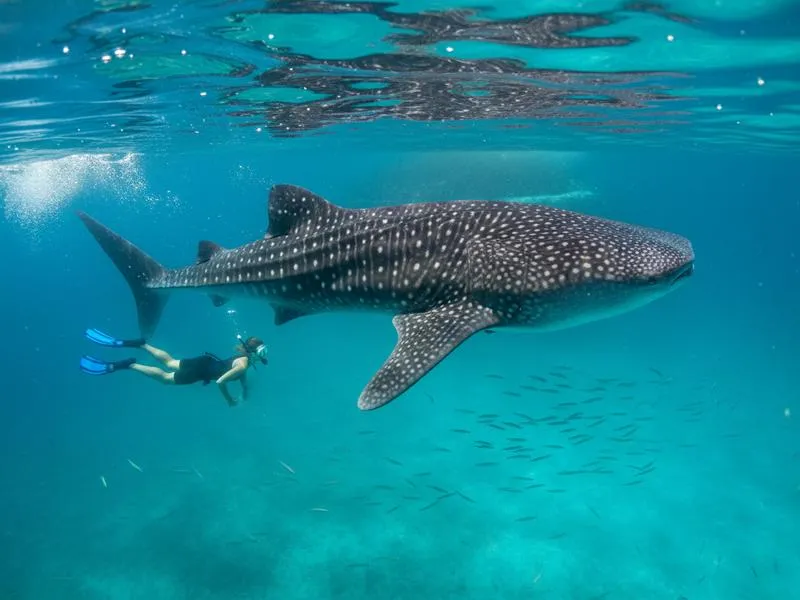
What to Know
Free experience: At Punta Cocos, on the island’s west end, you can wade into the shallow water on dark nights and see your hands glow blue-green. Best on new moon nights, 9 PM-midnight. Bring sandals for the sandy walk.
Guided tours: Kayak tours ($40-60 USD) take groups into the lagoon channels, away from town light pollution. Paddles create trails of blue fire through the water. The guides know the spots; the free experience is good, but the tours are significantly better.
Season calendar:
- June-October: Active, with August-September being peak intensity
- November-December: Fading — still faint traces, not worth a dedicated night
- January-May: Minimal to none
Moon phase matters: Plan bioluminescence viewing around new moon (dark sky) rather than full moon (washed out). The dates shift monthly.
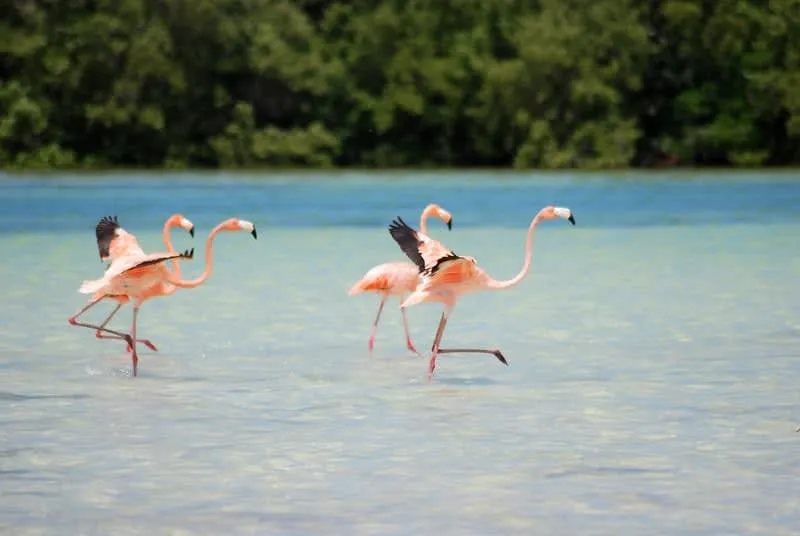
Flamingos at Punta Mosquito: Year-Round, Best March-May
Holbox’s flamingo lagoon at Punta Mosquito is one of the most accessible flamingo viewing spots in Mexico. The birds are present year-round, wading through the shallow tidal flats 3km east of town.
When to See Flamingos
| Period | Flamingo Activity | Notes |
|---|---|---|
| January-February | ✅ Good | Post-migration, good numbers |
| March-May | ✅ Best | Breeding season; highest concentrations |
| June-September | ✅ OK | Present but more dispersed; whale shark season distracts |
| October-December | ✅ Good | Returning birds after summer dispersal |
How to see them: Walk (45 min) or bike (15 min) east from town along the sand road. There’s no formal entrance — you simply walk to the flats. Best at low tide, early morning (7-9 AM). Bring binoculars; the birds are 50-100 meters from shore.
Other wildlife here: Brown pelicans, roseate spoonbills, herons, and frigatebirds. The whole lagoon area is worth 1-2 hours of birding any time of year.
Peak Season: June–August (The Wildlife Months)
If you’re coming for whale sharks and bioluminescence, come in July or August. This is Holbox’s most crowded and most expensive window, but it’s also when the island delivers its most extraordinary experiences.
What to expect:
- Whale shark tours run daily, sell out 3-5 days ahead in July-August
- Bioluminescence strongest, especially August
- Afternoon rain showers (typically 2-5 PM, clearing by evening)
- Jellyfish present in open water — wear a rash guard or wetsuit
- Town is lively; restaurants full; electricity slightly more reliable in recent years but still variable
Infrastructure reality check: Holbox has no permanent road connection to the mainland and ran entirely on diesel generators until recently. Power outages are more common June-October when demand is highest and hurricanes stress the system. Bring a power bank for your devices.
Worst Time to Visit Holbox
September is the worst month to visit Holbox for most travelers. It can still work if you are flexible and chasing low prices, but this is when hurricane risk is highest, ferry conditions are least predictable, and whale shark season is already fading.
If you want a stress-free first trip, avoid September and be cautious with late August into October unless you are watching forecasts closely. For a general beach trip, the savings usually do not justify the extra weather risk.
Holiday and Crowd Windows That Change the Answer
A lot of pages say “December to April” and stop there, but Holbox behaves very differently inside that stretch. These short crowd windows change prices and logistics more than the month alone.
- Christmas to Día de Reyes (roughly Dec 20 to Jan 6): excellent weather, but high hotel rates and full ferries.
- Semana Santa and Easter week: one of the busiest periods on the island, with beach clubs, carts, and ferries all feeling busier than normal.
- Late July to mid-August: peak whale shark demand, with the highest prices of the year and the most pressure on tours.
If you want the same dry-season weather without the friction, shift your trip to mid-January through early March or late March before Semana Santa.
Dry Season: December–April (The Weather Months)
December through April brings Holbox’s most reliable sunshine, lowest humidity, and emptiest beaches.
December: Busy from Christmas through New Year (Dec 20-Jan 5) — book accommodation 2-3 months ahead. After January 6, prices drop sharply and the island empties.
January-February: Best weather, cheapest prices (outside the holiday window). No whale sharks, no bioluminescence, no jellyfish. Flamingos good. This is the hidden sweet spot for travelers who want Holbox’s beach vibe without the crowds or premium prices.
March-May: The under-the-radar window. March is particularly strong: perfect weather (28-30°C), minimal crowds, flamingos at peak, clear water with no jellyfish, and prices 30-50% below July rates. Whale sharks haven’t started yet.
Weather by Month
| Month | Avg High (°C) | Avg Low (°C) | Rain Days | Humidity | Notes |
|---|---|---|---|---|---|
| January | 26 | 20 | 4 | Low | Perfect |
| February | 27 | 20 | 3 | Low | Perfect |
| March | 29 | 22 | 3 | Low | Ideal |
| April | 31 | 23 | 4 | Moderate | Warm, pleasant |
| May | 32 | 25 | 7 | Rising | Hot, manageable |
| June | 33 | 26 | 12 | High | Afternoon rain |
| July | 33 | 26 | 13 | High | Afternoon rain |
| August | 33 | 26 | 14 | Very high | Warmest month |
| September | 32 | 26 | 16 | High | Hurricane risk |
| October | 30 | 24 | 12 | High | Improving |
| November | 28 | 22 | 7 | Moderate | Good |
| December | 27 | 21 | 5 | Low | Busy holiday → quiet Jan 6+ |
Sea temperature stays 28-29°C June-October and 24-26°C November-May — warm enough for swimming year-round without a wetsuit.
Wildlife Calendar
| Wildlife | Season | Peak | Notes |
|---|---|---|---|
| Whale sharks | June–September | July–August | 400-800 sharks at peak |
| Bioluminescence | June–October | August–September | Free at shore or guided kayak tours |
| Flamingos | Year-round | March–May | Punta Mosquito, 3km east of town |
| Sea turtles (nesting) | May–October | June–August | Loggerhead and hawksbill nests on beach |
| Jellyfish | June–September | July–August | Wear rash guard; mostly moon jellies |
| Frigatebirds | Year-round | September–October | Isla de los Pájaros, lagoon area |
| Spoonbills & herons | Year-round | November–April | Punta Mosquito and lagoon edges |
| Bull sharks (nearby) | November–March | January–February | Not in Holbox — see Cozumel/PDC for this |
Holbox vs. Isla Mujeres: Timing Comparison
Both islands offer whale shark tours to the same aggregation point, but they suit different travel styles.
| Criteria | Holbox | Isla Mujeres |
|---|---|---|
| Whale shark access | ✅ 45-min boat ride | ✅ Similar distance |
| Whale shark tour cost | 2,000-2,500 MXN | 2,500-3,500 MXN |
| Best base for whale sharks | ✅ Holbox | Isla Mujeres |
| Infrastructure | Basic, generator power | Better, more reliable |
| Cars | ❌ None (golf carts) | ❌ Limited |
| Nightlife | Minimal (2-3 bars) | Moderate |
| Easy from Cancún | ❌ 2-hour drive + ferry | ✅ 20-min ferry |
| Bioluminescence | ✅ Strong June-Oct | ❌ Not a feature |
| Flamingos | ✅ Punta Mosquito | ❌ None |
| Best for | Wildlife immersion, rustic escape | Day trip from Cancún, whale sharks + comfort |
| ATM | ⚠️ One ATM on island — bring cash | ✅ Multiple |
Bottom line: If your trip centers on Holbox’s unique ecosystem — whale sharks + bioluminescence + flamingos + no cars — Holbox is the obvious choice. If you want whale sharks as one of several activities on a Cancún-based trip, base at Isla Mujeres or Cancún and do a day tour.
What to Skip
| Month | What to Avoid | Why |
|---|---|---|
| September | Entire month if possible | Peak hurricane season + jellyfish + whale sharks winding down |
| July-August | Long open-water swims without rash guard | Jellyfish season — irritating, not dangerous |
| June-October | Bringing electronics without waterproofing | Power outages during rain events; bring power banks |
| July-August | Arriving without booked whale shark tour | Tours sell out 3-5 days ahead |
| December 20-Jan 5 | Booking last minute | Christmas-New Year holiday crowd; accommodation books out months ahead |
| June-September | Expecting perfect beach days | Afternoon rain is real — build mornings for outdoor activities |
Best Time by Travel Style
| Travel Style | Best Time | Why |
|---|---|---|
| Whale shark snorkeling | July-August | Peak concentrations; most reliable daily tours |
| Bioluminescence | August-September | Strongest intensity, especially during new moon |
| Budget travel | February-March | Post-holiday prices, no crowds, perfect weather |
| Photography | March-April | Golden light, blue water, flamingos, no jellyfish |
| Wildlife watching (all species) | June-August | All wildlife active simultaneously |
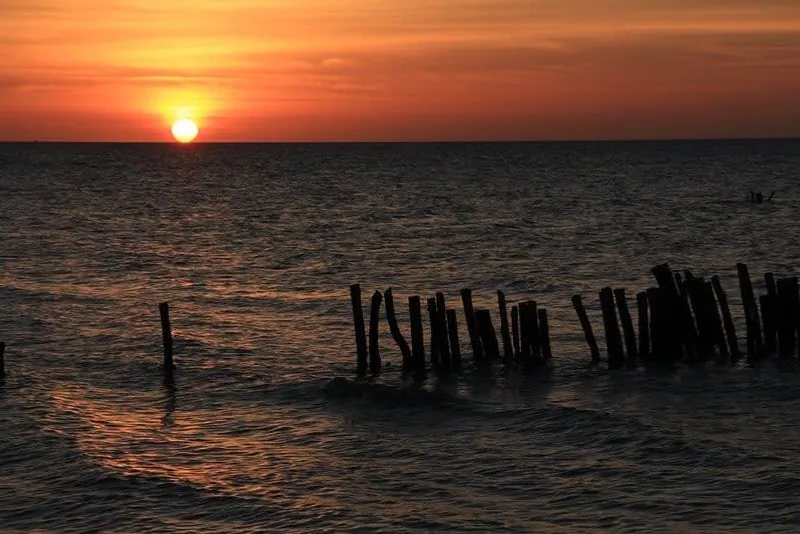
| Couples / romance | November-February | Perfect weather, uncrowded, sunsets from Punta Cocos |
| Families with children | November-February | No jellyfish, cool evenings, manageable heat |
| Solo travel | March-May | Social vibe returning, prices fair, wildlife still active |
| First visit to Mexico | March-April | See Holbox at its best without the rainy-season caveats |
Getting to Holbox (and Why Season Changes the Trip)
Holbox is reached by ferry from Chiquila, a small port 141km north of Cancún (about 2 hours driving). The ferry takes 20-25 minutes and costs 200-250 MXN ($10-12 USD) each way.
Timing the journey:
- June-October: Afternoon ferries can be rough if wind picks up after rain. Take morning ferries when possible.
- September: Check marine weather before crossing. Ferry operators cancel in rough conditions.
- December 20-Jan 5 and July-August: Ferries run at capacity. Arrive at Chiquila 30 minutes early.
Getting there:
- From Cancún: Colectivo from ADO terminal to Chiquila (~200 MXN, 2.5 hrs) + ferry, or rental car to Chiquila
- Car: Park at Chiquila parking lots (~100 MXN/day) — no cars on Holbox, so your car stays on the mainland
Frequently Asked Questions
Is Holbox worth visiting outside whale shark season?
Absolutely — especially March through May. You get Holbox’s best weather, flamingos at peak, the bioluminescence building (faint but present), clear jellyfish-free water, and prices 30-50% below July rates. November through February also delivers excellent conditions. Many repeat visitors actually prefer the off-season for its slower, quieter atmosphere.
How far in advance should I book for whale shark season?
Book accommodation 4-8 weeks ahead for July and August — good places sell out. For Christmas and New Year (Dec 20-Jan 5), book 2-3 months ahead. The rest of the year, 1-2 weeks is usually sufficient, though Holbox accommodation is limited enough that advance booking always makes sense.
Can you snorkel or swim in Holbox year-round?
Yes. The water temperature stays above 24°C all year, and the shallow, calm lagoon-side water makes Holbox one of Mexico’s most reliably swimmable beaches. The one exception: June through September, jellyfish are present in the open water. Wearing a rash guard or the wetsuit provided on whale shark tours solves this. The lagoon-facing beach is calmer than the open ocean side and has fewer jellyfish.
What’s the electricity situation?
Holbox’s power supply has historically been unreliable, particularly in summer. While a submarine cable has improved reliability in recent years, outages still happen — especially during heavy rain or high-demand periods in July-August. Bring a power bank and download maps and entertainment before arriving.
Is Holbox still worth it given the crowds in July-August?
Yes, but with managed expectations. Holbox at peak season (July-August) is busy for a “remote” island, but still tiny compared to Playa del Carmen or Cancún. If whale sharks are your reason for coming, the crowds are part of the deal and worth it. If you want the quiet, coconut-palms-and-no-one-around Holbox you’ve seen in travel photos, come in February or March.
More Holbox Planning Guides
- Holbox Island Travel Guide — Complete overview: getting there, beaches, where to stay, bioluminescence
- Things to Do in Holbox — 25 activities ranked, from whale sharks to Punta Cocos hammocks
- Holbox Beaches — Best swimming spots, Punta Mosquito, Punta Cocos, and beach expectations
- Best Hotels in Holbox — Where to stay by beach area and travel style
- Best Restaurants in Holbox — Where to eat lobster pizza, ceviche, breakfast, and beach dinners
- Cancún to Holbox — How to reach the island from the airport and hotel zone
- Sargassum Mexico 2026 — Better beach picks if seaweed conditions shift elsewhere in the Caribbean
- Swim With Whale Sharks in Mexico — Holbox vs Isla Mujeres vs Cancún for tours
- Best Time to Visit Mexico — National seasonal overview
- Isla Mujeres Travel Guide — Alternative base for whale shark tours
- Day Trips from Cancún — Options if visiting Holbox as a day trip