Best Cenotes in the Riviera Maya 2026: 20 Swimming Holes Ranked
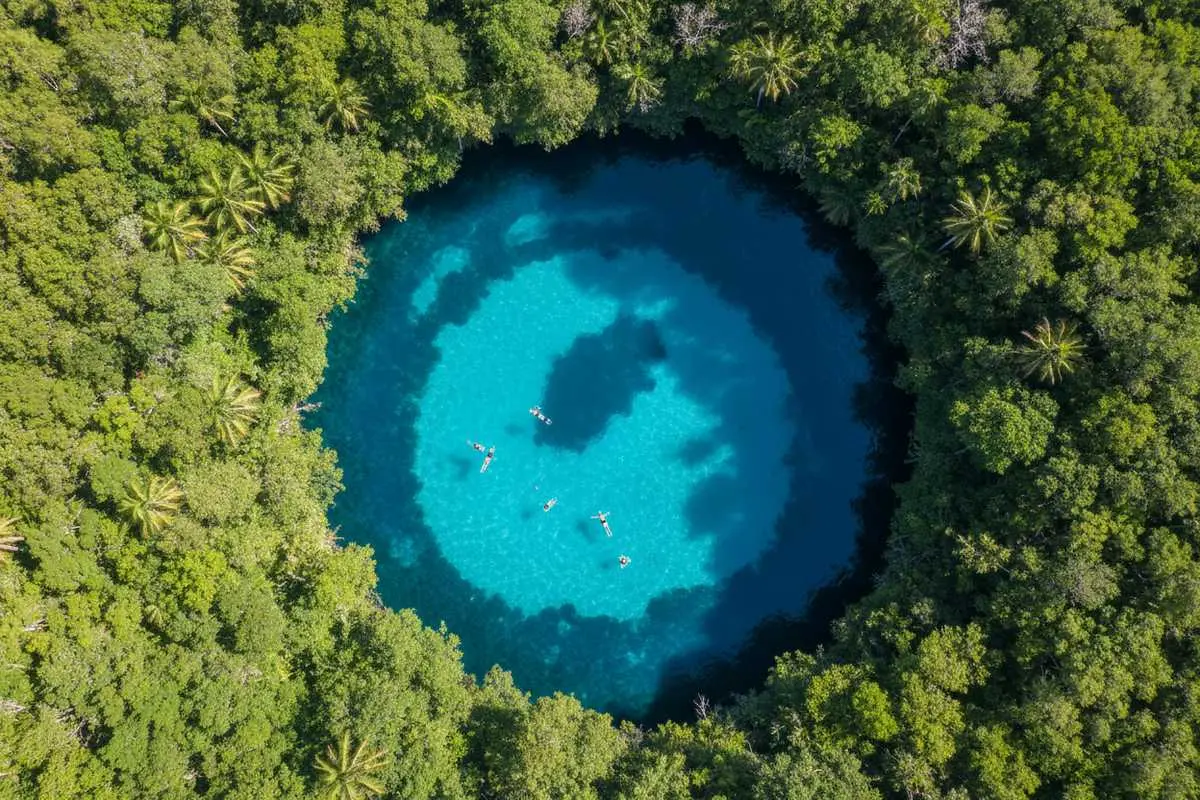
The Riviera Maya has over 6,000 cenotes — but most visitors only know a handful. These natural sinkholes are the underground soul of the Yucatán Peninsula: ancient freshwater pools where Maya priests performed sacred ceremonies, where cave divers chase visibility that exceeds 100 meters, and where you can swim with turtles 4 kilometers from Tulum.
Here’s the full breakdown: 20 cenotes ranked by location and experience, with 2026 entry fees, honest crowd intel, and everything you need to plan the right visit.
20 Best Cenotes at a Glance
| Cenote | Location | Type | Entry (MXN) | Best For |
|---|---|---|---|---|
| Gran Cenote | 4km from Tulum | Open + cave | 500 | Turtles, snorkeling |
| Cenote Dos Ojos | ~22km north of Tulum | Cave | From ~400 | Cave diving |
| Cenote Angelita | ~17km south of Tulum | Open | ~300–350 | Advanced diving |
| Casa Cenote | ~11km north of Tulum | Open | ~250–300 | Mix fresh/saltwater |
| Cenote Calavera | 3km from Tulum | Open | 250 | Cliff jumping |
| Cenote Azul | ~25km south of PDC | Open | Confirm direct | Families, swimming |
| Cenote Cristalino | ~25km south of PDC | Open | US$25 | Open-air swimming |
| Jardín del Edén | ~25km south of PDC | Open | ~300 | Snorkeling, fish |
| Chaak Tun | ~4.7km inland from PDC | Cave | Check official booking | Close to town |
| Río Secreto | ~8–10km south of PDC | Cave | From US$89 | Guided cave tour |
| Cenote Ik Kil | 3km from Chichen Itza | Open | 180 | Ruins combo |
| Cenote Suytun | 7km from Valladolid | Cave (semi) | 200 | Photo, light beam |
| Cenote Xkekén (Dzitnup) | 7km from Valladolid | Cave | 150 | Cave swim |
| Cenote Samulá | 7km from Valladolid | Cave | 150 | Cave atmosphere |
| Cenote Zaci | In Valladolid town | Ancient | 50 | Budget, accessible |
| Cenote Oxman | 7km from Valladolid | Open | 200 | Swing, hacienda |
| Cuzamá 3-cenote circuit | 45km from Mérida | Cave | 200 | Unique horse-cart |
| Cenote Xlacah | Dzibilchaltún ruins | Open | 80 | Ruins + swim combo |
| Cenote Verde Lucero | Ruta de Cenotes | Cave | 200 | Less crowded |
| Siete Bocas | Ruta de Cenotes | Cave (7 openings) | 200 | Adventure |
Cenotes Near Tulum
Gran Cenote — The Best All-Around Pick
Distance from Tulum: 4km on Highway 109 toward Cobá
Entry fee: 500 MXN (~$29 USD)
Hours: 8 AM – 4:45 PM
Best for: Turtles, snorkeling, swimming, first-timers
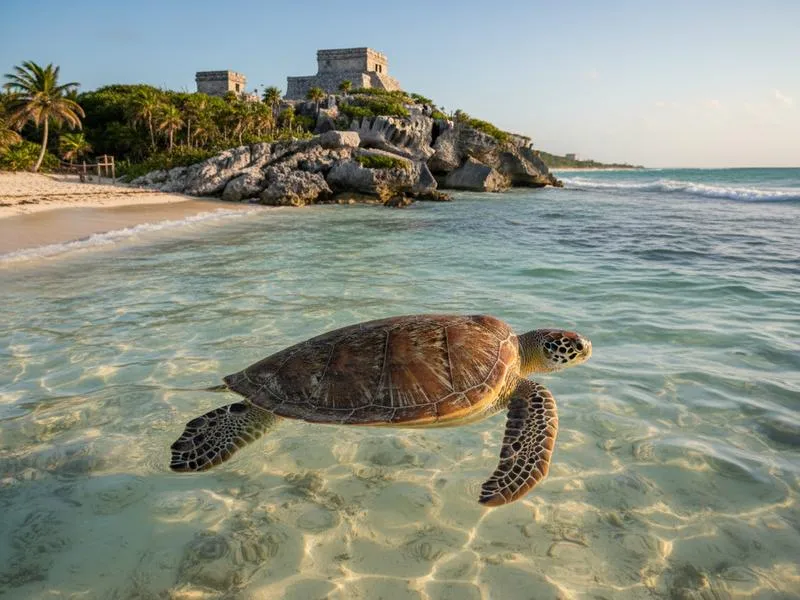
Gran Cenote is the most popular cenote in the Riviera Maya for good reason: it’s close to town, turtles swim past you in the morning, and the setting is genuinely beautiful — a large open pool connected by a natural tunnel to a second, cave-like chamber with stalactite formations.
Arrive before 9 AM to see the freshwater turtles before the crowds disturb them. By 10 AM the wooden platform is standing-room-only. Life jackets are mandatory and included. Snorkel rentals available on-site.
See also: Best Cenotes Near Tulum →
Cenote Dos Ojos — Best Cave Diving Cenote in Mexico
Distance from Tulum: about 22km north Entry fee: from about 400 MXN; packages vary Best for: Cave diving, advanced snorkeling
“Two Eyes” gets its name from twin circular sinkholes connected by a 400-meter wooden boardwalk. The site is part of the Sistema Sac Actun — the world’s longest underwater cave system at 370km — making this one of the top dive sites anywhere on the planet.
Non-divers can swim or snorkel in designated areas, while cavern and cave routes require the appropriate guide and certification. The site’s two main openings and limestone formations—not a hydrogen-sulfide layer—are the draw for most visitors.
See also: Cenote Dos Ojos Complete Guide →
Cenote Angelita — Advanced Dive, Surreal View
Distance from Tulum: about 17km south Entry fee: about 300–350 MXN site access; dive packages cost extra Best for: Advanced open water divers
At 60 meters deep, Cenote Angelita is a dramatic dive only — not suited for swimming or casual snorkeling. At 25–30 meters depth, you pass through a thick hydrogen sulfide cloud layer that creates the illusion of an underwater river flowing through a jungle (submerged trees visible through the milky cloud). One of the most photographed dive experiences in the world.
Minimum: Advanced Open Water certification.
Casa Cenote (Cenote Manatee)
Distance from Tulum: about 11km north Entry fee: about 250–300 MXN Best for: Saltwater + freshwater mix, families, snorkeling
Casa Cenote connects to the Caribbean Sea through underground channels, mixing salt and fresh water in the same pool. Mangrove roots line the edges. Both freshwater fish and saltwater species share the same cenote — surreal to snorkel. It sits near Tankah Bay, so you can combine a cenote swim with beach time if you have suitable transport.
The shallow depth (5–6 meters) makes this one of the best family options near Tulum.
Cenote Calavera (Skull Cenote)
Distance from Tulum: 3km toward Cobá
Entry fee: 250 MXN
Best for: Cliff jumping, local vibe
The three openings from above resemble a skull’s eye sockets and mouth. Visitors jump through the openings or use the ladder, following staff instructions. It combines well with Gran Cenote because both are on the Cobá road.
Cenotes Near Playa del Carmen
Cenote Azul — Best for Families
Distance from PDC: about 25km south on Highway 307 Entry fee: confirm directly Best for: Families, casual swimming
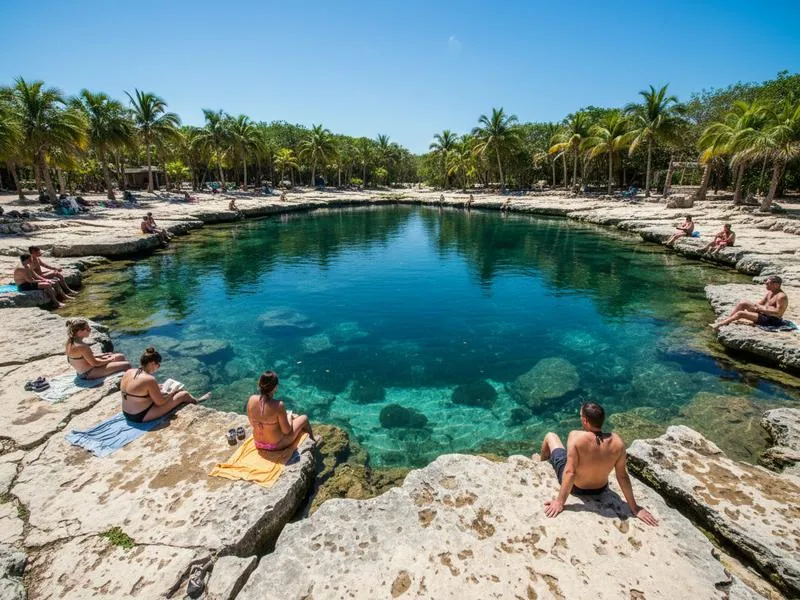
A large open cenote with multiple swimming areas, including a shallow section perfect for children. Less touristy than Gran Cenote with easier parking. Often the best option if you want to swim without fighting crowds. Combines well with a stop at Akumal (sea turtles, 4km further south).
Take a southbound colectivo and ask the driver to stop at “Cenote Azul.” Confirm the current departure point and fare locally.
Cenote Cristalino
Distance from PDC: about 25km south Entry fee: US$25 adults; US$15 ages 5–12; under 5 free Best for: Open-air swimming, snorkeling, jumping
Cristalino sits in the same Highway 307 corridor as Cenote Azul. Natural jump points, clear water, and fish make it a straightforward swimming stop. Use a colectivo or taxi between separate entrances rather than walking along the highway.
Jardín del Edén (Ponderosa)
Distance from PDC: about 25km south Entry fee: around 300 MXN; confirm before travel Best for: Snorkeling fish, cliff jumping, relaxed atmosphere
A large open cenote with abundant fish life and natural platforms for jumping. Less crowded than the Tulum cenotes. The surrounding jungle setting is particularly lush. Bring your own snorkel gear for the best experience.
Chaak Tun — Closest Major Cave Cenote to Town
Distance from PDC: about 4.7km inland on Avenida Juárez Entry fee: check the official booking page Best for: Cave cenote experience without renting a car
Chaak Tun is reached by taxi or prebooked transport rather than a practical walk from the tourist center. Visits are guided through cave chambers with stalactite formations and clear water.
Río Secreto — Best Cave Formation Tour
Distance from PDC: about 8–10km south Entry fee: from US$89 Best for: Guided underground-river tour, dramatic cave formations
Half the tour involves wading through an underground river; the other half involves walking through dry cave chambers with extraordinary stalactite/stalagmite formations. Not primarily a swimming experience — more of a guided cave tour. Recommended for people who want to experience cave systems without diving.
See also: Best Cenotes Near Playa del Carmen →
Cenotes Near Valladolid
Valladolid sits at the center of Yucatán cenote country. Cenotes here are cheaper, less touristy, and often more authentic than the overdeveloped Riviera Maya options.
Cenote Suytun — Most Photogenic Cenote in Mexico
Distance from Valladolid: 7km east
Entry fee: 200 MXN (2026)
Hours: 9 AM – 5 PM
Best for: Photography, the light beam
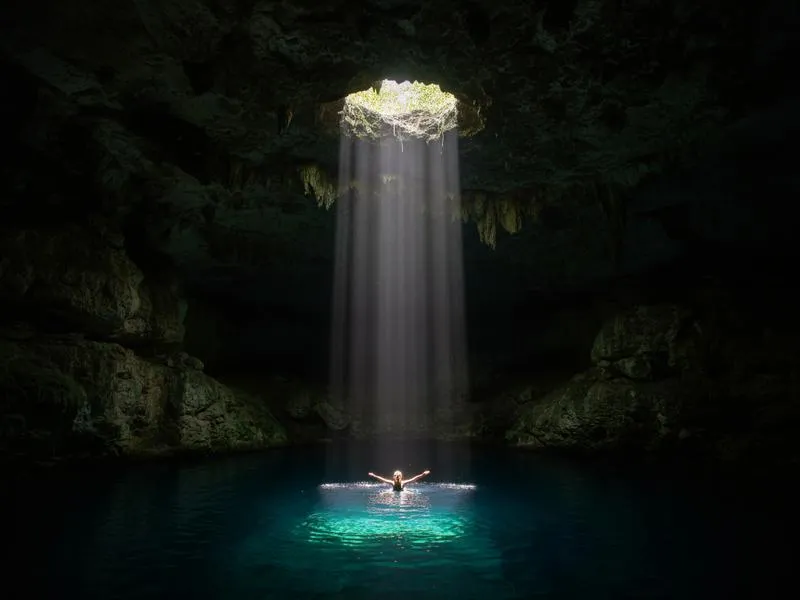
A cave cenote with a stone platform extending into the center of the pool. Around midday (11 AM–1 PM), a single beam of sunlight pierces through a hole in the cave ceiling and illuminates the platform. The most photographed cenote scene in all of Mexico.
Arrive before 10 AM for photos without crowds; the light beam effect is strongest 11 AM–1 PM. Cash only.
See also: Cenote Suytun Complete Guide →
Cenote Xkekén (Dzitnup) — Classic Cave Swim
Distance from Valladolid: 7km west (near Dzitnup village)
Entry fee: 150 MXN
Best for: Cave atmosphere, swimming
An underground cave cenote accessed by descending stairs through a narrow opening. A single hole in the roof lets in a beam of natural light. Stalactites hang from the ceiling. One of the most classic cave cenote experiences in Yucatán — less staged than Suytun, more naturally atmospheric. Sits 200m from Cenote Samulá; visit both together.
Cenote Samulá — Twin to Xkekén
Distance from Valladolid: 7km west
Entry fee: 150 MXN
Best for: Tree roots, underground atmosphere
Similar to Xkekén but with more dramatic tree roots descending from above into the water. A combo ticket for both Xkekén + Samulá often costs 250–280 MXN. The circuit is a 5-minute walk between them.
Cenote Zaci — Best Budget Cenote
Distance from Valladolid: In town center, 5-minute walk from main square
Entry fee: 50 MXN
Best for: Budget, accessibility, afternoon dip
An ancient cenote in the heart of downtown Valladolid. Black catfish swim through the green-tinted water. Surrounded by restaurants and shaded walkways. The most affordable cenote in the region — you won’t find another for 50 MXN with this quality. Ideal for adding to a town walk.
Cenote Oxman at Hacienda San Lorenzo
Distance from Valladolid: 7km
Entry fee: 200 MXN
Best for: The swing, hacienda aesthetic
An open cenote on the grounds of a working hacienda. A rope swing hangs over the water for dramatic jumps. The hacienda restaurant serves traditional Yucatecan food. One of the most Instagram-friendly cenotes outside of Suytun.
See also: Best Cenotes Near Valladolid →
Cenotes Near Cancun
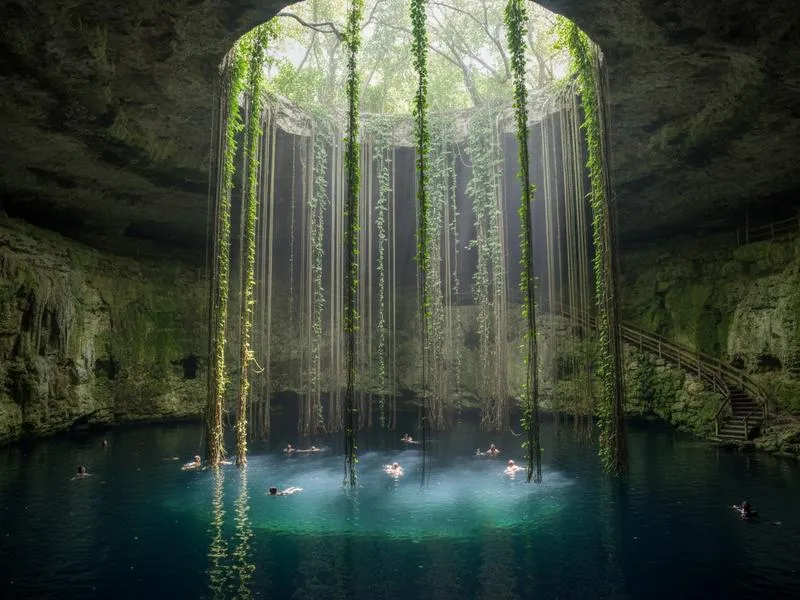
Cenote Ik Kil — Best Ruins Combo
Distance from Cancun: 175km (3km from Chichen Itza)
Entry fee: 180 MXN
Hours: 8 AM – 6 PM
Best for: Chichen Itza day trips
Ik Kil is the most famous cenote combo with Chichen Itza ruins — only 3km away. A circular sinkhole 26 meters deep with vines cascading from the rim to the water surface. Access via stairs (no ropes or ladders needed). Lockers, showers, and a restaurant on-site.
The site gets very busy from 10:30 AM–1 PM (when tour buses from Cancun arrive). Go at opening or wait until after 2 PM.
See also: Cenote Ik Kil Complete Guide →
Ruta de Cenotes — Cenote Verde Lucero + Siete Bocas
Distance from Cancun: 30km via Puerto Morelos
Entry fee: 150–200 MXN each
Best for: Less-touristy alternatives, independent exploration
The Ruta de los Cenotes is a 20km jungle road with over 60 cenotes. Cenote Verde Lucero offers intimate swimming with green-tinged water and minimal crowds. Siete Bocas (“Seven Mouths”) has 7 connected underground openings — more adventurous, less developed. Both are best reached by rental car.
See also: Best Cenotes Near Cancun →
Cenotes Near Mérida
Cuzamá 3-Cenote Horse-Cart Circuit — Most Unique Experience
Distance from Mérida: 45km southeast
Entry fee: 200 MXN per person + horse cart hire (500–700 MXN for the cart)
Best for: Unique experience, less touristy cave cenotes
The only cenote experience of its kind in Mexico: horse-drawn carts run on old henequén plantation railway tracks through the jungle to three connected cave cenotes. The caves are undeveloped and atmospheric — ropes to descend into one, narrow wooden ladders into another. The whole circuit takes 2–3 hours.
See also: Best Cenotes Near Mérida →
The 4 Types of Cenotes Explained
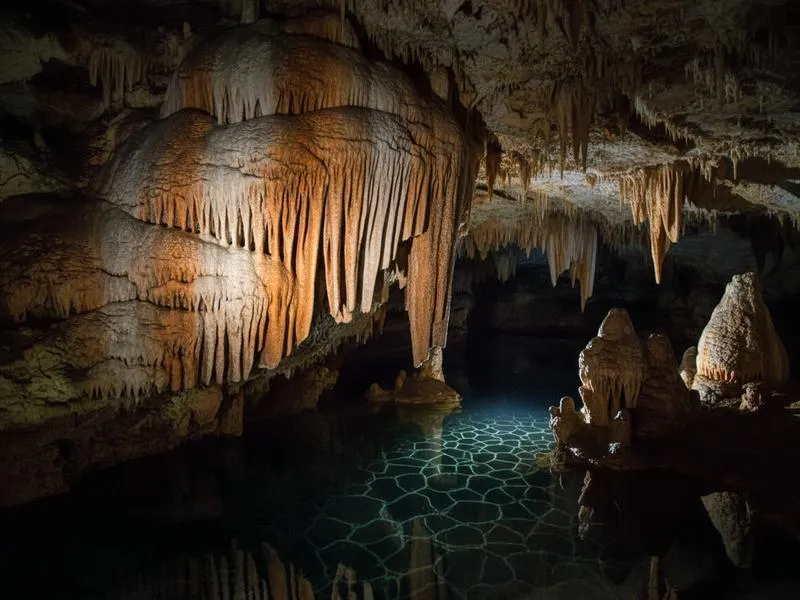
Understanding cenote types helps you pick the right experience:
| Type | Description | Best Examples |
|---|---|---|
| Cave | Fully underground, small opening, stalactites, dramatic lighting | Cenote Suytun, Xkekén, Choo-Ha |
| Semi-open | Partial roof collapse, dramatic light beams | Cenote Dos Ojos, Suytun |
| Open | Complete roof collapse, large open pool | Gran Cenote, Cenote Azul, Ik Kil |
| Ancient | Evolved into lake-like form, wide and shallow | Cenote Zaci, Laguna Cobá |
The Chicxulub asteroid impact 65 million years ago fractured the Yucatán’s limestone bedrock across the entire peninsula, creating the network that eventually formed the 6,000+ cenotes we see today. The water stays at 25–27°C year-round and can have visibility exceeding 100 meters — unlike almost anything else on Earth.
Cave Diving in Riviera Maya Cenotes
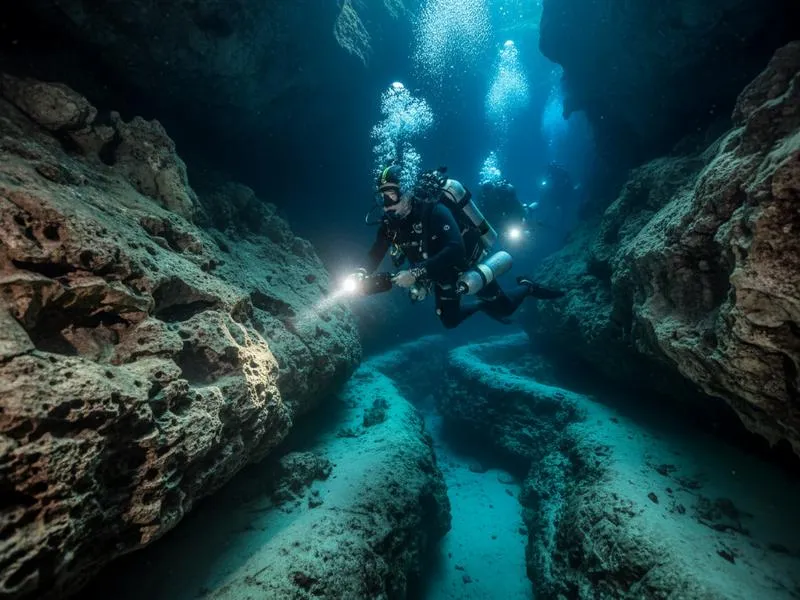
The Riviera Maya is one of the top 3 cave diving destinations globally. The Sistema Sac Actun — confirmed as the world’s longest underwater cave system at 370km — passes under most of Tulum and extends toward Cobá.
Certification Requirements
| Dive Type | Certification Required | Where |
|---|---|---|
| Cavern diving | Open Water minimum | Most cenotes (within natural light) |
| Advanced cavern | Advanced Open Water | Cenotes with deeper chambers |
| Cave diving | Cave Diver cert | System dives beyond natural light |
The Pit, Angelita, and deeper Dos Ojos sections require minimum Advanced Open Water. True cave diving (beyond the cavern zone) requires specialized cave certification — this is not accessible to recreational divers without additional training.
Best Cenotes for Cave Diving
- Cenote Dos Ojos — Barbie Line + Sistema Sac Actun access
- Cenote Angelita — hydrogen sulfide “underground river” at 30m depth
- The Pit (El Pit) — 36m deep, light beams, halocline
- Chac Mool — halocline effect, excellent visibility
- Cenote Carwash — fossil remains, easier navigation for beginners
Diving Costs
- Full 2-tank cenote dive: $170–250 USD (includes equipment, guide, transport)
- PADI Open Water course with cenote dives: $350–450 USD
- Cavern specialty add-on: $150–200 USD
Essential Info for All Visitors
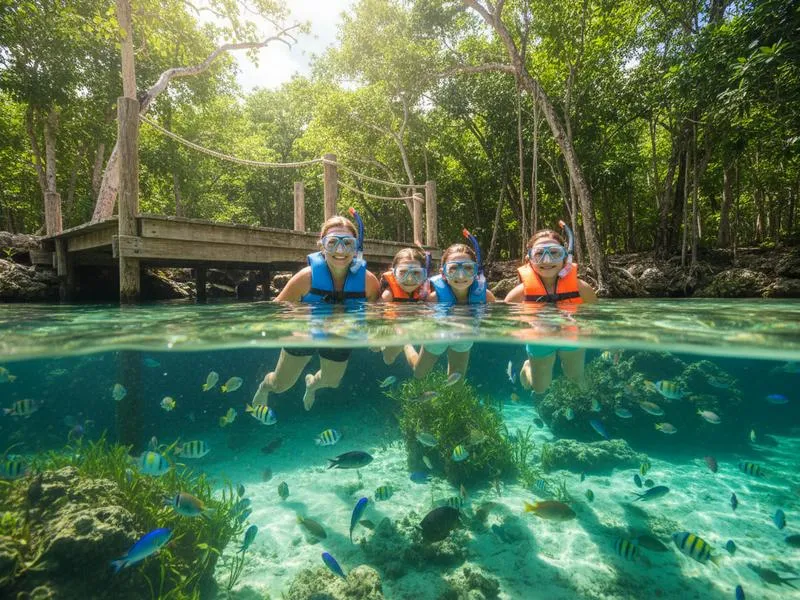
Sunscreen and Skin-Product Rules
Rules are set and enforced by individual operators. Some sites allow only biodegradable products after a shower; others, including Cenote Azul, prohibit all sunscreen, repellent, makeup, and lotions before swimming. Arrive product-free, shower as instructed, and use a UV rash guard or hat between swims.
Cash Only
Most cenotes do not accept credit cards. Bring exact or small bills. ATMs in Tulum and Playa del Carmen can run out of cash on busy weekends. Plan ahead.
Best Time to Visit
- Arrive before 10 AM. The entire Riviera Maya cenote system peaks at 10 AM–2 PM.
- Dry season (November–April): Best water clarity and cooler temperatures.
- Semana Santa (Mar 29–Apr 5, 2026): All popular cenotes at maximum capacity. Arrive at opening time or accept the crowds.
- July–August: School holiday crowds; early arrival essential.
- May–October: Fewer tourists but more humid. Still excellent cenote conditions.
Getting There
- Rental car: Best option for visiting multiple cenotes and choosing your own schedule. Compare rates →
- Colectivos: Highway 307 colectivos can work for roadside sites south of Playa del Carmen. Gran Cenote is west of Tulum on the Cobá road, so use a bike or taxi rather than relying on an ADO or Highway 307 colectivo.
- Organized tours: Day tours to Gran Cenote + Dos Ojos + Ik Kil available from Cancun, PDC, Tulum. Good value if you don’t want to drive.
What to Bring
- UV rash guard and hat; apply sunscreen only after your final swim or where the operator permits it
- Cash (small bills)
- Water shoes (slippery surfaces)
- Snorkel mask (rentals available but your own fits better)
- Dry bag for electronics
- Towel
Cenote Guides by Location
Use these to plan based on your base:
- Staying in Tulum? → Best Cenotes Near Tulum — Gran Cenote, Dos Ojos, Angelita, Casa Cenote, Calavera
- Staying in Playa del Carmen? → Best Cenotes Near Playa del Carmen — Chaak-Tun, Azul, Cristalino, Río Secreto
- Staying in Valladolid? → Best Cenotes Near Valladolid — Suytun, Xkekén, Samulá, Zaci, Oxman
- Staying in Cancun? → Best Cenotes Near Cancun — Ik Kil (Chichen Itza), Ruta de Cenotes
- Staying in Mérida? → Best Cenotes Near Mérida — Cuzamá circuit, Xlacah/Dzibilchaltún
- Individual guides: Gran Cenote · Dos Ojos · Cenote Ik Kil · Cenote Suytun
- By location: Cenotes near Chichen Itza · Cenotes near Tulum · Cenotes near Playa del Carmen · Cenotes near Mérida
Also: Best Cenotes in Mexico (all regions) · Mexico Cenotes Guide (types + safety)
We recommend travel insurance for Mexico trips — covers adventure activities including cenote diving and snorkeling.