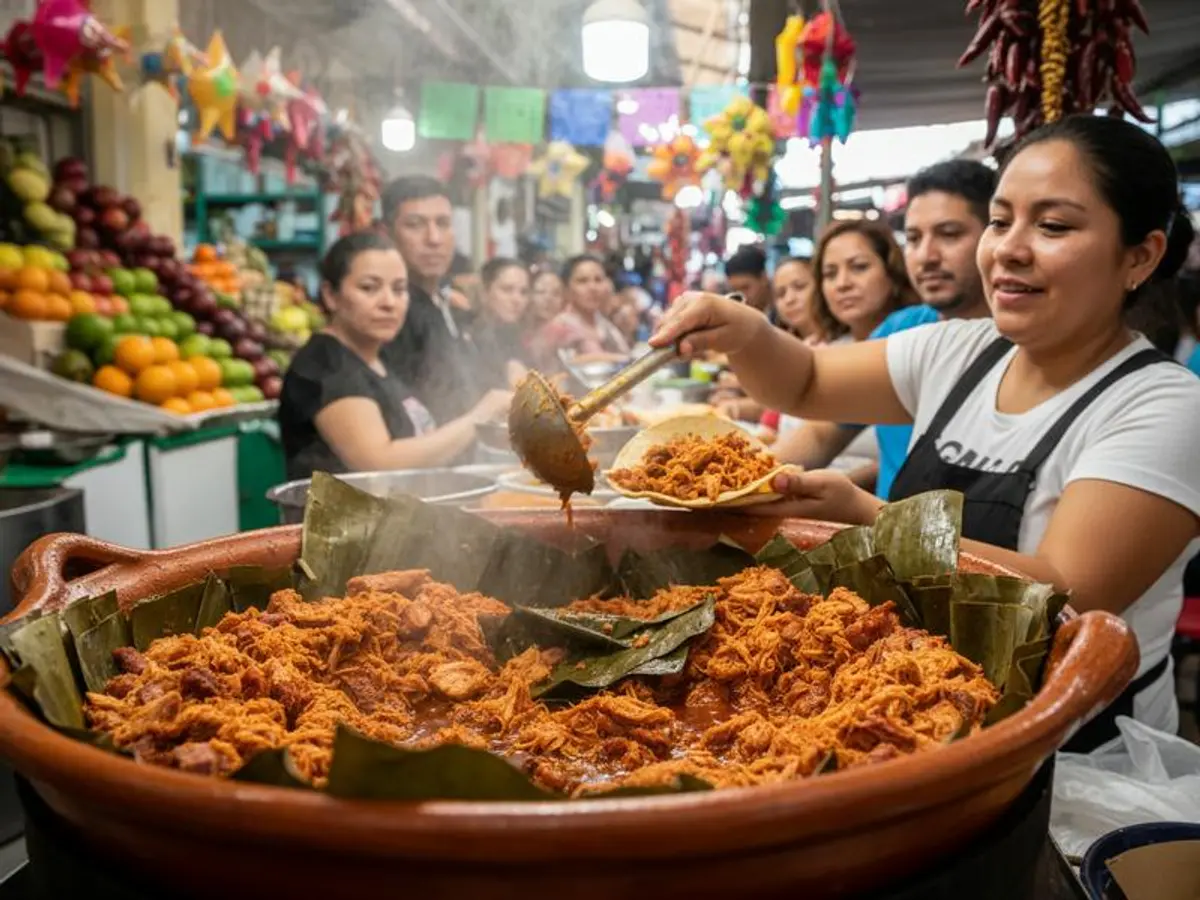
Best Restaurants in Mérida 2026: Yucatecan Food & Where Locals Eat
Yucatecan food is not Mexican food with a regional accent. It is its own culinary tradition with Maya roots, indigenous ingredients that don’t appear anywhere else in the country, and cooking methods — pit-cooking, achiote-curing, fermented corn drinks — that predate Spanish colonization by centuries. Coming to Mérida expecting tacos al pastor and enchiladas will leave you confused. Coming prepared to eat cochinita pibil, papadzules, and sopa de lima will leave you planning a return trip.
This guide covers the full spectrum: Sunday morning market rituals, the marquesita stands you must visit by 9pm, traditional Yucatecan restaurants for first-timers, the fine dining worth the price, and the student-budget streets where you eat well for almost nothing.
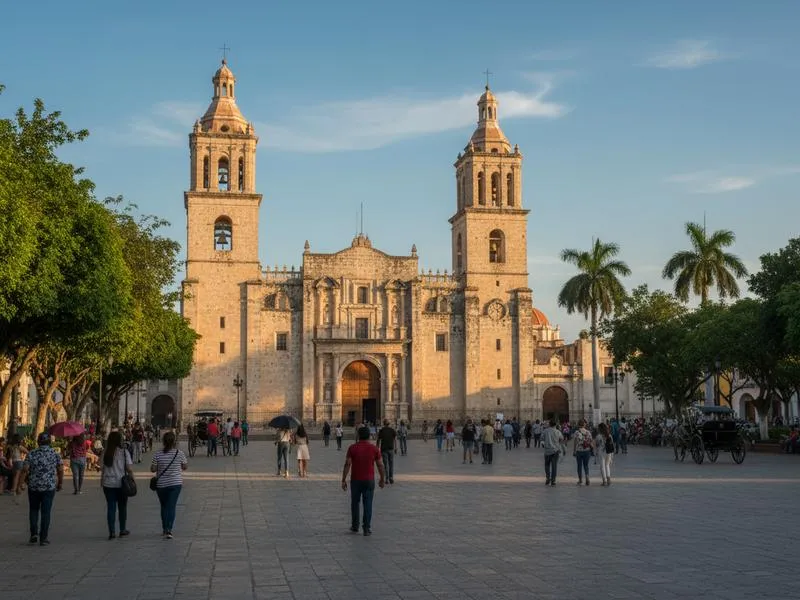
For orientation on the city itself, start with our Mérida travel guide.
Yucatecan Food: What Makes It Different
Before the restaurant list, the ingredient context — because Yucatecan cuisine uses things you won’t recognize from other Mexican cooking:
Achiote (annatto): A brick-red seed paste made from annatto seeds, ground with vinegar, garlic, and spices. It’s the base of cochinita pibil and gives Yucatecan food its distinctive earthy-sweet color. Not spicy. Deeply flavorful.
Habanero: The Yucatan uses habanero as its primary chili — not jalapeño, not serrano. It’s significantly hotter but also has a fruity, floral quality that other chilies don’t. It appears in table salsas, the pickled habanero onions served with cochinita, and in cooked form in many dishes.
Sour orange (naranja agria): A bitter citrus that looks like a regular orange but tastes nothing like one. It’s the souring agent in cochinita pibil marinades and sopa de lima. If your sopa de lima tastes just like chicken soup, the kitchen skipped the naranja agria.
Chaya: A leafy green plant indigenous to the Yucatan Peninsula with a higher protein content than spinach. The restaurant La Chaya Maya is named after it. You’ll find it in soups, scrambled eggs, and smoothies throughout the city.
Recado negro: A paste made from charred chiles, spices, and burned tortilla — the base of Mérida’s dark mole equivalents, used in some traditional preparations.
Traditional Yucatecan Restaurants
La Chaya Maya — The Tourist-Facing Institution That Earns It
La Chaya Maya is every guidebook’s first recommendation and for defensible reasons: it’s consistent, it covers the full Yucatecan canon, and it serves people who’ve never heard of papadzules alongside Mérida residents celebrating birthdays in the same dining room.
The cochinita pibil is made correctly — slow-cooked, not rushed, with proper pickled habanero onion accompaniment. The sopa de lima uses real naranja agria. The papadzules come with the proper pumpkin seed sauce (not the flour-thickened substitute). The chaya water (agua de chaya) is bright green and slightly grassy — drink it.
It’s not cheap by Mérida standards: 200-350 MXN per person. It’s reliable. For a first introduction to Yucatecan food when you don’t know the city yet, this is the right call.
Average spend: 200-350 MXN per person
Best for: First-time visitors, introduction to the full Yucatecan menu
El Tucho — Cantina Format, Botanas Culture
El Tucho operates on the Yucatecan cantina model: you order drinks, and food comes automatically. This is the botanas system — small dishes brought to your table as long as you keep ordering drinks. The food quality depends on what’s running that day, but it’s consistently traditional and more interesting than the tourist restaurant menus.
The crowd is local — professionals on long lunches, couples, people who’ve been coming for years. The drinks are beer and mezcal. The botanas rotate through Yucatecan classics: salbutes (puffed tortillas with turkey), panuchos, braised meats, pickled vegetables.
Arrive before 2pm for the best botana rotation. Budget 150-250 MXN per person including drinks.
Average spend: 150-250 MXN per person
Best for: Experiencing cantina culture, locals-adjacent dining
Amaro — Colonial Courtyard, Vegetarian Options
Amaro is set in a restored colonial mansion on Calle 59 with a courtyard that fills with natural light at lunch. The menu skews more broadly Mexican than strictly Yucatecan — a deliberate choice — but includes regional dishes and has more vegetarian options than most traditional restaurants in the city.
The vegetarian cochinita (using jackfruit as the protein base) is one of the better adaptations in Mérida. The agua de chaya and limonada con chía are both good. Weekend brunch (Saturday-Sunday 10am-2pm) fills the courtyard with a mix of Meridanos and visitors.
Average spend: 200-350 MXN per person
Best for: Vegetarians, colonial setting, brunches
Wayane — Upscale Yucatecan Without Fine Dining Prices
Wayane occupies the space between traditional restaurant and fine dining: elevated Yucatecan cooking at 300-500 MXN per person rather than the 1,200-2,000 MXN of K’u’uk. The kitchen takes classic dishes seriously — the poc chuc (thinly sliced pork marinated in sour orange, grilled over charcoal) is exceptional — and adds technique without losing the identity of the source material.
Good for a dinner when you want something more considered than La Chaya Maya but aren’t ready to commit to a tasting menu.
Average spend: 300-500 MXN per person
Best for: Elevated Yucatecan on a moderate budget
Markets: Where to Eat Like a Meridano
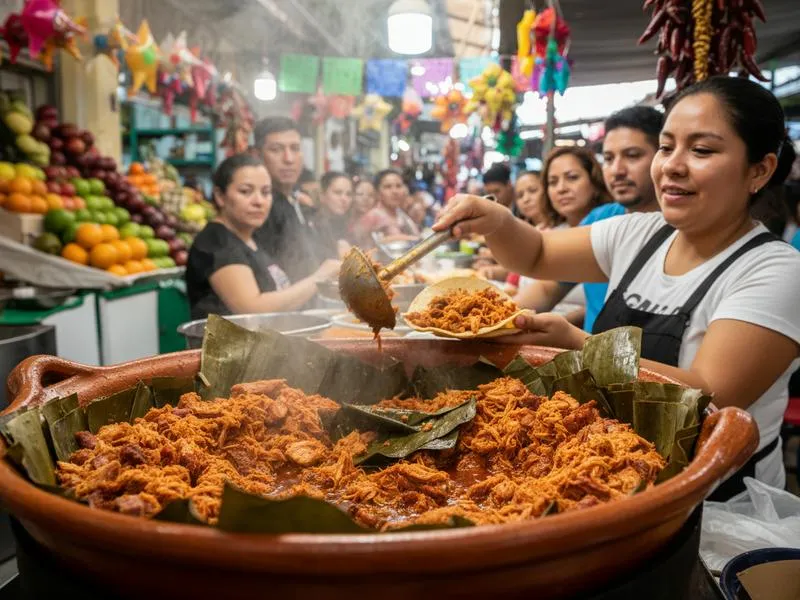
Lucas de Gálvez Market — Sunday Cochinita and Daily Breakfast
Lucas de Gálvez is Mérida’s main public market, a sprawling covered space near the centro histórico. The food section in the interior runs from early morning — vendors set up by 6:30am — and the cochinita pibil vendors specifically run on Sunday from 7am until they sell out (usually by 11am, often earlier).
Sunday at Lucas de Gálvez is the single best food experience in Mérida for the price: a full cochinita pibil breakfast — meat on tortillas or panuchos, pickled habanero onions, black beans, naranja agria squeeze — for 40-80 MXN. The pit-cooked pork has been slow-cooking overnight. The onions have been pickling since Saturday. This is what the dish is supposed to taste like.
Weekday breakfasts at the market are also excellent: salbutes, panuchos, tamales colados (steamed in banana leaves, Yucatecan style), and papadzules for 50-100 MXN.
Average spend: 40-100 MXN per person
Best for: Sunday cochinita ritual, cheapest authentic food in Mérida
San Benito Market — Neighborhood-Level Market Eating
San Benito is a smaller covered market in a residential Mérida neighborhood — less tourist visibility than Lucas de Gálvez, more genuinely local. The comida corrida stalls here (noon to 3pm) serve set lunches of soup, main, and drink for 70-100 MXN. The clientele is the neighborhood: workers, families, people eating lunch without thinking about it being a food experience.
Average spend: 70-100 MXN per person
Best for: Local lunch culture, off the tourist circuit
Fine Dining: Mérida’s World-Class Table
Apoala — Oaxacan-Yucatecan Fusion
Apoala bridges two of Mexico’s great culinary traditions — Oaxacan and Yucatecan — in a colonial building near Plaza Santa Ana. The kitchen uses Yucatecan proteins (pibil preparations, local seafood) with Oaxacan framework: moles, tlayudas, and mezcal-centric bar programming.
The tlayuda de pibil is the signature: Oaxacan-style large tortilla with slow-cooked Yucatecan pork, Oaxacan cheese, and a habanero-based salsa. Budget 400-700 MXN per person. The mezcal list is serious.
Average spend: 400-700 MXN per person
Best for: Mezcal enthusiasts, cross-regional Mexican cuisine
K’u’uk — The Best Restaurant in Mérida
K’u’uk is one of the Americas’ most ambitious Yucatecan restaurants. Chef Pedro Evia approaches traditional ingredients with molecular technique: cochinita pibil deconstructed into textured components, sopa de lima reimagined as a gel with crispy tortilla dust, papadzules reinterpreted through a pumpkin seed emulsion. It’s the kind of cooking where you understand the source dish better by experiencing the abstraction of it.
Tasting menu format (8-10 courses), 1,200-2,000 MXN per person before wine. Reserve 2-3 weeks ahead during high season (December-April). This is the meal you plan a trip around — not an afterthought.
Average spend: 1,200-2,000 MXN per person
Best for: Serious food travelers, special occasions
Rosas & Xocolate Restaurant — Hotel Dining Worth It
The restaurant at boutique hotel Rosas & Xocolate on Paseo de Montejo is one of those hotel restaurants that transcends its context. The kitchen focuses on Yucatecan ingredients through a contemporary lens, with a chocolate-centric dessert program (the xocolate in the name is not decorative). The setting — colonial mansion on Mérida’s grandest boulevard — is the best dining room ambiance in the city.
Non-hotel guests can and should reserve. Budget 500-900 MXN per person.
Average spend: 500-900 MXN per person
Best for: Romantic dinners, Paseo de Montejo setting, hotel dining that earns its price
Street Food: The Marquesitas Circuit
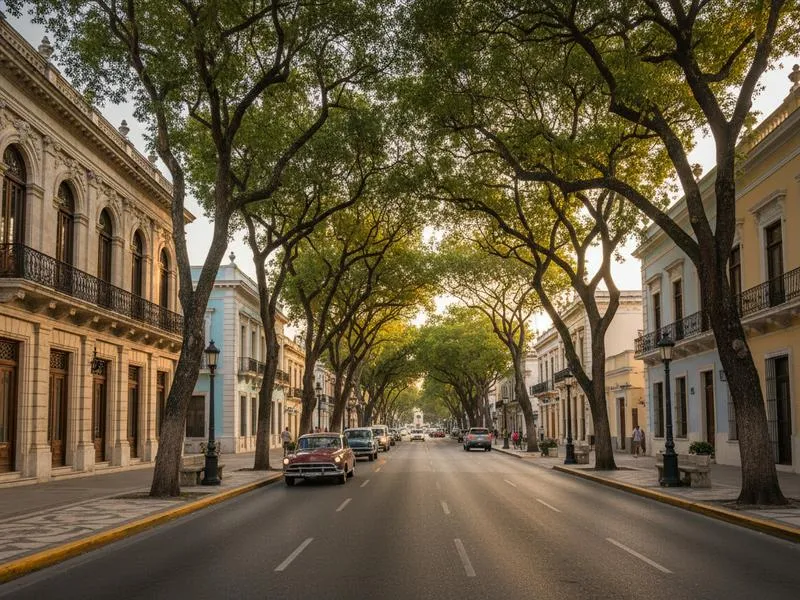
Parque Santa Lucía is the epicenter of Mérida’s marquesita culture. On weekend evenings (Friday-Sunday from 7pm), the park fills with food carts: marquesita vendors, elote (corn on the cob with cheese and chile), and various Yucatecan sweets.
The marquesita vendors at Santa Lucía: order the classic version first. Edam cheese and cajeta (goat’s milk caramel). The crepe is pressed on a round griddle, rolled around the filling while hot, eaten immediately. The contrast of salty melting cheese against sweet cajeta inside a crunch shell is Mérida’s defining street food experience.
The vendors who’ve been at the park for decades — the ones with the small, well-used carts rather than the bright franchise stands — are the ones to queue at. You’ll know them by the queue.
Cost: 25-45 MXN per marquesita
Best for: Evening street food culture, the definitive Mérida experience
Beyond Santa Lucía: Marquesita carts appear throughout the city on weekend evenings. The area around Parque de Santiago and the streets off Paseo de Montejo also have good regular vendors. Walking the centro histórico on a Friday night, you’ll encounter them organically.
Breakfast in Mérida
Café Crème
A coffee-forward breakfast spot popular with Mérida’s design and creative community. Excellent espresso drinks (rare in a city where café de olla is the default), good pan dulce, simple egg dishes. The crowd is laptop workers and young Meridanos rather than tourists. Go early (before 9am) for table availability on weekends.
La Guadalupana
Traditional Mérida breakfast: atole (warm corn-based drink), tamales de chaya, and pan de muerto year-round (not just November). La Guadalupana represents the neighborhood bakery model — nothing fancy, everything correct. The tamales colados (banana-leaf steamed, no masa husk) are the reason to go.
Hotel Breakfasts vs Street Food
The colonial boutique hotels (Rosas & Xocolate, Hacienda Xcanatun outside the city) serve very good breakfasts, but you’re paying for the setting: 200-350 MXN for what costs 80 MXN at Lucas de Gálvez market. The market breakfast wins on food quality. The hotel breakfast wins on experience. Both have their place depending on what morning you’re having.
Budget Eating: The UADY University Area
The Universidad Autónoma de Yucatán (UADY) campus is in the centro histórico, and the streets around it — particularly Calle 60 and the surrounding side streets — have the densest concentration of budget eating in central Mérida. Comida corrida spots run 50-80 MXN for a full set lunch. Juice stands, aguas frescas, and fruit vendors line the area.
The student budget zone: Calle 57 between 60 and 66, and the Mercado de Santa Ana neighborhood. Full sit-down meals with soup, main, and drink for 70-100 MXN.
The Sunday Cochinita Pibil Guide
Sunday morning in Mérida is organized around cochinita pibil. Understand how it works:
The timing: Vendors start the pork Saturday night or very early Sunday morning — pit-cooked (or slow-oven-cooked in the modern version) for 6-8 hours. It’s ready at 7am and sold out by noon at the popular spots. Arrive before 9am for best selection.
Where to go by priority:
- Lucas de Gálvez market — biggest selection, lowest prices, 40-80 MXN
- Neighborhood panaderías (bakeries) — many switch to cochinita service on Sunday mornings
- La Chaya Maya — if you prefer a sit-down restaurant setting, serves cochinita all Sunday
How to order: At market stalls, you order cochinita by peso (weight) or by number of tacos/panuchos. Say “dos panuchos de cochinita” or “un cuarto kilo de cochinita.” The vendor assembles everything. Add the pickled habanero onions (cebollas encurtidas) — they’re on the counter in a jar.
What makes Sunday cochinita different: The overnight cook produces a depth of flavor that shortened preparation can’t replicate. The fat from the pork has had time to render fully. The achiote and naranja agria have penetrated rather than just coated. This is why Sunday is the ritual.
Papadzules: The Most Underrated Yucatecan Dish
Papadzules deserve their own section because they’re consistently underordered by visitors who don’t know what they are, and they’re wonderful.
Papadzules are tortillas stuffed with hard-boiled egg, rolled and covered in a pumpkin seed sauce (pepita), then finished with a tomato-habanero salsa. The pepita sauce is thick, green, slightly nutty — nothing like the red and green salsas visitors expect from Mexican food. The egg filling is mild and lets the sauce be the story.
Order them at La Chaya Maya or at market stalls that list them. They’re cheap (50-80 MXN for a plate), filling, and give you a specific flavor profile you can’t get anywhere else in Mexico. This is Maya cooking in recognizable form.
Practical Notes
Reservations: K’u’uk requires advance booking — call or WhatsApp directly. Apoala and Rosas & Xocolate benefit from reservations on weekends. Traditional restaurants and markets: walk-in only.
Payment: Markets and street food are cash-only. Restaurants accept cards but many add a 3-5% surcharge. ATMs are widely available in the centro.
Hours: Markets start early (6:30-7am) and wind down by 3pm. Traditional restaurants peak at lunch (1-3pm) and dinner (8-10pm). Fine dining restaurants often don’t open until 1:30pm for lunch or 7:30pm for dinner.
Language: Menu English is rare outside the tourist-facing restaurants. Having Google Translate on your phone for market stalls helps. Yucatecan food terminology (salbutes, panuchos, papadzules) isn’t on most Spanish learning apps — this guide’s glossary above is your baseline.
Book Your Mérida Food Experiences
Guided food market tours, cooking classes, and cenote day trips (with lunch):
Browse Mérida food tours and experiences on Viator →Travel Insurance
Related Guides
- Mérida Travel Guide: Everything You Need to Know
- Things to Do in Mérida, Mexico
- Best Hotels in Mérida
- Day Trips from Mérida: Cenotes, Ruins & Coast
- Mexico Food Guide: Regional Cuisine Across the Country
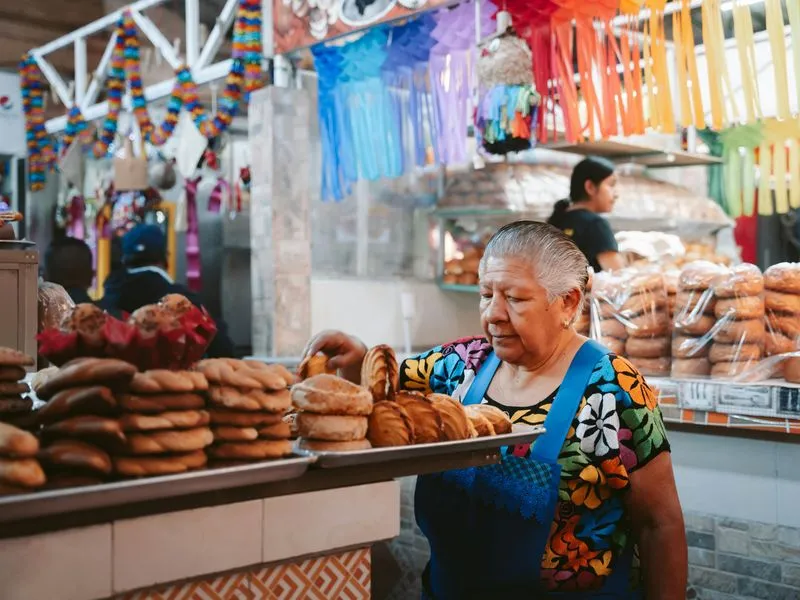
Mérida’s food scene rewards people who eat with curiosity rather than habit. The Sunday cochinita will be unlike any pork dish you’ve had. The K’u’uk tasting menu will make you think differently about what Yucatecan cuisine can be. And the marquesita at 8pm in Santa Lucía, eaten standing on the sidewalk while the park fills with families — that’s the version of Mérida food that you’ll actually tell people about.