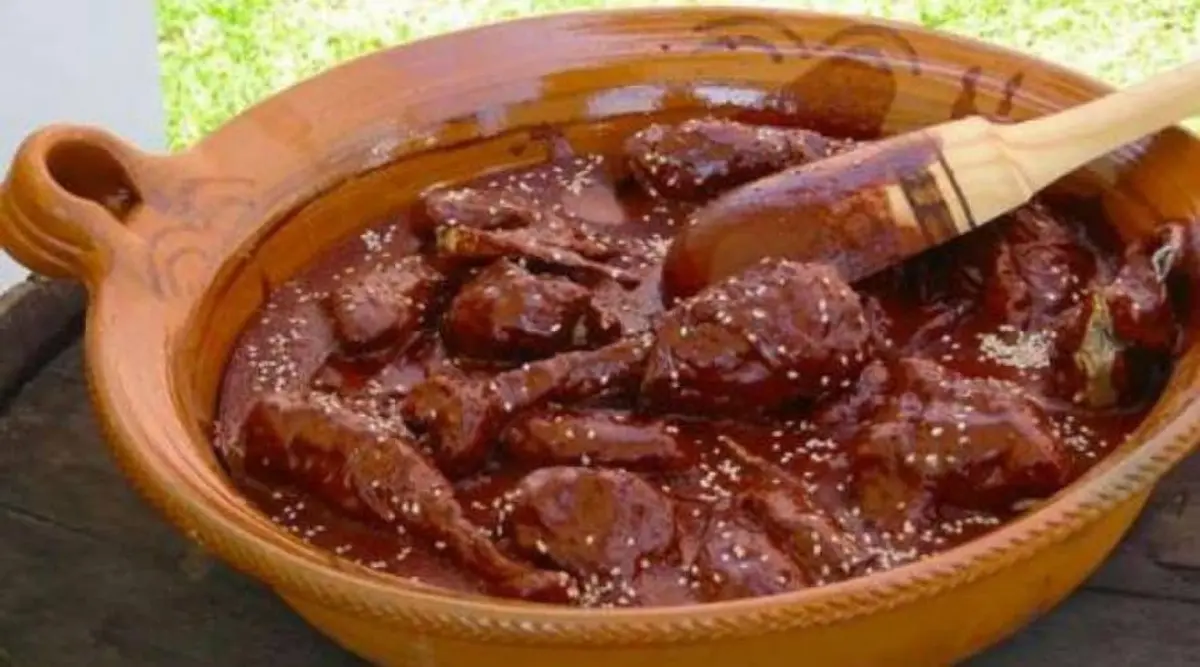
Food in Mexico: 30 Traditional Dishes to Try
Food in Mexico: 30 Traditional Dishes
Food in Mexico changes dramatically by region. Start with tacos al pastor in Mexico City, mole negro and tlayudas in Oaxaca, cochinita pibil in the Yucatan, birria in Jalisco, and Gulf seafood in Veracruz. This guide covers 30 traditional dishes worth trying, where each one belongs, typical prices, how to order, and how to avoid the generic tourist-menu version.
The version of Mexican food most of the world knows — a somewhat interchangeable rotation of tacos, burritos, nachos, and fajitas — has almost nothing to do with what people actually eat in Mexico. Traditional Mexican food is a collection of distinct regional cuisines, each shaped by different indigenous traditions, local ingredients, and geography.
Oaxacan food shares almost nothing with Yucatecan food. Sonoran carne asada is as different from Mexico City street food as Italian food is from Spanish. There are dishes on this list that you will not find outside their home region, and finding them is part of the point of traveling in Mexico.
This Mexican food guide covers 30 dishes organized by how and where you encounter them, with practical information on where to find them, what they cost, and how to order them. If your trip is centered on Mexico City, Oaxaca, Guadalajara, Veracruz, or the Yucatán, use those deeper local guides alongside this page.
Traditional Mexican Food in 30 Seconds
| If you’re traveling in… | Start with… | Best first stop | Why it matters |
|---|---|---|---|
| Mexico City | Tacos al pastor and tlacoyos | A busy night taquería or market stall | This is the fastest way to understand why CDMX street food is its own world |
| Oaxaca | Tlayuda and mole negro | Mercado 20 de Noviembre at lunch or dinner | Oaxaca gives you the clearest one-city hit of regional Mexican cooking |
| Yucatán | Cochinita pibil and sopa de lima | A Sunday market stand or lunch fonda | Yucatecan food tastes noticeably different from central Mexico |
| Guadalajara | Torta ahogada and birria | A local stand, not a tourist restaurant | Jalisco is where chile-fat broths and street-sandwich culture really land |
| Veracruz | Chilpachole and memelas | A market fonda or mariscos spot | Gulf cooking is smokier, soupier, and more seafood-driven than most visitors expect |
If you only have one week in Mexico, prioritize the dishes most tied to place, not the dishes you can already get at home. That usually means al pastor in Mexico City, mole and tlayudas in Oaxaca, Veracruz seafood specialties, and a broader regional shortlist like the one in Foods of Chiapas.
Street Food (8 Dishes)
1. Tacos al Pastor — Mexico City Style
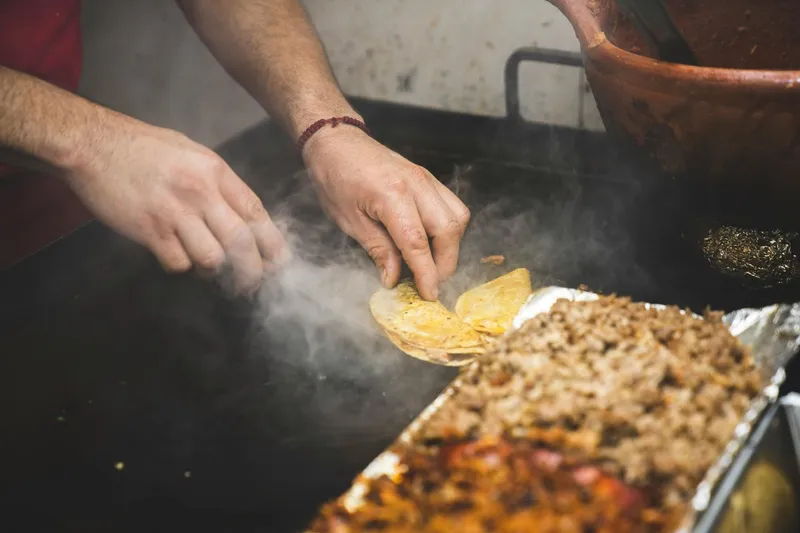
Al pastor is the king of Mexico City street food: thin-sliced pork marinated in dried chiles and achiote, stacked on a vertical spit (trompo) with a pineapple on top, slow-cooked for hours. The taquero shaves the meat off the rotating spit directly onto a small double-layer corn tortilla, adds a slice of pineapple, and finishes with onion, cilantro, and your choice of salsas.
The vertical spit method was adapted from Lebanese shawarma immigrants who arrived in Mexico in the early 20th century and changed the country’s taco culture permanently.
Where to find it: Mexico City is the home base. The Condesa and Centro Histórico neighborhoods have excellent al pastor stands, but the best ones are found wherever there’s a line of chilangos (CDMX locals) at 11pm. Avoid taquerías that serve al pastor without a visible trompo — pre-cooked meat off a pan is not the same thing.
Cost: 20-35 MXN per taco.
How to order: “Dos de pastor, con todo” (two pastor tacos, with everything — meaning onion, cilantro, and salsa).
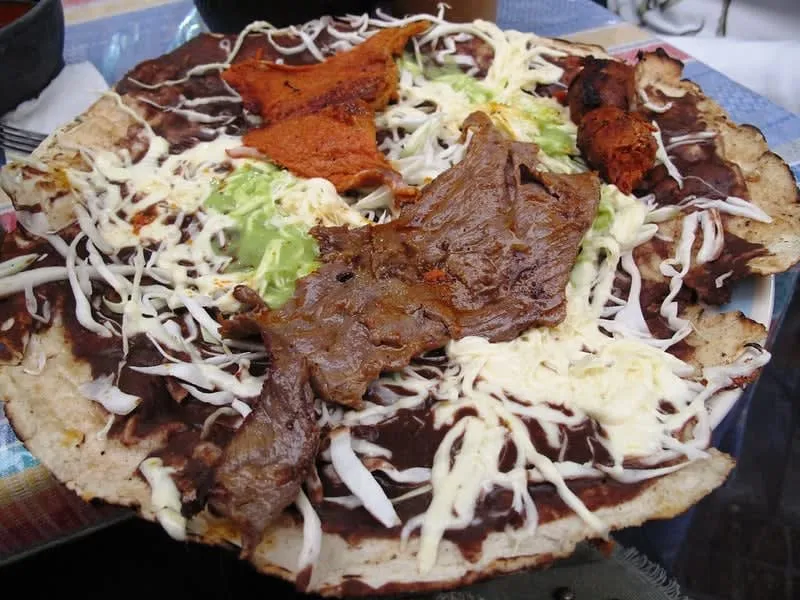
2. Tlayuda — Oaxaca
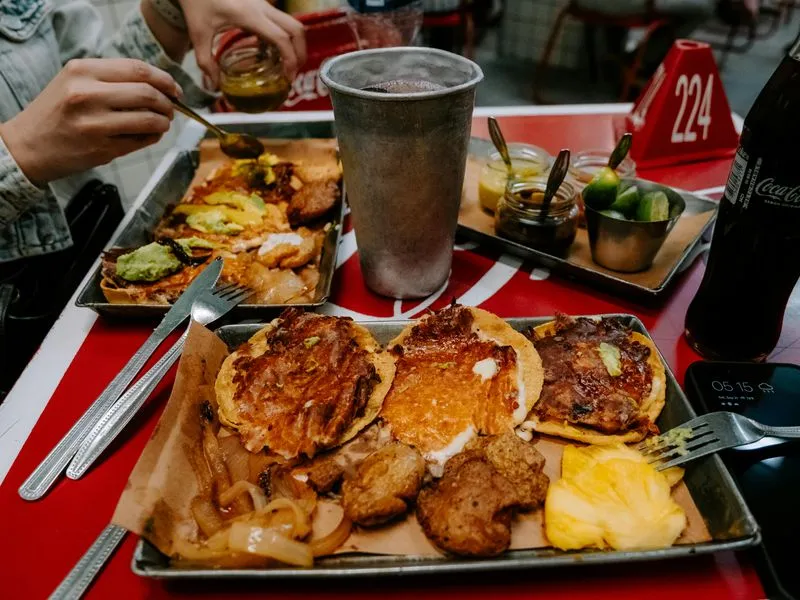
A tlayuda is a large, crispy-edged tortilla (about 40cm across) toasted on a comal, spread with black bean paste (tasajo lard-fried beans), quesillo (Oaxacan string cheese), and your choice of toppings — tasajo (dried beef), cecina (salted pork), chorizo, or the chapulines (grasshoppers) that make every first-timer pause.
It’s often called an “Oaxacan pizza” but the comparison doesn’t do it justice — the base has a specific fermented flavor from the dried corn, and the combination of bean + cheese + tasajo is distinctly Oaxacan.
Where: Oaxaca city mercado (Mercado Benito Juárez or 20 de Noviembre), or any market fondas in the Valles Centrales. Available city-wide at restaurants, but the market stands are the standard.
Cost: 30-45 MXN for a full tlayuda at a market.
How to order: “Una tlayuda con tasajo” or “con chapulines si quiere atreverse” (with grasshoppers if you’re feeling brave).
3. Tlacoyos — CDMX Markets
Pre-Hispanic oval-shaped masa cakes, pressed thick, filled with black beans, fava beans, or requesón (a fresh cheese), and cooked on the comal until the surface crisps. Topped with nopales (cactus strips), salsa, crumbled dry cheese, and cream.
Tlacoyos are one of those dishes that have survived largely unchanged from pre-Columbian times — a direct link to the cooking of the Central Mexican highlands before the Spanish arrived.
Where: CDMX markets, particularly Mercado de Jamaica, Mercado San Juan, and street vendors around Tepito and La Merced. Not commonly found outside central Mexico.
Cost: 25-40 MXN each.
4. Elotes and Esquites — Everywhere
Two versions of the same fundamental ingredient: corn.
Elote en mazorca is a whole grilled corn cob, covered in mayonnaise (yes, mayonnaise — trust the process), cotija cheese, chile powder, and lime.
Esquites is the same corn cut off the cob into a cup, with the same dressing plus an option of hot broth poured over.
Both are found everywhere, from street carts in Mexico City to beach vendors in Puerto Vallarta to evening markets in Oaxaca. This is the kind of food that becomes a snack habit within 48 hours of arriving in Mexico.
Where: Everywhere. Ubiquitous.
Cost: 20-35 MXN.
How to order: “Con todo” (with everything). They’ll ask if you want it picante — the correct answer is yes.
5. Torta Ahogada — Guadalajara
“Drowned sandwich” — a birote (Guadalajara’s specific style of sourdough roll, which exists only there due to the city’s water and altitude affecting the yeast) filled with carnitas, then submerged — completely, not drizzled — in a tomato and chile arbol sauce. It comes waterlogged. It will drip on your clothes. It’s one of the great sandwiches in Mexico.
Where: Guadalajara only, specifically. The torta ahogada made outside GDL with regular bolillo bread is a different, inferior sandwich. Joven is the most famous chain. Street stands near La Minerva and around Tlaquepaque.
Cost: 60-90 MXN.
How to order: “Media ahogada” (half-drowned, for the hesitant) or “bien ahogada” (fully drowned, the correct choice).
6. Marquesitas — Mérida
Yucatan’s answer to the crepe: a thin, crispy rolled wafer filled with Dutch Edam cheese (not Mexican cheese — actual Dutch Edam, a legacy of colonial trade routes) plus your choice of additional filling: Nutella, cajeta (caramel), strawberry jam. The cheese-Nutella combination sounds wrong. It isn’t.
Where: Mérida’s Paseo de Montejo on weekend evenings, and the parque in any Yucatan town at night. Street carts only — no restaurant equivalent.
Cost: 30-50 MXN.
How to order: “Con queso y Nutella” — the classic combination that has converted skeptics for decades.
7. Chapulines — Oaxaca
Grasshoppers. Toasted in a comal with lime, salt, and chile, then used as a taco filling, a tlayuda topping, or eaten straight as a snack. The flavor is deeply savory and mildly nutty — closer to peanuts than to anything insect-like. The texture is crunchy.
This is not a novelty food. Chapulines have been a protein source in Oaxacan cooking for at least 3,000 years. You’re eating something ancient and real.
Where: Oaxaca city markets and restaurants. Vendors sell them in bags at the Mercado 20 de Noviembre and at archaeological sites.
Cost: 30-60 MXN for a taco. Small bag as a snack: 40-80 MXN.
How to order: “Unos chapulines, por favor” — they’ll understand.
8. Memelas — Veracruz
Thick oval-shaped masa cakes from Veracruz, similar in concept to tlacoyos but broader and flatter, cooked on the comal and topped with black bean purée and salsa. Often served as a breakfast or mid-morning snack from market fondas.
Where: Veracruz city markets and the Gulf Coast lowlands. Rarely found outside the region.
Cost: 25-40 MXN.
Regional Mains (8 Dishes)
9. Mole Negro — Oaxaca
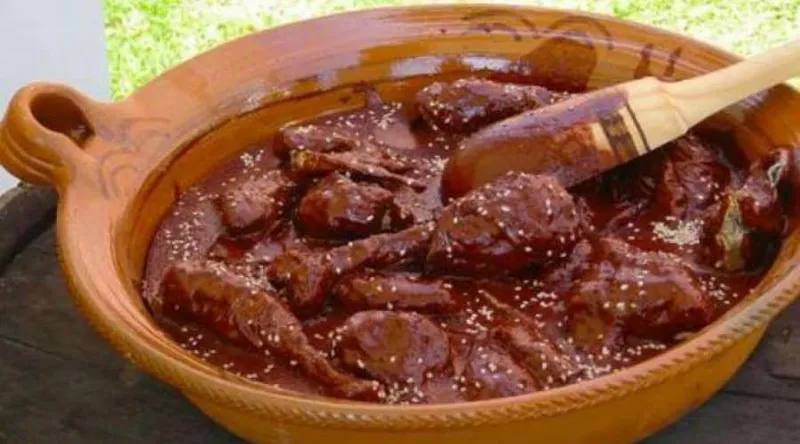
Oaxaca has seven moles, but mole negro is the cathedral of the seven. More than 30 ingredients: seven different dried chiles, chocolate, plantain, tomatoes, tomatillos, bread, seeds, charred chile skin (deliberately burnt — that bitterness is part of the flavor), spices. It takes three days to make properly. The result is a sauce of extraordinary complexity — no single flavor dominates, they all shift and layer.
Mole negro is served over turkey or chicken with rice and fresh tortillas. You don’t eat mole negro quickly.
Where: Oaxaca city. The comedores in Mercado 20 de Noviembre serve it at lunch. Restaurants like Casa Oaxaca and El Destilado do their own versions. But the standard is set in the markets.
Cost: 120-200 MXN at a market comedor. 300-600 MXN at a restaurant.
10. Cochinita Pibil — Yucatan
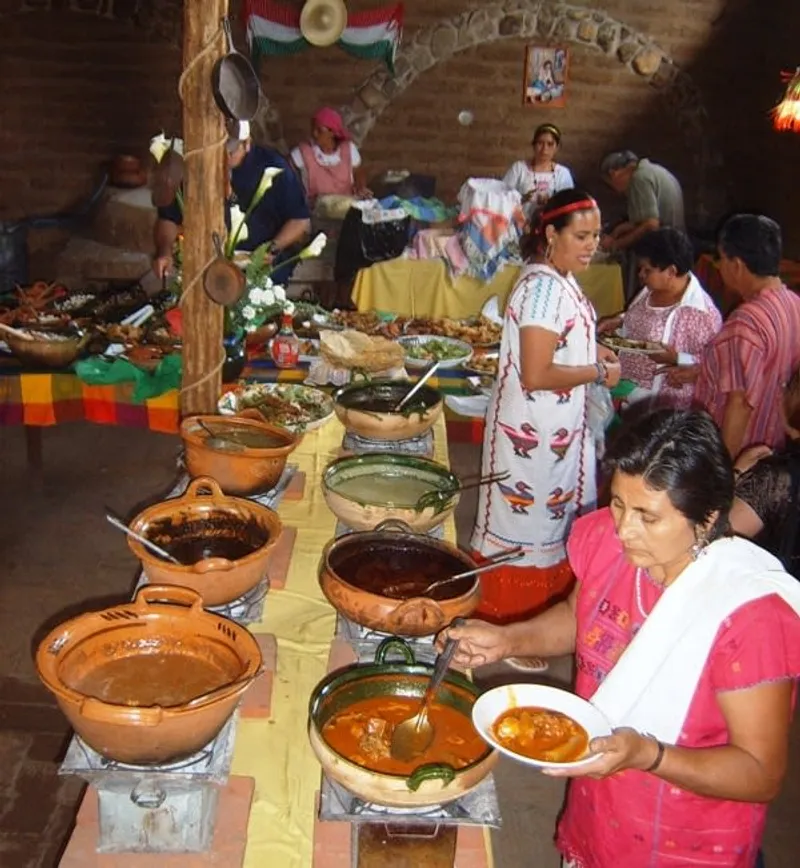
Slow-roasted pork marinated in achiote (annatto), sour orange juice, and spices, wrapped in banana leaves, and cooked in a pib (underground oven) for hours until the meat collapses and the fat renders into the sauce. Served in tacos or as a plate, with pickled habanero onions (critical — don’t eat cochinita without them).
The Sunday tradition in many Yucatan towns: pibil goes into the pib overnight and serves at breakfast on Sunday morning. Some of the best cochinita in Mexico comes from home kitchens that sell it from a table in front of their house on Sunday mornings.
Where: Everywhere in the Yucatan peninsula. Mérida’s Mercado Lucas de Gálvez has excellent versions. Izamal and Valladolid have strong traditional preparations.
Cost: 30-60 MXN for tacos. 120-180 MXN for a plate.
11. Chiles en Nogada — Puebla
A dish of specific season and place: large poblano chiles stuffed with a picadillo of pork, dried fruit, nuts, and spices, covered in a walnut cream sauce (nogada), and garnished with pomegranate seeds and parsley — the green, white, and red of the Mexican flag.
The crucial constraint: the traditional restaurant season usually runs from late July through September, when Puebla’s pomegranates and fresh walnuts are available. Exact opening and closing dates vary by harvest and restaurant, so confirm before making a special trip. If you’re in Puebla in September, order this before anything else.
Where: Puebla, usually from late July through September. Check the current chiles en nogada season guide before booking. Restaurant Fonda de Santa Clara is a standard reference; outside the short season, choose another Poblano specialty.
Cost: 250-400 MXN at a proper restaurant.
12. Pozole — Guerrero / Jalisco
Pozole is hominy corn (large dried kernels that bloom when cooked) in a rich broth with pork or chicken, dressed at the table with shredded cabbage, dried oregano, lime, chile, radishes, and tostadas. Three colors: rojo (red chile broth), blanco (clear), verde (tomatillo and green chile). Each color is associated with different regions and moods.
Pozole blanco is the state dish of Guerrero. Pozole rojo is the Jalisco version. Both are correct; they’re different dishes that share a name.
Where: Guerrero (Acapulco, Chilpancingo) for blanco. Guadalajara and Jalisco for rojo. Both versions appear throughout Mexico on Friday lunches — pozole is the traditional Friday meal.
Cost: 80-160 MXN for a bowl.
13. Birria — Jalisco
Originally: goat braised in a complex dried-chile broth until it falls apart, served in the broth (consommé) or in tacos fried in the fat that rises from the braising liquid. Born in Guadalajara, spread to every corner of Mexico and globally over the past decade.
Birria tacos (or quesabirria — with cheese) are made by dipping tortillas in the chile-fat consommé before frying them on the comal, filling with the shredded meat, and serving alongside a cup of broth for dunking. The crunch, the fat, the chile bitterness, and the broth are a complete flavor system.
Where: Guadalajara for the original goat version. Everywhere else in Mexico (and most Mexican restaurants worldwide) now serves a beef version. The Guadalajara original is worth seeking specifically.
Cost: 35-60 MXN per taco. 150-250 MXN for a full plate with consommé.
14. Carnitas — Michoacán
Carnitas is a technique: pork cooked in its own fat in a large copper pot (cazo de cobre) until it’s simultaneously crispy and tender. The copper pot is traditional to Michoacán and genuinely affects the heat distribution and result. Carnitas are sold by weight at stands, served in tacos with salsa, onion, and cilantro.
The key is variety. A good carnitas stand sells different cuts: maciza (lean loin), buche (stomach — melting and tender), cueritos (skin — crispy), costilla (rib meat). Order a mix.
Where: Michoacán is the source — Uruapan and the towns between Morelia and Pátzcuaro have excellent stands. Mexico City’s Saturday markets always have someone selling Michoacán carnitas. The best stands have been running for decades.
Cost: 30-50 MXN per taco. Carnitas sold by kilo: 250-350 MXN/kg.
15. Carne Asada — Sonora
Sonoran carne asada is not the same as grilled beef anywhere else. The cattle come from the high desert ranches of the Sonoran plain; the meat is cut thin and grilled over mezquite (mesquite) wood. The combination of the beef quality and the smoke flavor produces something fundamentally different from what you’ll find in a Guadalajara taquería or a CDMX market.
Where: Hermosillo, Guaymas, and throughout Sonora. The border cities (Nogales, Agua Prieta) have excellent asada culture influenced by cross-border ranching. Order it in a taco de asada or as a carne asada plate with beans, rice, and flour tortillas (Sonora is the state that eats flour tortillas, not corn).
Cost: 40-70 MXN per taco. Plate: 150-250 MXN.
16. Pescado Zarandeado — Nayarit / Puerto Vallarta
A whole snapper, butterflied, marinated in a spiced sauce, and grilled on a handmade wood-frame rack over a fire of mangrove wood — specifically mangrove, for the smoke flavor, a tradition from the coastal Nayarit fishing villages. The flesh is cooked slowly at a distance from the heat, staying moist while the skin crisps.
Where: Nayarit coast (Sayulita, Lo de Marcos, Rincón de Guayabitos, Mexcaltitán). Puerto Vallarta restaurants serve versions but the definitive preparation is in the fishing villages north of PV.
Cost: 200-400 MXN for a whole fish serving 1-2 people.
Soups (4 Dishes)
17. Caldo de Res — Nationwide
Beef bone broth with vegetables (carrots, chayote, corn, squash, cabbage, cilantro). Served with lime and chile and thick warm tortillas. This is the Mexican version of chicken soup as medicine — the standard Sunday lunch recovery food, the dish that appears at every family gathering.
Simple, deeply comforting, and made well nearly everywhere.
Cost: 80-120 MXN for a full bowl at a market comedor.
18. Sopa de Lima — Yucatan
Yucatan’s signature soup: chicken broth (richer and darker than standard Mexican caldo) finished with fried tortilla strips, shredded chicken, and most importantly lima — a Yucatecan citrus that is not a lime and not a lemon but something between, with a floral bitterness that characterizes Yucatecan cooking.
The dish makes no sense outside the Yucatan because the lima is not grown elsewhere. A “Mexican lime soup” made with regular limes in any other state is a different and inferior thing.
Where: Mérida, Valladolid, and throughout the Yucatan peninsula. Every mid-range restaurant has it on the menu. The version at the table under the trees in Valladolid’s central market is the reference.
Cost: 90-150 MXN.
19. Chilpachole de Jaiba — Veracruz
Blue crab in a rich, smoky tomato broth spiked with dried chile chipotle. The color is deep red, the broth is thick, and the crab is left in the shell to cook in the soup. Messy and exceptional.
Where: Veracruz city and the Gulf Coast fishing towns. The Mercado Hidalgo in Veracruz city, any mariscos restaurant on the malecón.
Cost: 120-200 MXN.
20. Menudo — Sunday Morning Nationwide
Tripe soup in a red chile broth, slowly cooked overnight until the tripe achieves a specific texture somewhere between firm and yielding. Served with oregano, lime, white onion, and tostadas. The stated purpose is to cure a hangover. The real purpose is Sunday family ritual — menudo is sold by restaurants and fondas on Sunday mornings only, typically 7am-1pm, and when it’s gone it’s gone.
It’s an acquired taste. Have it on a Sunday morning in a market fonda with a fresh tostada and see where you land.
Cost: 80-130 MXN.
Snacks and Sides (5 Dishes)
21. Gorditas
Thick masa pockets (thicker and rounder than a taco, thinner and flatter than an arepa) cooked on the comal and split open to receive their filling: beans, cheese, potato, chicharrón in salsa verde, rajas (poblano chile strips), or picadillo. Common breakfast food across north and central Mexico.
Cost: 20-40 MXN.
22. Huaraches
Masa shaped like a sandal sole, longer and thinner than a gordita, pressed and cooked on the comal, topped with beans, salsa, and meat or vegetables. Originally a CDMX street food but found across central Mexico. Named for their resemblance to the traditional leather sandal (huarache).
Cost: 35-60 MXN.
23. Sopes
Small thick masa discs with pinched edges (to contain the toppings), cooked on the comal and topped with beans, meat, salsa, cream, and cheese. The pinched rim is the identifying feature. Common breakfast and lunch street food.
Cost: 25-45 MXN each.
24. Quesillo — Oaxaca
Oaxacan string cheese: a fresh white cheese that forms during production into long, layered ropes that you pull apart and eat. Mild, slightly salty, with a specific elastic texture from the way the curds are stretched during making. You’ll find it balled up in the market, in tlayudas, on top of everything.
Buy it from a market vendor and eat it while walking. That’s the correct preparation.
Cost: 80-150 MXN per ball (serves 2-4 as a snack).
25. Pan Dulce
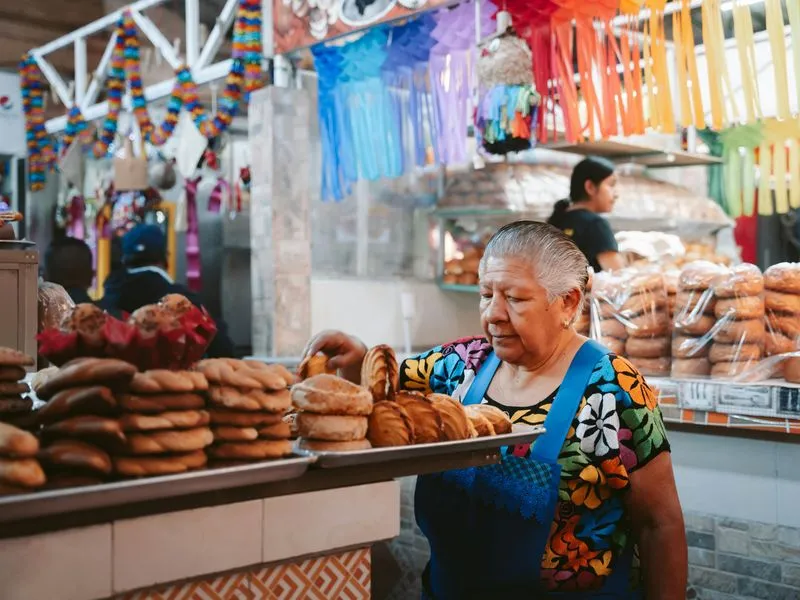
The Mexican bakery tradition: conchas (shell-shaped sweet rolls with a sugar crust), cuernos (croissant-like pastries glazed in chocolate or vanilla), polvorones (crumbly shortbread rounds), and dozens of other forms. Eaten at breakfast with café de olla (coffee brewed with cinnamon and piloncillo) or hot chocolate.
Panaderías open at 5am-6am and the freshest bread is gone by 9am. The routine: pick up a tray and tongs at the entrance, select what you want by putting it on the tray, pay at the counter.
Cost: 4-12 MXN per piece.
Drinks (5)
26. Tuba — Colima / Veracruz Coast
Fermented coconut palm sap, collected fresh from the tree daily by tuberos who climb the palms with a collection jug. Slightly sweet, faintly fizzy, mildly alcoholic in fresh form. Sold from large glass jugs on the coast, sometimes with fruit or cacahuates (peanuts) added. It spoils within a day of collection.
Where: Colima state and the Gulf Coast (Veracruz, Nayarit). This is a hyper-regional drink — you cannot find it outside its production zone.
Cost: 20-40 MXN for a large cup.
27. Tepache
Fermented pineapple: pineapple rind and core simmered with piloncillo (unrefined cane sugar) and cinnamon, then left to ferment 2-3 days. The result is lightly alcoholic (1-2%), sweet, slightly tart, slightly funky. Sold from street carts in many states.
Cost: 15-30 MXN.
28. Agua Fresca Guide
The aguas frescas are the daily cold drinks of Mexico: water blended with fruit, flowers, or grains, lightly sweetened. The three standards you’ll find everywhere:
Horchata: rice water with cinnamon and vanilla. Creamy and cooling.
Jamaica: hibiscus flower steep. Deep crimson, tart, refreshing. One of the best things to drink in heat.
Tamarindo: tamarind water. Brown, sweet-sour, complex.
All three are sold at market fondas, in large glass containers with ice. Order “un vaso de jamaica” and specify sin azúcar adicional (without extra sugar) if you prefer it less sweet.
Cost: 15-30 MXN per glass.
29. Mezcal — How to Drink It Properly
Mezcal is not tequila. Tequila is a variety of mezcal made only from blue agave in specific regions. Mezcal can be made from 30+ agave varieties, each producing a different flavor — earthy, smoky, floral, vegetal. The best mezcal comes from Oaxaca, Guerrero, and Durango.
Drink it neat. Room temperature. Small glass (veladora or copita). Served alongside a slice of orange and sal de gusano (salt ground with dried worm larvae from the agave plant — not a gimmick, genuinely good with the spirit).
Do not mix it. Do not add lime. Don’t shoot it. Sip it.
Cost: 80-200 MXN per shot at a mezcalería. Bottle of artisanal mezcal from a market: 300-800 MXN.
30. Champurrado
Thick, warm, chocolate atole: masa (corn dough) dissolved in water, cooked with dark chocolate (often Oaxacan chocolate tablet), cinnamon, and piloncillo. Served in a clay cup. Deeply filling, deeply warming. The traditional drink of Día de Muertos celebrations and the Christmas posadas season.
Tamale season in CDMX (November-January) means champurrado season. The two are inseparable.
Where: CDMX street vendors in the cold months. Oaxaca year-round from market fondas. Ubiquitous in Oaxacan markets.
Cost: 20-35 MXN per cup.
Where to Find Each Dish: Quick Reference
| Dish | Primary Location | Best Venue |
|---|---|---|
| Tacos al pastor | Mexico City | Busy taquería with visible trompo |
| Tlayuda | Oaxaca | Mercado 20 de Noviembre |
| Chapulines | Oaxaca | Market stalls |
| Cochinita pibil | Yucatan | Sunday market stands |
| Chiles en nogada | Puebla (late Jul-Sep) | Restaurants during the short season |
| Torta ahogada | Guadalajara | Stand near La Minerva |
| Birria | Jalisco / everywhere | Street stand with visible consommé pot |
| Carnitas | Michoacán | Saturday market stands |
| Carne asada | Sonora | Outdoor parrillada stands |
| Pescado zarandeado | Nayarit coast | Fishing village restaurants |
| Mole negro | Oaxaca | Market comedor at lunch |
| Marquesitas | Yucatan | Evening street cart |
| Sopa de lima | Yucatan | Market restaurant, lunch only |
| Chilpachole | Veracruz | Mariscos restaurant, Gulf Coast |
| Quesillo | Oaxaca | Market vendor, eat fresh |
| Tuba | Colima / Veracruz coast | Street vendor |
| Mezcal | Oaxaca | Mezcalería, not a cocktail bar |
How to Order Like a Local
The phrases that matter:
“¿Qué recomienda?” — What do you recommend? (Lets the vendor decide; usually produces better results than guessing.)
“Con todo” — With everything (onion, cilantro, salsa, lime — standard taco order).
“¿Está muy picante?” — Is it very spicy? (Useful before ordering the house salsa.)
“Sin chile, por favor” — Without chile please. (Universally understood if you need it.)
“¿Cómo lo preparan?” — How do you prepare it? (Useful for checking cooking method if you have dietary restrictions.)
“La cuenta, por favor” — The bill please.
Tipping: 10-15% at restaurants is standard. Street food stands: round up the total or leave small coins — not expected but appreciated.
Comida corrida: The set lunch menu available at market fondas 1pm-4pm: usually soup, main course, rice or beans, tortillas, and a drink for 60-120 MXN. Ask “¿Tiene comida corrida?” The answer is almost always yes at lunch.
Price Reality Table
| Category | What You Get | Price Range |
|---|---|---|
| Street food (single item) | Taco, elote, marquesita | 20-60 MXN |
| Market comida corrida | Soup + main + drink + tortillas | 60-120 MXN |
| Mid-range restaurant | Full meal, two dishes | 150-350 MXN per person |
| Tourist restaurant near main plaza | Average food, inflated price | 250-600 MXN per person |
| Fine dining (CDMX/Oaxaca) | Tasting menu, destination restaurant | 600-2,500 MXN per person |
The most important price truth: the best food in Mexico is rarely at the most expensive places. A 90 MXN comida corrida at a market fonda in Oaxaca will often be a better meal than a 500 MXN plate at a restaurant pitched at tourists. Follow where locals eat lunch.
Food Allergy and Dietary Guide
Vegetarian in Mexico
“Sin carne” (without meat) does not mean the dish was prepared without animal fat. Lard (manteca de cerdo) is used to fry beans, cook rice, and spread on tortillas at thousands of restaurants that would describe those dishes as vegetarian.
The correct phrase: “¿Están preparados con manteca o caldo de pollo?” — Are they prepared with lard or chicken broth?
Safe bets for vegetarians: Tlayudas with beans and quesillo (ask about the beans); quesadillas with huitlacoche (corn fungus) or rajas (chile strips); guacamole; enchiladas at restaurants that confirm vegetable-oil preparation; most antojitos if you confirm the specific preparation.
Oaxaca has the most vegetarian-friendly food culture in Mexico — insect protein (chapulines) fills the gap that meat occupies elsewhere, and the region’s vegetable-heavy indigenous cooking predates Spanish animal fat introduction.
Vegan: Significantly more difficult. Corn tortillas and grilled vegetables are safe. Most everything else involves either lard, cheese, or meat broth at some point in preparation.
Gluten
Mexican cooking is largely corn-based and naturally gluten-free at the ingredient level. The risks: flour tortillas (Sonora and north), some wheat-based antojitos, and cross-contamination in kitchen preparation. Ask “¿Tiene trigo?” (Does it contain wheat?).
What to Avoid
Restaurants on the main plaza of tourist towns. The markup at “strategic location” restaurants in places like Tulum main strip, Chichén Itzá parking lot vendors, and Oaxaca’s zócalo perimeter is significant and the food quality is typically worse than what you’ll find one block away. Walk one block inland from any tourist plaza and prices drop 30-40%.
Bottled water at restaurants. Many Mexico City restaurants now use filtered water systems and offer free filtered water. Ask “¿Tienen agua purificada?” before accepting bottled water at 40-60 MXN.
Tour-package restaurants. Day tour packages (Chichén Itzá, Teotihuacan) often include a buffet lunch at a restaurant that primarily serves tour buses. The food is mediocre and the price is embedded in your tour cost. If you can eat independently at a local fonda en route, do that.
“Authentic” warning signs: Menus translated to 8 languages, photos of every dish, chairs that face the tourist plaza rather than the kitchen. These aren’t dealbreakers individually, but together they suggest a restaurant designed for tourist throughput rather than food quality.
Regional Food Tours
Food tours are one of the best investments for food-focused travelers — a good guide covers 10-15 places in 3 hours that would take you two days to find independently.
Viator has solid food tour options in Mexico City, Oaxaca, Guadalajara, and the Yucatan. Filter by reviews and look specifically for small-group tours with local guides who focus on markets and street food rather than restaurants.
More Mexico Food and Travel
- Mexico City Food Guide — the clearest deep dive on tacos, markets, and what to order in CDMX
- What to Eat in Oaxaca — where to eat mole, tlayudas, and chapulines properly
- What to Eat in Veracruz — the fastest route to Gulf seafood and market dishes
- Foods of Chiapas — a broader regional shortlist beyond the usual tourist-food circuit
- Guadalajara Guide — birria, torta ahogada, and Jalisco tequila culture
- Yucatan 7-Day Itinerary — cochinita pibil, sopa de lima, and marquesitas route
- Mexico Travel Tips — practical planning guide for all Mexico trips