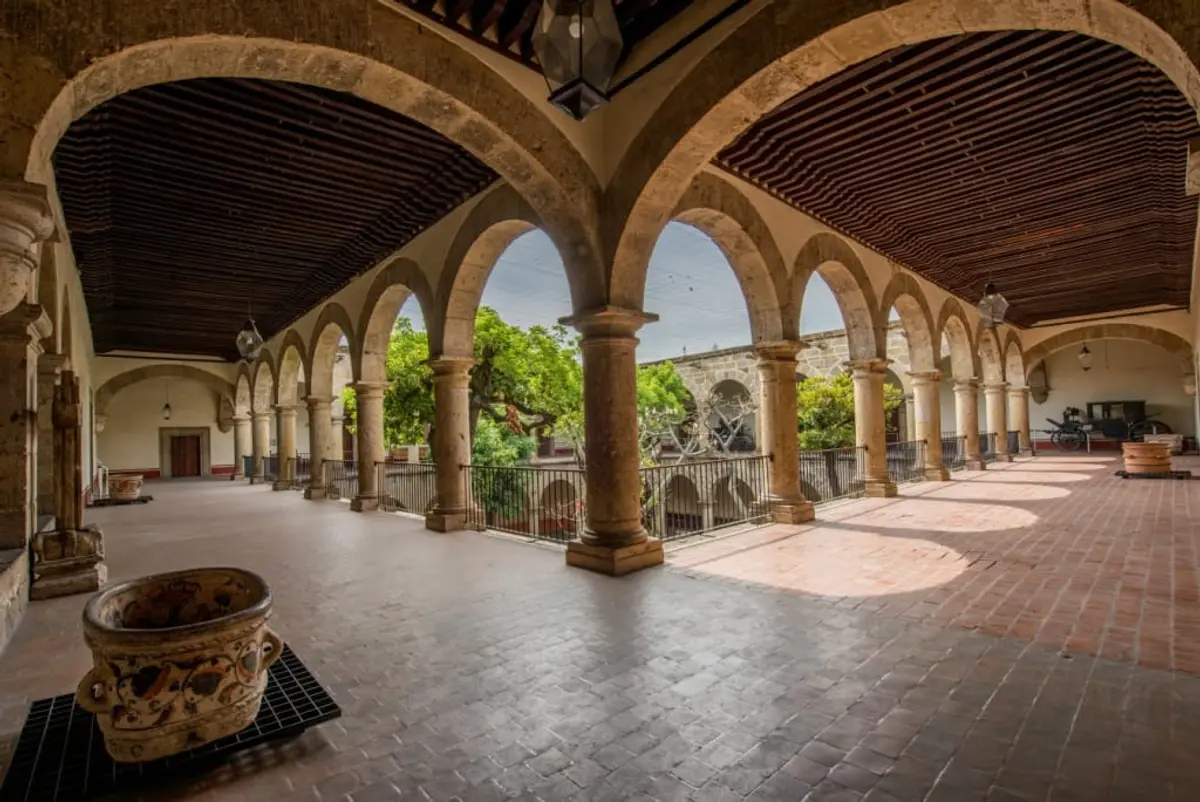
Guadalajara, Mexico Travel Guide (2026)
Guadalajara, Mexico, is best planned as a 3–5 day culture and food trip: explore Centro and Tlaquepaque, eat birria and torta ahogada, hear mariachi, and add Tequila or Lake Chapala as a day trip. This guide also compares the best areas to stay and covers safety, costs, Uber, and airport transport for first-time visitors.
| Quick Facts | Details |
|---|---|
| State | Jalisco |
| Elevation | 1,566 m (5,138 ft) |
| Airport | GDL — Miguel Hidalgo y Costilla International |
| Time zone | CST (GMT-6) / CDT (GMT-5) summer |
| Currency | Mexican peso (MXN). ATMs everywhere. |
| Language | Spanish. Less English spoken than Cancún or CDMX. |
| UNESCO sites | Cabañas Hospice (1997), Tequila blue agave landscape (2006) |
| US advisory | Level 3 — Reconsider Travel for Jalisco. The May 29, 2026 advisory lists no U.S. government employee travel restrictions in metro Guadalajara. |
| Best for | Culture, food, day trips, authenticity — not beaches |
| Days needed | 3–5 for the city; 5–7 to include day trips |
Guadalajara: 30-Second Answer
Guadalajara is best for travelers who want food, mariachi, tequila day trips, Tlaquepaque and Tonalá crafts, and a less overwhelming city base than Mexico City. Plan three days for Centro, Tlaquepaque, local food, and one mariachi or lucha libre evening; stretch to five to seven days if you want Tequila, Chapala, Ajijic, Tapalpa, or Mazamitla without rushing.
Stay in Centro if museums and plazas matter most, Americana or Chapultepec if restaurants and nightlife matter most, and Zapopan or Andares if comfort, malls, and easy rideshares matter most. Use Uber inside the city. Rent a car only if you want independent day trips beyond the metro area.
Why Visit Guadalajara Instead of Mexico City?
Mexico City gets all the press. Guadalajara gets the locals.
CDMX is extraordinary — but it requires time and energy. Guadalajara is more manageable, warmer (literally and figuratively), and less crowded. Traffic is still brutal, but the historic center is walkable. Uber works and costs half what it does in the capital. The food is arguably better for the specific dishes that matter most to Mexican culture.
Guadalajara is where you go to understand modern Mexico without the tourist veneer. Chivas fans and Atlas fans share the same streets. Craft markets are genuinely local. The best restaurants are on residential blocks, not tourist plazas.
If you want authentic Mexico within reach of a direct US flight, Guadalajara deserves more than it gets.
Top Things to Do in Guadalajara
For a complete activity-by-activity breakdown, see the Things to Do in Guadalajara guide — 30 activities covering all neighborhoods, day trips, and food experiences.
The Historic Center: Cruz de Plazas
The center of Guadalajara is organized around a cross of four interlocking plazas — the Cruz de Plazas — built in the 1950s around the Cathedral. It’s one of the most distinctive civic spaces in Mexico.
Metropolitan Cathedral stands at the center: a baroque facade with neo-Gothic twin towers added after the originals collapsed in an 1818 earthquake. Construction spanned 1561–1618, which explains the mashup of styles. Inside: paintings by Bartolomé Esteban Murillo and a golden altar that survived the Cristero War.
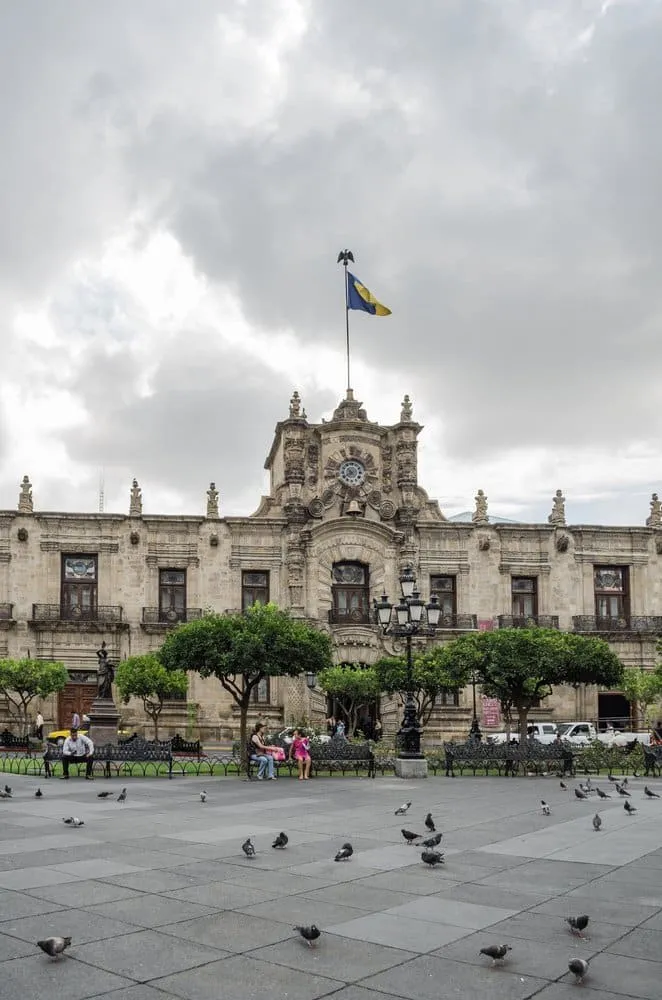
State Government Palace (Palacio de Gobierno): The architecture is beautiful but the reason to visit is inside — murals by José Clemente Orozco. His 1937 work on the main staircase depicts Miguel Hidalgo holding a torch, surrounded by chaos and struggle. It’s one of the most powerful murals in Mexico. Free entry.
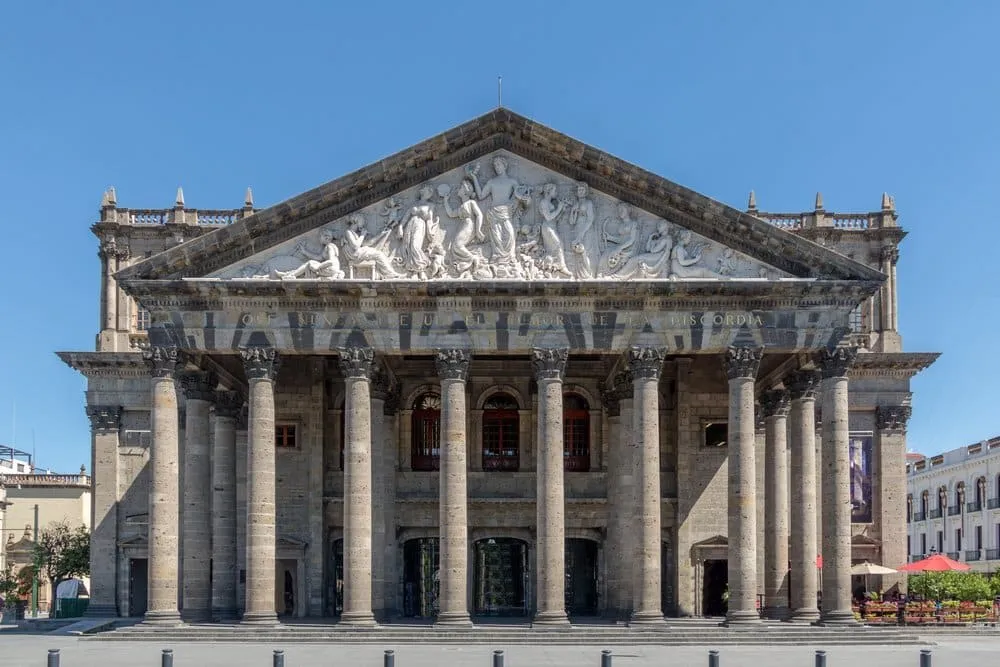
Degollado Theater (Teatro Degollado): Neo-classical 1866 theater, home of the Jalisco Philharmonic Orchestra. The frieze above the entrance shows Apollo surrounded by the nine muses. Even if you can’t catch a performance, the facade is worth seeing.
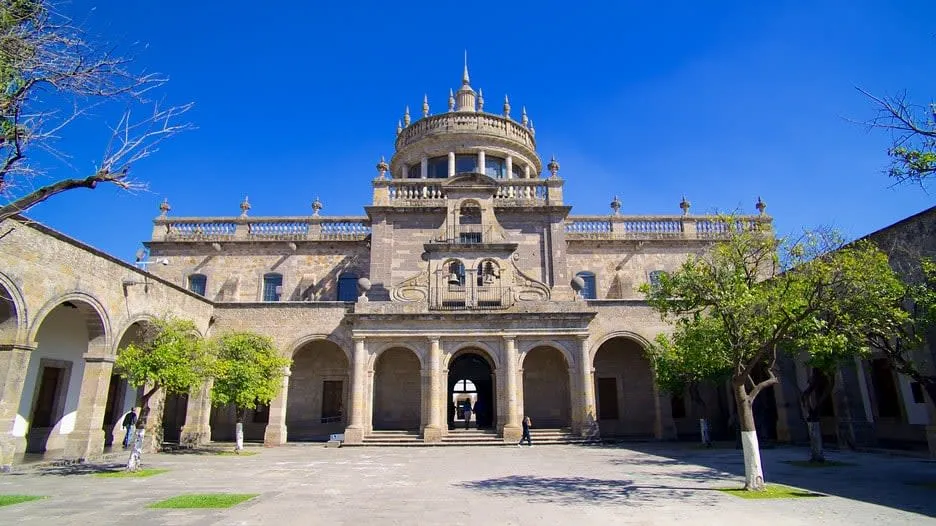
Cabañas Cultural Institute (Hospicio Cabañas): UNESCO World Heritage Site since 1997 and the crown jewel of the historic center. The neoclassical building was originally an orphanage (1810–1997). José Clemente Orozco painted 57 murals here in the 1930s — his most ambitious work. The central chapel dome shows El Hombre en Llamas (Man of Fire), arguably the greatest Mexican mural of the 20th century. Entry: 100–120 MXN ($5–6 USD). Plan 90 minutes minimum.
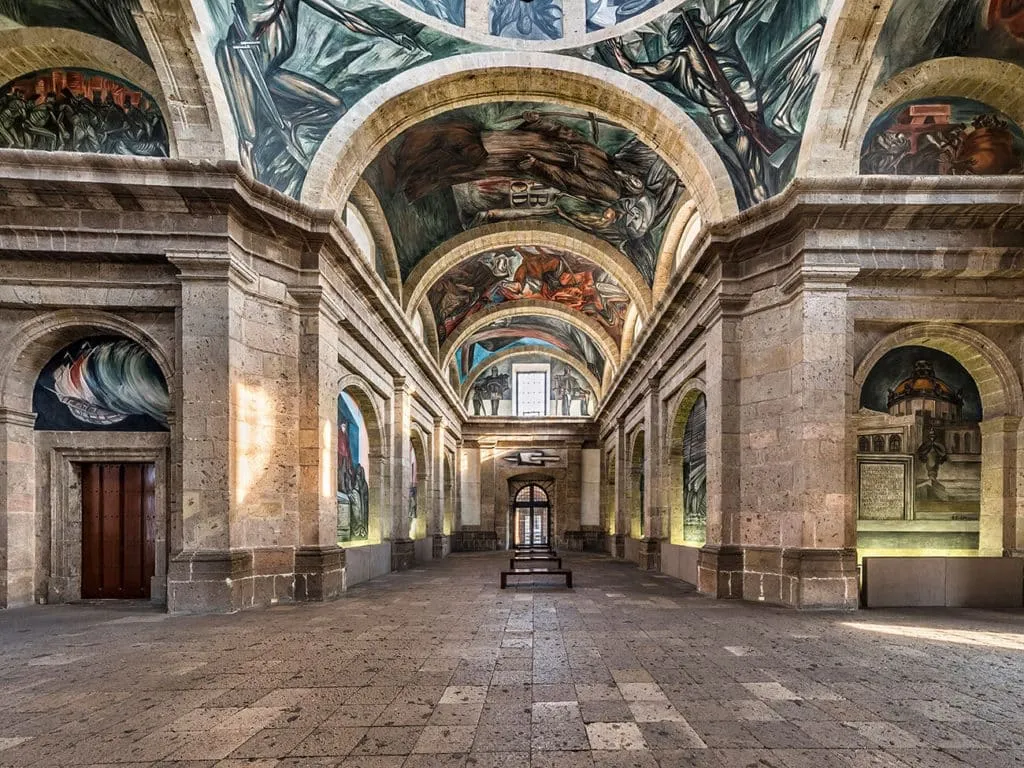
Regional Museum of Guadalajara: Housed in a beautiful 18th-century seminary building beside the Cathedral. 14 rooms covering Jalisco history from pre-Hispanic times through the Revolution. The paleontology room has a mammoth skeleton found in Chapala basin. Entry: free.
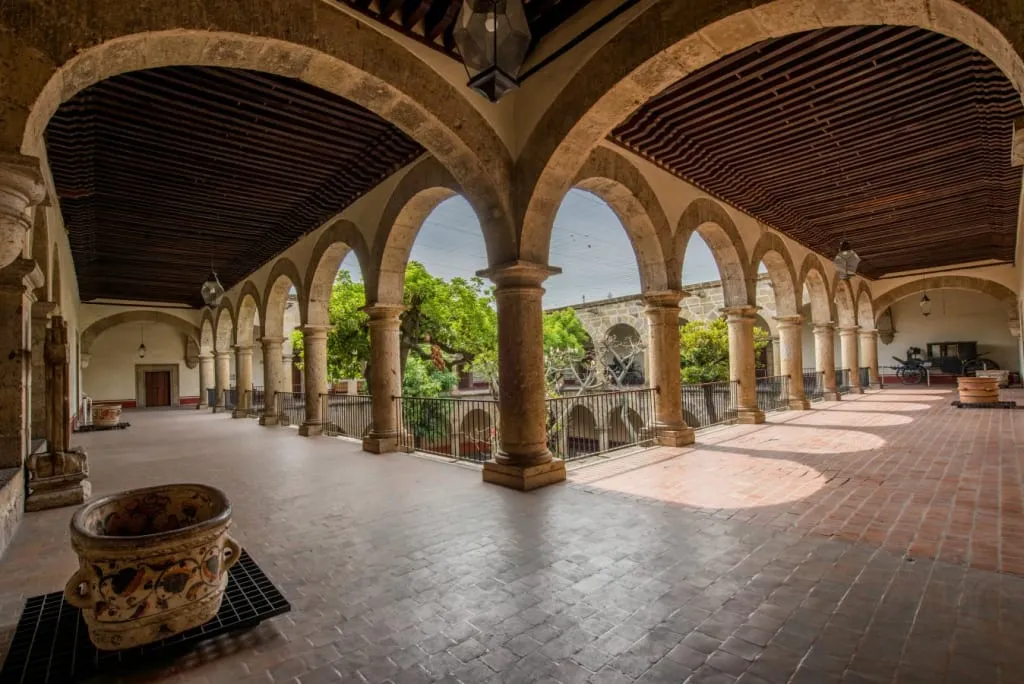
Practical note: The centro fills on weekends with families, street food, and live music. Weekday mornings are quieter for photos. Book a Guadalajara historic center walking tour on Viator to get the full historical context.
Tlaquepaque: The Arts & Crafts Village Inside the City
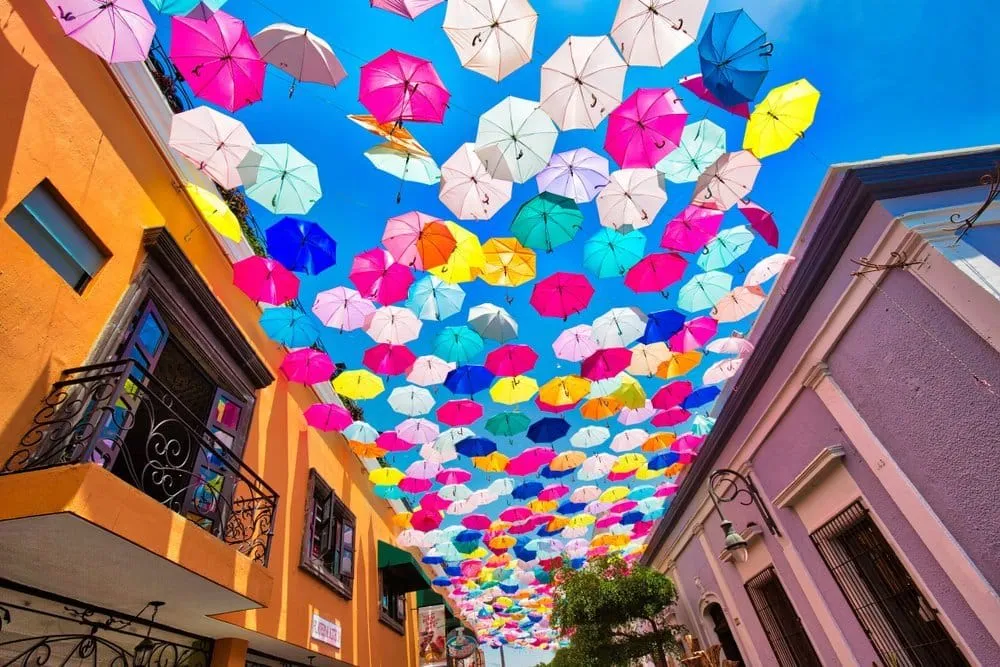
San Pedro Tlaquepaque is technically a separate municipality but functions as part of Guadalajara — 20 minutes from the centro by Uber ($3–4 USD). It’s one of Mexico’s best craft markets, but designed for actual buyers rather than tourists.
Galleries line the pedestrian Calle Independencia. You’ll find: Talavera ceramics, hand-blown glass (from a tradition established by Don Blas in the 1920s), blown glass jewelry, contemporary Mexican art, textiles, and furniture. Prices are fixed in the better shops — bargaining is appropriate at market stalls but not galleries.
El Parián at the center of Tlaquepaque is a covered market with mariachi performers in the evenings. Buy a cantarito — a clay pot drink with tequila, citrus, and mineral water — and stay for a set.
Señor del Rebozo Cantina: One of Guadalajara’s most historic cantinas, operating since 1957. Traditional cantina rules: free botanas (snacks) with your drink order.
See also: Tonalá (10 minutes further from Tlaquepaque) for wholesale artisan furniture, home decor, and the Thursday/Sunday street markets. Tonalá is where Tlaquepaque shops source their inventory.
Zona Chapultepec & Americana: Where Guadalajara Eats
The Chapultepec corridor and the Americana neighborhood are where tapatíos (Guadalajara locals) actually go out. Less touristy than the centro. Tree-lined avenues, craft beer bars, mezcal bars, and some of the best restaurant cooking in western Mexico. For the full evening breakdown — which cantinas to hit, Plaza de Mariachis timing, Ley Seca dates — see the Guadalajara Nightlife Guide.
Chapultepec Avenue closes to cars on Saturday mornings for Bici-Ruta cycling. The strip has cafes, art installations, and a flea market most weekends.
Americana is the neighborhood immediately south: blocks of converted colonial houses now holding restaurants, design studios, and independent coffee shops. This is Guadalajara’s most walkable dining district.
Zapopan: Basilica and ZapopanArte
Zapopan is another municipality within the Guadalajara metro — 20 minutes northwest. The Basilica de Zapopan (1730) houses the venerated Zapopanita Virgin, one of Mexico’s most important Marian shrines. The annual October 12 procession brings 2 million people through the streets when the statue returns from its circuit of Guadalajara’s churches.
ZapopanArte adjacent to the Basilica is a well-curated contemporary art museum. Free entry.
Zapopan is also home to Andares mall — if you want high-end retail or international restaurants, it’s here.
Lucha Libre at Arena Coliseo
Guadalajara’s Lucha Libre scene predates Mexico City’s by decades. Arena Coliseo runs matches every Tuesday (Glamour Tuesdays) and Sunday. Tickets: 150–300 MXN ($8–16 USD).
Even if wrestling doesn’t interest you: the crowd performance is extraordinary. Fans throw creativity at the refs and opposing team wrestlers that would make a stand-up comedian jealous. Go once.
Guadalajara Food Guide
Guadalajara’s food identity is so strong that the city’s own residents are called “tapatíos” — a word derived from a pre-Hispanic denomination meaning “triple-value.” The food reflects it. For a full breakdown of every dish, where to eat, and what to drink, see the Guadalajara food guide.
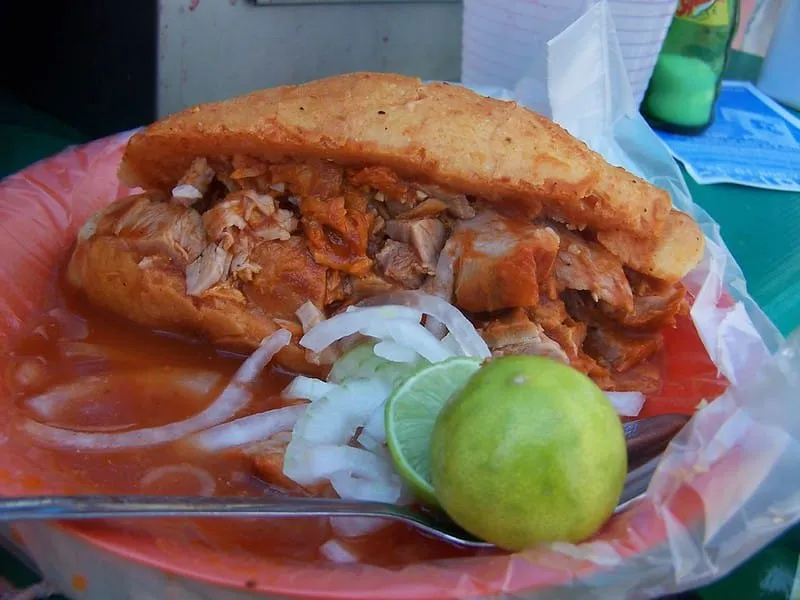
Torta Ahogada (Drowned Sandwich)
The most Guadalajaran thing you can eat. A torta ahogada is a carnitas sandwich on birote — a specific sourdough roll that only rises correctly in Guadalajara’s altitude and humidity — “drowned” in a thick tomato sauce and topped with pickled onion. Order it enchilada (spicy) or media (half and half).
The secret is the birote: in other cities, it’s just bread. In Guadalajara, the slightly salty, crusty roll doesn’t get soggy in the sauce. Locals insist the same torta made anywhere else fails the test.
Best spots: Tortas Ahogadas José El de la Bicicleta (traditional street cart, Mercado San Juan de Dios area), Tortas Toño, Las Famosas del Parque de la Solidaridad.
Carne en su Jugo (Beef in Its Juice)
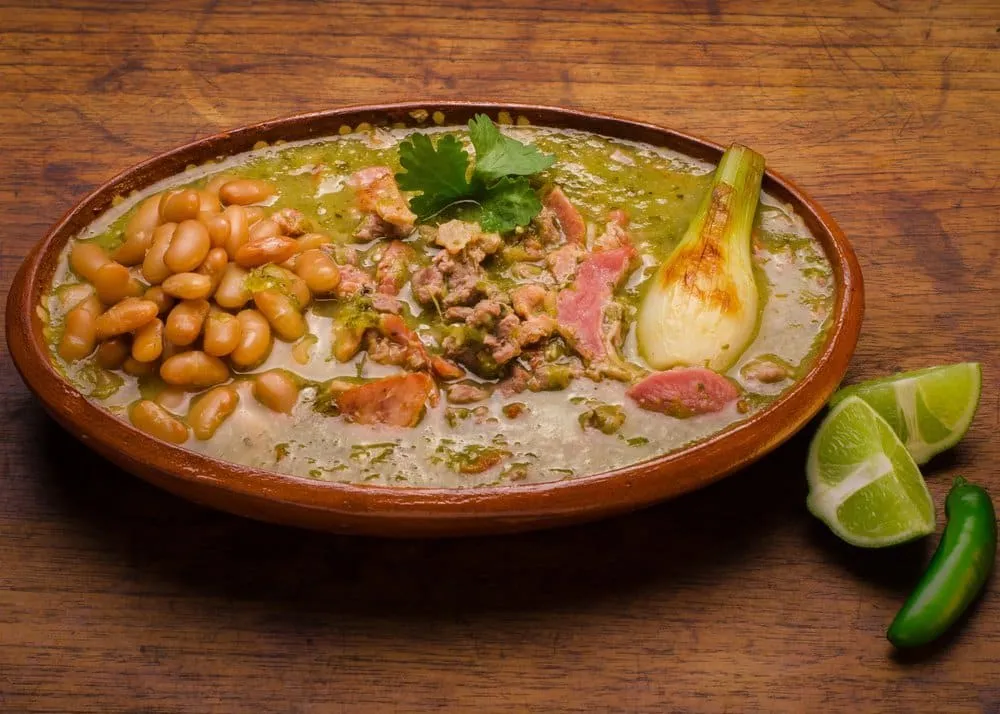
Invented in 1958 by Karnes Garibaldi restaurant, this dish is thin strips of beef simmered in the broth released by the meat itself, with bacon, green tomatillo, and serrano chile. Served with refried beans and corn tortillas.
Karnes Garibaldi holds a Guinness World Record for fastest restaurant service — 13 seconds average from order to table. Multiple locations citywide. It costs around 120–150 MXN ($6–8) per bowl and it’s one of the best food experiences in Mexico.
Birria
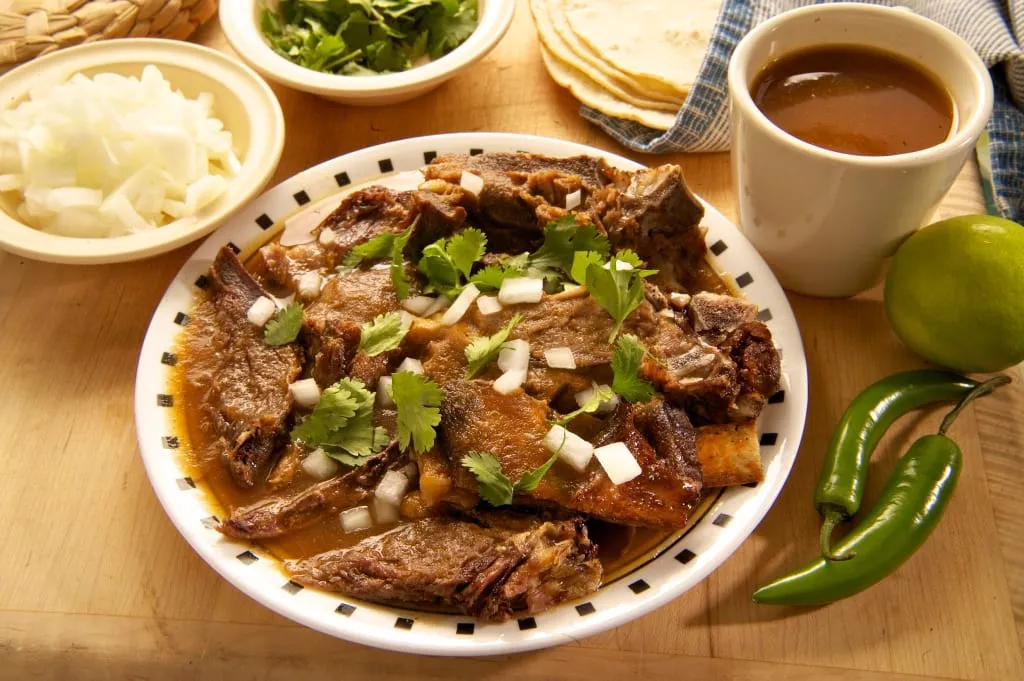
Birria was invented in Jalisco. The Guadalajara version uses goat or lamb (not beef — that’s the Americanized version) marinated overnight in a paste of guajillo, ancho, and morita chiles, then slow-cooked in an earthen pot for 5+ hours. The result: intensely flavored tender meat in a deep red broth. Served with chopped onion, lime, oregano, and corn tortillas.
Best spots: El Chololo, Las 9 Esquinas (a classic cantina in the centro), El Pilón de los Arrieros.
Note on birria tacos: The social media version with cheese and consommé for dipping is a 2010s Tijuana innovation. Traditional Guadalajara birria is served in a bowl. Both are excellent — they’re just different dishes.
Tejuino
Guadalajara street drink unique to Jalisco: fermented corn masa (similar production process to tepache) served cold over shaved ice with salt, lemon juice, and sometimes chamoy. Slightly sour, slightly sweet, refreshing. Find it from carts near markets and plazas. Cost: 15–25 MXN.
Jericalla
Guadalajara’s signature dessert: a vanilla custard with a burnt caramel top, created by nuns in the Cabañas Hospice orphanage to nourish the children. Richer than crème brûlée, simpler than flan. Find it in traditional restaurants throughout the city.
Cantarito Drink
The cocktail of Jalisco: tequila, orange juice, grapefruit juice, lime juice, and mineral water, served in a small clay pot. The clay mutes the sharpness of the tequila and keeps it cold. Buy one in Tlaquepaque’s El Parián or at the Tequila market.
The Tequila Route: Day Trip to Jalisco’s Agave Country
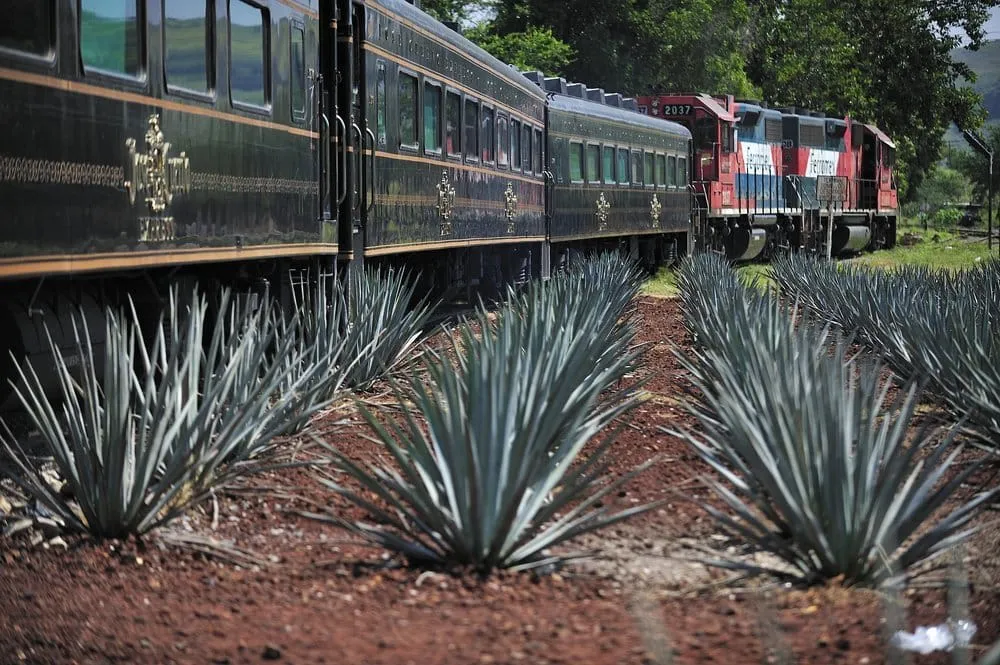
Tequila, Jalisco is 65 km northwest of Guadalajara — the town from which tequila takes its name. The surrounding agave landscape is a UNESCO World Heritage Site. Day trip options:
Jose Cuervo Express: Tequila tour train departing from Guadalajara’s González Gallo Station (Saturdays, some Sundays). The 5-hour round trip includes open bar, a stop at José Cuervo’s La Rojeña distillery, and agave field walk. Price: 1,200–2,500 MXN ($60–125 USD) depending on class. Book the Jose Cuervo Express on Viator — tickets sell out weeks ahead.
Self-drive or private tour: Tequila is 1 hour by car on the toll highway. Compare car rental prices on RentCars if you want flexibility. The town has 20+ distilleries open for tours: Casa Herradura, Mundo Cuervo, Patrón (technically in Atotonilco), and dozens of small-batch producers.
What to do in Tequila town: Visit 2–3 distilleries (Herradura is the best tour; Mundo Cuervo is the most photogenic), walk the main plaza, buy bottles directly from production (prices: 300–600 MXN / $15–30 USD for excellent tequilas), eat birria for lunch.
Learn the tequila vs mezcal difference before you go — it matters in Jalisco.
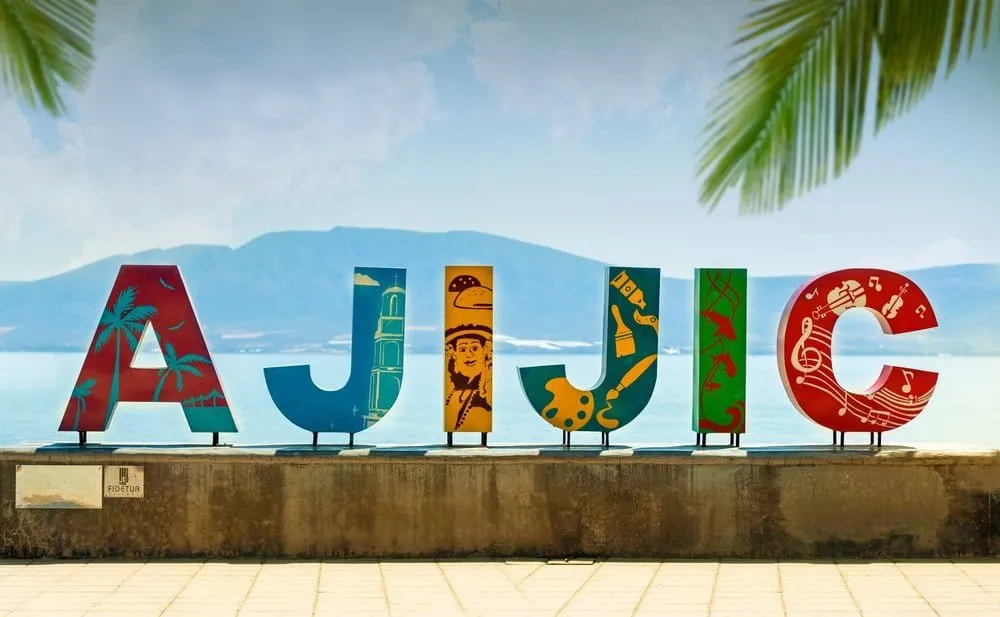
Day Trips: Lake Chapala & Ajijic
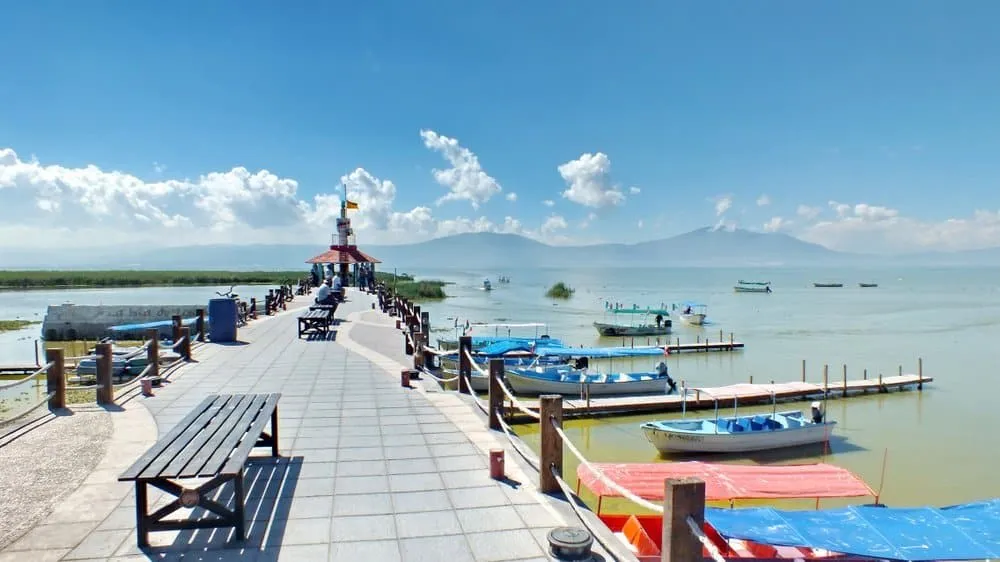
Lake Chapala is 50 km south of Guadalajara — 45 minutes by car or bus. At 1,112 km², it’s Mexico’s largest freshwater lake.
The lakeshore has attracted North American retirees since the 1940s. The area around Chapala town and Ajijic now has 15,000–20,000 foreign residents, primarily from the US and Canada. English menus, English bookstores, and expat bars line the lakefront — this is a cultural experience as much as a natural one.
What to do: Walk the Chapala malecón, hire a boat to Presidio Island (ruins of a Cristero War fort), eat fresh pescado blanco (endemic lake fish), watch sunset from a cafe in Ajijic.
Ajijic is 10 minutes from Chapala: cobblestone streets, art galleries, boutique restaurants, and the Ajijic Cultural Center with rotating exhibitions by local artists.
Day Trips: Mountain Pueblo Mágicos
Tapalpa (140 km, 2.5 hours)
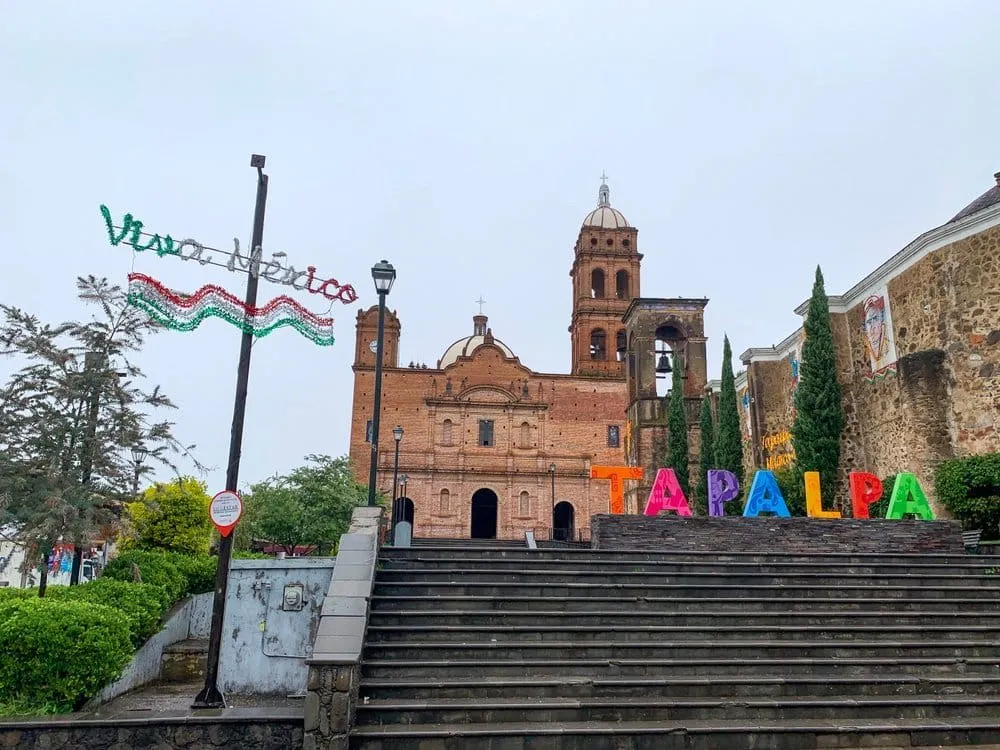
Tapalpa sits at 2,000 m in the Sierra de Tapalpa — pine forests, colonial architecture, and a main plaza with two churches (one 350-year-old, now a sacred art museum). Famous for las piedrotas — massive volcanic rock formations 5 km outside town, some with pre-Hispanic inscriptions.
Activities: zip-lining, ATV rental, horseback riding, tandem paragliding, hiking. Weekend escape for Guadalajara families — book accommodation ahead.
Mazamitla (120 km, 2 hours)
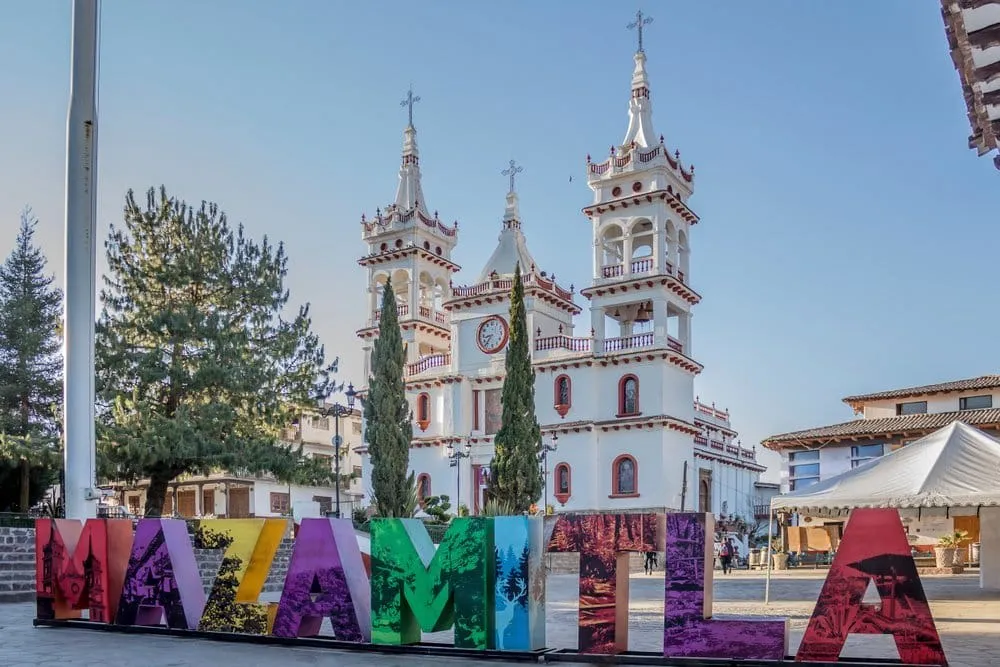
Mazamitla is a mountain Pueblo Mágico with white-facade buildings, red tile roofs, and forest hiking. The parish church of San Cristóbal has architectural details that resemble a Chinese temple — part colonial, part indigenous, part inexplicable. Hiking to El Salto waterfall and the Mirador de la Sierra del Tigre are the main outdoor activities.
Best option: If choosing one, Tapalpa has more to do. Mazamitla is better for a 2-day cabin retreat.
Getting to Guadalajara
By air: Guadalajara International Airport (GDL) is served by:
- From the US: American (Dallas, Chicago, LA, Miami, Phoenix), United (Houston, LA), Southwest (from several cities), Aeromexico, Volaris, VivaAerobus
- From Mexico City: 1 hour, 20+ daily flights (100–400 MXN / $5–20 USD one way on budget carriers)
- From Cancun: 2 hours direct on Volaris, VivaAerobus, and Aeromexico. See Guadalajara to Cancun 2026 for prices and booking tips.
- Airport to city: Uber: 200–350 MXN ($10–18 USD), 30–40 minutes. Official taxi: 400–500 MXN. Never use unmarked taxis.
By bus from Mexico City: ETN and Primera Plus run frequent departures from Terminal Poniente (Metro Observatorio, Line 1) — not TAPO. Journey: 5.5–6.5 hours. Price: 450–750 MXN ($22–37). ETN luxury class has 3-per-row seats with 180° recline — well worth it. See our complete Mexico City to Guadalajara guide for all options with 2026 prices. Heading back to CDMX? See the Guadalajara to Mexico City guide — Terminal Milenio is your departure point.
By car: Highway 15D (MEX-15D via Morelia) from CDMX takes 5.5–6 hours and costs ~700–950 MXN in tolls + fuel. The Morelia route is faster than the Querétaro route and lets you stop for lunch in one of Mexico’s most beautiful cities. See renting a car in Mexico for insurance and requirements.
Getting Around Guadalajara
Uber: Available and working throughout the city. Cheaper than CDMX. Short trips in the centro run 50–80 MXN ($3–4 USD). Safe for tourists — use it by default.
Macrobus (BRT): Orange articulated buses running on dedicated lanes. Route 707 connects downtown to the zonas industriales. Useful for longer cross-city trips: 11 MXN flat fare.
Tren Ligero (Light Rail): Line 1 runs from Juárez to Periférico Norte. Line 2 connects Tetlán to Copalita. Limited tourist utility — mainly commuter system. But Line 1’s Mercado San Juan de Dios stop is useful.
Don’t rent a car for the city. Traffic is dense and parking is a frustration. Uber handles everything. Reserve a rental only if you’re doing Tequila Route or Lake Chapala independently.
Where to Stay in Guadalajara
| Area | Best for | Price range/night | Notes |
|---|---|---|---|
| Historic Center | Culture, walkable sights | $50–120 USD | Boutique hotels in converted colonial buildings. Noisier on weekends. |
| Chapultepec / Americana | Food scene, bars, nightlife | $60–150 USD | Best location for dining out. More residential feel. |
| Zapopan / Andares | Business, shopping, families | $80–200 USD | Modern hotels, safest feeling area, furthest from downtown. |
Historic center picks: Hotel Morales (1880s building, rooftop terrace), Casa Fayette (boutique, great service). Chapultepec picks: Demetria Hotel (design hotel, excellent restaurant). Zapopan: Hilton, Presidente InterContinental (full-service, pools).
Best Time to Visit Guadalajara
Guadalajara has one of Mexico’s best climates — the “city of eternal spring” claim is mostly true.
| Month | Weather | Notes |
|---|---|---|
| Jan–Mar | 20–25°C days, 10°C nights | Dry season. Excellent. Semana Santa late March/early April — Tlaquepaque Quema de Judas, Ley Seca Thu+Fri. |
| Apr–May | 28–32°C | Hottest months. Dry. Good for sightseeing (no crowds). |
| Jun–Sep | 22–28°C | Rainy season — afternoon/evening showers, mornings clear. Still very visit-worthy. Lush green. |
| Oct | 22–27°C | October 12 Zapopan procession (2 million people). Día de Muertos building. |
| Nov | 22–26°C | FIL (International Book Fair) — world’s largest Spanish-language book fair. Last 10 days of November. |
| Dec | 18–24°C | Christmas decorations throughout centro. Mariachi concerts. |
Festival Cultural de Mayo: All of May — free outdoor concerts, dance performances, theater. The entire city becomes a stage.
FIL (Feria Internacional del Libro de Guadalajara): Late November, 10 days. 800,000+ visitors, 500+ publishers from 50 countries. If you read in Spanish, this is extraordinary.
Chivas and Atlas: Liga MX season runs September–April. Atlas FC at Estadio Jalisco (historic, center of city). Chivas at Estadio Akron (modern, 50,000 seats, 30 min from centro). Attending either is worth doing — the atmosphere is genuine and the tickets are cheap.
World Cup 2026: Guadalajara’s Estadio Akron is a FIFA 2026 host venue. Group stage and round of 16 matches scheduled June–July 2026. See World Cup 2026 Guadalajara guide for match schedules and logistics.
Safety in Guadalajara
Jalisco carries a U.S. State Department Level 3 advisory (Reconsider Travel). The May 29, 2026 advisory says there are no U.S. government employee travel restrictions in the Guadalajara Metropolitan Area, but it also notes that battles between criminal groups have occurred in tourist areas and injured or killed bystanders. Check the current Mexico travel advisory before departure because restrictions can change.
What this means practically: The Historic Center, Tlaquepaque, Tonalá, Zapopan Basilica, Chapultepec, and Lake Chapala remain major visitor areas, but location does not eliminate risk. Stay aware of your surroundings, avoid displaying valuables, use regulated or app-based transport, and avoid intercity driving after dark.
Standard precautions apply:
- Use Uber, not street taxis flagged down at night
- Don’t flash expensive cameras, phones, or jewelry in crowded markets
- Avoid walking in poorly lit areas after midnight
- Keep hotel safe for passports and extra cash
See full Mexico safety guide for state-by-state context, Mexico travel advisory 2026 for current State Department details, and our dedicated Is Guadalajara Safe? guide for a deep dive into cartel geography, safe tourist zones, and neighbourhood-by-neighbourhood breakdown.
Guadalajara Budget Guide
| Budget type | Daily budget | What you get |
|---|---|---|
| Backpacker | $30–50 USD/day | Hostel dorm ($10–15), street food (torta ahogada for $2, carne en su jugo for $6), Uber instead of taxis |
| Mid-range | $80–130 USD/day | Boutique hotel, restaurants (lunch $8–15, dinner $15–25), paid museum entries, day trip to Tequila |
| Comfortable | $150–250 USD/day | Design hotel, fine dining (Alcalde, La Docena, Alcalde), Jose Cuervo Express tequila train |
What costs nothing: Historic center, Government Palace (Orozco murals), Regional Museum, walking Tlaquepaque, Bici-Ruta Saturdays, Chapultepec flea market, Plaza Tapatía.
Essential Information
| Category | Details |
|---|---|
| Entry requirements | No visa for US/Canada/EU. Mexico entry requirements for current rules. |
| Health | Don’t drink tap water. Use garrafón water or bottled. Medical facilities excellent — GDL has private hospitals comparable to US quality. |
| Language | Spanish. Less English than tourist corridors. Basic Spanish phrases help significantly. |
| Tipping | 10–15% restaurants. 20 MXN for taxi/Uber (optional). Vialet: 20–30 MXN. |
| Packing | Light layers — evenings cool year-round. See Mexico packing list for full checklist. |
| Getting to beaches | No beaches in GDL. Puerto Vallarta is 3.5 hrs by car (MEX 15D) or 55 min flight. San Blas is 3 hrs. GDL to PVR guide · Puerto Vallarta guide. |
Frequently Asked Questions
Is Guadalajara safe for tourists? The U.S. State Department rates Jalisco Level 3 (Reconsider Travel). Its May 29, 2026 advisory lists no U.S. government employee travel restrictions in the Guadalajara Metropolitan Area, but notes that violence has occurred in tourist areas. Use standard urban precautions and check the current advisory before departure.
How many days do I need in Guadalajara? Three days covers the Historic Center, Tlaquepaque/Tonalá, food exploration, and one evening of mariachi. Five to seven days lets you add the Tequila Route, Lake Chapala, and a mountain Pueblo Mágico day trip. Guadalajara rewards slow travel — it reveals itself through meals and neighborhoods, not just sights.
What’s the difference between Tlaquepaque and Tonalá? Tlaquepaque (20 min from centro): curated galleries, blown glass artisans, upmarket craft shopping, pedestrian streets. The destination for buying one beautiful piece. Tonalá (10 min past Tlaquepaque): the wholesale artisan district, Thursday and Sunday street markets, furniture and home décor at near-production prices. Where Tlaquepaque shops source their stock.
Is Uber available in Guadalajara? Yes. Uber works throughout the city including the Historic Center, Zapopan, Tlaquepaque, and the airport. Also InDriver. Both are safe, GPS-tracked, and significantly cheaper than street taxis. Use them as your default transport.
What’s the best way to do the Tequila Route from Guadalajara? The Jose Cuervo Express train (Saturdays, occasionally Sundays) is the most memorable — open bar, agave fields, distillery stop. Book 2–4 weeks ahead; it sells out. Self-driving gives more flexibility: Highway 15D, 65 km, 1 hour. You can visit multiple distilleries including Casa Herradura (best educational tour), Mundo Cuervo (most Instagram-friendly), and small artisan producers like G4 or Siembra Azul if you want single-village tequilas.
More Guadalajara & Jalisco Guides
- Best time to visit Guadalajara — month-by-month guide
- Day trips from Guadalajara — 10 best excursions ranked
- Guadalajara to Guanajuato 2026 — bus, car & driving guide
- Guadalajara to Monterrey 2026 — fly 1 hr or drive via Zacatecas
- Guadalajara to Mazatlán 2026 — drive MEX-15D in 3.5–4 hrs or Primera Plus bus
- Guadalajara to Oaxaca 2026 — fly via Mexico City (no direct flight or bus)
- Guadalajara Airport guide — arrivals, transport, terminal map
- Best restaurants in Guadalajara
- Tequila, Jalisco — distillery tours and the agave landscape
- Tequila vs mezcal — what’s the actual difference
- San Pedro Tlaquepaque — complete guide
- Tonalá, Jalisco — artisan markets guide
- Lake Chapala — Mexico’s largest lake
- Ajijic, Jalisco — the expat lake town
- Tapalpa — Jalisco’s mountain Pueblo Mágico
- Mazamitla — cabin retreat guide
- What is mariachi? History and how to see it live
- Lucha Libre in Mexico — how to attend
- World Cup 2026 Guadalajara — stadium guide and match schedule
- Puerto Vallarta travel guide
- Is Mexico safe? Honest guide
- Mexico travel cost — how much does a trip cost