Tapalpa, Jalisco: Complete Pueblo Mágico Guide 2026 (Waterfalls, Cheese & Pine Forests)
Tapalpa is a highland Pueblo Mágico in Jalisco, sitting at 2,100 meters in the foothills of the Sierra Madre. Two hours south of Guadalajara, it offers pine forests, enormous volcanic rock formations, some of the best lamb in Mexico, and a town center that has barely changed since the colonial era.
It’s been a Pueblo Mágico since 2002 — the first in Jalisco, and one of the first in all of Mexico. Guadalajara residents come on weekends; few international tourists make it here, which is fine by those who do.
Quick Facts: Tapalpa
| Location | Jalisco, 132km south of Guadalajara |
| Elevation | 2,100m (6,890 ft) |
| Pueblo Mágico since | 2002 (first in Jalisco) |
| Name meaning | ”Land of colors” (Nahuatl: tlapalpan) |
| Population | ~6,000 in town; ~21,000 in municipality |
| Average temperature | 16°C / 61°F year-round |
| Best for | Weekend escape from Guadalajara, outdoor activities, food |
| Getting there | 2 hrs by car from GDL via Colima highway |
| Don’t miss | Las Piedrotas, borrego al pastor, Salto del Nogal, La Ceja mirador |
Safety Update: March 2026
On February 22, 2026, the Mexican military conducted a Special Forces operation in the rural municipality of Tapalpa that resulted in the death of CJNG leader Nemesio Oseguera Cervantes (“El Mencho”). This event generated significant international media coverage.
Current status (March 2026): Tapalpa town is operating normally. Shops, restaurants, hotels, and tourism activities are fully open. The operation occurred outside the town center in the rural areas of the municipality — not in the tourist zone.
The US State Department Advisory for Jalisco remains Level 2 (Exercise Increased Caution), unchanged from before the February 2026 events. For reference, Level 2 is the same advisory level applied to Germany, France, and the United Kingdom. Puerto Vallarta, Guadalajara’s historic center, and Tapalpa’s Pueblo Mágico zone are all covered by this Level 2 designation — not the higher Level 3 that applies to specific border regions.
Travelers planning to visit Tapalpa in March-April 2026 face no specific advisories beyond the standard Jalisco Level 2.
Getting to Tapalpa
By car (recommended): 132km south of Guadalajara via Highway 54 toward Colima. The drive takes about 2 hours and passes through rolling farmland before climbing into pine forests. The mountain section has tight curves — go at a comfortable pace. Note: expect some motion sickness potential on the mountain approach; the final 30 minutes are winding.
La Ceja viewpoint: On the descent into Tapalpa, pull over at La Ceja — a mirador with panoramic views of the entire valley. One of the best viewpoints in Jalisco. It’s on the highway 2km before you reach town; there’s a small parking area.
By bus: No direct service from Guadalajara. Options:
- ADO or Primera Plus to Sayula (1.5 hrs, ~150 MXN from GDL), then local bus or taxi to Tapalpa (30-40 min, ~120 MXN taxi)
- ADO to Ciudad Guzmán (2 hrs from GDL), then local transport to Tapalpa (~1 hr)
Day tour from Guadalajara: Organized day tours typically include transportation + La Ceja stop + Las Piedrotas + town time for lunch. Good option if you don’t have a car.
Compare rental car rates for Guadalajara — a rental gives you maximum flexibility for Tapalpa and the surrounding highland towns.
Book Guadalajara to Tapalpa day tours on Viator
From Puerto Vallarta: About 4.5 hours via Autlán de Navarro. Scenic but a long drive.
Top Things to Do in Tapalpa
1. La Ceja Mirador — Best View in Jalisco
Before you even reach town, stop at La Ceja. This mirador on the highway descent into Tapalpa offers a panoramic view of the entire pine-forested valley — the town below, the surrounding sierra, and on clear days the smoke from Volcán de Fuego de Colima to the south.
Most guides miss this. It’s 2km above town on the main road, with a natural pullout. Stop here first — the light is usually best in the morning before the mountain haze builds.
2. Walk the Historic Center
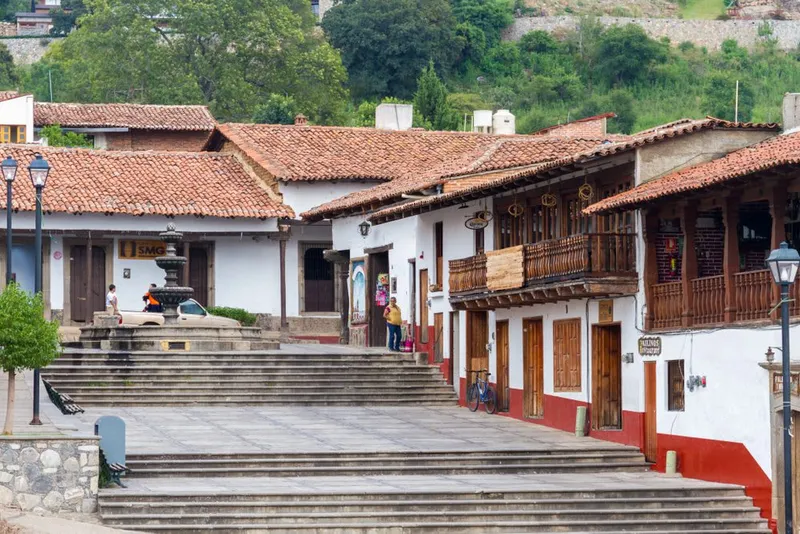
The heart of Tapalpa is a compact grid of cobblestone streets, white-plastered houses with red tile roofs, and wooden balconies. Built by Franciscan missionaries in the 17th century.
The main square anchors everything. On the north side: the Municipal Market, with cheese vendors selling Tapalpa’s famous queso crema directly from the farms. On the west: the Sculpture Garden with works by Sebastián and Alejandro Colunga.
San Antonio de Padua Church: The oldest in town, built by Franciscan friars in the 17th century. Remarkably, it preserves its original mesquite wood floor — one of the few colonial churches in Jalisco with an original wood interior. A small museum of sacred art is housed here.
Our Lady of Guadalupe Church: Built between 1950 and 1970 entirely through community effort — parishioners donated 20 cents a week, cattle were raffled, labor was volunteered. Built in exposed brick with no exterior cladding, which is unusual for Jalisco.
3. Las Piedrotas — The Valley of the Enigmas
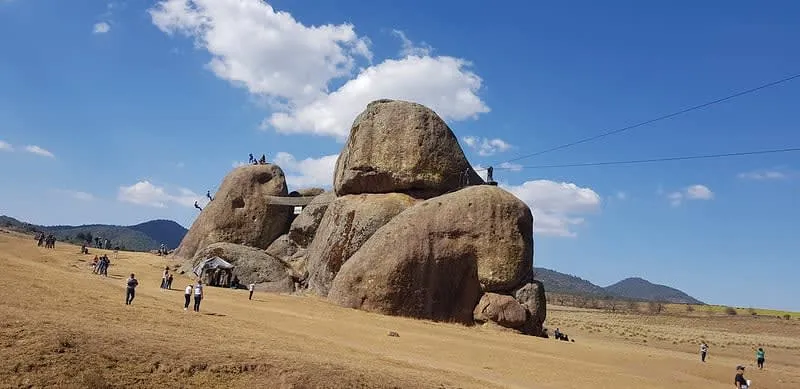
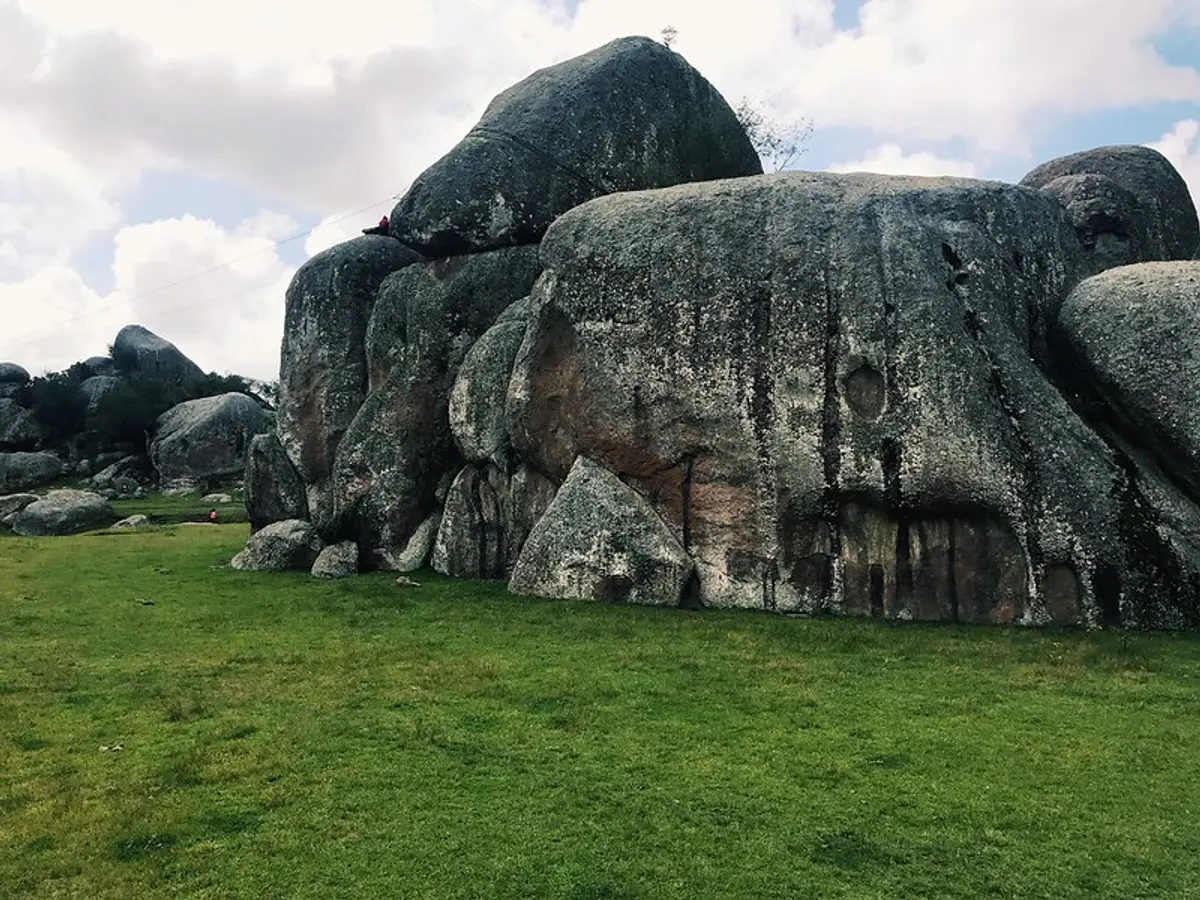
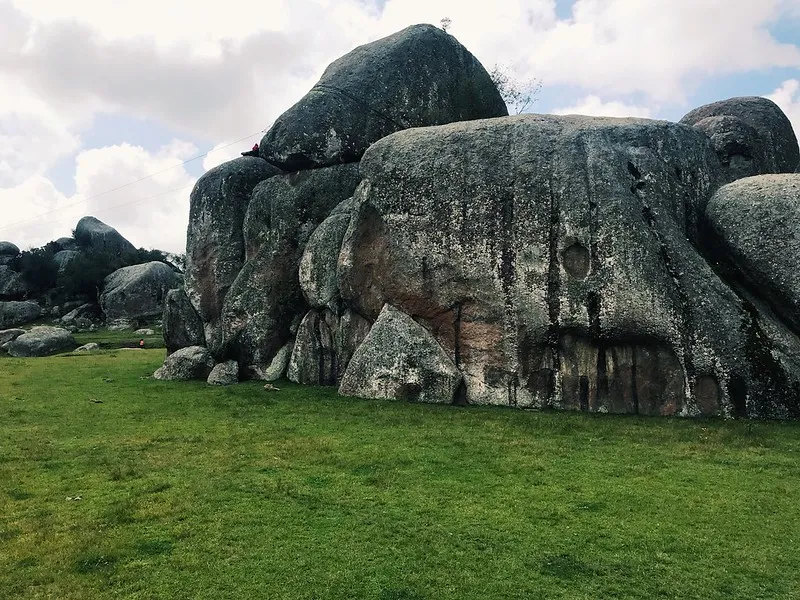
The most distinctive sight near Tapalpa: enormous volcanic rock formations scattered across a valley, some reaching the size of houses. Locals call the area the “Valley of the Enigmas” because their origin remains debated — volcanic uplift eroded by centuries of wind and rain, or meteorite impact. Pre-Hispanic petroglyphs can be found on some rocks if you look carefully.
The formations attract visitors who believe in energy vortexes; equinoxes bring spiritual pilgrims. Whether or not you hold that view, the formations are genuinely striking — smooth, rust-colored boulders ringed by pine forest.
Getting there: 2km from town, on the road to Chiquilistlán. Walk (25 min) or taxi (50 MXN). A small tourist train runs from the main square on weekends.
Entry: Free. Locals may request a voluntary donation for upkeep (typically 20-30 MXN per person; pay it).
Activities: Zip-lining, rappelling, horseback rides, and ATV tours operate here on weekends and public holidays (typically from 1 PM). Weekday visits are calmer — you’ll often have the area to yourself.
4. Salto del Nogal — Jalisco’s Largest Waterfall
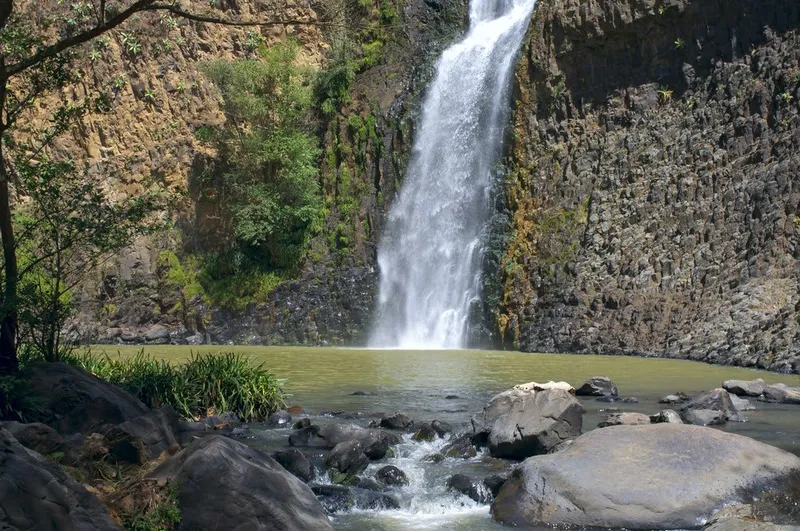
At 107 meters, the Salto del Nogal is the largest waterfall in Jalisco. About 10km from town, accessed after a 40-minute walk through pine and bromeliad forest. A smaller waterfall called Molino is visible on the trail before reaching the main drop.
Best time: June–September during the rainy season when the volume is highest. In the dry season (November–April), the flow reduces significantly — still worth visiting, but dramatically different in scale.
Access: Drive to the trailhead or hire a local guide from the main square (organized tours, usually 150–250 MXN/person). The area supports rappelling, mountain biking, hiking, fishing, and horseback riding.
5. Hacienda La Media Luna
An abandoned hacienda about 10 minutes from town (in the community of Lagunillas), famous as the landscape that inspired Juan Rulfo’s Pedro Páramo — widely considered the greatest Mexican novel and a direct influence on Gabriel García Márquez and Latin American literature.
The hacienda is partly in ruins but evocative. A lagoon in front allows sport fishing (tilapia, bass). Entry is informal and often free.
Nearby: La Conquista Paper Mill ruins (Latin America’s first industrial paper mill, 1840 — built by British investors, closed 1923). Two pieces of industrial archaeology on the same visit.
6. Ekopark Tapalpa
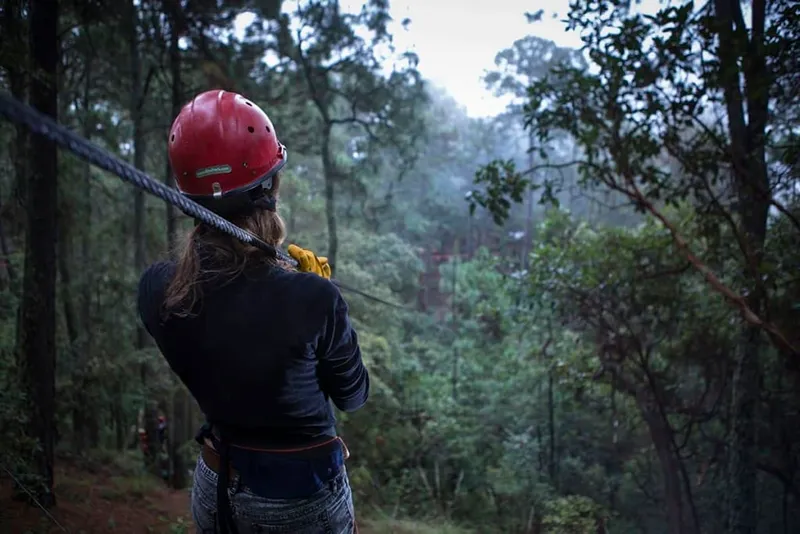
An adventure park 10km from town with 9 zip lines — the longest nearly 300 meters, running 25 meters above the tree canopy at up to 50 km/h. Also offers rappelling, climbing, hiking, ATV riding, and camping.
More organized and developed than most outdoor activities in the area. Good option if you’re visiting with kids or groups.
Entry: ~400-600 MXN/person for zip line package. ATV tours extra.
7. Los Frailes Natural Park
About 9km north of town: rock formations that resemble praying monks (frailes), sitting on the highest hill in the area. Panoramic views of the surrounding valleys.
Activities: climbing, rappelling, hiking, ATVs. The road winds through old-growth pine forest. Popular with Guadalajara families on holiday weekends.
8. Ferrería de Tula — The Colonial Foundry
In the nearby community of Ferrería de Tula: an 18th-century iron foundry that produced the bells still ringing in Tapalpa’s churches, bronze street fountains across Jalisco, and railroad tracks used by Mexican railways from the late 19th century. The ruins are partially preserved. Rarely visited by international tourists.
Best Time to Visit Tapalpa
| Month | Weather | Crowds | Waterfall | Notes |
|---|---|---|---|---|
| Jan–Feb | Cool (5-22°C) | Low-medium | Low | Cold nights, clear days — best for hiking |
| Mar–Apr | Warm (10-26°C) | Medium-High | Low | Pre-rainy season, Easter/Semana Santa busy |
| May | Hot (14-28°C) | Low | Minimal | Hottest month, transition to rains |
| Jun–Oct | Warm with afternoon rain | Medium | Peak | Rainy season — waterfall at full volume |
| Nov–Dec | Cool (8-22°C) | Medium | Low-medium | Excellent weather, smaller crowds than Mar |
Best overall: October–November. Post-rainy season means the Salto del Nogal is still flowing well, the pine forests are deep green, temperatures are comfortable, and weekend crowds are moderate.
Best for outdoor activities: November–March. Dry trails, clear skies, zero mud.
Best for the waterfall: August–September. Peak volume, but expect afternoon rain on 60-70% of days.
Avoid: Semana Santa and major Mexican holidays — town fills with Guadalajara visitors, accommodation triples in price.
Tapalpa Food Guide
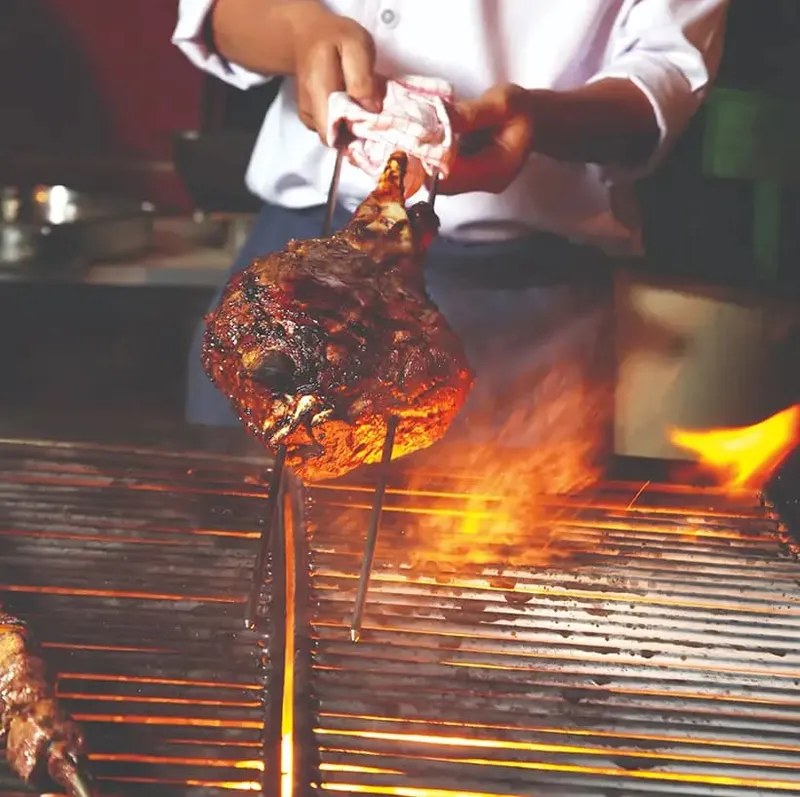
Borrego al Pastor (Lamb Al Pastor)
Tapalpa’s signature dish. Lamb marinated in orange and cooked on a vertical spit over oak wood — the combination of local citrus and highland oak gives it a flavor distinct from any other al pastor in Mexico. Beef was historically harder to raise in pine-forest terrain; lamb thrived.
Served with handmade tortillas, salsa, and refried beans. Cost: 150–200 MXN per plate at restaurants; 80-120 MXN at market stalls.
Where to eat it: El Vergel (km 2.6, road to San Gabriel) and La Mezcalera (km 2.5, road to Atemajac de Brizuela) are the known destinations. Market stalls also serve it, especially on weekends.
Queso Crema de Tapalpa
A semi-soft, fresh cream cheese produced on farms in the surrounding municipality. Vendors sell it in the Municipal Market and at roadside stalls entering town. Eaten with tortillas, as a topping on beans, or with peach preserves.
Ask when it was made — freshness matters with this cheese. Typical price: 80-150 MXN per piece depending on size.
Other Tapalpa Foods
| Dish | What It Is | Where to Find |
|---|---|---|
| Pegoste de durazno | Sweet peach preserve — the town’s dessert icon | Sweet shops throughout town |
| Chard tamales | Local preparation using mountain-grown chard | Market on weekdays |
| Enchiladas with queso Tapalpa | Tortillas in red sauce topped with local cheese | Centro restaurants |
| Rompope | Mexican egg liqueur, often pomegranate-flavored | Souvenir shops |
| Pomegranate punch | Seasonal cold drink | Market stalls |
Shopping and Crafts
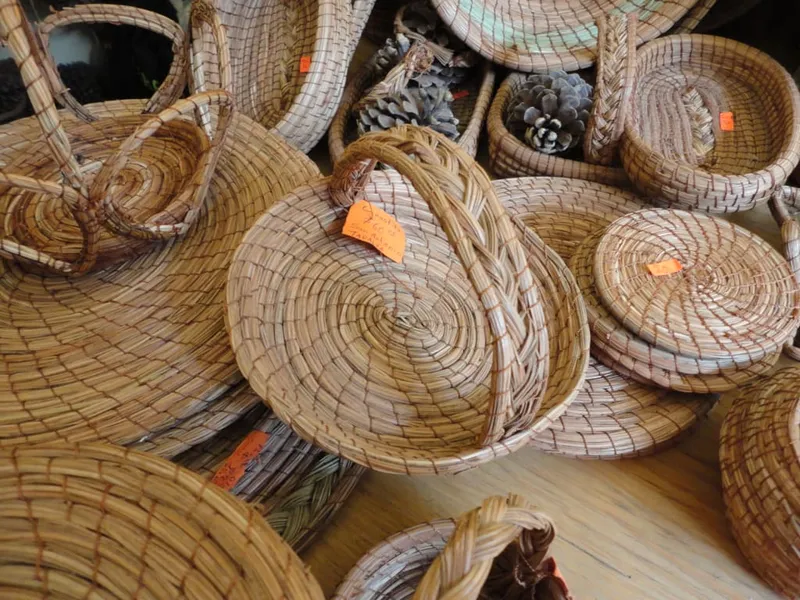
Ocochal: Tapalpa’s most distinctive craft — baskets, bowls, fruit holders, jewelry boxes, and decorative pieces woven from the needles of chino and teocote pine trees. Deep brown color, fine texture. One of the more unusual indigenous craft traditions in Jalisco.
Textiles: Jorongos (ponchos), blankets, and backpacks woven on handmade looms. Quality varies — the better pieces are made with highland wool.
Wood crafts: Colonial-style furniture, carved wooden pieces, huaraches.
Where to buy: The main square and surrounding streets. Market vendors offer lower prices than souvenir shops. Prices are fair; bargaining is not expected for small items.
Festivals in Tapalpa
| Festival | When | What Happens |
|---|---|---|
| Virgin of Guadalupe | January 4–13 | Processions, fireworks, traditional dances |
| Pilgrimage of the Absent Sons | Sunday near January 12 | Community procession for emigrant residents |
| Virgen de la Defensa | First Saturday of July to first Saturday of September | 150-year-old pilgrimage from Juanacatlán; two-month celebration |
| San Antonio de Padua | July 11–13 | Parish feast, traditional music |
| Mexican Independence Day | September 16 | Military parade through town |
Where to Stay
| Type | Price Range | Notes |
|---|---|---|
| Budget hotels | 400–700 MXN/night | Basic rooms, town center |
| Mid-range hotels | 800–1,500 MXN/night | Better comfort, some with fireplaces |
| Cabins / casas de campo | 1,200–2,500 MXN/night | Pine forest, most atmospheric |
| High-end country clubs | 2,000–4,000 MXN/night | Pool, lake views, breakfast included |
Three recommended options:
- Hotel El Remanso: On the shore of the Tapalpa lake, known for pool, breakfast, and service
- Hotel Tapalpa Country Club: At km 4.5 on the road to Chiquilistlán, rooms with fireplaces and lake setting
- Hotel Casona de Manzano: Colonial house at Francisco Madero 84, owner-operated, interior courtyard
Book in advance for weekends and holiday periods — Guadalajara families fill the town on Saturday nights.
Where to Eat
| Restaurant | What to Order | Location |
|---|---|---|
| Madre Tierra | Coffee, full meals, pastries | In front of main square |
| El Vergel | Duck confit tacos, lamb al pastor | Km 2.6, road to San Gabriel |
| La Mezcalera | Lamb al pastor, quail, fresh tortillas | Km 2.5, road to Atemajac |
| Market stalls | Queso crema, chard tamales, pegoste | Municipal Market |
Day Trips from Tapalpa
Tapalpa’s location in highland Jalisco puts several destinations within range:
- Guadalajara — 2 hours north; Mexico’s second city, tequila, mariachi, and Orozco murals
- Things to Do in Guadalajara — full activities guide for Jalisco’s capital
- Ciudad Guzmán — 50km east; gateway to Nevado de Colima volcano (Mexico’s most active)
- Sayula — 40km east; colonial town with lake views, easy stopover on the way
- Colima, Mexico — 90km south; the volcano state
- Hot Springs in Mexico — the Atacco community 3km from Tapalpa has a natural hot springs spa
- Mazamitla — 60km east; another highland Pueblo Mágico with similar pine-forest atmosphere (but less commercial than Tapalpa)
Budget Table
| Budget Level | Daily Cost | What You Get |
|---|---|---|
| Budget | $30–45 USD (550–830 MXN) | Budget hotel, market food, free sights |
| Mid-range | $60–90 USD (1,100–1,650 MXN) | Cabin, restaurant meals, Ekopark, guided hike |
| Comfortable | $90–130 USD (1,650–2,400 MXN) | Country club, all restaurant meals, activities |
Tapalpa is noticeably cheaper than coastal Pueblo Mágicos like Sayulita or Todos Santos. Main costs: accommodation (weekends command 30-50% premiums) and activities.
Practical Information
Getting around: Most of Tapalpa’s attractions are outside town. Taxis from the main square to Las Piedrotas cost 50 MXN; to the Salto del Nogal trailhead, 120-150 MXN. No Uber. Tourist trains to Las Piedrotas operate on weekends.
ATMs: One BBVA bank ATM in the town center. Bring cash — many restaurants and market vendors are cash-only.
Altitude: 2,100 meters. Visitors arriving from sea level may notice light-headedness on the first day. Hydrate and take the first day easy.
Cell service: Telcel and AT&T Mexico have coverage in town. Service drops in the more remote areas.
Best day: Sunday for the market; weekdays for fewer crowds.
For complete Jalisco trip planning, see our Guadalajara travel guide and day trips from Guadalajara.
Compare rental car rates for the Guadalajara–Tapalpa drive — a car is essential for getting the most out of Tapalpa.
Book Guadalajara and Jalisco tours on Viator — day trips from Guadalajara to Tapalpa available.
Travel insurance is worth considering before this trip, especially a policy with emergency medical coverage and evacuation support.