Day Trips from Guadalajara 2026: 10 Best Excursions Ranked
Guadalajara sits at the center of Jalisco like a hub with spokes radiating outward — and every spoke leads somewhere worth visiting. Within two hours of Mexico’s second city you have the town that gave the world tequila, Mexico’s largest lake, circular pyramids that no other culture ever built, a mountain Pueblo Mágico with apple orchards and pine forests, and one of the country’s most important religious pilgrimage sites.
This guide covers the 10 best day trips from Guadalajara, ranked by the combination of distance, effort, and payoff. Whether you have a rental car or you’re relying on buses and Uber, there’s a trip here that fits your style.
Quick Reference: Day Trips from Guadalajara at a Glance
| Destination | Distance | Drive | Best Transport | Entry Cost | Best For |
|---|---|---|---|---|---|
| Zapopan Basilica | 10 km | 20 min | Uber / metro | Free | Quick culture fix |
| Tlaquepaque | 15 km | 30 min | Uber / bus | Free | Crafts & galleries |
| Tonalá | 18 km | 35 min | Uber / taxi | Free | Wholesale artisan market |
| Lake Chapala & Ajijic | 50 km | 1 hr | Bus / car | Free (lakefront) | Lake scenery, expat towns |
| Tequila town | 65 km | 1 hr | Bus / car / train | Free–700 MXN+ | Distilleries, agave fields |
| Los Guachimontones | 80 km | 1.5 hr | Car / tour | 90 MXN | Unique circular pyramids |
| Tapalpa | 130 km | 2 hr | Car / tour | Free | Cobblestone Pueblo Mágico |
| Mazamitla | 160 km | 2.5 hr | Car | Free | Alpine forest, cabin stays |
| San Juan de los Lagos | 180 km | 2.5 hr | Bus / car | Free | Major pilgrimage basilica |
| Guanajuato city | 190 km | 2.5 hr | Bus / car | 40 MXN tunnels | UNESCO city (better overnight) |
Getting Around: Transport Options from Guadalajara
| Option | Best For | Cost | Flexibility |
|---|---|---|---|
| Rental car | Los Guachimontones, Tapalpa, Mazamitla | ~700–1,200 MXN/day | High — visit multiple spots, set your own pace |
| Uber | Tlaquepaque, Tonalá, Zapopan | 120–300 MXN one way | Medium — no luggage limit, return anytime |
| ADO / Primera Plus bus | Tequila, Lake Chapala, Guanajuato | 75–400 MXN | Medium — comfortable coaches, fixed schedule |
| Jose Cuervo Express train | Tequila (Saturdays only) | 1,100–1,800 MXN all-inclusive | Low — guided, great for a special occasion |
| Organized tour | Los Guachimontones, San Juan de los Lagos | 500–1,000 MXN | Low — no logistics stress, guide included |
Renting a car unlocks the full list, especially for Los Guachimontones, Tapalpa, and Mazamitla, which have limited or no public bus connections. Guadalajara’s airport (GDL) has all major rental agencies.
1. Tlaquepaque — Craft Galleries 15 Minutes Away
Distance: 15 km | Drive: 30 min | Entry: Free | Best day: Any day except Monday (some shops close)
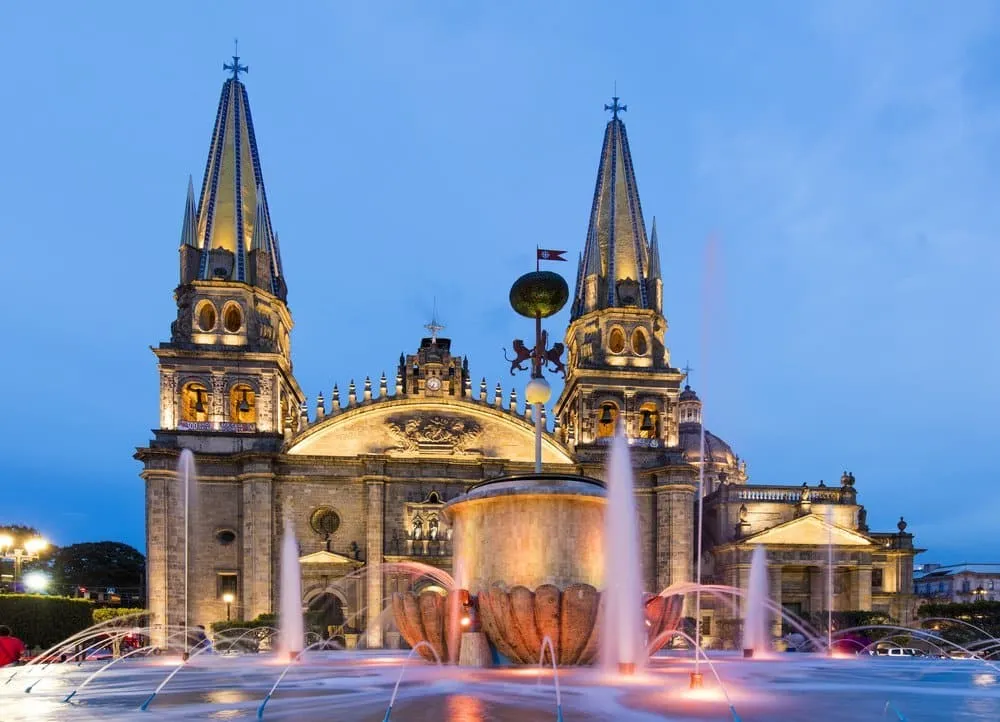
San Pedro Tlaquepaque is technically a separate municipality, but it’s essentially a walkable craft district attached to Guadalajara’s east side. The pedestrian main street — Calle Independencia — runs through 19th-century mansions converted into galleries selling blown glass, talavera pottery, huarache sandals, hand-embroidered textiles, and Huichol yarn art.
The blown-glass workshops are the real draw. Artisans work with open furnaces right inside the shop floor — you can watch molten glass being shaped into everything from decorative vases to intricate animal sculptures. Prices range from 200 MXN for small pieces to 5,000+ for large installations.
El Parián: The roofed colonial arcade at the center of town has mariachi musicians performing from late afternoon onward. Tables, cold beer, and live music until midnight. It sounds touristy and it is — but it’s genuinely enjoyable.
Where to eat: El Abajeño on Calle Independencia for traditional Jalisco dishes — birria, pozole, and sopa tapatía. Expect to spend 150–300 MXN per person.
Getting there: Uber from downtown Guadalajara costs 120–160 MXN and takes 30 minutes. Bus 275 from Plaza Tapatía also goes directly. Most people combine Tlaquepaque with Tonalá the same day — they’re on the same road heading east, 3 km apart.
2. Tonalá — Mexico’s Wholesale Craft Capital
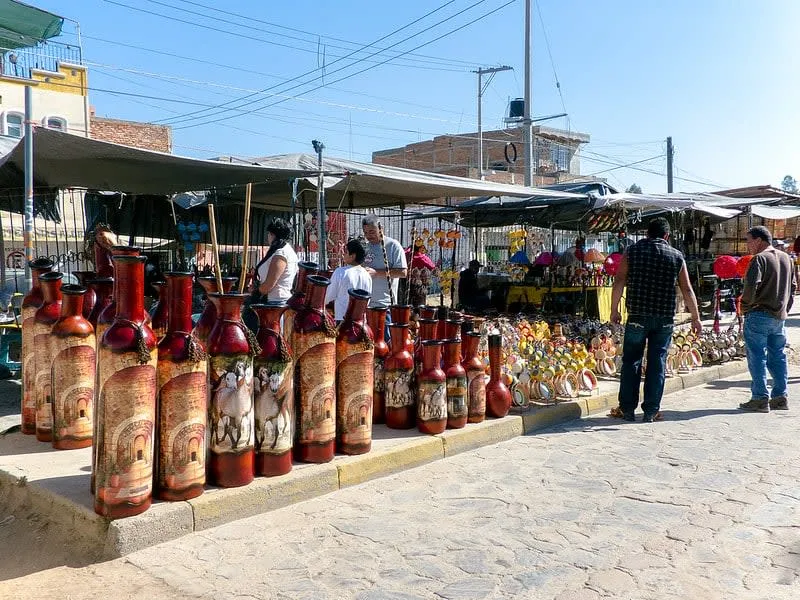
Distance: 18 km | Drive: 35 min | Entry: Free | Best day: Thursday or Sunday (market days)
Tonalá is where most Tlaquepaque shops source their inventory — which tells you everything about the prices. This is a production town of 500,000+ people where furniture workshops, ceramic studios, blown-glass factories, and textile manufacturers line every block. The quality ranges from tourist-grade to genuinely excellent artisan work.
Go on Thursday or Sunday — the whole town turns into a street market, with hundreds of vendors spreading goods across the main avenues. You’ll find: hand-painted Talavera tiles (from 30 MXN each), papier-mâché sculptures, carved wood furniture, silver jewelry, leather goods, and glass art at production prices.
If you’re shopping for home décor and willing to spend time, Tonalá on a Thursday can be one of the best shopping days in Mexico. Budget extra luggage weight.
Getting there from Tlaquepaque: 3 km east, 10 minutes by taxi (30–40 MXN) or colectivo van. Uber from downtown Guadalajara costs 130–180 MXN.
3. Tequila Town — The Agave Fields and Distilleries
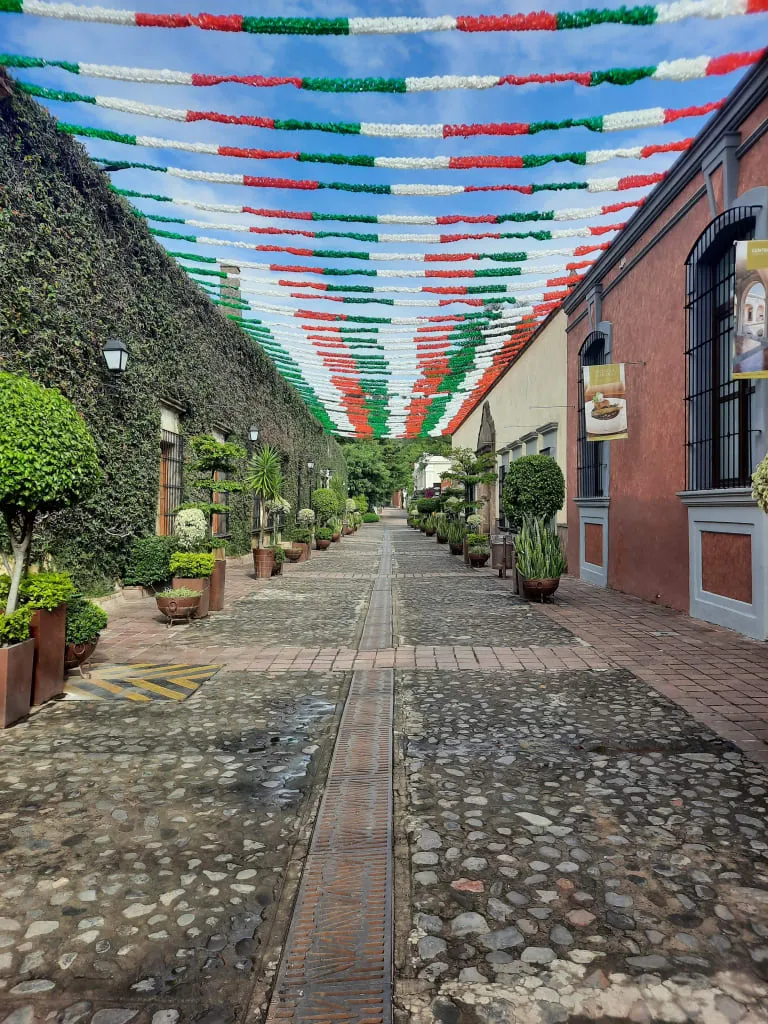
Distance: 65 km | Drive: 1 hr | Entry: Free to town, distillery tours 200–700 MXN | Best day: Saturday (Jose Cuervo Express train day)
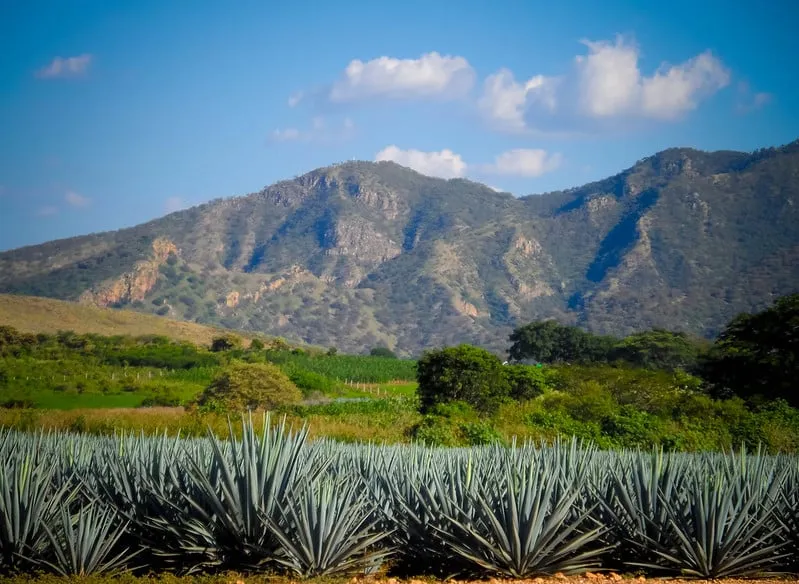
The town of Tequila sits in the middle of a UNESCO-listed agave landscape — rows of blue-gray Agave tequilana plants covering the volcanic hillsides in every direction. The town itself is small (about 40,000 people), walkable, and completely dedicated to the drink that shares its name.
The distilleries:
- La Rojeña (Jose Cuervo): The oldest operating distillery in Latin America (since 1795), located right on the main plaza. Guided tours run every 30 minutes, 200–700 MXN depending on how many tastings you want. Book online to avoid queues on weekends.
- Mundo Cuervo: The tourist complex next door includes a tequila museum, artisan market, and the Cuervo family hacienda.
- Casa Herradura (in Amatitán, 15 km away): The best educational tour if you want to understand the full process — from jimador harvesting to double-distillation. Smaller, less crowded, and the tour quality is higher.
- Small artisan producers: Several family distilleries around the region make small-batch tequila from single agave varieties. A rental car lets you visit these; tours skip them.
Jose Cuervo Express train: Runs Saturday only from Guadalajara’s train station. Departs around 10 AM, returns around 7 PM. All-inclusive: open bar on the train, distillery tour, tequila tastings, mariachi, folkloric dance. Costs 1,100–1,800 MXN depending on cabin class. Sells out weeks ahead — book online. It’s a party on rails, not a serious distillery education.
Self-drive option: Highway 15D from Guadalajara takes exactly 1 hour. The drive through agave fields is part of the experience. Park in the main plaza and walk everywhere.
Bus option: Terminal Central Antigua (not the modern TCRB terminal) — buses leave every 30–45 minutes for around 75 MXN, take 1.5 hours.
For more on the town and distillery options, see our complete Tequila Jalisco guide.
4. Lake Chapala & Ajijic — Mexico’s Largest Lake
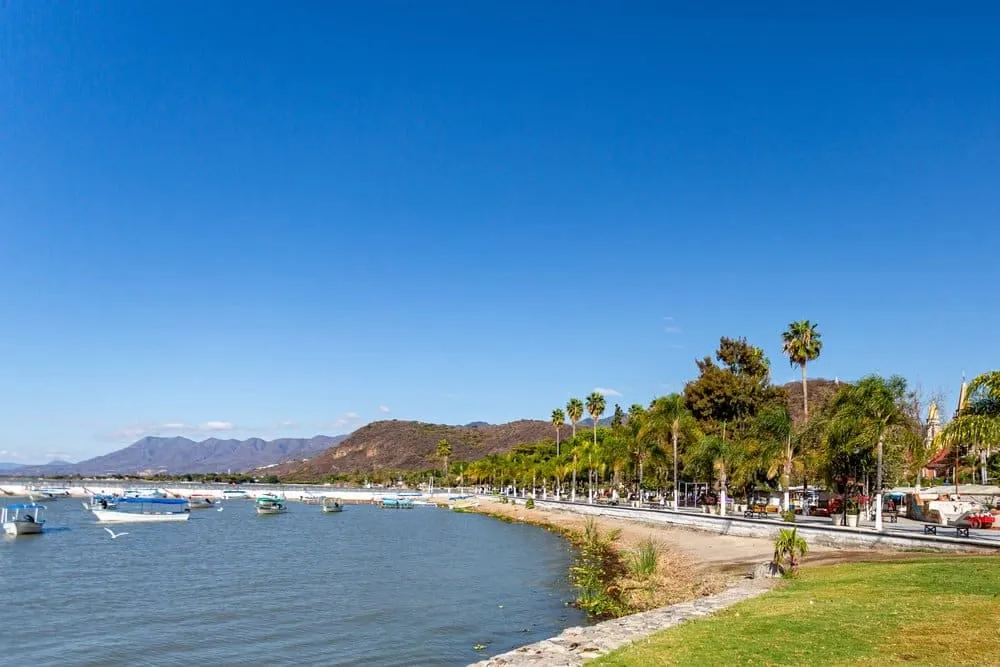
Distance: 50 km | Drive: 1 hr | Entry: Free | Best day: Weekdays (less crowded malecon)
Lake Chapala is the largest freshwater lake in Mexico — 80 km long and 18 km wide — and it sits just one hour south of Guadalajara at 1,524 m elevation. The lake has been slowly shrinking for decades due to water diversion, but the remaining body of water is still impressive, and the towns along its northern shore have become one of the most popular retirement destinations in the Americas.
Chapala town: The malecon runs along the northern shore with seafood restaurants serving fresh charales (tiny lake fish fried crisp and eaten whole), pescado blanco, and ceviche. Walk to the end of the pier for lake views. La Bodega restaurant is reliable for fish plates at 180–250 MXN.
Ajijic (10 km west of Chapala): This is where approximately 20,000 Americans and Canadians have settled — making it the largest American expat community outside the United States. The cobblestone streets, art galleries, yoga studios, and English-language bookshops give it a distinctly different feel from the rest of Mexico. The main plaza has a Saturday tianguis (artisan market). El Ojo del Lago and Lakeside Living newspapers are published weekly here — a surreal thing to find at a newsstand 40 minutes from a Mexican metropolis.
What Ajijic offers: Art galleries (several high-quality), the Ajijic Cultural Center, good international restaurants (harder to find in Guadalajara), and a calm lakefront boardwalk with views across to the mountains of Michoacán.
Combination route: Chapala malecon for lunch → Ajijic for afternoon galleries and sunset → return before dark. The 10 km between them takes 15 minutes by car or collective taxi.
Getting there: Buses from Guadalajara’s Terminal Central (old terminal, not TCRB) run frequently, about 45 MXN, 50 minutes. By car, take Highway 44 south from the Periférico.
5. Los Guachimontones — Mexico’s Only Circular Pyramids
Distance: 80 km | Drive: 1.5 hr | Entry: 90 MXN | Best day: Tuesday–Sunday (closed Monday)
Los Guachimontones near the town of Teuchitlán is one of the most underrated archaeological sites in Mexico — partly because it’s hard to pronounce, and partly because it’s not on the Yucatán Peninsula where most visitors concentrate.
The Teuchitlán culture (300 BCE – 900 CE) built these pyramids in a form found nowhere else on Earth: concentric circular terraces surrounding a central circular pyramid. No other Mesoamerican culture built in circles. The largest pyramid rises 18 meters; at its peak stood a tall pole where performers were attached by ropes and swung outward in a rotating descent — a ritual that survives today as the Voladores de Papantla ceremony.
The site contains at least 10 guachimontones (the circular pyramid complexes), a ballcourt, and residential areas spread across 900 hectares. The site museum in town (separate entrance, 30 MXN) explains the excavation history and shows recovered artifacts including figurines and ceramic vessels.
Why go: There’s almost no crowds. On a weekday you may have the site to yourself. The setting in a valley surrounded by mountains is beautiful. For $5 USD entry, this is one of the best archaeological value-for-money experiences in Mexico.
Getting there: Car is strongly recommended — take Highway 15 west from Guadalajara toward Ameca, exit at Tala, then follow signs to Teuchitlán. No direct public buses run to the site from Guadalajara; some organized tours from the city include Los Guachimontones. Google Maps is reliable here.
Combine with: The town of Tequila is 40 km north on Highway 15 — if you have a car, Los Guachimontones + Tequila town makes an excellent full day without backtracking much.
Book tours from Guadalajara that cover Los Guachimontones:
6. Tapalpa — The Mountain Pueblo Mágico
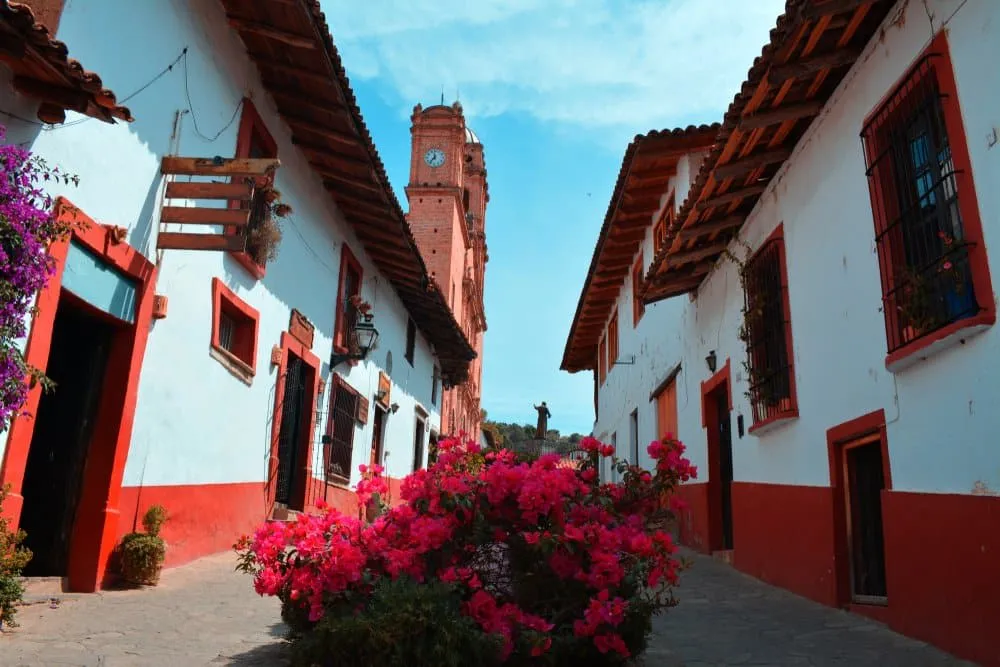
Distance: 130 km | Drive: 2 hr | Entry: Free | Best time: Weekends (festivals) or weekdays (quiet)
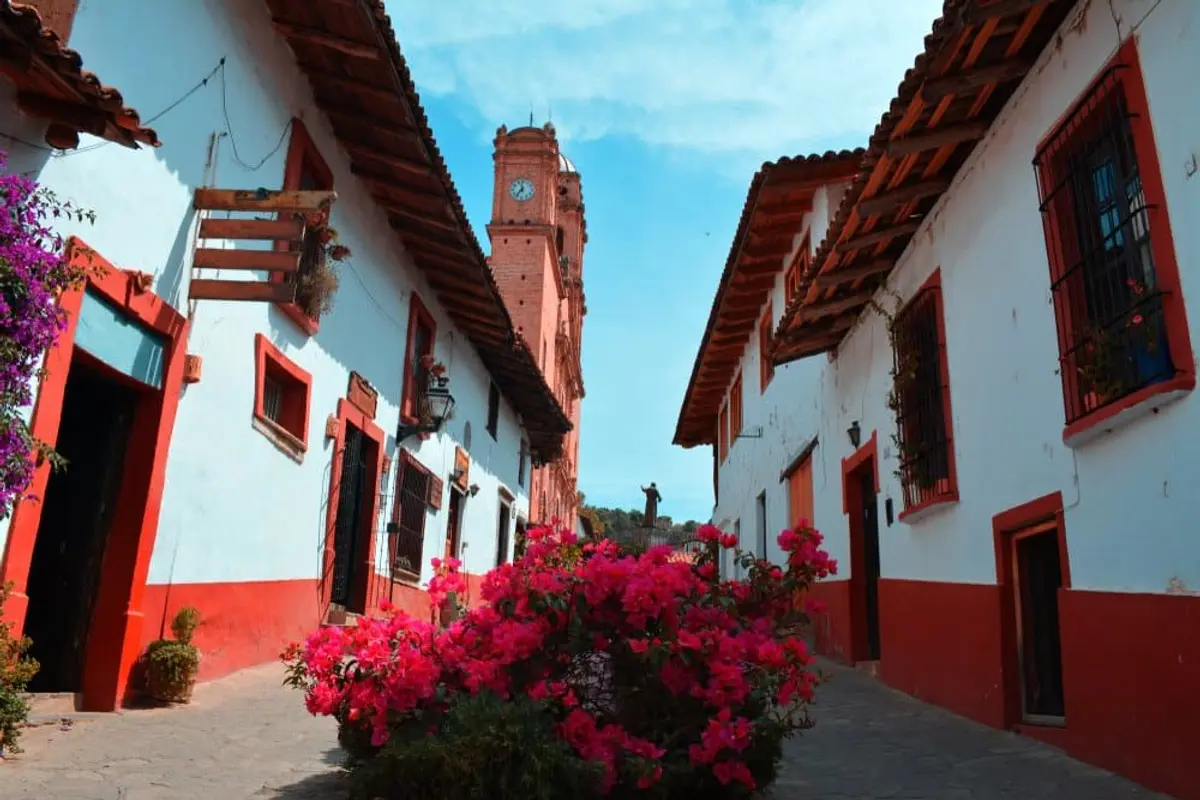
Tapalpa sits at 2,000 m elevation in the Sierra Madre Occidental, 2 hours south of Guadalajara through pine forests and apple orchards. It’s a Pueblo Mágico with the full colonial kit: white-painted buildings with terracotta roofs, a photogenic central plaza, and the kind of mountain air that Guadalajara doesn’t have.
What makes Tapalpa worth the drive:
Las Piedras Encimadas (The Stacked Boulders): 3 km outside town, a field of enormous volcanic boulders piled improbably on top of each other. Some of the stacks reach 10 meters. The walk through them takes about 45 minutes and the landscape is genuinely strange and beautiful. Free entry, small parking fee.
Apple orchards and country food: Tapalpa is known in Jalisco for its apple production. Several family restaurants serve country-style meals: caldo de pollo, gorditas de nata (cream fritters), and ponche (hot fruit punch) made with local apples and cinnamon. The main plaza has vendors selling handmade candy and apple conserves.
Local crafts: Hand-woven woolen blankets and pottery. Less commercialized than Tlaquepaque — you’re buying directly from producers.
Festivals: Tapalpa hosts a hot air balloon festival in November and a harvest festival in October. The town fills up on long weekends; go mid-week for a quieter experience.
Getting there: Highway 54 south from Guadalajara to Sayula, then mountain road to Tapalpa. No direct public bus — shared minivans run from Sayula (buses from Guadalajara’s TCRB terminal to Sayula, then taxi 30–40 MXN). Most people drive. The mountain road has sharp curves — slow down and enjoy the forest.
For full details on the town, see our Tapalpa Jalisco guide.
7. Mazamitla — Pine Forests and Log Cabins
Distance: 160 km | Drive: 2.5 hr | Entry: Free | Best season: October–February (cool, misty)
Mazamitla is a Pueblo Mágico in southern Jalisco that Guadalajara families visit when they want pine forests and cold mountain air. The town calls itself the “Switzerland of Mexico” — which is Mexican marketing hyperbole, but the pine forests, cobblestone streets, and wooden chalets (called construcciones mazamitlenses) are genuinely alpine in character.
What to do:
- Walk the cobblestone streets and central plaza — small town, fully walkable in 2 hours
- Try local sweets: jamoncillo (fudge-like milk candy), glorias (caramel with pecan), and ponche with tejocote fruits and cane sugar
- Day hikes in the surrounding pine forest — short trails start within 1 km of the plaza
- Visit local cheese and charcuterie producers along the main market street
Mazamitla vs Tapalpa: Both are mountain Pueblos Mágicos, both about 2–2.5 hours from Guadalajara. Tapalpa has more to do (Las Piedras Encimadas, more restaurants). Mazamitla is better if you want to slow down completely, rent a cabin, and eat cheese. They’re in different directions — Tapalpa southwest, Mazamitla southeast — so you can’t easily combine them.
Getting there: Car recommended. Highway 15 south toward Jiquilpan, exit toward Mazamitla. ADO buses from Guadalajara’s TCRB terminal run to the nearby town of Mazamitla via Zamora — check schedules, as service is limited.
8. San Juan de los Lagos — Mexico’s Most Visited Pilgrimage Basilica
Distance: 180 km | Drive: 2.5 hr | Entry: Free | Best time: Weekdays (avoid pilgrimage dates)
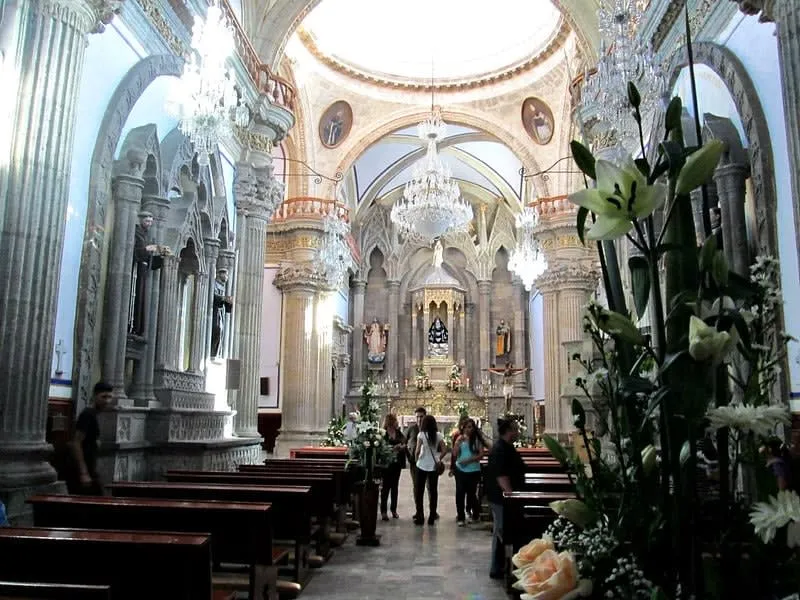
San Juan de los Lagos is not on most international tourist itineraries, but it’s one of the most visited religious sites in the Western Hemisphere. The Basilica of Our Lady of San Juan de los Lagos receives an estimated 9–10 million pilgrims per year — more than the Basilica of Guadalupe in Mexico City on most years.
The basilica houses a small 16th-century clay image of the Virgin Mary attributed with miracles. Thousands of milagros (votive offerings) cover the walls — small metal figures, photos, and handwritten messages left by the faithful. The basilica itself is enormous: 70 meters tall, cream-colored baroque exterior, and an interior with silver altarpieces that took decades to complete.
Why a non-religious visitor should come: The basilica is genuinely one of the most impressive colonial religious buildings in Mexico, and the surrounding market town is fascinating — hundreds of vendors selling religious paraphernalia, street food, and regional products from across Jalisco. The energy around major feast days is extraordinary.
Important dates to either seek or avoid:
- Candelaria (Feb 2): massive crowds — 1 million+ pilgrims over 3 days
- Assumption of Mary (Aug 15): another major pilgrimage date
- December 8 (Immaculate Conception): peak of the year
Visit on a regular weekday if you want to see the basilica without crowds. Visit during a feast day if you want to witness the scale of Mexican popular religion.
Getting there: Primera Plus and Omnibus de México buses run from Guadalajara’s TCRB terminal, about 2.5 hours, 200–280 MXN. By car, take Highway 80 northeast toward San Juan de los Lagos.
9. Guanajuato City — UNESCO Historic Center (Better as Overnight)
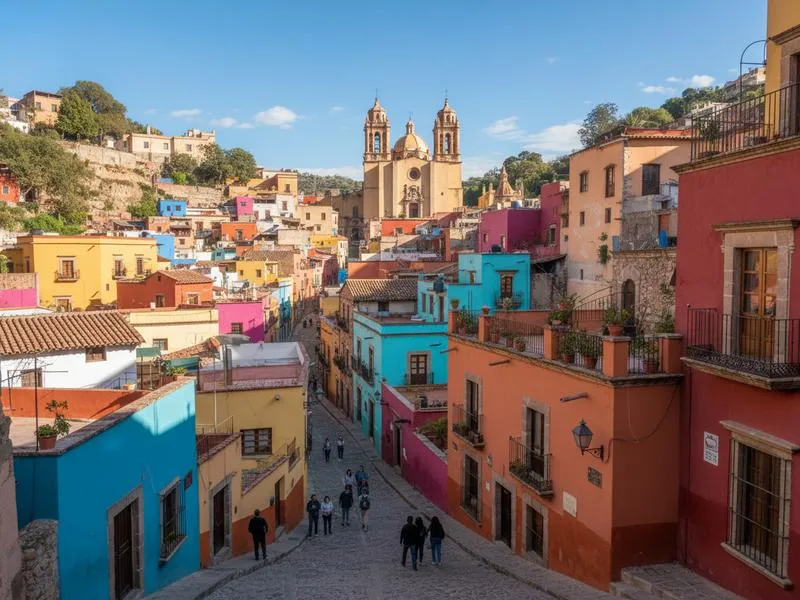
Distance: 190 km | Drive: 2.5 hr | Entry: 40 MXN (tunnels) | Best approach: Overnight stay strongly recommended
Guanajuato is the most beautiful city in Mexico’s colonial heartland — colorful houses stacked on steep hillsides, a network of underground tunnels (former river channels) replacing most surface streets, and a historic center where the Spanish silver boom left behind extraordinary baroque architecture.
The honest day trip assessment: 2.5 hours each way means you spend 5 hours in transit for maybe 4–5 hours in the city. That’s enough to see the main sights but not to walk the alleys properly, visit the Mummy Museum, or catch a callejoneada student minstrel parade in the evening. If you’re going to Guanajuato, spend at least one night.
That said: If your schedule allows only a day, go. The underground tunnels alone are worth the drive — entering the city through a former river bed while the historic center rises above you is one of the strangest and most memorable arrival experiences in Mexico. The Hospicio Hidalgo murals and the Jardín Unión plaza are both visible without much time commitment.
ADO/Primera Plus buses from Guadalajara’s TCRB terminal run several times daily, about 280–350 MXN, 2.5 hours. The bus drops you near the historic center.
For everything Guanajuato offers, see our Guanajuato city travel guide and things to do in Guanajuato. For a detailed transport guide, see Guadalajara to Guanajuato 2026.
10. Zapopan Basilica — 20 Minutes from Downtown
Distance: 10 km | Drive: 20 min | Entry: Free | Best time: Saturday mornings
Zapopan is technically Guadalajara’s western suburb, but the Basilica of Our Lady of Zapopan deserves a specific mention because most visitors who stay in Guadalajara’s historic center miss it entirely.
The 1730 basilica houses the Virgen de Zapopan — a small 16th-century corn-pith figure (only 33 cm tall) that is one of the most venerated Marian images in Mexico. Every October 12th, the Virgin completes her annual pilgrimage: having spent months touring the parishes of Guadalajara, she returns to Zapopan in a procession of up to 2 million people. It’s the largest religious procession in Mexico by attendance.
Outside pilgrimage season: The basilica plaza has a Sunday tianguis with traditional food and handicrafts. The Huichol Cultural Center nearby has genuine Huichol yarn art and beadwork — expensive but authentic, not the mass-produced versions you see in tourist shops.
Getting there: Uber from downtown Guadalajara costs 80–120 MXN. Line 3 of the Guadalajara Metro (when operating) reaches Zapopan. The ride takes 20–25 minutes.
Best Combination Routes
| Half-Day (3–4 hrs) | Full Day (6–8 hrs) |
|---|---|
| Tlaquepaque only | Tlaquepaque + Tonalá |
| Zapopan Basilica + Tonalá | Tequila town (self-drive) |
| Lake Chapala malecon | Lake Chapala + Ajijic |
| — | Los Guachimontones + Tequila (car required) |
| — | Tapalpa + Las Piedras Encimadas |
Best full day with a car: Los Guachimontones pyramids in the morning (open at 9 AM, arrive by 10 AM to avoid midday heat), lunch at a restaurant in Teuchitlán, then Tequila town for the afternoon distillery visit. Both sites are on the same highway west of Guadalajara — 40 km apart. Total drive from Guadalajara: 80 km out, 65 km back.
Best day without a car: Uber to Tlaquepaque for craft galleries and lunch (budget 400–600 MXN for the meal and a couple of glass pieces), then shared taxi to Tonalá for the afternoon market. Uber home from Tonalá. Total spend on transport: 350–500 MXN.
Seasonal Calendar
| Month | Best Conditions | Notes |
|---|---|---|
| Jan–Feb | Cool, dry | Best for Tapalpa, Mazamitla (cold nights, misty mornings). Tequila harvest ends Nov–Dec. |
| Mar–Apr | Warm, dry | Ideal for all destinations. Semana Santa = packed roads — go weekdays. |
| May | Pre-rainy, hot | Lake Chapala water levels start declining. Agave planting season. |
| Jun–Sep | Rainy season | Afternoons bring heavy rain — leave Tapalpa or Mazamitla by 2 PM. Guanajuato Cervantino Festival in October. |
| Oct–Nov | Mild, dry | October 12 = Zapopan pilgrimage (2M people — traffic standstill if you’re driving west). Guanajuato Cervantino is spectacular. Tapalpa harvest festivals. |
| Dec | Cool, festive | San Juan de los Lagos feast Dec 8 (huge crowds). Christmas posadas in every town. |
Budget Guide
| Destination | Transport | Entry/Tours | Food | Total Day Budget |
|---|---|---|---|---|
| Tlaquepaque + Tonalá | 350–500 MXN Uber | Free | 200–400 MXN | 550–900 MXN (~$30–50 USD) |
| Tequila (bus) | 150 MXN (RT bus) | 200–500 MXN distillery | 200–350 MXN | 550–1,000 MXN (~$30–55 USD) |
| Tequila (train) | 1,100–1,800 MXN | Included | Included | 1,100–1,800 MXN ($60–100 USD) |
| Lake Chapala (bus) | 90 MXN (RT bus) | Free | 200–350 MXN | 290–440 MXN (~$16–24 USD) |
| Los Guachimontones + Tequila | 800–1,200 MXN rental | 90 MXN pyramids | 300–500 MXN | 1,200–1,800 MXN (~$65–100 USD) |
| Tapalpa (car) | 700–1,000 MXN rental + gas | Free | 250–400 MXN | 950–1,400 MXN (~$52–78 USD) |
| Guanajuato (bus) | 560–700 MXN RT bus | 40–150 MXN | 250–400 MXN | 850–1,250 MXN (~$47–69 USD) |
Planning Your Guadalajara Trip
The Guadalajara travel guide covers everything about staying in and exploring the city itself — neighborhoods, food, World Cup 2026 matches, and getting around. For a full Jalisco experience, the things to do in Guadalajara guide covers 30 in-city activities including the Hospicio Cabañas murals, birria at Mercado San Juan de Dios, and Plaza de los Mariachis. For seasonal timing (Feria de Octubre, FIL book fair, Festival Cultural), see the best time to visit Guadalajara guide.
For travel insurance that covers Mexico including adventure activities and unexpected cancellations:
Getting to Guadalajara from Mexico City: Mexico City to Guadalajara — flights (1 hr, from 600 MXN), ETN bus (5.5 hrs from Terminal Poniente, 450–750 MXN), or drive via Morelia on MEX-15D (5.5 hrs). Uber works at GDL airport.
Heading to San Miguel de Allende from Guadalajara? See the Guadalajara to San Miguel de Allende guide — bus via Querétaro (5–6 hrs, 300–650 MXN) or drive (3.5–4 hrs on MEX-45D).
Heading to Puerto Vallarta from Guadalajara? See the Guadalajara to Puerto Vallarta guide — fly (35 min), Primera Plus bus from Terminal Milenio (4–4.5 hrs, 300–600 MXN), or drive via MEX-80D (3.5–4 hrs) with an optional Tequila stopover.
Heading to Monterrey from Guadalajara? See the Guadalajara to Monterrey guide — fly 1 hour (from 600 MXN) or drive via Zacatecas (9–10 hrs, 3 UNESCO colonial cities on the route).
Heading to Mazatlán from Guadalajara? See the Guadalajara to Mazatlán guide — drive MEX-15D in 3.5–4 hours (stop in Tequila on the way) or take Primera Plus bus from Terminal Milenio (4–5 hrs, 280–380 MXN).