Guadalajara Travel Guide: 30 Best Things to Do (2026)
Guadalajara is Jalisco’s cultural capital and the birthplace of tequila, mariachi, and birria. For a first trip, start with the historic center and Orozco murals, then add birria breakfasts, Tlaquepaque crafts, mariachi nights, a Tequila day trip, and Lake Chapala.
This Guadalajara travel guide covers the 30 best things to do, plus the neighborhoods, safety notes, transport, day trips, and local planning tips that help you build a first visit without wasting time in traffic.
The Historic Center
1. Hospicio Cabañas UNESCO Murals ⭐
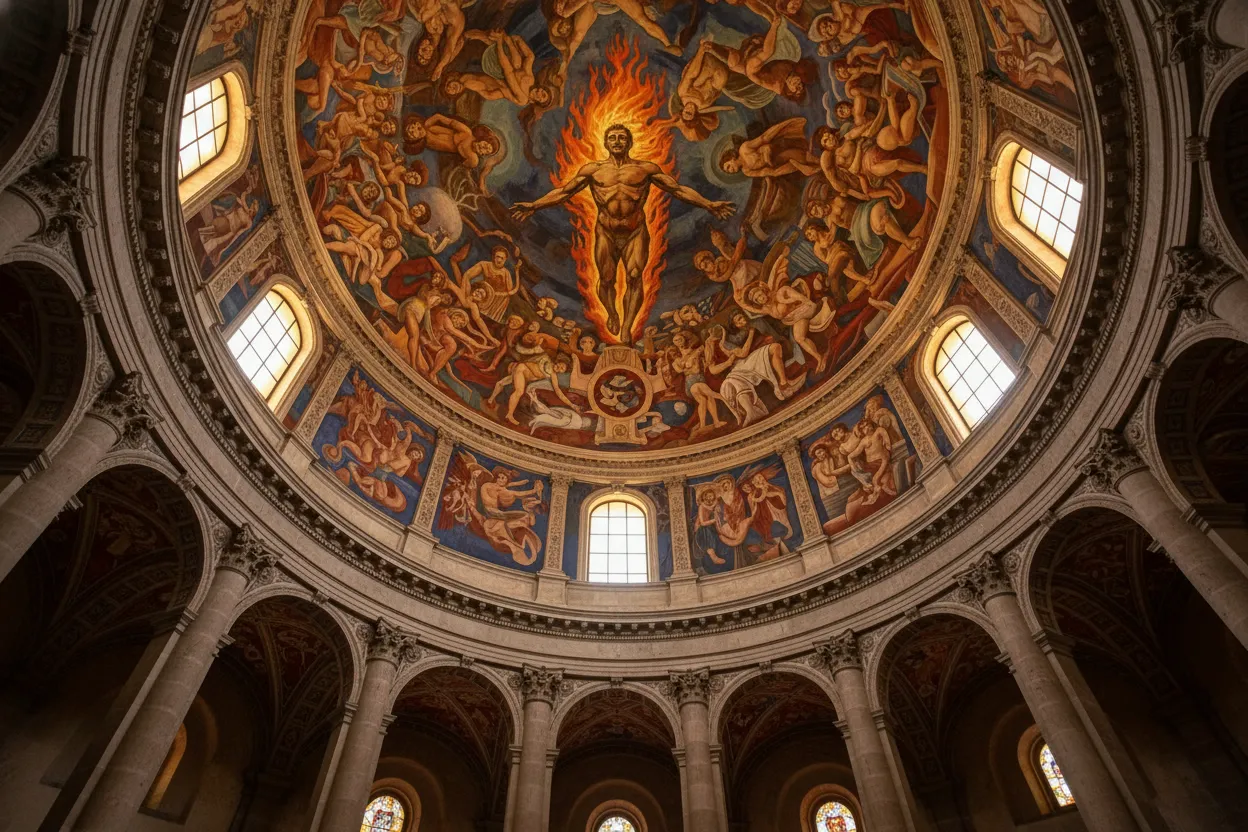
The single most important cultural site in Guadalajara, and arguably the most powerful room in Mexican art. Hospicio Cabañas was built between 1805 and 1810 as a hospital and orphanage, designed by Manuel Tolsá (the same architect who built Mexico City’s Palacio de Minería). It became a UNESCO World Heritage Site in 1997.
The reason to come: José Clemente Orozco’s murals painted between 1938 and 1939 across 57 panels covering the walls and ceiling of the main chapel. The centerpiece is El Hombre de Fuego (Man of Fire) — a figure consumed by flames on the chapel dome that Orozco considered his greatest work. Orozco is the most underrated of Mexico’s three great muralists (Rivera, Siqueiros, Orozco) and this is his masterpiece.
Practical notes:
- Entry: 100 MXN / ~$5 USD for international visitors; free Tuesdays and Sundays for Mexican residents
- Hours: Tue–Sun 10 AM–6 PM (closed Mondays)
- Location: Cabañas 8, El Retiro neighborhood, 15-minute walk from Degollado Theater
- Time needed: 90 minutes minimum; 2.5 hours to see properly
- Audio guide in English: recommended — the mural symbolism is dense without context
2. Guadalajara Cathedral
The twin blue-tiled spires of Catedral Metropolitana de Guadalajara have defined the city’s skyline since the original building in 1541. What stands today is an accumulation of 400 years of additions and reconstructions — earthquake damage in 1818 destroyed the original towers, which were rebuilt in the eclectic neogothic style you see now. The interior has 11 altars, a painting attributed to Murillo (the Spanish baroque master), and relics of Santa Innocencia under the main altar.
The cathedral anchors four plazas: Plaza de Armas (west, with the government palace), Plaza de los Laureles (north), Plaza Guadalajara (northwest), and Plaza Rotonda (east). Walking the perimeter takes you through the main civic and commercial life of the Historic Center.
- Entry: Free
- Hours: Daily 7 AM–8 PM
- Location: Avenida Alcalde s/n, Centro Histórico
3. Palacio de Gobierno — Orozco’s Hidalgo Mural
Inside the State Government Palace (1643), José Clemente Orozco painted two staircase murals in 1937 depicting Miguel Hidalgo — the priest who launched Mexico’s independence in 1810 — as a torch-wielding liberator surrounded by enemies of freedom. The images are political and confrontational in a way that Rivera’s murals at the National Palace in Mexico City are not.
The mural on the main staircase shows Hidalgo in flaming reds and oranges, clutching his torch with slaves, tyrants, and facist symbols at his feet. It took Orozco six months to paint.
- Entry: Free
- Hours: Mon–Fri 9 AM–3 PM; Sat–Sun varies
- Location: Avenida Corona 31, Centro Histórico, directly east of the Cathedral
4. Degollado Theater
Built between 1856 and 1866, Teatro Degollado is Guadalajara’s neoclassical opera house and the most elegant building in the city. The facade references the Parthenon; the interior was modeled on Milan’s La Scala with four tiers of balconies and a ceiling dome painted with the 4th Canto of Dante’s Divine Comedy.
The theater matters for music history: in 1905, the regional state government of Jalisco formally recognized mariachi as a genre of traditional music in a ceremony at this theater — the first official recognition of what would become Mexico’s most internationally recognized musical form.
Walk-in visits during the day when no performance is scheduled: usually possible and free. Check the schedule at teatrodegollado.gob.mx — Guadalajara Symphony Orchestra and Jalisco Folkloric Ballet perform here.
- Entry: Performances 200–600 MXN; free to peek during daytime
- Location: Avenida Degollado s/n, between Morelos and Belén
5. Regional Museum of Guadalajara
Housed in the former 17th-century Jesuit college next to the Cathedral, the Museo Regional de Guadalajara is the best history museum in western Mexico. The collection covers: pre-Hispanic Jalisco cultures (shaft tombs unique to western Mexico, ceramic figures unlike anything at Teotihuacan or the Maya sites), colonial religious art, and a complete mammoth skeleton discovered near Guadalajara in 1921.
The shaft tomb ceramics are the reason to come. Western Mexico developed independently of the Mesoamerican heartland and created hollow-clay figurines — dancing couples, shamans in animal skins, dogs wearing humans’ faces — that look more modernist than 1,500 years old.
- Entry: 75 MXN; free Sundays for Mexican residents
- Hours: Tue–Sun 9 AM–5:30 PM
- Location: Liceo 60, next to the Cathedral
Food & Markets
For a full guide to every dish, drink, and where locals eat, see What to Eat in Guadalajara.
6. Birria at Mercado San Juan de Dios ⭐
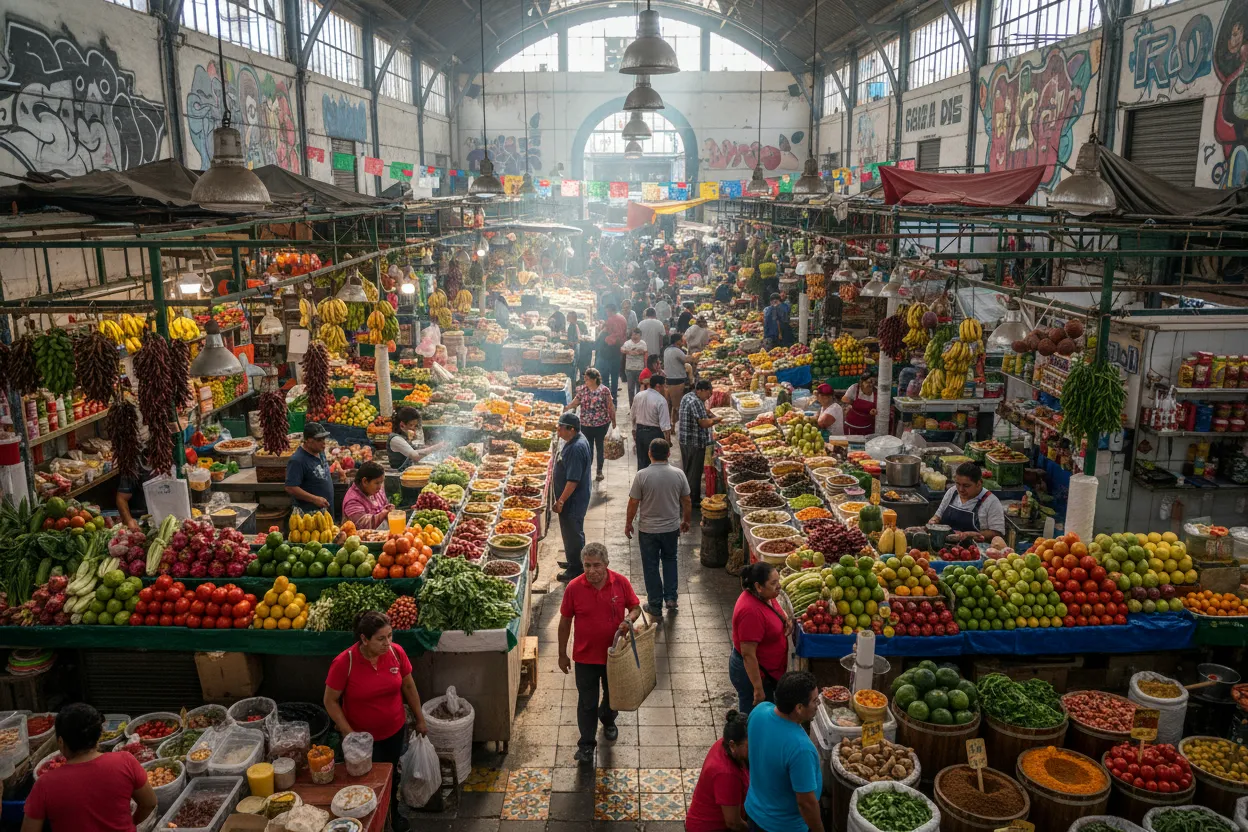
Mercado San Juan de Dios is Latin America’s largest covered market: three floors, 3,000 vendors, and the best cheap food in Guadalajara. Come before 10 AM for birria.
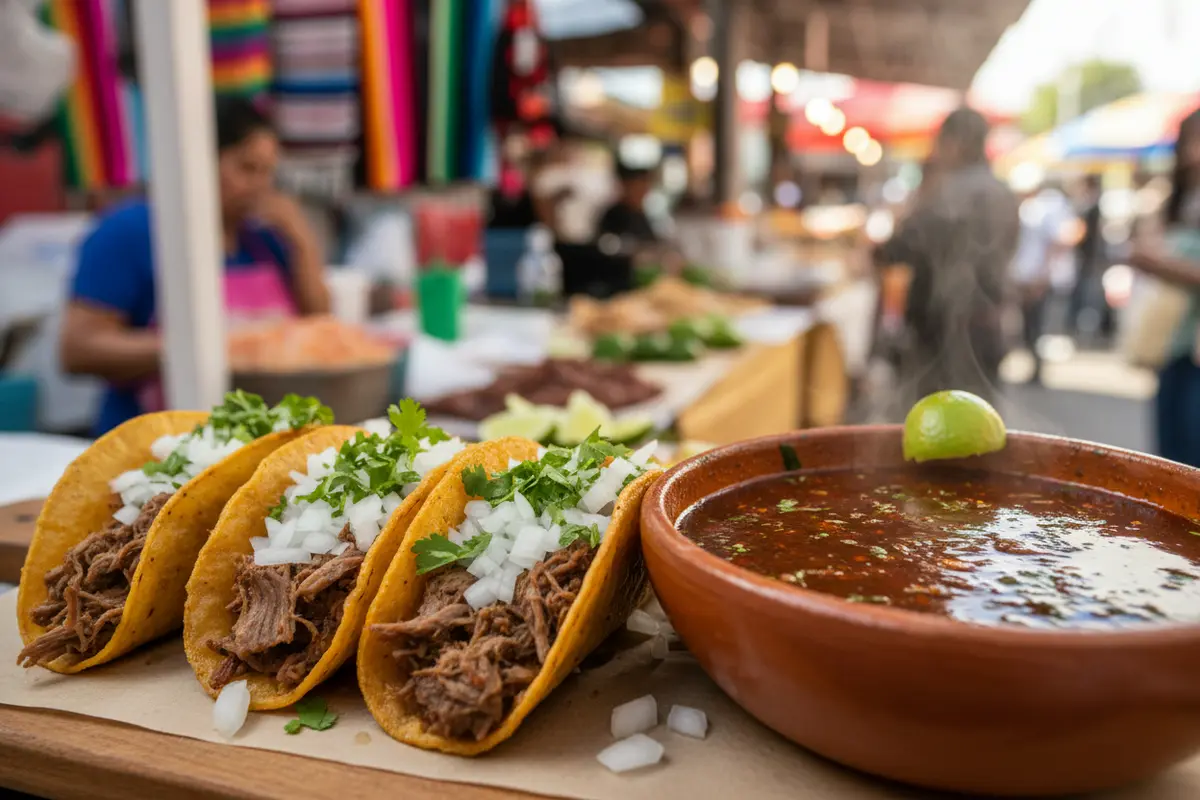
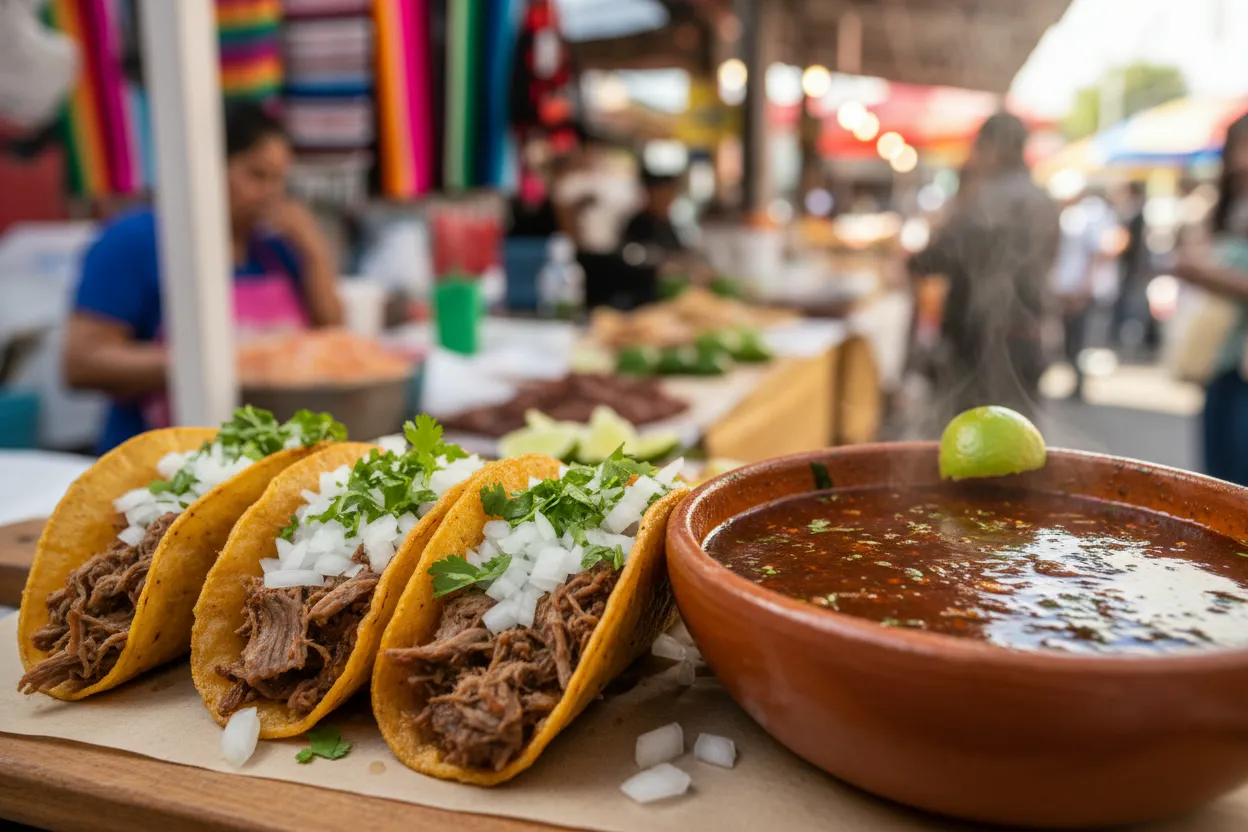
Birria is Jalisco’s most famous dish globally — braised goat or beef in a complex dried-chile broth (guajillo, ancho, pasilla, plus oregano, thyme, cinnamon, clove). The meat is slow-cooked for 4–8 hours until it falls apart. You get it in a bowl of dark consommé with tortillas on the side, or in tacos dipped in the braising liquid and griddled until crispy (the version that exploded on social media).
The birria stalls on the ground floor are open from 7 AM. A full breakfast of birria with consommé, tortillas, lime, onion, and cilantro runs 80–150 MXN. Skip the tourist food stalls near the entrance; go to the far end of the first floor.
- Location: Calzada Independencia Sur 26, El Santuario
- Hours: Daily 7 AM–8 PM (birria best before 11 AM)
- Price: 80–150 MXN for a full birria breakfast
7. Torta Ahogada ⭐
Guadalajara’s most unique dish and one of the messiest eating experiences in Mexico. A torta ahogada (“drowned sandwich”) is a birote roll (a crusty sourdough-like bread unique to Guadalajara — the low humidity and altitude give it a different crumb than rolls made elsewhere) stuffed with shredded pork carnitas, then completely submerged in spicy tomato-chile sauce. You eat it while it’s dissolving.
Two sauce options: mild tomato (jitomate) or spicy chile de árbol. Order the spicy one. The torta disintegrates within a few minutes so eat immediately. Use both hands.
Where to eat it:
- El Güero (Calle Mezquitán 12, Mexicaltzingo neighborhood): the classic institution, open since 1952, often cited as serving the definitive torta ahogada. Queue expected on weekends.
- Las Redes (Juan Manuel 284): old-school mercado environment, no-frills
- Tortas Toño: chain with multiple locations, consistent if you want convenience
8. Carne en su Jugo
Guadalajara’s second great original dish and a Guinness World Record holder. Carne en su jugo (“meat in its juice”) is thinly sliced beef braised and served in its own cooking broth — dark, intense, rich — with a scoop of pinto beans cooked into the bottom of the bowl, garnished with crispy bacon bits, tostada strips, raw white onion, cilantro, and a squeeze of lime.
A restaurant called Karne Garibaldi holds the Guinness record for fastest service in a restaurant (13.5 seconds per order). More importantly, it serves consistently good carne en su jugo at reasonable prices. Other good options near the Historic Center: Las Cenadurías in the Santa Tere neighborhood.
9. Plaza de los Mariachis at Night ⭐
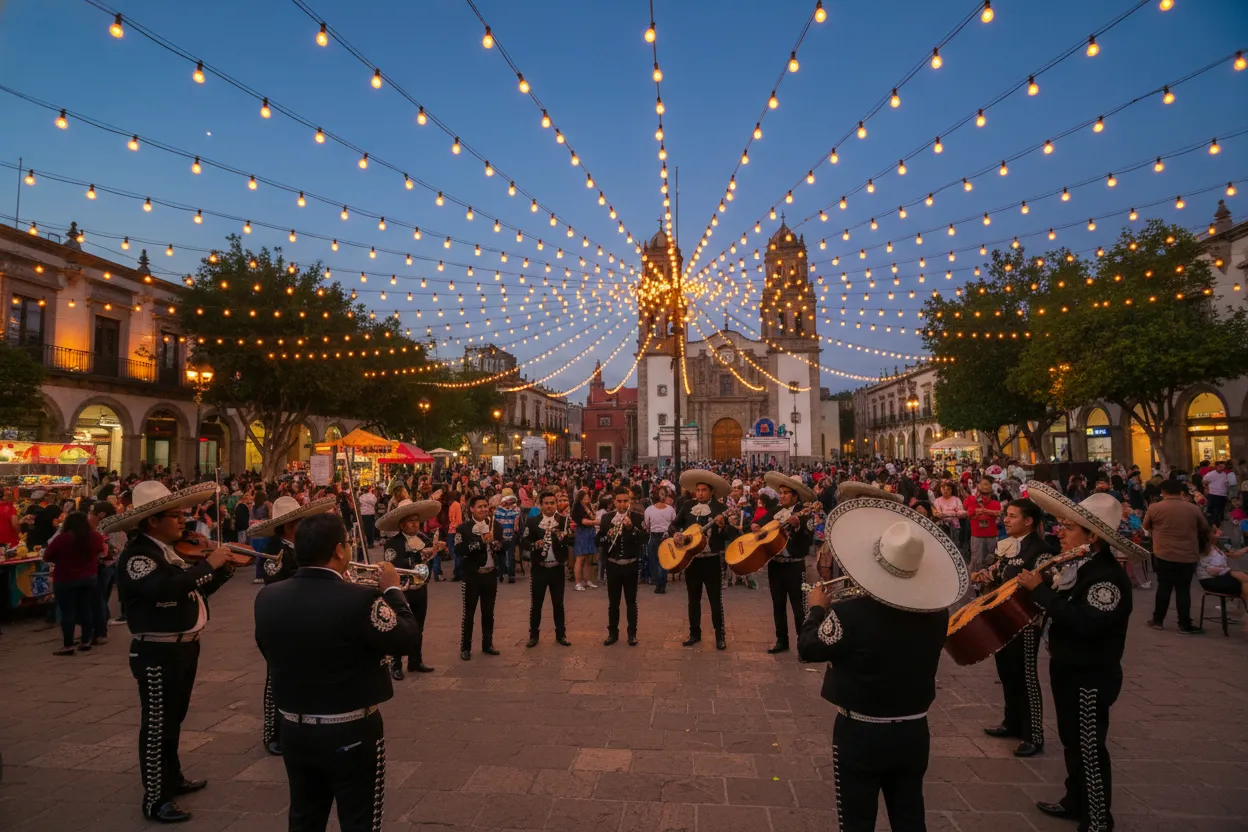
Plaza Garibaldi in Mexico City is more famous, but Guadalajara’s Plaza de los Mariachis (a few blocks from Mercado San Juan de Dios) is where the genre is most authentic. Live mariachi groups perform from around 9 PM every night — rotating bands playing for tips and table hire.
The experience: sit at an outdoor table, order a beer or a shot of tequila blanco (ask what’s regional), and hire a mariachi group for 3–5 songs. Negotiated table rate: 200–400 MXN for 30–40 minutes of private performance. Show up on a weekend for the most activity.
The plaza gets rowdy after midnight. Keep your phone pocketed.
10. Cantaritos at a Cantina
Cantaritos (little clay pots) are Guadalajara’s version of a cocktail: tequila, fresh orange, lime, and grapefruit juice, salt, and a splash of Squirt (Mexican grapefruit soda) served in a small unglazed clay pot. The clay absorbs some of the liquid and adds an earthy mineral note. You keep the pot.
Where to drink one in the right setting: Cantina La Fuente (Pino Suárez 78, Centro Histórico), one of Guadalajara’s oldest surviving cantinas with checkerboard floors and hand-painted murals. Cantinas operate under traditional rules — free botanas (small bar snacks) arrive with every drink.
See the full Guadalajara Nightlife Guide for the complete breakdown of bars, clubs, Ley Seca dates, and late-night food.
Neighborhoods
11. Tlaquepaque Craft District ⭐
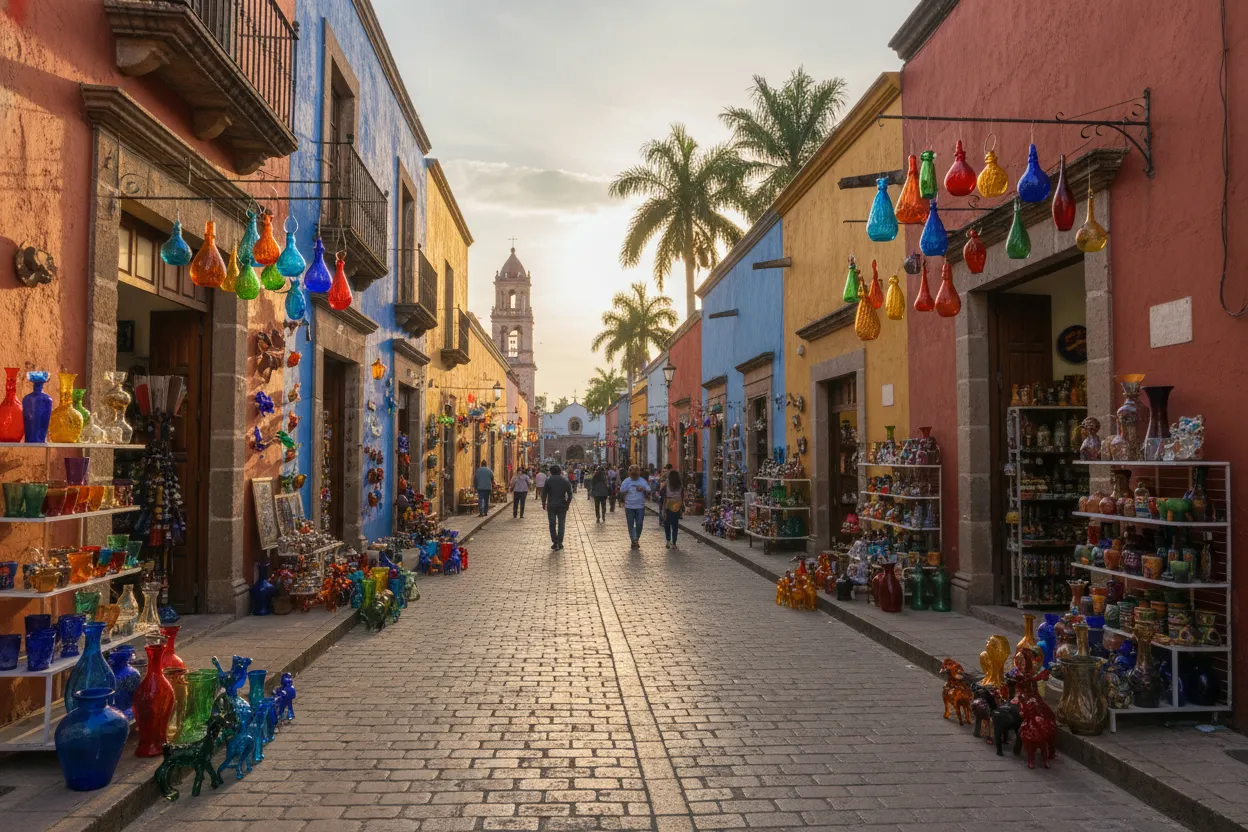
San Pedro Tlaquepaque is the craft and gallery district of Guadalajara — a suburb 20 minutes from the Historic Center that operates as a pedestrian craft village. The main street, Independencia, is closed to vehicles and lined with 19th-century mansions converted into galleries, studios, and restaurants.
What makes Tlaquepaque different from a tourist craft market: many shops here are working studios. In the glass district, artisans blow glass in front of you; you can watch a vase being made, then buy it for 300–1,500 MXN. The talavera pottery (hand-painted tiles and ceramics in the Puebla-Jalisco tradition) and huichol bead art (Wixáritari beading on wooden animals — the most labor-intensive folk art in Mexico) are genuinely high quality.
- Best section: Independencia pedestrian street + Donato Guerra
- Getting there: Uber from Historic Center 50–80 MXN, 20 min
- Best day: Any weekday (weekends get crowded with local families)
- Budget: Galleries are free to browse; crafts from 100 MXN (small pieces) to 10,000+ MXN (large original pieces)
12. Tonalá Thursday & Sunday Market
Tonalá is where Tlaquepaque galleries source their inventory — the wholesale artisan production center of Guadalajara. On Thursdays and Sundays, every street in Tonalá fills with stalls selling furniture, ceramics, metal work, textiles, and home décor at near-production prices.
The scale is overwhelming: 4,000+ stalls, 15,000+ artisans in the municipality. The difference in price compared to Tlaquepaque galleries: 30–50% less for the same items. Arrive early (9 AM) and bring a checked bag. Most vendors don’t ship internationally — arrange your own shipping for large pieces, or factor in airline oversize fees.
- Getting there: Uber from Historic Center 60–100 MXN, 25 min; 5 min by Uber from Tlaquepaque
- Best days: Thursday and Sunday (full market); other days most stalls are closed
13. Chapultepec Avenue & Colonia Americana
Guadalajara’s most vibrant neighborhood for cafés, independent restaurants, bars, and local life is the Chapultepec corridor — a 1 km stretch of Avenida Chapultepec in Colonia Americana lined with outdoor terraces, craft beer bars, excellent taco spots, and the city’s best specialty coffee scene.
On Thursday evenings, the street pedestrianizes for Jueves de Chapultepec — a street fair with vendors and live music. The surrounding Colonia Americana and Colonia Americana are Guadalajara’s answer to CDMX’s Roma Norte — tree-lined streets, Art Deco buildings, local restaurants that cater to residents, not tourists.
14. Zapopan Basilica
The suburb of Zapopan, 8 km northwest of the Historic Center, is worth visiting for its 17th-century basilica housing the Virgen de Zapopan — one of Mexico’s most venerated images. Made of corn paste in the 16th century, the figure is 26 cm tall and is carried in procession across Guadalajara each year on October 12 (Día de la Virgen de Zapopan): a 3-hour procession attended by over 1 million people.
The plaza in front of the basilica is surrounded by craft markets — better quality and lower prices than Tlaquepaque for basic crafts. The Huichol Museum inside the complex (free) has an excellent collection of Wixáritari yarn paintings and bead art.
- Entry: Basilica free; Huichol Museum free
- Getting there: Macrobús line 1, or Uber ~80 MXN from Historic Center
Culture & Nightlife
15. Guadalajara International Book Fair (FIL)
The Feria Internacional del Libro de Guadalajara is the largest book fair in the Spanish-speaking world and the second-largest book fair globally (after Frankfurt). Held in late November (approximately the last Saturday of November through the second Sunday of December), it draws 750,000 visitors, 500,000 titles, and publishers from 50+ countries.
Even outside the professional trade fair aspect, FIL is genuinely fun for anyone who reads: massive author signings, free readings by Spanish and Latin American writers, Guadalajara’s entire cultural life energized. The city fills up — book 3–4 months ahead if traveling during FIL.
- Dates: Last week of November into December
- Location: Expo Guadalajara
- Entry: 80–100 MXN for public days
16. Jalisco Folkloric Ballet
The Ballet Folklórico de la Universidad de Guadalajara performs at the Degollado Theater on Sundays at 10 AM. This is the original Mexican folkdance company — pre-dating Mexico City’s Palacio de Bellas Artes folkloric ballet — and the Sunday performance is one of the best value cultural experiences in Mexico.
The show covers regional dances from 8–10 states: the Jarabe Tapatío (the hat dance, Jalisco’s national dance), the Veracruz jarocho dances with zapateado footwork, Nayarit warrior dances, and Jalisco huapango — the 400-year-old folk music tradition built on falsetto voices, heel percussion, and competitive improvised verse. 2 hours.
- Entry: 200–400 MXN depending on seat
- Performance: Sundays 10 AM
- Book: teatrodegollado.gob.mx (sells out 2–3 weeks ahead)
17. Lucha Libre at Arena Coliseo Guadalajara
Mexico’s second-most passionate lucha libre scene after Mexico City. Arena Coliseo Guadalajara hosts shows every Friday and Sunday — full cards with 6–8 bouts including tecnicos (good guys) vs rudos (villains), championship matches, and the theatrical audience interaction that makes lucha different from any other wrestling format.
The atmosphere is genuinely loud and chaotic. Buy ringside seats for the full experience — 200–350 MXN. The venue dates to 1952 and has the feel of an old boxing gym that got out of hand.
- Shows: Fridays 8:30 PM, Sundays 5 PM
- Location: Medrano 294, Centro Histórico area
- Tickets: 120–400 MXN depending on distance from ring
Day Trips from Guadalajara
For the full breakdown of excursions — including Los Guachimontones pyramids, Tapalpa, San Juan de los Lagos, and the complete transport guide — see our dedicated Day Trips from Guadalajara guide.
18. Lake Chapala & Ajijic ⭐
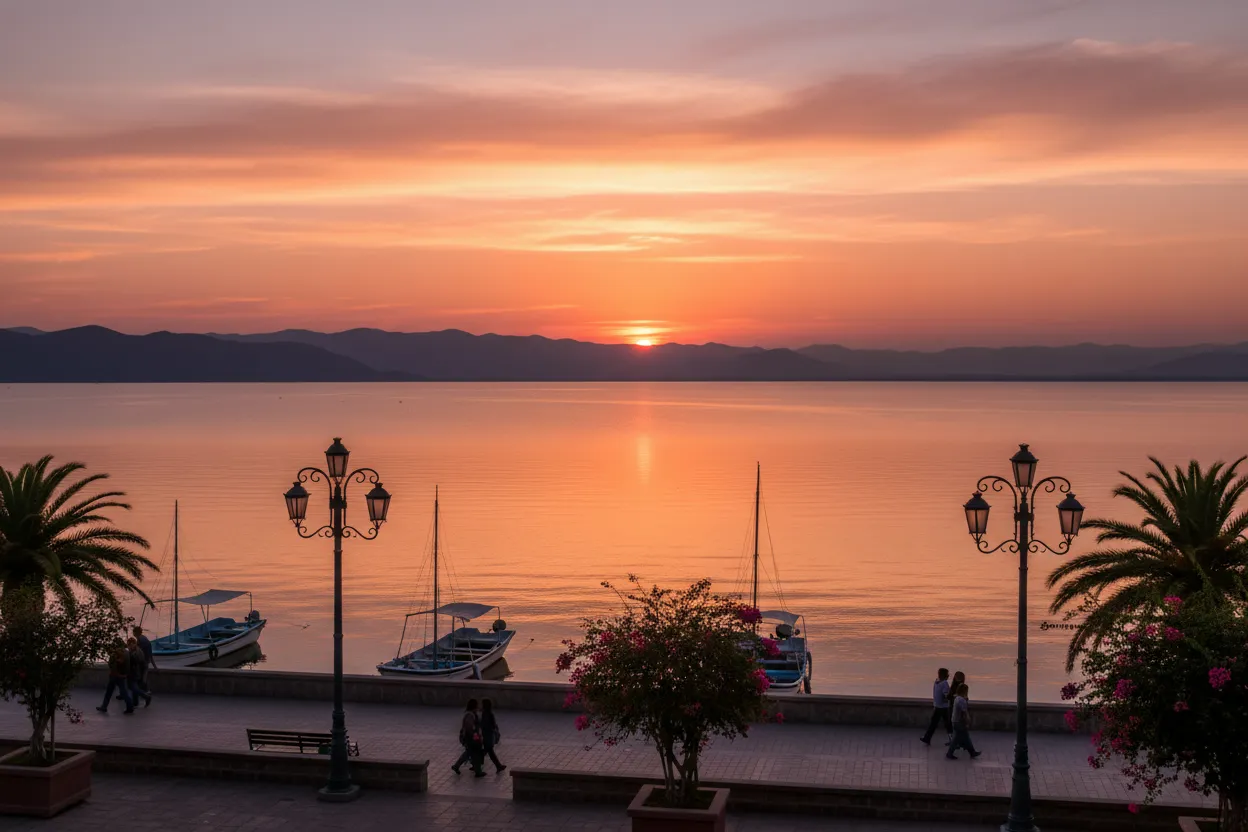
Lago de Chapala is Mexico’s largest lake — 80 km long, 18 km wide — and sits 50 km south of Guadalajara. The lakeside town of Ajijic has become home to the largest concentration of North American retirees in Mexico: approximately 20,000 Americans and Canadians live here permanently, attracted by the year-round spring climate (average 22°C), low cost of living, and the quality of care at local hospitals.
For visitors: the lake itself is beautiful (though water levels vary seasonally), the malecón through Ajijic is pleasant, and the town has genuinely good restaurant options oriented toward an international clientele. Take Highway 15D south for 40 minutes, or Uber for ~350 MXN.
Also near Lake Chapala: The town of Chapala (5 km east of Ajijic) is the larger lakeside municipality with a more local feel. Former Mexican president Porfirio Díaz had a summer home here.
19. Tequila Town and Distillery Tours ⭐
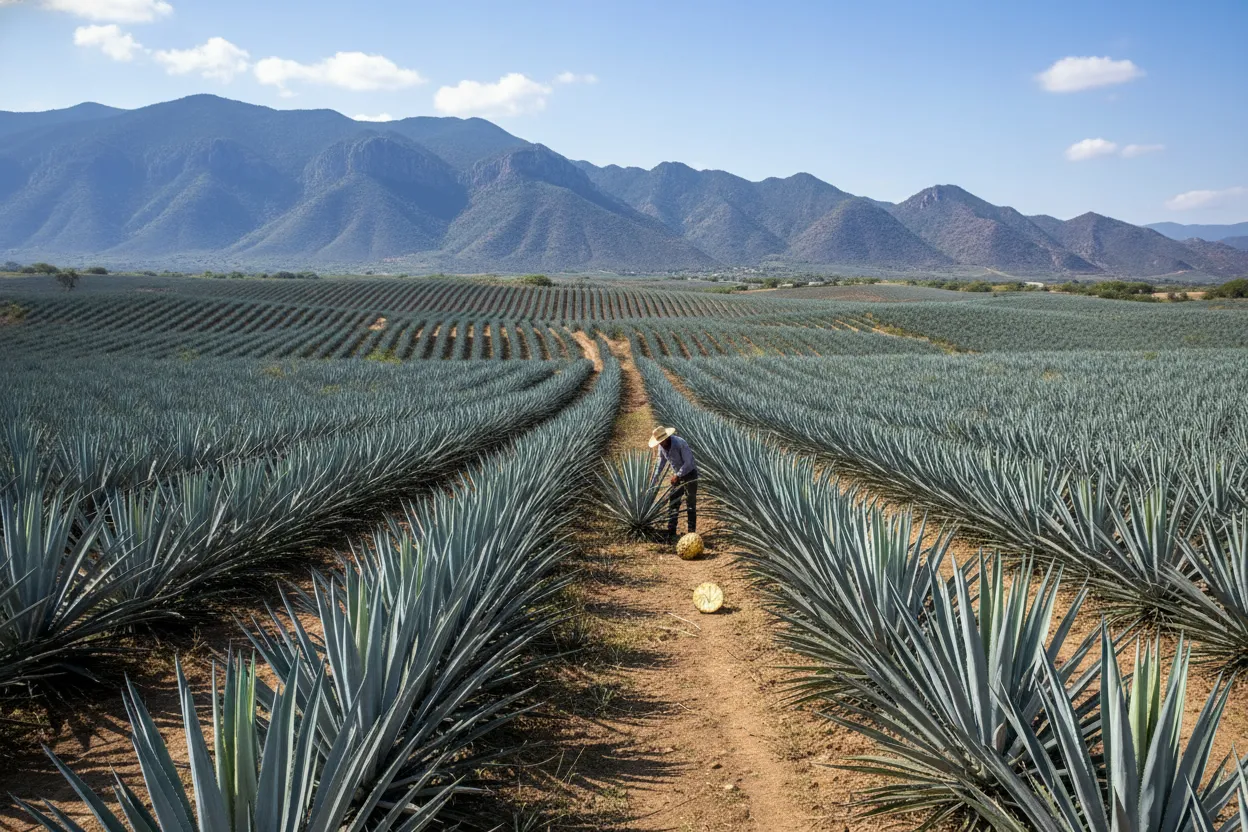
The town of Tequila (65 km northwest of Guadalajara) sits in the agave-covered hillsides of the blue agave UNESCO landscape and contains the original distilleries that gave the drink its name. The town center is a Mexican Pueblo Mágico with a small central plaza, the José Cuervo distillery adjacent, and agave fields visible from most streets.
What to do in Tequila town:
- Jose Cuervo’s La Rojeña distillery (the world’s oldest active distillery, founded 1758): 90-minute tour with tasting, 200–300 MXN, book at cuervo.com
- Casa Herradura (12 km outside town in Amatitán): considered the best educational distillery tour, includes copper pot stills, barrel aging rooms, and the original 1870 hacienda. 300–400 MXN with multiple tastings.
- Artisan distilleries on the Ruta del Tequila for single-village, small-production bottles: ask at the town tourism office
Getting there: Jose Cuervo Express train (Saturdays, recommended — see FAQ) or self-drive Highway 15D (1 hour). Public buses from Terminal Nueva Central (75 MXN, 1.5 hours).
20. Tapalpa — Mountain Pueblo Mágico
Tapalpa is a pine-forest Pueblo Mágico 130 km south of Guadalajara at 2,000 m elevation — white-painted streets, weekend horse riding, and the famous Piedrotas (three enormous volcanic boulders, 8 km from town, reachable by horse or ATV). The town has a distinct autumn/winter feel even in the dry season, with wood-burning fireplaces in most restaurants.
Best for: weekend escape from city heat, horseback riding, birote bread and atole for breakfast. Most Guadalajara families do this as a Saturday–Sunday overnight. Book accommodation ahead on long weekends.
- Distance: 130 km, 2.5 hours via Highway 54-D
- Best time: October–March (dry, cool, fireplaces)
21. Mazamitla — High-Forest Escape
Similar to Tapalpa but smaller and less visited, Mazamitla sits at 2,195 m in pine-oak forest 155 km southeast of Guadalajara. The town produces local cheeses, smoked meats (longaniza), and serves as a base for hiking the regional sierra. More authentic local character than Tapalpa.
22. Tlajomulco & Los Guachimontones Circular Pyramids
Los Guachimontones (60 km west of Guadalajara near Teuchitlán) contains the only circular stepped pyramids in Mesoamerica. Built by the Teuchitlán tradition between 300 BC and 900 AD, the concentric circular platforms surround a central altar — a design found nowhere else in the ancient world. The surrounding landscape of agave fields and a small lake makes this one of the most unusual archaeological sites in Mexico.
- Entry: 75 MXN INAH
- Getting there: 1 hour drive via Highway 15 West; no public bus option
- Best combined with: Tequila town (both in the same western Jalisco direction)
Parks & Outdoor
23. Bosque Los Colomos
Guadalajara’s best urban green space — Bosque Los Colomos is a 92-hectare native forest in the Providencia neighborhood with Japanese gardens, a rose garden, natural springs, and walking trails. Free entry. The kind of park where Tapatíos (Guadalajara residents) walk their dogs, run, and do Sunday picnics.
Compared to Chapultepec in Mexico City: smaller and quieter, but the water features (streams fed by natural springs) and pine groves feel genuinely wild for an urban park.
- Entry: Free
- Hours: Daily 6 AM–6 PM
- Getting there: Uber from Historic Center ~100 MXN, 20 min
24. Parque Mirador Independencia
The Mirador Independencia sits on the edge of the Barranca de Huentitán — the canyon carved by the Río Santiago immediately north of Guadalajara’s urban grid. The canyon drops 600 meters and the views from the mirador are genuinely dramatic: the city ends at the canyon edge, replaced by agave-covered slopes dropping toward the river.
On Sundays, the road down into the canyon is popular with cyclists and hikers who can reach the river at the bottom. The cable car from the mirador to the canyon floor has been intermittently operational — check current status before planning a cable car descent.
- Entry: Free (mirador/park area)
- Getting there: Macrobús or taxi to Independencia Norte, 20 min from Historic Center
Bici-Ruta Sundays
25. Sunday Bici-Ruta
Every Sunday from 8 AM to 2 PM, Guadalajara closes approximately 20 km of city streets to vehicles for Bici-Ruta — cyclists, inline skaters, joggers, and families with strollers take over the major corridors including Avenida Federalismo, Avenida 16 de Septiembre, and routes through the Historic Center and Chapultepec.
Bike rental stations operate at entry points (30–50 MXN for 2 hours). This is the best way to see the Historic Center, Tlaquepaque, and Chapultepec neighborhoods on the same day without dealing with traffic.
Art & Museums
26. Museo de Arte de Zapopan (MAZ)
The Museo de Arte de Zapopan in the Zapopan civic center houses Guadalajara’s best contemporary Mexican art collection — work by Francisco Toledo (Oaxacan master), Rufino Tamayo, and emerging Jalisco artists. Architecture designed by Luis Barragán’s disciple. Free on Tuesdays.
- Entry: 50 MXN; free Tuesdays
- Location: Andador 20 de Noviembre 166, Zapopan
27. Instituto Cultural Cabañas Contemporary Wing
After the UNESCO chapel murals, the Instituto Cultural Cabañas complex also houses rotating contemporary art exhibitions in the adjacent buildings. Quality varies, but the permanent collection of Orozco sketches, original cartoons for the murals, and early 20th-century Jaliscan art is worth the extra 30 minutes.
Café inside the complex is the best-located lunch option near the Mercado San Juan de Dios cluster.
Getting Around Guadalajara
Guadalajara has Uber and DiDi — use them. Short trips across the Historic Center: 50–80 MXN ($3–4 USD). The SITEUR Light Rail (TrenLigero) connects the Historic Center to Zapopan (Line 1) and runs north-south through the city (Line 2) for 10 MXN per ride. The Macrobús (BRT) fills the gaps.
Street taxis exist but meter usage is inconsistent for non-locals. Stick to Uber/DiDi for simplicity and GPS tracking.
| Transport | Best For | Cost |
|---|---|---|
| Uber/DiDi | Point-to-point anywhere | 50–150 MXN |
| TrenLigero | Historic Center ↔ Zapopan | 10 MXN |
| Macrobús | North-south corridors | 10 MXN |
| Local bus | Budget travel, all zones | 10 MXN |
| Taxi | Last resort (negotiate fare first) | 80–200 MXN |
Planning Your Guadalajara Visit
Recommended itinerary: 3–5 days for the city plus at least one day trip.
- Day 1: Historic Center — Hospicio Cabañas (morning), Cathedral + Degollado (midday), Mercado San Juan de Dios birria (evening), Plaza de los Mariachis (night)
- Day 2: Tlaquepaque (morning, before crowds), Tonalá Thursday/Sunday market or afternoon return, Chapultepec/Americana neighborhood dinner
- Day 3: Lake Chapala day trip or Tequila Route (Saturday = train option)
- Day 4: Zapopan Basilica + MAZ, Bosque Los Colomos, Carne en su Jugo lunch
- Day 5: Los Guachimontones circular pyramids + Tequila town (self-drive)
Best time to visit: October–March (dry season, mild temperatures 18–26°C). Avoid late May–early June (dry heat before rains, up to 35°C). December brings posadas and Christmas markets to the Historic Center. November’s FIL book fair adds cultural programming citywide.
| Month | Weather | Events | Crowds |
|---|---|---|---|
| Jan–Feb | 18–24°C, dry | Fiestas de la Candelaria | Low |
| Mar–Apr | 22–30°C, dry | Semana Santa — Tlaquepaque Quema de Judas, Ley Seca Thu+Fri | Medium |
| May–Jun | 28–35°C, dry then rains start | — | Low |
| Jul–Sep | 22–28°C, afternoon rain | — | Low |
| Oct | 20–26°C, cooling | Fiestas de Octubre (month-long), Virgen de Zapopan Oct 12 | Medium |
| Nov | 18–24°C, dry | FIL book fair (late Nov) | Medium-High |
| Dec | 15–22°C, cool nights | Christmas markets, posadas | High |
Budget: Guadalajara is significantly cheaper than Mexico City or Cancún for the same category of accommodation and restaurant. Budget travelers can eat well on 200–400 MXN/day in food; mid-range: 600–1,200 MXN/day all-in for food + transport.
Safety in Guadalajara
Jalisco is under a U.S. State Department Level 3 advisory (Reconsider Travel). The May 29, 2026 advisory lists no U.S. government employee travel restrictions in the Guadalajara Metropolitan Area, but notes that violence has occurred in tourist areas. Review the current Mexico travel advisory before departure, and use standard urban precautions in the city.
The Historic Center, Tlaquepaque, Tonalá, Zapopan, Chapultepec, and Plaza del Sol are major visitor areas, but location does not eliminate risk. Use regulated or app-based transport, avoid displaying jewelry or expensive equipment, stay aware of your surroundings, and avoid intercity driving after dark.
Internal Links
More Guadalajara and Jalisco content:
- Guadalajara Travel Guide 2026 — complete overview with neighborhoods, food, day trips
- Day Trips from Guadalajara — 10 excursions ranked with transport guide
- Best Time to Visit Guadalajara — Feria de Octubre, FIL, month-by-month guide
- Best Restaurants in Guadalajara — where locals eat
- World Cup 2026 Guadalajara — 6 matches at Estadio BBVA
- Guadalajara Downtown Guide — Historic Center deep dive
- Guadalajara Airport Guide — GDL logistics
- Tapalpa Jalisco Pueblo Mágico — mountain town day trip
- Best Time to Visit Mexico — month-by-month guide
- Mexico Travel Tips — 25 tips for first-timers
- Is Mexico Safe? — honest guide
- Mexico Travel Cost Guide — budget planning
- Colonial Mexico Travel Guide — the colonial circuit
- Things to Do in Mexico City — CDMX comparison
- Things to Do in Oaxaca — Oaxaca comparison
- Guanajuato City Travel Guide — nearby colonial city
- Things to Do in Guanajuato — Guanajuato activities
- San Miguel de Allende Guide — day trip from Guadalajara via GTO