Yucatan Food Guide 2026: 21 Dishes You Must Try (+ Where to Eat Them)
Yucatán is a Mexican state on the northern tip of the Yucatán Peninsula, home to Mérida (the cultural capital), Chichen Itzá, and one of the most distinctive regional cuisines in all of Mexico — rooted in ancient Maya cooking techniques that predate Spanish colonization by over 2,000 years.
I grew up eating food from all over Mexico, but Yucatan’s cuisine is genuinely unlike anything else in the country. It doesn’t taste like “Mexican food” as most people imagine it. The achiote paste, the sour orange, the habanero served on the side, the pib underground oven — these flavors trace back to the Maya civilization, not the mestizo cooking tradition that defines Central Mexico.
This guide covers 21 dishes you must try, where to find the best versions, and what makes Yucatecan food distinct.
Yucatan Food at a Glance
| Dish | Type | Don’t Miss It In |
|---|---|---|
| Cochinita pibil | Slow-roasted pork | Mérida (Sunday market) |
| Sopa de lima | Lime chicken soup | Everywhere, best in Mérida |
| Papadzules | Pumpkin seed enchiladas | Mérida fondas |
| Poc chuc | Citrus-grilled pork | Mérida, Valladolid |
| Relleno negro | Black turkey stew | Mérida home cooking |
| Huevos motuleños | Stacked breakfast eggs | Motul village, Mérida |
| Tikin-xic | Achiote-marinated fish | Cancún, coast, Holbox |
| Longaniza de Valladolid | Anise-spiced sausage | Valladolid |
| Kibis | Lebanese-Yucatan meat pie | Mérida, Campeche |
| Sopa de chaya | Chaya leaf soup | Mérida, rural villages |
| Xtabentún | Anise honey liqueur | Everywhere as digestif |
1. Cochinita Pibil — The Icon
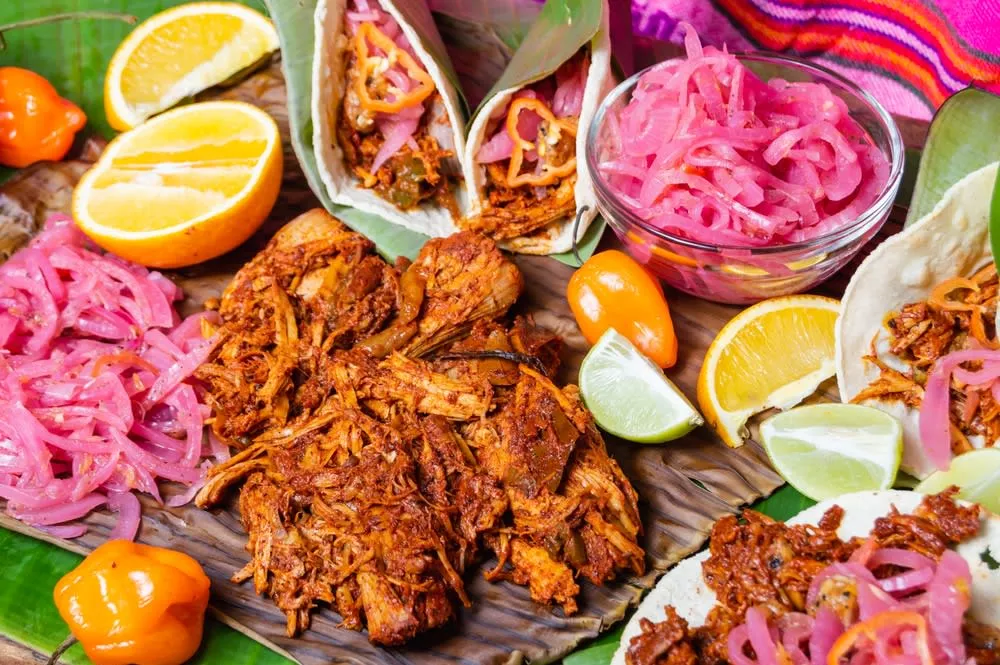
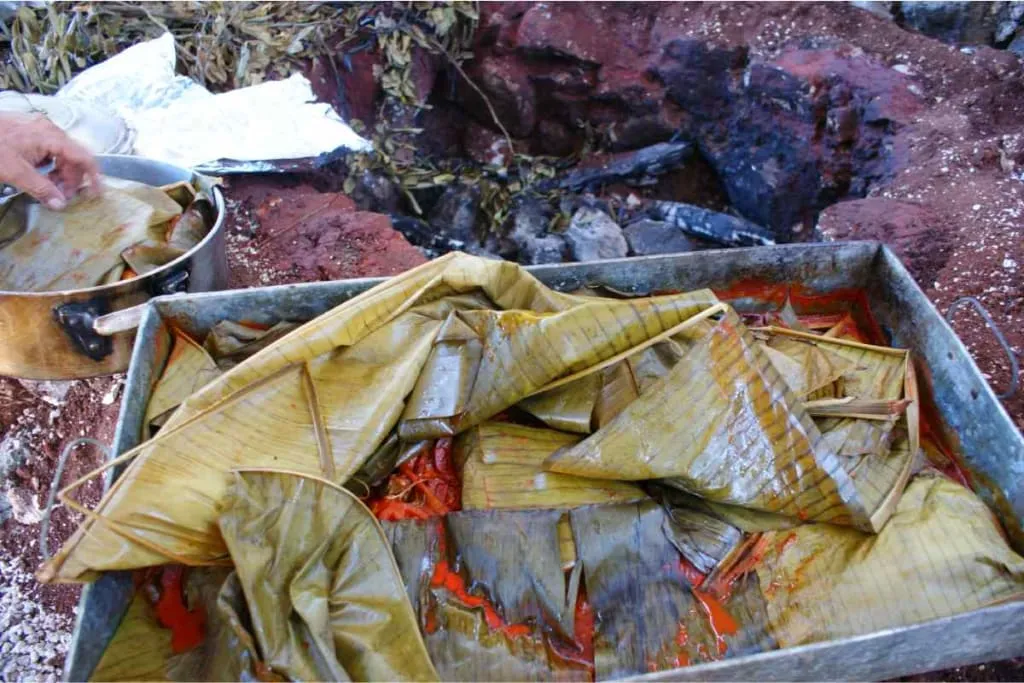
Cochinita pibil is Yucatan’s defining dish. The name means “baby pig from the pib” — pib being the traditional underground oven where pork (and originally wild game) was slow-roasted for hours over hot coals.
The preparation is methodical: pork shoulder or leg is marinated overnight in achiote (annatto seed paste), sour orange juice, garlic, black pepper, and cumin. The marinated meat is wrapped in banana leaves and slow-cooked in the pib for 6-8 hours. The result is impossibly tender, deeply orange-colored pork that shreds effortlessly.
It’s served with warm corn tortillas, pickled habanero onions (cebolla encurtida), and habanero salsa on the side. The onions are essential — their acidic bite cuts through the rich fat perfectly.
Where to eat it: Mérida’s Mercado Lucas de Gálvez on Sunday mornings has the best cochinita in the city. Arrive by 9 AM — serious locals line up early, and the good vendors sell out by noon. In Cancún, Mercado 28 in El Centro serves it daily for 80-120 MXN.
2. Papadzules — Ancient Enchiladas
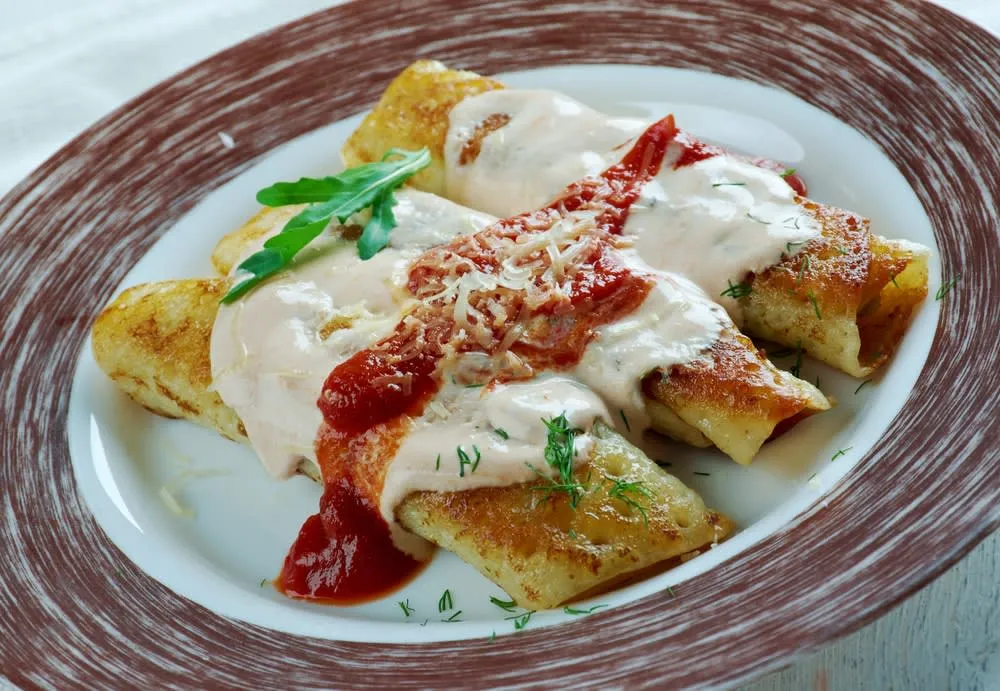
Papadzules predate Spanish colonization. The name comes from Maya “papak’zul” meaning “food of the lords” — this was a ceremonial dish served at important gatherings long before tortillas met cheese.
The mechanics: hard-boiled eggs are wrapped in corn tortillas, which are then bathed in a rich sauce made from ground pumpkin seeds (pepita) and epazote leaves. A tomato-habanero sauce is added on top, plus slices of red onion.
What makes papadzules distinctive is the pumpkin seed sauce — thick, nutty, slightly grassy from the epazote, and completely unlike anything in Central Mexican cuisine. The sauce technique of pressing and extracting oil from ground seeds is a pre-Hispanic preparation.
Where to eat it: Any fonda or cocina económica in Mérida serves papadzules. Mercado Lucas de Gálvez and Mercado Santa Ana are the easiest bets. Price: 50-80 MXN.
3. Frijol con Puerco — Monday Tradition
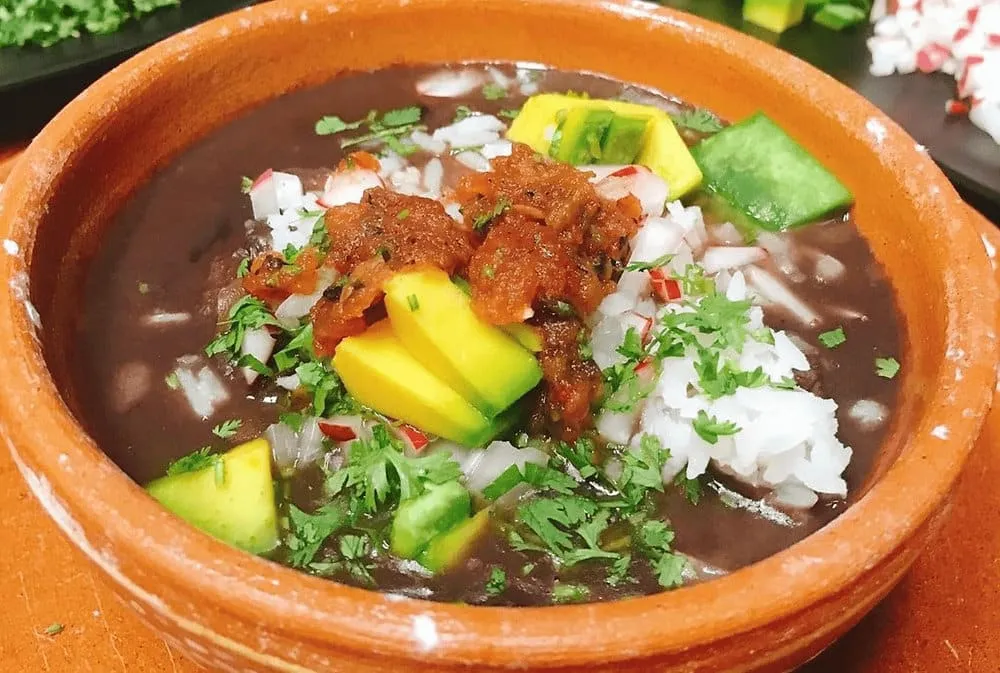
Ask a Yucatecan about their food traditions and frijol con puerco (beans with pork) will come up almost immediately. It’s eaten on Mondays — a tradition so entrenched that Yucatan restaurants promote their “lunes de frijol” (bean Monday) like a weekly event.
The dish is a slow-cooked stew of black beans and pork, served with garnishes including radishes, raw onion, cilantro, and habanero salsa. It’s filling, deeply flavored from the hours of slow cooking, and the kind of food that defines a culture’s relationship with its ingredients.
When to try it: Monday. Seriously. Any traditional Mérida comedor will have it on Monday specifically — that’s when you’ll get the best version.
4. Relleno Negro — The Black Stew
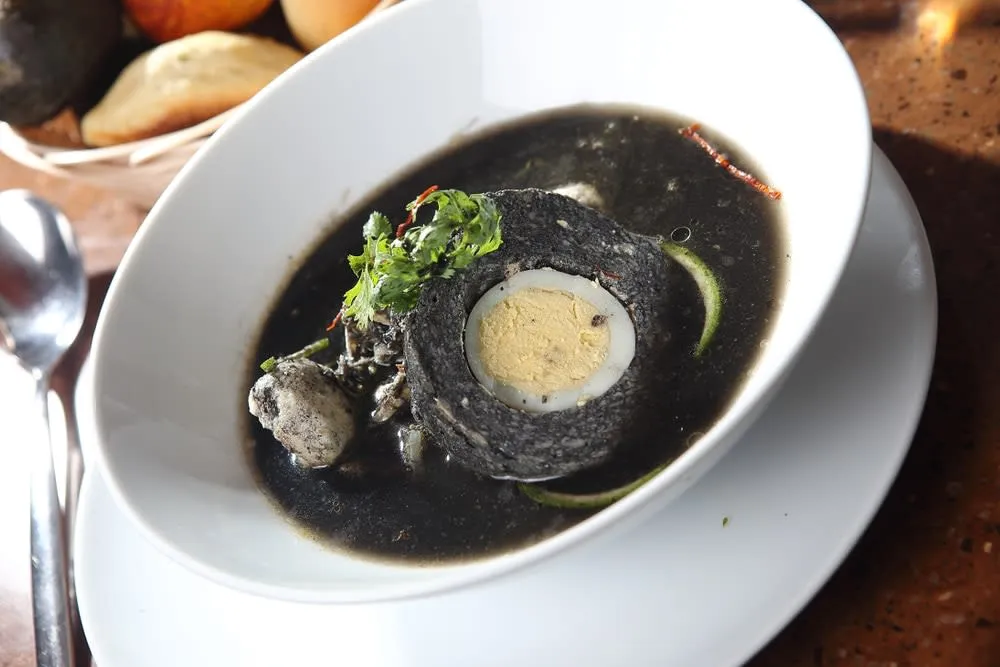
Relleno negro is the most intimidating-looking dish in Yucatan — a jet-black stew that arrives looking like something from a completely different culinary tradition. The color comes from recado negro (black recado paste), made by charring dried chiles until they turn almost completely black.
Don’t confuse the color with spiciness. Relleno negro is deeply savory and complex, not particularly hot. Turkey is the traditional protein (historically the Maya raised turkeys, not chickens), stuffed with seasoned ground pork, eggs, and olives, then cooked in the black sauce.
It’s a special occasion dish in Yucatan homes — prepared for Hanal Pixan (Yucatan’s Day of the Dead), weddings, and family gatherings. Finding it in restaurants is harder than cochinita — your best bet is a Mérida restaurant that specifically features Yucatecan home cooking rather than tourist-focused menus.
5. Pibilpollo (Mukbil Pollo) — Day of the Dead Bread
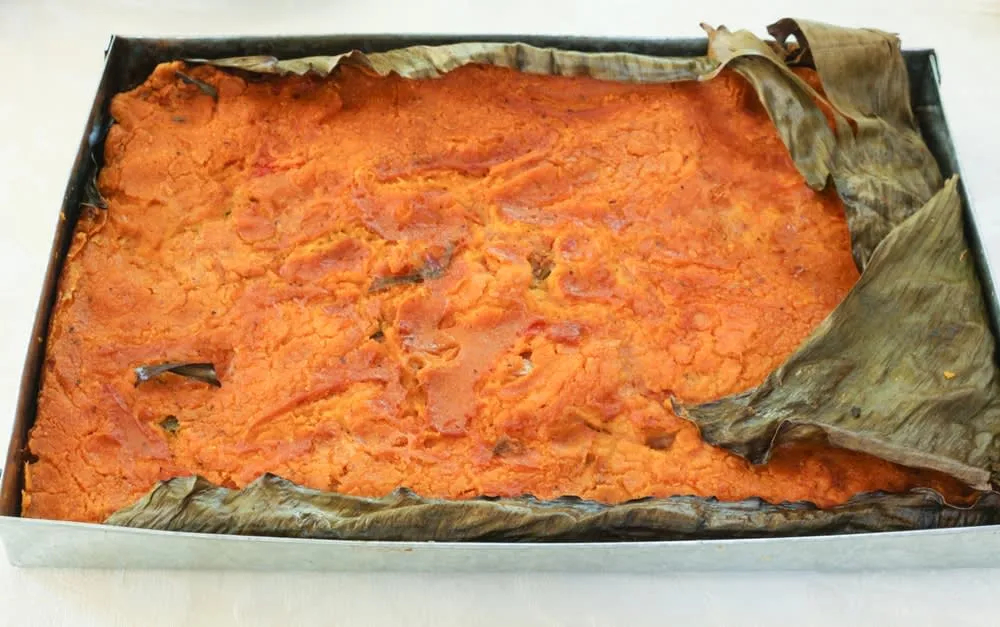
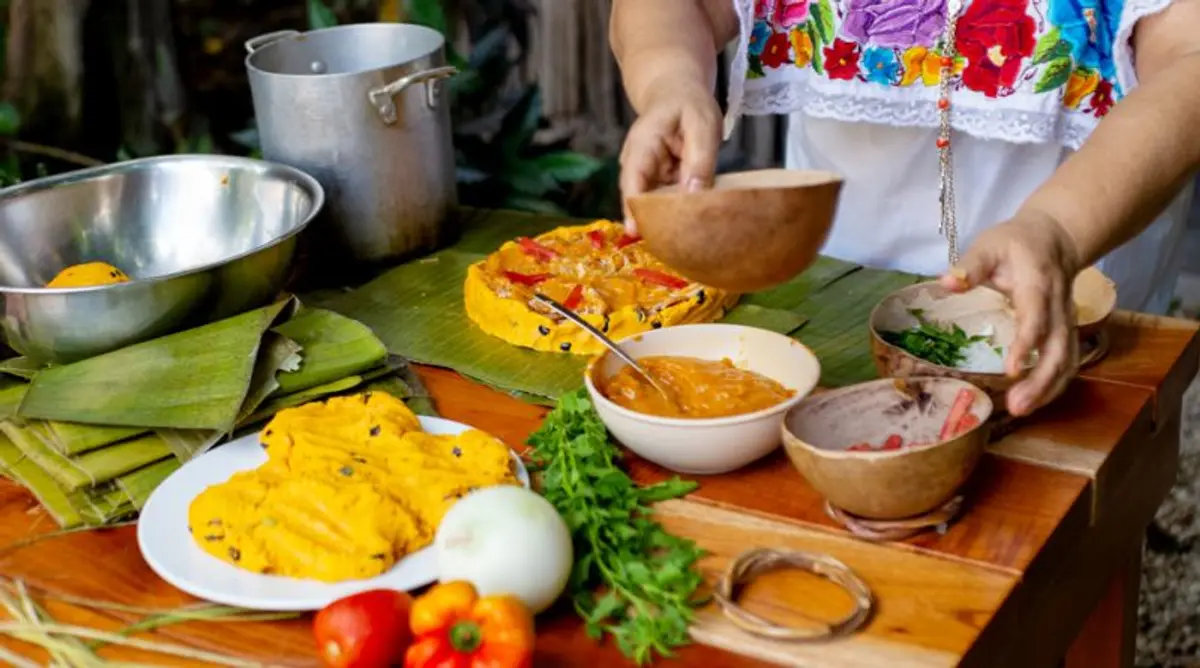
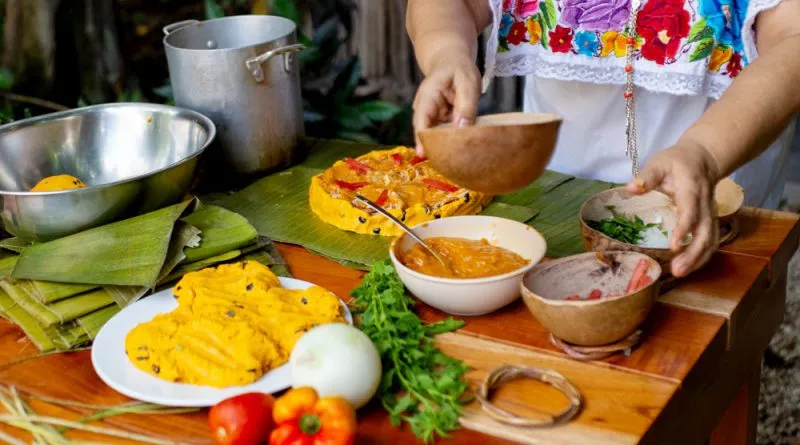
Pibilpollo, also called mukbil pollo, is a massive tamale cooked in the pib underground oven. The “pollo” (chicken) fills a thick masa (corn dough) disc that can be 30-40cm across, wrapped in banana leaves and slow-cooked for hours.
This is the defining food of Hanal Pixan — Yucatan’s Day of the Dead (October 31-November 2). Families prepare pibilpollo in advance and leave it on the ofrenda (altar) for the dead. The smell of banana leaves and masa cooking over coals is one of those deep memory-embedded scents for Yucatecans.
Pibilpollos appear at street markets starting in late October. Outside the Hanal Pixan season, you’ll find them at some Mérida fondas year-round, but it’s most authentic in autumn.
6. Huevos Motuleños — The Yucatan Breakfast
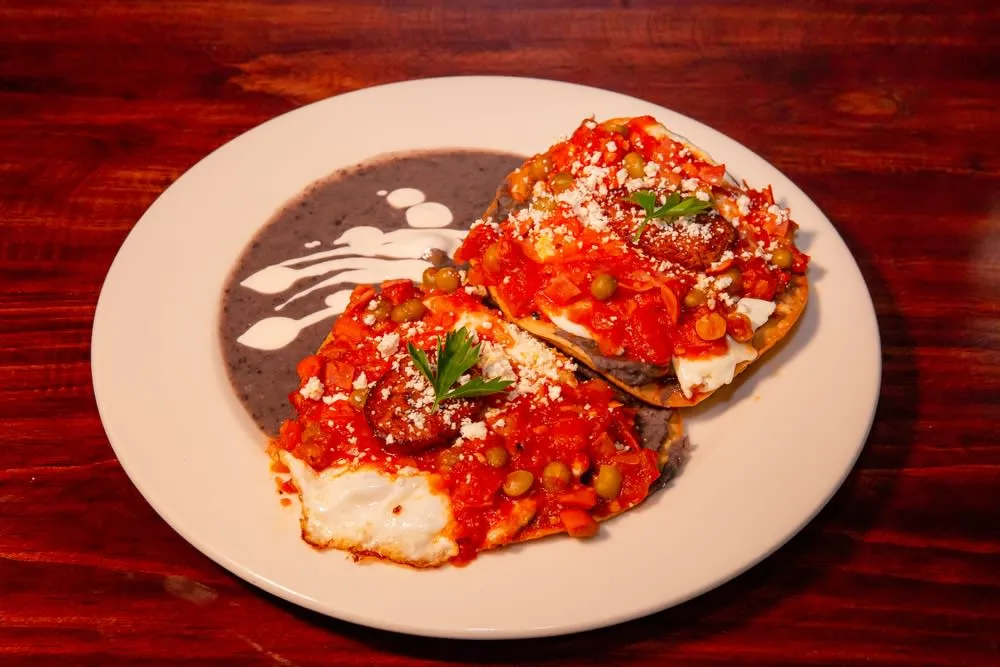
Huevos motuleños originated in the town of Motul, 46km east of Mérida, where they were apparently invented in the mid-20th century at a local restaurant. They’ve since spread throughout Yucatan and into the rest of Mexico as a signature regional breakfast.
The architecture: fried eggs sit on a corn tortilla that’s been spread with black bean paste and topped with tomato sauce, diced ham, peas, and fried plantain slices. Some versions add cheese. The combination of savory beans, sweet plantain, and runny egg yolk is genuinely excellent.
Where to eat it: Every Mérida hotel breakfast buffet includes them, but the best versions come from small breakfast spots near the central markets. Expect to pay 80-120 MXN. The town of Motul offers the “original” experience if you’re driving through.
7. Tikin-Xic — Achiote Fish
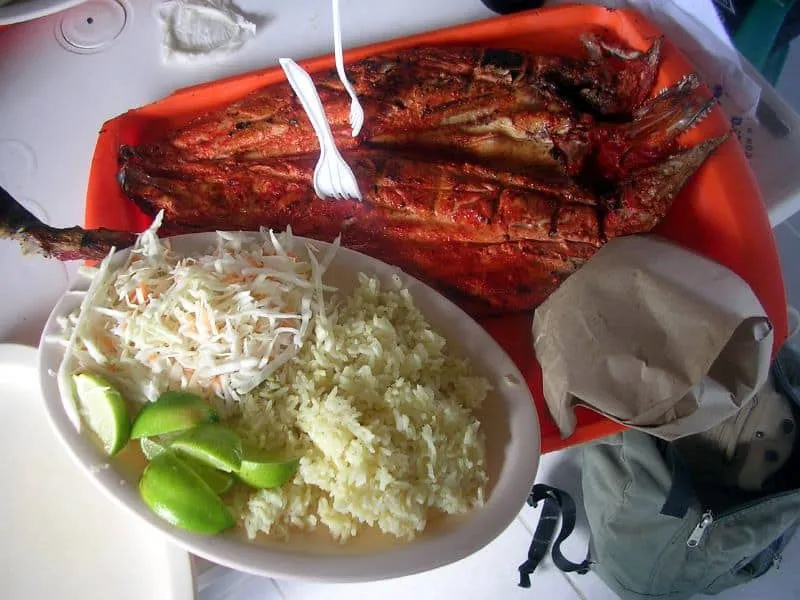
Tikin-xic (pronounced “tee-keen-SHEEK”) is the Yucatan coast’s answer to cochinita pibil — fish marinated in achiote and sour orange, wrapped in banana leaves, and grilled over coals. The name comes from Maya meaning roughly “dry-heat fish.”
Grouper (mero), sea bass (róbalo), and red snapper (huachinango) are the traditional fish used. The achiote paste colors the flesh bright orange during cooking. The banana leaves impart a subtle vegetal flavor and keep the fish moist.
Where to eat it: Coastal restaurants around Cancún, Isla Mujeres, and Holbox serve excellent tikin-xic. In Mérida, the restaurants near the Progreso beach road (about 1 hour north) specialize in it. Price: 180-350 MXN for a whole fish portion.
8. Poc Chuc — Citrus-Marinated Pork
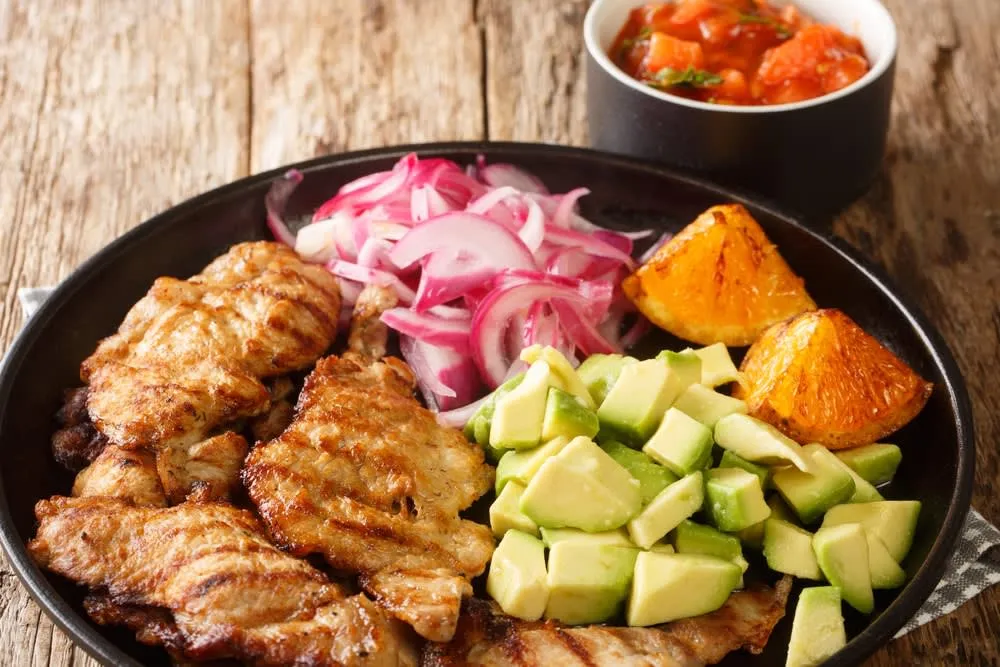
Poc chuc is arguably the most everyday Yucatan food — the equivalent of carne asada in northern Mexico or tacos al pastor in Mexico City. Thinly sliced pork is marinated in sour orange juice, salt, and pepper, then grilled quickly over charcoal.
The name comes from Maya words meaning “grilled” (poc) and “charcoal” (chuc). It’s simpler than cochinita pibil — no underground oven, no hours of marinating — but it captures the essential Yucatan flavor combination of pork + sour orange + habanero.
Served with black beans, pickled onions, sliced tomato and radish, and corn tortillas. It’s the go-to lunch order at any Mérida comedor.
Where to eat it: Ubiquitous in Mérida and Valladolid. At Mercado Lucas de Gálvez, poc chuc combos run 80-130 MXN. Los Trompos in Mérida is a famous specialist.
9. Sopa de Lima — The Comfort Food
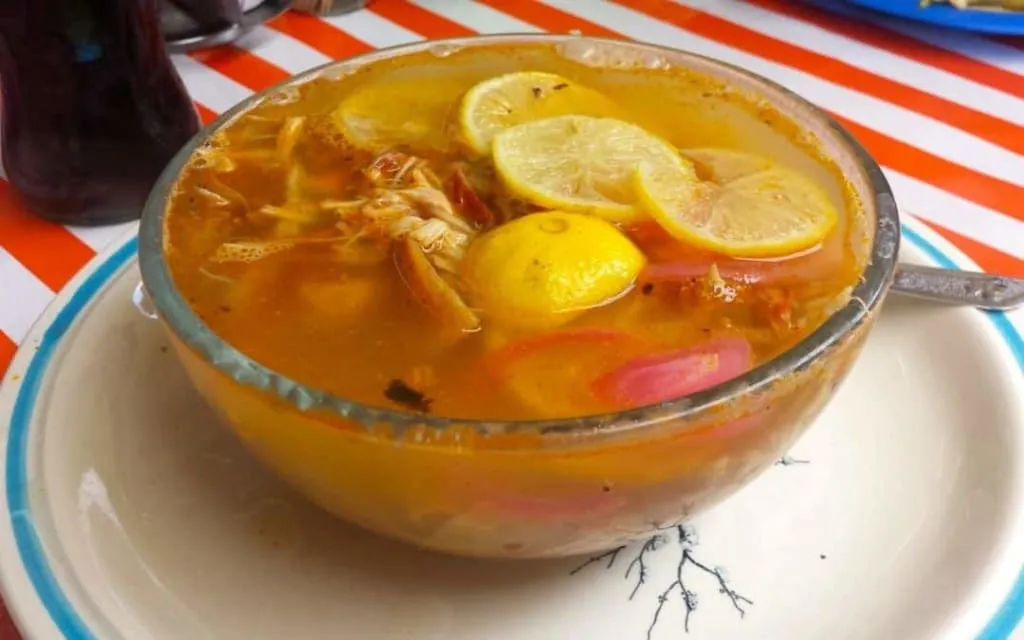
Sopa de lima (lima soup, not limón) is made with a specific variety of lime — the lima agria or Yucatan lima — that has a floral, aromatic quality different from the Persian limes found elsewhere in Mexico. This is not interchangeable with regular lime juice.
The soup base is chicken broth, simmered with the lima agria peel and juice, onion, tomato, and roasted garlic. Shredded chicken fills the bowl, with fried tortilla strips (totopos) added at the last moment for texture.
It’s simultaneously refreshing and warming — perfect for the Yucatan heat, which sounds paradoxical but works. The lima’s unique flavor profile is deeply Yucatecan and can’t be fully replicated outside the peninsula.
Where to eat it: Everywhere in Yucatan. It’s on every traditional menu. The version at Restaurante Amaro in Mérida’s Centro is excellent.
10. Escabeche Oriental — The Slow-Cooked Chicken
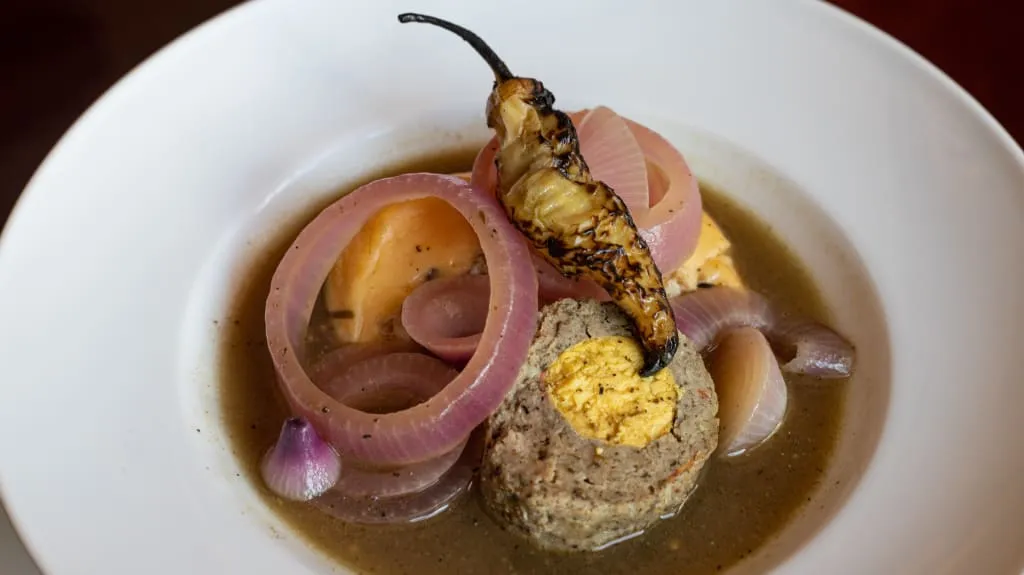
Escabeche oriental is a dish specific to the eastern Yucatan — particularly Valladolid and the towns around it. Chicken (originally turkey) is slow-cooked in a sauce of vinegar, black pepper, cumin, and xcatic chile — a pale yellow Yucatecan chile with medium heat and distinctive flavor.
The “oriental” in the name doesn’t refer to Asia. It refers to the “oriente” (eastern) region of Yucatan where this preparation originated. The vinegar-based sauce gives it a sharper, more acidic profile than most Yucatan dishes.
Where to eat it: Valladolid is the place. The restaurants around the main plaza serve versions that have been perfected over generations. If you’re visiting Chichen Itzá and stopping in Valladolid (which you should — it’s 43km away and far cheaper for lunch), escabeche oriental is the order.
11. Brazo de Reina — The Flattened Tamale
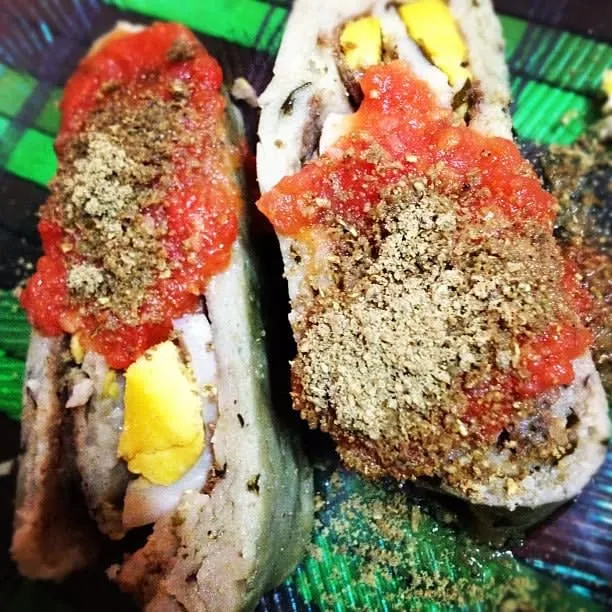
Brazo de reina (Queen’s Arm) is a distinctive type of tamale formed into a roll rather than individual packets. The masa is spread flat on a banana leaf, layered with chaya (tree spinach, a Yucatan endemic green), hard-boiled eggs, and pumpkin seeds, then rolled into a cylinder and steamed.
Chaya is the defining ingredient — a leafy green that grows throughout the Yucatan Peninsula, rich in protein and antioxidants, tasting like a cross between spinach and arugula. It appears in many Yucatan dishes and isn’t found much elsewhere in Mexico.
Brazo de reina is often found at Mérida’s Sunday markets and at fondas that specialize in traditional cooking.
12. Longaniza de Valladolid — The Spiced Sausage
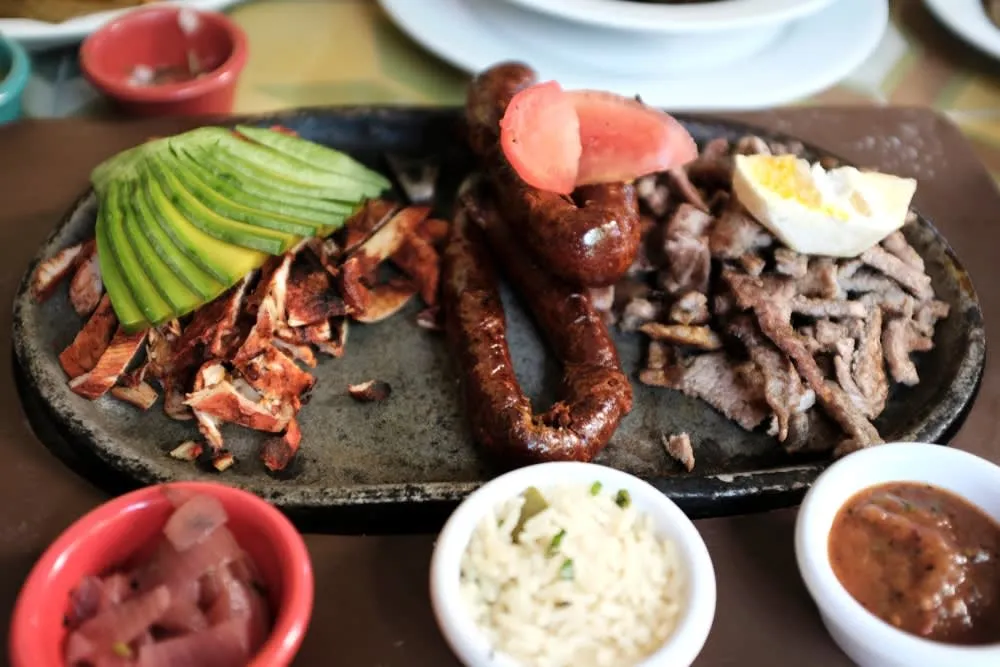
Longaniza de Valladolid is a dark, anise-flavored pork sausage that was developed in Valladolid (80km from Mérida). It’s coarser than Spanish longaniza, seasoned with black pepper, cumin, and oregano in addition to achiote, giving it the characteristic orange-red color.
It’s eaten at breakfast — sliced and fried with eggs, or mixed into dishes with beans and rice. The anise flavor is mild but distinctive. Valladolid has stalls throughout the market that sell it by weight, and it travels as a souvenir (vacuum-packed versions available).
Where to buy it: Valladolid’s Mercado Municipal, where vendors sell it fresh. You’ll also find it in supermarkets throughout Yucatan.
13. Kibis — The Lebanese Legacy
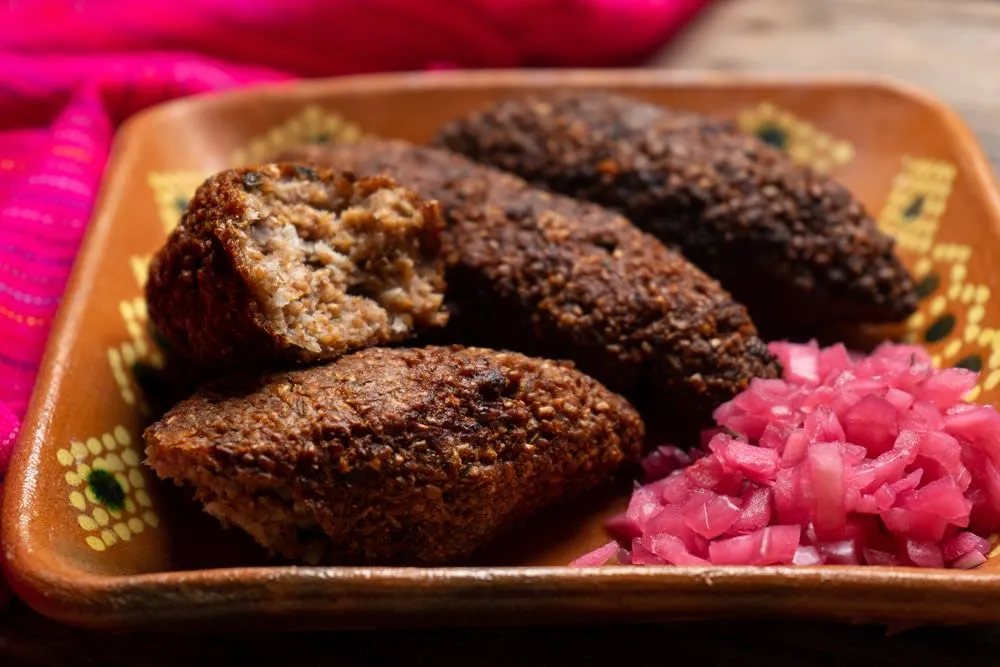
Kibis are the Yucatecan version of Lebanese kibbeh — brought by Lebanese immigrants who arrived in Yucatan in the late 19th and early 20th centuries. This Lebanese influence is stronger in Yucatan than almost anywhere else in Mexico, particularly around Campeche and Mérida.
Kibis are oval-shaped, deep-fried pastries made from bulgur wheat and seasoned ground beef. The outside is crispy; the inside is dense and savory. They’re eaten as street snacks and at markets, typically with a habanero salsa on the side.
The Lebanese community’s impact on Yucatan food also includes other dishes less obvious in their origin — stuffed cheese (queso relleno, below) shows the same influence.
Where to eat them: Market stalls throughout Mérida, especially near Lucas de Gálvez.
14. Yucatan Ceviche
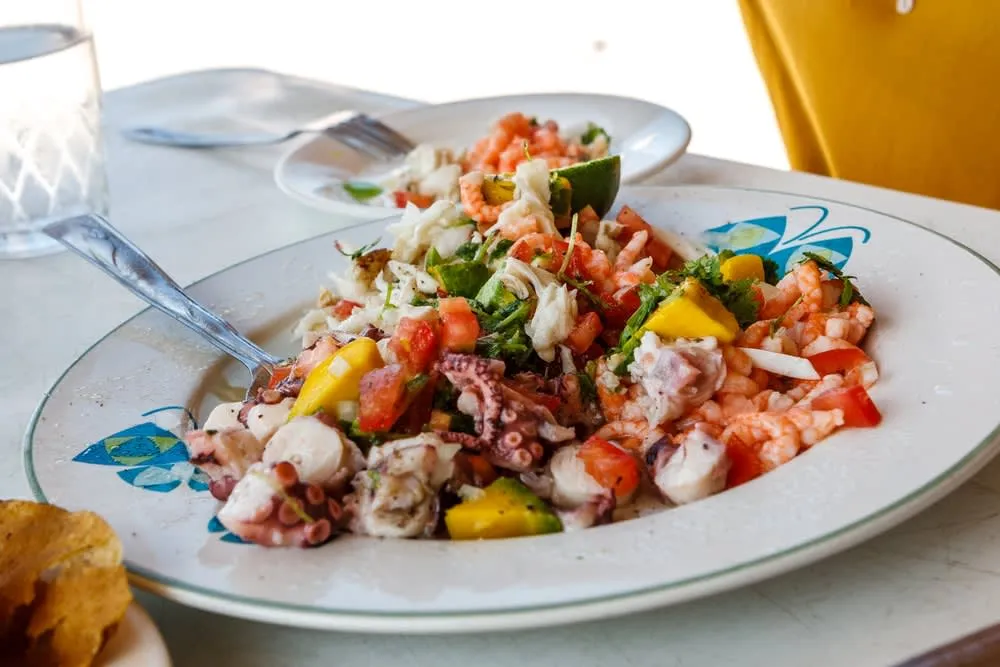
Yucatan ceviche differs from the lime-marinated versions found in Pacific Mexico. The acidulating agent here is sour orange (naranja agria) rather than regular lime — giving it a floral, aromatic quality. Habanero, cilantro, red onion, and tomato complete the marinade.
Coastal towns around Cancún, Progreso (Mérida’s beach), and Isla Mujeres serve the best versions. The ceviche is typically served with tostadas or saltines and a cold beer.
During Semana Santa, ceviche consumption in Yucatan spikes significantly — Good Friday’s fish/seafood requirement (abstinence from meat) drives demand throughout the week.
15. Caballero Pobre — The Egg Dessert
This one surprises people. Caballero pobre (“Poor Knight”) is a Yucatan dessert made from dried bread soaked in milk and egg, then fried and doused in a syrup of water, sugar, raisins, cinnamon, and vanilla. It’s essentially French toast with a sweet sauce.
The name references the “Poor Knight of Windsor” — a medieval English dish that made its way through Spain into colonial Mexico. It appears most prominently during Lent (cuaresma) and Semana Santa when meat is restricted. The sweet, milky, egg-rich dessert satisfies in a distinctly different way than the savory dishes that dominate Yucatan cooking.
16. Queso Relleno — Stuffed Cheese
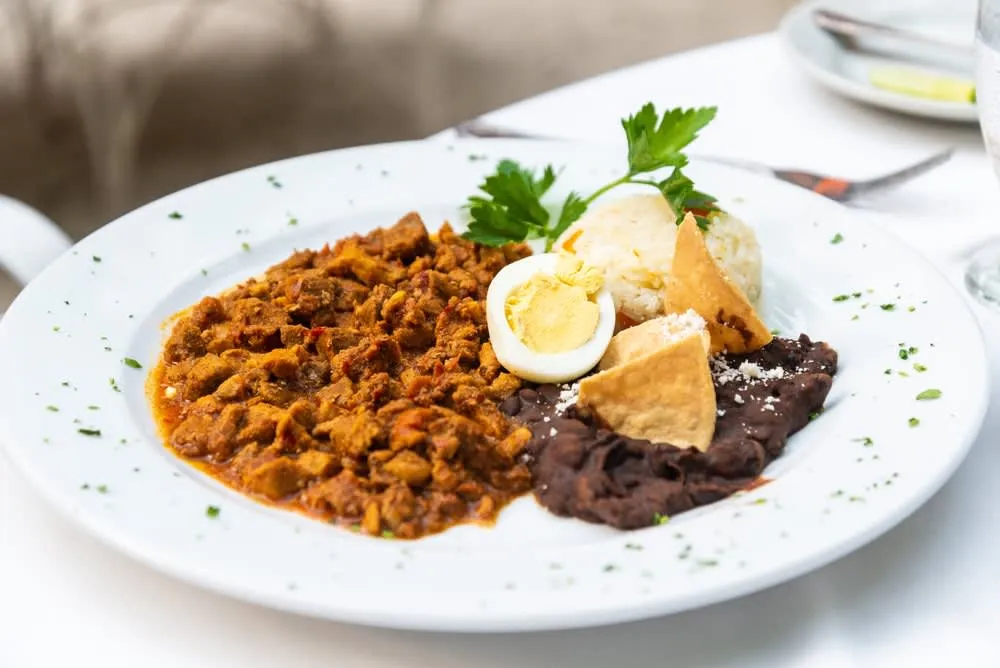
Queso relleno (stuffed cheese) reflects Yucatan’s Dutch trade connections — a full Edam cheese ball (the red wax variety imported from the Netherlands) is hollowed out and stuffed with a mixture of ground pork seasoned with achiote, raisins, olives, capers, and almonds.
The stuffed cheese is then baked or poached and served with kol — a thick white sauce made from chicken broth and masa (corn dough) — and a tomato sauce. It’s a spectacular-looking dish that explains the Dutch presence in Yucatan’s colonial port economy.
Queso relleno is a special occasion dish. It appears at family celebrations and at traditional Mérida restaurants that specialize in pre-Mexican (colonial era) cuisine.
17. Papaya Candy
Yucatan produces a distinctive crystallized papaya candy — strips of semi-ripe papaya cooked slowly in sugar syrup until they become translucent and intensely sweet. The texture is somewhere between candied fruit and a soft taffy.
It’s sold throughout Yucatan’s markets and at roadside stalls in the countryside. Given that Yucatan produces large quantities of papaya, the candy tradition makes local agricultural sense. Look for it alongside other Yucatan sweets at the Mercado Lucas de Gálvez.
18. Escabeche de Pescado
A lighter cousin of escabeche oriental, this preparation uses fish (typically tilapia or sea bass) marinated in a vinegar, oregano, and xcatic chile sauce and then quickly seared. It’s served cold or at room temperature as a light lunch or first course.
Coastal Yucatan restaurants near Progreso and Celestún serve versions that showcase the freshness of the Gulf fish.
19. Sopa de Chaya
Chaya leaf soup is a simple but deeply traditional Yucatan preparation — chicken or vegetable broth with fresh chaya leaves (occasionally with small corn dumplings or rice). Chaya is a tree spinach endemic to the Yucatan Peninsula, consumed by the Maya for thousands of years.
The leaves must be cooked before eating — raw chaya contains compounds that neutralize when heated. The cooked soup has a mild, slightly grassy flavor similar to spinach. You’ll find it at markets and home-cooking restaurants that prioritize Yucatan traditions.
20. Marquesitas — Crispy Rolled Crepes
Marquesitas are Mérida’s quintessential street snack and one of the few modern inventions in this ancient food tradition. Thin, crispy crepes are rolled around a filling, traditionally queso de bola (Edam cheese) — more Dutch-Yucatan cross-cultural exchange.
Modern versions add Nutella, cajeta (goat milk caramel), strawberry jam, or chocolate alongside the cheese. The combination of savory melted Edam with sweet filling is an acquired taste that Meridians are fiercely loyal to.
The marquesita cart is as essential to Mérida evenings as the ice cream vendor is to American neighborhoods. Find them around the main plaza starting at 6 PM.
21. Xtabentún — The Maya Liqueur
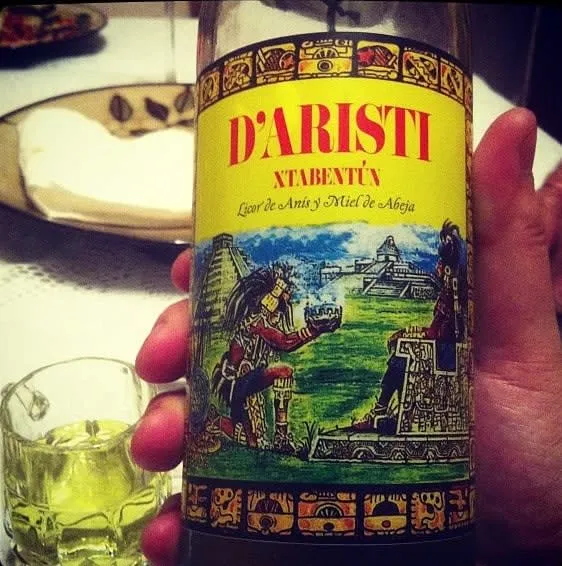
Xtabentún is technically a liqueur, but no Yucatan food guide is complete without it. Made from the fermented honey of Melipona bees — the ancient stingless bees kept by the Maya for over 3,000 years — combined with anise distillate, the result is sweet, aromatic, and unmistakably regional.
The Melipona bee (xunan kab in Maya, “noble lady bee”) is considered sacred in Maya culture and still kept in traditional log hives called jobones in Yucatan villages. The honey is darker, more complex, and distinctly different from honeybee honey.
Xtabentún is served cold, over ice, or as a digestif after dinner. It makes one of the most distinctive food souvenirs from Yucatan — available at the Mérida airport duty-free and at markets throughout the state.
Where to Eat Yucatan Food
| City | Best Spots | Price Range |
|---|---|---|
| Mérida | Mercado Lucas de Gálvez (Sunday mornings), Mercado 23, Apoala, Restaurante Amaro | 60-300 MXN |
| Valladolid | Mercado Municipal (breakfast), restaurants around Parque Zoci | 60-200 MXN |
| Cancún | Mercado 28 in El Centro, La Parrilla on Yaxchilán | 80-200 MXN |
| Holbox/Isla Mujeres | Beachfront restaurants for tikin-xic and ceviche | 150-400 MXN |
| Chichén Itzá (town) | Restaurants in Pisté village — cheaper than on-site | 100-200 MXN |
Pro tip: Avoid hotel Zone restaurants in Cancún for authentic Yucatan food — prices are 3-5× higher and authenticity is lower. The 15-minute taxi ride to El Centro (downtown Cancún) is worth it.
What to Drink with Yucatan Food
- Agua de chaya — chaya-leaf water, bright green, mildly vegetable-tasting, very refreshing
- Agua de jamaica — hibiscus flower water, standard in Mexico but ubiquitous in Yucatan
- Cerveza Sol/Modelo — the standard beer pairing with cochinita pibil and poc chuc
- Xtabentún — anise honey liqueur, digestif, definitively Yucatecan
- Henequén cocktails — modern Mérida bartenders use agave spirits from the peninsula
Explore more: Things to Do in Mérida | Mérida Travel Guide | Best Time to Visit Yucatan | Yucatan 7-Day Itinerary | What to Eat in Cancún