Whale Watching in Mexico 2026: Gray Whales, Humpbacks & Best Season Guide
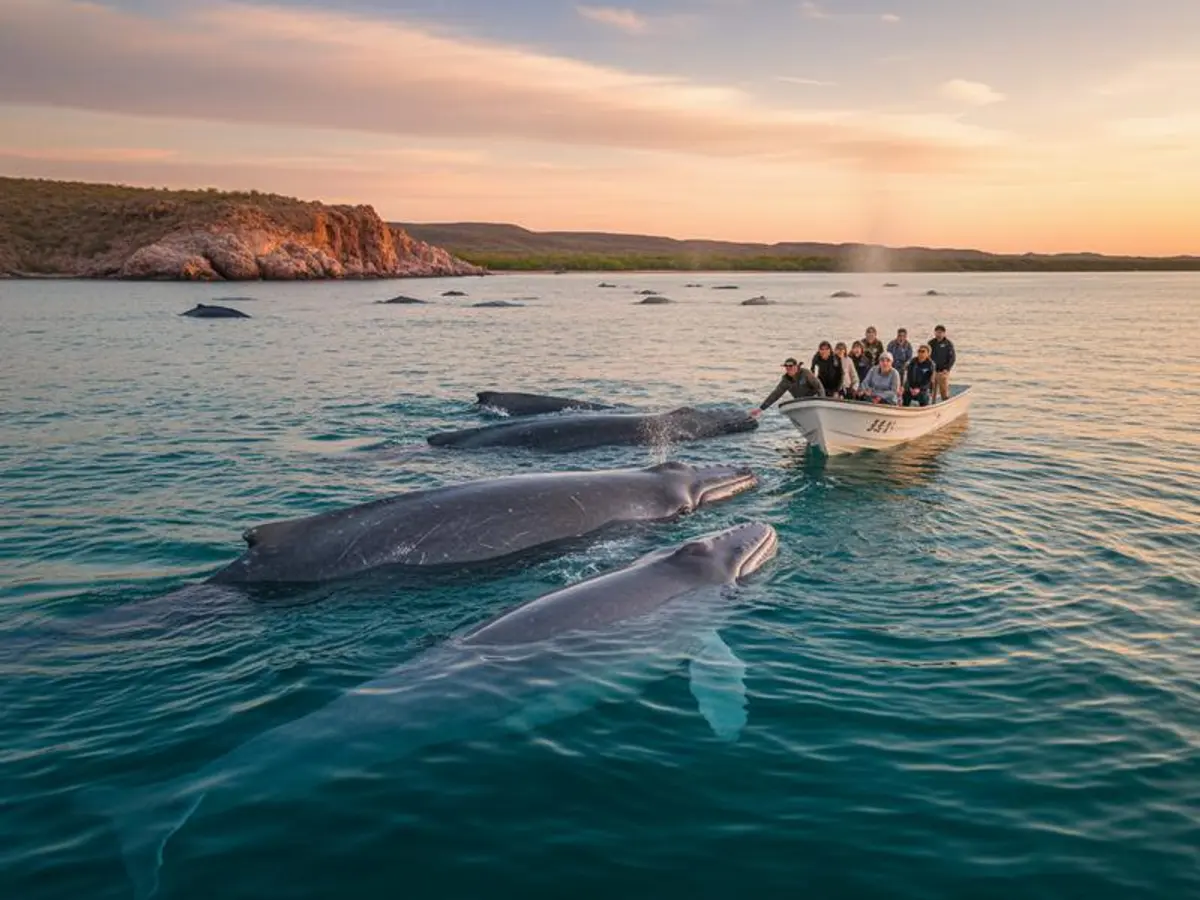
Mexico hosts some of the world’s most extraordinary whale watching. Every winter, thousands of gray whales travel over 10,000 km from the Arctic to breed in Baja California’s warm lagoons — and in those lagoons, they actively seek contact with humans. Simultaneously, hundreds of humpbacks fill the Pacific coast from Puerto Vallarta to Los Cabos, and blue whales gather in the Sea of Cortez.
This guide covers every whale species in Mexico, when to go, where to go, and how to book a responsible tour.
Whale Species You’ll Encounter in Mexico
Mexico has five regularly sighted whale species, each with distinct seasons and locations.
| Species | Best Location | Peak Season | Encounter Type |
|---|---|---|---|
| Gray Whale | Baja California lagoons | Jan–Mar | Friendly whale contact |
| Humpback | Puerto Vallarta, PV-Banderas Bay | Dec–Mar | Breaching, acrobatics |
| Blue Whale | Sea of Cortez (La Paz, Loreto) | Dec–Mar | Open-water sightings |
| Fin Whale | Sea of Cortez | Dec–Apr | Ocean viewing |
| Sperm Whale | Baja Pacific coast | Year-round | Deep-water |
Gray Whales (Eschrichtius robustus)
Gray whales are the reason Mexico sits at the top of every serious whale watcher’s list. Between December and April, the Eastern Pacific population — roughly 27,000 whales — migrates from Arctic feeding grounds to three sheltered lagoons in Baja California Sur to breed and give birth.
What makes Mexico extraordinary is the friendly whale phenomenon: here, gray whale mothers actively bring their calves to panga boats to be touched, petted, and scratched. This behavior, which occurs nowhere else on Earth at this scale, has been documented since the 1970s in Laguna San Ignacio.
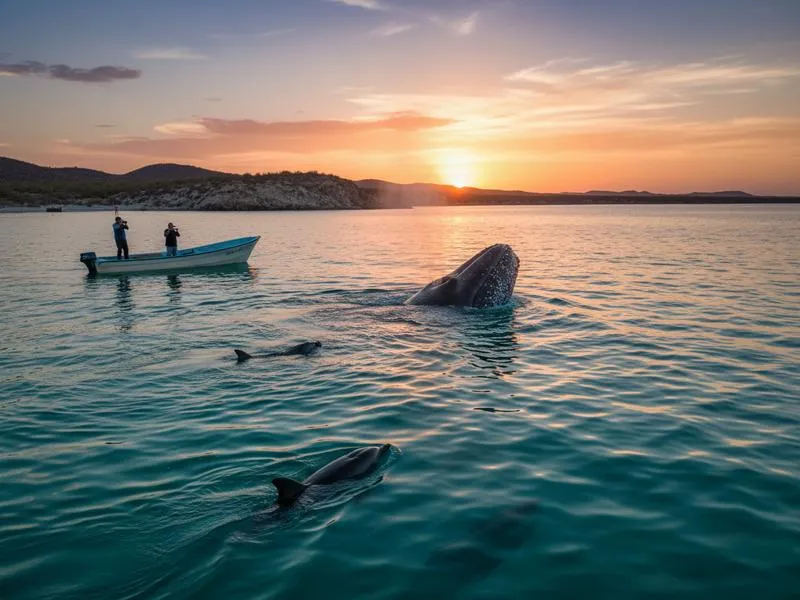
Gray whale season runs December through April (first arrivals December, peak January–March when calves appear, final departures April). By March, calf numbers are at maximum. By mid-April, the lagoons are largely empty as whales begin the 10,000 km return journey north.
March 2026 note: This is the FINAL weeks of gray whale season. The last window for friendly whale encounters is now through early April.
Humpback Whales (Megaptera novaeangliae)
Humpbacks are the acrobats — breaching, tail-slapping, and singing. Mexico’s Pacific coast hosts a substantial humpback population from November through March, concentrated in:
- Banderas Bay (Puerto Vallarta / Riviera Nayarit) — over 600 whales at peak
- Los Cabos — visible from shore, tours from Cabo San Lucas marina
- Huatulco and Oaxaca Coast — smaller but less crowded
- Mazatlán coast — offshore sightings December–March
Peak humpback season is January–February, though late-season March often produces more energetic behavior as whales prepare for their northern migration.
Blue Whales (Balaenoptera musculus)
The Sea of Cortez hosts the largest known aggregation of blue whales in the Northern Hemisphere — an estimated 2,000 animals in the peak winter months. Tours depart from La Paz and Loreto between December and March.
Blue whale encounters are more variable than gray whale tours. These are pelagic animals in open water, not lagoon residents. Tours typically sight 1–3 animals per trip, often at distance. The sightings, when they happen, are extraordinary — blue whales reach 30 meters and weigh up to 200 tons.
Best Whale Watching Destinations in Mexico
1. Laguna San Ignacio (Most Intimate Gray Whale Encounters)
Location: Baja California Sur, 230 km south of Guerrero Negro
Species: Gray whales
Season: January–April (peak February–March)
Best for: The most intimate friendly whale encounters in Mexico
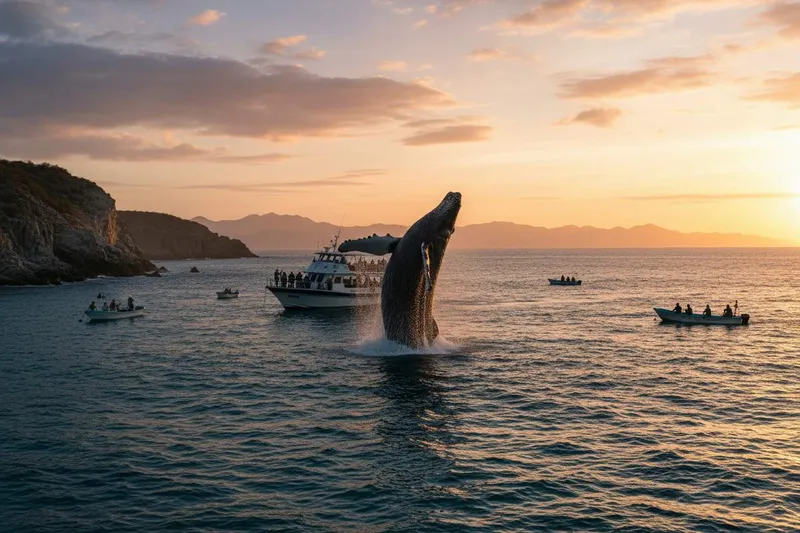
San Ignacio is the crown jewel of gray whale tourism. The lagoon sits inside the El Vizcaíno UNESCO Biosphere Reserve and is reached by dirt road through the Vizcaíno Desert — the remoteness is part of what keeps whale numbers high and interactions genuine.
The Kuyima ejido operates licensed tours under community management. Whale friendly behavior here is legendary: mothers routinely bring newborn calves to boats, push calves up toward outstretched hands, and seem to enjoy the contact. Scientists have multiple hypotheses but no consensus explanation for why San Ignacio whales are especially social.
Practical: Tours run from Ejido Luis Echeverría (15 km from the lagoon). Day trips from Guerrero Negro possible but exhausting — overnight stays recommended. Book 2–3 months in advance for February peak.
2. Laguna Ojo de Liebre / Scammon’s Lagoon (Largest Gray Whale Population)
Location: Guerrero Negro, Baja California Sur
Species: Gray whales
Season: December–April
Best for: Higher whale density, easier access, budget-friendly tours
Laguna Ojo de Liebre has the largest gray whale concentration of the three lagoons — estimated 2,500+ whales at peak. Named after American whaler Charles Melville Scammon who “discovered” it in 1857 (and nearly drove gray whales to extinction in the Pacific), the lagoon is now a UNESCO site.
Access is the easiest: Guerrero Negro is on Highway 1, reachable by bus from La Paz or Ensenada. Tours run from the town pier, 30 minutes from the whale zone. Friendly whale encounters happen here but are less consistent than San Ignacio — the lagoon is larger and whales more dispersed.
Cost: 600–900 MXN per person for 2–3 hour tour. Most affordable gray whale option.
3. Bahía Magdalena (Whale Watching with Mangroves)
Location: Puerto San Carlos / Puerto López Mateos, BCS
Species: Gray whales
Season: January–March
Best for: Combining whale watching with bird watching, accessible from La Paz
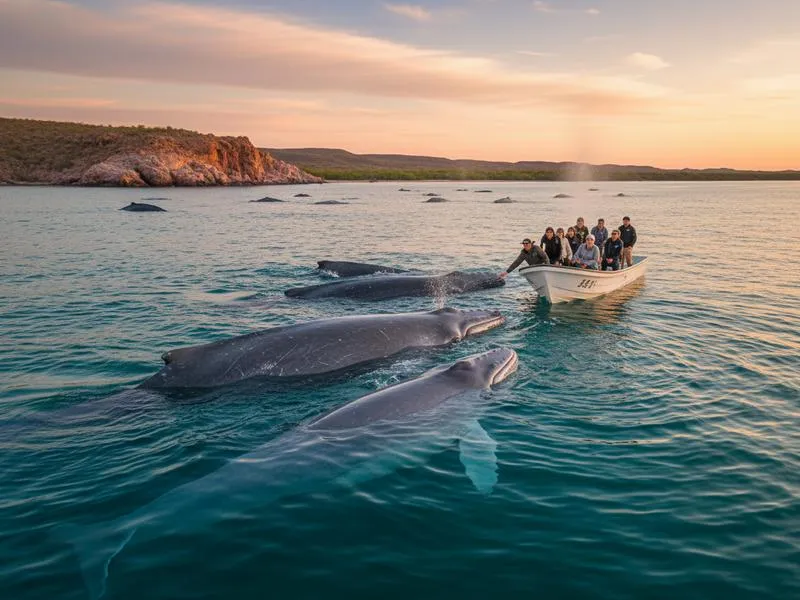
Bahía Magdalena is the southernmost gray whale nursery and the easiest to reach for travelers based in La Paz or Los Cabos. Tours depart from Puerto San Carlos (3 hours from La Paz by car) or Puerto López Mateos.
The bay’s mangrove channels add a unique element — whale encounters in narrow channels with birds overhead. Friendly whale behavior occurs but generally less frequently than San Ignacio. Water is calmer than open-ocean tours.
Logistics: Day trip from La Paz possible. Book a tour through your La Paz hotel or directly with local operators in Puerto San Carlos.
4. Banderas Bay — Puerto Vallarta & Riviera Nayarit (Best Humpbacks)
Location: Puerto Vallarta, Jalisco / Riviera Nayarit
Species: Humpback whales
Season: November–March (peak January–February)
Best for: Dramatic humpback acrobatics, easy access from major resort hub
Banderas Bay is one of Mexico’s largest natural bays and hosts Mexico’s highest concentration of humpback whales in winter. Over 600 humpbacks use the bay annually. The combination of warm surface waters and deep underwater canyon (El Edén submarine canyon) creates ideal conditions.
Tours depart from the Marina Vallarta and La Cruz de Huanacaxtle (Riviera Nayarit). A standard 3–4 hour tour will typically encounter multiple whales, often including mothers with calves, male escorts, and competitive groups with spectacular surface displays.
Seasonal timing: November arrivals are unpredictable. By December, whale density is high. January–February is peak. March tours still encounter whales but numbers are declining as migration begins.
5. Los Cabos (Visible from Shore + Tours)
Location: Cabo San Lucas / San José del Cabo
Species: Humpback whales
Season: December–April
Best for: Seeing whales without booking a dedicated tour, easy to combine with resort stay
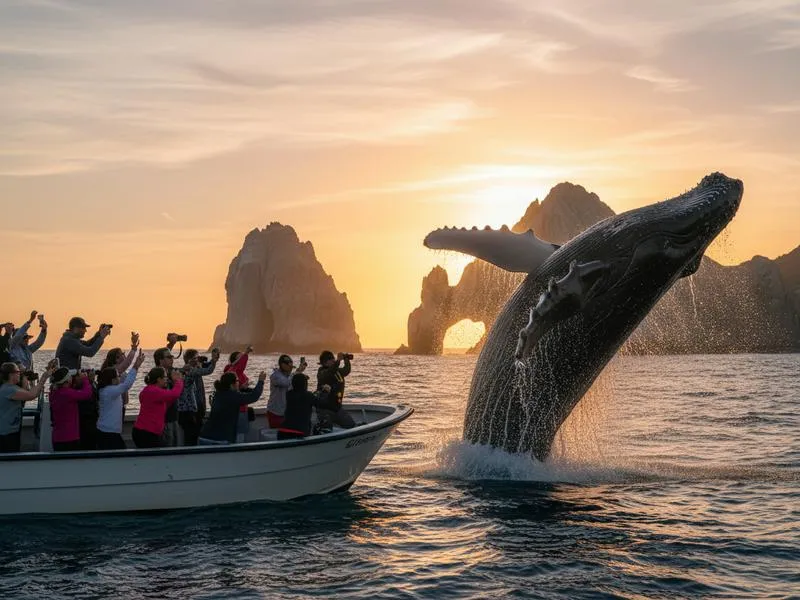
Los Cabos offers the rare combination of whale watching visible from the shoreline of luxury resorts. In December–March, humpbacks are routinely visible from the beaches of the Hotel Zone and even from El Arco. Tours depart from Cabo San Lucas marina — the same operators handling snorkel trips add whale watching to their routes in season.
Whale watching from shore at Los Cabos works best from elevated viewpoints at sunrise and sunset when light is low and the horizon is clear.
6. Sea of Cortez — La Paz & Loreto (Blue Whales)
Location: La Paz / Loreto, Baja California Sur
Species: Blue whales, fin whales, sperm whales, common dolphins
Season: December–March
Best for: Blue whale sightings, diverse marine life
La Paz-based operators run dedicated blue whale tours into the Sea of Cortez from December through March. These are pelagic tours — expect 4–6 hours at sea, often with mixed sightings (blue whales, fin whales, dolphins, sea lions, whale sharks).
Blue whale sighting rates vary: expect 60–70% probability of encountering blue whales on a dedicated tour, and nearly 100% probability of some whale species. Sperm whales are occasionally sighted, as are fin whales (second-largest animal on Earth).
Season Calendar: When to Go
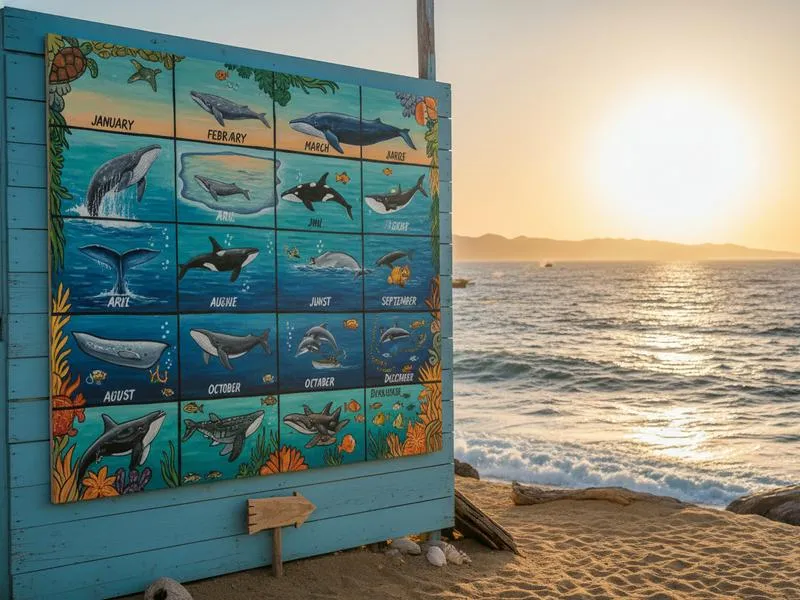
| Month | Gray Whales (Baja) | Humpbacks (PV/Cabo) | Blue Whales (Sea of Cortez) | Notes |
|---|---|---|---|---|
| December | First arrivals | Good — season opens | Peak months beginning | Book January–February NOW |
| January | Peak — adults + early calves | Excellent | Peak | Best month overall |
| February | Peak — calves abundant | Peak | Peak | Best friendly whale encounters |
| March | Good — calves very active | Good — declining | Good | Current: final weeks of gray whale season |
| April | Final departures | Last sightings | Ending | Lagoon tours wind down mid-April |
| May–November | None | None | None | Whale shark season in Holbox/La Paz |
The Friendly Whale Phenomenon
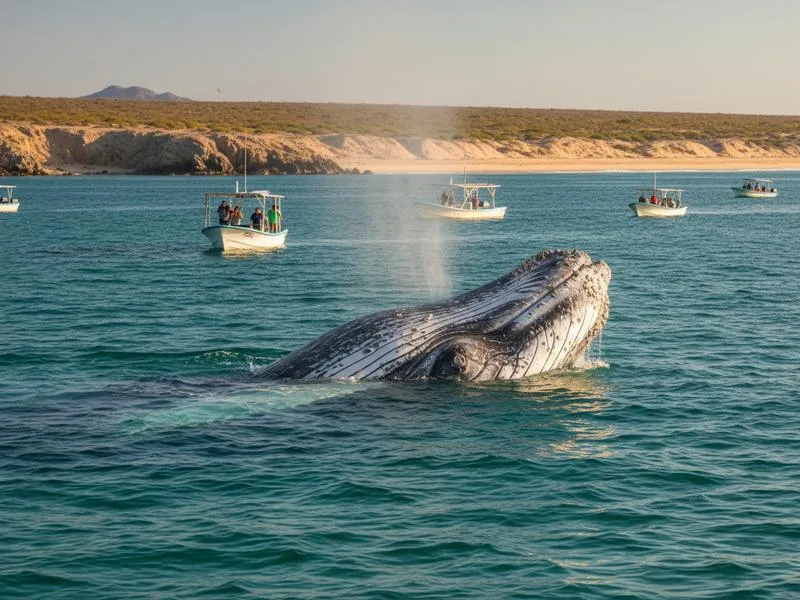
Nothing in wildlife tourism quite prepares you for a 15-ton gray whale swimming under your boat, surfacing next to your hand, and leaning into a pet like a dog. The friendly whale behavior in Baja’s lagoons is genuinely one of the most extraordinary wildlife encounters on the planet.
The science: Researchers have studied friendly whale behavior since it was first documented by fisherman Francisco “Pachico” Mayoral in Laguna San Ignacio in 1972. Multiple hypotheses exist: mothers may be teaching calves to interact with benign humans, whales may be rubbing parasites against boat hulls, or it may be play behavior. No single explanation is accepted.
The experience: A licensed guide maneuvers the panga slowly near whales. When a whale approaches — always whale-initiated — the guide signals passengers to sit calmly and extend a hand. The whale brings its rostrum to your hand. Some interactions last 5–15 minutes with a whale repeatedly approaching different passengers.
Ethical guidelines:
- Never initiate contact — wait for the whale to approach
- One hand only, and gently
- No sudden movements or noise
- Follow guide instructions immediately if they signal to withdraw
- Never attempt to touch a calf before its mother approaches first
How to Book a Responsible Tour
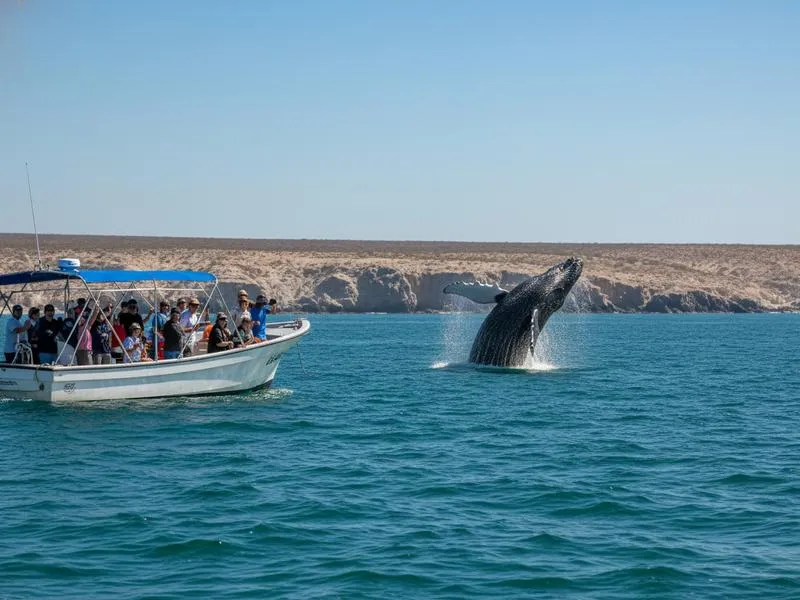
For Gray Whale Tours (Baja Lagoons)
Laguna San Ignacio:
- Book directly with Kuyima (ejido-owned, San Ignacio village) or Ecoturismo Kuyima
- Tours run from January through early April, 2–3 hour panga excursions
- Overnight packages recommended: camps at San Ignacio or the lagoon edge
- Book 2–4 months ahead for peak January–February dates
Laguna Ojo de Liebre (Guerrero Negro):
- Book through Mario’s Tours or Malarrimo Eco Tours in Guerrero Negro
- Day trips possible; easiest access on Hwy 1
- Book 2–4 weeks ahead
Bahía Magdalena:
- Tours from Puerto San Carlos or Puerto López Mateos
- La Paz tour operators offer day-trip packages (transport included)
- 2–3 weeks advance booking sufficient
For Humpback Tours (Puerto Vallarta / Los Cabos)
- Book through certified marine tour operators at Marina Vallarta or Cabo San Lucas marina
- Look for SEMARNAT-licensed operators
- Standard tours: 3–4 hours, 1,000–2,000 MXN per person
- Book 1–2 weeks ahead in peak January–February
What Makes a Tour Ethical
| Look For | Avoid |
|---|---|
| SEMARNAT-licensed operator | Unlicensed private tours |
| Panga limit per lagoon zone (enforced) | Tours advertising guaranteed whale contact |
| Maximum approach speed regulations | Operators who chase or herd whales |
| Marine biologist or trained naturalist guide | No briefing before entering whale zone |
| Life jackets + safety briefing | No emergency equipment |
| Community-run (ejido/cooperative) operators | Mass tourism boat companies |
Tour Costs and Budget Planning
| Tour Type | Location | Duration | Cost per Person |
|---|---|---|---|
| Lagoon panga (gray whale) | Guerrero Negro | 2–3 hrs | 600–900 MXN ($33–50 USD) |
| Lagoon panga (gray whale) | San Ignacio | 2–3 hrs | 800–1,200 MXN ($44–66 USD) |
| 2-night package (gray whale) | San Ignacio | 2 days | $250–450 USD all-in |
| Humpback tour | Puerto Vallarta | 3–4 hrs | 1,000–2,000 MXN ($55–110 USD) |
| Blue whale tour | La Paz | 4–6 hrs | 1,400–2,400 MXN ($77–132 USD) |
| All-inclusive whale safari | Baja packages | 5–7 days | $800–2,000 USD total |
Money-saving tip: Book directly with local guides and ejido operators rather than through hotels or international tour companies. Direct booking saves 30–50% on the same tours. Tour aggregators like Viator offer convenience but at a premium.
What to Bring on a Whale Watching Tour
Essentials:
- Waterproof jacket (it gets cold on the water even in Baja winter)
- Sunscreen (reef-safe not required in the Pacific/Gulf, but recommended)
- Polarized sunglasses (reduces surface glare when scanning for whale blows)
- Binoculars (8×42 minimum magnification)
- Seasickness medication if susceptible (take before boarding)
- Camera with telephoto lens (whales surface quickly and unpredictably)
- Waterproof bag for electronics
For gray whale lagoon tours: Dress in layers. Lagoon mornings are cold (5–10°C in January), afternoons are warm. The panga sprays water. Wind protection matters more than warm clothing.
Combining Whale Watching with Other Activities
Baja California Sur
- Whale sharks in La Paz: October–May season, snorkel alongside the world’s largest fish. See our La Paz guide →
- Sea lions at Los Islotes: Year-round, 30-minute boat from La Paz
- Copper Canyon: Add Chihuahua inland for a complete Baja + Interior Mexico trip
- Cabo Pulmo marine park: UNESCO reef with 463% biomass recovery, 60 km east of Cabo
Pacific Coast (Puerto Vallarta)
- Sea turtle releases: Seasonal Jul–Nov, same coast
- Marietas Islands: UNESCO biosphere, snorkeling and bird life — tours year-round with different seasonal highlights
- Sayulita and Riviera Nayarit: Day trips from Puerto Vallarta →
Gray Whale Conservation: From Extinction to Recovery
Gray whales are one of the great conservation success stories. In the 19th century, whalers discovered the Baja lagoons and nearly drove the species to extinction — by the 1930s, the population had collapsed to an estimated 3,000 animals.
Full protection under the Marine Mammal Protection Act (1972) and Mexico’s lagoon UNESCO designations allowed the population to recover to approximately 27,000 animals — near historical population levels.
The current threats are subtler: climate change is shifting Arctic krill and amphipod populations (gray whales’ primary food), leading to documented cases of emaciated whales arriving at Baja lagoons. The IUCN lists Pacific gray whales as Least Concern, but the population needs continued protection of both Arctic feeding grounds and Baja breeding lagoons.
The eastern Pacific population and the western Pacific population are distinct. The western Pacific (Korean) population is critically endangered with only 100–150 animals remaining.
Frequently Asked Questions
See the full FAQ section above the article.
Whale watching information updated March 2026. Gray whale season ends mid-April 2026. For planning 2026–2027 season trips, bookmark and return in October 2026.
Explore more Mexico wildlife guides: Best Time to Visit Mexico | La Paz Travel Guide | Puerto Vallarta Things to Do | Mexico in March 2026 | Swimming with Whale Sharks Mexico