La Paz Mexico Travel Guide 2026: Beaches, Whale Sharks & Costs
La Paz is one of the best first-time beach cities in Mexico if you want swimmable water, wildlife, and lower prices than Los Cabos. It works best for travelers choosing between whale shark season, Balandra Beach days, Espíritu Santo boat trips, and a walkable Malecón base rather than an all-inclusive resort strip.
La Paz in 30 Seconds
| Question | Short answer |
|---|---|
| Is La Paz worth visiting? | Yes, especially if you want calm beaches, marine life, and a more local Baja city than Cabo. |
| Best months? | October to May, with October to November best overall and December to February best for whale sharks. |
| How long to stay? | 3 to 5 days is ideal. |
| Best beach? | Balandra for scenery, Tecolote for more active water time. |
| Fly where? | Usually Los Cabos (SJD), then bus or drive 3 hours north. |
| Typical daily budget? | About $60 to $120 USD before major tours. |
La Paz is the capital of Baja California Sur, Mexico, a city of about 250,000 people on the Sea of Cortez, 177 kilometers north of Los Cabos. Jacques Cousteau called this sea “the world’s aquarium,” and La Paz is one of the easiest places in Mexico to turn that line into an actual trip.
Quick Facts
| State | Baja California Sur |
| Population | ~250,000 |
| Location | Sea of Cortez coast, 177km north of Los Cabos |
| Airport | LAP (General Manuel Márquez de León) — limited US routes |
| Nearest major airport | SJD Los Cabos — 177km / 3 hours |
| Daily budget | $60–120 USD |
| Best time | October–May |
| Whale shark season | October–May (peak December–February) |
| Sea lion colony | Los Islotes — 30 min by boat |
| Water temperature | 22–29°C depending on month |
| US State Dept. rating | Level 2 (same as most of Europe) |
| Currency | Mexican peso (MXN). USD accepted at tourist businesses. |
Why La Paz Instead of Los Cabos
Los Cabos is the Baja California that most Americans know — resort hotels, Pacific surf breaks, sport fishing, and a party scene that goes until 4 AM. That’s a legitimate destination.
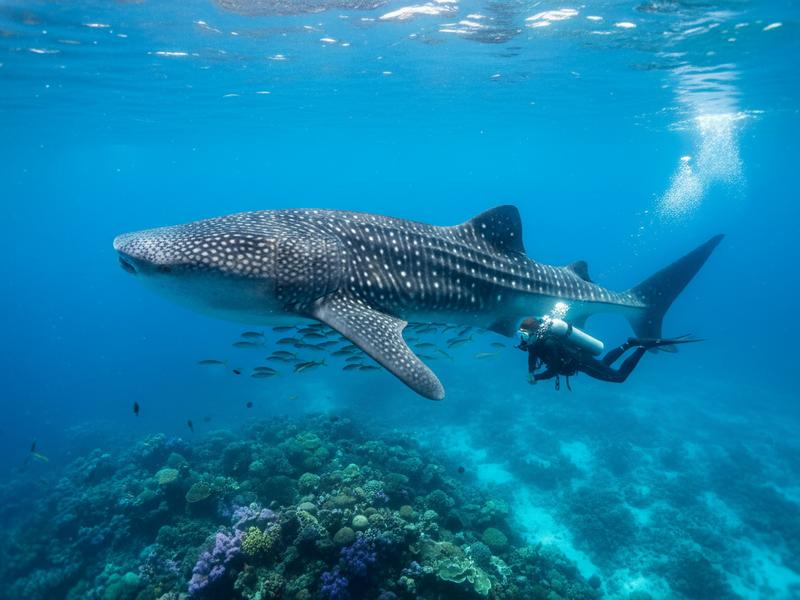
La Paz is the other Baja: calmer water on the Sea of Cortez side, a real Mexican city that predates the tourism infrastructure, and wildlife access that Los Cabos simply can’t match. Whale sharks in the bay. Sea lion colonies 30 minutes offshore. Espíritu Santo Island — a UNESCO biosphere reserve — reachable by a 45-minute boat ride.
Prices are 30–50% lower than Los Cabos across hotels, restaurants, and tours. The Malecón (5km waterfront boardwalk) has more in common with a Mexican city’s evening paseo than with any resort strip.
The comparison in a table:
| La Paz | Los Cabos | |
|---|---|---|
| Water type | Sea of Cortez — calm, warm, clear | Pacific + Cortez — surf, currents |
| Whale sharks | Yes — best in Mexico | No |
| Sea lion swimming | Yes — Los Islotes | No |
| Beach swimming | Excellent (Balandra, Tecolote) | Limited (currents dangerous at many beaches) |
| City feel | Real Mexican city | Resort corridor |
| Price level | $ | $$–$$$ |
| Nightlife | Modest | Extensive |
| Snorkeling/diving | World-class | Good |
| International flights | Limited | Extensive |
Most people who visit La Paz come via Los Cabos — fly SJD, spend a night or two in Cabo, then drive or bus 3 hours north. This combination trip covers both Bajas.
The Sea of Cortez Context
The Sea of Cortez (also called the Gulf of California) is the body of water between the Baja California Peninsula and mainland Mexico. UNESCO designated it a World Heritage Site in 2005, calling it “the world’s aquarium” in reference to Jacques Cousteau’s famous description.
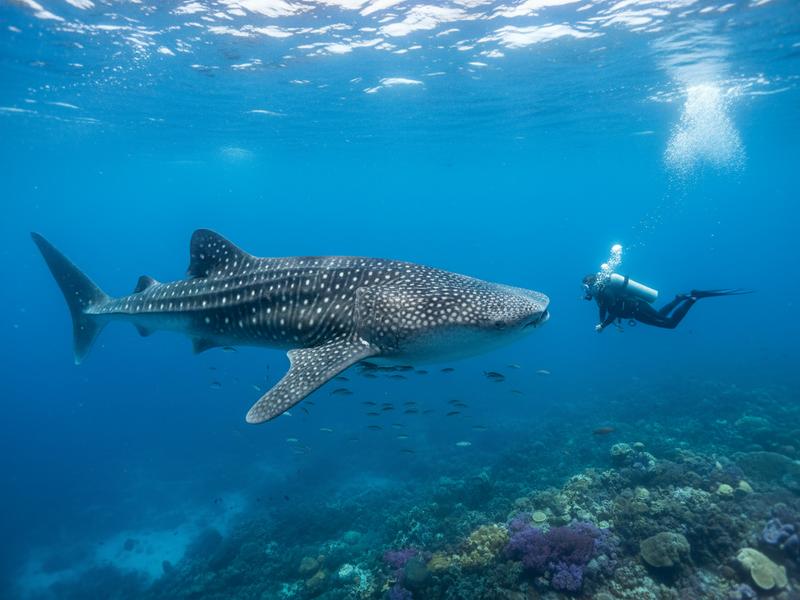
The biodiversity concentration here is exceptional: 891 species of fish, one-third of the world’s marine mammal species, multiple sea turtle species, and seasonal whale populations. The cold California Current meets warm tropical water from the south, creating an upwelling that supports extraordinary food chains.
La Paz sits on the eastern shore of the Baja Peninsula, directly on the Sea of Cortez. This location is why whale shark tours, sea lion swimming, and Espíritu Santo trips all operate from the city.
Whale Sharks: The Main Reason to Come to La Paz
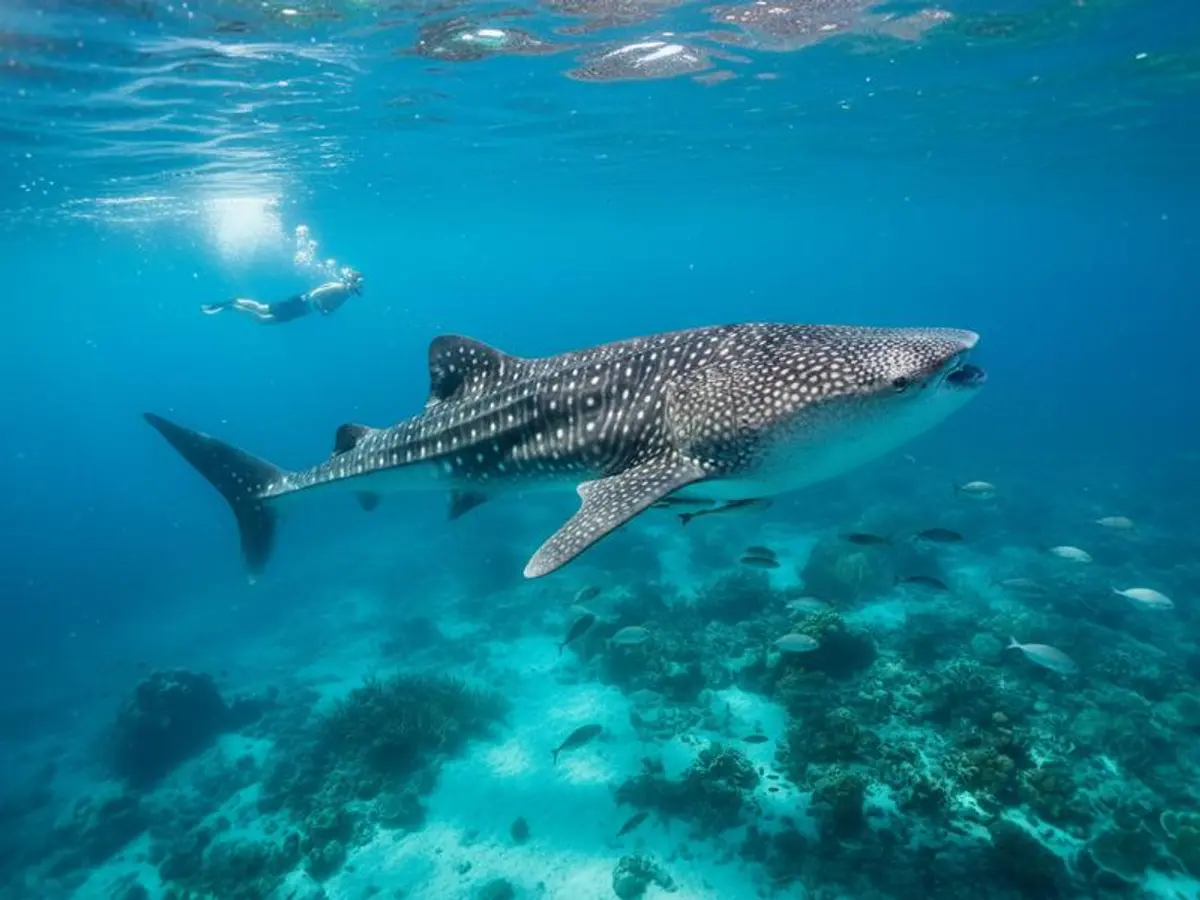
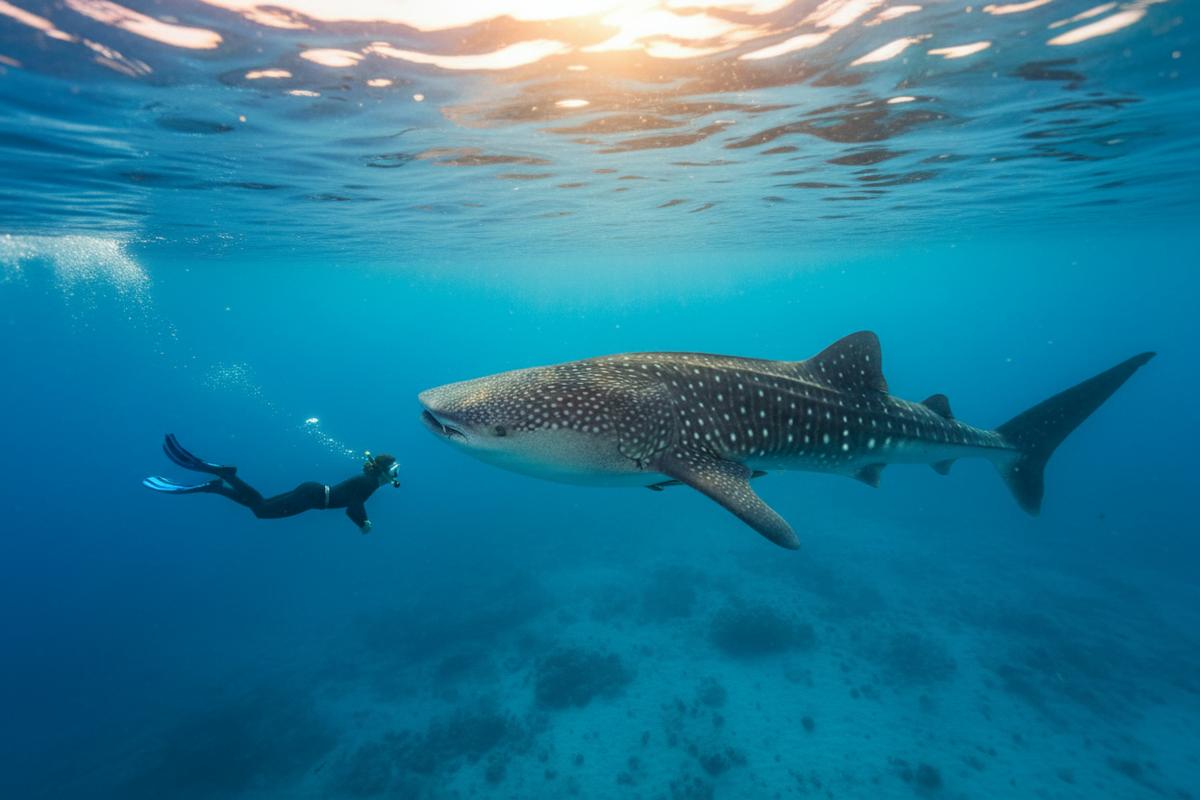
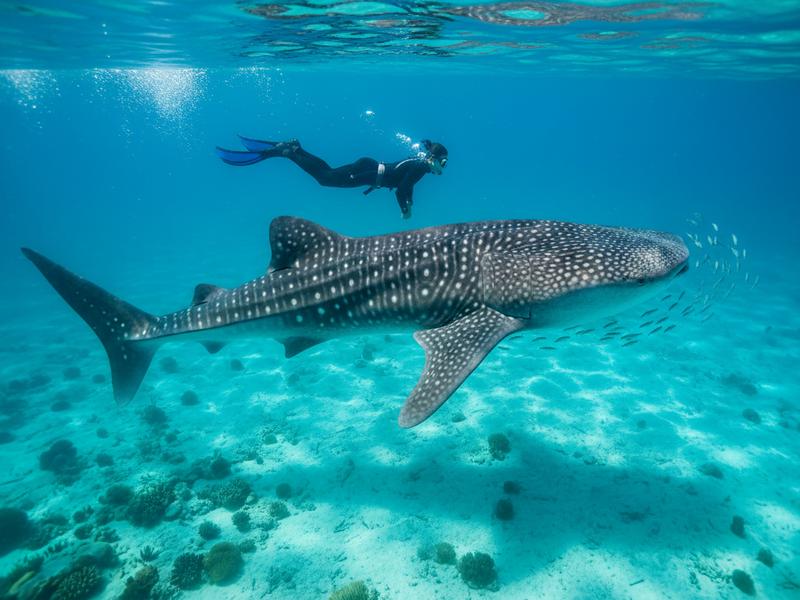
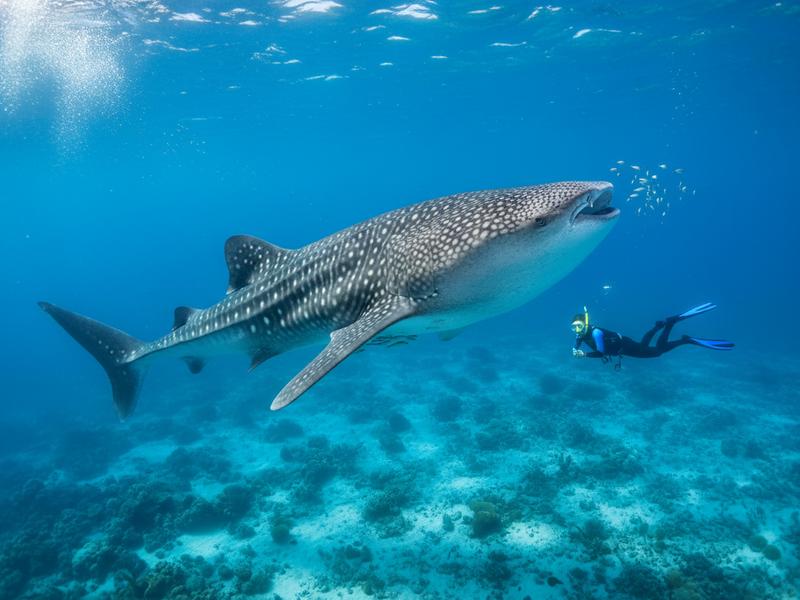
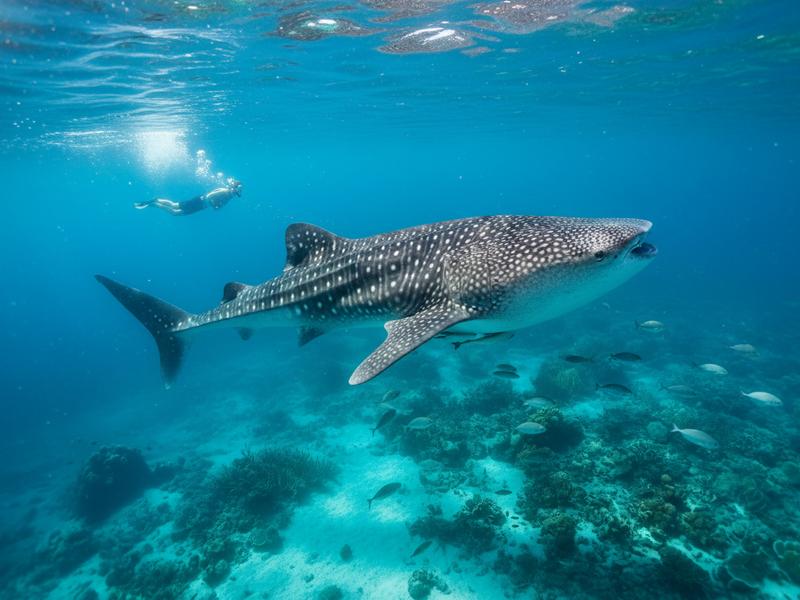
La Paz offers the most accessible whale shark snorkeling in Mexico — probably in the world. The whale sharks aggregate in the waters north of the city (particularly around Isla Partida and in open water south of Espíritu Santo) in a predictable annual pattern.
Season: October through May. Peak numbers December through February. Some sharks remain year-round but summer sightings are less reliable. That timing is the opposite of the Mexican Caribbean season; our Mexico whale shark guide compares La Paz, Holbox, and Isla Mujeres month by month.
The experience: You board a small panga (open motorboat) with a guide, motor out 20–40 minutes, and enter the water within swimming distance of a whale shark. The sharks are docile filter-feeders — they’re ignoring you while vacuum-filtering plankton. Adults reach 12 meters in length. Swimming alongside one is like flying next to a submarine.
Rules: Mexican regulations require snorkeling only (no scuba diving near whale sharks). Maintain 3-meter distance. No touching. One guide per small group. These regulations exist and guides enforce them — the legitimate operators won’t compromise on this.
Cost: ~$80–100 USD per person for a half-day tour including snorkel gear, wetsuit (optional), and transfer from the Malecón.
Book in advance: Good operators sell out weeks ahead in peak season (December–February). Book La Paz whale shark tours on Viator.
Sea Lions at Los Islotes
Los Islotes is a pair of small rocky islands 30 minutes by boat north of Espíritu Santo, home to one of the largest sea lion colonies in Mexico — approximately 500 animals.
Unlike many sea lion viewing experiences, Los Islotes is interactive. The younger sea lions approach snorkelers, swim in circles around you, occasionally mock-charge (harmless, startling), and seem to regard the interaction as play. The adults stay on the rocks. The pups are in the water.
It is one of the genuinely extraordinary wildlife encounters in Mexico — more personal than whale sharks, more energetic than turtle snorkeling. Most La Paz day tours to Espíritu Santo include a stop at Los Islotes.
Espíritu Santo Island
Espíritu Santo is a UNESCO World Heritage biosphere reserve island 25km northeast of La Paz — reachable by boat in 45 minutes. It’s uninhabited and strictly protected. Day trips and overnight camping are both possible (camping requires advance permits).
What you’ll find on a day trip:
- Snorkeling at multiple reef sites around the island — fish density is higher than anywhere on mainland Mexico’s coasts
- Blue-footed booby nesting colonies on the northern cliffs (seasonal)
- Kayaking through protected coves
- Sea lion stop at Los Islotes (usually included)
- Pristine beaches with no development — no vendors, no umbrellas, no noise
Overnight camping on Espíritu Santo requires permits from SEMARNAT. The camping experience is exceptional — desert island, complete silence, bioluminescent water at night. About 5–10 campsites max at any time.
Day trip cost: $80–120 USD including panga, guide, gear, lunch. Book through Viator’s La Paz tours or directly with operators on the Malecón.
La Paz Beaches
Balandra Beach
24km north of La Paz city. Balandra is a protected bay within El Mogote-Ensenada de La Paz biosphere reserve, and it is consistently voted Mexico’s most beautiful beach.
The defining feature is the water. The bay is so protected and shallow that you can walk hundreds of meters from shore in knee-to-waist depth water. The color shifts from pale turquoise near shore to deep blue at the edges. The sand is light and clean. Desert mountains frame the bay on three sides.
Entry: Free. Parking: 50 MXN. Small food stalls at the parking area. No shade on the beach itself — bring a shade tent or umbrella. Crowds: Gets busy on weekends and holidays. Arrive before 10 AM to secure a good spot and parking.
Balandra is not ideal for swimming in the traditional sense (it’s too shallow for laps), but it’s perfect for wading, floating, snorkeling the outer edge, or just standing in photogenic turquoise water. Bring snorkel gear — the outer section of the bay has good fish and occasional rays.
Tecolote Beach
Also north of the city (6km past Balandra turnoff). Tecolote faces open water rather than a protected bay — the water is deeper, rougher, and better for kitesurfing. Kite and windsurfing rentals available at the beach. Restaurant on-site. Less photogenic than Balandra but more active for water sports.
El Coromuel Beach
A city beach 5km from the center, on the Malecón extension. Best in the evening when the sunset bar fills up. Good sunset drinks location, not a swimming beach. Standard city beach facilities.
The Malecón
La Paz’s Malecón is a 5-kilometer waterfront boardwalk running along the bay from downtown toward the marina. It’s the social center of the city — locals walk it every evening, vendors set up artisan stalls, restaurants with outdoor tables fill up from 7 PM onward.
The sunset from the Malecón is frequently cited as one of the better sunsets in Mexico — the Sea of Cortez’s orientation means the sun drops behind the mountains across the bay, turning the water orange and pink.
Practical Malecón tips:
- Walk west (toward the marina) for the cleaner, quieter section
- The older section near downtown has more art installations and historic monuments
- Best time: 5–8 PM when the evening breeze picks up and the light is best
La Paz Food: What to Actually Eat
La Paz has one of the strongest regional food identities in Baja California:
Chocolate clams (almejas chocolatas): Named for their brown-chocolate shell, these clams are native to the Sea of Cortez and found almost nowhere else. Served raw with lime and salsa, or grilled. Order them at any mariscos restaurant. If you miss these, you’ve missed a defining La Paz experience.
Zarandeado fish: A Sinaloa-style preparation where a whole fish (typically snapper or grouper) is butterflied, marinated, and slow-grilled over an open fire. The best versions are done over wood, basted constantly. La Paz versions often incorporate local herbs.
Tacos de marlín: Marlin tostadas and tacos are a La Paz specialty — smoked marlin, not raw, mixed with chiles and onion and served on a crispy tostada or in a corn tortilla. Nothing like marlin preparation anywhere else in Mexico.
Sinaloan-style ceviche: The mainland Sinaloa influence is strong in La Paz food. The ceviche uses tomato, orange juice, and cucumber in addition to lime — sweeter and richer than Yucatán or Pacific coast versions.
Where to eat on the Malecón: The stretch of restaurants between the docks and the downtown end of the Malecón has the best view options. Expect to pay 150–300 MXN for a seafood plate.
For more Baja food context, see our Baja California Sur best places guide.
Getting to La Paz
By Air
La Paz Airport (LAP) — General Manuel Márquez de León International Airport — operates direct routes from a handful of US cities (primarily Los Angeles and Phoenix, seasonally). For most US travelers, direct flights to La Paz require monitoring airlines like Alaska, Southwest, or Volaris for limited seasonal routes.
The standard approach: Fly into Los Cabos (SJD) instead. It has far more US routes (direct from 30+ US cities year-round). From SJD, La Paz is 177km north on Highway 1 — about 3 hours by car or bus.
| From SJD Los Cabos | Method | Cost | Time |
|---|---|---|---|
| Rental car | Hwy 1 north | from $25/day | 3 hrs |
| Aguila bus | Direct service | ~300 MXN | 3–3.5 hrs |
| Shared shuttle | Pre-book | $30–50 USD | 3 hrs |
Compare car rental rates from Los Cabos airport — a rental gives you flexibility for Balandra and Espíritu Santo access.
For context on Los Cabos as a Baja starting point, see our Los Cabos travel guide.
Baja Ferries from Mazatlán
Baja Ferries operates an overnight ferry between Mazatlán (mainland Mexico) and La Paz. The crossing takes 18–20 hours. Prices range from 1,000 MXN (basic seat) to 2,500+ MXN (private cabin), with vehicle transport available.
This route is the way to road-trip the full Baja California Peninsula — drive south from Tijuana or Ensenada to La Paz, then take the ferry back to mainland Mexico to continue the journey. It’s a logistics-heavy but rewarding route.
For Mazatlán context and the ferry departure details, see our Mazatlán travel guide.
Where to Stay in La Paz
The Malecón area is the best base — you’re walking distance from tour operators, restaurants, and sunset viewing, and within a 30-minute drive of Balandra Beach.
| Budget | Range | Notes |
|---|---|---|
| Budget guesthouses | $25–45/night | Several around the downtown area |
| Mid-range boutique hotels | $60–100/night | Best options cluster on or near the Malecón |
| Upscale options | $120–180/night | Limited compared to Los Cabos |
La Paz doesn’t have a resort hotel culture — most lodging is independent hotels, boutique guesthouses, and small family-run places. This is part of the appeal.
Day Trips from La Paz
Todos Santos
90km north of La Paz on Highway 19, Todos Santos is a Pueblo Mágico and artist colony known for galleries, boutique hotels, and a laid-back Pacific coast atmosphere. The Hotel California here inspired a completely false rumor that it’s the one referenced in the Eagles song (it isn’t — but every hotel employee has heard the question a thousand times).
The actual draws: excellent restaurants, working ceramics and painting studios, a historic mission, and Pacific coast beaches within walking distance. Good half-day or full-day trip.
Loreto
4 hours north of La Paz on Highway 1. Loreto is one of the oldest mission towns in Baja California — founded 1697, the first permanent Spanish settlement on the peninsula. The mission church is still standing and in active use. The old town is compact and walkable.
Loreto Bay has excellent fishing and a more intimate version of the Sea of Cortez whale shark/sea lion experience (fewer visitors, smaller operator base). Worth visiting if you have 5+ days in the region. See our Loreto guide for specifics.
Budget Planning
| Item | Cost |
|---|---|
| Whale shark tour | $80–100 USD/person |
| Espíritu Santo day trip | $80–120 USD/person |
| Sea lion snorkel add-on | Often included in Espíritu Santo tours |
| Balandra Beach entry | Free (parking 50 MXN) |
| Budget hotel/night | $25–45 USD |
| Mid-range hotel/night | $60–100 USD |
| Malecón seafood meal | $10–20 USD |
| Taco de marlín | 30–50 MXN |
| Bus from SJD (one way) | |
| Car rental from SJD | from $25 USD/day |
Daily budget estimate:
- Budget: $60–80 USD/day (guesthouse + street food + one tour every few days)
- Mid-range: $100–130 USD/day (boutique hotel + restaurant meals + tours)
- Comfortable: $150–200 USD/day (best hotel + whale sharks + Espíritu Santo)
La Paz runs 30–50% cheaper than Los Cabos for equivalent category.
Best Time to Visit La Paz
October–November (Best Overall)
Whale sharks arrive, water is still warm from summer (27–29°C), tourist crowds are minimal, and the weather is dry and pleasant. This is the sweet spot.
December–February (Peak Whale Shark Season)
Highest whale shark concentrations in the bay. Also peak tourist season — more visitors, slightly higher prices, but still nothing like Cancún or Los Cabos scale. Water temperatures drop to 22–24°C (wetsuit recommended for long snorkels).
March–May (Good)
Whale shark season extending into May. Water warming back up. Shoulder season pricing before summer heat arrives.
June–September (Avoid for Whale Sharks, Hot)
Hurricane season (though direct hits on La Paz are infrequent). Heat reaches 38–40°C. Whale shark sightings unreliable. Some summer visitors come specifically for the warmer water and diving without the cold current. Budget travelers can find significant price drops.
If you want a fuller month-by-month breakdown before picking dates, see our guides to the best time to visit Mexico, best time to visit Los Cabos, and best time to visit Mexico in August.
Biggest First-Timer Mistakes in La Paz
- Treating La Paz like Cabo. The city rewards slow mornings, wildlife tours, and beach time more than nightlife planning.
- Flying only to LAP before checking SJD prices. Los Cabos usually has better routes and can save you hundreds.
- Showing up late to Balandra. Parking fills, shade is nonexistent, and midday weekend crowds change the experience.
- Underestimating tour sellouts in whale shark season. December to February operators can fill up well in advance.
- Trying to cram Cabo, La Paz, Todos Santos, and Espíritu Santo into 48 hours. La Paz gets much better once you give it at least 3 nights.
La Paz Safety
Baja California Sur has a US State Department Level 2 rating — “Exercise Normal Precautions” — which is the same rating as France, Germany, and most of Western Europe. It is consistently one of the safest states in Mexico.
La Paz specifically has minimal tourist crime. The city is small, the tourist areas are walkable, and the main safety considerations are the same as any mid-size city anywhere:
- Watch belongings in crowded areas
- Use registered taxis or Uber
- Don’t leave valuables visible in rental cars
- Carry a copy of your passport, not the original
For extended travel through Baja, travel insurance is worth carrying, especially if you plan to snorkel, boat, dive, or road-trip the peninsula.
Practical La Paz Tips
Getting around the city: La Paz is manageable by foot in the Malecón area. Taxis are cheap (50–100 MXN for most city trips). Uber operates here. For Balandra and Tecolote, you need a car or a tour — colectivo taxis also run north on highway days.
Water sports rentals: Kayak and paddleboard rentals available from operators on the Malecón and at Balandra Beach. Kitesurf equipment at Tecolote.
Language: Spanish is the dominant language. English is spoken at tour operators and most tourist-facing restaurants but not universally. Learning basic Spanish greetings gets you a noticeably better experience.
Tours vs. self-guided: Whale sharks and Espíritu Santo require boats — tour operators are the only option. Balandra Beach is easy DIY (drive or taxi). The Malecón and city food are obviously independent.
La Paz and the Broader Baja Trip
La Paz works as:
- A standalone destination — 4-5 days gives you whale sharks, Espíritu Santo, Balandra, and the Malecón food scene
- Part of a Los Cabos trip — fly into SJD, spend 2-3 nights in La Paz, return to Cabo for flight home. See our Los Cabos guide for the comparison.
- A Baja Peninsula road trip base — the midpoint of a Tijuana-to-Cabo drive, with the Baja Ferries option for mainland Mexico connections
For the complete Baja California picture including the best beaches and towns across both states, see our Baja California Sur best places guide.
La Paz is the anti-resort destination in a peninsula that now has plenty of resorts. The people who love it — and they love it fiercely — tend to be the ones who found it by accident on the way to or from Los Cabos, spent a couple of extra days, and rescheduled their flight home.
For a full breakdown of every activity available in La Paz — whale shark logistics, diving sites, kayak routes, day trips to Loreto and Todos Santos, and a seasonal activity calendar — see our Things to Do in La Paz 2026 guide.
If you’re visiting La Paz as a day trip from Los Cabos, our Day Trips from Los Cabos guide covers the full Los Cabos → La Paz logistics including departure times, whale shark tour booking, and how to combine Balandra Beach in one day.
Planning excursions out of La Paz? Our Day Trips from La Paz guide covers 10 excursions ranked, and if you want a broader Baja beach comparison, our best beaches in Mexico guide helps place La Paz against Caribbean and Pacific alternatives.