Cabo San Lucas & Los Cabos Travel Guide 2026
Cabo San Lucas is the lively resort city within Los Cabos. San José del Cabo and the 30 km Tourist Corridor complete this destination at the southern tip of Baja California Sur, where the Pacific Ocean meets the Sea of Cortez. All three areas share Los Cabos International Airport (SJD), with direct flights from 40+ US and Canadian cities.
Los Cabos is two completely different destinations that share an airport. Cabo San Lucas is party bars, marina restaurants, sportfishing boats, and the celebrity resort strip. San José del Cabo — 30 km east — is a quiet colonial town with a working art district, a wildlife estuary, and streets where you can eat enchiladas at a sidewalk table without feeling like you’re at a theme park.
Most visitors only see one. The best trips see both.
There’s also one critical piece of information about Los Cabos that most guides bury or omit: most of the beaches are too dangerous to swim in. The Pacific current at Land’s End is powerful enough to pull experienced swimmers under. Knowing which beaches are actually safe is the most important practical knowledge you can bring to Cabo.
This guide covers all of it.
Los Cabos Quick Facts
| State | Baja California Sur |
| Airport | Los Cabos International (SJD) |
| Cabo San Lucas population | ~85,000 |
| San José del Cabo population | ~180,000 |
| Time zone | UTC-7 (Mountain Standard Time, observes DST → UTC-6 summer) |
| Currency | Mexican peso (MXN). USD accepted almost everywhere in tourist areas. |
| Language | Spanish. English spoken extensively in all tourist areas. |
| Best time | November–May (dry season) |
| Whale watching | December–April (humpbacks + grey whales) |
| Sportfishing season | Year-round; marlin peak July–November |
| Hurricane risk | September–October |
| Budget level | Mexico’s most expensive destination |
The Two Towns You Need to Understand
Cabo San Lucas
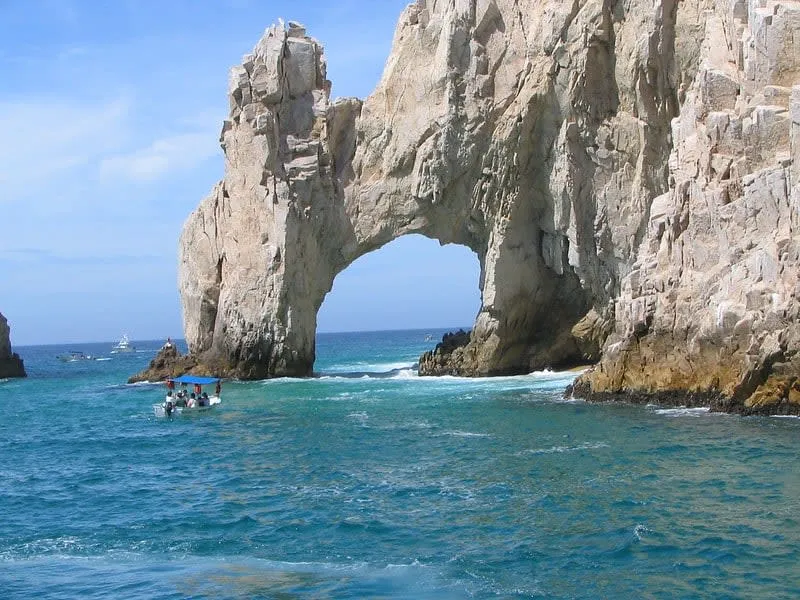
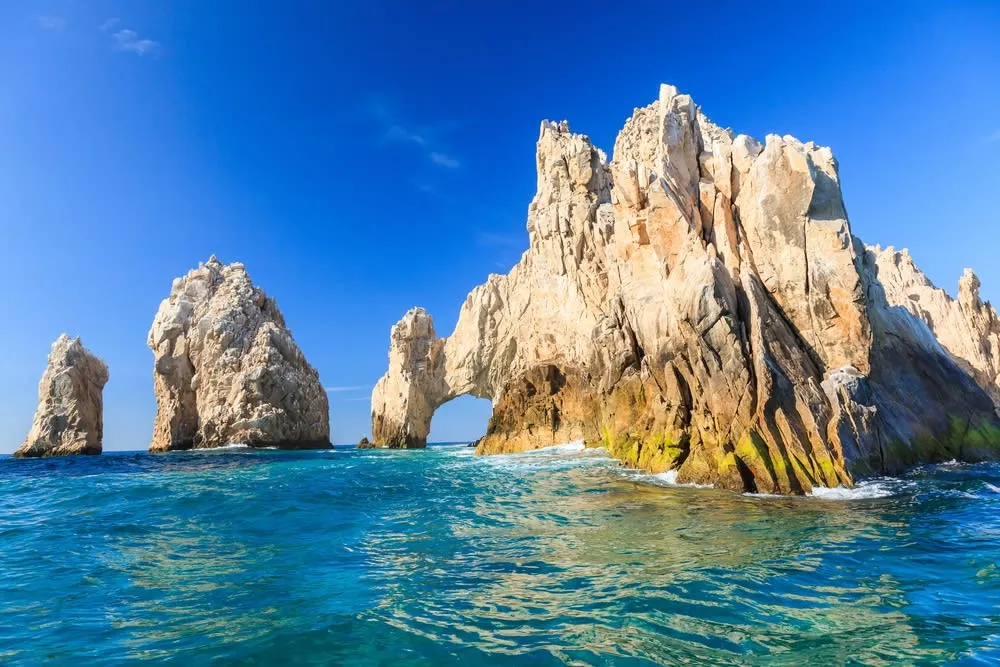
The marina. The clubs. The arch. Cabo San Lucas is where the bars are open until 4 AM, where cruise ships anchor in the bay, and where bachelor parties book the big fishing boats. It’s also where the most photographed landmark in Baja — El Arco at Land’s End — sits at the very tip of the peninsula.
Downtown Cabo San Lucas is a compact grid around the marina, walkable, touristy, loud in the evenings. The marina boardwalk has dozens of restaurants, all-inclusive pool clubs, water sports operators, and bars. The vibe: Cancun meets San Diego.
Best for: Nightlife, sportfishing, El Arco, water sports, all-inclusive resorts, bachelor/bachelorette trips, younger travelers.
San José del Cabo
30 km east of Cabo San Lucas via the Corridor (Highway 1). A colonial town with a 1730 Jesuit mission, a proper central plaza, and streets that feel like a functioning Mexican city rather than a resort park. The art district — roughly Obregón, Guerrero, and surrounding streets — has 30+ galleries, studios, and design shops. The Thursday Art Walk (November–June, 5-9 PM) is the best evening activity in all of Los Cabos: galleries open, wine served, working artists in residence.
The estero (estuary) at the edge of the hotel zone is a rare freshwater-saltwater mixing zone with herons, ospreys, and hundreds of migratory bird species.
Best for: Couples, honeymooners, art lovers, food focused travelers, anyone who wants Mexico with their resort trip, families with older kids.
The Corridor (Tourist Corridor)
The 30 km stretch of Highway 1 between the two towns is the main resort zone — where most high-end all-inclusive hotels sit, plus the calmer swimming beaches (Santa María Bay, Chileno Bay). No town center, but shuttle service from most hotels to both Cabo and San José. For a full comparison of Los Cabos vs other Mexican AI zones, see Best All-Inclusive Resorts in Mexico 2026.
El Arco: What You Actually Need to Know
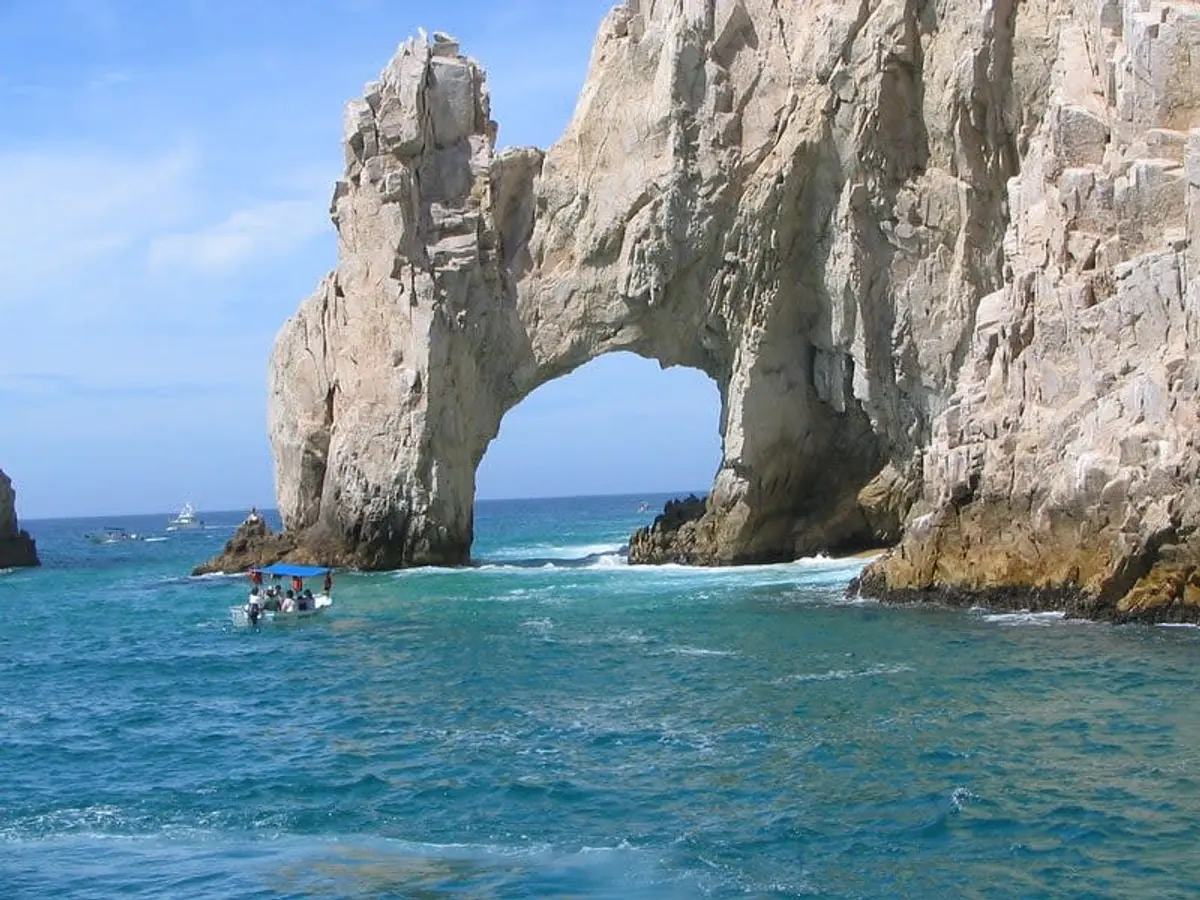
El Arco de Cabo San Lucas — the natural rock arch at the southern tip of the Baja Peninsula — is where the Pacific Ocean meets the Sea of Cortez. It’s one of Mexico’s most photographed landmarks.
How to see it:
- Water taxi from Medano Beach: The standard approach. 150-200 MXN round trip for a 20-minute boat ride around the arch. Boats run continuously from Medano Beach’s main pier. Negotiate before boarding.
- Glass-bottom boat tour: 200-300 MXN. Adds a look at the underwater rock formations.
- Kayak rental: 300-400 MXN/2 hours. Paddle yourself — the most intimate way to see it in calm conditions. Not recommended in choppy seas.
- Sailing/snorkeling cruise: Half-day tours from 800-1,500 MXN include El Arco + Chileno or Santa María for snorkeling.
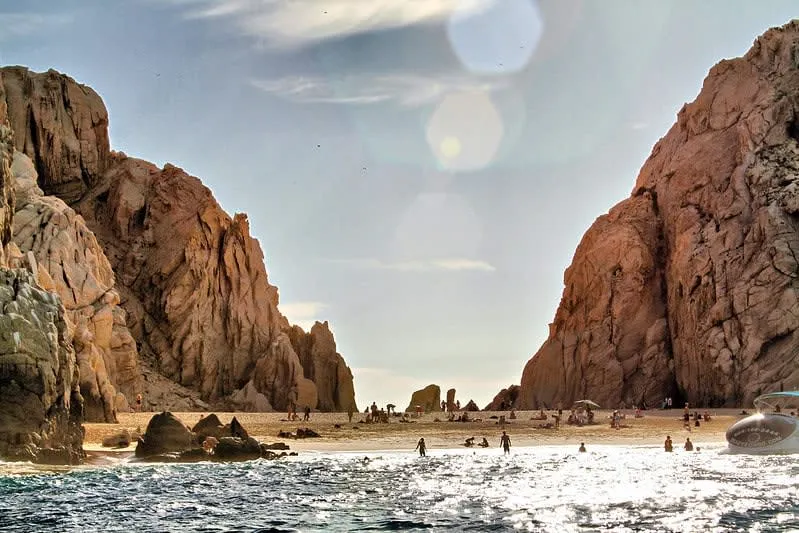
Lover’s Beach and Divorce Beach: Two beaches sit at El Arco — one on each side. Lover’s Beach (Sea of Cortez side) is calm, swimmable, and reachable by water taxi. Divorce Beach (Pacific side) has dramatic waves and powerful current. Do not swim at Divorce Beach — the Pacific swells are deceptive and several tourists drown here each year.
Beaches: The Critical Safety Warning
Most beaches in Los Cabos are not safe for swimming. The Pacific Ocean’s current at the tip of the Baja Peninsula is powerful, hidden rip currents develop quickly, and the shore break can be severe. This is not a small caveat — it’s the most important practical information about Cabo.
Safe Swimming Beaches
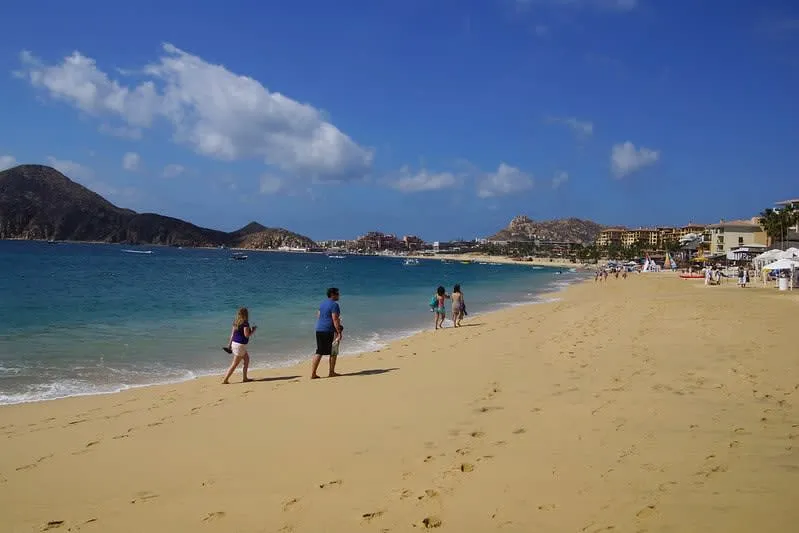
Medano Beach (Cabo San Lucas) The only swimming beach in Cabo San Lucas proper. Inside the bay, protected from Pacific current. Wide, sandy, lined with beach clubs and water sports operators. This is where everyone actually swims. Full Medano Beach guide →
Santa María Bay (Corridor, Km 12) One of the best snorkeling beaches in Los Cabos — a protected cove with rocky underwater formations and high fish density. Entry from a public parking area. No beach clubs (walk-in access). Calm water most of the year. The snorkeling trumps anything at Medano.
Chileno Bay (Corridor, Km 15) A public beach with a protected bay. Snorkeling, calm swimming, picnic facilities, and a marine sanctuary designation. Good for families. Free public access.
Hotel Zone Beaches, San José del Cabo The stretch of beach fronting the San José hotel zone has calmer conditions than the Pacific-facing Cabo beaches, though it’s still not as protected as Medano. More suitable for walking/sunbathing than serious swimming.
Dangerous Beaches (Do Not Swim)
- Divorce Beach (Land’s End, Pacific side) — rip currents, powerful shore break
- Playa Solmar (Pacific, adjacent to Solmar Hotel) — beautiful, genuinely dangerous, consistently flagged
- San Pedrito / Cerritos (further north) — Pacific swells, surfing only
The flag system: Red flag = no swimming. Most Los Cabos beaches that aren’t in protected bays fly red or yellow flags frequently. Respect the system — lifeguard coverage is inconsistent.
Top Things to Do in Los Cabos
Sportfishing
Cabo San Lucas has been called the Marlin Capital of the World — a title that’s been contested but reflects the genuine density of billfish in the surrounding waters. The Sea of Cortez’s warm, nutrient-rich currents produce:
- Marlin: Blue, black, and striped — peak July–November
- Dorado (mahi-mahi): Year-round, peak June–November
- Yellowfin tuna: Year-round
- Wahoo: August–December
- Roosterfish: April–October
Half-day sportfishing: $300-600/person on a shared boat. Full-day private charter: $800-2,000+. Multiple operators on the marina boardwalk — book the night before for same-day rates. Compare Los Cabos fishing charters on Viator for verified operators with trip insurance.
Whale Watching (December–April)
The Sea of Cortez and the Pacific waters off Los Cabos are winter grounds for humpback whales and migrating gray whales (gray whales pass through en route to their calving lagoons further up the Baja coast). December–February is peak season. Tours depart from the Cabo San Lucas marina: $60-100/person for a 2-3 hour tour. You can often see whales from the shore in peak season near the Corridor hotels.
Snorkeling: Cabo Pulmo (1.5 hours east)
Cabo Pulmo Marine Park is the highest-priority day trip from Los Cabos. A UNESCO World Heritage Site, one of the oldest living coral reefs on the Pacific coast of North America, and one of Mexico’s great conservation success stories — after fishing was banned in 1995, fish biomass increased 463% in 10 years.
The reef is completely different from the Caribbean (no table corals, more plate and brain corals, Pacific species). Bull sharks, giant manta rays, and enormous schools of jack fish. Entry: free. Snorkel rentals: 100-150 MXN. Driving: 1.5 hours east on Highway 1 past San José del Cabo.
The Art District, San José del Cabo
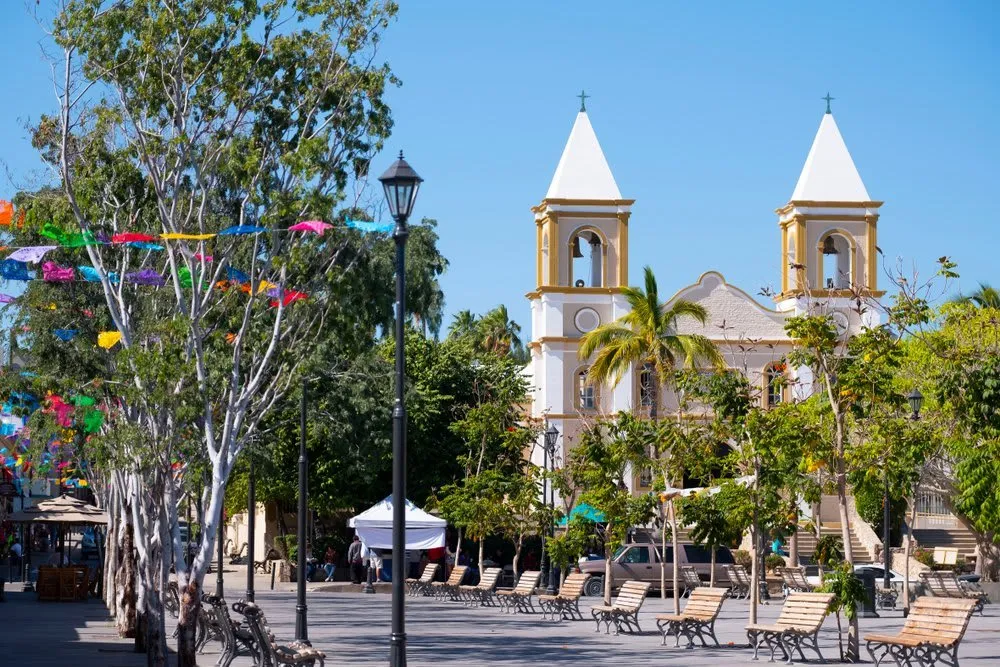
The art district around Avenida Obregón and Guerrero has more working galleries per block than most Mexican cities three times its size. Baja-influenced painting, ceramics, glass art, and sculpture. The Thursday Art Walk (November–June, 5-9 PM) is when galleries open with wine, artists are present, and the entire district activates — simultaneously the best free evening activity and the best way to understand why San José attracts artists.
The Jesuit mission church at the central plaza (Misión San José del Cabo Anuití, founded 1730) anchors the colonial center. The original mission was destroyed in a 1734 Pericú uprising — the current church dates from 1940 but contains original 18th-century artifacts.
Todos Santos (1 hour north)
Todos Santos is one of Mexico’s most unusual small towns — a former sugar cane production center turned artist colony, 90 km north of Cabo San Lucas on Highway 19. The town received Pueblo Mágico designation in 2006. Galleries, surf breaks at Playa Los Cerritos (12 km south of town), excellent restaurants, and the famously misclaimed Hotel California (the building predates the Eagles song and has no proven connection — it’s still worth a beer on the rooftop). A perfect half-day from Los Cabos. Todos Santos full guide →
Getting to Los Cabos
Los Cabos International Airport (SJD) is 13 km from San José del Cabo and 48 km from Cabo San Lucas. It receives direct flights from:
- USA: Los Angeles, San Francisco, Dallas, Houston, Phoenix, Chicago, Denver, Las Vegas, Seattle, New York, and 20+ more cities
- Canada: Toronto, Calgary, Vancouver (seasonal)
- Mexico City: 2 hours direct (Aeroméxico, Volaris, VivaAerobus — multiple daily)
Airport to Town
| Option | San José del Cabo | Cabo San Lucas | Notes |
|---|---|---|---|
| Official taxi | 650-800 MXN | 900-1,200 MXN | Fixed rates — ask for tarifa oficial |
| Shared shuttle | 300-400 MXN/person | 400-500 MXN/person | Pre-book online for cheaper rates |
| Private transfer | $45-60 USD | $60-80 USD | Worth it for 3+ people |
| Rental car | $30-60/day | $30-60/day | Best flexibility for Corridor/Cabo Pulmo |
Skip the timeshare sales people in arrivals. They offer free/discounted transport in exchange for attending a 90-minute presentation. They’re aggressive and the contracts are not in your favor. For rental cars, compare prices at Los Cabos Airport (SJD) on RentCars — the best rates are usually booked a week ahead.
Full airport transport breakdown: Los Cabos Airport Transportation Guide →
Getting Around Los Cabos
Los Cabos has no urban transit system connecting the two towns. Options:
Taxis: Plentiful in both towns. Always negotiate or confirm the rate before getting in. Standard Corridor trip: 200-400 MXN depending on starting point.
Rental car: The most flexible option if you’re doing day trips (Cabo Pulmo, Todos Santos, La Paz) or staying in the Corridor. Highway 1 between the towns is well-maintained. Get full insurance — Mexico’s highway system has tolls and occasional livestock crossings. Most standard credit card rental insurance doesn’t cover Mexico.
Resort shuttles: Most Corridor all-inclusive hotels run regular shuttles to Cabo San Lucas marina and San José del Cabo centro. Check your hotel’s schedule — often faster and cheaper than taxis for basic town visits.
Water taxis: For El Arco and Lover’s Beach from Cabo San Lucas — the only way to reach some beaches.
Los Cabos Budget Guide
Los Cabos is Mexico’s most expensive destination. Prices here reflect proximity to the US, a high concentration of luxury resorts, and a predominantly American tourist base accustomed to paying American prices.
| Category | Budget (San José centro) | Mid-Range (Corridor hotels) | Luxury all-inclusive |
|---|---|---|---|
| Accommodation | $60-110/night | $180-350/night | $400-900/night/person |
| Meals | $15-30/day (local spots) | $50-100/day | Included |
| Transport | $10-20/day (taxis) | $15-30/day | Often included |
| Activities | $30-80/day (fishing, El Arco) | $80-200/day | Often included |
| Daily total | $115-240 | $330-680 | $450-1,100 |
The San José budget hack: Stay in San José del Cabo’s centro histórico — guesthouses and boutique hotels at 40-50% of Cabo marina pricing. Take a taxi to Cabo for El Arco/Medano Beach, return for dinner on Obregón at a local restaurant. Same views, same fish, much less money.
Los Cabos Food Guide
Cabo San Lucas (Marina Area)
The marina boardwalk has 50+ restaurants competing for tourist business — quality ranges from excellent to tourist-trap. The best restaurants are slightly off the marina: look for places on streets parallel to the waterfront.
- Best food at Cabo San Lucas: Fresh seafood tacos, sashimi-grade tuna (the local fishing fleet makes the tuna supply exceptional), and marlin dishes. Marlin tacos (taco de marlin) with local pickled vegetables is the signature dish.
- What to skip: Chain restaurants with English-only menus and photos of the food.
San José del Cabo (Centro Histórico)
Far better food scene per dollar. Local restaurants around the central plaza and Calle Obregón serve authentic Baja dishes without marina pricing.
Baja-specific food you should eat:
- Machaca: Dried, shredded beef or venison — the northern Mexico classic. Baja machaca uses sea fish as well as beef.
- Almejas chocolatas: Chocolate clams from the Sea of Cortez — large, meaty, eaten raw with lime or grilled. A Baja delicacy.
- Langosta Puerto Nuevo style: Grilled split lobster from nearby Puerto Nuevo village — a Baja tradition. 200-400 MXN for a whole lobster at San José restaurants.
- Birria de chivo: Goat birria is a northern Mexico specialty. San José has excellent versions.
- Fish and shrimp tacos: Baja California Sur is where the fish taco was perfected. Crispy battered fish or grilled fish, cabbage slaw, crema, salsa.
Day Trips from Los Cabos
| Destination | Distance | Highlight |
|---|---|---|
| Cabo Pulmo | 1.5 hrs east | Pacific reef UNESCO site — best snorkeling/diving in Baja |
| Todos Santos | 1 hr north | Art colony, Pueblo Mágico, surfing at Cerritos |
| La Paz | 2.5 hrs north | State capital, whale shark swimming (Oct–Mar), Espíritu Santo Island |
| San Ignacio / Guerrero Negro | 5–7 hrs north | Grey whale calving lagoons — UNESCO (Jan–Apr) |
| East Cape (East of Cabo Pulmo) | 2+ hrs east | Deserted beaches, off-road adventure, sportfishing camps |
La Paz is the best day trip from Los Cabos if you’re not doing whale shark snorkeling from Cancun or Holbox. The Sea of Cortez whale sharks around La Paz operate October–March — a completely different season from the Holbox population. Tour operators in La Paz take small groups to swim with 8-12 meter whale sharks in calm, clear water. It’s a 2.5-hour drive from Cabo but worth overnighting. La Paz also has Balandra Beach (voted Mexico’s most beautiful beach repeatedly), Espíritu Santo Island biosphere reserve, and a real Mexican city atmosphere that Los Cabos lacks. See our La Paz travel guide for the full breakdown including whale shark booking, beaches, and how the two cities compare.
Where to Stay in Los Cabos
Cabo San Lucas (Marina Area)
Close to El Arco, water taxis, nightlife. Best for: groups, bachelor/bachelorette, anyone who wants the Cabo nightlife experience. Price range: $150-400/night for standard hotels; $300-800+ for luxury marina properties.
San José del Cabo (Centro Histórico)
Colonial boutique hotels, quieter atmosphere, best restaurant access. Best for: couples, art travelers, families, anyone wanting authentic Mexico alongside resort amenities. Price range: $80-200/night boutique hotels.
The Corridor (Between the Two Towns)
Where most large all-inclusive resorts are located — Hyatt Ziva, Grand Velas, One&Only Palmilla, Montage. Direct beach access (Chileno Bay, Santa María Bay), resort shuttle to both towns. Best for: all-inclusive family trips, honeymoons, couples wanting beach resort without the Cabo party noise. Price range: $250-1,000+/night/person all-inclusive.
If you already know your trip style, book by zone instead of just chasing the lowest nightly rate. Cabo San Lucas works best for nightlife, Medano Beach swimming, and marina access, San José del Cabo is better for walkable dinners and a quieter art-district base, and the Corridor is the right move for beach resorts and all-inclusive trips.
Use the search that matches your actual stay decision: start with Medano Beach / marina hotels if you want swimmable water and nightlife, switch to San José del Cabo boutique hotels if walkable restaurants and a calmer town matter more, and price the Corridor separately if the whole point is a resort stay with beach service and shuttle access.
Best Time to Visit Los Cabos
| Month | Weather | Ocean | Crowds | Notes |
|---|---|---|---|---|
| December | ⭐⭐⭐⭐⭐ Dry, 26°C | Mild, whale season begins | High (Christmas peak) | Expensive |
| January | ⭐⭐⭐⭐⭐ Dry, 24°C | Cool, whale season peak | Moderate | Best whale watching |
| February | ⭐⭐⭐⭐⭐ Dry, 25°C | Cool-mild, whales | Moderate | Excellent overall |
| March | ⭐⭐⭐⭐ Dry, 27°C | Warming, whales ending | High (Spring Break) | Crowds in Cabo |
| April | ⭐⭐⭐⭐ Dry, 29°C | Warm, whale season over | Moderate | Good value |
| May | ⭐⭐⭐ Warming, 32°C | Warm, fishing peaks | Low | Value month |
| June | ⭐⭐⭐ Hot, 34°C | Warm, marlin begins | Low | Hot, some rain |
| July | ⭐⭐ Hot, 35°C | Warm, great fishing | Moderate | Hurricane risk starts |
| August | ⭐⭐ Hot, 35°C | Hot, fishing excellent | Moderate | Hurricane risk |
| September | ⭐ Hurricane risk | Choppy | Very low | Avoid if possible |
| October | ⭐⭐ Cooling, 32°C | Calming | Very low | Chubascos risk |
| November | ⭐⭐⭐⭐ Dry, 28°C | Mild, whale season near | Low | Best value month |
The clear winners: November (best value, ideal temperatures, whale season starting, low crowds) and January–February (peak whale watching, perfect beach weather, post-Christmas pricing).
For a complete month-by-month breakdown of weather, prices, whale watching seasons, and what to skip, see our Best Time to Visit Los Cabos guide.
Safety in Los Cabos
Los Cabos is one of Mexico’s safest tourist destinations. The tourist areas (Cabo marina, San José centro, Corridor hotel zone) are well-policed and busy enough that petty crime is the main concern rather than violent crime.
Practical safety notes:
- Beach safety is the real risk — more tourists are harmed by Pacific currents than by crime. Follow the flag system strictly.
- The marina area in Cabo San Lucas can get rowdy late at night — standard bar-district awareness
- Timeshare presentation pressure is intense; it’s legal but exhausting if you engage
- Official taxis from hotel stands are safe; random street hailing is fine in the tourist zones
For full Mexico safety context: Is Mexico Safe? →
Useful Links for Planning
- What to Eat in Los Cabos 2026 → — Fish tacos, chocolate clams, aguachile negro, Baja Med, and where locals eat
- Los Cabos Nightlife 2026 → — Cabo Wabo, Mandala, the Marina strip, and why BCS has no Ley Seca
- Best Time to Visit Los Cabos →
- Medano Beach Complete Guide →
- Things to Do in Los Cabos 2026 →
- Day Trips from Los Cabos 2026 →
- Things to Do in La Paz 2026 →
- San José del Cabo Things to Do →
- Todos Santos Baja Guide →
- Baja California Sur: 15 Best Places →
- Car Rental in Mexico Guide →
- Mexico City to Los Cabos 2026 →
- Mexico Entry Requirements (US Citizens) →
- Mexico Packing List 2026 →
- Is Mexico Safe? →
- Mexico Travel Budget →
- Puerto Vallarta Travel Guide →
- Cancun vs Los Cabos 2026 → — Full comparison: beaches, ruins, sportfishing, prices
- Puerto Vallarta vs Los Cabos 2026 → — Pacific coast comparison: culture vs luxury, LGBTQ+ scene, whale watching, budget breakdown
- Cancun to Los Cabos 2026 → — Direct 2.5-hour flight, open-jaw routing, SJD airport transfer guide
- Cancun Travel Guide →
- Tulum Travel Guide →
Ready to book? Browse all Los Cabos tours on Viator — whale watching, sportfishing, El Arco snorkeling, Cabo Pulmo day trips, and Todos Santos excursions.