Mexico City Travel Guide 2026: Neighborhoods, Food, Safety & What to Actually Do
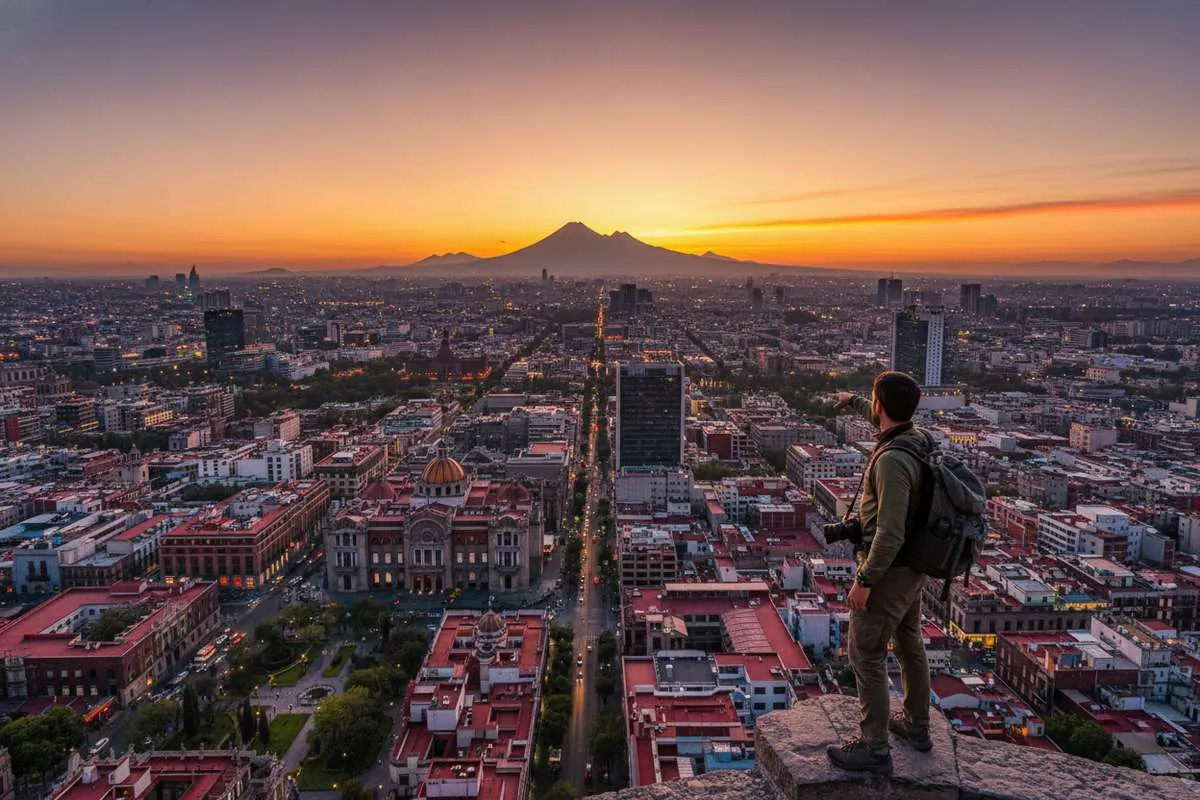
Mexico City (CDMX) is the capital of Mexico, with 9.2 million residents in the city proper and 21.7 million in the metro area — the largest Spanish-speaking city in the world. It sits at 2,240m (7,350ft) elevation in the Valley of Mexico, founded on the site of the Aztec capital Tenochtitlan, which Spanish conquistadors described in 1519 as more magnificent than any European city of its time.
This is a city with 180+ museums, a food scene that has placed multiple restaurants on the World’s 50 Best list, and neighborhoods so distinct that moving between them feels like visiting different cities. It’s also the most misunderstood major destination in Mexico — tourists who skip it have no idea what they’re missing.
Understanding Mexico City: The Basics
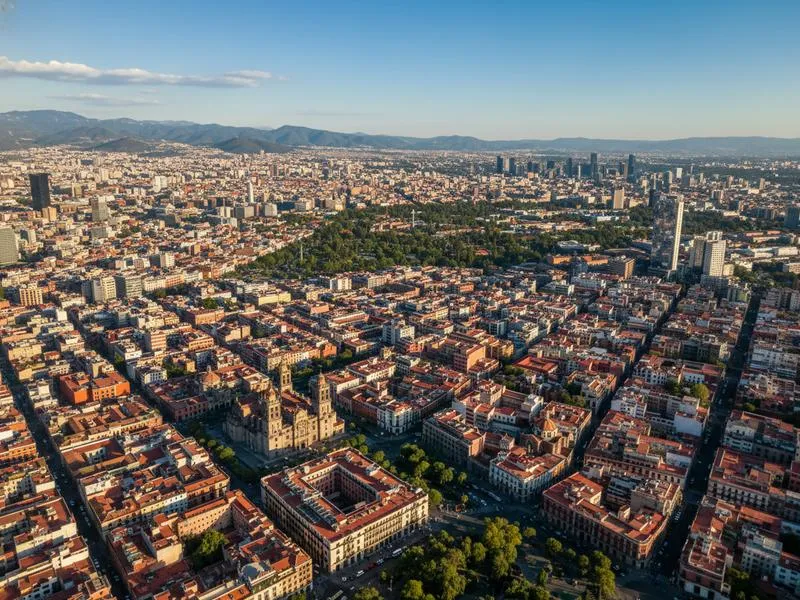
Mexico City occupies the dried lakebed of Lake Texcoco. The Aztecs built Tenochtitlan as an island city connected to shore by causeways. When Spain conquered it in 1521, they drained the lake and built colonial architecture on top — which explains why churches tilt and sidewalks buckle throughout the Centro Histórico. The soft lakebed soil shifts continuously.
The city is divided into 16 alcaldías (boroughs), but tourists focus on a handful of central neighborhoods. Understanding which is which saves time and shapes your whole trip.
Quick facts:
| Fact | Detail |
|---|---|
| Full name | Ciudad de México (CDMX) |
| Population | 9.2M city / 21.7M metro area |
| Altitude | 2,240m (7,350ft) |
| Airport | AICM (MEX) — 5km from Centro; new AIFA is 50km north |
| Currency | Mexican peso (MXN) |
| Time zone | UTC-6 (same as Chicago) |
| Main language | Spanish |
| Tap water | Not safe to drink |
Best Neighborhoods to Explore
Centro Histórico: The Historic Heart
The Centro Histórico is where Mexico City began and remains its symbolic heart. The massive Zócalo (main plaza) is one of the largest public squares in the world, flanked by the Metropolitan Cathedral (under construction since 1573) and the National Palace. Beneath the plaza lie excavated ruins of the Aztec Templo Mayor — you’re walking above a conquered civilization.
Pedestrian street Francisco I. Madero connects the Zócalo to Bellas Artes. The ornate Palacio de Correos (post office) is worth seeing for its architecture alone. The area is chaotic during the day and transforms into something more relaxed at night.
- Must-see: Templo Mayor + Museum, Palacio de Bellas Artes, Metropolitan Cathedral, Palacio Nacional murals (Diego Rivera)
- Best for: History, architecture, first-time visitors
- Avoid: Random taxis at night — use Uber from hotels
Roma and Condesa: The Neighborhood Everyone Talks About
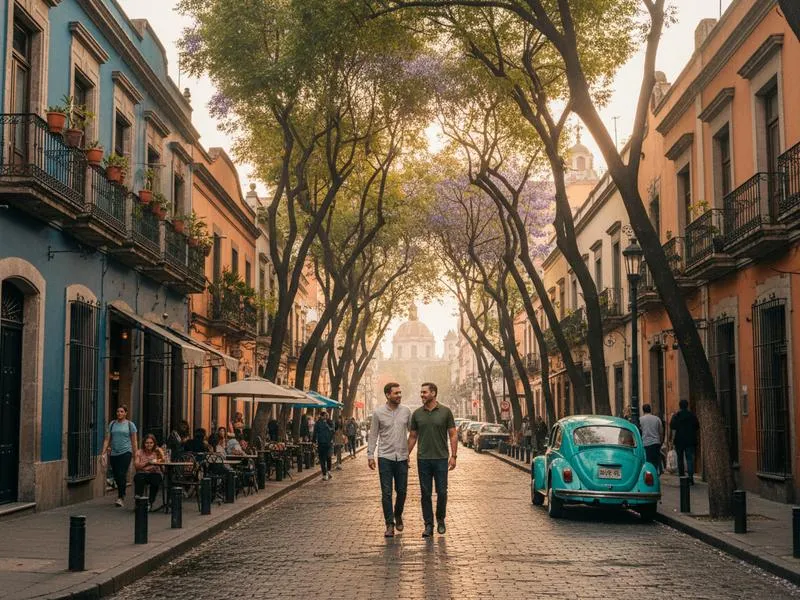
Adjacent Roma and Condesa represent CDMX’s most photogenic face. Developed in the early 20th century, they feature tree-lined boulevards, Art Nouveau and Art Deco architecture, and a density of restaurants, cafes, and galleries that rivals any neighborhood in Latin America.
Roma Norte trends artier and grittier — the best independent restaurants, natural wine bars, and design stores. Condesa is slightly more residential and family-friendly, centered around Parque México and Parque España.
Both are highly walkable. Distance between Roma and Condesa: about 15 minutes on foot.
Polanco: Luxury Mexico City
Polanco is CDMX’s most affluent neighborhood, home to luxury hotels (Four Seasons, St. Regis, W Hotel), designer boutiques along Avenida Presidente Masaryk (called “the Mexican Rodeo Drive”), and world-class restaurants including Pujol and Quintonil.
The Museo Soumaya — billionaire Carlos Slim’s private collection in a striking silver building — is free and houses 66,000 pieces including the largest collection of Rodin sculptures outside Paris.
Coyoacán: Colonial Charm South of the Center
South of the center, Coyoacán feels like a village swallowed by the metropolis. Its colonial-era plazas attract locals on weekends — a more lived-in atmosphere than the tourist-polished Centro. This is where Frida Kahlo lived and where León Trotsky was assassinated.
The Casa Azul (Museo Frida Kahlo) is the city’s most visited museum. Book tickets online at least 2 weeks ahead — it sells out consistently. The Mercado de Coyoacán is one of the city’s most authentic food markets.
Chapultepec: Urban Park + Museum Cluster
Chapultepec isn’t a neighborhood — it’s a 686-hectare urban park (one of the largest in the Western Hemisphere) that houses multiple essential attractions in one walkable area: the Museo Nacional de Antropología, Chapultepec Castle, a modern art museum, the city zoo (free), and the Papalote Museo del Niño.
Combine Chapultepec with Polanco (adjacent) for a full day.
San Ángel: Saturday Bazaar
San Ángel is an upscale colonial neighborhood primarily visited for the Bazar del Sábado (Saturday Bazaar) — one of Mexico City’s best craft and art markets, operating every Saturday in a 17th-century mansion. The cobblestone streets and Jacaranda-lined Plaza del Carmen make it one of the most photogenic areas in the city.
Food: Why Mexico City Has No Rival
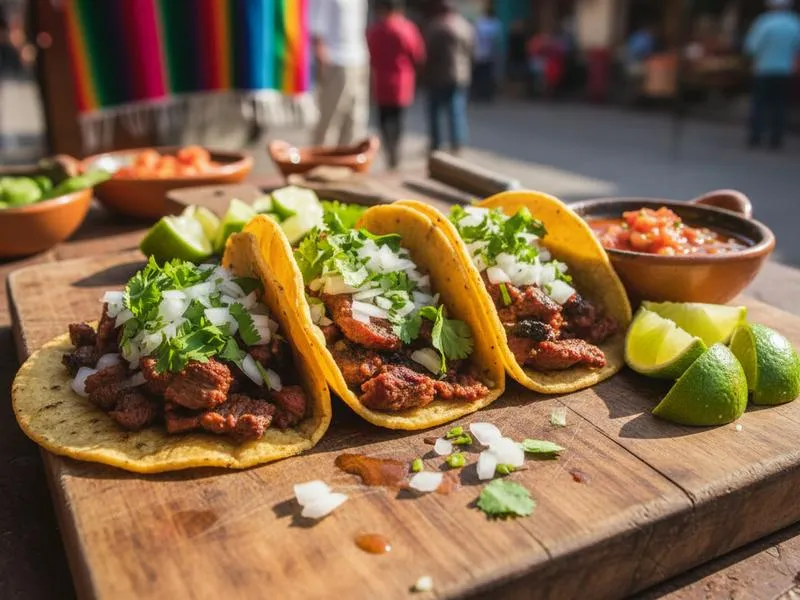
Mexico City’s food scene is extraordinary by any global standard. It’s home to multiple restaurants on the World’s 50 Best list (Pujol, Quintonil) and an entirely separate ecosystem of street food that feeds 21 million people daily with precision and craft.
Street Food: Where to Start
Street food in CDMX is not “budget food” — it’s often the best food available. The city runs on specific street food rhythms:
- Morning: Tacos de canasta (basket tacos: mole, chicharrón, bean) sold from bicycle carts
- Morning/lunch: Tacos de guisado from market stalls — choose from 10+ daily fillings
- All day: Esquites (corn cups with mayo, cheese, chili, lime) and elotes
- Night: Tacos al pastor — pork marinated in guajillo chilies on a vertical trompo spit, with fresh pineapple
Essential street foods:
- Tacos de suadero — CDMX’s signature: slow-cooked beef brisket, sliced thin, typically at taquerías near Mercado de Medellín
- Quesadillas with flor de calabaza (squash blossom) or huitlacoche (corn fungus) — unique to the capital region
- Tortas — Mexican sandwiches; Torta Pueblana from street stands is $2–3 and filling
- Tamales — morning staple, sold from steaming pots or bicycle carts; pink (sweet) or savory wrapped in corn husk
- Tlayuda — Oaxacan flatbread spread with black beans and toppings, widely available in CDMX
Markets: How Locals Actually Eat
Every neighborhood has its market, and market stalls offer some of the best and cheapest meals.
| Market | Character | Best for |
|---|---|---|
| Mercado de San Juan | Upscale, imported goods, exotic meats | Wagyu tacos, jamón ibérico, exotic seafood |
| Mercado Roma | Modern food hall, Instagram-friendly | Variety, craft beer, upscale street food |
| Mercado de Coyoacán | Traditional, local | Authentic tlayudas, seafood tostadas, aguas frescas |
| Mercado de Medellín | South American + Mexican mix | Sunday breakfast, fresh produce |
| Mercado de Jamaica | Flower market + food stalls | Breakfast among locals, flowers |
Full meal at a market stall: 60–150 MXN ($3–7.50 USD).
Fine Dining: The World-Class Tier
CDMX has earned global recognition for its fine dining. The key names:
- Pujol (Enrique Olvera): Mexico’s most famous restaurant. “Mole madre” — a mole with elements aged 1,000+ days alongside a fresh mole — is the dish. Reserve 3–6 weeks ahead at pujol.com.mx. ~$200 USD/person.
- Quintonil (Jorge Vallejo): Seasonal Mexican, foraging-focused, equally acclaimed. ~$150 USD/person.
- Contramar: The best mariscos (seafood) restaurant in the city. Tuna tostadas are legendary. Expect a 1-hour wait for lunch without a reservation; they don’t take dinner reservations.
- Máximo Bistrot: Farm-to-table, French-Mexican. Popular with expats and food industry.
- El Hidalguense: For the best barbacoa in CDMX (lamb slow-cooked in agave, served Saturday–Sunday only).
180 Museums: Mexico City’s Defining Fact
Mexico City has more museums per capita than any other city in the world. 180+ museums sounds like a statistic — it becomes real when you realize you could spend three weeks here and not run out of new museums to explore.
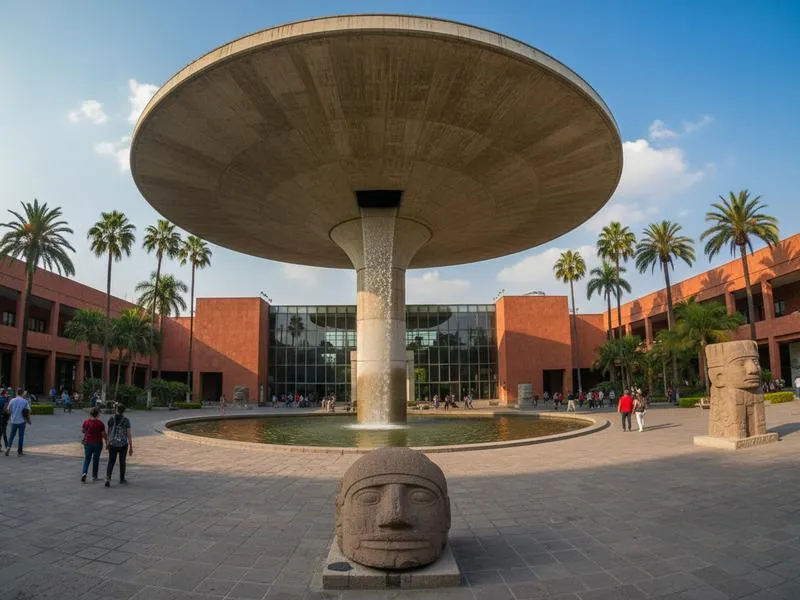
The Essential Museums
Museo Nacional de Antropología (MNA): The single most important museum visit in Mexico. One of the world’s great anthropological collections — the Aztec Sun Stone (not a “calendar”), the Piedra de Tizoc, Maya artifacts, Olmec heads (replicas), and the contents of Pakal’s tomb. Plan 3–4 hours minimum. Entry: 85 MXN ($4.25 USD). Located in Chapultepec Park. Closed Mondays.
Museo Frida Kahlo (Casa Azul): Frida Kahlo’s birthplace, home, and final resting place. The most visited museum in the city — book tickets 2–4 weeks ahead at museofridakahlo.org.mx. Entry: 270 MXN ($13.50). Tuesday–Sunday 10 AM–6 PM.
Palacio de Bellas Artes: Both an architectural masterpiece (Art Nouveau exterior, Art Deco interior) and working performing arts venue. The interior murals by Diego Rivera, David Alfaro Siqueiros, and Rufino Tamayo are the main draw. Free to enter the lobby; entry to exhibition floors: 85 MXN. Check the schedule for Ballet Folklórico de México performances.
Museo Soumaya: Billionaire Carlos Slim’s private collection — 66,000 pieces housed in a striking silver building. Completely free. Highlights: the largest Rodin collection outside Paris, coins spanning 3,000 years of history, European masters. Located in Polanco.
Museo Tamayo: One of the best modern and contemporary art collections in Latin America. Located in Chapultepec Park. Entry: 85 MXN.
Archaeological Sites Within the City
You don’t need to leave CDMX to encounter pre-Hispanic Mexico:
- Templo Mayor: Excavated heart of Tenochtitlan, beside the Zócalo. The Coyolxauhqui Stone (moon goddess) and thousands of artifacts. Entry + museum: 85 MXN.
- Tlatelolco (Plaza de las Tres Culturas): Site of the 1968 student massacre and the last Aztec battle. Three civilizations visible simultaneously: Aztec pyramid, colonial church, and 1960s apartment block. Free.
- Cuicuilco: One of the oldest pyramids in the Valley of Mexico (900 BCE), now surrounded by a shopping center and university. Entry: Free.
- Xochimilco: The ancient Aztec canal system, still functional as “floating gardens.” UNESCO World Heritage Site. Trajinera boat: 350–500 MXN per boat per hour.
Day Trips from Mexico City
Mexico City’s location puts remarkable destinations within 1–4 hours.
| Destination | Distance | How to Get There | Entry |
|---|---|---|---|
| Teotihuacan | 50km NE | Bus from Terminal Norte (1.5hr, 60 MXN) | 85 MXN + 75 MXN INAH = 160 MXN |
| Puebla | 130km E | ADO bus from TAPO (2hr, 200–280 MXN) | Free city; Cholula pyramid 85 MXN |
| Tepoztlán | 80km S | Bus from Taxqueña (1.5hr, 100 MXN) | Free |
| Taxco | 180km SW | ADO bus from Sur terminal (3hr, 230 MXN) | Free |
| Valle de Bravo | 150km W | Bus from Observatorio (2.5hr, 170 MXN) | Free |
| Grutas de Tolantongo | 300km N | Bus + taxi (4–5hr total) | 120 MXN entry |
| Cuernavaca | 85km S | ADO from TAPO (1.5hr, 170 MXN) | Palacio de Cortés: free |
Teotihuacan: The Essential Day Trip
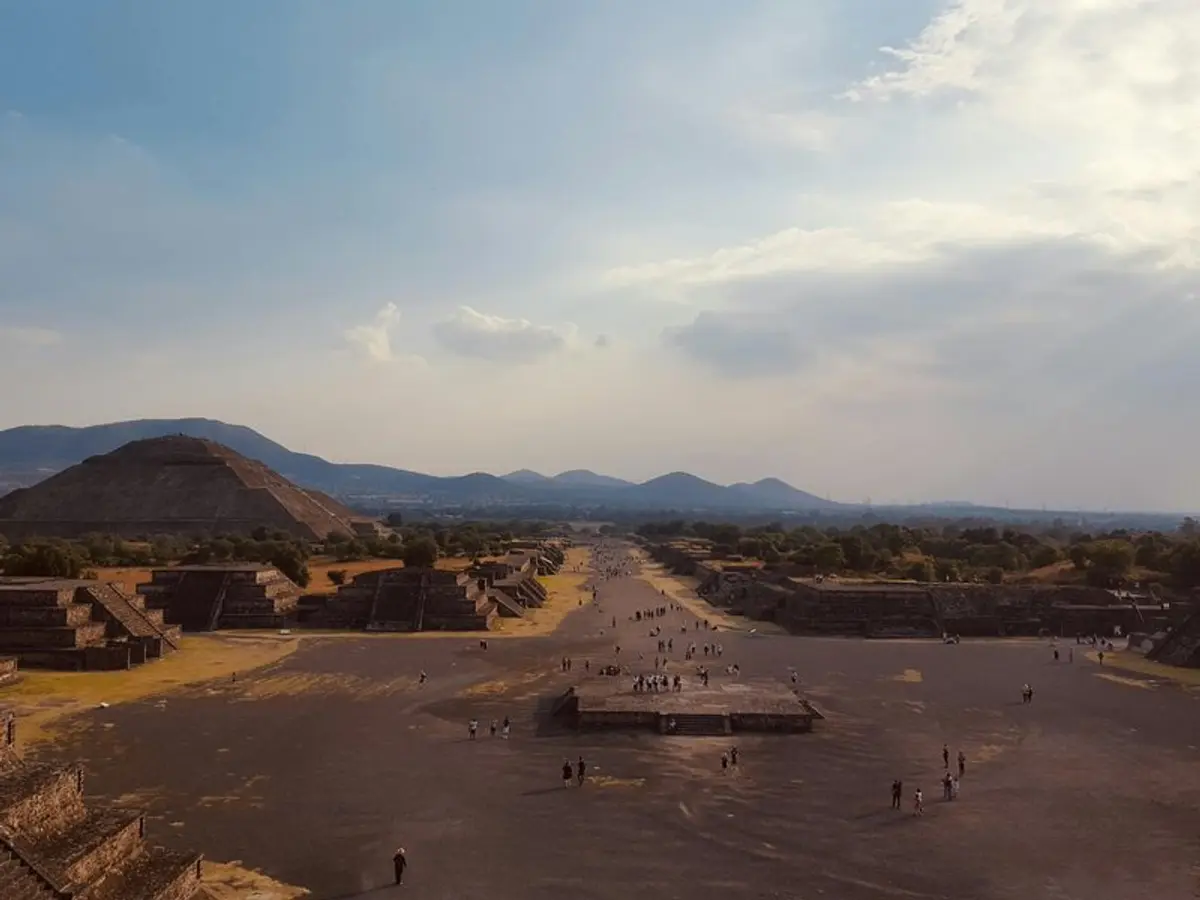
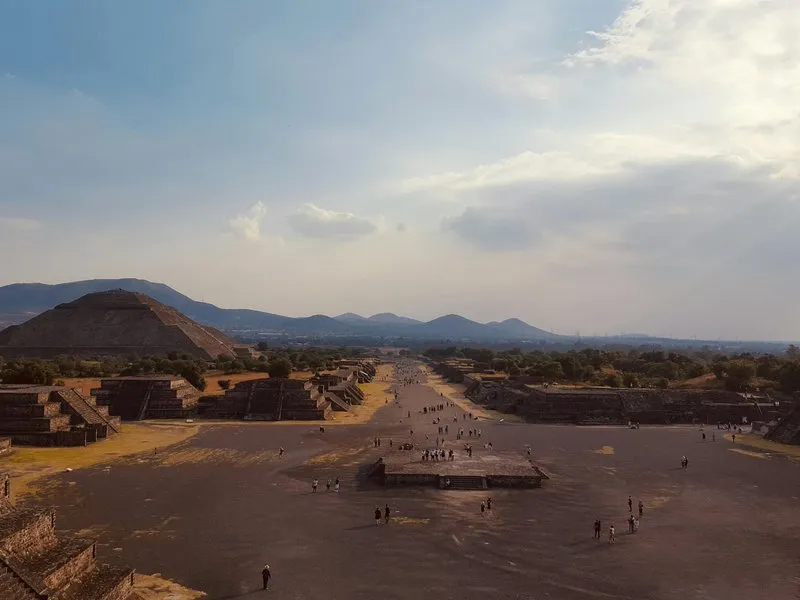
The Pyramids of the Sun and Moon sit 50km northeast — Mexico’s most visited archaeological site. This UNESCO World Heritage Site was once one of the largest cities in the ancient world (population 100,000+, circa 200–600 CE). No one knows who built it.
Practical: Take the bus from Terminal Norte (not a tour), arrive at 8 AM, climb the Pyramid of the Sun (65m, 248 steps — still climbable unlike Chichen Itza), walk the 4km Avenue of the Dead before the heat and crowds arrive. Be done by noon. Total cost independently: ~$12 USD. If you prefer a guided tour with transport, browse Mexico City day tours on Viator — skip-the-line and sunrise options available.
Puebla and Cholula
Colonial Puebla (2hr east) is the birthplace of mole poblano and chiles en nogada. The nearby archaeological site of Cholula has the world’s largest pyramid by volume — with a Spanish church built on top of it. The Grandes Pirámides de Cholula entry is 85 MXN; you can walk tunnels through the pyramid’s interior. See the complete Puebla travel guide for the full picture.
Where to Stay in Mexico City
Neighborhood choice shapes your entire experience.
If you want the easiest first trip, start with Roma Norte or Condesa. If you care more about museums, luxury hotels, and polished service, jump straight to Polanco. If budget matters more than nightlife, compare Centro Histórico against Roma before you book — the price gap can cover several museum tickets, tacos, and Uber rides.
Coming for the November festival weekend? Start with the Corona Capital 2026 guide for dates, venue logistics, and planning deadlines, then use our where to stay for Corona Capital guide to compare Roma, Condesa, Polanco, and options closer to the Autódromo.
| Neighborhood | Best For | Price Range (USD/night) |
|---|---|---|
| Roma Norte | First-timers, food lovers, boutique hotels | $60–150 |
| Condesa | Couples, quiet walks, tree-lined streets | $70–180 |
| Polanco | Luxury travelers, business, fine dining | $150–600+ |
| Centro Histórico | History buffs, budget travelers | $25–120 |
| Coyoacán | Quieter stay, local feel | $40–130 |
| San Ángel | Romantic, upscale, weekend visits | $80–200 |
Top picks by budget:
- Budget: hostel or guesthouse in Centro Histórico ($25–40/night) or Roma ($40–60)
- Mid-range: Boutique hotels in Roma Norte ($90–150) — excellent design-forward options
- Luxury: Las Alcobas or St. Regis in Polanco ($300–600); Four Seasons Reforma ($400–800)
Once you know whether you want leafy walkability, luxury service, or a cheaper historic-center base, compare live prices by neighborhood — Mexico City rates swing a lot on weekends, Formula 1 week, major concerts, and holiday weekends.
Getting Around Mexico City
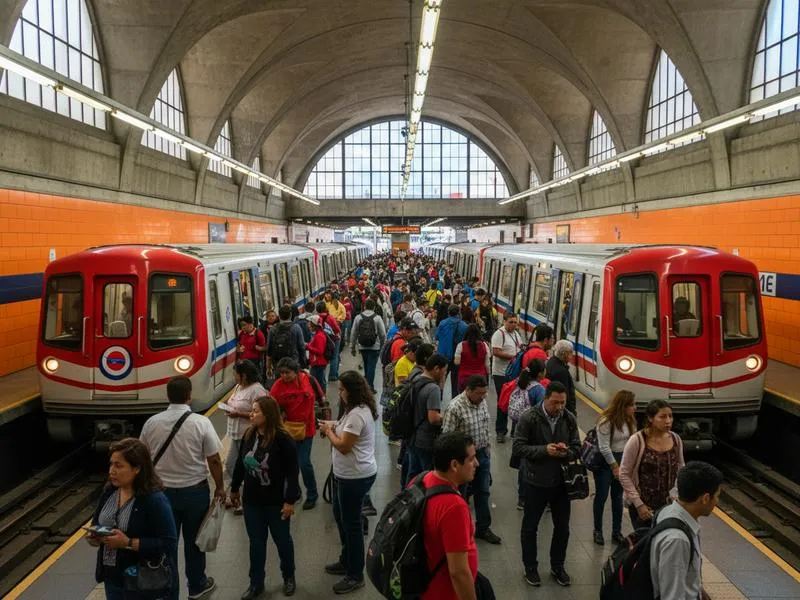
Metro: The Best Way to Cross the City
CDMX’s metro carries 4 million passengers daily — one of the world’s busiest systems and one of its cheapest. Single ride: 6 MXN ($0.30 USD). The system uses pictorial station icons, so navigation is possible without reading Spanish.
12 lines cover all major tourist neighborhoods. Key lines:
- Line 3 (Olive): Bellas Artes → Coyoacán → Universidad
- Line 2 (Blue): Zócalo ↔ Taxqueña (for Tepoztlán/Cuernavaca buses)
- Line 7 (Orange): Polanco ↔ Barranca del Muerto
Avoid rush hour: 7–9 AM and 6–8 PM — trains pack beyond US subway standards.
Uber and DiDi
Uber and DiDi operate extensively and are the recommended option for tourists at night or when carrying luggage. Prices: $2–8 USD for most in-city trips. No cash option required — pay by app.
Never hail a random street taxi — CDMX has had serious issues with “pirate taxis” (fake cabs). This is essentially the only safety rule that matters in the tourist zones.
Walking
Roma, Condesa, and the Centro Histórico are all highly walkable. Distances between neighborhoods are substantial — Roma to Coyoacán is 7km (1.5hr walk or 20 min metro). What looks close on a map takes time. Factor in the altitude: walking feels more tiring than at sea level.
Bike
CDMX’s Ecobici bike-share system has 480+ stations across central neighborhoods. Great for Roma→Condesa→Polanco circuits. Day pass: 180 MXN ($9 USD) at any station or via app.
Practical Information
Safety
Mexico City is safe for tourists in the areas described above. The US State Department rates CDMX at Level 2 (Exercise Increased Caution) — the same as France, Germany, and Japan. Millions of visitors come annually without incident. The key rules: Uber > taxis, don’t display expensive equipment, avoid the metro during rush hour if carrying luggage.
For broader Mexico travel safety context, see our Is Mexico Safe guide and Mexico Travel Advisory 2026.
Budget Guide
| Category | Budget | Mid-range | Luxury |
|---|---|---|---|
| Accommodation | $25–50 | $80–150 | $300–600+ |
| Food (per day) | $10–20 (street + market) | $30–60 (restaurants) | $80–250 (fine dining) |
| Transport | $2–5 (metro + occasional Uber) | $10–20 | $30–60 (private car) |
| Activities | $5–15 (most museums are cheap) | $20–40 | $50–200+ |
| Daily total | $42–90 | $140–270 | $460–1,100+ |
Altitude Tips
At 2,240m (7,350ft), CDMX sits higher than Denver. Common symptoms: headaches, shortness of breath, fatigue. Prevention:
- Hydrate aggressively (2L+ water on day 1)
- Skip alcohol for the first 24 hours
- Don’t overexert on arrival day
- Take ibuprofen if headache develops
Most people adjust fully within 48 hours.
Best Time to Visit
| Period | Why |
|---|---|
| Oct–Nov | Perfect weather + Day of the Dead (Nov 1–2) — city’s most spectacular cultural event |
| Feb–Apr | Dry, warm, jacaranda bloom (Mar) at Viveros de Coyoacán |
| Nov–Jan | Festive season, good weather, Christmas decorations in Centro |
| Jun–Sep | Rainy season (afternoon showers only), lower prices, fewer tourists |
| Holy Week (Semana Santa) | Iztapalapa Passion Play (2M people, Good Friday) — see Semana Santa in Mexico City guide |
For a full month-by-month breakdown, see our Best Time to Visit Mexico City guide.
Air Quality
At altitude, CDMX sometimes issues contingencias ambientales (air quality alerts) during winter temperature inversions (Dec–Feb). On alert days, car restrictions apply. Check Calidad del Aire México app if visiting in winter.
Suggested Itineraries
3 Days: Essential CDMX
- Day 1: Centro Histórico (Zócalo + Templo Mayor + Metropolitan Cathedral + Bellas Artes) → evening in Roma Norte
- Day 2: Chapultepec (Anthropology Museum 3 hrs) + Polanco afternoon + Museo Soumaya (free) → Polanco dinner
- Day 3: Coyoacán (Casa Azul + Mercado + plazas) → Xochimilco trajinera
5 Days: With Teotihuacan
Add Day 4: Teotihuacan (full day — take the 8 AM bus). Day 5: Roma Norte deep dive (markets, galleries, cafes, Contramar if budget allows). For evening plans, the Mexico City nightlife guide covers every neighborhood from mezcal bars in Roma Norte to high-end clubs in Polanco.
7+ Days: Comprehensive
Add: Puebla + Cholula day trip. San Ángel Saturday Bazaar. Tlatelolco. More neighborhoods. The city rewards extended stays more than almost anywhere.
For more Mexico itinerary ideas, see our 10 Days in Mexico guide and 2 Weeks in Mexico guide.
Quick Links: Mexico City Deep Dives
- Mexico City Airport Transportation 2026 — Uber vs taxi vs metro, Felipe Ángeles guide
- Best Time to Visit Mexico City — jacarandas, festivals, month-by-month
- Mexico City Food Guide — markets, street food, where to eat by neighborhood
- What to Eat in Mexico City → — 30 essential dishes: tacos al pastor, guajolotas, pozole, chilaquiles, and where to find each one
- Is Mexico Safe for Tourists? — honest safety breakdown by state
- Mexico Travel Advisory 2026 — current US State Department ratings
- How Much Does Mexico Cost? — daily budgets for every travel style
- Mexico Packing List 2026 — what to bring for a city trip
- Mexico City to Querétaro — ETN/Primera Plus bus from Terminal Norte (2.5–3.5 hrs, 200–500 MXN), driving MEX-57D + Bernal/Tequisquiapan detour
- Mexico City to Puebla — ADO bus every 15 min from TAPO (2 hrs, 180–280 MXN), driving via Cholula, day trip guide
- Mexico City to Oaxaca — flights, overnight bus, driving: all options with 2026 prices
- Mexico City to Guadalajara — flight (1 hr) vs ETN bus (5.5 hrs) vs driving via Morelia
- Mexico City to Cancun — Mexico’s busiest domestic route: flights from 600 MXN (2h 15min), MEX vs AIFA guide
- 10 Days in Mexico Itinerary — CDMX + Oaxaca or Yucatán
- 2 Weeks in Mexico Itinerary — longer circuit with CDMX
Ricardo Sanchez is a Mexico-based travel writer who has lived in and around Mexico City for years. mexicotravelandleisure.com is an English-language guide to Mexico travel built on firsthand experience.