Things to Do in Álamos 2026: 20 Best Activities in Sonora's Silver Town
Álamos is a colonial silver town that most Mexico travelers have never heard of. Located in the sierra foothills of southern Sonora, it sits 53km east of the Nogales–Mazatlán highway at the end of a single mountain road — close enough to route easily, remote enough that most people drive past.
The silver was found in 1683. The wealth it produced over the following two centuries built a compact colonial city that has changed surprisingly little. Churches, mansions, and cobblestone plazas from the 1700s survive intact. When the silver ran out in the early 20th century, Álamos stopped growing — which is why it’s preserved.
The second reason to come: birds. The surrounding Sierra de Álamos-Río Cuchujaqui biosphere hosts extraordinary concentrations of migratory birds from November through April, plus year-round populations of wild military macaws.
Quick Overview: 20 Things to Do in Álamos
| # | Activity | Time | Best Season |
|---|---|---|---|
| 1 | Walk the colonial center | 2–3 hrs | Year-round |
| 2 | Cathedral de la Purísima Concepción | 30 min | Year-round |
| 3 | Museo Costumbrista de Sonora | 1.5 hrs | Year-round |
| 4 | Parque Alameda | 1 hr | Year-round |
| 5 | Mirador San José views | 1 hr | Nov–Apr |
| 6 | Hacienda de los Santos restaurant | 2 hrs | Year-round |
| 7 | Military macaw birdwatching | Half day | Oct–Apr |
| 8 | Guided birding tour (400+ species) | Full day | Nov–Apr |
| 9 | Arroyo La Aduana waterfall | Half day | Jul–Oct |
| 10 | Horse riding in the sierra hills | 2–3 hrs | Nov–Apr |
| 11 | Hot springs near Álamos | Half day | Nov–Apr |
| 12 | Cactus forest hikes | Half day | Oct–Apr |
| 13 | Silver craft workshops | 1–2 hrs | Year-round |
| 14 | Festival del Queso y Vino | 2–3 days | April |
| 15 | Día de los Muertos procession | 1 night | Nov 1–2 |
| 16 | El Fuerte day trip (El Chepe connection) | Full day | Year-round |
| 17 | Río Cuchujaqui swimming | Half day | May–Oct |
| 18 | Colonial mansion photography walk | 2 hrs | Year-round |
| 19 | Local market and cooking | 2 hrs | Year-round |
| 20 | Night sky from Mirador San José | 1 hr | Oct–Apr |
The Colonial Center
1. Walk the Colonial Architecture
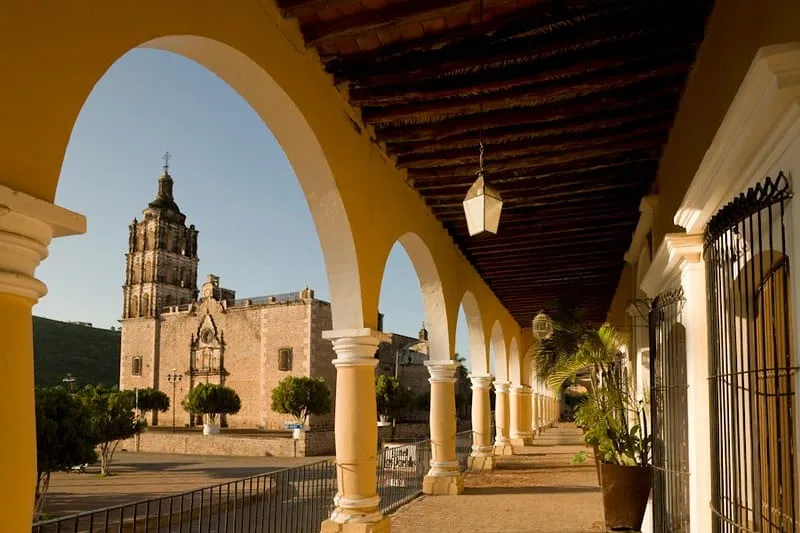
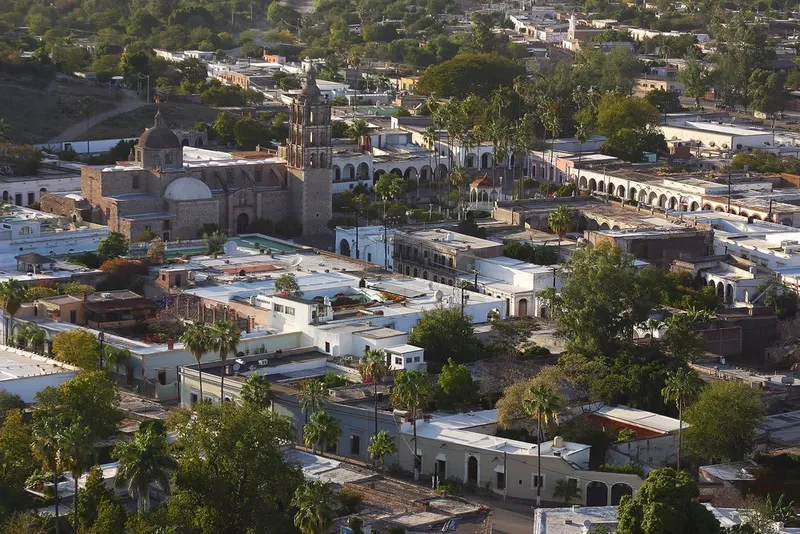
Álamos’ historic center is compact — the main area fits within about 10 square blocks — but the concentration of intact colonial architecture is extraordinary for northern Mexico. Most colonial towns of this quality are in central Mexico (Guanajuato, Oaxaca, Puebla). Álamos represents the northern limit of that tradition.
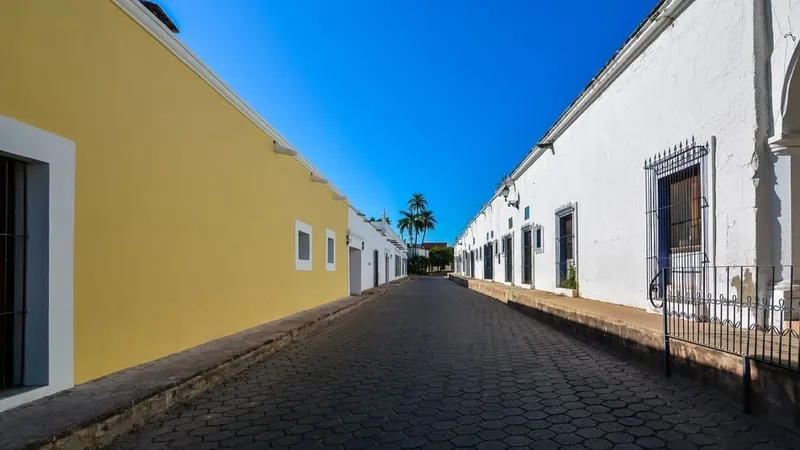
The key streets are the ones radiating from the Plaza de Armas (main square): Calle Rosales, Calle Juárez, and the approaches to the cathedral. Walking without destination for 2–3 hours reveals the best of it: ochre and white facades, iron-barred windows with deep sills, carved stone doorways, and occasional glimpses into interior courtyards.
Many of the colonial mansions were purchased and restored by American and Canadian expatriates beginning in the 1950s, which is why the preservation is unusually complete. The restoration investment created the aesthetic, but the town’s original silver-era bones are real.
2. Catedral de la Purísima Concepción
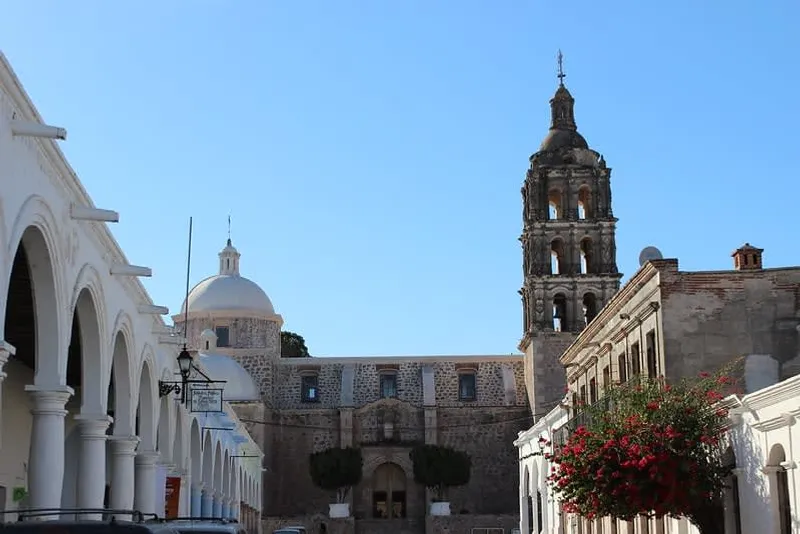
The cathedral was built in 1786 on the site of an earlier chapel, funded by the silver families who made their fortunes from the surrounding mines. The plain Baroque facade — towers, arched entrance, stone carved with restrained detail — is characteristic of colonial Sonoran architecture: less elaborate than the baroque excess of Oaxaca or Mexico City, but more structurally honest.
Interior highlights include a carved retablo (altarpiece) with gold leaf and paintings from the colonial period. The building faces the Plaza de Armas; the combination of the cathedral facade and the square is the essential Álamos image.
3. Museo Costumbrista de Sonora
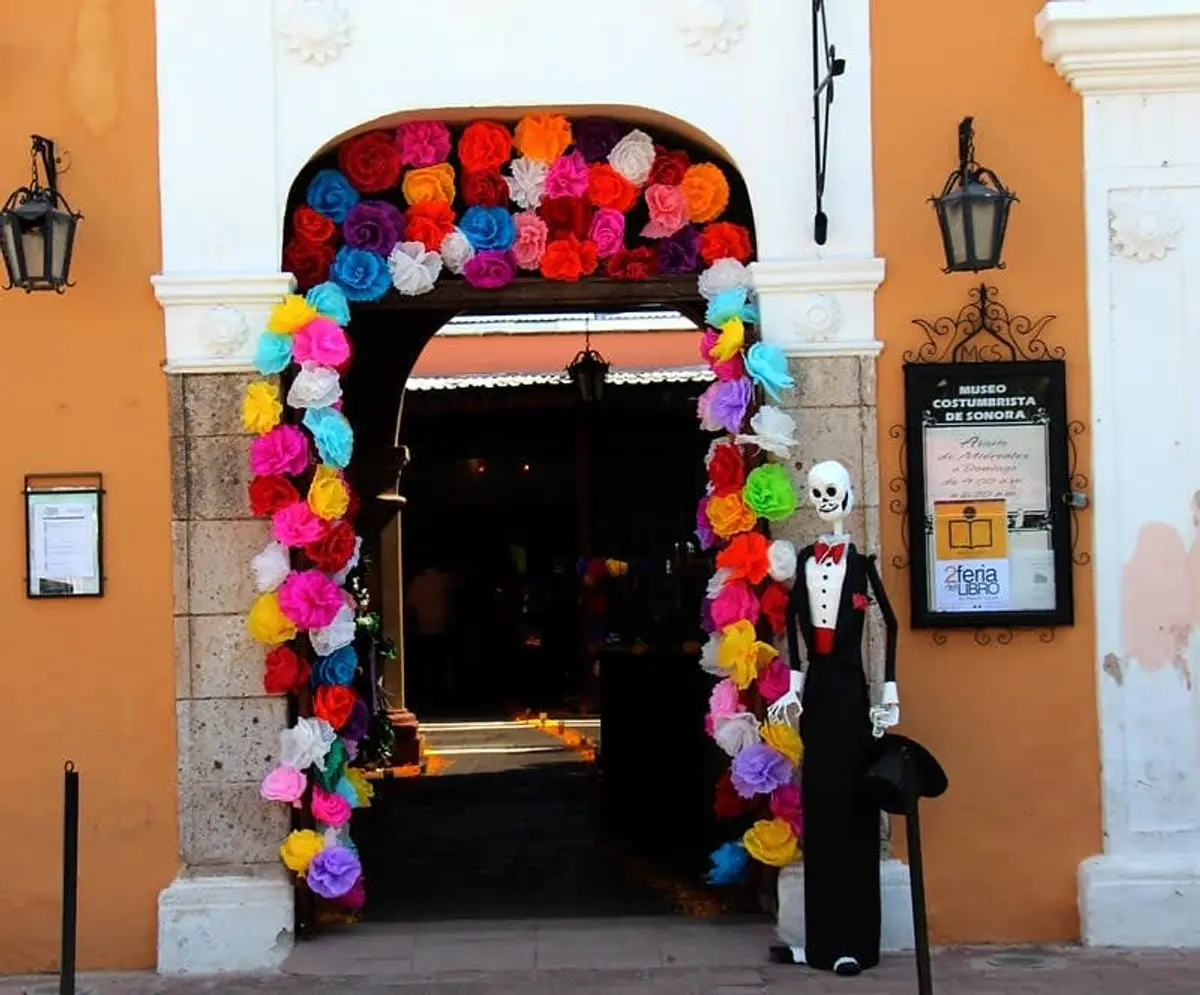
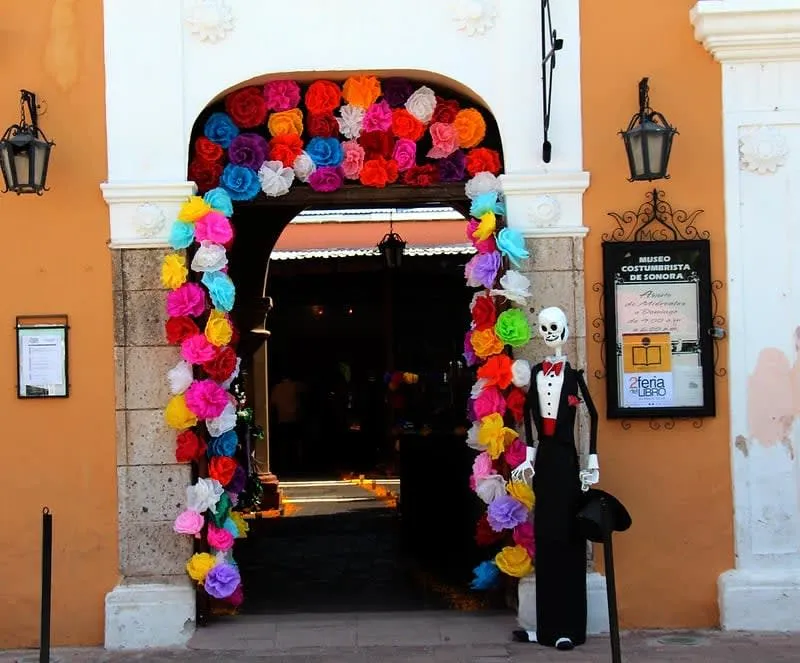
The Costumbrista Museum occupies a colonial building at the corner of the main plaza and covers Álamos and Sonora’s history from pre-Hispanic times through the silver boom and into the 20th century. Collections include period clothing, mining equipment, colonial documents, and photographs from the town’s peak prosperity.
The museum’s name translates roughly to “Museum of Customs and Traditions” — it’s a social history museum, not just an artifacts collection. Entry is approximately 30–50 MXN. Allow 1.5 hours.
4. Parque Alameda
Álamos’ main public park and the hub of town life, particularly in the evenings. The alameda (shaded park with poplar trees) is the traditional social space — people sit, vendors sell, and the temperature drops slightly under the canopy. On weekends, families gather here in larger numbers. It connects directly to the cathedral and the main square.
5. Mirador San José
A viewpoint above the town accessible by a 20-minute walk uphill from the colonial center. From the mirador, the entire layout of Álamos becomes visible: the cathedral towers, the red-tile rooftops, the surrounding sierra, and the valley to the west. Early morning and late afternoon have the best light. Evening visits offer an excellent dark sky — Álamos has no significant light pollution and the stars visible from the mirador are genuinely impressive.
Birds and Wildlife
6. Military Macaw Birdwatching
Wild military macaws (Ara militaris) winter in the Sierra de Álamos in large numbers from approximately October through April. They arrive in noisy flocks — the birds are bright grass-green with red foreheads, about 75cm long, and extremely loud. Flocks of 20–100 birds fly over the town and surrounding hillsides at dawn and dusk.
The best viewing: stand at the Mirador San José or the cathedral plaza in the early morning and wait. The macaws announce themselves long before you see them. No guide required for basic viewing; a birding guide significantly improves your chances of locating roosting flocks.
7. Full-Day Guided Birding Tour
The Sierra de Álamos-Río Cuchujaqui biosphere has one of the most extraordinary bird lists in Mexico. Over 400 species have been recorded, with November through April being peak season for migrants from North America mixing with the resident tropical species of the Sierra Madre Occidental foothills.
Notable species beyond military macaws: lilac-crowned parrots, thick-billed parrots (rare, November), trogons, Sinaloa wrens, orange-breasted buntings, and multiple warbler species. Local guides are available through hotels or the tourism office; a full-day tour runs approximately 800–1,500 MXN.
Day Trips and Nature
8. Arroyo La Aduana Waterfall
The mining town of La Aduana, 6km west of Álamos, has an arroyo (stream canyon) that forms a waterfall after significant rains. Best in the monsoon season (July–October) when water flow is highest. During dry season (November–April), the stream may be reduced to a trickle.
La Aduana itself was once the customs point for silver leaving the mines — it predates Álamos and has its own 18th-century church. The round trip is a pleasant 30-minute drive with the waterfall as an add-on to the village history.
9. Hot Springs
Several hot spring sites exist within 45 minutes of Álamos in the surrounding sierra. Locally known as aguas termales, these range from developed facilities to natural pools. Ask at your hotel or the tourism office for current conditions and access — road quality varies seasonally.
10. Cactus Forest Hikes
The dry sierra foothills around Álamos contain Sonoran cactus forest with saguaro, organ pipe, cardon, and numerous other species. Hiking trails accessible from the edge of town pass through this landscape during the dry season (October–April). Local guides can lead half-day hikes with identification of both plants and birds. The cactus density here is comparable to Baja California but sees almost no tourism.
11. Río Cuchujaqui Swimming
The Río Cuchujaqui runs through the biosphere south of Álamos and has swimming holes accessible during and after the rainy season (May–October). During dry season, flow is reduced. The river canyon is also a birding corridor and an important habitat for the region’s wildlife.
Culture and Events
12. Silver Craft Workshops
Álamos’ silver-working tradition is one of the oldest in Sonora. Several workshops in the town center produce traditional silver jewelry and decorative objects using techniques descended from the colonial era. The filigrana style — intricate twisted silver wire work — is a regional specialty.
Buying direct from workshops is significantly cheaper than resort gift shops. Expect to spend 300–2,000 MXN for quality silver pieces. Ask at the tourism office for current workshop locations; some open to visitors by appointment.
13. Feria Internacional del Queso y Vino (April)
Álamos hosts an international cheese and wine festival each April — the Feria Internacional del Queso y Vino — which draws producers from Sonora, Baja California, and beyond. The event runs 2–3 days with tastings, live music, and artisan vendors in the plaza.
Sonora produces distinctive cheeses (Chihuahua-style fresh cheeses, regional hard cheeses from the ranching tradition) and Baja California wine from the Valle de Guadalupe. This festival is the best single-event reason to time a visit specifically to April.
14. Día de los Muertos in Álamos
The Day of the Dead celebration in Álamos is the most intimate and authentic of any sizeable town in northern Mexico. The procession through the colonial streets on the night of November 1–2, with altars set up in the main plaza and the cemetery outside town illuminated by candles, is moving in a way that the larger, more performative events in Mexico City and Oaxaca aren’t.
Álamos is small enough that the event feels communal rather than touristic. If your travel dates are flexible, timing a visit for November 1–2 is worth it.
15. Horse Riding in the Sierra
Several ranches around Álamos offer guided horse rides through the sierra foothills. Trails pass through cactus forest and dry tropical woodland with views back toward the town and the surrounding valley. A 2–3 hour ride costs approximately 400–700 MXN. Best November through April before the heat becomes prohibitive.
Day Trips from Álamos
16. El Fuerte — Connection to Copper Canyon and El Chepe
El Fuerte is 130km southwest of Álamos (about 2 hours by car) and serves as the western terminus of the El Chepe railway into Copper Canyon. The railway (Ferrocarril Chihuahua al Pacífico) runs from El Fuerte through the Barranca del Cobre (Copper Canyon) to Chihuahua City, passing through canyon country that rivals the Grand Canyon in depth.
El Fuerte itself is a Spanish colonial fort town — smaller than Álamos but worth an afternoon. The Álamos–El Fuerte combination creates a logical northern Mexico colonial route, and the El Chepe connection makes either town a jumping-off point for Copper Canyon.
For Copper Canyon specifics, see Copper Canyon Mexico.
Getting There
From Los Mochis: Highway 15 south to Navojoa (1.5 hours), then Highway 162 east to Álamos (53km, 45 minutes). Total: approximately 2.5 hours.
From Mazatlán: Highway 15 north to Navojoa (4.5 hours), then Highway 162 east. Total: approximately 5.5 hours. Worth it as a stop on a Mazatlán–Hermosillo route.
From Hermosillo: Highway 15 south to Navojoa (3 hours), then east to Álamos. Total: approximately 4 hours.
By bus: ADO and Tufesa run from Los Mochis, Mazatlán, and Hermosillo to Navojoa. From Navojoa, taxis or colectivos run to Álamos (approximately 60–80 MXN per person for the 53km).
There is no commercial air service to Álamos. The nearest airport is Obregón (Ciudad Obregón), 60km from Navojoa, with flights from Mexico City.
Where to Stay and Eat
Hotels:
- Hacienda de los Santos — the destination hotel; a converted 17th-century hacienda with a pool and one of the best restaurants in Sonora. Rates approximately 2,500–5,000 MXN per night.
- Casa de los Tesoros — colonial boutique hotel in a former convent. Rates approximately 1,200–2,000 MXN.
- Hotel Los Portales — budget option on the main plaza, 500–900 MXN.
Restaurants:
- Hacienda de los Santos restaurant: the best kitchen in Álamos; Sonoran beef, regional specialties
- El Mesón de Álamos: colonial setting, reliable regional food (100–200 MXN)
- Local market stalls around the alameda: breakfast burritos, caldo, tacos (40–80 MXN)
Budget Guide
| Category | Budget | Mid-Range | Comfortable |
|---|---|---|---|
| Accommodation/night | 500–900 MXN guesthouse | 1,200–2,000 MXN boutique | 2,500–5,000 MXN hacienda |
| Food/day | 150–250 MXN | 300–500 MXN | 600–1,500 MXN |
| Birding guide (full day) | — | 800–1,200 MXN | 1,500 MXN private |
| Horse riding (2–3 hrs) | 400 MXN | 600–700 MXN | Private ranch |
| Museum entries | ~80 MXN total | ~80 MXN | ~80 MXN |
Tours and Insurance
Álamos lacks major tour operator infrastructure — most activities are arranged through your hotel or the municipal tourism office. Viator has options for the broader Sonora/Copper Canyon region:
Browse Sonora Tours on Viator →For a remote destination like Álamos — limited hospitals, mountain roads — travel insurance is practical coverage for the unexpected.
Plan Your Visit
Related guides:
- Copper Canyon Mexico — full guide to the Barranca del Cobre and El Chepe railway
- Mexico Travel Tips — practical Mexico travel advice
Álamos is one of those places that disproportionately rewards travelers who find it. The colonial architecture is excellent. The birding is world-class. The festival calendar is genuine rather than manufactured for tourists. And the remoteness — the fact that it’s 53km off the main highway with no direct bus service — ensures that the people you meet there came specifically for the experience rather than by accident.
If you’re routing through northern Mexico on a Los Mochis–Mazatlán or Copper Canyon circuit, a 2-night detour to Álamos is one of the better decisions you can make.