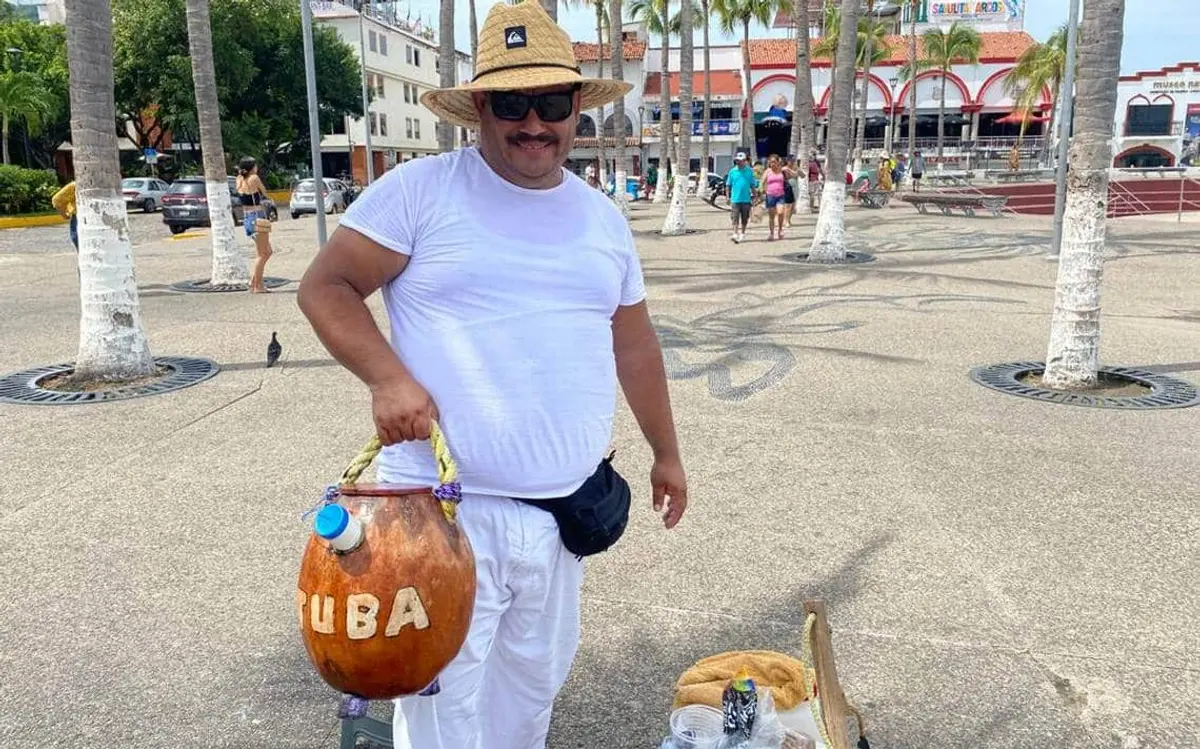
Tuba Drink in Mexico: Taste, Alcohol & Where to Try It
Tuba drink in Mexico is a traditional beverage made from coconut palm sap, not coconut water. As of June 2026, the best traveler answer is still simple: if you order a cup from a street vendor in Colima or Puerto Vallarta, you are usually getting a lightly fermented, pink-tinted palm wine served cold with chopped apple, strawberry, and salted peanuts.
Short answer: tuba is a Pacific-coast specialty from Colima, Jalisco, and parts of Guerrero. It is usually lightly alcoholic, around 1 to 4% ABV, though the fresh morning version can be nearly non-alcoholic.
For most travelers, the important distinction is simple: tuba comes from the flower stem of the coconut palm, not from inside the coconut itself. That is why it tastes richer, slightly fizzy, and more wine-like than coconut water.
Tuba reached Mexico roughly 400 years ago via Filipino sailors on the Manila Galleon. That origin story matters because researchers argue the fermentation and distillation knowledge behind tuba helped shape the later development of mezcal and tequila on Mexico’s Pacific coast.
What Is Tuba Drink in Mexico?
If you searched “what is tuba drink in Mexico”, here is the clean answer: it is Mexico’s coconut palm wine, made mainly in Colima and nearby Pacific-coast states from sap tapped from the coconut palm flower stem.
That makes tuba different from drinks travelers already know:
| Question | Fast answer |
|---|---|
| Is tuba coconut water? | No. It comes from the palm’s flower stem, not from inside the coconut. |
| Is tuba alcoholic? | Usually lightly, around 1 to 4% ABV by the time most vendors sell it. |
| What does tuba taste like? | Sweet, tropical, lightly fizzy, and a little sour. |
| Where should you try it first? | Colima city if possible, then Manzanillo or Puerto Vallarta. |
| Why is it important? | It is one of Mexico’s clearest living links to the Manila Galleon and Filipino influence. |
Tuba Drink in Mexico in 30 Seconds
If you only want the fast answer, this is it: tuba is Colima’s traditional coconut palm drink. Vendors collect sap from the flower stem of the coconut palm, let it ferment lightly, tint it with copal resin, then serve it cold with fruit and peanuts.
Most visitors first encounter tuba in Colima, Manzanillo, or Puerto Vallarta. It is usually sweeter in the morning, slightly more alcoholic by afternoon, and far more regional than drinks like tepache or pulque.
If you are deciding where to try it first, use this shortcut:
| Best Place to Try Tuba First | Why it works best |
|---|---|
| Colima city | Best if you want the most authentic first try and the clearest Manila Galleon / local-culture context |
| Manzanillo | Best if you already want a Colima coast trip and do not want to split time between city and beach |
| Puerto Vallarta | Best if you want the easiest no-detour tuba stop on a normal international tourist route |
| Barra de Navidad / Melaque | Best if you want a quieter Jalisco-coast version instead of a bigger resort base |
| Tuba at a Glance | |
|---|---|
| What is tuba drink? | A lightly fermented drink made from coconut palm sap |
| Where is it from? | Colima and Mexico’s Pacific coast |
| Does it have alcohol? | Usually yes, about 1–4% ABV |
| What does it taste like? | Sweet, tropical, lightly fizzy, slightly sour |
| How is it served? | Cold, with diced fruit and salted peanuts |
| Best places to try it | Colima city, Manzanillo, Puerto Vallarta, Barra de Navidad |
| Related beverages | Pulque, tepache, colonche, guarapo |
| Why travelers care | It is one of Mexico’s most distinctive regional drinks and part of the Manila Galleon story |
Is Tuba Worth Seeking Out Outside Colima?
If you only have one shot at trying tuba in Mexico, Colima is still the best first stop. That is where the drink makes the most sense culturally, and where it feels like a local tradition rather than a curiosity you happened to spot on a waterfront.
But that does not mean you need to build a whole trip around it.
| Your trip plan | Best call |
|---|---|
| You are already visiting Colima or Manzanillo | Absolutely try tuba, this is the best version for a first experience |
| You are staying in Puerto Vallarta | Try it if you see a trusted street vendor, it is worth it without a special detour |
| You are in Cancún, Mexico City, Oaxaca, or inland central Mexico | Do not chase it, try local drinks from that region instead |
| You care more about history than flavor | Prioritize Colima, because the Manila Galleon / Filipino influence story lands better there |
For most travelers, the practical answer is simple: try tuba if you are already on Mexico’s Pacific coast, especially in Colima or Puerto Vallarta, but do not redesign an inland itinerary just for the drink.
What Is Tuba Drink?
Tuba is a fermented beverage made from the sap (néctar) of the coconut palm (Cocos nucifera). It is not made from coconut milk or coconut water — it is extracted directly from the cut inflorescences (flowering stems) of the palm before the coconuts develop.
For most travelers, the clearest way to understand it is this: tuba is Mexico’s coconut palm wine. If you have tried pulque, tepache, or guarapo, tuba belongs in that same family of traditional fermented drinks — but with a much more tropical, lightly fizzy profile.
The liquid is colorless when first extracted. The characteristic pink-to-reddish color of Mexican tuba comes from the addition of brea, a resin from the copal tree, which is added during production and gives the drink both its color and a slight tannin quality that moderates the sweetness.
For searchers asking “what is tuba drink in Mexico?”, the cleanest answer is: a regional coconut palm wine from Colima that can be almost non-alcoholic in the morning and lightly boozy by afternoon.
In the Philippines, where tuba has been produced since precolonial times, the coloring agent is bark from the tangal (mangrove) tree. The color-stabilizing principle is the same; the plant source differs by hemisphere.
What reaches you when you buy a glass from a Colima tubero is typically:
- Lightly fermented (2–4% ABV by midday)
- Served cold in a clay cup or plastic bag
- Sweetened with diced apple, strawberry, or mango
- Topped with salted peanuts and/or walnuts
- Occasionally served with a dusting of cinnamon
It tastes like nothing else in Mexico. The closest comparison is a cross between fresh coconut water, kombucha, and cider — tropical, slightly fizzy, lightly sour, and refreshing in a way that commercial drinks never quite replicate.
Does tuba have alcohol? Yes — street vendor tuba is typically 2–4% ABV (light beer strength) by midday. Morning tuba (tuba dulce) is under 1% ABV. Left overnight, it reaches 5–7% ABV. Most vendors sell the lightly fermented afternoon batch.
Where do most travelers actually try tuba? Usually in Colima city, Manzanillo, or Puerto Vallarta — especially in plazas, waterfront areas, and local markets rather than restaurants. If you are planning a Pacific-coast trip, our guides to Colima, Mexico, Manzanillo beaches, and the Puerto Vallarta Romantic Zone help you place tuba in a real itinerary.
Why Travelers Seek Out Tuba in Mexico
Tuba stands out because it gives travelers something increasingly rare on the Mexican coast: a drink that still feels tied to a place, a route, and a living street tradition. It is not a bar cocktail you can order anywhere. You usually find it in places with strong Pacific-coast identity, especially Colima, Mexico, Manzanillo, and Puerto Vallarta.
If you are building a food-first Mexico itinerary, tuba also fits naturally alongside other regional drinks and dishes. It pairs especially well with conversations around traditional Mexican drinks, Mexican drinks, and the agave story behind tequila vs. mezcal.
Is Tuba Alcoholic?
Yes — tuba is alcoholic, but how much depends on when you buy it.
| Time of day | Name | Alcohol level | What it tastes like |
|---|---|---|---|
| 6–10 AM | Tuba dulce (sweet tuba) | Under 1% ABV | Very sweet, like coconut water with fruit |
| 12–4 PM | Standard street tuba | 2–4% ABV | Sweet-sour, light beer strength |
| 5–8 PM | Tuba agria (sour tuba) | 4–6% ABV | Noticeably alcoholic, wine-like |
| Next morning (unboiled) | Over-fermented tuba | 5–8% ABV | Sharp, acidic, approaching vinegar |
The practical answer for tourists: Most tuberos sell the midday afternoon batch. At 2–4% ABV, it’s comparable to a light beer or cider. Morning tuba (tuba dulce) is under 1% ABV — essentially non-alcoholic, comparable to some kombucha brands. Children are routinely given the morning batch in Colima.
Does tuba get you drunk? Not from a single cup of the standard street vendor version. Two or three cups of the afternoon batch (each 300ml, ~3% ABV) gives you roughly one standard drink — you’d feel relaxed, not drunk. Evening or over-fermented tuba at 5–8% ABV is another matter.
Pregnancy and tuba: The morning batch (tuba dulce, under 1% ABV) is generally considered safe by local tradition, but medical guidance recommends avoiding all alcohol during pregnancy. The afternoon/evening batches are best avoided.
Tuba vs Coconut Water: What’s the Difference?
This is the most common question from first-time visitors, and the distinction matters:
| Tuba | Coconut water | |
|---|---|---|
| Source | Coconut palm sap (from the flower stem) | Liquid inside a young green coconut |
| How collected | Cut to the inflorescence of the live tree | Husk cracked open from the fruit |
| Fermented? | Yes — fermentation begins within hours | No — completely fresh |
| Alcohol | 1–7% ABV depending on time of day | 0% |
| Color | Pink-red (from copal resin) | Clear |
| Taste | Sweet-sour, complex, fizzy, fruit and peanuts | Mild, sweet, clean, neutral |
| Where to find | Tubero street vendors — Pacific coast only | Grocery stores worldwide |
Tuba is made from the same tree as the coconut, but from a completely different part of the palm. A coconut palm can either produce coconuts or be tapped for sap, once you start cutting the inflorescence for tuba, that stem won’t produce fruit. The tubero effectively trades future coconuts for daily sap.
That is also why many top results compare tuba to palm wine rather than to a juice or agua fresca. The closer mental model is palm wine with a Mexican Pacific-coast serving style, not bottled coconut water.
This is also why authentic tuba is expensive to produce: you are sacrificing fruit yield for each tap point.
For searchers asking “does tuba drink have alcohol?”, the answer is yes, but usually at a low level. A midday cup is normally closer to a light beer than a spirit, while the morning batch is often mild enough that locals describe it as sweet rather than boozy.
The Manila Galleon: How Tuba Crossed the Pacific
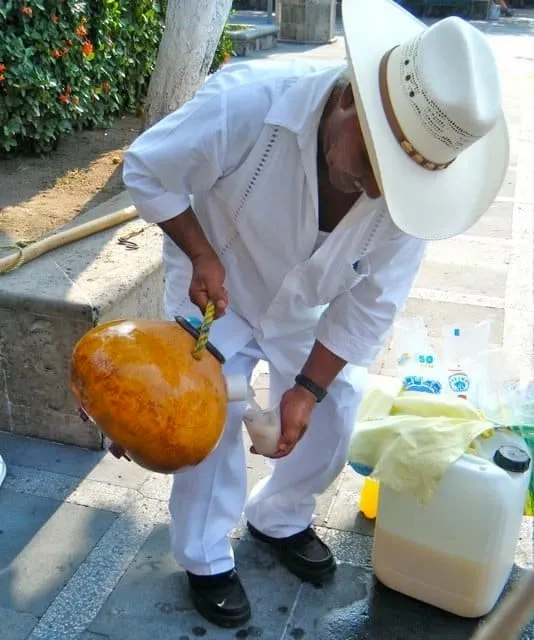
The story begins in 1565, when Andrés de Urdaneta discovered the return route from the Philippines to Mexico across the Pacific — the tornaviaje. For the next 250 years, the Manila Galleon made annual round trips between Manila and Acapulco, connecting Asia and the Americas in the world’s first transoceanic trade route.
The galleons carried more than silk and silver. They carried people. Filipino sailors (manileños), enslaved workers, and free migrants crossed the Pacific and settled along Mexico’s Pacific coast, particularly in what is now the state of Colima. They brought coconuts — both as food on the voyage and as living plants that they hoped would grow in New Spain’s tropical soil.
The first coconut palms in Mexico are documented to have been planted in Colima, and the knowledge of how to extract and ferment the sap came with the people who planted them. The name tuba itself is Filipino, derived from the Visayan word for the sap of the coconut palm.
By the 17th century, tuba was being produced commercially in Colima, Jalisco, and Guerrero. Colonial records describe a thriving trade. By the 18th century, it was one of the most consumed beverages along Mexico’s entire Pacific coast.
The Tuba–Tequila Connection: The Story Most Mexicans Don’t Know
This is where tuba’s story becomes genuinely remarkable.
When Filipino sailors arrived in Mexico, they brought not just tuba but also the knowledge of how to distill it. In the Philippines, fermented tuba sap is sometimes distilled into a stronger liquor called lambanog or bahalina — a clear, powerful coconut spirit. The distillation equipment described in 17th-century colonial accounts of Colima matches Filipino lambanog stills precisely: hollow tree trunks connected to copper kettles heated over wood fires.
Here is the leap: Mexico had agave. Agave sap (aguamiel) ferments readily into pulque — indigenous Mexicans had known this for centuries. But distillation of agave was not documented in pre-Columbian Mexico. After Filipino migrants arrived with distillation knowledge and equipment, records begin appearing of agave sap being distilled in the same regions where tuba production was concentrated.
That distilled agave became mezcal — and eventually, the specific blue-agave variety of mezcal produced in Jalisco became tequila.
Researchers including anthropologist Gideon Lasco (whose field work in both Colima and the Philippines documented this connection) and historian Enrique Chávez Orozco have traced this chain of cultural transmission. It remains underacknowledged partly because colonial historiography credited Spanish and indigenous elements while overlooking Filipino and Asian influences — and partly because most Mexicans (and Filipinos) simply never learned about the Manila Galleon’s cultural cargo.
The next time you order a tequila, you are drinking a tradition that traces back to coconut palms on a Pacific sailing ship.
How Tuba Is Made: The Tubero’s Daily Ritual
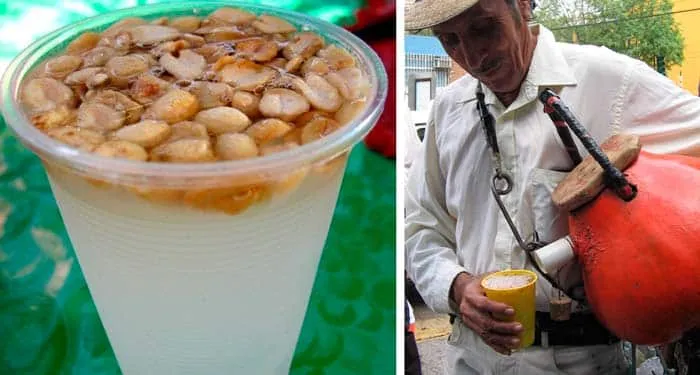
The production of tuba requires daily physical labor in conditions that have barely changed in four centuries.
Before dawn: The tubero climbs the coconut palm using a rope or, in modern operations, a ladder. At the top, they collect the liquid that has dripped overnight from the previous day’s cuts into a sealed gourd container (bule or balsa).
The cut: At the base of each inflorescence (the stem that would otherwise produce coconuts), a precise cut is made. The cut must be deep enough to allow sap to flow but not so deep it damages the palm. A small slice of the cut surface is removed daily to keep the wound open and the sap flowing. This continues for 10–15 days per inflorescence before it is rested.
Two harvests daily: The morning collection (tuba dulce — sweet tuba) is transparent, very sweet, and has essentially no alcohol — the overnight cold slows fermentation. By afternoon, the same cut yields a lighter liquid that has already begun to ferment in the tropical heat. This is the tuba agria (sour tuba) — more complex in flavor, lightly alcoholic.
Post-harvest processing: Many tuberos boil the fresh sap to stop fermentation at a specific point, add the brea (copal resin) for color, and incorporate fruit and nuts. Others serve it completely raw and unprocessed — the most traditional form.
A single experienced tubero typically maintains 10–20 palms and produces 20–50 liters of tuba per day. The work is physically demanding and the margins are thin. The number of practicing tuberos in Colima has declined significantly over the past 30 years.
What Does Tuba Taste Like? Tasting Notes
| Stage | Time | Color | Flavor Profile | Alcohol |
|---|---|---|---|---|
| Sweet tuba | Morning (6–10 AM) | Transparent/pale | Very sweet, coconut water, floral | <1% ABV |
| Afternoon tuba | 12–4 PM | Pink (with brea) | Sweet-sour balance, lightly fizzy | 2–4% ABV |
| Evening tuba | 5–8 PM | Deeper pink-red | Noticeably sour, wine-like, tannic | 4–6% ABV |
| Overnight ferment | Next morning | Dark red | Strong, acidic, almost vinegary | 5–8% ABV |
Most tuberos sell the afternoon batch, which hits the best balance of sweetness and gentle fermentation. If you are offered morning tuba, it is sweeter and essentially non-alcoholic — excellent for children or anyone avoiding alcohol. Ask for the afternoon batch if you want the full flavor experience.
The fruit and nut additions are not optional extras — they are considered part of the complete tuba experience. The salted peanut contrast against the sweet-sour sap is one of those combinations that only makes sense once you taste it.
Tuba vs. Other Mexican Fermented Drinks
Mexico has a remarkable tradition of fermented plant beverages, and tuba belongs in conversation with all of them:
| Drink | Base Plant | Region | Alcohol | Flavor |
|---|---|---|---|---|
| Tuba | Coconut palm sap | Colima, Jalisco, Guerrero | 1–7% | Sweet, tropical, fruity |
| Pulque | Agave sap (aguamiel) | Central Plateau | 4–8% | Viscous, sour, earthy |
| Tepache | Fermented pineapple | National | 2–4% | Sweet, spiced, citrusy |
| Colonche | Prickly pear cactus | Jalisco, San Luis Potosí | 4–8% | Deeply fruity, rich purple |
| Guarapo | Sugarcane juice | Veracruz, Guerrero | 1–4% | Grassy, sweet, raw |
| Tejate | Cacao + corn | Oaxaca | 0% (non-alcoholic) | Chocolatey, complex, cold |
| Pozol | Corn + cacao | Tabasco, Chiapas | 0% | Sour, fermented corn, earthy |
Tuba and pulque are the two oldest fermented beverages consumed continuously in Mexico since before or shortly after the Conquest. Both are experiencing cultural revival as interest in traditional foods grows.
For the complete overview of Mexico’s traditional drinks — alcoholic and non-alcoholic — see the Mexican drinks guide and traditional Mexican drinks. If you want to follow the agave side of the story that tuba may have influenced, continue with tequila vs. mezcal, how to drink tequila, or the full mezcal guide.
Where to Try Tuba in Mexico
If your goal is not just to learn about tuba but to drink it on your trip, focus on a short list of places where it is still part of street life:
- Colima city: the strongest tuba identity in Mexico, especially around plazas and markets
- Manzanillo: common along the waterfront and in warm-weather local food circuits
- Puerto Vallarta: easiest place for many international travelers to spot a tubero on the Malecón or near the Romantic Zone
- Barra de Navidad and Melaque: smaller Jalisco coast towns where the tradition still survives
Tuba is much harder to find in central Mexico, Mexico City, or the Yucatán. This is a Pacific-coast drink, not a national street drink in the way that aguas frescas or tepache can be.
Regional Variations Across Mexico
Colima (the heartland): The most developed tuba culture in Mexico. Pink tuba with brea is the standard. Tuberos sell in the Jardín Núñez (main plaza), the markets, and from bicycle carts. The drink is deeply embedded in local identity — Colima celebrates its tuberos in cultural events and the production method is under consideration for cultural heritage status.
Jalisco coast (Melaque, Barra de Navidad, Puerto Vallarta): Very similar to Colima’s version. In Puerto Vallarta’s Zona Romántica, street vendors sell tuba alongside other regional foods. The version here tends to be slightly sweeter and more heavily fruited. Our Puerto Vallarta Romantic Zone guide covers where to find it between the food markets.
Guerrero (Acapulco, Zihuatanejo coast): Less common but still present. The Guerrero version often skips the brea coloring, resulting in a paler, clearer drink. Flavor tends toward more sharply fermented.
Michoacán coast: Produced in smaller quantities around Lázaro Cárdenas and the Costalegre region. Very close to the Colima version but with regional fruit additions — mamey and guanábana appear alongside the standard apple and peanut.
Oaxaca (Tehuantepec coast): Exists in the Tehuantepec Isthmus region but is distinct from the Colima tradition — here the coconut culture is less connected to the Filipino galleon trade and developed separately from coastal cultivation.
Where to Find Tuba in Mexico
Best Places to Try Tuba Drink in Mexico
Best cities for tuba:
| City | Where to Look | Notes |
|---|---|---|
| Colima city | Jardín Núñez, Mercado Constitución | Multiple tuberos; widest selection |
| Manzanillo | Waterfront, Mercado Central | Best on weekends |
| Puerto Vallarta | Zona Romántica, Mercado Municipal | Tourist-accessible |
| Melaque / Barra de Navidad | Main plaza, beach vendors | More traditional, less tourist-priced |
| Acapulco | Mercado Central | Paler version without brea |
Practical tips:
- Look for the traditional bule gourd container — the vessel that keeps tuba cold without ice
- Ask for “con todo” (with everything) to get the full fruit and nut treatment
- Morning visits (before 10 AM) get the sweetest, freshest batch
- Pay $15–30 MXN for a cup depending on city — tourists are sometimes quoted double; observe what locals pay first
Outside Mexico: Bottled commercial tuba is virtually nonexistent. The drink does not travel well — fermentation continues in the bottle and the fresh tropical character is largely lost within 24–48 hours of production. The only way to taste authentic tuba is to travel to the Pacific coast.
How to Order Tuba (Useful Spanish)
Walking up to a tubero for the first time is straightforward:
- “Una tuba, por favor” — one tuba please (they’ll assume con todo)
- “Con todo” — with everything (fruit, peanuts, the works)
- “Sin cacahuates” — without peanuts (for allergy concerns)
- “¿Está dulce o agria?” — is it sweet or sour? (asking which batch it is)
- “La dulce, por favor” — the sweet one (morning batch, less alcohol)
- “¿De cuándo es?” — when was this harvested? (fresh vs. older batch)
Most tuberos serve from large glass containers or sealed gourds. You’ll see the characteristic pink liquid, the diced fruit, and the white peanuts floating on top. It is sold in plastic cups or sometimes small clay vessels.
Price check: In Colima markets, expect 15–25 MXN. At tourist-area vendors in Puerto Vallarta, prices run 30–60 MXN. If quoted more, it’s tourist pricing — you can politely decline or pay it as a convenience tax.
Is Tuba Safe to Drink?
Yes — tuba sold by established tuberos is safe for most visitors. A few practical considerations:
Fermented sap, not contaminated water. The fermentation process itself inhibits pathogen growth. Tuba is not made with Mexico’s tap water. The risk of tuba causing stomach illness is genuinely low compared to raw salads or uncooked street food.
The fruit is the higher risk. The diced apple, strawberry, and mango added on top may have been washed with tap water. If you have a sensitive stomach, ask for “sin fruta” (without fruit) and just take the tuba with peanuts.
Morning tuba is the safest batch. The tuba dulce harvested at dawn has had overnight cold temperatures slowing fermentation and bacterial activity. It is the freshest, sweetest, and most food-safe version. Afternoon batches are still safe for most people, just more fermented.
Allergy warning: Peanuts (cacahuates) are standard. Always specify “sin cacahuates” if you have a nut allergy. Walnuts are sometimes added in certain regions.
Alcohol warning: If you are pregnant, avoid afternoon or evening tuba — by 2–4 PM it has reached 2–4% ABV. Morning tuba (under 1% ABV) is comparable to some fruit juices.
Tuba Nutrition Facts
Fresh coconut palm sap is a naturally nutritious liquid before heavy fermentation sets in. Published studies on coconut sap composition show:
| Nutrient | Per 100ml (fresh sap) | Notes |
|---|---|---|
| Calories | 17–25 kcal | Rises to 35–45 kcal as fermentation concentrates sugars |
| Carbohydrates | 4–6g | Mostly sucrose and fructose; drops as fermentation proceeds |
| Protein | 0.2–0.3g | Trace levels |
| Potassium | 200–270mg | Comparable to coconut water |
| Iron | 0.2–0.5mg | Higher than most fruit juices |
| Vitamin C | 6–10mg | Present in fresh sap; reduced by fermentation |
| Alcohol | 0–7% ABV | Varies by harvest time and fermentation duration |
A typical 300ml street serving with fruit and peanuts comes to approximately 100–150 total calories. The peanuts contribute most of the fat content — specify “sin cacahuates” (without peanuts) if you want a lower-calorie option.
One traditional use of fresh tuba is as a rehydration drink along the coast — the potassium and natural sugars make it genuinely effective after beach activity in Colima’s heat, not unlike sports drinks but without artificial ingredients.
Tuba Health Benefits: What the Research Says
Tuba has been used as a traditional remedy on Mexico’s Pacific coast for centuries. A 2019 study published in PubMed Central (Bacterial Diversity and Population Dynamics During the Fermentation of Palm Wine From Guerrero, Mexico) documented that Mexican tuba contains beneficial microorganisms with empirical applications in gastrointestinal health.
Evidence-based health properties of tuba:
| Benefit | Mechanism | Evidence Level |
|---|---|---|
| Digestive support | Live Lactobacillus and Saccharomyces cultures | Traditional use + PMC 2019 study |
| Electrolyte replenishment | High potassium (200–270mg/100ml) + natural sugars | Coconut sap composition research |
| Probiotic activity | Live fermentation produces beneficial bacteria | ResearchGate 2019: Flores-Gallegos et al. |
| Iron source | 0.2–0.5mg iron per 100ml | Higher than most fruit juices |
| Antioxidant properties | Phenolic compounds from copal brea resin | Traditional ethnobotanical use |
| Low glycemic impact | Fermentation converts sucrose to simpler sugars | Fermentation science |
Important caveats:
- These benefits apply to fresh, minimally fermented tuba (morning batch, under 1% ABV). Heavily fermented afternoon tuba has fewer live cultures.
- Research is still limited compared to well-studied probiotics. Do not substitute tuba for medical treatment.
- The fruit and peanut additions (apple, strawberry, pecans) add their own nutritional value — vitamin C, healthy fats, and fiber.
Coastal tradition: Colima fishermen have long used fresh morning tuba as a hangover remedy and post-exercise rehydration drink. The potassium content rivals sports drinks; the natural sugars provide energy without synthetic additives. This folk use is now supported by the biochemical research.
Can You Buy Tuba Outside Mexico?
Short answer: no, not authentically.
Why it doesn’t export: Tuba is a live fermented product. Once the sap is extracted and fermentation begins, the flavor profile peaks within hours and continues changing. Within 24–48 hours, untreated tuba turns from a sweet fermented drink to something approaching vinegar. Without pasteurization (which kills the live fermentation character) or refrigerated cold chain from Colima to your doorstep, authentic tuba is physically impossible to export.
Commercial attempts: Several Mexican producers have tried bottled versions with pasteurization and sugar additions to stabilize the product. The results are commercially mediocre — they capture some of the flavor but none of the live fermentation character that makes authentic tuba special. These products are niche items in specialty Mexican grocery stores in Los Angeles and Chicago, not mainstream.
The Filipino version (tuba vinegar): In Filipino grocery stores in the US and internationally, you may find sukang tuba — a vinegar made from over-fermented coconut tuba. This is not the same drink; it is the end-stage product of leaving tuba to ferment past the drinkable point. Excellent as a cooking vinegar; not what you’re looking for.
Bottom line: If you want tuba, you need to travel to Colima, Jalisco, or Guerrero. This is one of Mexico’s genuinely exclusive food experiences — it cannot be replicated anywhere else.
Tuba and the Future of Traditional Mexican Beverages
For decades, carbonated soft drinks and industrial beer have displaced traditional fermented beverages across Mexico. Tuba consumption in Colima dropped sharply from the 1970s through the 2000s as Coca-Cola and Pepsi distributors built out infrastructure into the Pacific coast.
The reversal began around 2015. Growing interest in fermented foods (kombucha, kefir, natural wine), rising food tourism, and a broader cultural revival of indigenous and traditional beverages has brought renewed attention to tuba. Academic research into the Manila Galleon’s food legacy has increased. Craft beverage producers in Jalisco have experimented with bottled versions, though with limited commercial success.
The tubero who sells from a gourd on Colima’s main plaza is practicing something that has continued unbroken for over 400 years. If you are anywhere near the Pacific coast — in Colima, Puerto Vallarta, or the Guerrero coast — seeking out a tuba vendor is one of the most authentic food experiences Mexico offers.
Tuba-Based Drinks: Cocktails and Recipes
Because tuba has a neutral sweet-sour base and low alcohol, bartenders and home cooks along Mexico’s Pacific coast use it as a mixer. These are not commercial recipes — they are informal preparations served at beach bars in Colima and Manzanillo:
Tuba Coco Frío
The most common served variation. Fresh tuba poured over crushed ice in a coconut shell, topped with toasted peanuts and a wedge of lime. The lime adds acid that sharpens the fermented character. Served at beach bars in Manzanillo and Barra de Navidad.
Tuba con Mezcal
Half tuba, half mezcal (a joven or espadin works best — nothing too smoky). Ice, cucumber slice, tajín on the rim. The tuba’s sweetness rounds the mezcal’s edge. You will occasionally find this at craft mezcalerias in Colima city that celebrate the Manila Galleon heritage angle.
Tuba Enchilada
Not spicy in the chile sense — enchilada here means treated with tajín and lime. Fresh tuba in a clay cup, a squeeze of lime, and a shake of tajín over the top. Street-vendor style. Extremely refreshing at noon in Colima’s heat.
At-Home Tuba Approximation
You cannot make authentic tuba without access to a live coconut palm and the ability to collect fresh sap. However, if you want to understand the flavor profile:
| Ingredient | Amount | Purpose |
|---|---|---|
| Unsweetened coconut water | 200ml | Base flavor approximation |
| Fresh lime juice | 1 tbsp | Adds the fermented sour note |
| Honey | 1 tsp | Restores the sap sweetness |
| Pomegranate juice | 1 tbsp | Mimics the pink color from brea |
| Sparkling water | 50ml | Adds the mild effervescence |
| Diced apple + salted peanuts | to taste | The traditional garnish |
The result is not tuba — it is an approximation that gives you a sense of the flavor architecture. Authentic tuba tastes more alive and complex because of the active fermentation, which no static recipe replicates.
Planning Your Tuba Trip: Colima in 2 Days
Colima is the state and city where tuba culture is most deeply embedded. It is one of Mexico’s smallest states — frequently skipped by travelers moving between Puerto Vallarta and Manzanillo — and that is exactly what makes it worth going to.
Getting to Colima city:
- From Guadalajara: 2.5–3 hrs by Primera Plus bus (Terminal Cajititlán), 260–380 MXN
- From Manzanillo: 1.5 hrs by colectivo/taxi, or ADO bus
- From Puerto Vallarta: 4–4.5 hrs by first-class bus via Autovías/primera plus
- The Colima airport (CLQ) has limited routes; most travelers connect through GDL or ZLO (Manzanillo)
Day 1: The City and the Tuba Circuit
Start at the Jardín Núñez (central plaza) at 8–9 AM — this is where the best tuberos position themselves in the morning. Order your first tuba of the day: sweet, barely fermented, served in a clay cup with apple and peanuts.
Walk to the Mercado Constitución (10 minutes) for breakfast alongside local market workers — tamales colimenses, atole, or sopitos (Colima’s miniature sope variation).
Spend the afternoon at the Museo Regional de Historia de Colima (free on Sundays, 40 MXN otherwise) for the state’s history including the Manila Galleon connection. The Colima ceramics — pre-Hispanic dog figurines in particular — are among Mexico’s most recognizable archaeological forms.
Return to the Jardín Núñez around 4–5 PM for the afternoon tuba: now more fermented, pink-red from the brea, more complex. This is the time to try more than one vendor and compare.
Day 2: Volcán de Colima and the Coast
The Volcán de Colima (actually the twin peaks of Volcán de Fuego, Mexico’s most active volcano, and Nevado de Colima) dominates the state. Organized tours from the city visit the viewpoint at La Yerbabuena (as close as permitted — current exclusion zones vary; check with tour operators).
Manzanillo (1 hour from Colima city) is Mexico’s largest Pacific port and the place where the Manila Galleons docked for 250 years. The waterfront has tuba vendors, excellent ceviche, and the specific context of where all this history happened. The city’s beaches — Playa Miramar, Playa Audiencia — are calm, warm Pacific water without the sargassum that affects the Caribbean coast.
Practical Colima information:
| Detail | Info |
|---|---|
| Best time to visit | November–May (dry season); avoid July–September (rainy + high humidity) |
| Daily budget | $35–55 USD/day (mid-budget traveler) |
| Uber | Works in Colima city; limited in Manzanillo |
| Language | Spanish only — minimal English compared to tourist cities |
| Stay | Centro Histórico for proximity to tuba vendors; 2 nights sufficient |
| Safety | Colima state has had security challenges; consult the Mexico travel advisory for current status |
For the full Colima state guide, see Colima Mexico travel guide.
Conclusion
Tuba is the drink that most visitors to Mexico never encounter and almost nobody has heard of outside the Pacific coast. It is also, if the researchers are right, the origin point of one of the world’s most recognized spirit traditions.
The story: Filipino sailors → coconut palms → fermentation technique → meets Mexican agave → mezcal → tequila. It is a 460-year chain of cultural transmission that crosses the Pacific twice and ends in a glass on a bar counter somewhere in the world tonight.
If you want to go deeper into Mexico’s fermented drink tradition, the natural next stops are:
- Pulque guide — agave sap’s own 3,000-year story
- How to drink mezcal — the spirit that tuba may have inspired
- Tequila vs Mezcal — how the two spirits diverged
- Mexican drinks guide — the full spectrum of what Mexico drinks