Day of the Dead Mexico 2026: Complete Día de Muertos Guide
The first time I watched families set up ofrendas as a child growing up in Mexico, nobody explained what was happening — it was simply part of how the world worked. The dead came home in November, you put out their favorite food, lit candles so they could find their way, and gathered around them. Only later, when I started explaining this tradition to international friends, did I realize how radically different it is from what the world imagines “Day of the Dead” to be.
This guide cuts through the movie-poster Catrinas and the costume party misconceptions to give you the real story: what this celebration means, when and where to experience it, and how to do it as a respectful visitor.
What Is Day of the Dead? The Real Story
Day of the Dead is not Mexican Halloween. It’s not edgy. It’s not spooky. It’s a deeply personal family reunion — the one night of the year when the dead are believed to return home.
The roots are ancient. The Aztec civilization maintained an elaborate 20-day festival honoring the dead, presided over by Mictecacíhuatl, the Lady of the Dead. When Spanish colonizers arrived in the 16th century, they brought All Saints’ Day (November 1) and All Souls’ Day (November 2) with them — Catholic holidays that happened to align with the existing Aztec celebrations. The result was a fusion that kept the pre-Hispanic spirit while adopting Catholic elements.
What survived is one of the most honest traditions I know: the acknowledgment that death is not an ending but a transformation, and that the connection between the living and the dead doesn’t break.
Three things this is NOT:
- A costume party (Catrinas and skull makeup are fine — treating it like Halloween is not)
- A morbid or sad occasion (families laugh, drink mezcal, tell stories about the deceased)
- A uniform national holiday (every region has distinct traditions — Oaxaca, Michoacán, Yucatán, and CDMX each celebrate differently)
2026 Dates: What Each Day Means
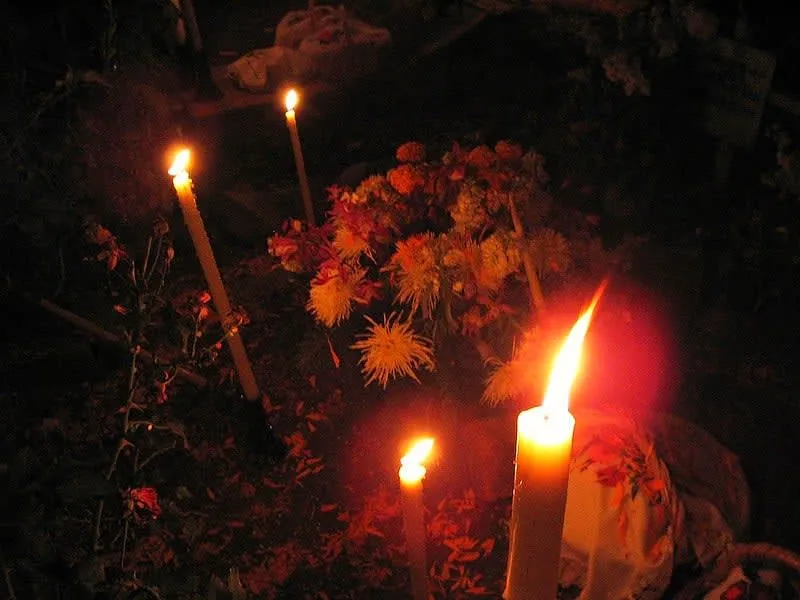
Day of the Dead is not a single day — it’s a week-long arc, with different days carrying different meanings:
| Date | Name | Meaning |
|---|---|---|
| Oct 28 | Día de los Accidentados | Honors those who died in accidents or violently |
| Oct 29 | Día de los Olvidados | Honors the forgotten dead — those with no living relatives |
| Oct 30 | Día de los que murieron sin bautismo | Honors unbaptized children |
| Oct 31 | Víspera de Muertos (Halloween in some urban areas) | Spirits begin arriving; liminal night |
| Nov 1 | Día de Todos Santos / Día de los Angelitos | Honoring deceased children; their spirits return first |
| Nov 2 | Día de Muertos / Día de los Difuntos | The main day; honoring all deceased adults; spirit visits at their peak |
Most public events and cemetery vigils happen the night of November 1 into November 2. In Oaxaca, festivities begin earlier and run through November 2–3.
For what else to do during these weeks, see our Mexico in October and Mexico in November guides.
Where to Experience It: 6 Cities Compared
1. Oaxaca — The Gold Standard
Oaxaca is where the celebration reaches its fullest, most elaborate expression. The entire city transforms. Altar competition in the zócalo (main plaza). Candlelit vigils in village cemeteries outside the city — Xoxocotlán and San Pablo Villa de Mitla are the most accessible. Marigold arches everywhere. The smell of copal resin in the air.
What makes it special: The Indigenous Zapotec tradition runs deep here. Altar designs include elaborate sand paintings, and the cemetery vigils are genuinely moving — families cooking at gravesites, sleeping beside their loved ones, welcoming them home.
Logistics: Book 6 months ahead minimum. October 31–November 2 hotel availability in Oaxaca fills completely. Rates triple. Budget 3–4 nights in the city plus day trips to villages.
Cost level: Medium-high during the holiday (normal Oaxaca prices are moderate)
Crowds: High but manageable — spread across the city and surrounding villages
For full Oaxaca planning, see our Oaxaca Travel Guide and Things to Do in Oaxaca. For planning your visit around the dry season, see Best Time to Visit Oaxaca.
2. Pátzcuaro, Michoacán — The Most Intimate Experience
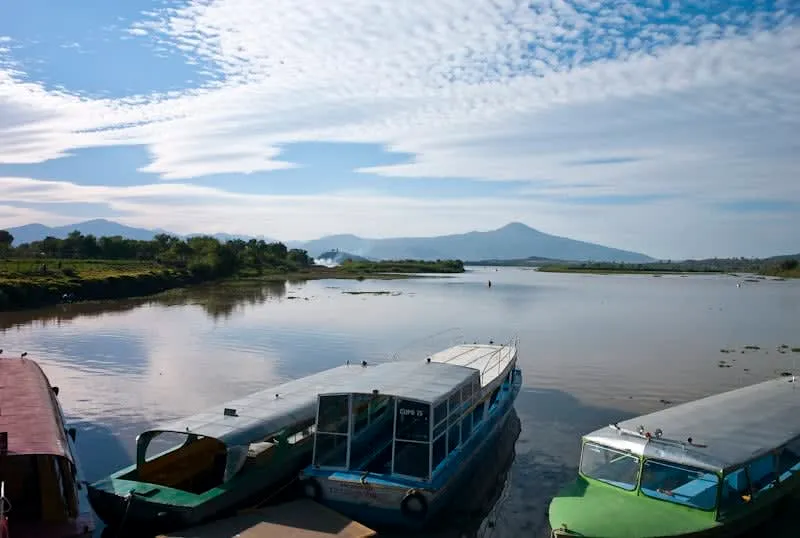
If you want to experience Day of the Dead as a ceremony rather than a spectacle, Pátzcuaro is where you go. The indigenous Purépecha people of Michoacán have maintained their own distinct version of this tradition — one that predates the Spanish arrival.
The island of Janitzio, accessible by boat across Lake Pátzcuaro, holds an all-night candlelit vigil. Families gather at cemetery graves with ofrendas, marigold petals, candles, and food. The lake itself is lit by candles and paper lanterns. There is nothing quite like it in Mexico.
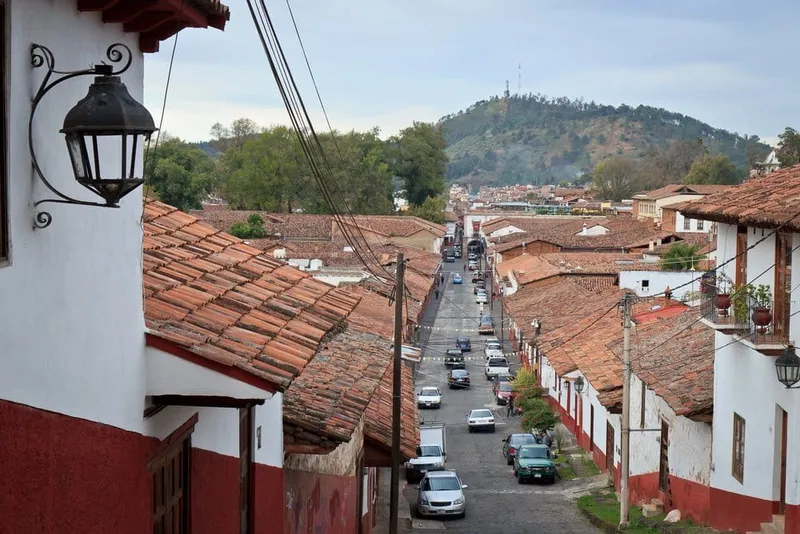
The town of Pátzcuaro itself is beautiful any time of year — colonial architecture, great food, warm people. See our Pátzcuaro Michoacán Guide for year-round travel details.
What makes it special: More intimate, less touristy than Oaxaca. The Purépecha tradition feels ancient.
Logistics: Also book 6 months ahead. The boat to Janitzio fills; arrive early (before 8 PM) on November 1.
Cost level: Moderate
Crowds: High at Janitzio — the rest of the lake area is calmer
3. Mixquic, Mexico City — For Those Based in CDMX
Mixquic is a barrio in the southeastern part of Mexico City that maintains one of the most authentic and accessible Day of the Dead celebrations in the metropolitan area. It’s about 35km from Centro Histórico, reachable by metro + pesero or by car.
The cemetery in Mixquic becomes the center of the ceremony — families illuminate graves with thousands of candles, creating a scene that’s extraordinary for a neighborhood within a mega-city.
What makes it special: Accessible without flying. Authentic ceremony in an actual community, not a staged event.
Logistics: Go by metro + local transport to avoid traffic. November 1 evening is the main event.
Cost level: Low (neighborhood celebration, no entrance fees)
Crowds: Large but it’s an outdoor space — manageable
4. Mexico City Centro — For the Public Spectacle
CDMX’s main plaza (Zócalo) hosts large public altar installations, the Gran Ofrenda, and the famous Day of the Dead parade. The parade started in 2016, inspired by the James Bond film Spectre that invented the idea — and then CDMX made it real. It’s now a genuine tradition with elaborate floats, Catrina costumes, and hundreds of thousands of spectators.
What makes it special: Scale and production value. Free and accessible. Family-friendly.
Best for: Families, first-timers, or those who want the festive public experience rather than the cemetery ceremony
5. San Miguel de Allende — Expat-Influenced but Beautiful
San Miguel has a large expat community that has embraced Day of the Dead enthusiastically — perhaps more enthusiastically than anywhere else. The Jardín (main square) fills with altars and Catrina-dressed visitors. It’s more of a festival-style celebration than a solemn ceremony.
What makes it special: Visually stunning — the colonial backdrop makes for incredible photography. More social and festive.
Best for: Those who want atmosphere without the intensity of cemetery vigils
6. Mérida — Yucatán’s Distinct Tradition (Hanal Pixán)
The Mayan celebration is called Hanal Pixán and has distinct elements not found elsewhere. Traditional Yucatecan foods like pib (pit-baked tamale) are central. The cemeteries in Mérida and outlying towns like Halachó are decorated with palm arches and flowers. Families maintain vigils from October 31 through November 2.
What makes it special: Completely different from other regional celebrations — Mayan in origin with its own food, language, and aesthetic
Best for: Those combining with Yucatán Peninsula travel
6-City Comparison Table
| City | Best For | Crowd Level | Advance Booking | Cost Level |
|---|---|---|---|---|
| Oaxaca | Full experience, altar contests | High | 6 months | Medium-high |
| Pátzcuaro | Intimate, indigenous tradition | High at Janitzio | 6 months | Moderate |
| CDMX Mixquic | Accessible, authentic local | Medium | 1–2 months | Low |
| CDMX Parade | Spectacle, photography | Very high | 1 month (hotel) | Low–medium |
| San Miguel de Allende | Photography, festive atmosphere | Medium-high | 3 months | High |
| Mérida (Hanal Pixán) | Mayan tradition, less crowded | Medium | 2–3 months | Moderate |
The Ofrenda: What Every Element Means
The ofrenda (altar) is the physical welcome home for returning spirits. Every element has meaning:
Cempasúchil (Marigolds): The most visible symbol of Día de Muertos. The vivid orange-yellow color and strong scent are believed to create a path that guides spirits from the land of the dead back to their families. Petals are scattered from the cemetery or street to the home.
Copal incense: Copal resin has been burned in ritual contexts in Mesoamerica for thousands of years. The smoke is believed to carry prayers and communicate with the spirit world.
Water: Placed on the ofrenda because the dead’s journey is long and tiring. The spirit arrives thirsty.
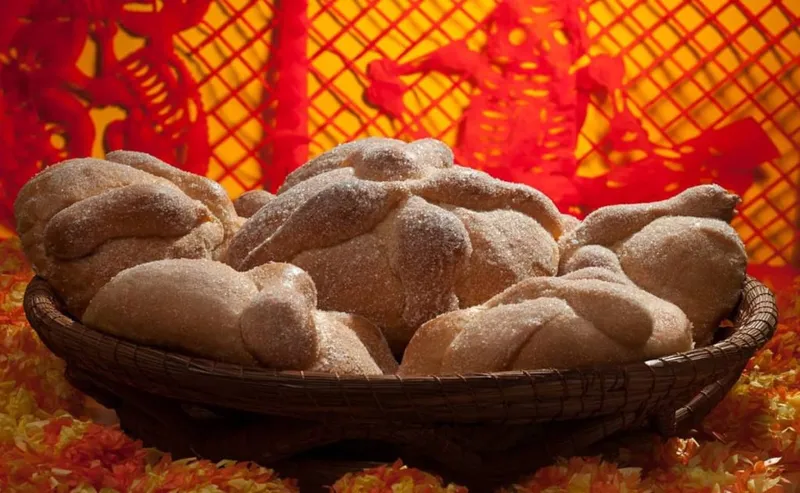
Pan de muerto: Sweet egg bread decorated to represent bones and a skull. One is placed on the altar for the spirit; the family eats the rest together.
Photographs: The spirit needs to know where they are. Photos help them recognize their ofrenda and guide them to the right home.
Favorite foods and objects: This is the most personal element. The ofrenda should include whatever the deceased loved in life — their favorite meal, a bottle of mezcal, cigarettes, their favorite music playing, tools from their trade.
Salt: Purification. Also placed to help the spirit on their return journey.
Candles: One candle for each deceased family member being honored. The light guides them home.
Marigold arch: Many ofrendas include an arch made of marigolds — a doorway through which the spirit enters.
Sugar skulls (calaveras de azúcar): Colorfully decorated skulls, often with the name of the deceased written on the forehead. They’re festive, not macabre — death is not feared in this tradition.
La Catrina: Where the Icon Comes From
The elegant skeleton woman you see everywhere during Día de Muertos has a specific, relatively recent origin — and most visitors don’t know it.
The original: José Guadalupe Posada, a Mexican political cartoonist, created La Calavera Garbancera in 1910. It was a skull drawing mocking the indigenous wealthy class that adopted European fashions and pretended to be something they weren’t. The caricature showed that beneath all the fancy European hats and clothes, death makes everyone equal.
The transformation: Diego Rivera painted the skull with a body in his famous 1947 mural Sueño de una tarde dominical en la Alameda Central (Dream of a Sunday Afternoon at Alameda Park). He gave her a complete elegant figure, dressed in European fashion, and named her “La Catrina.” That’s the image we know today.
What she means: La Catrina is originally a social critique — the skeleton of a wealthy woman reminds us that no amount of money, fashion, or social pretension survives death. She’s become the symbol of Día de Muertos, but her origins are political satire, not ancient tradition.
You can see Rivera’s original mural at the Museo Mural Diego Rivera in Mexico City.
Food Guide: What to Eat During Día de Muertos
Pan de muerto is the centerpiece — find it in every panadería (bakery) starting in mid-October. The round bread is made with orange zest, anise, and eggs, decorated with bone-shaped dough strips and dusted with sugar. Every family and bakery has its own recipe. Eat it with hot chocolate or atole.
Sugar skulls (calaveras de azúcar): Edible but mostly decorative. The craft of making sugar skulls is intricate — tiny skulls are used as offerings, large ones are displayed.
Mole negro: In Oaxaca, mole negro is the ceremonial food of Día de Muertos — a complex sauce made with chilhuacle negro chiles, chocolate, plantain, and dozens of other ingredients. It takes days to prepare properly. Eating it at this time of year, in Oaxaca, is one of those food experiences you don’t forget.
Champurrado: A thick, rich drink made from masa (corn flour), piloncillo (raw cane sugar), chocolate, and cinnamon. Heavy and warming — perfect for chilly cemetery nights.
Atole: A gentler warm corn-based drink, available in many flavors (vanilla, strawberry, tamarind). Traditional and found everywhere during this season.
In Michoacán, mucbipollo: A large pit-baked tamale — an ancient Mayan preparation found primarily in Michoacán and the Yucatán during this season.
In Yucatán, pib: Similar concept — a large pit-baked tamale with black beans and pork, called mukbil pollo in Mayan.
How to Be a Respectful Visitor
This is important enough to say clearly: Day of the Dead is not a festival staged for tourists. It’s a sacred family observance. You are welcome — Mexican culture is genuinely generous to visitors — but you’re a guest.
Do:
- Learn the basics of what you’re witnessing before you arrive
- Ask permission before photographing families at gravesites (often they say yes — but ask first)
- Dress modestly for cemetery visits — no shorts, no revealing clothing
- Learn a few Spanish phrases: “¿Me permite tomar una foto?” (May I take a photo?)
- Accept food or mezcal if offered — refusing is rude
- Participate in public celebrations (parades, altar viewing, marigold purchases) freely
- Consider hiring a local guide — they provide context and facilitate introductions
Don’t:
- Touch ofrendas or eat offerings without being explicitly invited
- Treat cemetery visits as a photo safari
- Dress in costume for cemetery visits (the parade in CDMX is different — costumes are appropriate there)
- Arrive drunk or treat it as party tourism
- Assume photography is always welcome — read the room
- Explain to Mexicans what their holiday “really means” based on what you’ve seen in movies
The golden rule: If you wouldn’t do it at a family funeral in your own country, don’t do it here.
Booking and Logistics
Oaxaca and Pátzcuaro accommodation: Book 6 months ahead for anything reasonable. Hotels in Oaxaca on October 31–November 2 are fully booked by May. If you’re reading this in September hoping to go in November — call hotels directly and ask about cancellations.
Flights: Prices spike significantly for the October 31–November 2 period. Book early or fly into a nearby hub (Oaxaca International, Morelia) and consider arriving October 28–30 when flights are cheaper.
Tours: Guided cemetery tours in Oaxaca and Pátzcuaro are worth considering — a good local guide helps you understand what you’re witnessing and facilitates respectful access. Viator and GetYourGuide both offer options.
Mexico City: Easier to access last-minute. The parade and Zócalo events are free. Mixquic needs planning but is doable without advance booking.
Book Your Day of the Dead Experience
Day of the Dead tours — guided cemetery visits, ofrenda-making workshops, mezcal tastings paired with traditional food — are best booked in advance. We recommend Viator for curated options:
Browse Day of the Dead Tours on Viator →Travel Insurance for Mexico
Getting Around During Day of the Dead
Oaxaca Transportation
The city center of Oaxaca is walkable — most ofrendas, the market (Mercado de Jamaica, temporarily relocated during the season to accommodate altars), and the Zócalo are within 15 minutes on foot from most hotels. The villages with the most moving cemetery vigils — Xoxocotlán, San Pablo Villa de Mitla, Tlacolula — require transport.
Options:
- Organized tours: The most practical for cemetery visits. Local tour operators offer night van tours that take you to 2–3 cemeteries, provide guides, and handle logistics. Highly recommended if this is your primary reason for visiting. Book through your hotel or via Viator.
- Colectivos (shared vans): Run from Oaxaca’s second-class bus terminal to surrounding villages. Cheap (around 15–25 MXN) but infrequent late at night.
- Private taxi or car rental: Most flexible, but parking near cemeteries on November 1 is impossible. Hire a driver who will wait.
Getting to Pátzcuaro
Pátzcuaro is accessible from Morelia (the state capital) by bus — about 1 hour. The overnight ADO or Primera Plus buses from Mexico City take 5–6 hours directly to Pátzcuaro or Uruapan (then a short drive). Flying into Morelia and taking a colectivo is the most efficient option from distant cities.
Janitzio boat access: Boats run from the Muelle General dock in Pátzcuaro town to the island of Janitzio. On November 1–2, boats run frequently through the night. Arrive at the dock by 7–8 PM to get a good spot for the candlelit ceremony.
Building Your Own Ofrenda: A Practical Guide
If you’re staying in Mexico for an extended period, or renting an apartment or house during Day of the Dead, consider building a small ofrenda. This is not cultural appropriation — Mexican hosts often invite foreign guests to participate, and setting up a small altar is a way to honor anyone you’ve lost.
What you’ll need (find everything at any Mexican market in October):
- A table or surface — any surface works; drape with a bright cloth
- Cempasúchil marigolds — sold in large bundles at markets starting mid-October; incredibly fragrant; create a path with petals from your door to the ofrenda
- Copal incense — sold in blocks or granules; burn in a clay incense burner (also sold at markets)
- Candles — tall white candles are traditional; one per deceased person being honored
- Photo of the deceased — printed and displayed prominently
- Water — a glass of clean water for the spirit’s thirst
- Salt — placed in a small dish
- Pan de muerto — buy at any bakery; one loaf for the altar
- Favorite foods and objects — whatever the person loved in life
- Paper decorations (papel picado) — colorful tissue paper cut in geometric patterns; sold at every market
The levels of the ofrenda carry meaning: traditional ofrendas have 2, 3, or 7 levels, each representing different elements (earth, wind, water, fire, in some traditions) or the 7 Catholic stages of after-death. Many modern urban ofrendas are simply a single table. Don’t overthink it — the gesture matters more than the architecture.
Photography Tips for Day of the Dead
Day of the Dead is visually extraordinary. You will want to photograph it. Here’s how to do it well and respectfully:
At public events (parades, Zócalo installations, market altars): Photograph freely. These are staged for public enjoyment.
At cemetery vigils: Ask permission before photographing people at specific graves. The family unit gathered around a grave is participating in something personal. A simple “¿Puedo tomar una foto?” (May I take a photo?) goes a long way. Many families say yes enthusiastically — they’re proud of their ofrendas.
Night photography: Cemetery vigils are candlelit — beautiful but challenging to photograph. Use a lens with a wide aperture (f/1.8 or f/2) if you have one. Tripods are impractical in crowded cemeteries. Increase ISO and accept some grain — the atmosphere matters more than perfect sharpness.
What makes a good Day of the Dead photo:
- The candles and marigolds at a grave surrounded by family
- A well-built ofrenda with its layers and details
- Faces, expressions — the joy and grief mixed together
- The contrast of candlelight against dark sky
- Pan de muerto, skulls, and offering foods in close-up
What to avoid photographing: Children in obvious distress, families in private moments of grief, anything that feels intrusive.
The Music of Día de Muertos
Sound is part of the ceremony in many regions. At Zapotec cemeteries in Oaxaca, brass bands play through the night at gravesites — families hire musicians to perform the deceased’s favorite songs. The resulting soundscape, with competing bands from adjacent graves, is unlike anything else.
In Purépecha tradition in Michoacán, the music is more hushed — the ceremony is quieter, more introspective, with subdued singing and prayer.
In CDMX and urban celebrations, mariachi music and traditional songs like La Llorona, Cielito Lindo, and Las Mañanitas (often sung to the dead as a birthday greeting) fill the air.
The song you’ll hear everywhere: “La Llorona” — a traditional song about the weeping woman of Mexican legend, associated with grief, loss, and the line between worlds. It’s played and sung continuously during Día de Muertos, and it’s hauntingly beautiful.
Planning Your Trip Around Day of the Dead
The ideal Oaxaca itinerary:
- Arrive October 28–29: See early preparations, visit the market, take a cooking class (mole negro, pan de muerto)
- October 30: Visit Tlacolula market and surrounding archaeological zones
- October 31: Attend public altar installations in the Zócalo; evening in Monte Albán (if open for special night visit)
- November 1 (evening into early Nov 2): Cemetery vigil tour — Xoxocotlán or San Pablo Villa de Mitla
- November 2: Final cemetery visits in the morning; altar competition judging in the Zócalo; afternoon and evening recovery
- November 3–4: Depart or extend into the sierra
The ideal Pátzcuaro itinerary:
- Arrive October 30: Town exploration, market
- October 31: Surrounding villages, early ceremonies
- November 1 (evening): Boat to Janitzio for the all-night vigil (return by 2–3 AM or stay until dawn)
- November 2: Morning at local cemeteries in town; afternoon rest
- Consider combining with: Morelia (30 minutes away), Angangueo monarch butterfly sanctuary (2 hours away in November)
Día de Muertos dates shift slightly with the calendar but November 1–2 are always the core days. Check local event listings for specific village ceremonies each year.