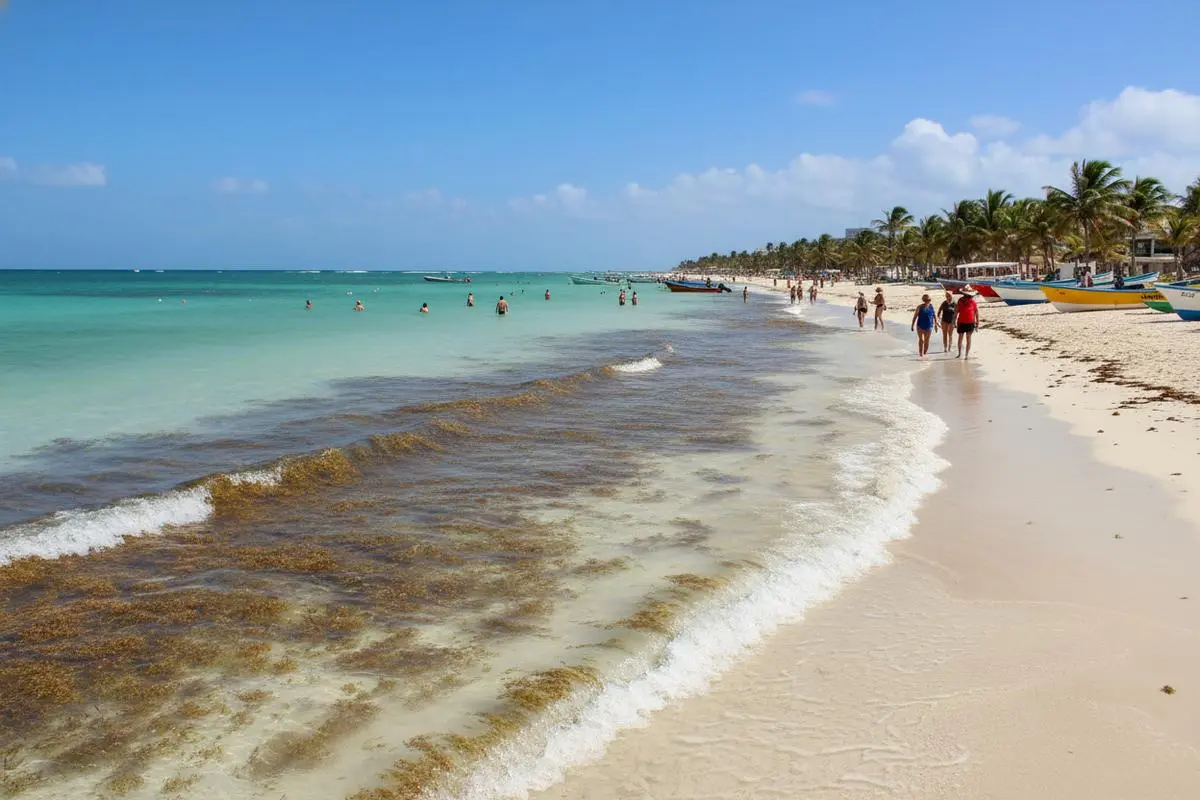
Playa del Carmen Sargassum 2026: Worst Months
Playa del Carmen Sargassum in 30 Seconds
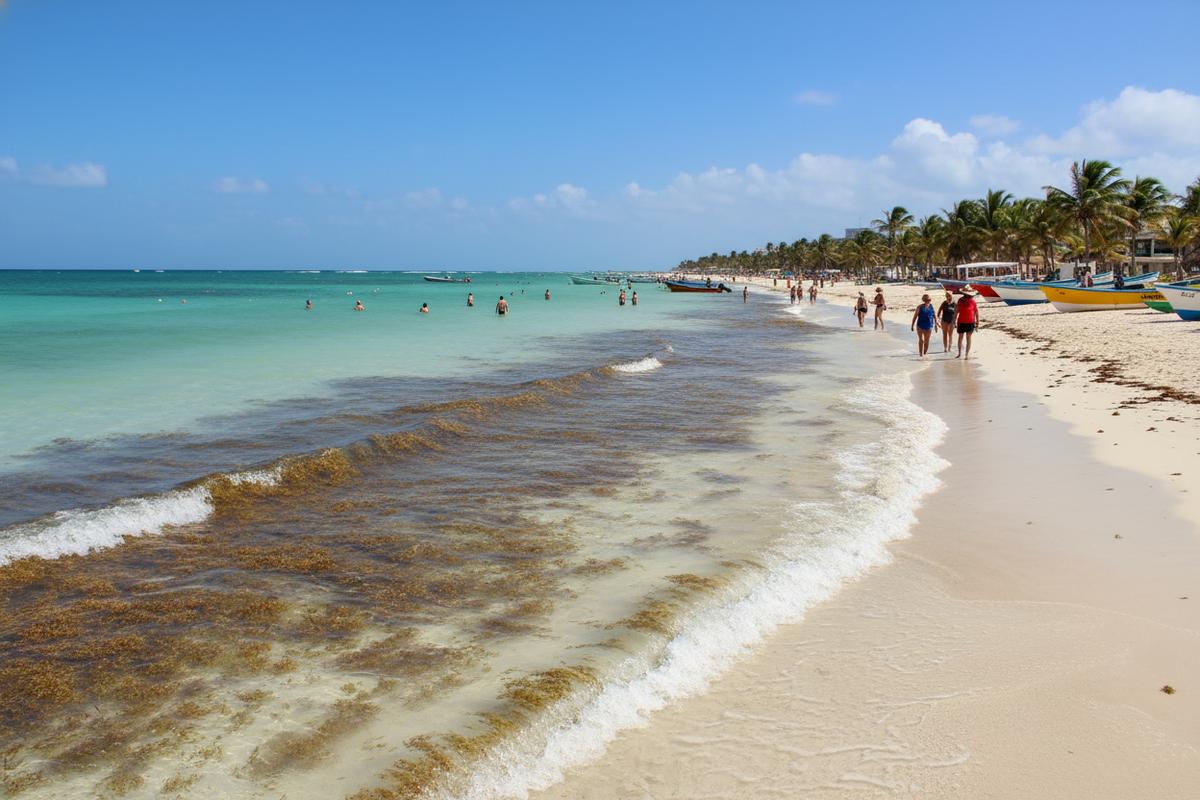
Playa del Carmen sargassum season usually runs from March through October, with the highest risk from May through August. Central Playa and Playacar can still have clear mornings, but they are more exposed than Isla Mujeres and Cozumel’s west coast, so summer beach quality can change fast.
Book Playa in peak sargassum months only if you want a flexible town base: restaurants on foot, the Cozumel ferry, cenotes, hotel pools, and easy inland day trips. If your trip depends on guaranteed clear water outside your room, choose different dates or compare Mexico beaches without sargassum before locking a hotel.
Before arrival, check beach reports from How Is The Sargassum, satellite-based risk from NOAA, and broader outlook notes from USF’s Sargassum Watch System. Use this page with our broader Mexico sargassum season guide, then decide week by week instead of trusting one old beach photo.
Why Playa del Carmen Gets Hit Harder
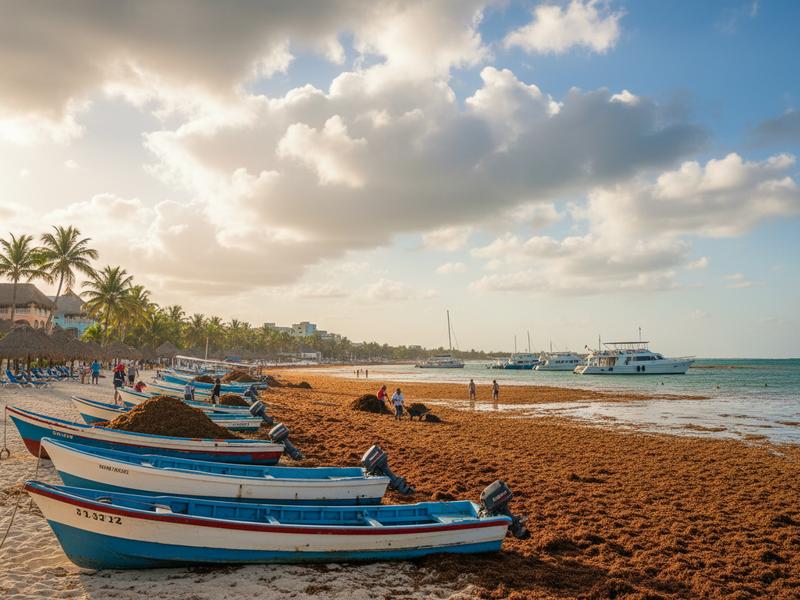
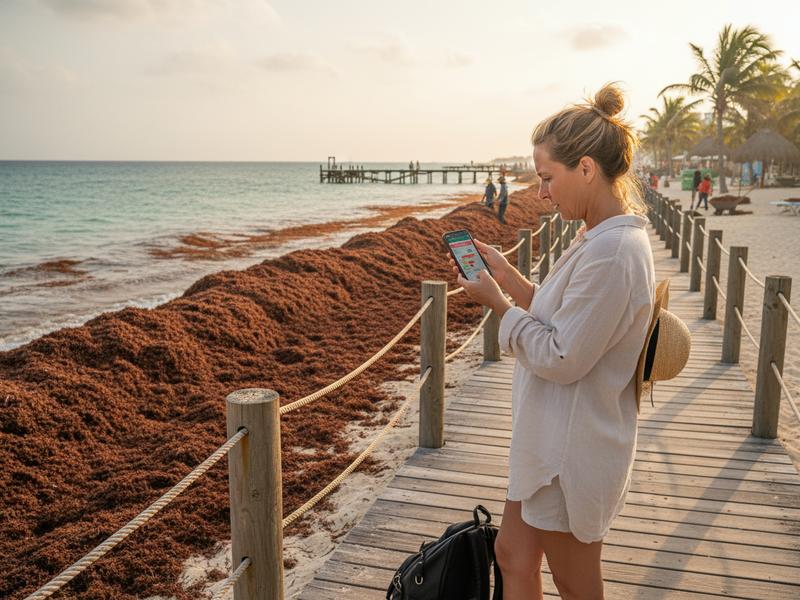
Playa del Carmen sits on a long, exposed stretch of the Riviera Maya. When wind and current push seaweed toward the coast, central beaches can receive it directly. Cleanup crews work hard, but a heavy overnight arrival can overwhelm a beach by morning.
The beach also narrows in parts of town. That means piles on the sand feel closer to restaurants, beach clubs, and walking paths than they might at a larger resort beach. Even when the water is technically swimmable, the smell can affect the experience if seaweed decomposes in heat.
This does not mean every day is bad. Sargassum often moves in waves. A beach can look rough one morning, improve after cleanup, and be fine two days later. That is why Playa rewards travelers who do not prepay every beach club and do not measure the whole trip by one shoreline.
For month-specific weather, pair this with best time to visit Playa del Carmen and our Playa del Carmen travel guide.
Best Areas to Stay in Playa During Sargassum Season
During peak seaweed months, I would choose hotel area by lifestyle first and beach second.
Central Playa works if you want restaurants, nightlife, shops, and ferry access. The beach can be mixed, but your backup options are excellent. You can wake up, check the water, and decide in minutes whether it is a beach morning, Cozumel day, cenote day, or long lunch day.
Playacar can feel calmer and more resort-like. Some sections have better-managed beach areas, though sargassum can still arrive. It is a good compromise for families or couples who want a resort feel without giving up access to town.
North of town can give you larger resorts, better pools, and more space, but you may lose walkability. That is fine if the hotel has enough on-site value. It is frustrating if you need taxis every time the beach disappoints.
Use best hotels in Playa del Carmen for hotel research, then filter reviews by the same month you plan to travel.
Cozumel Is the Best Playa Del Carmen Pivot
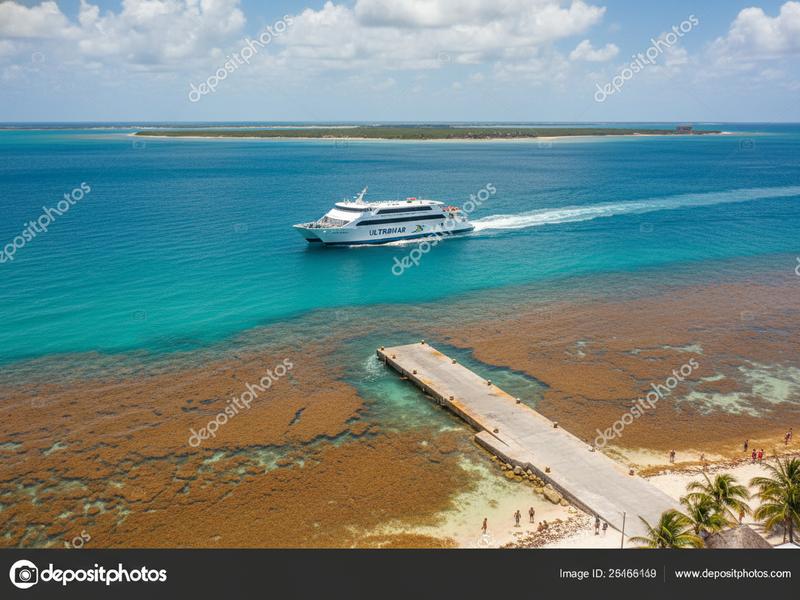
The ferry is the reason I do not write Playa del Carmen off during sargassum season. If mainland beaches are brown, Cozumel’s west coast may still be blue because it faces the channel rather than the open Caribbean.
A Cozumel day is simple: walk to the ferry, cross in about 35-45 minutes, then choose a beach club, snorkeling trip, or taxi loop. Budget $20-45 USD ($340-765 MXN) per adult for ferry tickets depending on operator and class. Add $15-40 USD ($255-680 MXN) for taxis and $20-80 USD ($340-1,360 MXN) for beach club spending depending on how you travel.
Do not assume all of Cozumel is clear. The east coast can get seaweed too. For swimming and snorkeling, focus on the west side and check same-day reports. Our Cozumel travel guide and best beaches in Cozumel are the next reads.
Cenotes, Ruins, and Non-Beach Days
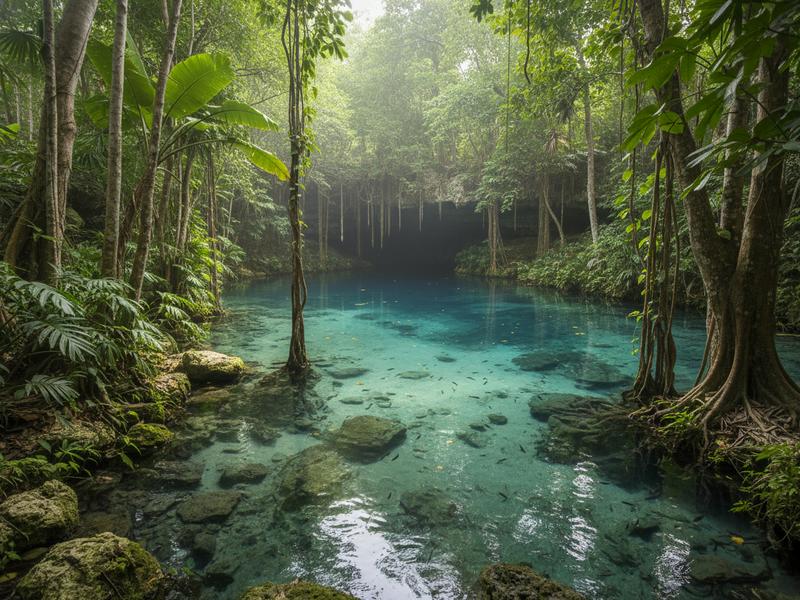
Playa del Carmen is one of Mexico’s best bases for non-beach recovery days. Cenotes near town are easy, varied, and not affected by seaweed. Some feel like open jungle pools; others are cave systems with dramatic light and colder water. Independent visits can cost $10-30 USD ($170-510 MXN) per cenote before transport. Guided multi-cenote tours usually land around $50-120 USD ($850-2,040 MXN) per person.
Ruins are another strong option. Tulum, Coba, Chichen Itza, and Ek Balam can all work from Playa, depending on how long a day you want. If the coast is unpleasant, leaving early for an inland day often feels better than waiting around for cleanup.
Food also matters. Playa has enough restaurants, cafes, taco spots, and bars to keep a trip moving. Use best restaurants in Playa del Carmen and things to do in Playa del Carmen to build a plan that is not beach-dependent.
Final Playa del Carmen Sargassum Advice
Book Playa del Carmen in sargassum season if you want a flexible town, not a guaranteed beach. Stay somewhere you like even when the water is not perfect. Keep a Cozumel day open. Budget for cenotes. Avoid locking every day into prepaid beach clubs.
If you are choosing between Caribbean bases, compare Cancun sargassum season for resort backup and Isla Mujeres sargassum season for clearer water odds. If you want the lowest seaweed risk, switch to Mexico beaches without sargassum.
My Playa booking filter
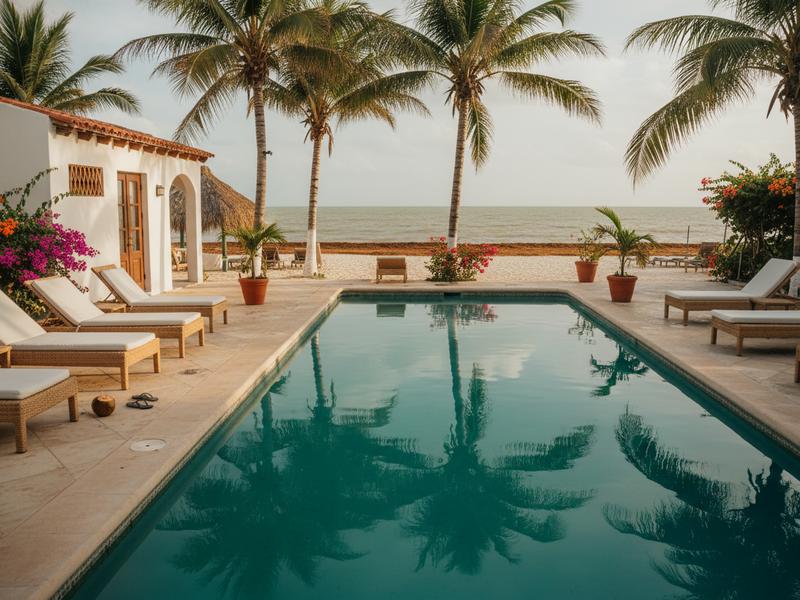
For Playa del Carmen in peak seaweed months, I would book around mobility. Can I walk to dinner? Can I reach the Cozumel ferry quickly? Can I get to cenotes without a painful transfer? Do I like the hotel pool enough to spend a full afternoon there? If the answer to those questions is yes, Playa can still be a good summer base.
I would be more cautious with isolated beachfront resorts north or south of town unless the resort itself is strong. Isolation is lovely when the beach is clear. It is frustrating when the shoreline smells bad and every alternative needs a taxi. If you want isolation, pay for a hotel with excellent pools, food, shade, and honest cleanup.
How to use Cozumel well
Do not wait until noon to pivot to Cozumel. If Playa looks bad and Cozumel reports look better, go early. Ferries, taxis, and beach clubs all get busier as other travelers make the same decision. Bring reef-safe sunscreen, cash for taxis, and enough flexibility to switch from beach club to snorkeling or lunch if wind changes.
The west coast of Cozumel is the usual target, but ask where the water is best that day. A local taxi driver, dive shop, or beach club can often tell you more than a hotel receptionist on the mainland. If conditions are mixed, choose a place with a pool or good food so the day is not binary.
When Playa is the wrong choice
Playa is the wrong choice if you want silence, guaranteed beach photos, and no planning. It is also a weak choice if your budget leaves no room for ferries, cenotes, or taxis. The town gives you options, but options cost either money or energy.
Playa is the right choice if you want a flexible base and would enjoy the trip even with two non-beach days. The food, walkability, Cozumel access, and cenotes can more than make up for messy water if you arrive with the right expectations.
A realistic three-night Playa plan
For a short Playa del Carmen trip, I would make the first morning a beach test, not a prepaid commitment. Walk the central beach early, check smell and water color, then decide. If it is good, rent chairs or pick a beach club. If it is rough, take the ferry to Cozumel before crowds build. If wind makes Cozumel questionable too, switch to cenotes or a food-focused town day.
The second day should be inland by design. A cenote route, Coba, Tulum ruins, or Valladolid gives the trip variety and keeps you from measuring every hour against the beach. The third day can return to the coast if conditions improve. This rhythm feels much better than standing on the sand every morning hoping nature changes.
What to ask Playa hotels before arrival
Ask whether the beach in front of the hotel is currently swimmable, not merely open. Ask how far guests walk to find clearer water, whether the hotel has beach cleanup, and whether pool space gets crowded when the beach is affected. If you are staying in a condo or small hotel, ask who handles cleanup on that stretch. Public and semi-public beach management can vary block by block.
If you are choosing between a beach hotel and a town hotel, be honest about your habits. If you will leave the hotel for every meal anyway, a town location with a nice pool may beat an expensive beach room. If you want quiet resort time, make sure the resort delivers even when the shoreline is not the star.
When to choose somewhere else
Choose somewhere else if your group wants a classic beach-resort week with minimal movement. Cancun, Isla Mujeres, Cozumel, Huatulco, or Puerto Vallarta may fit better depending on the season. Choose Playa if you will enjoy the town itself. Sargassum hurts Playa most when travelers book it as only a beach destination, because the town’s real strength is how much else sits within easy reach.
The bottom line for Playa
Playa del Carmen is a good sargassum-season choice only when you want the town as much as the beach. If your ideal day includes breakfast at a cafe, a beach check, a ferry option, tacos, shopping, a rooftop pool, and dinner on foot, Playa gives you a lot of control. If your ideal day is walking from room to perfect water with no decisions, pick different dates or a different coast.
The smartest Playa travelers stay loose. They do not judge the whole trip by the first shoreline they see. They ask locals where water is clearer, move early, and spend money only after checking conditions. That approach turns Playa’s exposure into a manageable inconvenience instead of a vacation-defining problem.
If you still choose Playa, make the trip intentionally varied. Book one restaurant you are excited about, mark two cenotes, save the Cozumel ferry schedule, and keep one lazy pool afternoon open. Those details sound small, but they change the emotional frame of the trip. You are not waiting for the beach to behave; you are using Playa as a base for several good versions of the Riviera Maya.
That is the fairest way to judge Playa in summer. It is not the lowest-risk beach choice in Mexico, but it is one of the easiest places to turn a bad beach morning into a good travel day. Use that strength deliberately, and Playa remains useful even when the shoreline is having a bad week. The best Playa trip is a moving trip: beach when it is good, town when it is not, island when reports look better, and cenotes whenever you need guaranteed clear water. That simple rhythm is what makes the town worth considering. Build around options, not promises.