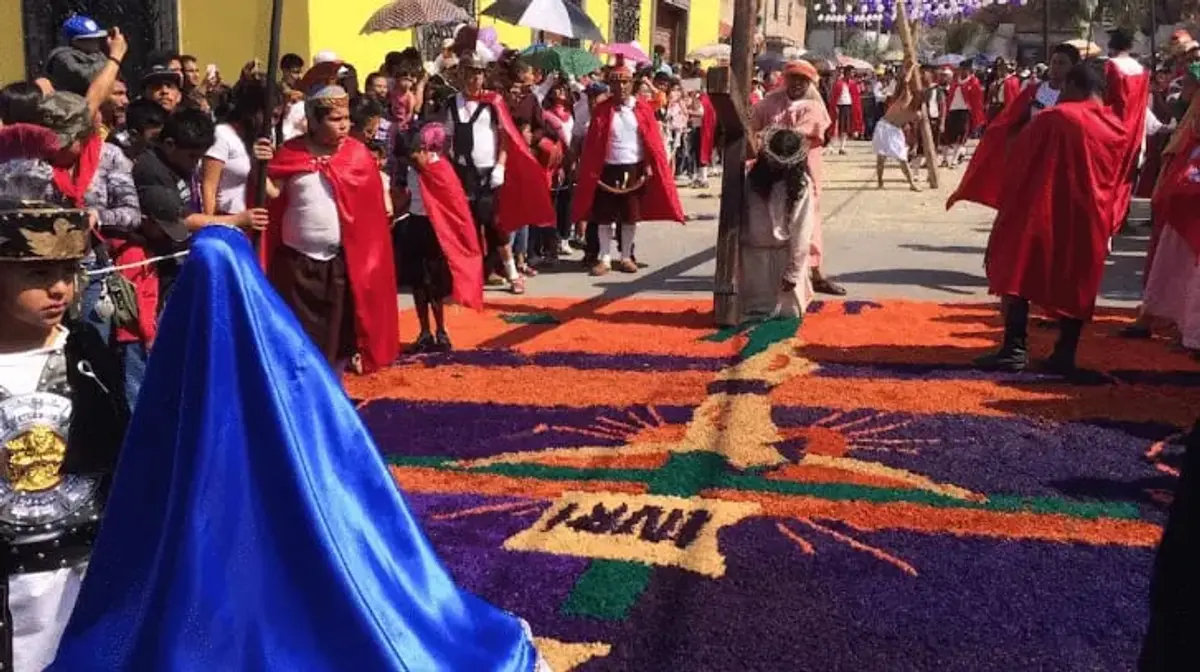
Semana Santa in San Miguel de Allende 2026: Official Schedule, Processions, Best Areas
Semana Santa in San Miguel de Allende is worth it if you want the official Holy Week schedule, the Good Friday Procession of Silence, and a city where you can still have a good dinner and drinks after the religious events end. For most travelers, the smartest plan is to stay in Centro, Guadiana, or Ojo de Agua and focus your trip on Thursday night through Holy Saturday.
The biggest dates in 2026 are Palm Sunday on March 29, Holy Thursday on April 2, Good Friday on April 3, Holy Saturday on April 4, and Easter Sunday on April 5. The signature events are the Good Friday Procession of Silence from the Oratorio de San Felipe Neri, church ceremonies and alfombras through the week, and the Quema de Judas on Holy Saturday. San Miguel is less severe than Taxco and easier for first-time visitors than Oaxaca if you want tradition without giving up comfort.
Semana Santa in San Miguel de Allende in 30 Seconds
| Need | Short answer |
|---|---|
| Best day to go | Good Friday, April 3 for the Procession of Silence |
| Best for | Travelers who want Holy Week tradition plus restaurants, bars, and boutique hotels |
| Main event | Good Friday Procession of Silence from the Oratorio |
| Most festive moment | Quema de Judas on Holy Saturday |
| Best area to stay | Centro for first-timers, Guadiana/Ojo de Agua for a quieter walkable base |
| Worth it if nightlife matters? | Yes, more than Oaxaca or Taxco |
| Ley Seca? | No general Guanajuato dry law |
| Better base if SMA is sold out | Querétaro for a day trip |
If you’re deciding between Easter destinations in Mexico, San Miguel works best for travelers who want a strong Semana Santa atmosphere without giving up comfort, nightlife, or easy logistics. If you are still comparing options, read Semana Santa in Oaxaca, Semana Santa in Taxco, and Mexico City to San Miguel de Allende.
Best San Miguel de Allende Area During Semana Santa by Trip Style
| Trip style | Best area | Why |
|---|---|---|
| First trip, want to walk everywhere | Centro / near El Jardín | Closest to La Parroquia, the Oratorio, and the main procession route |
| Want quieter nights but still walkable | Guadiana | Easier sleep, still close enough to walk into the center |
| Want views and a residential feel | Ojo de Agua | Calm base above the center, good if you do not mind hills |
| Booking late and centro is overpriced | Outer centro edge / upper hillside guesthouses | Usually better value than postcard-core boutique hotels |
| San Miguel is too expensive | Querétaro | Best backup for a same-day Good Friday or Holy Saturday visit |
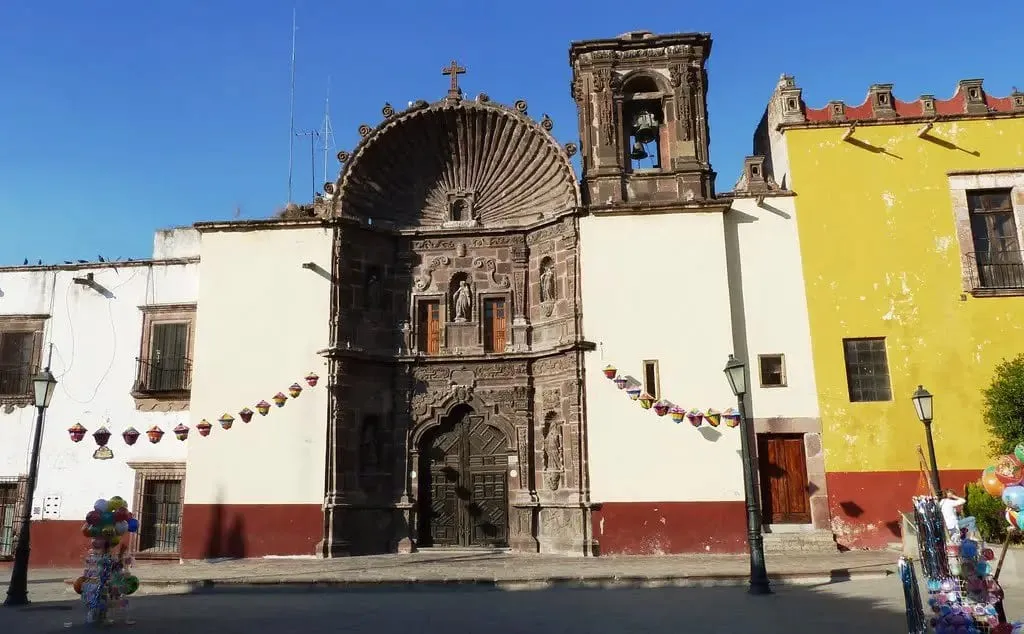
What Makes San Miguel’s Semana Santa Stand Out
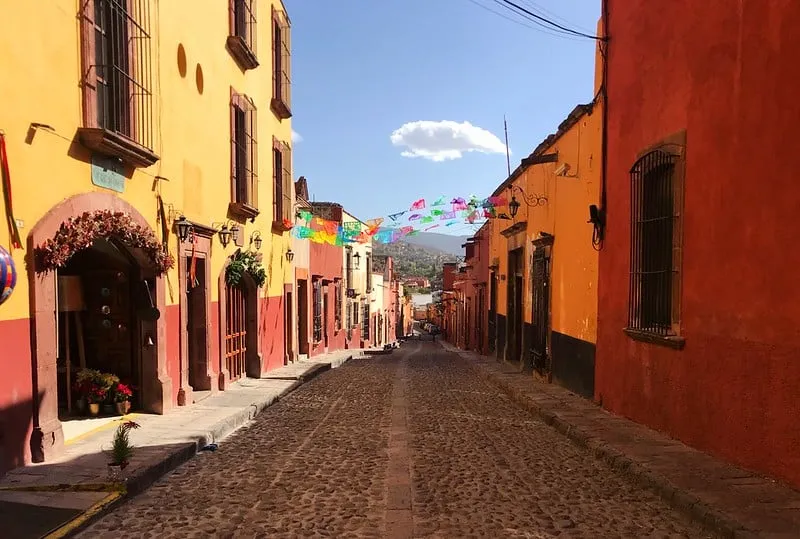
San Miguel draws a specific kind of Holy Week crowd: Mexican families from Guadalajara, León, and Querétaro alongside international visitors who’ve heard that the city transforms during Easter. It’s not wrong. The difference between SMA on a normal March weekend and SMA during Holy Week is significant.
Three things that set it apart:
-
El Jardín as stage set: The city’s central garden is ringed by historic buildings. Processions end here, mojigangas perform here, and the burning of Judas on Holy Saturday happens here or in the adjacent streets. The colonial architecture amplifies everything.
-
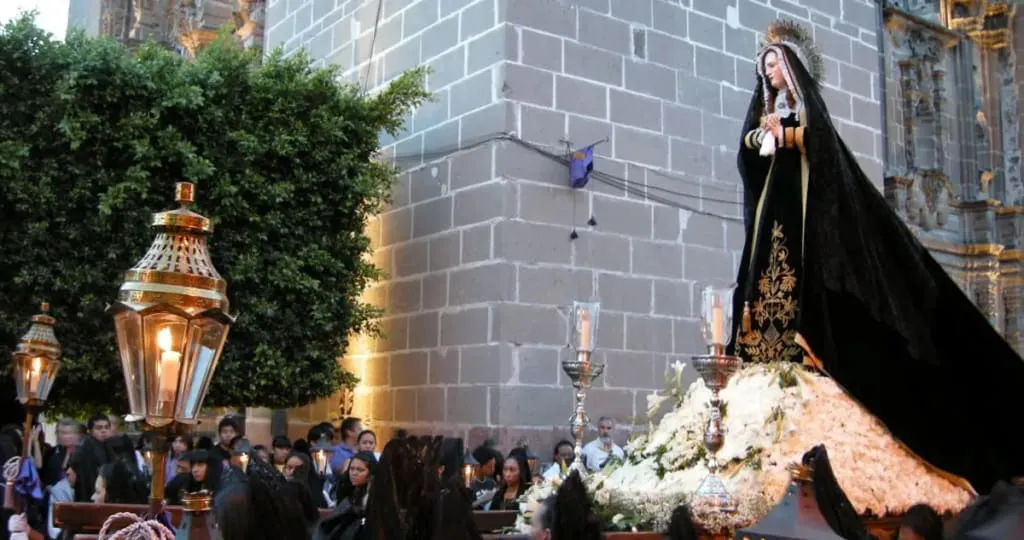
Oratorio de San Felipe Neri’s Holy Burial Procession: San Miguel’s most important Semana Santa event — not La Parroquia’s. The Oratorio’s Friday night procession carries a glass coffin containing a revered Christ figure through the streets in near-total silence. Attendance runs 2-3 hours. One of the most moving religious events in Mexico.
-
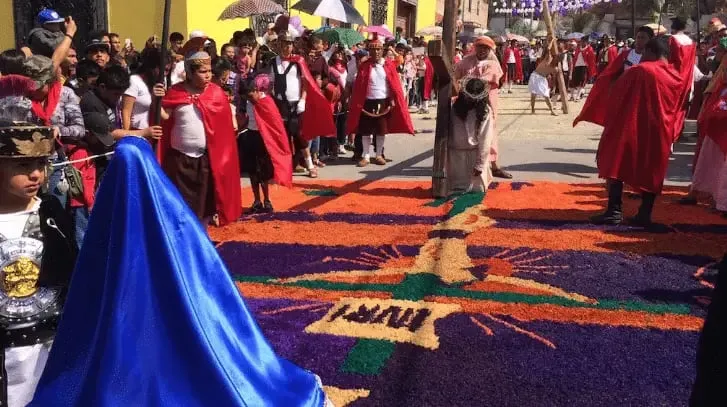
Alfombras (street carpets): Like Oaxaca but on cobblestone colonial streets, neighborhood families and brotherhoods create elaborate carpets of flowers, colored sawdust, and pine needles for processions to walk over. The best ones appear dawn to early morning before they’re destroyed by the procession. Palm Sunday and Holy Thursday dawn are the times to look.
Official Schedule by Day
Palm Sunday — March 29
Palm Sunday Mass: La Parroquia and the Oratorio hold Palm Sunday masses with the distribution of palm leaves woven into crosses and figures — a craft that has its own artisan industry in the area. The Zócalo (El Jardín) fills with vendors selling palms by morning.
Afternoon procession: A full procession from Oratorio de San Felipe Neri through the historic center, ending at La Parroquia. Good time to see the full pageantry before the week’s intensity builds.
Practical: This is arrival day for most visitors. Hotels at full occupancy. Restaurant waits start here.
Holy Monday–Wednesday (March 30–April 1)
Stations of the Cross: Daily Via Crucis at churches across the city. The Sanctuary of Atotonilco, 15km outside SMA, holds its own Stations of the Cross — the sanctuary’s interior murals were the inspiration for what the Spanish called “Mexico’s Sistine Chapel.” Bus connections run from SMA center.
Mojigangas begin: Giant papier-mâché figures (mojigangas) — 3-4 meters tall, animated by performers inside — start appearing in the streets for evening entertainment. They’re traditional to San Miguel, and they dance, gyrate, and terrorize children in the most affectionate way. Look for them in the Callejón del Chorro and around La Parroquia at dusk.
Photography note: Holy Monday through Wednesday is the easiest time for photography — less crowded than Palm Sunday and Good Friday, morning light on La Parroquia’s facade, alfombras being constructed.
Holy Thursday — April 2
Last Supper Ceremony: Formal re-enactment at La Parroquia and the Oratorio. One of the most attended services of the week.
Washing of Feet (Lavatorio de Pies): Traditional ceremony where a priest washes the feet of 12 men representing the apostles. Happens at major churches throughout the afternoon.
Night Procession: A long, candlelit procession departing the Oratorio de San Felipe Neri. Unlike Good Friday’s silence, Thursday night allows more ambient noise and movement — the visual spectacle of thousands of candles moving through colonial streets at night is striking.
Good Friday — April 3
The Day of Everything:
Morning: Stations of the Cross through the city. Participation is open to anyone — many visitors join the procession for the full route.
Afternoon — Procession of Silence: The central event of San Miguel’s entire Semana Santa. Departing from the Oratorio de San Felipe Neri at approximately 3-4 PM, this procession moves in near-complete silence through the historic center. Participants wear white tunics and hoods. The Christ figure in the glass coffin is carried on a float. Thousands of Sanmiguelenses (local residents) and pilgrims walk behind. The crowd on the sidelines observes in silence.
Duration: 2-2.5 hours. Route passes through El Jardín.
Photography etiquette: Unlike Chamula’s absolute photo ban, photography of the procession is generally permitted — but read the mood. When the coffin passes, people are in genuine religious grief. Many observers cry. Take the moment seriously. Lower the phone during the most intense segments.
Ley Seca Note: San Miguel de Allende is in Guanajuato state. Guanajuato state does not enforce a blanket Ley Seca on Good Friday, though individual establishments may choose to close or limit service. Most bars and restaurants in SMA remain open. This is different from Guerrero state (Taxco), which has a full dry law Thursday–Saturday.
Holy Saturday — April 4
Quema de Judas (Burning of Judas): The most theatrical and surreal event of Semana Santa. Papier-mâché Judas figures — often caricatures of corrupt politicians, celebrities, or generic “bad people” — are exploded with fireworks in the streets around El Jardín. The mojigangas return. The atmosphere shifts from somber to carnivalesque. This is the moment when the week’s religious intensity releases into celebration.
Timing: Usually mid-morning to early afternoon. El Jardín and surrounding streets.
Easter Vigil: La Parroquia and the Oratorio hold the Easter Vigil mass starting around 9-10 PM. Ends near midnight with bells.
Easter Sunday — April 5
Easter Mass: La Parroquia at 10-11 AM, typically packed. The week officially ends. City begins depressurizing.
Departure day: Most visitors check out Easter Sunday morning. If you’re staying an extra day (Monday), you’ll have the city significantly quieter.
Ley Seca in Guanajuato vs Other States
| State | Ley Seca 2026 | Days |
|---|---|---|
| Guanajuato (San Miguel de Allende) | ❌ No general ban | None |
| Mexico City | ❌ No ban | None |
| Quintana Roo (Cancún/Tulum) | ❌ No ban | None |
| Jalisco (Guadalajara, Puerto Vallarta) | ✅ Partial | Good Friday Apr 3 |
| Guerrero (Taxco/Acapulco) | ✅ Full | Thu Apr 2–Sat Apr 4 |
| Oaxaca | ✅ Partial | Good Friday Apr 3 only |
San Miguel’s bars and restaurants stay open all week — this is a significant draw for the international expat and visitor community. The city has a large wine and cocktail culture around the El Jardín / Recreo street area.
Where to Stay for Semana Santa
If you want to be able to walk to the main processions, stay in the historic center, Guadiana, or Ojo de Agua. Those areas keep you close enough to El Jardín and the Oratorio without forcing you to deal with road closures every time you move around.
Best setup for most travelers: a boutique hotel or apartment 10-15 minutes on foot from El Jardín. You still get the atmosphere, but you avoid some of the loudest late-night congestion right in the core.
What sells out first: luxury and design-forward hotels in the centro histórico. San Miguel’s best-known properties often fill first for Good Friday and Holy Saturday.
Budget-friendly move: look at smaller guesthouses and apartments in Guadiana, Ojo de Agua, or the hills just above the center. They are usually cheaper than the postcard-core blocks and still walkable.
Nearby alternative: Querétaro is the cleanest backup base if San Miguel prices spike. You can day-trip in for Good Friday or Holy Saturday, then return after the crowds. See day trips from Querétaro and best hotels in Querétaro.
Biggest Mistakes to Avoid
- Arriving on Good Friday without a hotel plan. San Miguel gets crowded fast, and last-minute center stays can be painfully overpriced.
- Driving into the historic center during procession hours. Street closures and pedestrian congestion make this a bad idea.
- Treating Good Friday like a party event. Holy Saturday is festive, but Good Friday is still a serious religious observance.
- Assuming every event happens at La Parroquia. The Oratorio de San Felipe Neri is central to the most important Holy Week procession.
- Skipping a backup dinner reservation. Restaurants stay open, but peak evening slots disappear.
Getting to San Miguel de Allende
From Mexico City (most common): ETN or Primera Plus bus from Terminal Norte, not TAPO. Travel time is usually 3.5-4 hours. Semana Santa return departures sell out first, so book the Sunday or Monday return before you arrive. See Mexico City to San Miguel de Allende.
From Guadalajara: Usually a bus connection via Querétaro or León, or a drive on MEX-45D. Expect roughly 5-6 hours by bus connection or about 4 hours by car. See Guadalajara to San Miguel de Allende.
From Guanajuato City: Around 1.5 hours by car. This is a good same-region add-on if you want to pair two colonial cities in one trip. If you’re comparing bases, read Guanajuato City travel guide.
Parking: San Miguel’s narrow colonial streets were not designed for cars. During Semana Santa, the historic center’s streets close entirely for processions. Park at the outskirts (Estadio Municipal parking area off Salida a Celaya) and walk in. Do not attempt to drive into the historic center during procession hours.
Practical Tips
Crowds: San Miguel holds approximately 170,000 permanent residents. Semana Santa brings an estimated 50,000-80,000 visitors over the week. El Jardín on Good Friday afternoon is genuinely packed — shoulder-to-shoulder in places. Arrive early for good viewing positions.
Altitude: 1,870 meters. Not as acute as Mexico City (2,240m) or Guanajuato (2,090m), but if you’re coming from sea level, one day of acclimatization helps. Hydrate, pace yourself during the outdoor events.
Weather: Late March in San Miguel is warm and dry. Days reach 24-28°C, nights drop to 10-14°C. The dry season peak means clear blue skies — good for photos. Evenings and night processions require a light jacket.
Cash: Many Semana Santa vendors (alfombra materials, street food, artisan stands around the procession routes) are cash-only. Most restaurants and hotels take cards. ATMs at Bancomer, HSBC, and Santander near El Jardín. Expect queues on Good Friday.
Restaurants: San Miguel’s restaurant scene is excellent. During Semana Santa, seafood is traditional (Catholics abstain from meat on Good Friday). Mariscos, bacalao, and camarones dominate Friday menus. Book dinner reservations for Wednesday–Saturday well in advance — walk-ins are possible but risky.
Frequently Asked Questions
What is the main Semana Santa event in San Miguel de Allende?
The Procession of Silence on Good Friday (April 3, 2026), departing from Oratorio de San Felipe Neri. The procession carries a glass coffin with a revered Christ figure through the historic center in near-complete silence. Duration: 2–2.5 hours. It’s the most emotionally powerful event of the week. Most visitors also attend the Quema de Judas on Holy Saturday morning for the contrast — the week’s solemnity explodes into fireworks and mojigangas.
Is there a Ley Seca in San Miguel de Allende during Semana Santa?
No. Guanajuato state does not enforce a blanket dry law during Holy Week. Bars, restaurants, and stores remain open throughout, including Good Friday (April 3). This is different from Guerrero state (Taxco/Acapulco), which has a full dry law Thursday through Saturday. San Miguel is one of Mexico’s most bar-forward colonial cities — the wine, cocktail, and mezcal scene runs normally all week.
Can I still find hotels in San Miguel de Allende 8 days before Semana Santa?
Difficult but not impossible. The historic center boutique hotels (Rosewood, Casa Sierra Nevada, Belmond) are fully booked. Check Airbnb and Booking.com for casas and apartments in Rancho Xotolar, Guadiana, or Ojo de Agua neighborhoods — 15-20 minutes walk from El Jardín, 20-30% cheaper. Hostels may have dorm beds. Alternatively, base yourself in Querétaro (60km, 1.5hr) and day-trip for the main events.
How does San Miguel’s Semana Santa compare to Taxco or Oaxaca?
Each has a distinct character. Taxco (Guerrero): most intense penitential tradition, chain-dragging flagellants, full Ley Seca Thu–Sat, silver-mining town atmosphere. Oaxaca: Zapotec–Catholic fusion, more indigenous in character, alfombras made from natural materials, mezcal culture paused Friday only. San Miguel: most photogenic colonial backdrop, largest international/expat audience, mojigangas and burning Judas add carnivalesque energy, no dry law, most nightlife-compatible of the three. Pick based on what you want: austere devotion (Taxco), indigenous tradition (Oaxaca), or colonial spectacle with evening drinks (San Miguel).
What are mojigangas and when do they appear during Semana Santa?
Mojigangas are giant papier-mâché figures, 3-4 meters tall, worn by performers who animate them from inside. They’re traditional to San Miguel de Allende specifically — you won’t find them at Semana Santa in Taxco or Oaxaca. During Holy Week, they appear primarily Holy Monday through Wednesday evenings (street entertainment around El Jardín) and return with full force on Holy Saturday for the Quema de Judas. The contrast between Good Friday’s solemnity and Holy Saturday’s mojigangas + fireworks is one of the week’s defining experiences.