Veracruz City Travel Guide 2026: Fort, Carnival & Gulf Coast
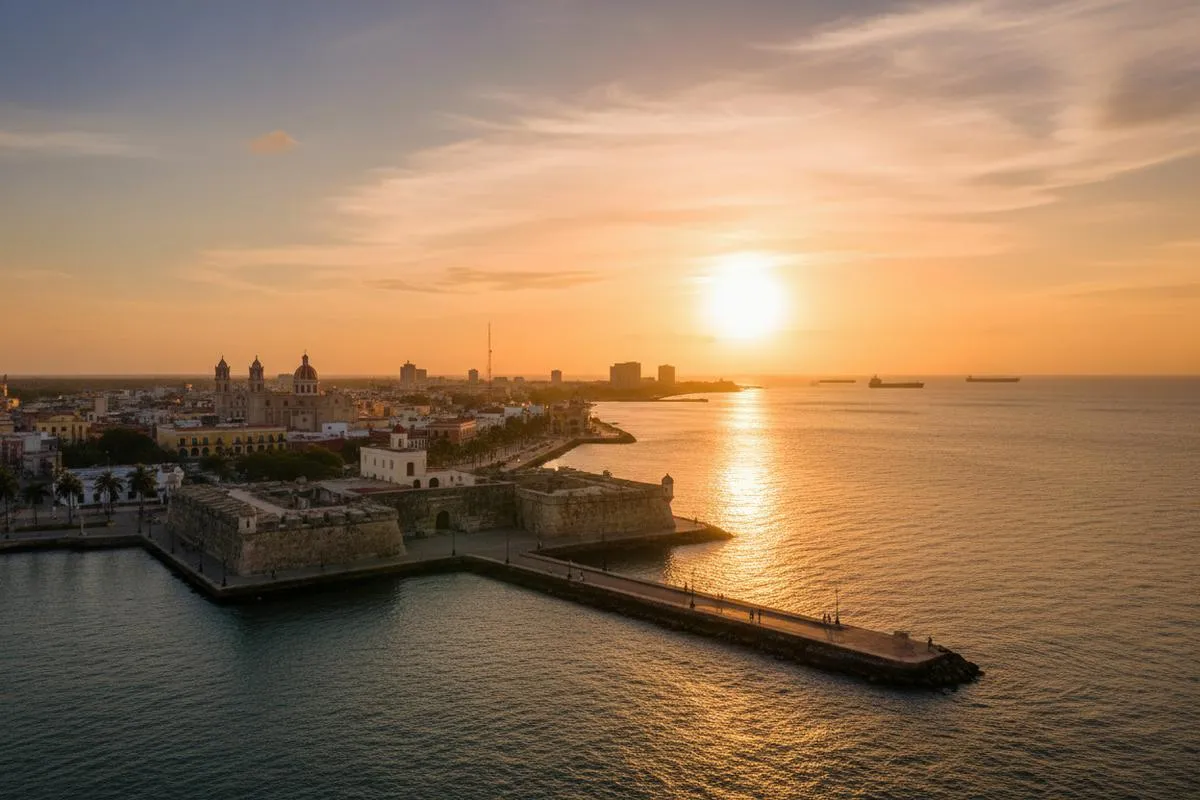
Veracruz City is a port on the southwestern Gulf of Mexico in the state of Veracruz, Mexico — founded by Hernán Cortés in 1519, making it the oldest continuously inhabited European settlement in mainland North America, with a population of approximately 600,000 (metro area 800,000).
It is Mexico’s busiest commercial port, historically the entry point for Spanish colonizers and the gateway through which African cultures arrived during the slave trade — shaping a coastal identity that is louder, saltier, and more rhythmically alive than almost anywhere else in the country.
Why Go to Veracruz
Most tourists skip Veracruz City. They fly into Cancún, Oaxaca, or CDMX and never make it east to the Gulf. That’s both a shame and your advantage — this is a city of 600,000 people operating entirely for itself, not for you.
What you get: one of the world’s great harbor forts, Mexico’s biggest Carnival, a café culture built around tin cups struck together to call the waiter, seafood so fresh the fish was in the Gulf this morning, and a music scene (son jarocho) that produced La Bamba and is still going strong every weekend on the Zócalo.
What you don’t get: Instagram-optimized aesthetics, English menus, or curated tourist zones. Veracruz requires a bit more engagement — and rewards it proportionally.
Fort San Juan de Ulúa
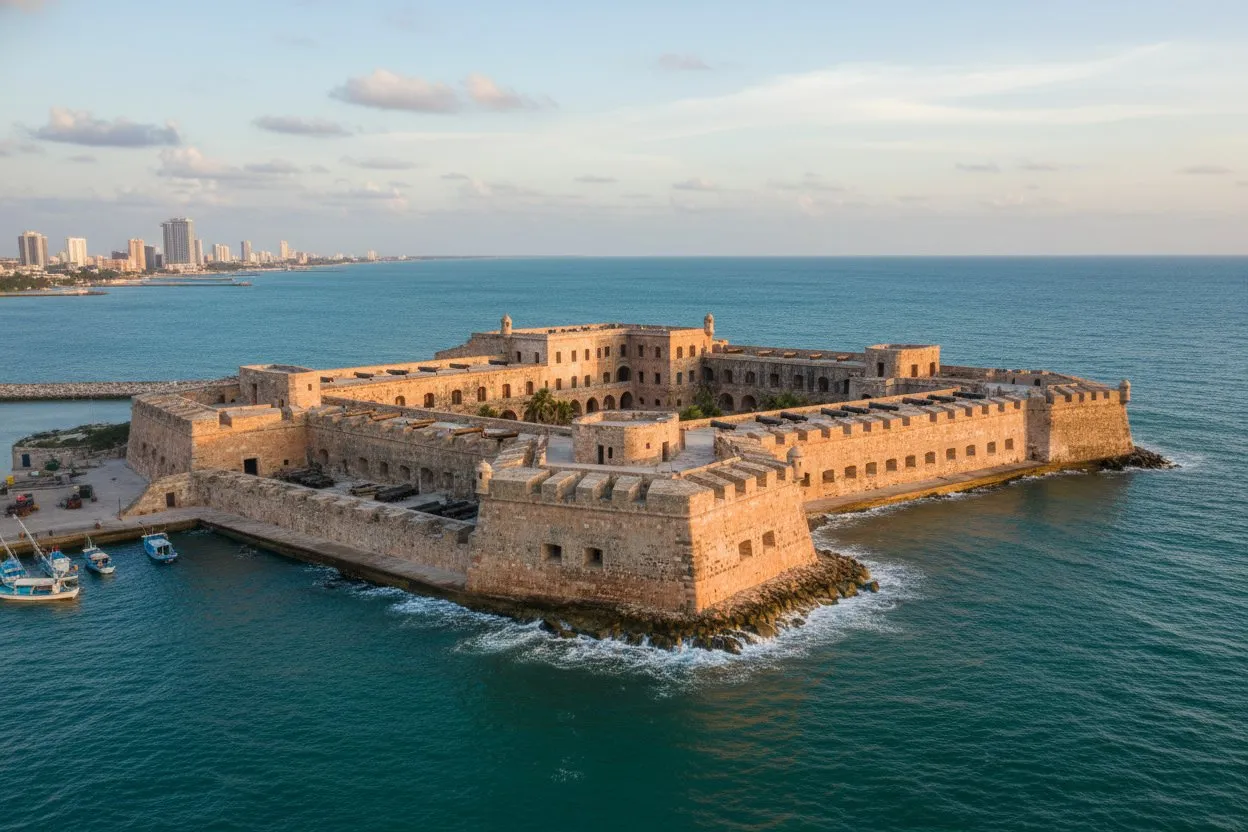
The best single sight in Veracruz is a coral-built island fortress constructed starting in 1535 — the first Spanish military fortification in the Americas. For 300+ years it guarded the approach to New Spain’s most important port, and later served as a prison (Benito Juárez and other political prisoners were held here).
Practical details:
- Getting there: Causeway bridge connects to the island (~2km from the center), or catch the ferry from the Malecón (30–50 MXN round trip)
- Hours: Tuesday–Sunday, 9am–4:30pm
- Entry: ~90 MXN for Mexican nationals, ~175 MXN for foreign tourists
- Time needed: 2–3 hours to do it properly
- Highlight rooms: The royal prison cells (where the condemned heard the sea through the walls), the moat system, and the cannon battery overlooking the port
The fort is larger than it looks from photos. Walk the full perimeter walls for views of both the port (massive container ships slide past) and the city skyline. Bring water — there’s minimal shade in the central courtyard.
Veracruz Carnival
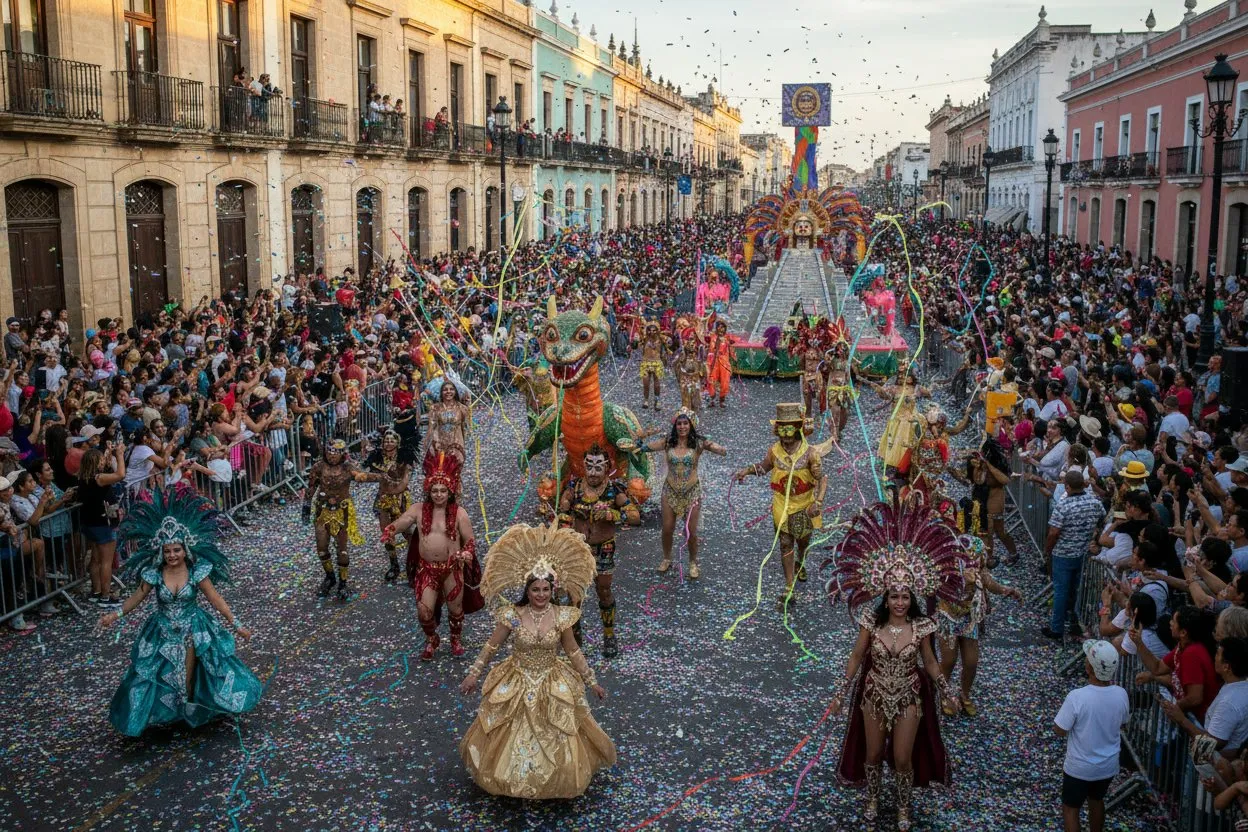
Veracruz Carnival is the biggest in Mexico and one of the largest in Latin America — comparable to Barranquilla (Colombia) in energy if not in scale. It runs for nine days before Ash Wednesday, typically in February.
What actually happens:
- The centerpiece is the “Burning of Bad Humor” (Quema del Mal Humor) on opening night — a parade float carrying a satirical effigy of a public figure or abstract concept is set on fire
- Daily parades down Avenida 16 de Septiembre with floats, comparsas (costumed dancing groups), and massive sound systems
- The “Combate Naval” — a naval battle reenactment in the harbor
- Son jarocho concerts throughout the week
If you’re going: Book accommodation months in advance. Prices triple during Carnival week. The city has ~600,000 residents and receives another 500,000+ visitors for the event.
The Malecón and Zócalo
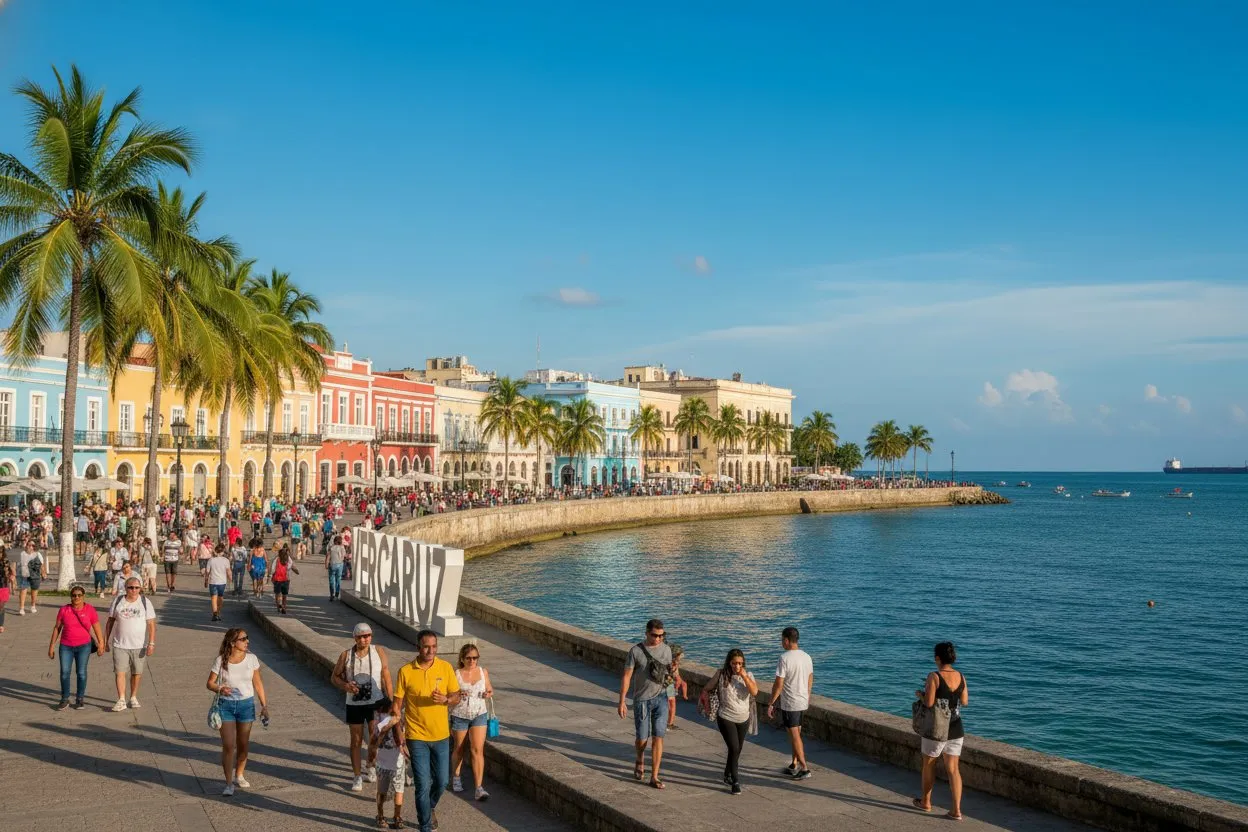
The Malecón is a 3.5km waterfront promenade running from the cruise ship terminal past the historic center. It’s where Veracruz happens: food carts selling ceviche, families walking, marimba bands playing, and joggers who’ve somehow acclimated to the 35°C humidity.
The Zócalo (Plaza de la Constitución) is directly adjacent to the Malecón — one of Mexico’s most socially active main squares. On weekend nights, son jarocho groups gather and anyone can dance. The bandstand hosts live music almost every evening. The cathedral (1721) and Palacio Municipal frame the square.
Key Zócalo buildings:
- Palacio Municipal — the city hall, with a first-floor arcade of restaurants and cafés
- Catedral de Nuestra Señora de la Asunción — modest by Mexican standards but the Zócalo setting gives it character
- Portal de Miranda — the arcaded walkway connecting Zócalo to La Parroquia
La Parroquia: The Only Café That Matters
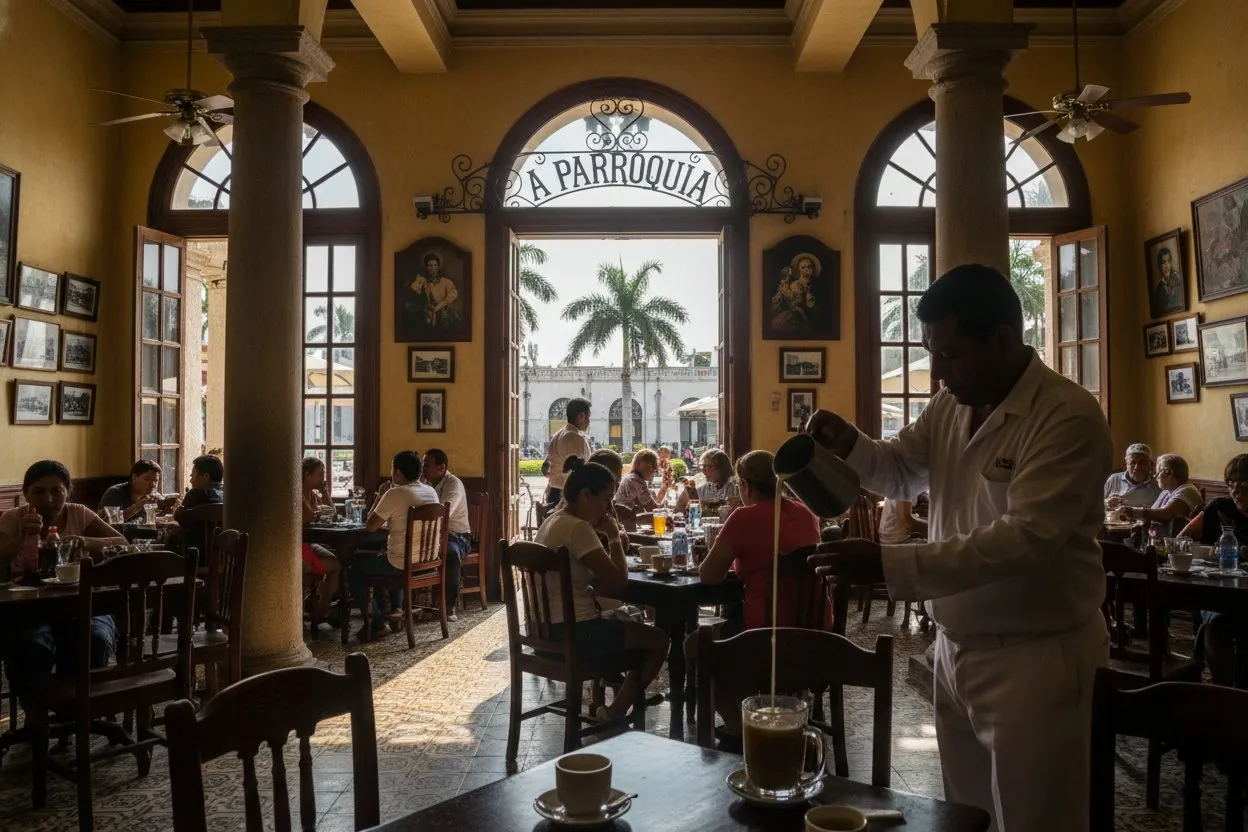
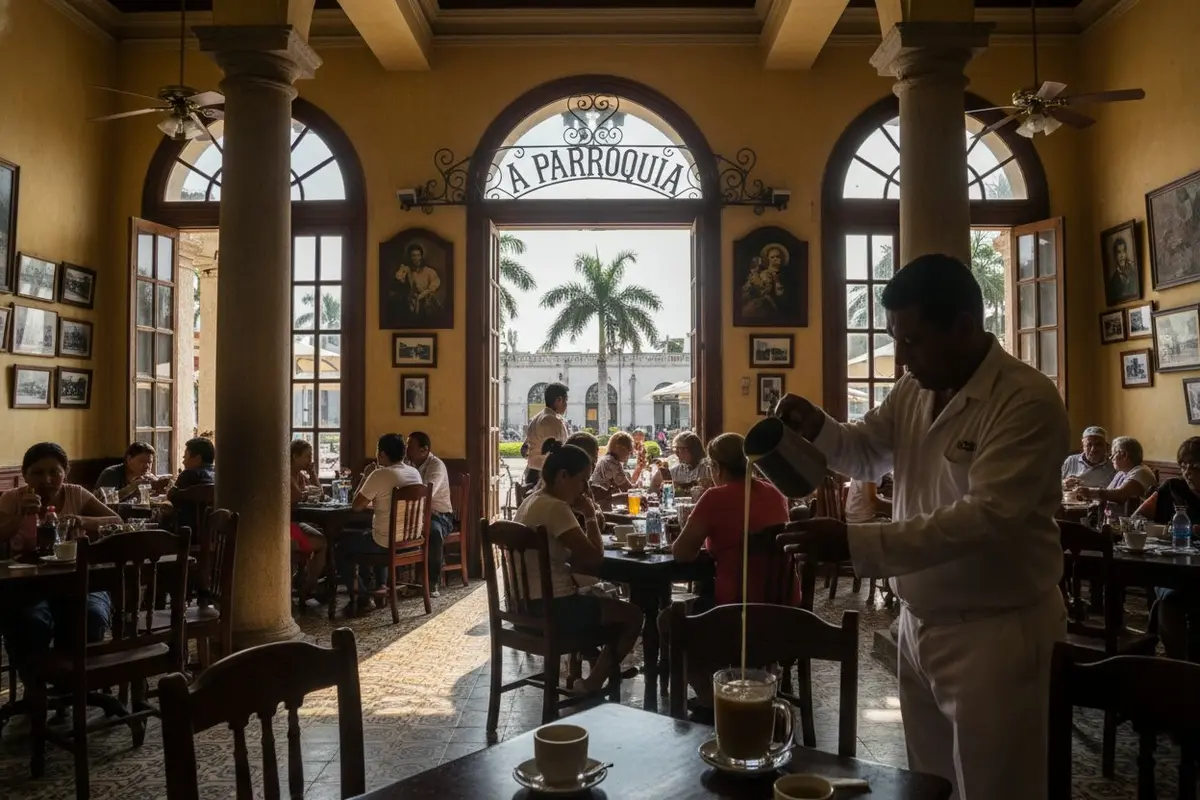
If you do nothing else in Veracruz, go to La Parroquia for breakfast. Not because it’s fancy — it’s a straightforward café — but because of the ritual.
You order a glass of black coffee (café negro) and when you want more milk, you tap your glass with a spoon. A lechero (milk man) materializes immediately with a pot of hot milk, pouring from shoulder height in a thin stream to create foam. The tapping sound echoes constantly through the room — it’s a kind of ambient percussion that defines the Veracruz morning.
- Location: Independencia 187, facing the Malecón
- Hours: Open 24 hours
- What to order: Café lechero, pan de cazón (layered tortilla with shark and black beans), or churros con chocolate
There are now multiple La Parroquia locations. The original on the Malecón is the one worth visiting — the branches in malls don’t have the same atmosphere.
Food in Veracruz
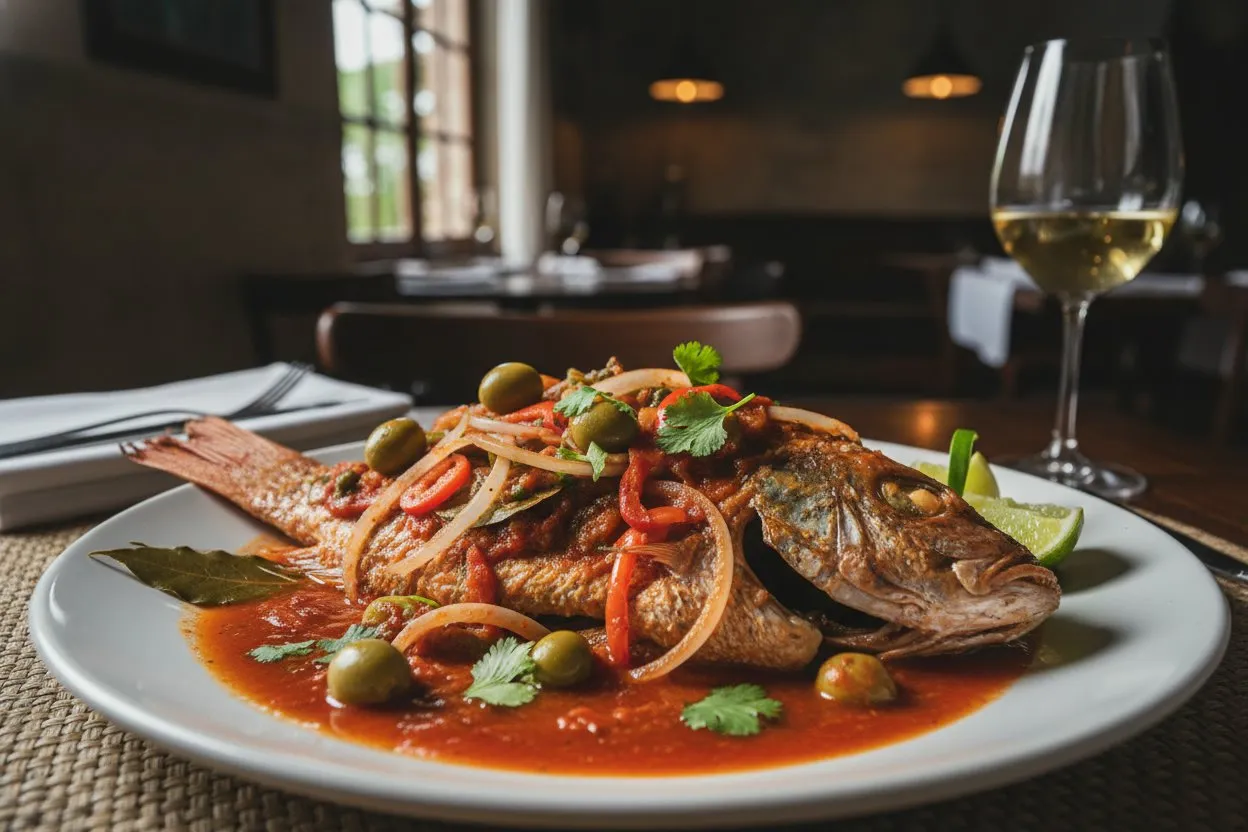
Veracruz cuisine is one of Mexico’s most distinctive — shaped by three influences that met at this port: Indigenous (Totonac, Huastec), Spanish, and African. The result is seafood-heavy, often briny with olives and capers (Spanish), flavored with hierba santa and chiles (Indigenous), and texturally complex in ways that set it apart from other Mexican coastal food.
The Essential Dishes
Huachinango a la Veracruzana — The signature dish: red snapper slow-cooked in a sauce of tomatoes, green olives, capers, pickled jalapeños, and herbs. The olive-caper combination is Spanish (specifically from the Canary Islands, which were the last stop for many ships before crossing the Atlantic). Order it at any marisquería — it’s ubiquitous and it should be.
Pescado a la Talla — Whole fish (usually sea bass or snapper) butterflied and grilled over charcoal, brushed with adobo. Best in Boca del Río at the beach restaurants.
Ceviche Veracruzano — Different from Yucatán or Sinaloa versions: the fish is marinated in lime, then mixed with tomato, onion, cilantro, avocado, and often a splash of tomato juice. Less sour, more complex.
Vuelve a la Vida (“Come Back to Life”) — An octopus, shrimp, oyster, and clam cocktail in a spicy tomato broth. The name refers to its supposed hangover-curing properties. Eaten with saltines.
Tostadas de Jaiba — Blue crab tostadas. The Gulf produces excellent blue crab, and Veracruz prepares it simply: the meat mixed with lime and chile, served cold on a crispy tostada.
Café Lechero — Already covered above, but worth repeating: the hot-milk-poured-from-height ritual defines the Veracruz café experience.
Where to Eat
- Marisquería Villa Rica (Boca del Río) — The best huachinango a la veracruzana in the metro area. Worth the 20-minute taxi from center.
- Marisquería El Mono Blanco (Centro) — Reliable, unpretentious, great seafood cocktails.
- Nevería Güero — For nieves (ice cream) in flavors like queso añejo (aged cheese), mamey, and tejocote.
- Mercado Hidalgo — The central market, best for budget breakfasts and authentic antojitos.
Son Jarocho: Music on the Zócalo
Son jarocho is the folk music tradition of Veracruz — a blend of Spanish, Indigenous, and African rhythms that developed at this port as cultures collided. The most famous son jarocho is La Bamba, which Ritchie Valens popularized in 1958 using a melody that had been played in Veracruz for at least 200 years.
Live son jarocho is performed weekly on the Zócalo, typically Friday and Saturday evenings. The ensemble uses the jarana (a small guitar), harp (arpa jarocha), and requinto. Dancers perform on a wooden board (tarima) — percussive footwork is part of the music.
The Encuentro de Jaraneros in Tlacotalpan (90km south) is the major annual festival, held in late January/early February. If your trip aligns, it’s worth attending.
Getting Around Veracruz City
On foot: The historic center and Malecón are walkable. Most sights (Zócalo, Fort San Juan de Ulúa ferry, La Parroquia, Baluarte de Santiago) are within 1–1.5km of each other.
Taxi: Abundant and metered (or negotiated flat rate). Expect ~80–120 MXN for trips within the center; 150–200 MXN to Boca del Río.
Uber: Available in Veracruz. Often more reliable than street taxis for longer distances. App shows price upfront.
Public buses: Routes connect the center to Boca del Río and suburbs. 7–10 MXN per ride. Fine for budget travelers; crowded in rush hour.
Car rental: Useful if you’re planning day trips to Xalapa or Los Tuxtlas. Book via Rentalcars to compare rates.
Beaches Near Veracruz City
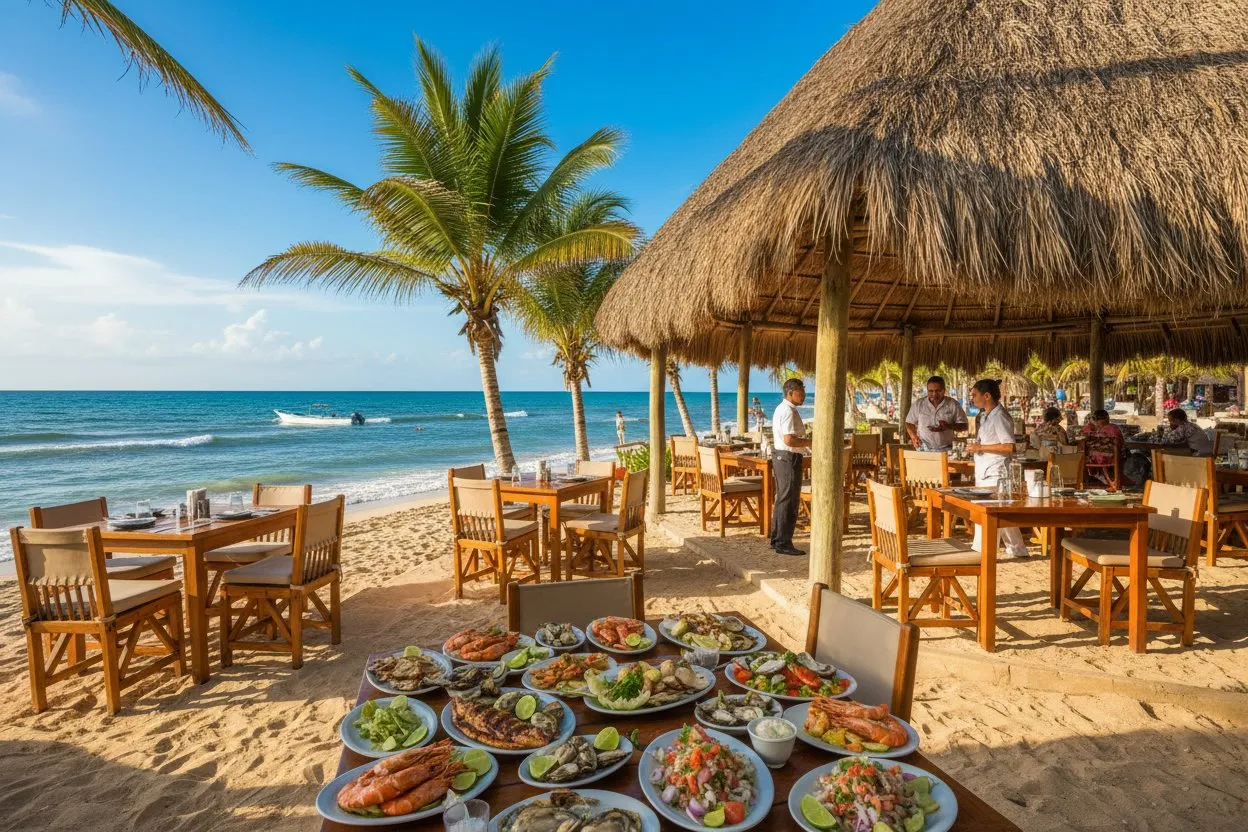
Fair warning: the beaches directly in Veracruz City (Villa del Mar, Mocambo) are not Mexico’s finest. The Gulf is warm but murky compared to the Caribbean, the sand is gray-beige, and the waterfront is industrial in parts. The city’s charm isn’t in its beaches.
Boca del Río — A municipality immediately south of Veracruz City, known for its cluster of seafood restaurants along the waterfront. The beach itself is similar quality to Veracruz proper, but the restaurant strip (especially on weekends) is excellent for an afternoon of seafood and cold beer. 20-minute taxi from downtown.
Playa de Chachalacas — 60km north of the city, past Cardel. Long beach, fresh water springs, sand dunes. Far more attractive than city beaches. Day trip from Veracruz.
Tecolutla — 120km north, a small beach town popular with Mexican families. Leatherback sea turtle nesting season June–August (organized night tours available). Better beach quality than Veracruz itself.
For serious beach time, Veracruz City isn’t the destination — it’s the cultural base. The beaches improve significantly as you move north or south along the coast.
Day Trips from Veracruz City
Xalapa (90km west — 1.5 hrs)
Xalapa (Jalapa) is the capital of Veracruz state and home to the Museo de Antropología de Xalapa — arguably the best anthropology museum outside Mexico City. The collection includes the largest gathering of Olmec colossal heads anywhere (seven heads, plus hundreds of other Olmec artifacts). The UNAM campus and cloud forest setting make it beautiful. A genuine half-day trip; some prefer it to the city itself.
Papantla and El Tajín (200km north — 3 hrs)
Papantla is the center of Totonac culture and the home of the Voladores de Papantla — performers who climb a 30-meter pole and spin downward on ropes in a pre-Hispanic ceremony UNESCO classified as Intangible Cultural Heritage. El Tajín (25km from Papantla) is a major archaeological zone: 168 confirmed structures, 17 ball courts (the most in Mesoamerica), and the iconic Pyramid of the Niches with 365 niches (one per day of the solar year). This is better as an overnight trip or early-departure day trip.
Los Tuxtlas (160km south — 2.5 hrs)
Los Tuxtlas region is a volcanic biosphere reserve on the Gulf coast with rainforest, crater lakes (Laguna Catemaco, Laguna Encantada), and Olmec heritage. Catemaco is the town base; local brujos (folk healers/shamans) have made it a pilgrimage site. The Eyipantla waterfall (60m drop, similar visually to Agua Azul) is 8km from San Andrés Tuxtla.
Orizaba (130km west — 2 hrs)
Orizaba is Veracruz’s mountain city — sitting at 1,200 meters elevation with views of Pico de Orizaba (5,636m, Mexico’s highest mountain). The Belgian iron church (Palacio de Hierro) was prefabricated in Brussels and shipped as a kit. The cable car tram (teleférico) crosses a river gorge and operates as public transit — the only urban cable car in Mexico. Architecture buffs find it fascinating.
Where to Stay in Veracruz City
| Zone | Vibe | Budget (MXN/night) |
|---|---|---|
| Centro Histórico | Walking distance to everything | 800–2,500 |
| Malecón / waterfront | Sea views, noise | 1,200–3,500 |
| Boca del Río | Quieter, near beach restaurants | 900–4,000 |
Budget picks: Hotel Colonial (Centro, colonial courtyard, reliable), Howard Johnson (walkable to Zócalo).
Mid-range: Hotel Mocambo (historic 1930s resort hotel, pool, beach access — the iconic Veracruz hotel).
Splurge: Fiesta Americana (Boca del Río, pool, international standard).
Getting to Veracruz City
By bus (recommended): ADO operates frequent luxury buses from CDMX TAPO terminal. Journey: 4.5–5 hours. Cost: 400–650 MXN one-way. Also connections from Puebla (2.5 hrs), Oaxaca City (6 hrs), and Xalapa (1.5 hrs). See the complete Mexico City to Veracruz transport guide for terminal details, toll breakdown, and the Puebla/Orizaba stopover option. Book via ADO’s website.
By air: Aeropuerto Internacional General Heriberto Jara (VER) is 8km south of the city center. VivaAerobus, Aeromexico, and Volaris operate routes from CDMX, Cancún, Monterrey, and Guadalajara. Taxi from airport to center: ~200–250 MXN.
By car: From CDMX via MEX-150D (Autopista México-Veracruz): ~5 hours, ~420 km. Highway tolls approximately 600–700 MXN round trip. Driving allows easy stops at Puebla and Orizaba en route.
Best Time to Visit
| Month | Temperature | Conditions | Notes |
|---|---|---|---|
| Jan | 24°C / 75°F | Dry, comfortable | Best overall weather |
| Feb | 25°C / 77°F | Carnival season | Book 3+ months ahead |
| Mar | 27°C / 81°F | Drying out, warm | Spring break option |
| Apr | 30°C / 86°F | Hot, some humidity | Still manageable |
| May | 32°C / 90°F | Getting hot | |
| Jun | 33°C / 91°F | Humid, rainy start | Hurricane season begins |
| Jul–Aug | 34°C / 93°F | Hot, humid, storms | Avoid if heat-sensitive |
| Sep | 31°C / 88°F | Peak hurricane risk | Least recommended month |
| Oct | 29°C / 84°F | Cooling, some rain | Can work |
| Nov | 27°C / 81°F | Comfortable | Good shoulder season |
| Dec | 24°C / 75°F | Nortes (cold fronts) | Can bring strong winds |
Nortes: From October through February, cold fronts (nortes) periodically sweep in from the north, dropping temperatures by 10–15°C in hours and bringing heavy rain and strong Gulf winds. These can last 2–4 days. They’re uncomfortable for beach activities but fine for fort-visiting and café-sitting. Check forecasts if traveling November–March.
Practical Information
Currency: Mexican pesos (MXN). ATMs available throughout the center. Cards accepted at major restaurants and hotels; bring cash for markets and street food.
Language: Spanish is the only language you’ll reliably get. In tourist areas, basic English exists; in markets and local restaurants, it doesn’t. Learn five food words minimum.
Safety: Level 2 travel advisory (same as CDMX). The historic center and Malecón are standard-precaution urban areas. Don’t walk alone at night in unfamiliar streets. Don’t flash expensive gear. Uber works here.
Travel insurance: Choose travel insurance with emergency medical and evacuation coverage for Mexico.
Connectivity: OXXO stores sell Telcel SIMs; buy on arrival. Free WiFi at La Parroquia and major restaurants.
Budget Guide
| Category | Budget | Mid-Range | Splurge |
|---|---|---|---|
| Hotel (per night) | 700–900 MXN | 1,500–2,500 MXN | 3,000+ MXN |
| Breakfast | 80–150 MXN | 150–250 MXN | — |
| Lunch/dinner | 120–200 MXN | 300–600 MXN | 800+ MXN |
| Fort San Juan de Ulúa | 175 MXN | 175 MXN | 175 MXN |
| Day trip (transport) | 100–400 MXN | 200–600 MXN | Rental car |
| Daily total | ~1,200 MXN | ~2,500 MXN | ~5,000+ MXN |
Veracruz is one of the more affordable major Mexican cities. Street food and market meals cost the same as anywhere in Mexico; the seafood restaurants in Boca del Río are the one category that can push costs up.
Veracruz vs. Other Gulf Coast Destinations
Veracruz vs. Tampico: Both are Gulf port cities. Veracruz has far more historical sightseeing (Fort San Juan de Ulúa, Carnival, son jarocho) and is more developed for tourism. Tampico has arguably better beaches and shrimp in vinaigrette that rivals Veracruz’s ceviche, but it’s a harder sell.
Veracruz vs. Tlacotalpan: Tlacotalpan (90km south) is a UNESCO colonial town on the Papaloapan River — pastel-painted houses, riverside ambiance, and the Encuentro de Jaraneros festival. A beautiful day trip or overnight from Veracruz; it’s complementary rather than competitive.
Veracruz vs. Cancún: These aren’t really comparable. Cancún is resort infrastructure built for international beach tourism. Veracruz is a real city with 500 years of history. They serve different travelers.
Frequently Asked Questions
Is Veracruz City worth visiting? Yes — especially if you want an authentic Mexican port city experience far from the tourist trail. Fort San Juan de Ulúa, the Carnival (Mexico’s largest), excellent seafood, the iconic La Parroquia café, and son jarocho music make it genuinely compelling. It’s not polished like Cancún, but that’s the point.
When is the best time to visit Veracruz City? January through April is ideal — cool, dry, and Carnival happens in February. May through June heats up but is manageable. Avoid July–September: extreme heat, humidity, and peak hurricane risk from the Gulf. October–November is decent but still warm.
How far is Veracruz from Mexico City? Approximately 420 km. ADO buses take 4.5–5 hours from TAPO terminal (400–600 MXN). Driving via MEX-150D is around 5 hours. Aeropuerto Internacional General Heriberto Jara (VER) has connections to CDMX, Cancún, Monterrey, and Guadalajara.
What is Veracruz famous for? Mexico’s oldest continuously inhabited city (founded 1519 by Hernán Cortés), its massive annual Carnival, Fort San Juan de Ulúa, huachinango a la veracruzana (red snapper in olive-tomato-caper sauce), and son jarocho music — the genre that gave the world La Bamba.
Is Veracruz City safe for tourists? Veracruz State has a Level 2 travel advisory — the same as Mexico City and Guadalajara. The historic center, Malecón, and Boca del Río are generally safe for tourists. Avoid isolated areas at night and don’t display expensive equipment. Uber works here.
Plan Your Veracruz Trip
Related guides:
- What to Eat in Veracruz 2026 — huachinango a la veracruzana, chilpachole de jaiba, vuelve a la vida & the full food guide
- Things to Do in Veracruz 2026 — 25 activities from reef diving to the lechero ritual
- Day Trips from Veracruz 2026 — Xalapa, Papantla, Los Tuxtlas, Orizaba ranked
- Los Tuxtlas, Veracruz — rainforest, crater lakes, Olmec heritage
- Orizaba, Veracruz — Mexico’s highest mountain and Belgian iron church
- Papantla, Veracruz — Voladores de Papantla and El Tajín ruins
- Mexico Travel Advisory 2026 — current safety information by state
- Mexico Travel Budget by Region — how much to budget per day
- Best Cities to Visit in Mexico — compare Veracruz against other options
- Mexico City to Veracruz 2026 — every transport option, prices, and Orizaba stopover guide
Veracruz is best for: Travelers who want a real Mexican city experience, history (oldest European settlement in North America), exceptional Gulf seafood, and culture (Carnival, son jarocho) without the tourist overlay. If you’re happy figuring things out in Spanish and don’t need infrastructure aimed at you — go.