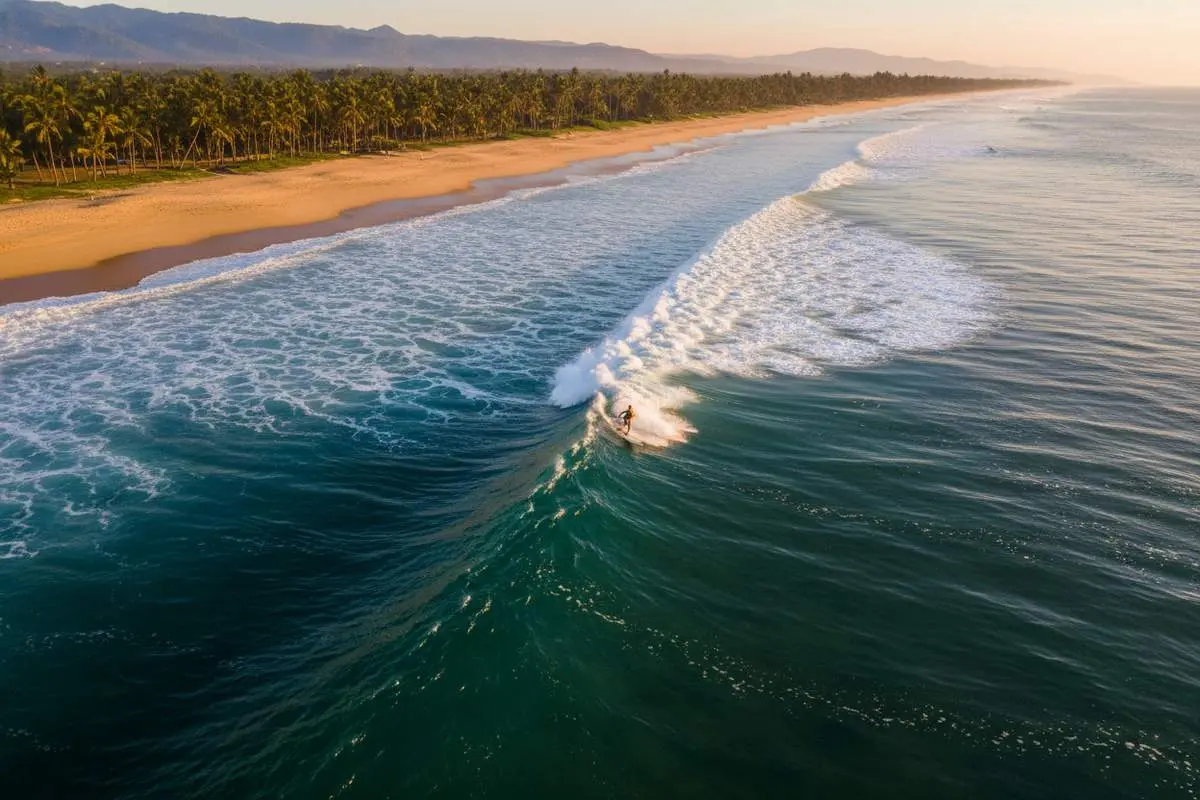
Adventure Travel Mexico 2026: 20 Best Experiences Ranked
Mexico Is an Adventure Country
Most people come to Mexico for the beaches and the tacos. Both are excellent. But Mexico is also one of the world’s most concentrated adventure destinations — a country where you can dive the world’s longest underwater cave system in the morning, eat mole negro for lunch, and watch bioluminescent plankton light up the sea at night.
This is a ranked guide to 20 of the best adventure experiences in Mexico in 2026, organized by type, with honest information about difficulty, cost, and when to go.
Water Adventures (6)
1. Cave Diving at Dos Ojos — Quintana Roo
The Sac Actun system, of which Dos Ojos is a part, is the world’s longest mapped underwater cave system — over 370 kilometers of flooded passages beneath the Yucatan jungle. You cannot fully appreciate that scale until you’re inside, finning through crystalline water with stalactites hanging overhead, sunlight filtering in shafts from above.
Who can do it: Cave diving certification required. This is not a snorkel activity. If you want the experience without the cert, the cavern zone (within sight of natural light) is accessible to open-water divers. Full cave penetration is certification-only.
Cost: 1,200-2,500 MXN per person for a guided cavern dive, depending on operator and depth of experience.
Logistics: Most operators depart from Tulum. Book in advance — reputable cave dive shops have limited slots.
2. Cenote Rappelling — Yucatan
You stand at the edge of a circular hole in the jungle floor. Below, maybe 20 meters down, a pool of turquoise water glows in the half-light. You clip into a harness, lean back, and descend.
Cenote rappelling (or abseiling) is one of those rare experiences that looks terrifying from a photo and feels surprisingly approachable in person, because every descent is guided, the equipment is modern, and you end up in one of the most beautiful places on earth.
Who can do it: No certification needed. Guides handle everything. Minimum age typically 8-10.
Cost: 200-500 MXN per person, often including swim time afterward.
Where: Several operators near Valladolid and around Cancún offer this. Some combine it with zip-line and ATV packages.
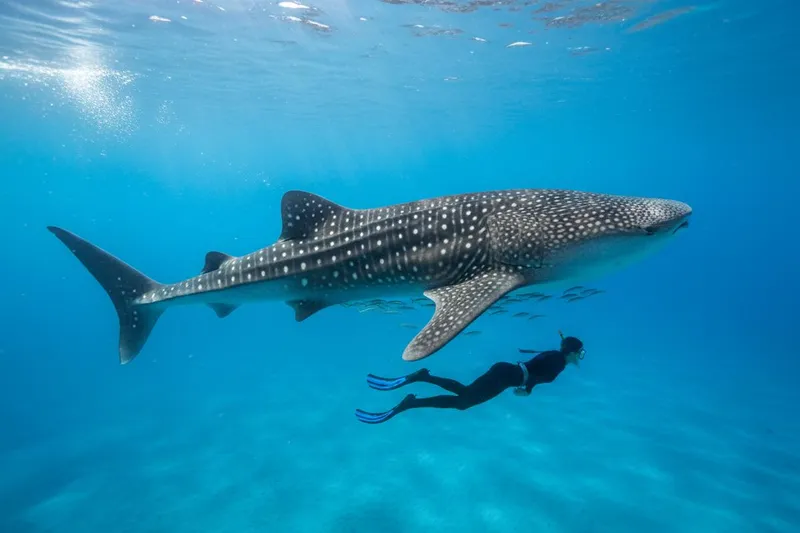
3. Whale Shark Snorkel — Holbox
See our full guide at /blog/swim-with-whale-sharks-mexico/.
The short version: whale sharks are the largest fish on earth. They grow to 12 meters. Their mouths are a meter wide. They filter-feed on plankton and are completely harmless to humans. Swimming alongside one — watching those distinctive white spots slide past you in slow motion — is as close to a religious experience as you can have in the ocean.
Season: June through September, peaking July-August. This is a hard seasonal window — there are no whale sharks in Holbox in December.
Cost: 2,000-2,800 MXN per person from Holbox, including boat, guide, mask, and fins.
Rules: Snorkel only (no scuba). Maximum 2 swimmers per shark at a time. No touching.
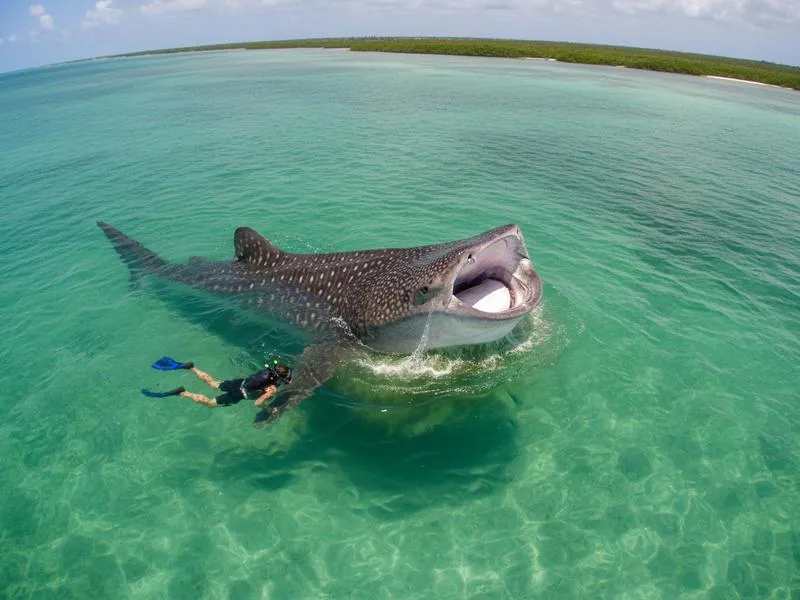
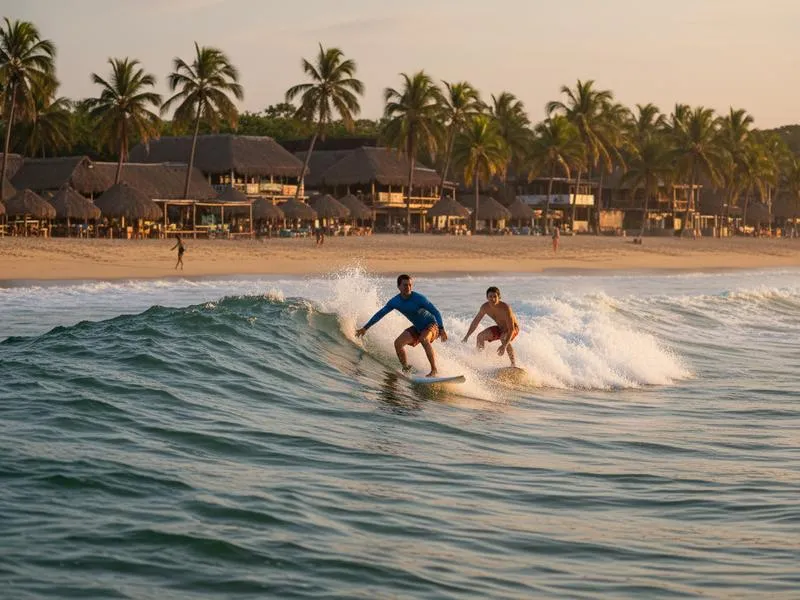
4. Surfing Puerto Escondido — Zicatela Pipeline
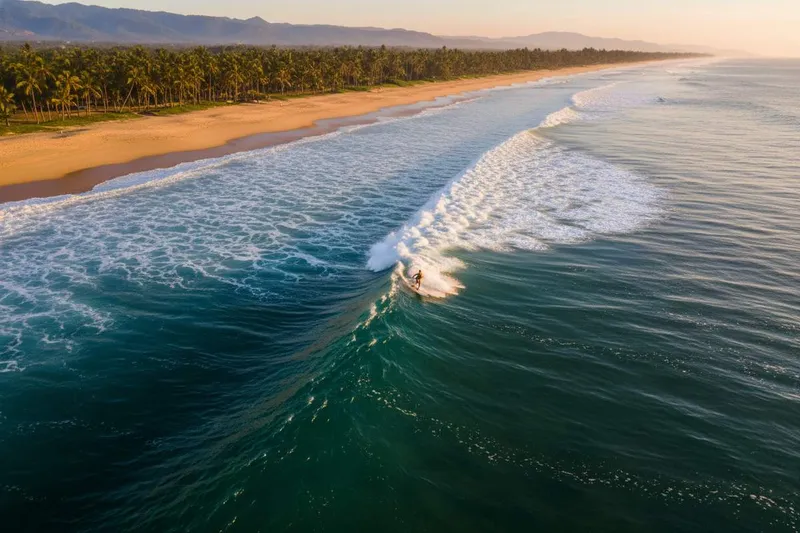
Zicatela is one of the top 10 waves in the world. The Puerto Escondido Open has been held here. The wave breaks fast, hollow, and heavy directly onto sand — which makes for incredible surfing and brutal wipeouts.
This is not a beginner wave. If you’ve never surfed before, Playa Carrizalillo (5 minutes away) and Playa Zicatela’s southern end are learner-friendly. The main Zicatela break is for intermediates and experts only.
For a full breakdown of surf spots across Mexico, see /blog/surfing-in-mexico/.
Season: May through October brings the biggest swells (up to 6 meters). November-April is smaller but more consistent for intermediates.
Cost: Surf lessons from 500-800 MXN/hr. Board rental 200-400 MXN/day.
5. Kayaking Sumidero Canyon — Chiapas
The Cañón del Sumidero drops 1 kilometer from the canyon rim to the Grijalva River below. Seen from a boat, the walls close in around you with the improbable verticality of a natural cathedral. Kayaking here — in the shadow of those walls, with crocodiles sunning themselves on the banks — is one of the most dramatic paddling experiences in Mexico.
Who can do it: Intermediate kayakers. Current is manageable but the canyon is not calm water — respect the conditions.
Cost: Tours from Chiapa de Corzo run 300-600 MXN for a motorboat tour. Guided kayak tours are less common and cost 800-1,500 MXN.
Logistics: Base yourself in Chiapa de Corzo or Tuxtla Gutiérrez. Morning tours have calmer light.
6. Bioluminescence Night Swim — Holbox / Manialtepec
On dark nights between July and October, the water around Holbox and Laguna Manialtepec (near Puerto Escondido) glows blue when disturbed. Every stroke of your arm, every kick of your legs, lights up in cold fire. It’s caused by dinoflagellates — single-celled marine organisms that produce light when agitated.
The experience requires darkness (go on a new moon), calm conditions, and a guide who knows where the concentrations are highest.
Season: July through October. Best on moonless nights.
Cost: 400-800 MXN for a guided night kayak or swim tour from Holbox. Manialtepec tours from Puerto Escondido run similar prices.
Note: Light pollution ruins it. Don’t use your phone flashlight. Don’t wear insect repellent in the water.
Land Adventures (7)
7. Pico de Orizaba Climb — Veracruz/Puebla Border
At 5,636 meters (18,491 feet), Pico de Orizaba is the third-highest peak in North America, after Denali and Logan. It is a serious mountaineering objective — not a casual hike. Above 4,000 meters the terrain becomes technical: glacier travel, crampon work, ice axe self-arrest.
The reward: a summit view across the entire Gulf Coast plain to the sea, and the knowledge that you’ve stood on top of Mexico.
Who can do it: Experienced hikers with high-altitude acclimatization. Technical experience required above 4,000m. Hire a certified guide — mandatory for safety, and you will not find the route alone in whiteout conditions.
Cost: Guided ascents run 4,000-8,000 MXN per person (2 nights at huts, guide, equipment).
Season: October through March. The glacier is most stable in the cool dry season.
8. Copper Canyon Multi-Day Trek — Chihuahua
The Barrancas del Cobre (Copper Canyon) is not one canyon — it’s a system of six interconnected canyons, collectively larger than the Grand Canyon by surface area. The Rarámuri people have lived here for centuries and still run trails that would humble most athletes.
Multi-day trekking here is genuinely remote. Villages are small, infrastructure is basic, and the terrain is demanding. That’s the point.
Duration: 3-7 days. Most routes pass through Creel as a base.
Who can do it: Experienced hikers with wilderness experience. Guides from Rarámuri communities are strongly recommended — they know the terrain, and the income directly supports local families.
Cost: Guided multi-day treks 2,000-5,000 MXN per person per day, including accommodation and meals in community guesthouses.
For full logistics, see our Copper Canyon guide.
9. El Tepozteco Pyramid Hike — Morelos
An hour from Mexico City, El Tepozteco is a small Aztec pyramid perched on a cliff above the town of Tepoztlán. The hike to reach it is steep — 40 minutes of rough stone steps and scrambling — but the ruins themselves are remarkable: a small temple to Tepochtli, the pulque deity, with a view across the valley that explains exactly why this spot was considered sacred.
Who can do it: Anyone reasonably fit. No permit. No guide required.
Cost: Entrance fee 85 MXN. Trail is free. Town is worth the trip on its own.
Best time: Early morning (6am-9am) to beat heat and crowds. The final section is fully exposed.
10. Sierra Norte Mountain Biking — Oaxaca
The Pueblos Mancomunados (eight indigenous Zapotec villages sharing communal forest) have built an excellent trail network through cloud forest above 2,000 meters. The biking here — swooping through pine-oak canopy, crossing suspension bridges, dropping into valleys where the fog is still burning off — is unlike anywhere else in Mexico.
Who can do it: Intermediate cyclists. Trails vary from easy cross-country to technical descents. Bike rental and guided tours available through the community tourism offices in Benito Juárez village.
Cost: Bike rental 300-500 MXN/day. Guided tours 600-1,200 MXN.
For hiking in the same area, see /blog/hiking-pueblos-mancomunados/.
11. ATV Desert Riding — Los Cabos
The Baja desert around Los Cabos — dunes, dry arroyos, cactus fields running to the sea — is ATV country. Tours head out into terrain that’s genuinely dramatic: volcanic rock formations, desert scrub, and at the end of some routes, the meeting point of the Pacific and Sea of Cortez.
Who can do it: No experience needed. Tours are guided and the terrain is forgiving.
Cost: 1,200-2,000 MXN per person for 2-hour tours.
12. Ik Kil Cenote Cliff Jump — Yucatan
Ik Kil is the famous waterfall cenote near Chichén Itzá — vines hanging from the rim, waterfalls trickling down the walls, blue water 26 meters below. There’s a platform at 28 meters from which people jump. It is very high. The impact is significant.
Who can do it: Strong swimmers only, and only if you’ve done cliff jumping before and understand foot-first entry technique. The cenote is safe — the jump is just for the committed.
Cost: 180 MXN entrance. Platform jump is free once inside.
Note: Arrive before 10am. After that, tour buses arrive and it gets extremely crowded.
13. Zipline Over Cenotes — Yucatan
Multiple operators around Cancún, Tulum, and Valladolid run zipline parks over cenotes — you cross over or drop into the water from a cable. Some parks combine zipline with rappelling, swimming, and ATV. It’s theme-park adventure but the setting is genuinely spectacular.
Cost: 200-500 MXN for zipline passes. Package deals 600-1,500 MXN.
Air Adventures (3)
14. Hot Air Balloon Over Teotihuacan — Mexico State
Dawn. The pyramids of the Sun and Moon emerge from the morning haze. You’re floating 300 meters above them, the Valley of Mexico spreading out in all directions. Teotihuacan from the air is one of the great sights of the Americas — the geometric perfection of the Avenue of the Dead, the scale of the Pyramid of the Sun, the surrounding mountains.
This is the best hot air balloon experience in Mexico, and arguably one of the best in the world for the scenery alone.
Cost: 200-280 USD per person. This is not cheap, but it’s worth every peso.
Booking: Book at least 2 weeks ahead. Slots at dawn (the only time conditions are good) fill fast.
Season: Year-round, but October-March has clearest skies. Flights cancel in rain or wind.
15. Paragliding Carrizalillo — Puerto Escondido
From the headland above Playa Carrizalillo, tandem paragliders launch and spiral out over the Pacific, with the bays and surf breaks of Puerto Escondido laid out below. Flights last 10-20 minutes and end on the beach. It requires zero experience.
Cost: 1,200-1,800 MXN for a tandem flight.
Season: Year-round, but winds are most consistent November-April.
16. Hot Air Balloon Over San Miguel de Allende — Guanajuato
San Miguel at sunrise, from the air, is one of the most beautiful sights in Mexico — the pink stone of the Parroquia, the colonial rooflines, the hills rolling away toward the high desert plateau.
Cost: 180-250 USD per person.
Booking: As with Teotihuacan, book well in advance. Fewer operators than Teotihuacan, so availability is tighter.
Wildlife Adventures (4)
17. Cage Diving with Bull Sharks — Playa del Carmen
Bull sharks are among the most powerful predators in the ocean. Unlike whale sharks, they’re not filter feeders — they’re apex predators. Diving with them from a cage (and sometimes without — brave operators offer no-cage encounters) off Playa del Carmen is one of the world’s most intense wildlife experiences.
Season: November through March. Bull sharks gather in the warm waters off Playa del Carmen during this period in unusually high numbers.
Cost: 1,500-2,500 MXN for a guided dive.
Who can do it: Open water certification required.
Insurance note: This is an extreme sport. Verify your travel insurance explicitly covers shark diving before you book.
18. Night Turtle Release — Playa Escobilla — Oaxaca
Playa Escobilla is one of the most important Olive Ridley sea turtle nesting beaches in the world. During the arribada (mass nesting event), tens of thousands of turtles come ashore in a single night. Guided programs let you witness the nesting, collect and relocate eggs to protected hatcheries, and release hatchlings at dawn.
Season: June through November.
Cost: 200-400 MXN for guided programs. Some conservation projects ask for volunteers.
Note: Photography during turtle nesting requires red-light torches only — white light disorients the turtles.
19. Crocodile Spotting — Sumidero Canyon / Laguna Manialtepec
Both Sumidero Canyon and Laguna Manialtepec (near Puerto Escondido) host significant crocodile populations. Boat tours on both pass within meters of American crocodiles sunning themselves on banks, floating in still sections of water, or occasionally crossing paths with kayakers.
This is wildlife viewing, not an organized activity — you see what’s there on the day. Both locations typically produce reliable sightings.
Cost: Boat tours 300-600 MXN from Chiapa de Corzo (Sumidero). Manialtepec tours 400-700 MXN from Puerto Escondido.
20. Lucha Libre — Mexico City
Lucha libre is not a sport. It’s a performance art form that also happens to be a sport. Masked wrestlers with names like El Hijo del Fantasma and Místico execute genuinely terrifying aerial moves from the ropes while the crowd shouts insults and the referee pretends to maintain order.
Arena México seats 17,000. On a big night, it’s one of the loudest, most chaotic, most purely enjoyable events you can attend anywhere. The adrenaline is real. The entertainment is guaranteed.
Cost: 150-500 MXN depending on seat tier. Go cheap — the nosebleeds are more fun.
When: Events most Fridays and Sundays at Arena México, Colonia Doctores, CDMX.
Adventure by Skill Level
| Experience | Best Choices |
|---|---|
| Beginner | Cenote rappelling, whale shark snorkel, hot air balloon Teotihuacan, ATV Cabo desert, night turtle release, Lucha libre, El Tepozteco |
| Intermediate | Surfing Puerto Escondido (small days), Copper Canyon day hikes, bioluminescence swim, crocodile boat tours, zipline cenotes, paragliding, Nevado de Toluca |
| Expert | Cave diving Dos Ojos, Pico de Orizaba summit, Copper Canyon multi-day, bull shark cage dive, open-ocean kayaking |
Safety for Adventure in Mexico
Use certified guides. In Mexico’s adventure sector, guide quality varies enormously. For technical activities (cave diving, volcano climbing, bull shark diving), always verify:
- PADI or CMAS cave diving certification
- Guide membership in AMTAVE (Mexican Adventure Tourism Association) or equivalent
- Equipment that is modern and maintained
- Emergency protocols and first aid capability on site
Insurance. Standard travel insurance — the kind that covers trip cancellation and lost luggage — typically excludes extreme sports. If you plan to cave dive, climb Pico de Orizaba, or do anything in the “expert” tier above, you need a policy with a dedicated extreme sports rider.
travel insurance includes adventure sport coverage in their standard plan up to a reasonable threshold, with optional upgrade for higher-risk activities. It’s one of the most affordable options that can work for travel in Mexico adequately. Get it before you leave — policies purchased after an incident are useless.
Altitude. Several activities on this list involve significant altitude: Pico de Orizaba (5,636m), Pueblos Mancomunados (2,000-3,100m), Monarch Butterfly Reserve (3,000m). Acclimatize properly. Spend at least 2-3 nights at altitude before attempting any strenuous activity above 3,000m.
Water safety. Cenotes look calm. Ocean currents are less forgiving. Never enter a cenote cave system without a guide. Check surf conditions before paddling out at Zicatela — it’s one of the most powerful beach breaks in the Americas.
Best Month by Adventure Type
| Activity | Jan | Feb | Mar | Apr | May | Jun | Jul | Aug | Sep | Oct | Nov | Dec |
|---|---|---|---|---|---|---|---|---|---|---|---|---|
| Whale shark snorkel | — | — | — | — | — | ✓ | ✓✓ | ✓✓ | ✓ | — | — | — |
| Bioluminescence | — | — | — | — | — | ✓ | ✓✓ | ✓✓ | ✓✓ | ✓ | — | — |
| Bull shark diving | ✓ | ✓✓ | ✓ | — | — | — | — | — | — | — | ✓ | ✓✓ |
| Turtle release | — | — | — | — | — | ✓ | ✓✓ | ✓✓ | ✓✓ | ✓ | ✓ | — |
| Pico de Orizaba | ✓✓ | ✓✓ | ✓ | — | — | — | — | — | — | ✓ | ✓✓ | ✓✓ |
| Surfing PE | ✓ | ✓ | ✓ | ✓ | ✓✓ | ✓✓ | ✓✓ | ✓✓ | ✓✓ | ✓ | ✓ | ✓ |
| Hot air balloon | ✓✓ | ✓✓ | ✓✓ | ✓ | ✓ | ✓ | ✓ | ✓ | — | ✓ | ✓✓ | ✓✓ |
| Cenote activities | ✓✓ | ✓✓ | ✓✓ | ✓✓ | ✓ | ✓ | ✓ | ✓ | ✓ | ✓ | ✓✓ | ✓✓ |
✓✓ = optimal | ✓ = good | — = not recommended or off-season
Book Your Adventure
Most activities on this list can be booked through Viator with verified operators, English-speaking guides, and genuine reviews. Particularly useful for:
- Teotihuacan hot air balloon (book early)
- Cenote rappelling + zipline combo packages
- Whale shark tours from Holbox and Isla Mujeres
- Copper Canyon guided treks
- Bull shark dives from Playa del Carmen
Before any adventure trip to Mexico, get proper coverage through travel insurance. Their Nomad Insurance includes adventure sports — standard travel policies typically don’t. Extreme sports (cave diving, volcano climbing, shark diving) require their upgraded adventure rider.
More Mexico Adventures
- Swimming with Whale Sharks in Mexico — full guide to Holbox, Isla Mujeres, and La Paz
- Surfing in Mexico — Zicatela, Sayulita, Barra de Nexpa, and more
- Copper Canyon — the most dramatic landscape in northern Mexico
- Hiking Pueblos Mancomunados — Oaxaca’s cloud forest trail network
- Mexico Travel Insurance — what you actually need and what to skip