Best Waterfalls in Mexico 2026: 15 Stunning Cascades Ranked
Mexico’s Waterfalls: More Spectacular Than You Expect
Most people visit Mexico for the ruins, beaches, and food. Mexico’s waterfalls are one of the country’s best-kept geographic secrets — and they’re enormous.
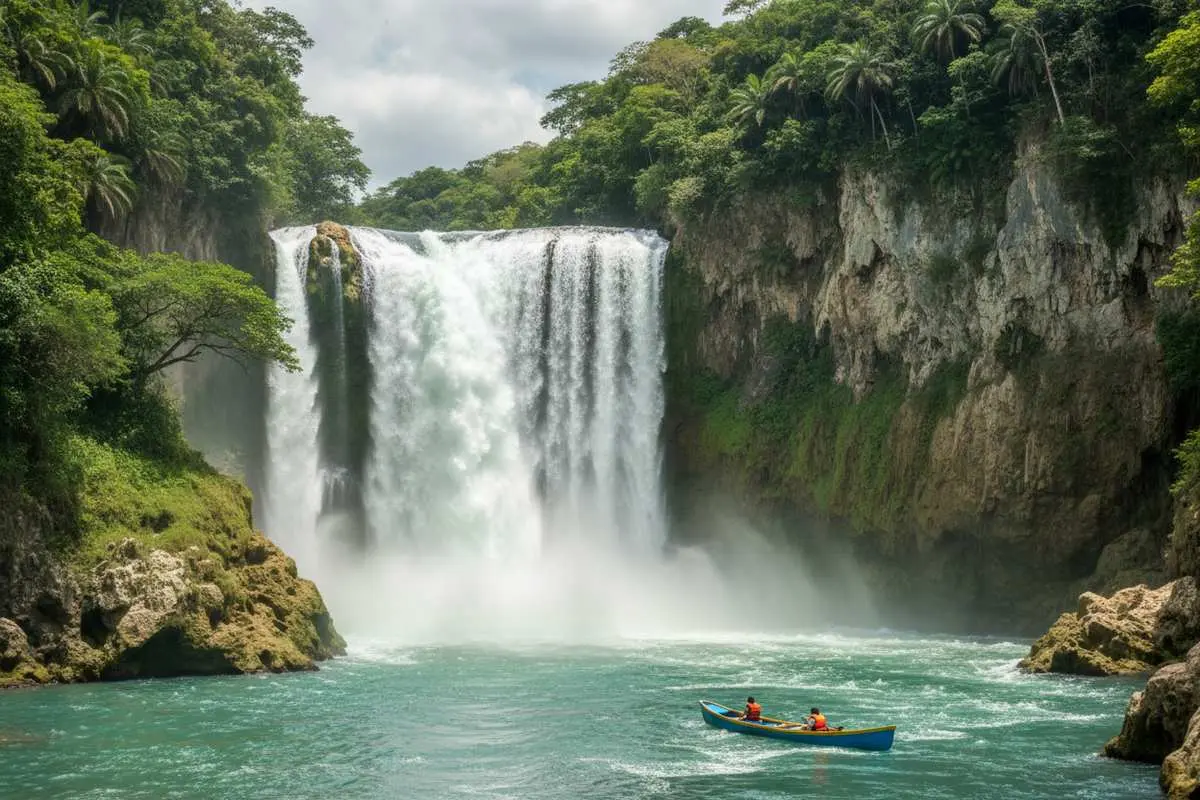
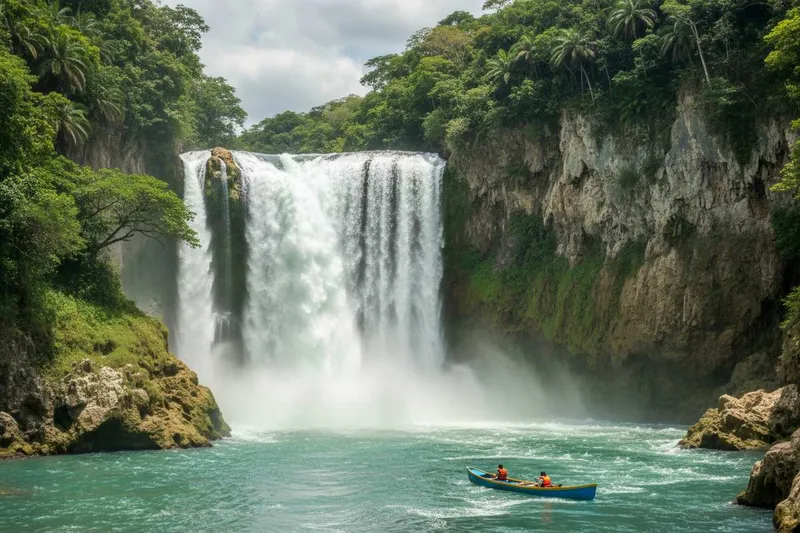
The Basaseachi Falls in Chihuahua drop 246 meters (807 feet) in a single free fall, making them taller than Niagara Falls. The Tamul waterfall in Huasteca Potosina fans 105 meters wide across a turquoise limestone canyon accessible only by canoe. El Chiflon in Chiapas is actually five waterfalls on a single trail, with a viewing platform level with the spray of the main cascade.
This guide ranks the 15 best across Mexico — where they are, when to go, how to get there, and what to expect. Most are best in rainy season (June–October). A few are seasonal exceptions.
Chiapas: Mexico’s Waterfall Capital
1. El Chiflon — Five Waterfalls on One Trail
Height: 120 meters (main fall — Velo de Novia / Bride’s Veil)
Location: Near Comitán, Chiapas
Entry: 50 MXN
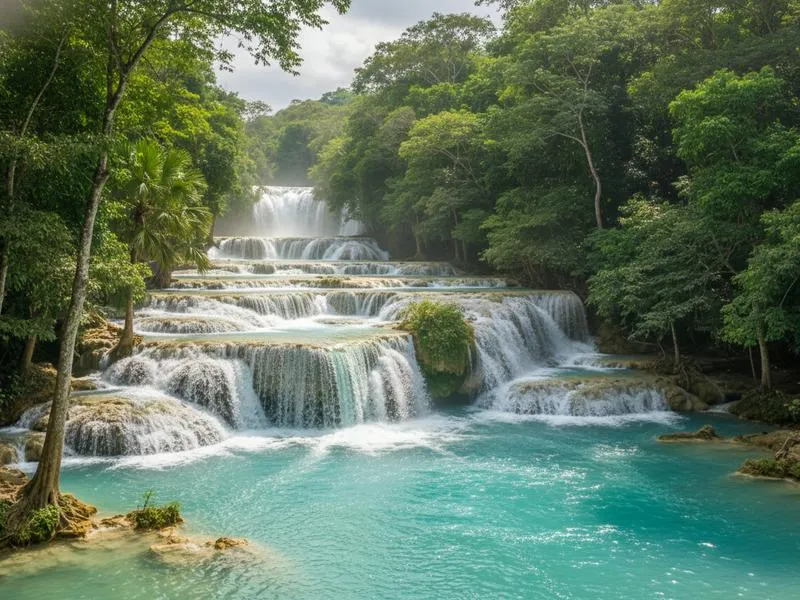
El Chiflon is the most underrated waterfall system in Mexico. Five named cascades on a single 2-km trail: Enamorados, Roberta, Arcotete, Suspiros, and Velo de Novia at the top. The trail ends at a viewing platform level with the top of Velo de Novia — eye-to-eye with a 120-meter curtain of white water and spray. There’s a turquoise pool below Enamorados (the first fall) where swimming is permitted.
Getting there: 2.5 hours from San Cristóbal de las Casas, 45 minutes from Comitán. Combis from San Cristóbal via Comitán run 120–150 MXN. Tour operators in San Cristóbal offer full-day trips with Lagunas de Montebello included.
Best season: Year-round, but most powerful in rainy season. The turquoise color is less affected by sediment here than at Agua Azul — El Chiflon stays relatively clear even in August.
2. Agua Azul — Mexico’s Most Photographed Falls
Height: 6 meters per cascade (series of 500+ cascades)
Location: Tumbalá, Chiapas (between San Cristóbal and Palenque)
Entry: 35 MXN
Agua Azul isn’t a single dramatic waterfall — it’s a 5-kilometer series of turquoise tiered cascades over limestone shelves. In dry season (November–April), the calcium carbonate in the water creates vivid blue-green color. In July–September, heavy rainfall muddies the water to brown — a fact many tour operators don’t mention.
The site is often combined with Misol-Ha on the San Cristóbal–Palenque route.
Getting there: Combi tours from San Cristóbal (350–400 MXN, includes Misol-Ha + Palenque ruins) or colectivos from Palenque town. ADO buses stop at the junction — 10-minute walk to falls.
Best season: November through early June. Specifically avoid August and September for the turquoise color.
3. Misol-Ha — A Waterfall You Walk Behind
Height: 35 meters
Location: Salto de Agua municipality, Chiapas
Entry: 30 MXN
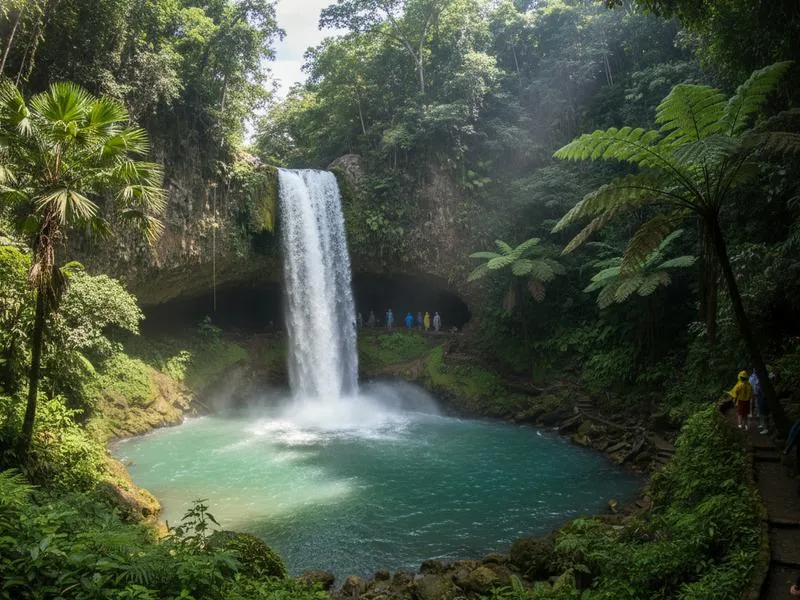
A single 35-meter curtain of water dropping into a deep round pool. What makes Misol-Ha unique: a path leads behind the waterfall into a shallow cave — you walk through the spray with the cascade roaring two meters in front of you. The cave extends far enough back to stay relatively dry.
In rainy season, Misol-Ha runs at full volume — the cave path gets wetter, which makes it more impressive. This is one waterfall where rainy season is better.
Getting there: On the San Cristóbal–Palenque highway, 21 km before Palenque. Same combi tours include it with Agua Azul.
4. El Aguacero — The Forgotten Chiapas Giant
Height: 60 meters (accessible viewing)
Location: Near Ocozocoautla, Chiapas
Entry: 30 MXN
El Aguacero doesn’t make most tourist lists because it requires a 3 km trail through cloud forest to reach. The reward is a series of cascades in a canyon where the trail passes through caves, rope bridges over gorges, and swimming holes. The main fall is 60+ meters; the entire walk through the canyon takes 2–3 hours.
Getting there: 30 minutes from Tuxtla Gutiérrez. Combis from Tuxtla to Ocozocoautla, then a 10-minute mototaxi to the trailhead.
Copper Canyon, Chihuahua
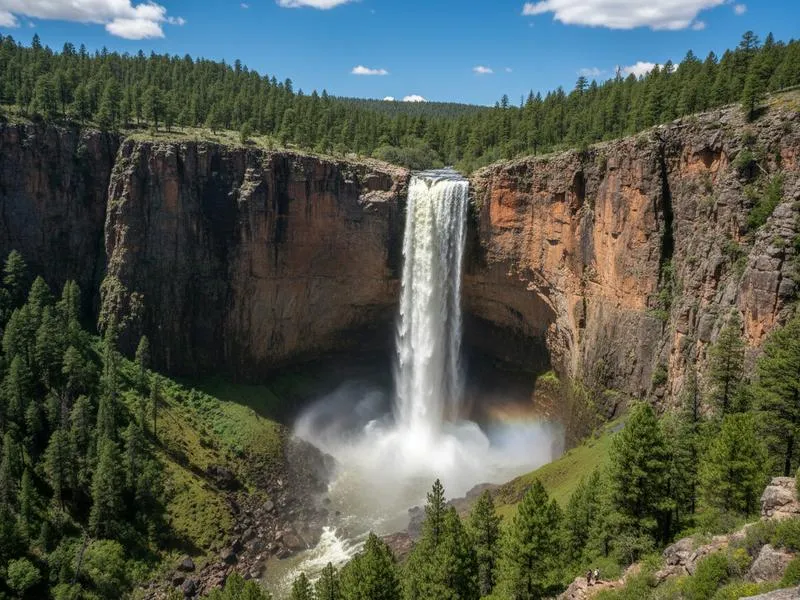
5. Cascada de Basaseachi — Mexico’s Tallest
Height: 246 meters (807 feet) — Mexico’s tallest, 15th tallest in the world
Location: Basaseachi National Park, Chihuahua
Entry: 50 MXN
A single, free-falling column of water from a cliff edge into the pine-oak canyon below. In dry season (April–May), it shrinks to a thin thread. In rainy season (July–October), it becomes a full, roaring cascade — the cliff-top viewpoint (reachable by 30-minute hike) looks directly across to the falls with nothing between you and the spray but air.
A more dramatic hike (2 hours each way, 800m descent) reaches the canyon floor for the base view.
Getting there: From Chihuahua City: 5 hours by car via Cuauhtémoc. From Creel (on the El Chepe train route): 1.5 hours by car. Creel-based tours run day trips for 600–800 MXN per person. See our Copper Canyon guide for the El Chepe train logistics.
Best season: July–October for full volume. Not worth a special trip in April–May.
6. Piedra Volada — The Hidden Competitor
Height: 453 meters (Mexico’s highest, technically — but mostly dry)
Location: Batopilas municipality, Chihuahua
Entry: Free
Piedra Volada is taller than Basaseachi but flows only in peak rainy season (August–September) — a seasonal cascade that becomes the second-highest waterfall in North America briefly each year. Reaching it requires serious hiking in the remote Barrancas del Cobre. For serious adventure travelers only.
Huasteca Potosina, San Luis Potosí
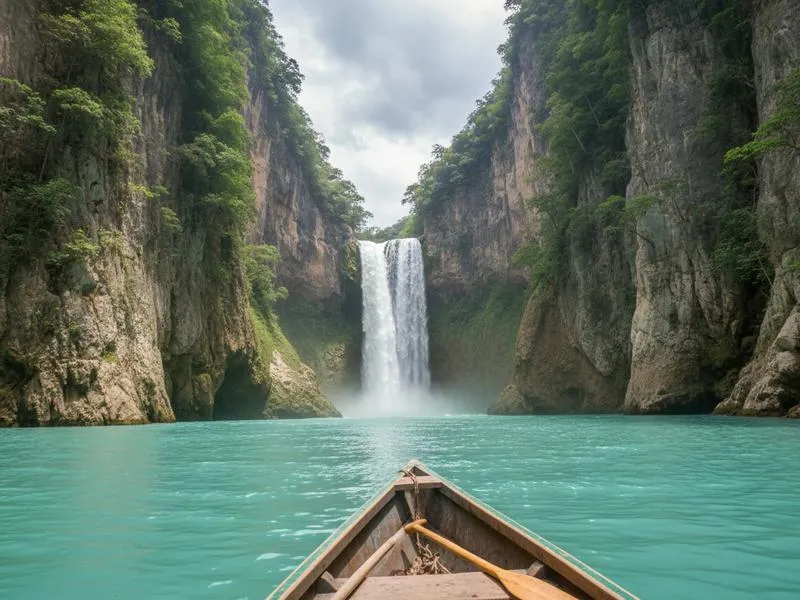
7. Tamul — Mexico’s Most Spectacular Waterfall Experience
Height: 105 meters (344 feet), 105 meters wide
Location: Huasteca Potosina, near Ciudad Valles
Entry: Included in guided tour (600–800 MXN total)
Tamul can only be reached by canoe — 45 minutes up the Río Santa María through a limestone gorge, paddling under vertical canyon walls draped in hanging plants. The falls appear at the end of the canyon: a wide curtain of water dropping from the cliff into the river at its base. You paddle directly to the base, into the spray.
The best season is July through October — Tamul builds to its full 105-meter width in rainy season. In April–May, it’s still impressive but noticeably narrower.
Getting there: Tours from Ciudad Valles (5.5 hours from Mexico City). Full-day Huasteca Potosina tours include Tamul + Micos + swimming holes in the Río Coy. Book through local operators in Ciudad Valles or via Viator Huasteca Potosina. Independent visitors rent kayaks at the launch point (250–350 MXN/kayak).
8. Micos — Multiple Swimming Holes in the Jungle
Height: 6–15 meters per cascade
Location: El Naranjo, San Luis Potosí
Entry: 50 MXN, plus activities
Micos is a 5-km stretch of the Río Micos with seven named waterfalls and swimming holes connected by jungle trail. The activity is the point: jumping from waterfalls, natural waterslides on smooth rock, swimming in turquoise pools. Best done with a guide who knows which pools are safe at which water levels.
Getting there: 30 minutes from Ciudad Valles. Combis from the market. Most Huasteca tours include both Tamul and Micos.
Veracruz
9. Eyipantla — The Apocalypto Waterfall
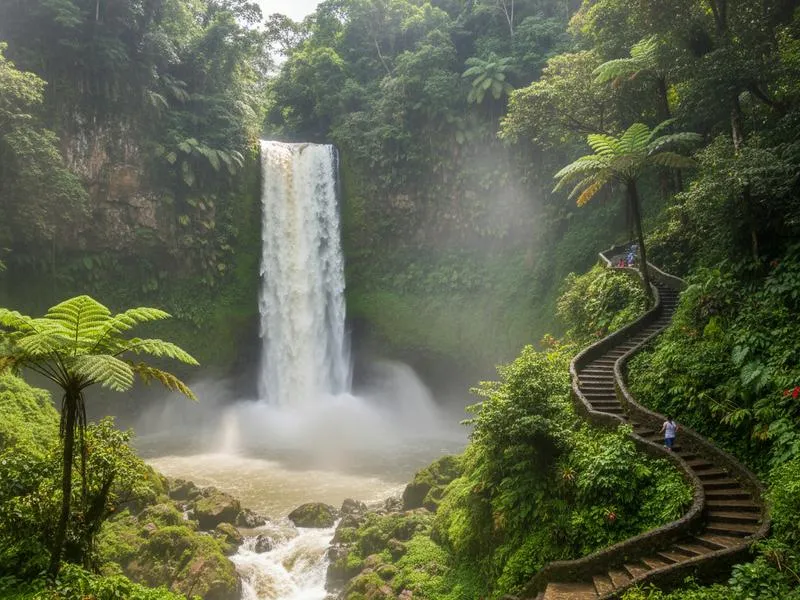
Height: 50 meters
Location: San Andrés Tuxtla, Veracruz
Entry: 40 MXN
244 steps lead down through humid jungle to a viewing platform at the base of a 50-meter curtain fall. The falls were used as a filming location for Mel Gibson’s Apocalypto. In rainy season, the mist at the base is so thick you can barely see the top. Bring a waterproof bag.
Getting there: From San Andrés Tuxtla (1.5 hrs from Veracruz city), combis to Santiago Tuxtla, then mototaxis to the falls.
Nayarit and Jalisco
10. Cascada Cola de Caballo — Near Monterrey
Height: 25 meters
Location: Santiago, Nuevo León (40 km south of Monterrey)
Entry: 80 MXN
The “Horse Tail” waterfall sits in a narrow canyon 40 minutes from Monterrey. A pleasant 30-minute walk from the park entrance leads to the base. Best in rainy season (August–October). Monterrey visitors on a half-day excursion combine this with García Caves. See the Monterrey guide for day trip logistics.
Quick Reference Table: Mexico’s 15 Best Waterfalls
| # | Waterfall | State | Height | Entry | Best Season | Can Swim? |
|---|---|---|---|---|---|---|
| 1 | El Chiflon | Chiapas | 120m | 50 MXN | Year-round | Lower pool only |
| 2 | Agua Azul | Chiapas | 6m/cascade | 35 MXN | Nov–Jun | Yes (designated areas) |
| 3 | Misol-Ha | Chiapas | 35m | 30 MXN | Year-round | Pool at base |
| 4 | El Aguacero | Chiapas | 60m | 30 MXN | Rainy season | Swimming holes |
| 5 | Basaseachi | Chihuahua | 246m | 50 MXN | Jul–Oct | View only |
| 6 | Piedra Volada | Chihuahua | 453m | Free | Aug–Sep | No (remote) |
| 7 | Tamul | SLP | 105m | Tour included | Jul–Oct | Base pool |
| 8 | Micos | SLP | 6–15m | 50 MXN | Year-round | Yes (all pools) |
| 9 | Eyipantla | Veracruz | 50m | 40 MXN | Year-round | No |
| 10 | Cola de Caballo | Nuevo León | 25m | 80 MXN | Aug–Oct | No |
| 11 | Puente de Dios | SLP | 10m | 30 MXN | Year-round | Yes |
| 12 | Cascada Las Brisas | Puebla | 50m | 30 MXN | Rainy season | View only |
| 13 | Cascada de Texolo | Veracruz | 50m | 20 MXN | Year-round | No |
| 14 | Cascada Cusarare | Chihuahua | 30m | Free | Rainy season | View only |
| 15 | Salto de Eyipantla | Veracruz | 50m | 40 MXN | Year-round | No |
Visiting Waterfalls in Mexico: Practical Tips
Safety during rainy season: Fast currents can appear suddenly after upstream rainfall. Follow local guide advice on which pools are safe to enter. If the water looks brown and turbulent, it isn’t safe — beautiful days can mask dangerous upstream conditions.
What to wear: Quick-dry shorts and water shoes (sandals work at most). Bring a dry bag for your phone and camera — spray zones at major falls are extensive.
Photography: Morning light works best at most Mexican waterfalls — falls face east or north at most sites. Golden-hour afternoon light at Tamul is spectacular in the canyon.
Tour vs. independent: Tamul and Micos require local guides for safety (canoeing in a gorge, water-level knowledge). El Chiflon, Agua Azul, and Misol-Ha are fine independently. Basaseachi is easily visited by rental car from Creel.
For waterfall visits timed to rainy season, read the Mexico Rainy Season guide to understand which months maximize flow without impassable roads.
Rent a car from RentCars.com to reach remote falls like Basaseachi (Copper Canyon area), Tamul (San Luis Potosí), and El Chiflon (Chiapas) — most are not accessible by public transport alone.
For the Huasteca Potosina waterfalls circuit, Chiapas canyon tours, and other waterfall day trips, browse Viator Mexico waterfall experiences.