Monterrey Travel Guide: 7 Top Sights & Safety
Monterrey, Nuevo León, Mexico rewards visitors with seven standout sights, from Macroplaza and Paseo Santa Lucía to Parque Fundidora and Cerro de la Silla, plus carne asada and easy Sierra Madre day trips.
This Monterrey travel guide ranks those seven essential sights, then covers safe visitor areas, where to eat, the best months to go, and how to use MTY airport. Start here if you are deciding whether Monterrey belongs on your Mexico itinerary.
Monterrey is not the Mexico of pyramids and colonial plazas. It’s industrial, ambitious, fast, and surprisingly rewarding for travelers willing to dig past the skyline.
Monterrey Mexico Quick Facts
| State | Nuevo León |
| Population | 1.1M city / 5.3M metro |
| Altitude | 540m above sea level |
| Airport | MTY (General Mariano Escobedo) |
| Distance to Texas border | 240km (Laredo) |
| US Travel Advisory | Level 2 — Exercise Increased Caution (Nuevo León state) |
| Language | Spanish (strong norteño accent) |
| Currency | Mexican Peso (MXN) |
| Best time to visit | Oct–Nov, Feb–Apr |
| World Cup 2026 | 6 matches at Estadio BBVA (June–July) |
7 Best Things to Do in Monterrey
1. Walk the Macroplaza
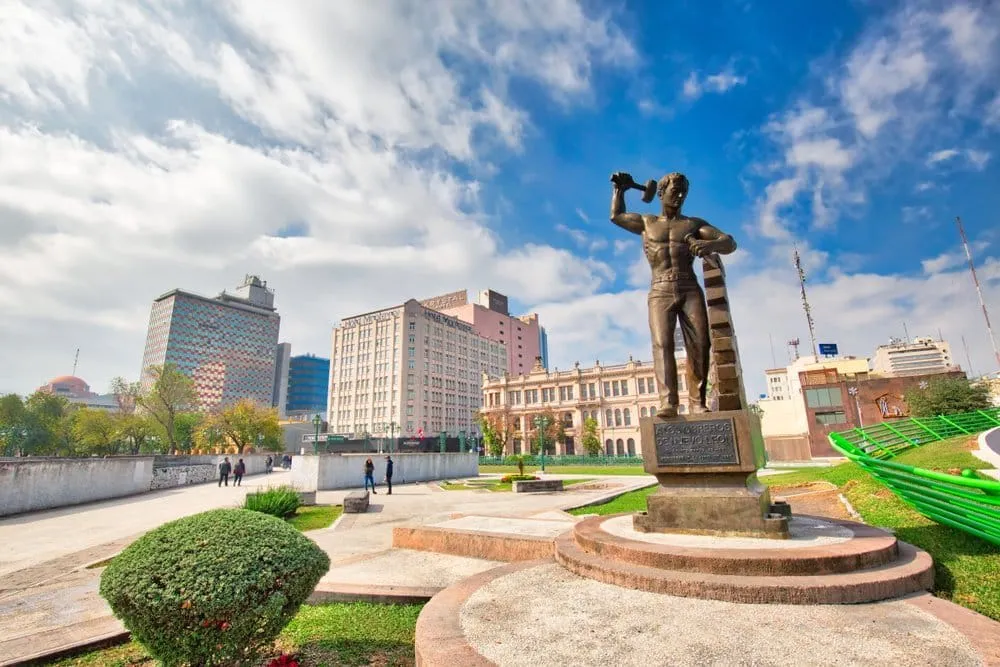
At 400,000 square meters, Monterrey’s Macroplaza is one of the largest public squares in the world — wider than the Zócalo in Mexico City. The iconic landmark is the Faro del Comercio, a slender 70-meter orange tower designed by Luis Barragán that fires green laser beams across the city at night.
Surrounding the plaza are the Cathedral (18th-century baroque façade, Ángel Zárraga murals painted 1940), the Government Palace Museum (political history of Nuevo León, free entry), and the 19th-century Palacio de Justicia. Walk the full length at sunset when the Faro’s lasers come alive and the mountains glow behind the skyline.
2. Paseo Santa Lucía
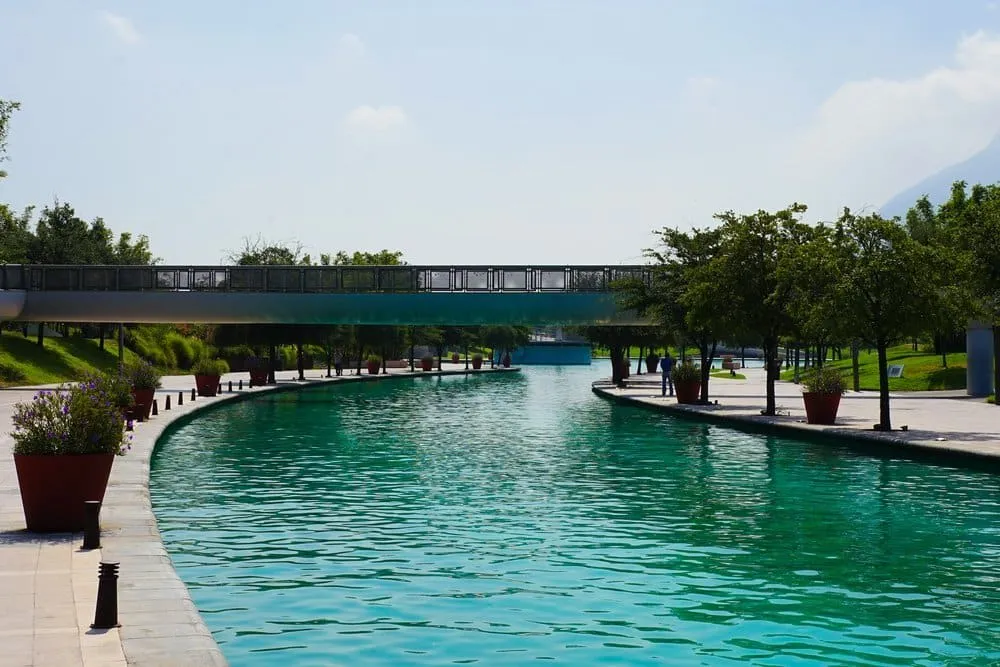
An artificial waterway 2.5km long, the Santa Lucía connects the Macroplaza to Parque Fundidora along a pedestrian walkway lined with 24 fountains, sculpture installations, and outdoor restaurants. Small boats make the full route — a peaceful way to link the city’s main attractions.
Built for the 2007 Universal Forum of Cultures, Santa Lucía is technically the longest artificial river in Latin America and the spine of Monterrey’s downtown revival. Walk it in the morning before the heat builds.
3. Parque Fundidora
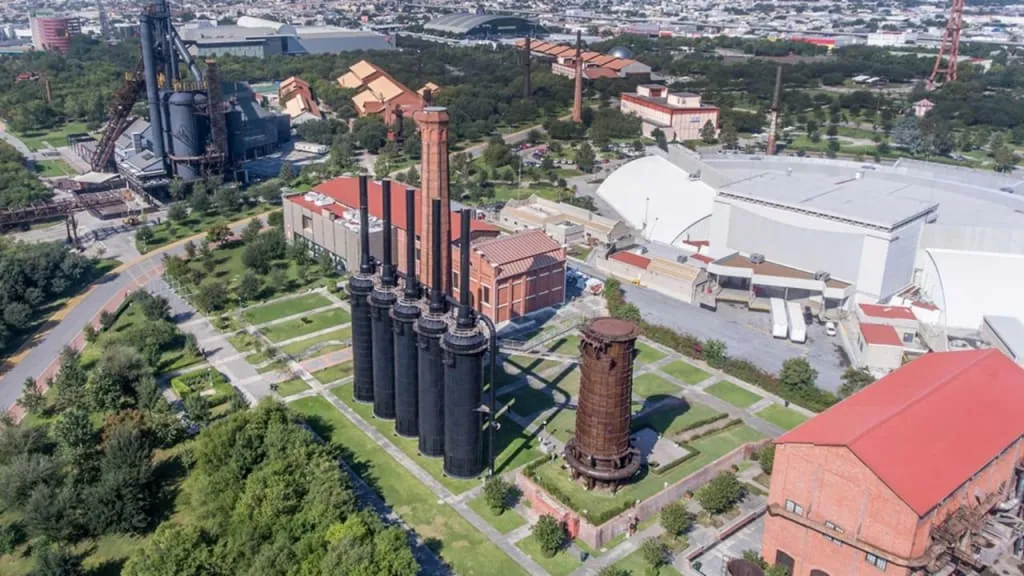
The most compelling park in northern Mexico — a former steel mill complex now a UNESCO-recognized industrial heritage site. The Altos Hornos (blast furnaces) still stand, rust-orange against the sky, converted into outdoor exhibition spaces. The Plaza de los Visionarios commemorates the founders of Mexico’s steel industry.
Beyond the industrial heritage: Parque Fundidora has a convention center (Cintermex), sports venues, the Museo del Acero Horno 3 (interactive steel museum, kids love the hands-on exhibits), and large festival spaces. The Horno 3 museum includes a cable car ride that crosses inside a dormant blast furnace.
4. Barrio Antiguo
Monterrey’s historic neighborhood and the city’s best nightlife district — concentrated in 10 blocks near the Macroplaza. Colonial houses from the 18th and 19th centuries now house bars, mezcalerías, craft beer spots, and live music venues. On Friday and Saturday nights, Barrio Antiguo is one of the most energetic urban bar scenes in northern Mexico.
By day: browse the Mercado Juárez for produce and antiques, visit the Museo de Historia Mexicana (free Sundays), and look for portales (covered colonial arcades) along Calle Morelos.
5. Cerro del Obispado
The oldest building in Monterrey occupies a hilltop with panoramic city views. The Obispado (Bishop’s Palace) dates from the late 18th century and was built as a summer retreat for the Bishop of León — later used as a military fort during the 1846 Battle of Monterrey against US forces and again during the Mexican Revolution.
Now the Regional Museum of History of Nuevo León, the building has exhibitions on colonial-era Monterrey and its industrial transformation. The views from the hill — Cerro de la Silla in the background, the entire metro spread below — are the best in the city. Free admission.
6. Alfa Planetarium
Mexico’s first IMAX theater (installed 1978) is still operational inside this science complex in San Pedro Garza García. Beyond the planetarium and 400-seat IMAX dome, the Alfa has an open-air aviary (25 species), an astronomical observatory open to the public (one of the largest in Latin America for public use), and a live science garden for hands-on exhibits.
The exterior centerpiece is a stained glass window by Rufino Tamayo, one of Mexico’s greatest 20th-century artists. Worth 2-3 hours on a morning visit.
7. Cerro de la Silla
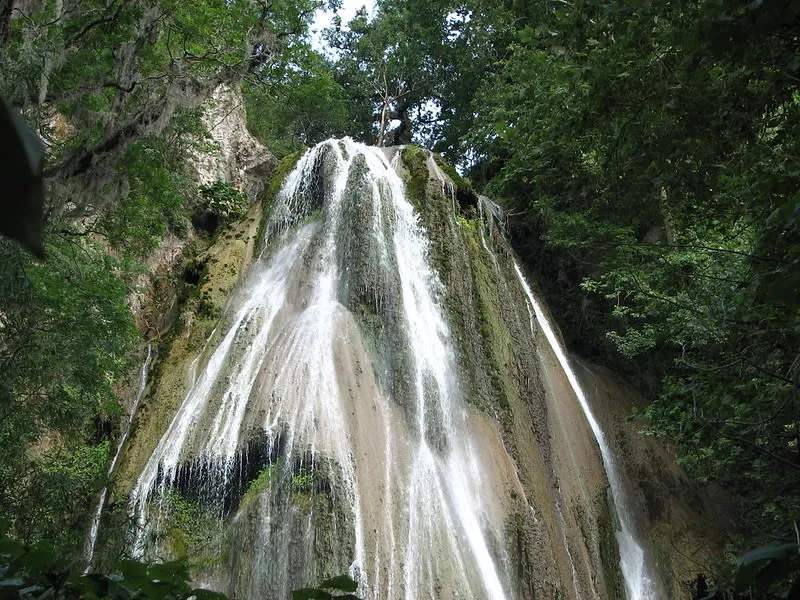
The saddle-shaped mountain visible from almost every point in the city is Monterrey’s defining symbol — an 1,820-meter peak in the Sierra Madre Oriental. You don’t have to hike it to appreciate it, but guided hikes to the summit take 4-6 hours and offer views across the entire metropolitan area.
Surrounding the Cerro is the Cumbres de Monterrey National Park, which also contains the Cola de Caballo waterfall (25 meters, accessible by horse-drawn cart or on foot) — a worthwhile half-day trip from downtown.
Food Guide: Eating in Monterrey
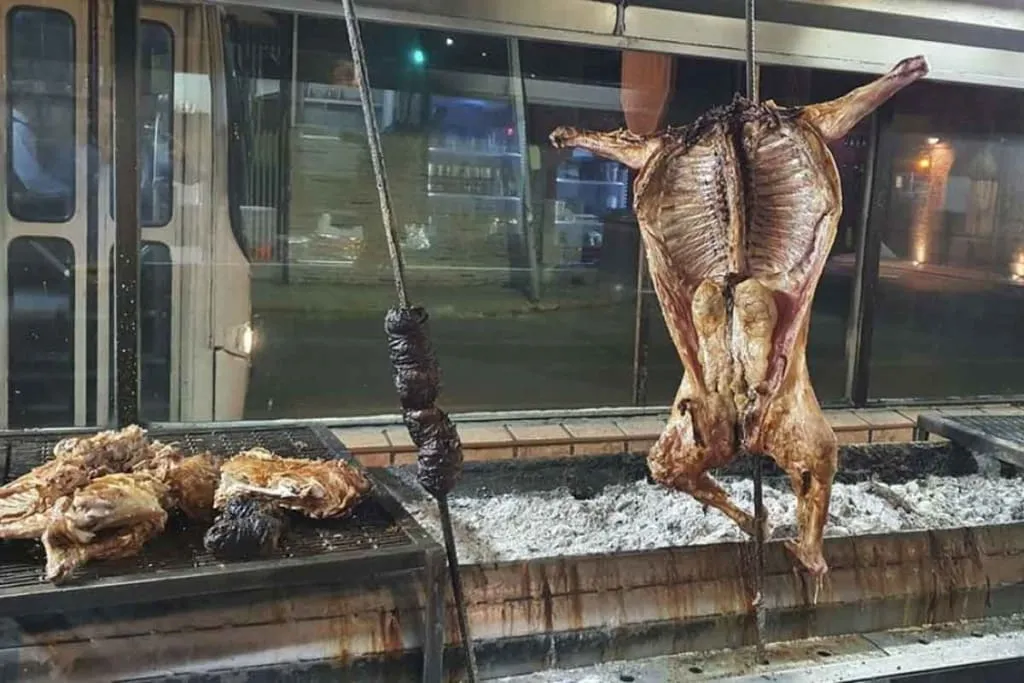
Monterrey is Mexico’s carne asada capital. Full stop. This is where beef is king, charcoal is sacred, and Sunday afternoon asadas are the primary social institution.
What to Eat
| Dish | What It Is | Where to Find It |
|---|---|---|
| Cabrito al pastor | Baby goat roasted whole over mesquite | El Rey del Cabrito, El Tío, El Moralito |
| Carne asada | Grilled beef (arrachera or costilla) | Any asadero or neighborhood grill |
| Machaca con huevos | Dried shredded beef with scrambled eggs | Any breakfast spot, mercados |
| Pan de agua | Crusty local bread unique to Monterrey | Panadería Don Colás, El Molino |
| Discada | Mixed meat stir-fry (chorizo, bacon, beef) cooked on a plow disc | Ranch-style restaurants in the outskirts |
| Carta Blanca | Lager beer, born in Monterrey 1890 | Every bar, corner store, and restaurant |
→ Full guide: What to Eat in Monterrey: 15 Dishes & Where to Find Them
The Carne Asada Ritual
Regiomontanos don’t do carne asada at restaurants on weekdays. This is a Sunday event, a neighborhood gathering, a family ceremony. If you’re lucky enough to be invited to a backyard asada, go. You’ll eat arrachera and costillas cooked over mesquite, drink Carta Blanca from glass bottles, and get a genuine window into norteño culture.
For restaurant carne asada, Asadero El Tío is the institution — family-run, huge portions, proper mesquite smoke.
Craft Beer & Mezcal
Monterrey’s industrial heritage translated into a craft beer scene. Cerveza Fauna (from Monterrey) and the taproom at Cervecería Cuauhtémoc Moctezuma (the 1890 brewery, free beer at the tour) are worth visiting. The brewery tour includes the original red-brick building and ends with complimentary samples.
For mezcal, Barrio Antiguo has a dozen mezcalerías — try Oaxacan mezcals alongside locally distilled spirits from Nuevo León’s agave-rich sierra.
Day Trips from Monterrey
For the full breakdown with transport options, logistics, and combination routes, see the Day Trips from Monterrey guide. Quick reference:
| Destination | Distance | Time | Highlights |
|---|---|---|---|
| García Caves | 47km NW | 1.5hr drive | 600m deep cave system, cable car, stalagmites |
| Cola de Caballo | 35km SW | 45min drive | 25m waterfall, Cumbres National Park |
| Chipinque Ecological Park | 15km SW | 20min drive | Mountain biking, hiking, pine forest, city views |
| Sierra de Arteaga | 80km SW | 1.5hr drive | Mexico’s only ski resort (Bosques de Monterreal), apple orchards |
| Parras de la Fuente | 230km W | 2.5hr drive | Mexico’s oldest winery (Casa Madero, founded 1597) |
| Monterreal (ski resort) | 80km SW | 1.5hr drive | Skiing Dec–Jan when snow conditions allow |
García Caves
The star day trip from Monterrey. Discovered in 1843, the García Caves have 16 chambers up to 105 meters deep, with spectacular rock formations, marine fossils (the caves were an ancient seabed), and eerie natural illumination. A cable car takes you 700 meters up the mountain to the cave entrance — the ride alone is worth the trip.
Open daily 9 AM–5 PM. Entry: approximately 200 MXN adults. Add the cable car fee. Allow 2-3 hours total.
Chipinque Ecological Park
Just 15km from downtown, this 1,800-hectare mountain park sits at 1,700m above sea level and offers the easiest mountain access from any Mexican city. Half a dozen hiking trails (1–8km), mountain biking rentals, picnic areas, and views across the entire Metro Monterrey. A good morning trip before the city heats up.
World Cup 2026 in Monterrey
Monterrey is one of three Mexican host cities for the FIFA World Cup 2026 (June–July). The Estadio BBVA in San Nicolás de los Garza (20 minutes from downtown) is one of the most visually striking stadiums in Latin America — 53,500 capacity, built into the mountains, every seat under a roof.
Six group stage matches are scheduled for Monterrey. Tickets went on sale in 2025 through FIFA’s official portal — if you’re planning to attend, accommodation must be booked now. Hotels within 5km of Estadio BBVA are already filling up for match weeks.
See our FIFA World Cup Mexico 2026 guide for full ticket and travel details. We also have a dedicated Monterrey World Cup guide covering stadium logistics, fan zones, and hotel strategy.
Getting to Monterrey
By Air
General Mariano Escobedo International Airport (MTY) is 24km northeast of the city center. Direct flights operate from:
- USA: Houston (HOU, 1h15min / IAH, 1h20min), Dallas (DFW), Miami, Chicago, LA, New York
- Mexico: Mexico City (1h30min, 800–2,500 MXN), Guadalajara (1h15min), Cancún, Tijuana
From the airport: Uber is available freely (unlike most Mexican airports) at 280–380 MXN to downtown. Authorized taxi costs 320–420 MXN. No direct metro connection. See the full Monterrey Airport Transportation guide for zones, prices, and scam warnings.
By Road
Monterrey is 240km from Laredo, Texas (approximately 3 hours), making it the most accessible major Mexican city from the US. Highway 85D is the main toll road. Compare car rental prices on RentCars for cross-border or Mexico-domestic rentals.
ADO and ETN run comfortable express buses from Mexico City (8.5–10 hours, Terminal Norte) and Guadalajara (8 hours). See our complete Mexico City to Monterrey guide and Monterrey to Mexico City guide for prices, terminals, and the driving route via Querétaro.
Direct flights connect Monterrey to Cancun in 2.5 hours — see the Monterrey to Cancun guide for airlines, prices, and the CUN airport Uber ban explained.
Getting Around Monterrey
The Metro covers downtown, Fundidora, and key districts efficiently. Two lines (1 and 2) cost 5 MXN per trip — cheapest transit in any Mexican city. Uber is widely available and reliable within the metro area. Taxis from the street are functional but negotiate the fare before you enter.
Where to Stay
| Zone | Best For | Price Range (per night) |
|---|---|---|
| San Pedro Garza García | Business travelers, safety, upscale dining | $80–250 USD |
| Barrio Antiguo / Centro | Nightlife access, colonial character, budget | $30–100 USD |
| Near Macroplaza | Walking to major attractions | $50–150 USD |
| Near Estadio BBVA | World Cup 2026 visitors | $60–200 USD (prices rising) |
San Pedro Garza García (the wealthy municipality adjacent to Monterrey) has the best hotel-to-safety ratio. For budget options, Barrio Antiguo hostels and guesthouses run $15–30/night in dorms, $35–60 in private rooms.
Use Viator for Monterrey tours and day trips including García Caves tours with transport and Cola de Caballo guided excursions.
Best Time to Visit Monterrey
| Month | Temp (°C) | Rain | Notes |
|---|---|---|---|
| Jan–Feb | 8–22°C | Low | Clear skies, cool nights, best hiking weather |
| Mar–Apr | 15–28°C | Low | Spring wildflowers, ideal weather |
| May | 20–35°C | Medium | Heat building — avoid midday outdoor activities |
| Jun–Jul | 25–40°C | Medium | World Cup 2026 — extreme heat, book AC accommodation |
| Aug–Sep | 25–38°C | High | Hottest months, occasional tropical storm remnants |
| Oct–Nov | 15–28°C | Low | Second-best window — warm days, cool evenings |
| Dec | 8–20°C | Low | Christmas events, mild, occasional cold fronts |
Best windows: October–November and February–April offer the ideal combination of weather and low crowds. Avoid June–September unless attending World Cup matches — the mountain basin traps heat aggressively.
Safety in Monterrey
The U.S. State Department rates Nuevo León Level 2 (Exercise Increased Caution). Its state-specific guidance tells U.S. government employees not to travel between cities after dark, not to hail street taxis, and to avoid Federal Highway 85 between Nuevo Laredo and Monterrey after dark. This is a state-wide assessment rather than a guarantee about any individual neighborhood. See Is Monterrey Safe? for the current neighborhood and route breakdown.
The practical reality: Monterrey’s tourist zones (San Pedro Garza García, Macroplaza district, Fundidora, Barrio Antiguo, Chipinque) are safe for visitors during the day and in the evenings. The cartel violence that dominated headlines 2007–2012 was concentrated in peripheral colonias and has significantly reduced in the tourism core.
Standard precautions:
- Use Uber, not street taxis at night
- Don’t flash expensive jewelry or cameras in peripheral areas
- Stay in well-lit, populated areas after midnight
- Avoid driving to unfamiliar colonias after dark
- Trust your instincts — regiomontanos are genuinely hospitable people
Travel insurance is worth considering here, especially a policy with emergency medical coverage and evacuation support.
Our safest cities in Mexico guide provides full safety rankings across the country.
Budget: How Much Does Monterrey Cost?
Monterrey is more expensive than Oaxaca or Yucatán but cheaper than Mexico City or Los Cabos.
| Budget Level | Daily Cost | What You Get |
|---|---|---|
| Budget | $35–55 USD/day | Hostel or guesthouse, tacos and mercado meals, Metro transport, free attractions |
| Mid-range | $60–100 USD/day | 3-star hotel in Barrio Antiguo, restaurant dinners, Uber, one paid attraction |
| Comfort | $120–200 USD/day | Business hotel in San Pedro, nicer restaurants, tours, airport Uber |
Main costs to budget:
- García Caves tour: 200 MXN entry + cable car
- Estadio BBVA World Cup tickets: $100–500 USD depending on round/seat
- Airport Uber: 200–300 MXN
- Cabrito dinner at El Rey del Cabrito: 300–500 MXN per person
See our full Mexico travel cost guide for comparison across all destinations.
Monterrey in the Northern Mexico Context
Monterrey is the natural base for exploring northern Mexico. From here you can access:
- Copper Canyon (Barrancas del Cobre) — Board the Chepe train in Chihuahua (5 hours north by bus) for Mexico’s most dramatic rail journey
- Monclova, Coahuila — Industrial city with Cuatro Ciénegas biosphere reserve nearby (2.5 hours west)
- Parras de la Fuente, Coahuila — Casa Madero, Mexico’s oldest winery (founded 1597), 2.5 hours west
- Northern Mexico travel guide — Full overview of the region including Chihuahua, Sonora, and Baja
What to Read Before You Go
- Best Time to Visit Monterrey — World Cup 2026 planning, month-by-month weather, and seasonal pricing
- Things to Do in Monterrey — 25 activities, day trips, and free things to do with practical details
- Monterrey to Guadalajara 2026 — fly 1 hr or drive via Zacatecas and Aguascalientes
- Is Mexico Safe? — Honest assessment by a Mexican
- Mexico Entry Requirements for US Citizens — FMM, passport, customs
- How to Get Around Mexico — Car, bus, and flight options
- Mexico Travel Cost Guide — Daily budget by destination
- What is Machaca? — Monterrey’s signature breakfast ingredient explained