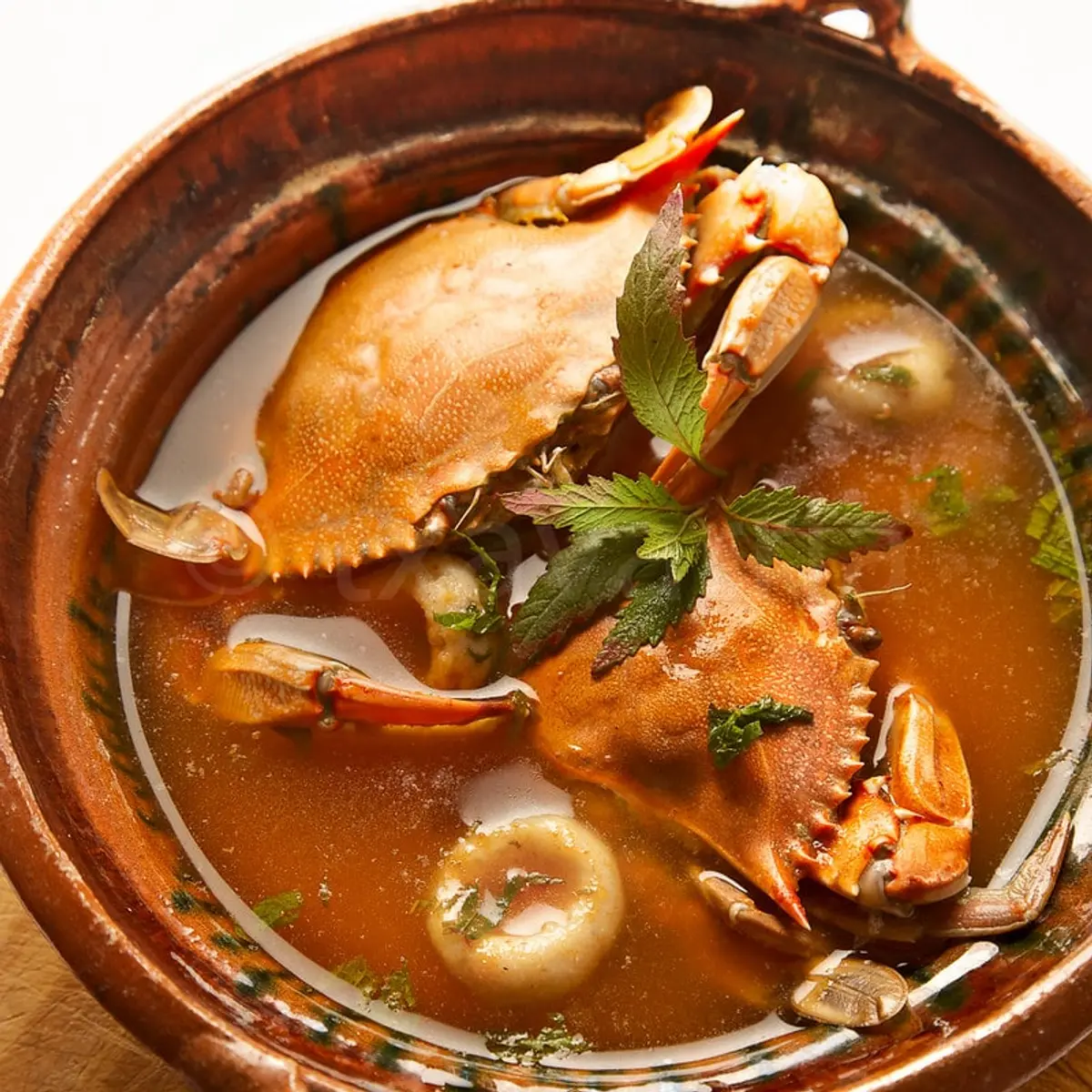
Chipachole (Chilpachole): Veracruz Crab Soup Recipe
Chipachole is another spelling of chilpachole, a smoky Veracruz crab soup made with blue crab, dried chiles, tomato, epazote, and blended corn tortilla for body. The classic version is chilpachole de jaiba, served in Veracruz city, Boca del Río, and Alvarado; this guide explains what it is, how it tastes, and how to make it.
You will also see it spelled chipachole, and cooks sometimes make shrimp or mixed-seafood versions. But if you want the dish most locals mean, start with chilpachole de jaiba, the crab version tied most strongly to Veracruz city, Boca del Río, and Alvarado.
For travelers, chilpachole matters because it is one of the clearest ways to taste the difference between Gulf Coast cooking and the better-known food of central or Pacific Mexico. If you are planning a food-focused stop, pair it with our guides to what to eat in Veracruz and things to do in Veracruz.
What Is Chipachole (Chilpachole)?
Chilpachole is a smoky, slightly thick Veracruz crab soup made with dried chiles, tomato, epazote, and usually blue crab. It tastes richer and more herbal than a standard caldo de mariscos, and the version to order first is usually chilpachole de jaiba, not the shrimp one.
Chilpachole in 30 Seconds
| Question | Short answer |
|---|---|
| What is chilpachole? | A smoky Veracruz crab soup made with blue crab, chipotle, tomato, epazote, and corn tortilla. |
| What is the classic version? | Chilpachole de jaiba, the blue crab version. |
| What does it taste like? | Briny, smoky, herbal, and thicker than a typical seafood broth. |
| What should you order first? | The crab version in Veracruz city, Boca del Río, or Alvarado. |
| Is it spicy? | Usually medium, warming rather than brutally hot. |
| Is it worth trying outside Veracruz? | Only if the restaurant is specifically Veracruz-style and actually known for seafood. |
Chilpachole at a Glance
| Also spelled | Chipachole (both correct) |
| Pronunciation | chil-pa-CHO-lay (4 syllables) |
| Origin | Veracruz state, Gulf Coast of Mexico |
| Main ingredient | Blue crab (jaiba azul) |
| Best first order | Chilpachole de jaiba in Veracruz city, Boca del Río, or Alvarado |
| Defining flavors | Chipotle chile, epazote herb, corn tortilla |
| When eaten | Lent, Holy Week, after parties, cold-front days |
| Price in markets | 60 to 120 MXN at Mercado Hidalgo |
| Price in restaurants | 150 to 250 MXN at Boca del Río seafood spots |
| Related dishes | Caldo largo, arroz a la tumbada, tostadas de jaiba |
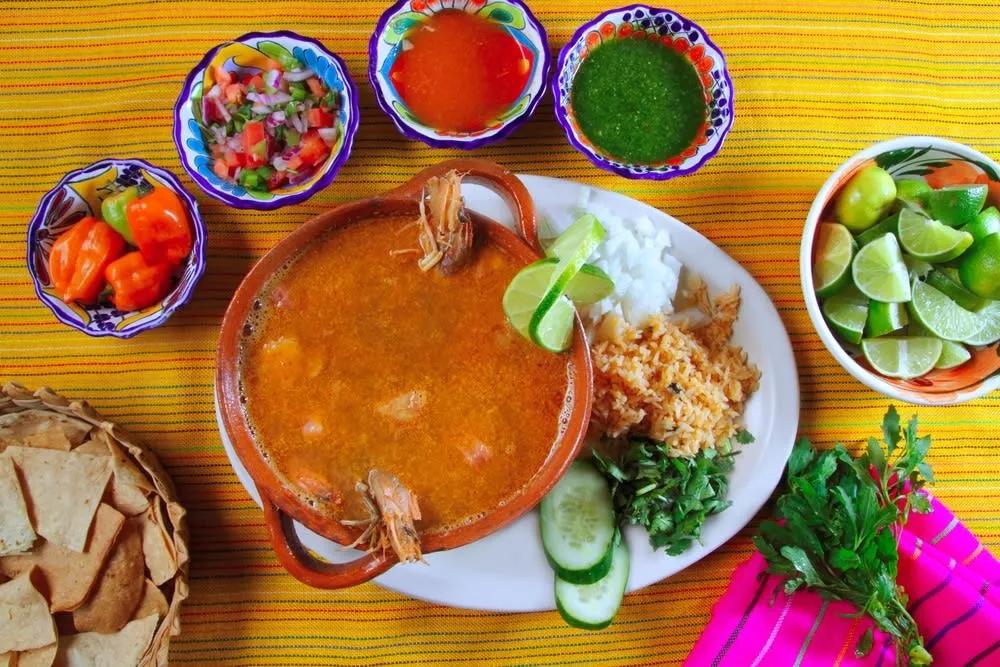
Best Place to Try Chilpachole First
If you only have room for one bowl, start with chilpachole de jaiba in Veracruz city or Alvarado, not an inland version in Mexico City. That is where the soup makes the most sense: fresher crab, stronger Gulf Coast seasoning, and the market-style preparation locals actually grow up with.
| If this is your situation | Order this first |
|---|---|
| You want the most classic first bowl | A market fonda in Veracruz city, where the broth is usually deeper and less adapted for tourists. |
| You want the most local fishing-town version | Alvarado, where crab culture is stronger and the soup is often simpler but more local. |
| You want a more comfortable restaurant setting | Boca del Río, where seafood specialists do polished versions without losing the Veracruz identity. |
| You are eating outside Veracruz | Only order it if the restaurant is explicitly Veracruz-style and known for seafood, not just generic Mexican dishes. |
Is Chilpachole Worth Seeking Out Outside Veracruz?
Yes, but only selectively. If a restaurant in Mexico City, Puebla, or elsewhere is explicitly Veracruz-style and already strong on seafood, chilpachole can still be worth ordering. If the menu is broad and chilpachole appears as just one token regional dish, the bowl is usually less convincing than what you will get on the Gulf Coast.
For most travelers, the smarter move is simple: treat chilpachole as a Veracruz priority dish, not a generic Mexico bucket-list soup. If you are headed to Veracruz anyway, eat it there first and then compare later versions elsewhere.
What Does Chilpachole Mean in English?
Chilpachole translates roughly to “mixed chile dish” or “mixed chiles stew” from the Náhuatl words chili (chile pepper) and patzolli (mixed or tangled food). In plain English, it is best understood as a smoky Veracruz crab soup or seafood stew from Mexico’s Gulf Coast.
The two spellings — chilpachole and chipachole — are both correct; locals use both interchangeably. In recipes, you’ll sometimes see chilpachole de jaiba (crab version) or chilpachole de camarón (shrimp version).
It is not related to pozole, caldo largo, or any other Mexican soup. Chilpachole is its own dish with a distinct chile base and Gulf Coast identity.
What Is Chilpachole?
Chilpachole is a thick, deeply flavored seafood soup built on a base of rehydrated dried chiles — usually chipotle (for smoke) and ancho or guajillo (for body and depth) — blended with tomatoes, onion, garlic, and epazote, then enriched with fish or seafood stock. Corn tortilla, blended into the sauce, provides the characteristic thick texture that distinguishes chilpachole from thinner Mexican caldos.
The defining version — chilpachole de jaiba — uses whole blue crab (jaiba azul, Callinectes sapidus), the same species fished extensively in the Gulf of Mexico. Cooking the crabs whole in the soup, shells included, releases an intense oceanic richness that becomes the backbone of the broth.
“A soup that demands patience and good crabs — there is no shortcut that doesn’t show in the bowl.” — Veracruz culinary historian Lula Martín del Campo
The 5 Variations
While crab is the prestige version, Veracruz cooks adapt chilpachole to whatever the sea provides:
| Version | Main Protein | Notes |
|---|---|---|
| Chilpachole de Jaiba | Blue crab (whole) | The classic — richest flavor, most labor-intensive to eat |
| Chilpachole de Camarón | Shrimp | Sweeter, easier to eat, widely available inland |
| Chilpachole de Pescado | Firm white fish | Often huachinango (red snapper) or robalo (snook) |
| Chilpachole Mixto | Crab + shrimp + octopus | The Veracruz Sunday version — everything goes in the pot |
| Chilpachole de Ostión | Oysters | Less common, specific to oyster areas near Alvarado |
In Veracruz restaurants, the mixto version is increasingly common and satisfies visitors who want to experience multiple Gulf Coast flavors in one bowl. Traditionally, the best chilpachole uses a single protein done properly.
When Veracruzanos Eat Chilpachole
Chilpachole functions as both everyday market food and a ceremonial dish in Veracruz culture:
- Cuaresma (Lent) — The 40 days before Easter drive enormous demand for seafood. Chilpachole de jaiba becomes ubiquitous from Ash Wednesday through Holy Week. Veracruz fishermen supply extra crab specifically for this season.
- Viernes de Semana Santa (Good Friday) — The peak day. Markets fill with fishermen selling fresh jaiba, and the smell of chile-and-crab soup carries through entire neighborhoods.
- La cruda (hangover recovery) — Veracruzanos believe chilpachole cures hangovers, and the reasoning is sound: brothy salt rehydrates, crab protein repairs, chile heat promotes perspiration, and epazote has folk-medicine anti-inflammatory status. It is not a medical treatment, but it holds the same restorative cultural status in Veracruz that pho holds in Hanoi.
- Nortes (cold fronts) — When Gulf cold fronts hit Veracruz from October through February, dropping temperatures dramatically, hot chilpachole becomes the city’s comfort food of first resort.
Complete Chilpachole de Jaiba Recipe
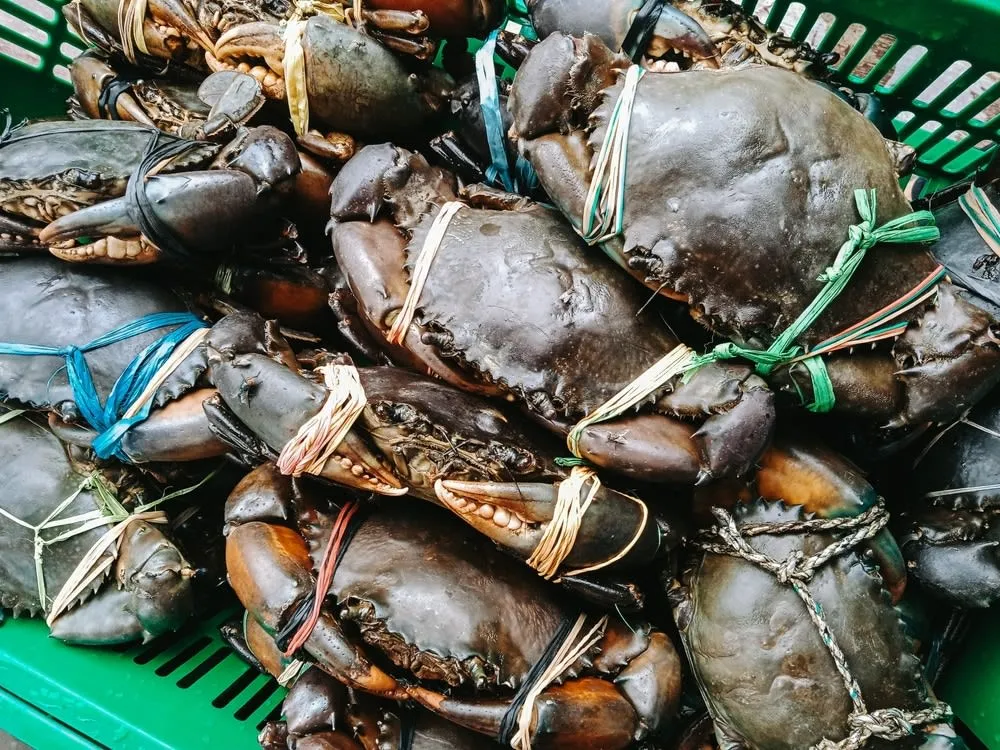
Ingredients (4 servings)
- 4 whole blue crabs (jaiba), cleaned and halved — fresh is essential
- 1 cup crab pulp or picked crab meat (optional, for extra richness)
- 400g shelled shrimp (optional, for the mixto version)
- 5 dried chipotle chiles (morita or meco), deveined and seeded
- 2 dried guajillo or ancho chiles, deveined and seeded
- 4 roma tomatoes, quartered
- 1 white onion, diced
- 4 garlic cloves, chopped
- 2 corn tortillas (old or day-old — these are the thickener)
- 4 cups fish stock (shrimp or crab stock if available)
- 1 large bunch fresh epazote (essential — no close substitute)
- 2 tablespoons vegetable oil
- Salt to taste
- Lime wedges, corn tostadas, and fresh cilantro to serve
Method
1. Sear the crabs. Heat oil in a heavy pot over medium-high heat. Add crab halves in batches, searing until they turn bright red, 3–4 minutes. Remove and set aside. This builds a crust and releases flavor into the oil.
2. Build the sauce base. In the same pot, sauté onion and garlic until softened (3–4 minutes). Add tomatoes and cook until broken down. Add the chipotle and guajillo chiles and the corn tortillas broken into pieces. Cook together 5 minutes, stirring frequently.
3. Blend. Transfer the onion, tomato, chile, and tortilla mixture to a blender with 2 cups of fish stock. Blend until completely smooth. The tortilla creates the thick body. Strain through a fine-mesh sieve back into the pot for a smooth finish — or skip straining for a more rustic texture.
4. Cook the sauce. Return the strained sauce to the pot over medium heat. Cook 10 minutes, stirring constantly, until it darkens slightly and loses its raw taste. This step is critical — undercooking the chile sauce leaves a sharp, acidic edge.
5. Add stock and epazote. Pour in the remaining 2 cups of fish stock. Add the epazote (whole stems and leaves). Bring to a gentle boil.
6. Return the crabs. Add the seared crabs back to the pot along with the crab pulp and shrimp if using. Reduce to a simmer and cook 15–20 minutes. Season generously with salt.
7. Serve. Ladle into deep bowls ensuring each serving has at least one crab half. Garnish with fresh cilantro. Serve with lime wedges and corn tostadas for dipping. Eating chilpachole is hands-on work — have napkins ready.
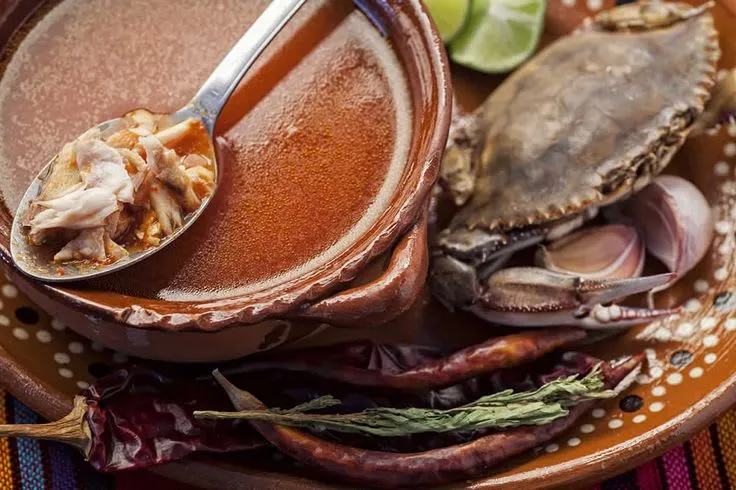
Key Technique Notes
- Epazote is non-negotiable. This herb has a distinctive flavor — slightly resinous, herbal, almost medicinal — that defines the dish. Fresh is transformative; dried works as a substitute. Mexican grocery stores and some farmers’ markets in the US carry it. Without epazote, it’s a chile-crab soup, not chilpachole.
- The tortilla thickener. Old tortillas blend more smoothly than fresh. Two tortillas for four servings is the standard ratio — adjust up for a thicker soup.
- Buy whole live or fresh-dead crabs. Pre-cooked crab won’t survive the second cooking without becoming rubbery. Fresh crabs give the broth the depth that makes chilpachole worth the effort.
- Strain the chile paste. Veracruz restaurants strain for a silky, professional-looking soup. Home cooks often skip it. Both are correct — straining is refinement, not necessity.
- Making it in the US: Blue crab (Callinectes sapidus) is the same species sold at US fish markets along the Gulf and East coasts. Chipotle chiles in adobo (canned) can substitute for dried moritas. Epazote can be found at Mexican grocery stores or ordered online dried.
Chilpachole Nutrition Facts
One serving (approximately 400ml with one crab half) provides:
| Nutrient | Approximate Amount | Notes |
|---|---|---|
| Calories | 220–280 kcal | Depends on amount of crab pulp added |
| Protein | 28–35g | Blue crab is one of the leanest, highest-protein seafoods |
| Fat | 8–12g | Primarily from crab and cooking oil |
| Carbohydrates | 12–18g | From corn tortilla thickener and tomatoes |
| Sodium | 800–1,100mg | Higher in restaurant versions; season to taste at home |
| Omega-3 fatty acids | 350–500mg | Crab is a meaningful source of marine omega-3s |
| Zinc | 4–6mg (30–40% DV) | Blue crab is among the richest dietary zinc sources |
| Vitamin B12 | 8–12mcg (300–500% DV) | Essential B12; crab is an exceptional source |
Chilpachole is a nutrient-dense, relatively low-calorie seafood soup. The corn tortilla thickener adds minimal carbohydrates while providing the characteristic body. Compared to cream-based seafood soups of similar richness, it is significantly lower in fat and calories.
Where to Eat Chilpachole in Veracruz
If chilpachole is one of the main reasons you are going to Veracruz, base yourself in Veracruz city or Boca del Río so you can try both market and restaurant versions. Then use our Veracruz travel guide and day trips from Veracruz to add Alvarado or Tlacotalpan without overcomplicating the route.
The best chilpachole is always found close to where the jaiba are caught:
- Mercado Hidalgo (Veracruz city) — Market fondas serve daily-made chilpachole at 60–120 MXN per bowl. Find a seat by 1 PM — they run out by 2 PM. No frills, maximum flavor. This is the authentic version.
- Boca del Río — The seafood restaurant strip south of Veracruz city. Mariscos Temo, La Paella, and Mariscos Villa Rica all serve excellent chilpachole de jaiba. Larger portions, slightly higher prices (150–250 MXN).
- El Portal del Ángel (Veracruz malecón) — One of the few established waterfront restaurants that does traditional chilpachole rather than tourist-adapted seafood.
- Alvarado, Veracruz — Fishing town 60km south of the capital, known as the crab capital of Veracruz state. The market here has some of the most authentic and inexpensive chilpachole in the region. Day trip territory from Veracruz city. See day trips from Veracruz for getting there.
- Coatzacoalcos — Southern Veracruz’s largest city has its own Gulf Coast seafood tradition and serves chilpachole in market fondas. Less visited by tourists = more authentic preparation. Read the Coatzacoalcos guide.
Outside Veracruz, you’ll find chilpachole on menus in Tampico (Tamaulipas), and occasionally in Mexico City’s Veracruz-style seafood restaurants — particularly in the Roma neighborhood and around Mercado de Medellín.
Chilpachole vs. Other Mexican Soups
| Soup | Origin | Main Protein | Thickener | Defining Flavor |
|---|---|---|---|---|
| Chilpachole | Veracruz/Tamaulipas | Crab or seafood | Corn tortilla | Chipotle + epazote |
| Pozole | Guerrero (national) | Pork or chicken | Hominy corn | Guajillo or tomatillo |
| Caldo de Mariscos | Pacific/Gulf Coast | Mixed seafood | Thin broth | Tomato + chile de árbol |
| Caldo Largo | Veracruz | Whole fish | Thin broth | Tomato, achiote, herbs |
| Aguachile | Sinaloa | Raw shrimp | None | Lime + chile serrano |
| Menudo | Northern Mexico | Tripe | Hominy corn | Guajillo, oregano |
Among Mexican seafood soups, chilpachole occupies a unique position: thick enough to be a full meal, complex from the chile base, and immediately identifiable as a Veracruz dish. It sits alongside cecina from Morelos and bocoles from the Huasteca as one of Mexico’s great regional dishes that most tourists never encounter.
Veracruz Food Beyond Chilpachole
Chilpachole is just one expression of a rich Gulf Coast food tradition. Veracruz has one of Mexico’s most distinctive regional cuisines, shaped by Totonac, Aztec, Spanish, Afro-Mexican, and French influences:
- Huachinango a la Veracruzana — Red snapper braised in tomatoes, olives, capers, and pickled jalapeños. The dish most associated with Veracruz internationally.
- Arroz a la Tumbada — Rice cooked with mixed seafood in a rich broth. The Veracruz version of a rice pot, served in the pot it’s cooked in.
- Caldo Largo — Thin fish broth with whole fish pieces, vegetables, and herbs. Lighter than chilpachole but equally comforting.
- Tostadas de jaiba — Fried tortillas topped with seasoned blue crab meat, avocado, and salsa. The Veracruz beach snack.
- Garnachas veracruzanas — Small fried masa cakes topped with bean paste and dried beef. A Veracruz street food staple.
See things to do in Veracruz for a full guide to exploring the city and day trips from Veracruz for reaching Alvarado and Tlacotalpan where traditional Gulf Coast cooking is best preserved.
If you’re planning to eat your way through Veracruz, chilpachole is the soup to have at least once — ideally in a market fonda, with your elbows on a plastic table, crab shell in one hand and lime in the other.