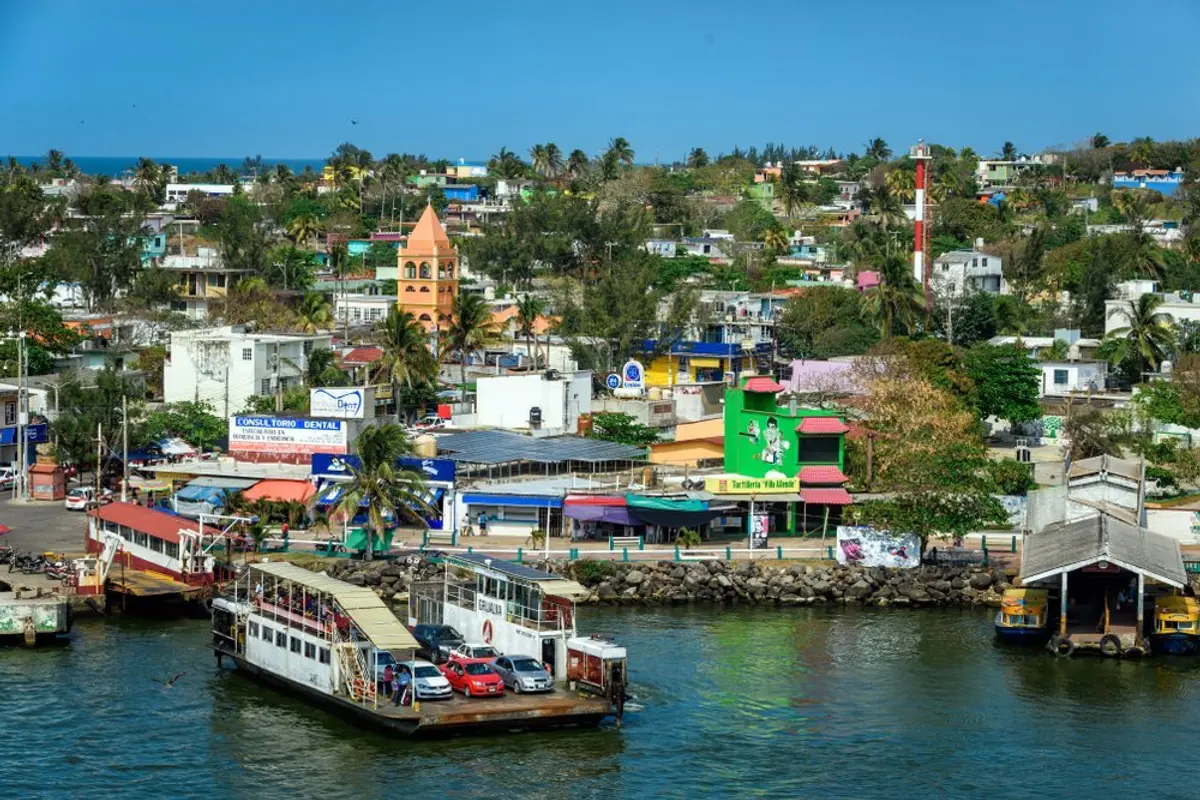
15 Best Things to Do in Coatzacoalcos, Veracruz in 2026
If you’re looking for the best things to do in Coatzacoalcos, Veracruz, start with the malecón, the Olmec Archaeology Museum, Paseo de las Escolleras, and a seafood stop before heading out to Las Barrillas or Los Tuxtlas. Coatzacoalcos is worth visiting for 1 to 2 days if you want a real Gulf Coast city with lower prices, river-meets-sea views, and easy southern Veracruz day trips, but it is not the right stop if your priority is a polished resort beach.
This southern Veracruz city of roughly 310,000 people sits where the Coatzacoalcos River meets the Gulf of Mexico. It is known as Salma Hayek’s hometown, a gateway to the Olmec heartland, and one of the easiest bases for exploring southern Veracruz without Riviera Maya prices. The name comes from Nahuatl and is usually translated as “place where the serpent hides” or “in the enclosure of the snake.”
Locals call it Coatza. What it lacks in resort polish, it makes up for with a long waterfront promenade, practical prices, regional museums, family-friendly parks, and strong access to the wetlands and rainforest landscapes that make Los Tuxtlas one of the most interesting corners of Mexico. If you’re comparing it with the state’s better-known port, read our full Veracruz travel guide and things to do in Veracruz next.
Coatzacoalcos in 30 Seconds
| If you want… | Best move |
|---|---|
| The must-do first stop | Walk the malecón, then visit the Olmec Archaeology Museum |
| A beach afternoon | Go to Las Barrillas, not the industrial waterfront beaches |
| The best viewpoint | Walk Paseo de las Escolleras near sunset |
| The best day trip | Use Coatzacoalcos as a base for Los Tuxtlas or Salto de Eyipantla |
| The best food stop | Eat seafood on or near the malecón |
| How long to stay | 1 to 2 days for the city, 3 if you add nature day trips |
| Who should skip it | Travelers who want a resort beach or nightlife-heavy stop |
Coatzacoalcos at a Glance
| Quick fact | Detail |
|---|---|
| State | Veracruz |
| Best for | Waterfront walks, Olmec history, seafood, southern Veracruz day trips |
| Top attraction | The 15-kilometer malecón |
| Best beach nearby | Las Barrillas |
| Closest airport | Minatitlán-Coatzacoalcos Airport (MTT) |
| Good trip length | 1 to 3 days |
| Best season | November to April |
| Vibe | Working Gulf port city, not a resort |
Here’s everything you need to know about visiting Coatzacoalcos, including what to do, where to eat, how to get around, and whether it’s worth adding to a broader Veracruz trip.
Is Coatzacoalcos Worth Visiting?
Yes, if you want an underrated Veracruz stop with a long malecón, strong seafood, Olmec history, and lower prices than Mexico’s resort cities. Most travelers only need 1 to 2 days here. Use it as a practical base for the malecón, the Olmec museum, Paseo de las Escolleras, Las Barrillas, and day trips into Los Tuxtlas.
Skip Coatzacoalcos if your priority is swimmable postcard beaches, nightlife, or a polished historic center. In that case, you’ll probably be happier in Veracruz city, Orizaba, or one of the state’s better beach zones in our guide to Veracruz’s best beaches.
What to Do in Coatzacoalcos if You Only Have One Day
If you only have one day in Coatzacoalcos, do this in order:
- Morning: Walk the malecón and visit the Olmec Archaeology Museum
- Lunch: Eat seafood on or near the waterfront, ideally chilpachole, garlic shrimp, or pescado a la veracruzana
- Afternoon: Head to Las Barrillas or Paseo de las Escolleras depending on whether you want beach time or a viewpoint
- Sunset: Return to the malecón or the giant flag monument
- Dinner: Stay for mariscos or regional antojitos downtown before leaving
That one-day loop covers the city’s waterfront, history, food, and best local atmosphere without forcing you to zigzag across town.
15 Best Things to Do in Coatzacoalcos
1. Walk the 15-Kilometer Malecón
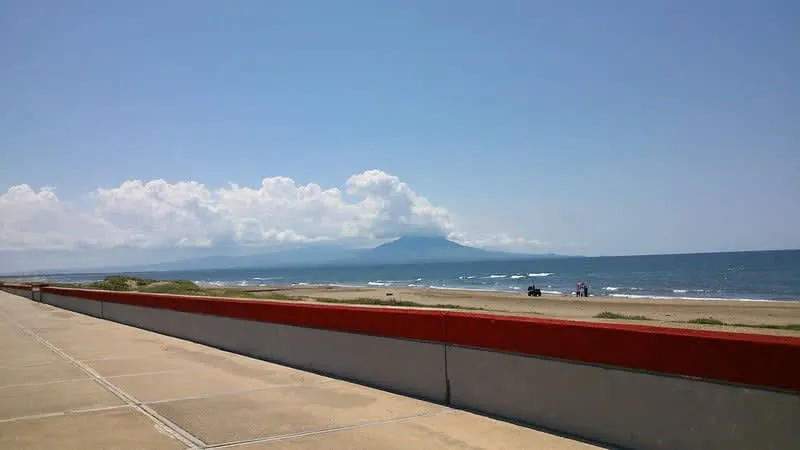
The Coatzacoalcos boardwalk is the city’s signature attraction and one of the longest malecónes in Mexico, stretching more than 15 kilometers along the Gulf.
Dedicated running and cycling tracks line the route, monuments and sculptures pop up every few hundred meters, and food vendors set up along the coast selling everything from elote to cocktails de camarón. If you’re searching for Coatzacoalcos tourist attractions, this is the obvious starting point because it ties together the museum zone, viewpoints, food stalls, and beach access.
Pro tip: Start at the Olmec museum end and walk south toward the Escolleras so you catch the sunset behind the cargo ships entering the river.
2. Explore the Olmec Archaeology Museum
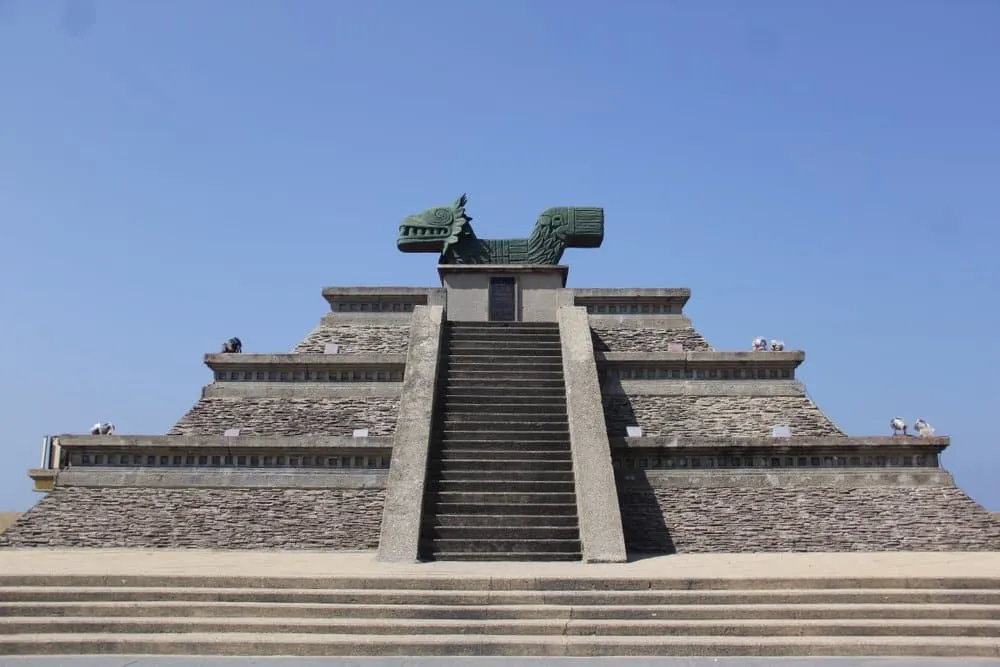
Right on the boardwalk sits the Museo de Arqueología Olmeca, housed in a building shaped like a pyramid. Inside, over 500 pieces from the Olmec civilization are on display — the oldest major civilization in Mesoamerica, predating the Maya and Aztecs by centuries.
Coatzacoalcos sits within the Olmec heartland, the region where these master sculptors created their famous colossal stone heads. The museum is small enough to tour in an hour but dense enough to rewrite what you thought you knew about pre-Hispanic Mexico. The Olmecs were one of the most important indigenous groups in Mexico, and this museum brings their world to life in ways that larger Mexico City institutions sometimes miss.
Cost: Free – $30 MXN (~$1.50 USD) | Hours: Tuesday–Sunday, 9am–5pm
3. Relax at Playa Las Barrillas
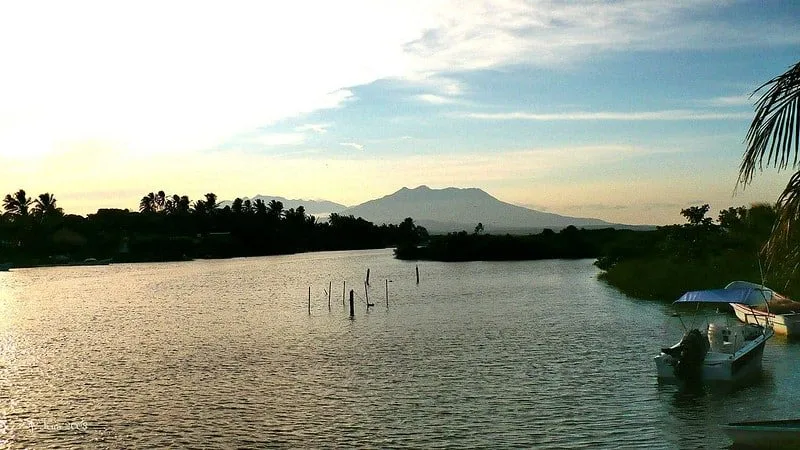
Playa Las Barrillas is Coatzacoalcos’s most popular beach, tucked between the Laguna del Ostión and the open sea. Unlike the Caribbean side of Mexico, Gulf beaches here have a wild, untamed feel — warm brown sand, strong waves, and palapa restaurants serving freshly caught seafood steps from the water.
The beach has water games for kids, ATV rentals, and boat tours on Viator through the nearby mangrove channels. Order a plate of camarones al mojo de ajo (garlic shrimp) under a palapa and spend an afternoon doing absolutely nothing.
Boat tours: $100–$200 MXN ($5–$10 USD) per person for a 1-hour mangrove tour | ATV rentals: $200–$400 MXN ($10–$20 USD) per hour
For more beach options in the state, check our guide to Veracruz’s best beaches.
4. Watch Cargo Ships at Paseo de las Escolleras
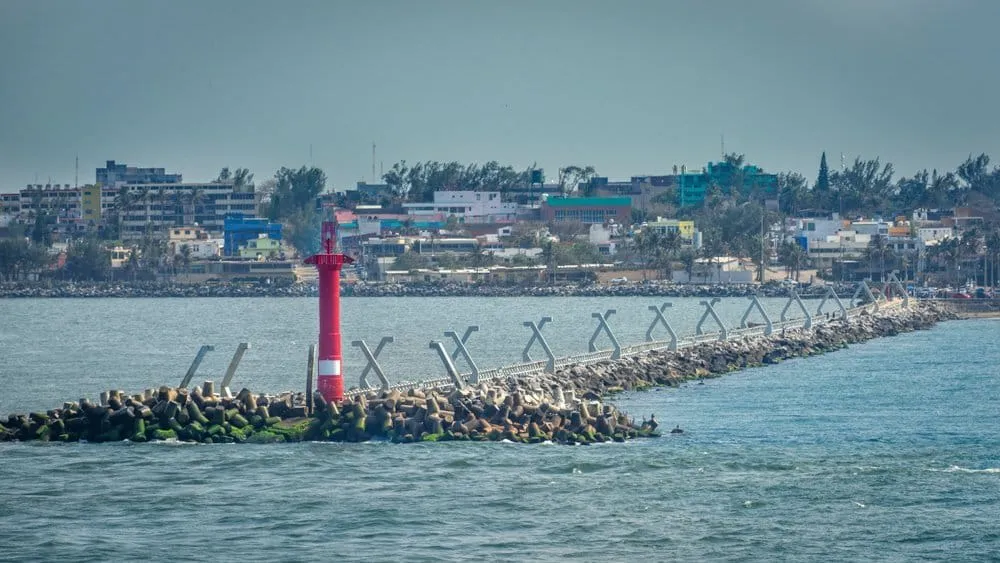
At the point where the Coatzacoalcos River pours into the Gulf of Mexico, a 1-kilometer stone jetty extends into the sea. The Paseo de las Escolleras is where locals come to jog, fish, and watch massive cargo ships navigate the narrow channel.
The walk to the end and back is about 2 kilometers, and the view from the tip, with open ocean on one side and the river channel on the other, is one of the most dramatic in southern Veracruz. Fishermen line the rocks in the early morning, and the whole scene has a raw industrial beauty that perfectly captures Coatzacoalcos’s identity as a working port city.
If you only have half a day in town, pair the Escolleras with the malecón and the Olmec museum. That three-stop loop covers the city’s waterfront, archaeology, and best viewpoint fast.
5. Visit the Lighthouse Museum
The Faro Museo (Lighthouse Museum) sits at the entrance to the port and houses exhibits on both the Olmec culture and Coatzacoalcos’s maritime history. Old navigation instruments, photographs of the port through the decades, and artifacts from the city’s founding in 1522 fill the small but engaging galleries.
The lighthouse itself offers views over the river mouth and the Gulf. Adjacent to the museum is a small zoo and botanical garden — the Bicentennial Park — making this a solid 2-hour stop, especially if you’re traveling with kids.
Cost: $20–$40 MXN (~$1–$2 USD) | Hours: Tuesday–Sunday, 9am–4pm
6. Explore Bicentennial Park and Zoo
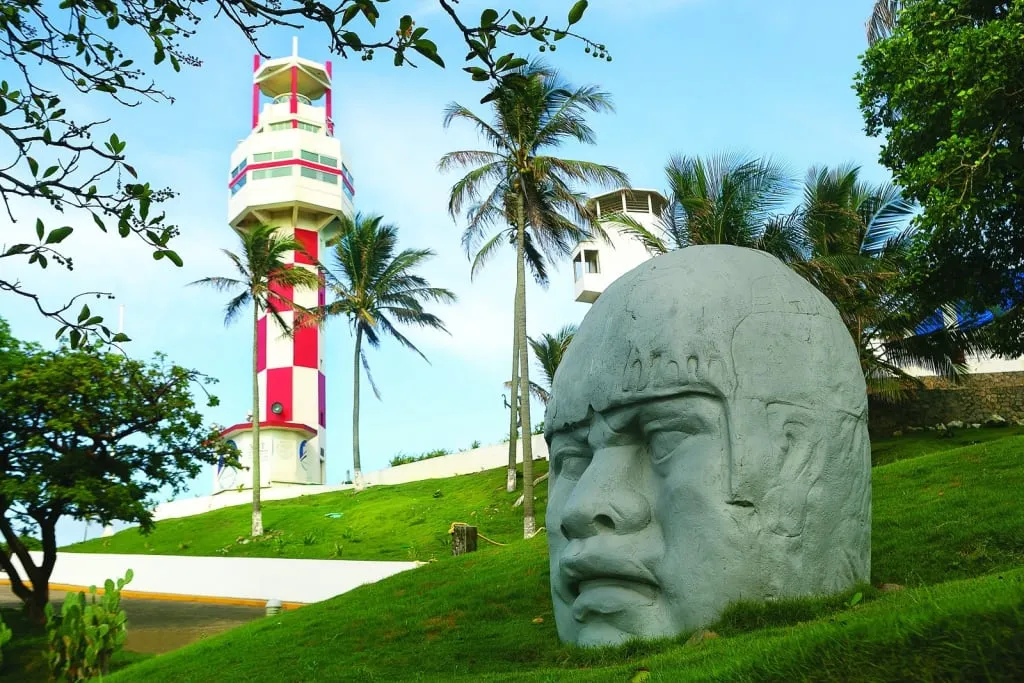
Connected to the Lighthouse Museum, Parque Bicentenario is a compact but well-maintained zoo featuring animals native to southern Mexico’s tropical lowlands. The star residents are jaguars and crocodiles — both species that inhabit the wetlands surrounding Coatzacoalcos.
The park has children’s workshops, clean walkways shaded by tropical trees, and enough to keep families engaged for 1–2 hours. You can bring your own food and have a picnic. Mexico has several impressive wildlife sanctuaries and national parks, and this small zoo offers a taste of what lives in the surrounding jungle.
Cost: Free – $20 MXN (~$1 USD) | Best for: Families with children
7. Trek Through Jaguaroundi Ecological Park
Parque Ecológico Jaguaroundi is a tropical rainforest reserve managed by PEMEX (Mexico’s national oil company) — an unusual partnership that actually works. Guided tours take you through dense jungle on raised boardwalks and trails, with opportunities for canoeing and kayaking through the waterways.
Guides explain the local ecosystem — howler monkeys, tropical birds, snakes, and the park’s namesake jaguarundi cats — and the conservation efforts protecting this green lung surrounded by petrochemical infrastructure. It’s a surreal contrast that makes the experience even more memorable.
Cost: Free (reservations required) | Duration: 2–3 hours | Tip: Bring insect repellent — the mosquitoes in the jungle are relentless
For a similar but larger ecological experience, visit the Nanciyaga Ecological Reserve near Catemaco, about 2 hours northwest.
8. Visit Jurassic Coatzacoalcos Park
A favorite with local families, Parque Jurásico Coatzacoalcos features life-sized dinosaur replicas set along a jungle trail. Kids can take a boat ride through the site, climb a rock wall, and try rappelling.
It’s smaller than similar parks in bigger cities, but the boat ride through the jungle adds a unique touch. Budget about 1.5 hours, and go in the morning before the afternoon heat makes outdoor attractions unbearable.
Cost: $80–$150 MXN ($4–$8 USD) per person | Best for: Families with kids under 12
9. Chase Waterfalls at Soteapan
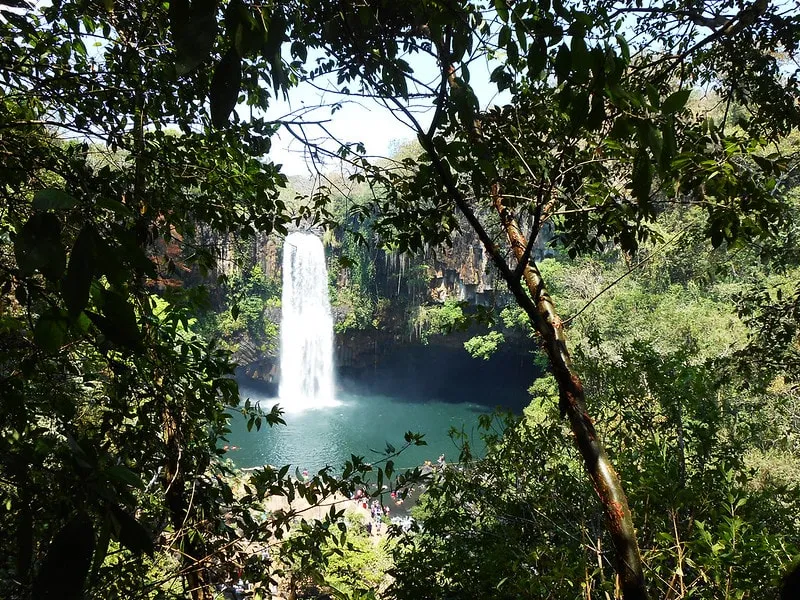
About 90 minutes from Coatzacoalcos, the Soteapan waterfall is set deep in the Sierra de Santa Marta mountains. You can rent boats, swim beneath the cascade, and hire local guides who’ll take you deeper into the surrounding rainforest.
The access road is rough — a high-clearance vehicle helps — but the reward is a tropical swimming hole with almost no other tourists. Pack snacks and water, because there are limited services.
For an even more spectacular waterfall nearby, the Salto de Eyipantla — a 40-meter cascade that’s one of the most powerful in Mexico — is about 2 hours away in Los Tuxtlas.
10. Explore the Cathedral of San José
The Catedral de San José is Coatzacoalcos’s main church and one of its most photographed buildings. The modernist architecture stands out against the city’s more utilitarian buildings, and the interior features striking stained glass and a peaceful courtyard.
Even if you’re not religious, the cathedral is worth a 20-minute visit for its architecture and its role as the spiritual center of this port city. Mass times are posted outside, and the plaza in front fills with food vendors on weekend evenings.
11. Eat Seafood at the Malecón Restaurants
Southern Veracruz produces some of Mexico’s best coastal cuisine, and Coatzacoalcos is ground zero. The city sits where the river meets the Gulf, which means fresh catches from both saltwater and freshwater sources. If food is your main reason for stopping in the state, also bookmark our guides to what to eat in Veracruz and chilpachole.
Must-try dishes:
- Chilpachole de jaiba — spicy crab soup that’s basically Veracruz in a bowl. We have a complete guide to chilpachole.
- Camarones al mojo de ajo — garlic shrimp, usually served with rice and fried plantains
- Cóctel de camarón — shrimp cocktail with tomato, lime, onion, avocado, and habanero
- Pescado a la veracruzana — whole fish in a sauce of tomatoes, olives, and capers
- Mojarra frita — fried tilapia, crispy outside, tender inside
- Armadillo memelas — a regional specialty. Read about memelas in our food guide.
- Zacahuil tamale — the massive 3-foot tamale that feeds a crowd, traditional in southern Veracruz
Best restaurants in Coatzacoalcos:
| Restaurant | Known For | Price Range (per dish) |
|---|---|---|
| La Flor del Istmo | Breakfasts & seafood | $80–$200 MXN ($4–$10 USD) |
| Mariscos Juan Chinchoncha | Seafood buffet | $150–$300 MXN ($8–$15 USD) |
| La Picadita Jarocha | Regional antojitos | $50–$120 MXN ($2.50–$6 USD) |
| El Pirata del Golfo | Gulf seafood & ceviches | $100–$250 MXN ($5–$13 USD) |
| Mariscos El Tío | Fresh oysters & cocktails | $80–$200 MXN ($4–$10 USD) |
12. Cool Off at Local Water Parks
When the tropical heat hits its peak (and in Coatzacoalcos, it will), two water parks offer relief:
- Bajío Sports Center — public pools, water slides, and sports facilities
- El Gallero Aqua Park — more slides, wave pools, and family-friendly attractions
Both charge $80–$200 MXN ($4–$10 USD) per person and are popular weekend spots for local families. Go on a weekday for smaller crowds.
13. See the Flag Monument at the Seafront
The massive Asta Bandera (flag monument) on the seafront is one of Coatzacoalcos’s most recognizable landmarks. The giant Mexican flag flying over the Gulf of Mexico makes for a dramatic photo, especially at sunset when it catches the wind against an orange sky.
The surrounding plaza is a popular gathering spot in the evenings, with food carts, families, and a relaxed atmosphere that captures the rhythm of daily life in a Mexican port city.
14. Walk the Downtown Streets
Coatzacoalcos’s downtown — centered on Avenida Ignacio Zaragoza — is where the city’s commercial life happens. Markets sell everything from tropical fruit to leather goods, taco stands line the side streets, and the architecture ranges from colonial remnants to mid-century oil boom buildings.
This is where you’ll find the cheapest food in the city: market stalls serving comida corrida (set lunch menus) for $60–$80 MXN ($3–$4 USD) including soup, main course, drink, and tortillas.
15. Learn About the Isthmus of Tehuantepec Corridor
Coatzacoalcos is the Gulf Coast endpoint of the Isthmus of Tehuantepec — the narrowest point in Mexico, where only 200 kilometers separate the Gulf of Mexico from the Pacific Ocean. The Mexican government is developing the Interoceanic Corridor as a trade route alternative to the Panama Canal, with Coatzacoalcos as a major hub.
This megaproject is transforming the region. New rail connections, port upgrades, and industrial development zones are reshaping southern Veracruz’s economy. For travelers, it adds context to why this city exists and why it matters — Coatzacoalcos has been a strategic crossroads since the Olmecs.
Day Trips from Coatzacoalcos
One of Coatzacoalcos’s biggest advantages is its location as a gateway to southern Veracruz’s most spectacular natural attractions. This is where the city beats many bigger Veracruz destinations. You can base yourself here, keep hotel costs low, and still reach rainforest, mangroves, waterfalls, and major archaeological context without changing hotels every night. If you’re building a broader state itinerary, combine this page with Orizaba, Papantla, and our broader Veracruz travel guide.
Los Tuxtlas (2 hours northwest)
The Los Tuxtlas region is one of Mexico’s most biodiverse areas — volcanic mountains, tropical rainforest, waterfalls, and Lake Catemaco. Spend a day exploring the lake, visiting the Nanciyaga Ecological Reserve, or hiking through the jungle. The region is also famous for its brujos (healers/shamans) — read about the Catemaco brujos tradition.
Sontecomapan Mangroves (2.5 hours)
The Sontecomapan mangrove forest is a protected biosphere where freshwater rivers meet the Gulf through a labyrinth of mangrove channels. Boat tours take you through tunnels of twisted roots where crocodiles, herons, and monkeys live. One of the most underrated natural experiences in all of Mexico.
Salto de Eyipantla Waterfall (2 hours)
The Salto de Eyipantla is a 40-meter-wide cascade crashing through the jungle — one of the most powerful waterfalls in Mexico. It was a filming location for Mel Gibson’s Apocalypto. You can walk behind the curtain of water for a dramatic perspective.
Villahermosa, Tabasco (2 hours east)
The capital of neighboring Tabasco state, Villahermosa has the world-famous Parque Museo La Venta — an outdoor museum with original Olmec colossal heads in a jungle setting. Combine it with the Ruta del Cacao (Chocolate Route) for a full day of Tabasco culture.
Minatitlán (30 minutes)
Coatzacoalcos’s twin city across the river. Worth a quick visit for its market and regional food — particularly chinameca smoked beef and chanchamitos tamales.
Practical Information
How to Get to Coatzacoalcos
By Air: Coatzacoalcos shares the Minatitlán-Coatzacoalcos Airport (MTT) with neighboring Minatitlán, about 20 minutes from downtown.
| Route | Airlines | Flight Time | Cost (one way) |
|---|---|---|---|
| Mexico City (MEX) | Aeroméxico, VivaAerobus | 1.5 hours | $800–$2,500 MXN ($40–$125 USD) |
| Monterrey | VivaAerobus | 2 hours | $1,000–$3,000 MXN ($50–$150 USD) |
Note: Interjet no longer operates — the airline ceased operations in 2020. Use Aeroméxico for full-service or VivaAerobus/Volaris for budget fares.
By Bus: ADO first-class buses connect Coatzacoalcos to major cities:
| Route | Duration | Cost |
|---|---|---|
| Mexico City (TAPO) | 7–8 hours | $700–$1,200 MXN ($35–$60 USD) |
| Veracruz city | 4.5 hours | $400–$700 MXN ($20–$35 USD) |
| Villahermosa | 2.5 hours | $300–$500 MXN ($15–$25 USD) |
| Oaxaca city | 6–7 hours | $500–$900 MXN ($25–$45 USD) |
| Xalapa | 5.5 hours | $450–$800 MXN ($22–$40 USD) |
By Car: From Mexico City, take the autopista via Córdoba and Acayucan — about 7 hours (550 km). From Veracruz city, it’s 310 km (3.5 hours) on Highway 180. From Villahermosa, 170 km (2 hours) east on Highway 180D. You can compare car rental prices on RentCars for the best deals.
Toll costs from CDMX: approximately $700–$900 MXN ($35–$45 USD) each way. The toll roads are well-maintained and significantly safer than the free alternatives — always use toll highways in this region.
Getting Around Coatzacoalcos
- Uber/DiDi: Both operate in Coatzacoalcos. A ride across town costs $40–$80 MXN ($2–$4 USD). This is the safest and most convenient option.
- Taxis: Available everywhere. Agree on the price before getting in — typical rides are $40–$100 MXN ($2–$5 USD) within the city.
- Walking: The malecón area and downtown are walkable. The city is flat.
- Colectivos: Shared vans run fixed routes for $10–$15 MXN ($0.50–$0.75 USD). Ask locals for the route you need.
- Car rental: Available at the airport and in the city. Useful for day trips to Los Tuxtlas, Catemaco, and Sontecomapan.
Where to Stay
Coatzacoalcos isn’t a resort town — hotels are geared toward business travelers and domestic tourists, which means reasonable prices.
| Category | Hotels | Nightly Rate |
|---|---|---|
| Budget | Hotel Enríquez, Quetzalcoatl Hotel | $400–$700 MXN ($20–$35 USD) |
| Mid-range | Hotel One Coatzacoalcos, Terraza del Sol | $800–$1,200 MXN ($40–$60 USD) |
| Upscale | Fiesta Inn Coatzacoalcos, Playa Varadero | $1,200–$2,000 MXN ($60–$100 USD) |
Best location: Stay near the malecón for walkability and sea breeze. The Fiesta Inn and Hotel One are both in this area. If you want a more conventionally tourist-friendly base with a bigger hotel and restaurant scene, compare it with the best hotels in Veracruz.
Daily Budget Estimate
| Style | Daily Cost | Includes |
|---|---|---|
| Budget | $500–$800 MXN ($25–$40 USD) | Budget hotel, market food, walking/colectivos |
| Mid-range | $1,200–$2,000 MXN ($60–$100 USD) | Mid-range hotel, restaurant meals, Uber, activities |
| Comfortable | $2,000–$3,500 MXN ($100–$175 USD) | Upscale hotel, nice restaurants, car rental, day trips |
Coatzacoalcos is significantly cheaper than tourist destinations like Cancún, Playa del Carmen, or even Oaxaca city. Your money goes further here. For a complete breakdown of travel costs across Mexico, see our guide on how much a trip to Mexico costs.
Safety
Veracruz state has a Level 2 US travel advisory (“exercise increased caution”). In Coatzacoalcos specifically:
- The malecón area, beaches, and tourist attractions are generally safe during the day
- Use Uber or DiDi rather than street taxis, especially at night
- Avoid walking in isolated areas after dark — stick to well-lit, populated zones
- The city’s economy is tied to the oil industry, and local security has improved significantly in recent years
- Common sense applies: don’t flash expensive jewelry or electronics, keep your phone in your pocket
For a detailed safety breakdown, read our comprehensive Mexico safety guide and our state-by-state travel advisory. If you’re deciding between Gulf Coast bases, our Veracruz travel guide gives you the better-known alternative.
Best Time to Visit
Coatzacoalcos has a tropical monsoon climate — expect heat and humidity year-round.
| Season | Temperature | Rainfall | Verdict |
|---|---|---|---|
| Nov–Feb | 22–28°C (72–82°F) | Low | ✅ Best — warm but comfortable |
| Mar–May | 25–32°C (77–90°F) | Low-Medium | ✅ Good — warming up |
| Jun–Aug | 27–34°C (81–93°F) | High | 🟡 Hot and rainy afternoons |
| Sep–Oct | 25–30°C (77–86°F) | Very High | 🔴 Hurricane season — avoid |
The city receives over 290 centimeters (115 inches) of rainfall annually — more than double what Mexico City gets. September is the wettest month. If you’re planning day trips to Los Tuxtlas or the waterfalls, the dry season (November–April) means clearer trails and better road conditions. You can explore Mexico tours on Viator.
A Brief History of Coatzacoalcos
Coatzacoalcos sits in the Olmec heartland — the region where Mesoamerica’s first major civilization flourished between 1500 and 400 BCE. The Olmecs built the first pyramids, created the first writing system, and carved the famous colossal stone heads that you can see in museums throughout the region.
According to Aztec legend, this is where the god Quetzalcoatl — the Feathered Serpent — sailed away on a raft around 999 CE, promising to return. When Cortés arrived from the east in 1519, Aztec emperor Moctezuma briefly wondered if the prophecy was being fulfilled.
The city was founded in 1522 when Captain Gonzalo de Sandoval established Villa del Espíritu Santo on behalf of Hernán Cortés. It became a strategic port connecting the Gulf of Mexico to the Pacific via the Isthmus of Tehuantepec — a role it still plays today.
In the 20th century, the oil boom transformed Coatzacoalcos into one of Mexico’s most important industrial cities. PEMEX refineries and petrochemical plants drove economic growth, and the population surged.
And yes — Salma Hayek was born here in 1966, daughter of a Lebanese-Mexican businessman and a Spanish opera singer. The city takes quiet pride in its most famous export.
FAQ
Is Coatzacoalcos worth visiting? Yes — Coatzacoalcos offers a genuine Gulf Coast experience with Olmec museums, a 15-kilometer malecón, tropical wildlife parks, and some of the best seafood in Veracruz. It’s off the typical tourist trail, which means lower prices and an authentic Mexican atmosphere. As Salma Hayek’s hometown and the legendary departure point of Quetzalcoatl, it has cultural significance that surprises most visitors.
How do I get to Coatzacoalcos from Mexico City? You can fly into Minatitlán-Coatzacoalcos Airport (MTT) with Aeroméxico or VivaAerobus — flights take about 1.5 hours and cost $50–$120 USD. By ADO first-class bus from CDMX TAPO terminal, the journey takes 7–8 hours and costs $40–$60 USD. Driving takes about 7 hours via the Córdoba–Veracruz toll highway.
Is Coatzacoalcos safe for tourists? Coatzacoalcos is generally safe for tourists who stick to the malecón area, main beaches, and established attractions. Veracruz state has a Level 2 US travel advisory (exercise increased caution). Use Uber or DiDi instead of street taxis, avoid isolated areas at night, and keep valuables discreet. The tourist areas along the boardwalk are well-lit and patrolled.
What is Coatzacoalcos known for? Coatzacoalcos is known as Salma Hayek’s birthplace, the legendary departure point of the Aztec god Quetzalcoatl, a major Gulf of Mexico port city, and a center of Mexico’s oil industry. For visitors, it’s known for its 15-kilometer malecón, Olmec archaeology museum, Gulf Coast seafood, and proximity to Los Tuxtlas.
What is the best time to visit Coatzacoalcos? The best months are November through April, when temperatures are comfortable (22–28°C / 72–82°F) and rainfall is minimal. Avoid September and October — the peak of hurricane season and the rainiest months.
Wrapping Up
Coatzacoalcos is worth visiting if you want a side of Veracruz that feels local, practical, and rooted in history rather than packaged for resort tourism. Come for the malecón, the seafood, and the Olmec context. Stay longer if you want to use it as a launch point for Los Tuxtlas, Sontecomapan’s mangroves, Eyipantla Falls, or a cross-state swing toward Villahermosa and the Ruta del Cacao.
For more underrated stops in the region, pair this guide with our pages on Orizaba, Papantla, Veracruz’s best beaches, what to eat in Veracruz, and our broader Veracruz travel guide. If safety is your main concern, check our 2026 Mexico travel advisory guide before you lock in transport and hotels.
Mexico’s Gulf Coast still rewards travelers who go a little deeper, and Coatzacoalcos is one of the easiest places to do exactly that.