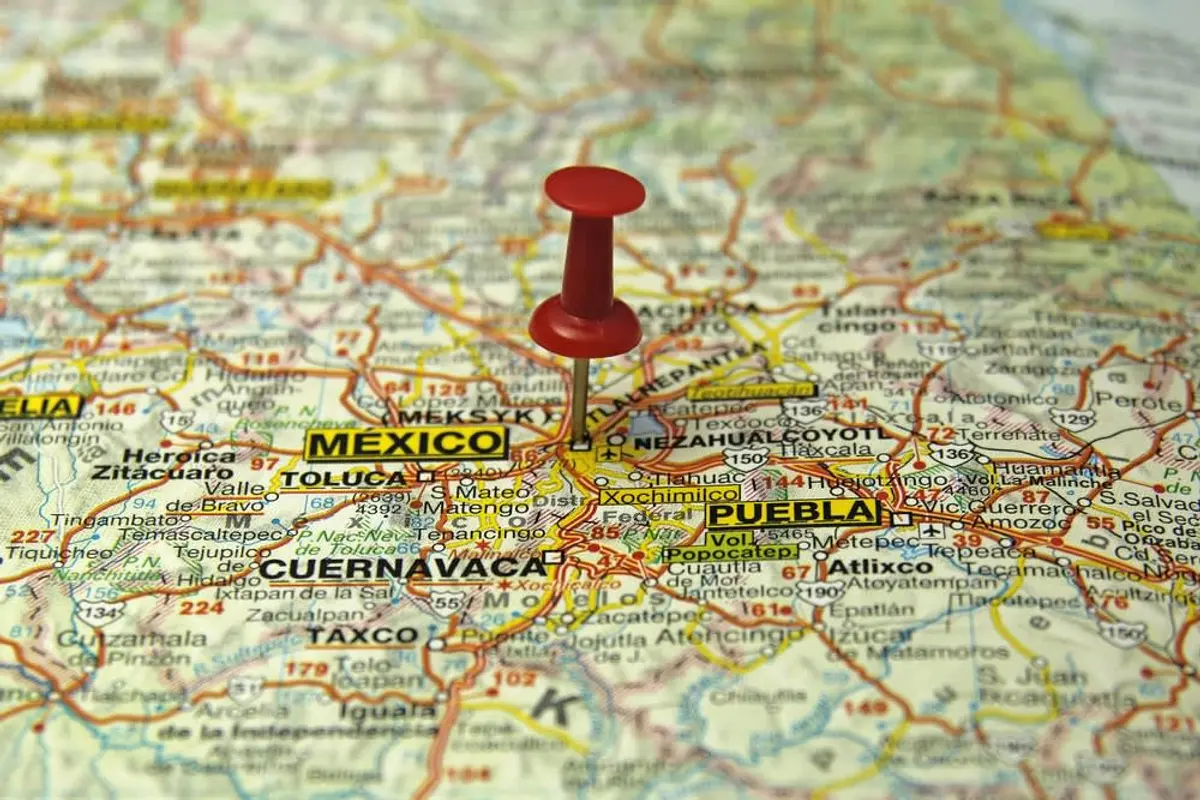
Driving to Mexico From the US in 2026: Passport, Insurance, TIP, and Border Crossing Rules
Yes, you can drive to Mexico from the US in your own car in 2026, and for most travelers the process is simple if you handle the paperwork before you reach the border. The short answer: bring a passport, buy Mexican auto insurance, and confirm whether your route also needs a Temporary Import Permit (TIP) plus immigration registration.
If you are driving into Baja California, you can usually skip the TIP. If you are driving beyond the border zone into mainland Mexico, you usually cannot. The first decision is not just can I drive into Mexico with my car? It is am I doing a Baja or free-zone drive, or a mainland road trip that needs insurance, a TIP, and an immigration stop? This guide answers that first, then walks you through the exact requirements, best border crossings, permit rules, fees, and safety basics that matter most for first-timers.
If the TIP, insurance, and long border drive sound like too much hassle, the easier version is to fly into Mexico and rent locally for the road-trip section. Compare Mexico rental rates on RentCars before you decide whether bringing your own car is actually worth it.
Driving to Mexico From the US in 30 Seconds
| What you need to know | Fast answer |
|---|---|
| Can you drive a US car into Mexico? | Yes, as long as the car is legally registered and you carry the right passport, insurance, and vehicle paperwork. |
| Is a passport card enough? | Usually yes for land entry, but a passport book is still the safer all-around choice for longer trips and unexpected flight changes. |
| Is US car insurance valid in Mexico? | No. You need separate Mexican auto insurance before you cross. |
| Do you need a TIP? | Not for Baja California or most short border-zone trips. Yes for most mainland routes beyond the free zone. |
| Do you need an FMM or entry paperwork? | Usually yes for real road trips beyond the immediate border area. Ask INM at the crossing what applies to your trip length. |
| Best border crossing strategy | Pick the crossing with the cleanest toll-road route to your destination, not just the shortest line or the biggest city crossing. |
| Biggest first-timer mistake | Reaching the border without Mexican insurance, TIP planning, enough MXN for early tolls, or a plan for where to stop for immigration. |
Can You Drive Your Car to Mexico?
Yes, completely legal and very doable. Hundreds of thousands of Americans and Canadians drive their own vehicles into Mexico every year — for road trips, winter escapes, relocations, and everything in between. Baja California is practically overrun with US-plated cars every winter.
The key difference from crossing to Canada: Mexico requires specific documentation that many travelers don’t know about until they’re at the border.
Passport Book vs Passport Card for Driving to Mexico
This is one of the biggest last-minute questions, especially for US travelers doing a land crossing for the first time.
| Document | Can you use it to drive into Mexico by land? | Best use case |
|---|---|---|
| US passport book | Yes | Best for almost everyone, especially if plans change or you might fly home unexpectedly. |
| US passport card | Usually yes for land entry | Fine for straightforward land-border trips, but less flexible than a passport book. |
| REAL ID driver’s license | No, not by itself | Useful for US domestic flights, not a substitute for a passport at the Mexico border. |
If you already have a passport card and you are doing a simple land crossing, it is usually accepted. But for longer Mexico road trips, a passport book is still the safer choice because it creates fewer problems if your trip changes, you need consular help, or you end up flying back.
What Do You Actually Need at the Border Counter?
For most first-time drivers, this is the simplest checklist:
| Border requirement | What to have ready |
|---|---|
| Your identity | Passport book or passport card |
| Your car | Registration, and title if a permit office asks for ownership proof |
| Your legal driving document | Valid US driver’s license |
| Your Mexico car coverage | Printed or saved Mexican auto insurance policy |
| Your mainland permit | TIP confirmation if you are leaving Baja or the free zone |
| Your entry paperwork | FMM or the current INM visitor registration process for your stay |
Here are the three core requirements, plus one extra document many first-time drivers forget:
- Valid passport or passport card for the traveler
- Mexican auto insurance for the car
- TIP / Temporary Import Permit if you are leaving the border zone or Baja
- FMM tourist permit if your stay requires immigration registration
The 3 Main Requirements to Drive to Mexico
Requirement 1: Mexican Auto Insurance
Your US car insurance does not work in Mexico. Period.
Mexico requires “liability financial responsibility” for all vehicles. Under Mexican law, if you’re in an accident without valid Mexican insurance, you can be held in custody until financial responsibility is established. This is not a theoretical risk — it happens to unprepared tourists regularly.
What Mexican auto insurance costs:
- Day policies: 20-50 USD per day (ideal for short Baja trips or border day visits)
- Monthly policies: 80-150 USD for 30 days
- 6-month policies: 150-400 USD (best value for extended trips or winter stays)
- Annual policies: 300-600 USD
Where to buy:
- Sanborn’s Insurance — the oldest US-Mexico insurance provider, offices near major crossings, buy online at sanbornsinsurance.com
- Baja Bound — popular online option, instant coverage, good for Baja trips
- International Insurance — wide range of carriers, buy at iimex.com
- At the border — kiosks at every crossing offer insurance, prices are fair but you lose research time standing in line
Buy 24-48 hours before crossing so you can compare rates and read your policy properly, not in a rush at the border.
What Mexican auto insurance covers:
- Liability for damage to other vehicles and property (required by law)
- Medical coverage for injuries to third parties
- Collision and comprehensive damage to your vehicle (on comprehensive policies)
- Legal assistance if you’re detained
Do not skip this. The entire trip depends on it.
Requirement 2: TIP — Temporary Import Permit
The Temporary Import Permit (TIP) — in Spanish: Permiso de Importación Temporal — is a document that authorizes you to bring your foreign-registered vehicle into Mexico’s interior for a temporary period. It exists to prevent foreign vehicles from being sold or permanently left in Mexico without paying import taxes.
Do you need a TIP?
- No TIP needed: If you’re staying in Baja California peninsula (entire peninsula, no TIP required) or within the border free zone (roughly the first 20-40km of northern border states in most cases)
- TIP required: If you’re driving anywhere else in mainland Mexico — Mexico City, Guadalajara, Oaxaca, Puerto Vallarta, Copper Canyon, Yucatán Peninsula, etc.
Do You Need a TIP for Mexico by Destination?
| Destination or route | TIP needed? | Fast answer |
|---|---|---|
| Tijuana, Rosarito, Ensenada, Valle de Guadalupe | No | Baja California routes do not require a TIP. |
| La Paz, Loreto, Cabo San Lucas, San José del Cabo | No | Still Baja peninsula, so no TIP unless you ferry to mainland Mexico. |
| Puerto Peñasco / Sonora coast | Usually no | Often covered by the Sonora free-zone setup, but verify the current Banjercito map before you go. |
| Monterrey, Mexico City, Querétaro, San Miguel de Allende | Yes | Mainland interior route, so plan on getting the permit. |
| Oaxaca, Puerto Vallarta, Guadalajara, Copper Canyon | Yes | These are mainland interior drives beyond the free zone. |
| Mérida, Valladolid, Cancún, Tulum, Bacalar | Yes | Yucatán Peninsula road trips from the US still require a TIP if you are bringing your own foreign-plated car into mainland Mexico. |
For first-timers, this is the cleanest rule: Baja usually means no TIP. Mainland Mexico usually means yes. If Sonora is your exception route, confirm it directly with Banjercito before you leave.
TIP fees:
- Processing fee: 45 USD plus VAT online, or 51 USD plus VAT at border modules and consulates (non-refundable; verify the current fee with Banjercito)
- Deposit: Approximately 200-400 USD, depending on vehicle age (refunded when you exit Mexico with the vehicle)
| Vehicle model year | Typical TIP deposit |
|---|---|
| 2007 and newer | 400 USD |
| 2001-2006 | 300 USD |
| 2000 and older | 200 USD |
The deposit is charged to a credit card and released when you cancel the TIP at the border on your way out. Never leave Mexico without canceling your TIP — if you fly home and ship the car, or if your TIP isn’t properly cancelled, you can be fined or have issues re-entering with the vehicle.
Important exception: in addition to Baja California, much of the Sonora free zone can also be visited without a TIP. If your route stays inside that zone, verify the current Banjercito map before you travel. If you are driving farther south into mainland Mexico, assume you need the permit unless Banjercito says otherwise.
Where to get a TIP:
- Banjercito (Mexico’s military bank) offices at major border crossings
- Online through Banjercito’s official vehicle-permit service (apply in advance — faster at the border)
- Some crossings process them on the same day; others require advance application
Documents required for TIP:
- Valid passport
- Vehicle title or registration (must match the permit applicant’s name)
- Driver’s license
- Proof of Mexican auto insurance
- Credit card in your name (for the deposit)
Requirement 3: Valid Driver’s License
Your US driver’s license is valid in Mexico. An international driver’s permit is not required (though it can help in the rare case of a confused police officer in a remote area). Ensure your license is current and matches the name on your vehicle registration.
One More Document Many Travelers Need: FMM Tourist Permit
If you are crossing into Mexico for more than a very short border visit, you may also need an FMM (Forma Migratoria Múltiple) or the current visitor registration process that replaces it at your crossing. Rules and enforcement vary by border, but the practical move is simple: stop at immigration and ask what is required for your length of stay and destination.
In plain English:
- Day trip in the immediate border area: often minimal paperwork
- Longer road trip into mainland Mexico: expect immigration formalities in addition to your vehicle paperwork
- Staying 7+ days or traveling deep into the country: do not assume you can skip this
This is the document gap many guides gloss over. Your car paperwork and your personal entry paperwork are not the same thing.
Which Border Crossing to Use
Mexico and the US share 1,954 miles of border with dozens of official crossings. Here’s how to choose the right one:
| Crossing | Best For | Notes |
|---|---|---|
| San Diego / Tijuana (San Ysidro or Otay Mesa) | Baja California, Pacific coast | Busiest crossing in the world; use Otay Mesa to avoid downtown San Diego congestion |
| Calexico / Mexicali | Eastern Baja, Sonora | Less crowded than San Ysidro |
| Nogales, AZ / Nogales, Sonora | Sonora, mainland Mexico via Pacific route | Good gateway for Pacific coast destinations |
| El Paso / Ciudad Juárez | Central Mexico via I-10 route | Major gateway; Ciudad Juárez has safety concerns — use toll roads and don’t linger |
| Laredo / Nuevo Laredo | Monterrey, Mexico City, Gulf coast via I-35 | Main commercial route; Nuevo Laredo has safety concerns — transit quickly |
| McAllen / Reynosa | Gulf coast, Tamaulipas | High security risk area — check current advisories carefully |
| Brownsville / Matamoros | Gulf coast alternative | Security risk area — review advisories |
| Del Rio / Ciudad Acuña | Coahuila, alternative to Laredo | Less traffic, reasonable route for Monterrey |
Safety note: Several border cities in Texas — particularly Nuevo Laredo, Reynosa, and Matamoros — fall under Level 3 or Level 4 US State Department advisories. If you must cross through these points, transit directly to the toll highway without stopping. Do not drive at night.
Best Border Crossing by Destination
If you are not sure where to enter, use your final destination, not just the closest crossing from home.
- Baja road trip: San Ysidro, Otay Mesa, Tecate, or Mexicali
- Puerto Peñasco / Sonora coast: Lukeville-Sonoyta or Nogales depending on your route
- Monterrey or Mexico City from Texas: Laredo area or the Colombia Bridge crossing, then straight onto toll roads
- Copper Canyon / Chihuahua route: El Paso-Ciudad Juárez is the most practical gateway
- Yucatán Peninsula by car: most US drivers enter from Texas, then continue through toll-road corridors via Monterrey and central or Gulf routes
Best US-to-Mexico Crossing by Trip Type
| Trip type | Best crossing move | Why it usually works best |
|---|---|---|
| First Baja road trip | Otay Mesa or Tecate | Easier southbound flow and less downtown Tijuana chaos than San Ysidro. |
| Texas to Monterrey / Mexico City | Colombia Bridge or Laredo area early in daylight | Fast access to the main cuota corridor if you keep moving and avoid lingering. |
| Arizona to Sonora beaches | Lukeville-Sonoyta | Simplest route for Puerto Peñasco and the Sonora coast. |
| El Paso to Chihuahua / Copper Canyon | El Paso-Ciudad Juárez | Most direct gateway for the Chihuahua corridor if you stay on the main route. |
| Border test run before a bigger trip | San Ysidro to Tijuana or Nogales | Easy way to practice the crossing process before a deeper mainland drive. |
For first-timers, the easiest rule is this: choose the crossing with the cleanest onward toll-road route, not the crossing with the shortest line.
Border Wait Times: How to Not Waste 4 Hours
Border wait times can range from 20 minutes to 5+ hours depending on the crossing, day of week, and time of day.
How to minimize wait:
- Use the CBP One app — provides real-time wait times at all crossings; check before you leave
- Cross on weekday mornings (Tuesday-Thursday, 7-10am) — lowest volume
- Avoid Friday afternoons, Sundays, and US holiday weekends — worst times
- Otay Mesa vs San Ysidro: Otay Mesa typically has shorter lines and better road access for south-bound traffic
SENTRI lanes: If you have SENTRI (the US-Mexico equivalent of TSA PreCheck for land crossings), you’ll cut wait times dramatically. Worth getting if you cross regularly.
Before You Cross: 30-Minute Prep That Saves Hours
This is where many of the top-ranking guides are still too vague. The real win is arriving with your route already matched to your paperwork:
- Baja trip: insurance + passport first, then confirm you really stay in the no-TIP zone
- Mainland road trip: insurance + TIP plan + immigration stop
- Border-area day visit: confirm whether you are staying inside the free zone before paying for paperwork you may not need
Once that is clear, the rest of the border process gets much easier.
Before you leave your hotel or gas stop on the US side, do this quick check:
- Fill the tank before crossing, because fuel stations may not be immediate after some ports of entry
- Keep passport, registration, insurance policy, and TIP paperwork together in one folder
- Download offline maps in Google Maps or Maps.me in case your cell service drops right after the border
- Carry pesos for tolls, snacks, and smaller crossings where card acceptance is inconsistent
- Screenshot your insurance emergency line and Banjercito confirmation
This sounds basic, but it is exactly the difference between a smooth crossing and a chaotic first hour in Mexico.
What to Declare at Mexican Customs
When entering Mexico by land, you’ll encounter customs inspection. Here’s what to know:
Duty-free allowances:
- Personal items for your trip (clothes, toiletries, electronics for personal use)
- Cash or traveler’s checks: amounts over 10,000 USD must be declared
- Gifts and purchased goods: 500 USD per person (air) or 75 USD per person (land crossings) duty-free
- Up to 10 liters of alcohol
- Up to 200 cigarettes or 50 cigars
Food restrictions:
- No fresh meat (beef, pork, poultry) into Mexico — serious restrictions
- Fruits and vegetables have restrictions — check the current SAT/SENASICA list
- Processed and packaged food is generally fine
Firearms: Mexico has extremely strict gun laws. Do not bring any firearms or ammunition across the border. Even a single forgotten bullet can result in serious criminal charges and imprisonment. This is enforced rigorously.
The Baja California Exception (No TIP Required)
If your entire trip is on the Baja California peninsula — covering the states of Baja California (Norte) and Baja California Sur — you do not need a TIP. The permit system does not apply in Baja.
This is one reason Baja is such a popular driving destination for Americans. You can drive from San Diego to Cabo San Lucas (roughly 1,000 miles) without a TIP, with just your Mexican auto insurance and passport.
Cross into Baja through:
- San Ysidro / Tijuana (most popular)
- Otay Mesa / Tijuana (less congested)
- Tecate (small, relaxed crossing — great for Baja wine country)
- Mexicali (east side entry to Baja)
The only time you need a TIP in Baja is if you take the ferry from La Paz or Santa Rosalía to mainland Mexico — then you’re crossing into TIP territory and need the permit.
Driving Safety in Mexico: The Real Picture
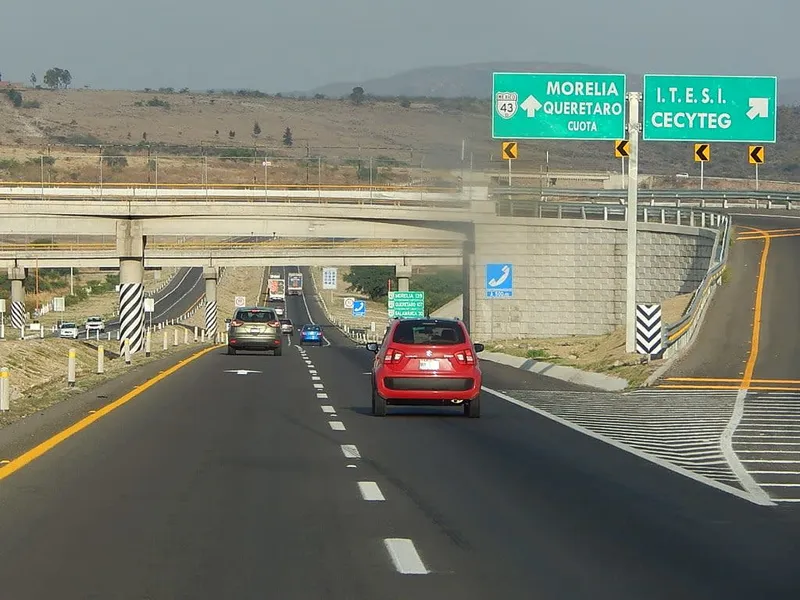
Most people who drive in Mexico have uneventful, enjoyable trips. The risk is real but manageable with common sense. Here’s what actually matters:
Rule 1: Don’t drive at night in Northern Mexico or Level 3-4 advisory states
Highway crime in Mexico — the incidents you read about — is concentrated at night, on secondary roads, in Northern border states. If you’re driving from Laredo to Monterrey, do it during daylight. Driving through Sinaloa, Tamaulipas, Guerrero, or Michoacán at night is how road trips go wrong.
Daytime driving on toll highways in tourist areas — the Yucatán, Oaxaca, Pacific coast, colonial highlands — is routine and safe.
Rule 2: Use toll roads (cuotas), not free roads (libres)
Toll roads cost money — sometimes 5-20 USD for a long segment — but they’re:
- Better maintained (fewer potholes and unexpected hazards)
- Patrolled by Green Angels and federal police
- Faster (fewer stops, better surfaces)
- Significantly lower crime risk than libre roads
Budget the tolls into your trip cost. In Mexico, toll roads are a safety investment.
Rule 3: Green Angels — free roadside assistance
Mexico’s federal highway system operates Ángeles Verdes (Green Angels) — a fleet of green pickup trucks that patrol major toll highways specifically to help stranded motorists. Services are completely free:
- Minor repairs and tire changes
- Emergency fuel (you pay only for the fuel cost)
- Towing referrals
- First aid
- Radio communication
If you break down on a Mexican highway, stay with your car and call 078 (Green Angels hotline) or wait — they patrol twice daily on major routes. This service is legitimately excellent and rarely mentioned in US travel guides.
Road Conditions by Region
| Region | Road Quality | Notes |
|---|---|---|
| Baja California (Highway 1) | Variable | Paved throughout; some rough sections south of La Paz; occasional cattle on road at night |
| Yucatán Peninsula | Good | Flat terrain, good roads; Highway 180/307 well-maintained |
| Oaxaca (Highway 190) | Good main road, rough secondary | Highway 190 (OAXACA-CDMX) is excellent; mountain roads to villages are narrow |
| Pacific Coast (Highway 200) | Varies by segment | Coastal scenery; some rough segments in Guerrero — check advisories |
| Mexico City approaches | Heavy traffic | Allow 2-3 hours extra for CDMX approach; ring roads (Periférico) needed |
| Copper Canyon (Highway 16) | Rough, scenic | Mountain roads to canyon viewpoints are challenging; high clearance vehicle helpful |
| Northern border states | Generally good | Main highways fine; avoid secondary roads |
Toll Road Guide: How to Pay
Payment methods:
- Cash: Mexican pesos (MXN) accepted everywhere. Some booths also accept USD, but change is given in pesos. Bring small bills — 50 and 100 MXN notes.
- Credit cards: Accepted at many modern toll booths, but not all. Never rely on card-only.
- IAVE transponder: Mexico’s electronic toll system, equivalent to E-ZPass. Worth getting if you live near the border or make frequent trips. Significant time savings.
Typical toll costs:
- Short segments (20-50km): 30-80 MXN
- Monterrey to Mexico City (full route, ~900km): approximately 800-1,200 MXN in tolls
- Mexico City to Oaxaca: approximately 400-600 MXN
- Tijuana to Ensenada (Baja): approximately 150 MXN
Budget roughly 100-200 MXN per 100km of toll road driving as a rough estimate.
What to Do If Stopped by Police
Police stops happen to foreign-plated vehicles more often than to local cars. Most are routine. Some involve corrupt officers attempting to extract a bribe (mordida). Here’s how to handle both:
Stay calm. Pull over safely, keep your hands visible, and speak politely. “Buenos días” goes a long way.
Have your documents ready. Driver’s license, passport, vehicle registration, Mexican insurance card, and TIP document. Keep them accessible.
Know your rights. You have the right to request a written citation (infracción) rather than paying on the spot. Saying “Quiero un comprobante” (I want a receipt) shifts the dynamic — officers who are attempting extortion usually don’t want a paper trail.
Don’t pay cash to police. If you’re cited for a real violation, pay at an official collection point (banco/recaudadora de multas), not on the roadside. Ask for the formal ticket.
The bribe reality: Mexico’s police culture around mordidas has improved significantly in the past decade, particularly in tourist areas and major cities. Federal highway police are generally professional. Local municipal police in small towns have more variation. The honest answer: some travelers encounter this, most don’t. If you do, staying calm and asking for a receipt usually ends the encounter without payment.
If something serious happens: Contact your Mexican auto insurance provider’s emergency line immediately — they provide legal assistance. The US consulate can also be contacted in genuine emergencies.
Kidnapping: The Honest Context
US news coverage of Mexico inevitably includes kidnapping stories. Here’s the honest picture for tourist drivers:
Express kidnapping (brief detentions for ATM withdrawals) exists primarily in certain urban areas and targets people who appear wealthy and are not paying attention. It is not a routine risk for tourists on toll roads in tourist areas.
Cartel-related kidnappings target rival cartel members, local businesspeople, and people traveling in high-risk states (Tamaulipas, Sinaloa, Guerrero, Michoacán, Zacatecas) at night on libre roads.
For the vast majority of tourist driving — Baja, Yucatán, Oaxaca, Pacific coast resorts, colonial highlands — kidnapping is not a practical concern any more than it is in a major US city. The same basic awareness that keeps you safe anywhere applies: travel on toll roads, during daylight, in tourist regions, and don’t flash expensive items.
For the full honest breakdown of Mexico’s safety situation by region, read our Is Mexico Safe guide — written by someone who grew up there.
Canceling Your TIP When You Leave Mexico
This deserves its own section because it causes expensive mistakes. If you obtained a TIP, you need to cancel it with Banjercito before fully exiting Mexico with the vehicle. Do not assume the permit closes automatically.
If you fail to cancel it:
- your deposit may not be refunded
- the vehicle can remain flagged in the system
- you may have trouble bringing a car into Mexico again later
If you are driving back to the US, build extra time into your return-day plan specifically for TIP cancellation.
Internal Links and Next Steps
You’re driving to Mexico — here’s what else to read:
- Driving in Mexico: Road Trips Guide — the companion guide to driving within Mexico once you’ve crossed
- Mexico entry requirements for US citizens — the fastest passport, passport-card, and REAL ID double-check before you leave
- Mexico travel tips — practical logistics guide for your whole trip
- Is Mexico safe? — state-by-state safety breakdown so you know which routes to take
- Mexico visa requirements — who needs extra immigration paperwork and who does not
- Mexico travel cost — tolls, fuel, insurance, and real trip-budget expectations
- Driving from the US to Mexico checklist — the cleanest last-minute document check before you reach the border
- Tijuana day trip from San Diego — if you want to test a short border crossing before a bigger road trip
Renting instead of driving your own car? RentCars compares Mexican car rental options including local insurance — often a simpler option for travelers who want to drive but not deal with TIP paperwork.
Quick Reference Checklist Before You Cross
- Valid US passport
- Valid driver’s license
- Vehicle title/registration
- Mexican auto insurance purchased (not your US policy — that’s invalid)
- TIP permit obtained (if traveling beyond Baja or border free zone)
- Cash in MXN for tolls (bring small bills)
- CBP One app installed (real-time border wait times)
- Emergency contacts saved (Mexican insurance provider, Green Angels: 078, US Embassy: +52 55 5080 2000)
- Travel insurance active (medical evacuation coverage)
- Route planned on toll roads (cuotas) with daylight timing