Mexico for Seniors 2026: Best Destinations & Practical Guide
Mexico has been a top destination for senior travelers and retirees from the US and Canada for decades. The reasons are practical as much as atmospheric: warm weather that runs most of the year, private hospitals that rival US quality at a fraction of the cost, large established expat communities where you won’t feel out of place, and a cost of living that makes a comfortable lifestyle genuinely affordable on a fixed income.
Over 1 million Americans and Canadians live full-time or part-time in Mexico. The destinations that have attracted them — San Miguel de Allende, Lake Chapala, Puerto Vallarta, Mérida — have built real infrastructure around that community: English-language doctors, pharmacies familiar with foreign prescriptions, senior activity groups, and international restaurants alongside local ones.
This guide covers the best destinations, medical realities, accessibility honest talk, and the practical information senior travelers actually need.
Why Mexico for Seniors?
Year-round warm weather. Mexico’s popular expat destinations — San Miguel de Allende, Puerto Vallarta, Lake Chapala, Mérida — sit in climate zones that rarely see temperatures below 15°C (60°F). Winters are mild and sunny. For people escaping Canadian winters or cold northern US states, this alone justifies the trip.
World-class private hospitals at accessible costs. Mexico’s private hospital system is excellent. Top facilities in Guadalajara, Mexico City, Puerto Vallarta, and the Riviera Maya are accredited by international bodies and staffed with US- and European-trained specialists. A cardiologist consultation that costs 400 USD in the US runs 60–80 USD in Mexico. Many procedures that would require months of waiting in the Canadian public system can be scheduled within days.
Low cost vs. US and Canada. A couple can live comfortably in San Miguel de Allende or Lake Chapala on 2,500–3,500 USD per month — including accommodation, food, healthcare, and social activities. This is life-changing for people on fixed incomes.
Established expat communities. The key difference between Mexico and other cheap destinations is that the expat communities here are deep and long-established. There are English-language libraries, theater groups, yoga classes, volunteer organizations, and social clubs. Arriving as a senior solo traveler in San Miguel or Ajijic does not mean arriving alone.
Accessibility of tourist sites. Most major Mexican attractions — ruins, markets, churches, beaches — are manageable for most seniors without mobility issues. Cobblestone cities exist and are covered honestly below, but much of Mexico’s tourist infrastructure is flat, accessible, and built for visitor comfort.
Best Destinations for Seniors in Mexico
1. San Miguel de Allende — The Classic Choice
Altitude: 1,870 meters (6,134 ft) Expat community: Estimated 30,000+ Medical: Hospital de la Fe (general), Hospital MAC (specialty), several bilingual clinics
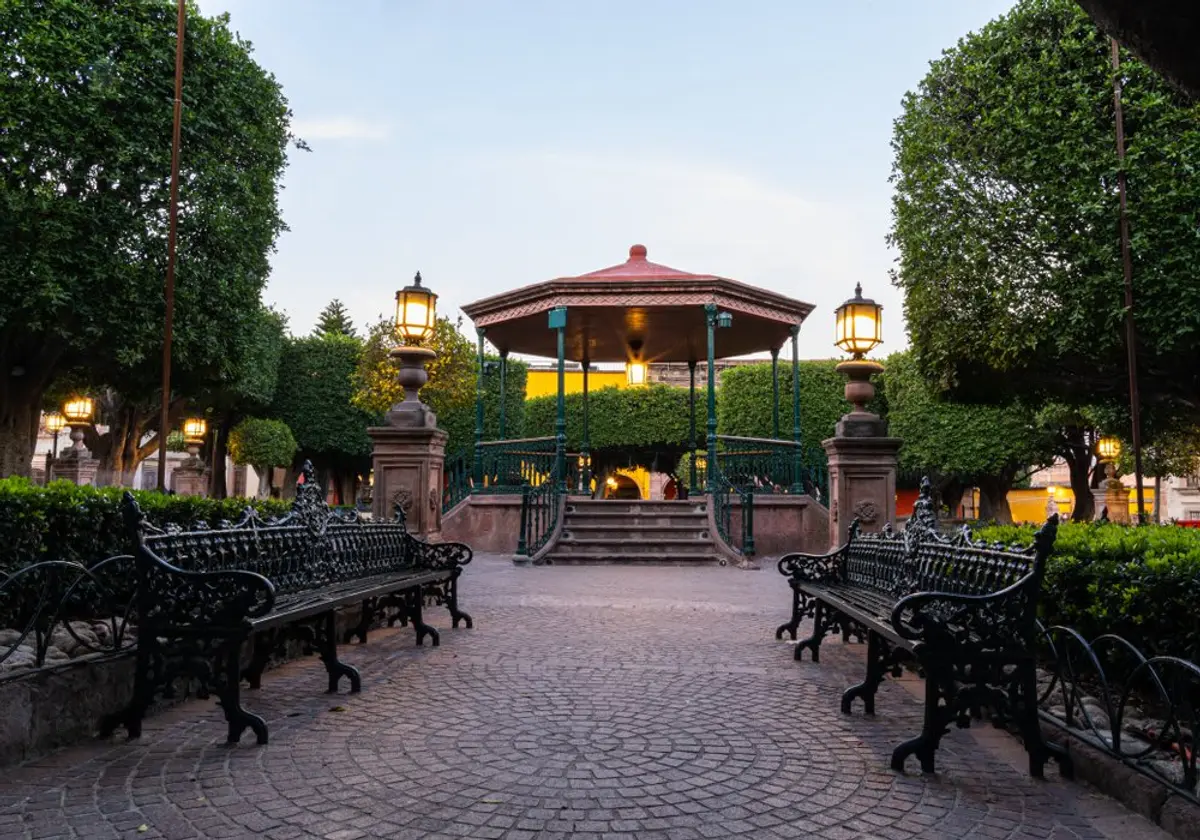
San Miguel de Allende is the most famous retirement and expat destination in Mexico — and for most seniors, the reputation is deserved. The city’s colonial centro is genuinely flat (unusual for a colonial highland city), the expat community is enormous and active, and the quality of life on offer is extraordinary.
Why it works for seniors:
-
Flat centro means less strain than neighboring Guanajuato (which is all hills)
-
English is widely spoken in the expat zones
-
Excellent bilingual private medical care
-
Hot springs at La Gruta, 15 minutes outside town — popular with seniors for arthritis and joint relief
-
Active social calendar: art walks, concerts, markets, lectures
Altitude consideration: At 1,870 meters, most healthy seniors tolerate San Miguel fine. Give yourself 24–48 hours to acclimatize on arrival — take it easy, avoid heavy alcohol the first day, and drink extra water. If you have COPD, heart failure, or severe anemia, consult your doctor before booking.
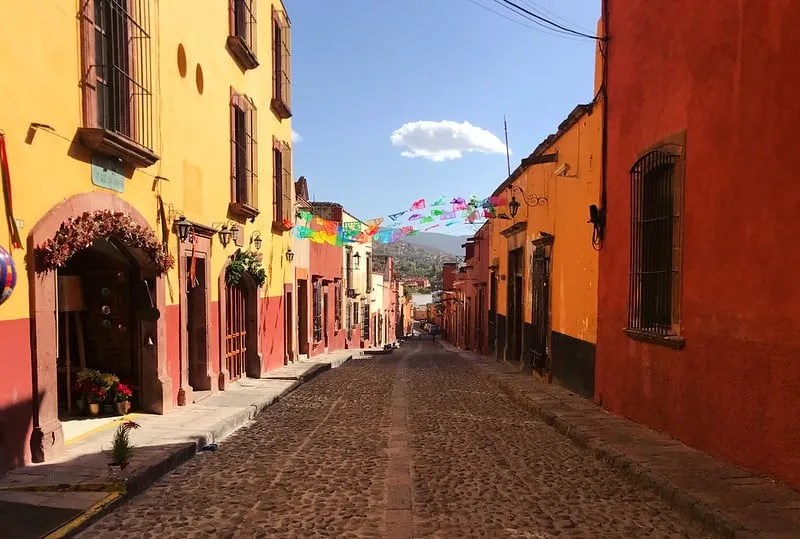
Cobblestones: Real issue. The side streets in San Miguel use traditional cobblestones (adoquines) — beautiful, but hard on ankles and impractical for walkers or wheelchairs. The main plaza and primary streets are smoother. If mobility is a concern, stay close to the centro and book a ground-floor room.
2. Puerto Vallarta — Best Beach Option
Altitude: Sea level Medical: CMQ Hospital (internationally accredited), Hospital San Javier Strong LGBTQ+ friendly community = inclusive for all travelers
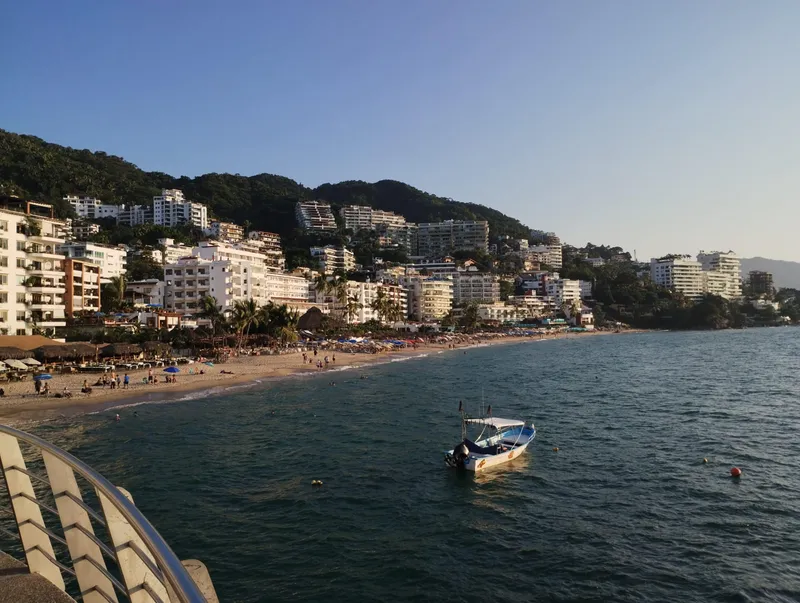
Puerto Vallarta is the best combination of beach, infrastructure, and medical care on Mexico’s Pacific coast. The city sits at sea level (no altitude issues), has world-class private hospitals including CMQ Hospital which attracts significant medical tourism, and has a mature tourist infrastructure built over decades.
The Zona Romántica (Old Town) is walkable with cobblestones but manageable. The Malecon boardwalk is paved and flat. The Zona Hotelera (hotel strip north of centro) offers modern resort infrastructure with excellent accessibility.
For seniors specifically:
-
No altitude — arrive and feel fine immediately
-
5th Avenue (Olas Altas to Basilio Badillo) is a flat, walkable zone with restaurants, cafés, and shops
-
Strong medical reputation — CMQ Hospital has English-speaking staff and handles everything from routine care to cardiac procedures
-
Puerto Vallarta’s inclusive culture (it’s one of Mexico’s most LGBTQ+-friendly cities) creates a generally welcoming environment for everyone
3. Mérida — Colonial City with Low Crime
Altitude: Sea level (17 meters) Medical: Clínica de Mérida, Hospital Faro del Mayab Crime: Consistently one of Mexico’s safest large cities
Mérida is the capital of Yucatán State and a colonial city with a character distinct from the Pacific coast destinations. It’s flat, walkable, genuinely safe, and has been growing rapidly as an expat destination over the past decade.
The centro histórico is built on a flat grid — no hills, no dramatic cobblestones. The main plazas, the cathedral, the Paseo Montejo boulevard, and the markets are all accessible. Average temperatures run hot (33–38°C / 90–100°F in summer), but Nov–Apr is ideal.
For seniors:
- Safe to walk at night in the tourist areas — a real differentiator
- Easy day trip to Chichen Itza (1.5 hours)
- Strong food scene — the best regional Mexican cooking in the Yucatán
- Lower property and living costs than San Miguel or Puerto Vallarta
- Growing English-speaking expat community (behind SMA and Chapala, but accelerating)
4. Cancún and Riviera Maya — Resort Comfort
Altitude: Sea level Medical: Hospiten Cancún, American Hospital Cancún Accessibility: Best in Mexico for mobility-impaired travelers
For seniors who want beach resort infrastructure — accessibility ramps, elevator hotels, beach wheelchairs, all-inclusive dining — Cancún and the Riviera Maya are the easiest choice in Mexico. The entire Hotel Zone is purpose-built tourist infrastructure with accessibility standards that approach US norms.
Private hospitals in Cancún (Hospiten, which is a major Spanish chain) are fully equipped for complex medical situations. The corridor from Cancún to Tulum has more top-tier private hospitals per kilometer than most of Mexico.
Trade-off: Cancún is resort Mexico — less authentic cultural immersion than Mérida or Oaxaca, more international hotel brands, higher prices than inland destinations.
For mobility-impaired travelers: This is the most accessible Mexico option by a significant margin. Research hotel accessibility directly — ask specifically about beach access, pool entry, and elevator availability.
5. Lake Chapala and Ajijic
Altitude: 1,524 meters (4,997 ft) Medical: Medical tourism from nearby Guadalajara (30 minutes) Expat community: Largest outside Mexico City
The Lake Chapala area — particularly the village of Ajijic on the lake’s north shore — has the longest-established and largest expat community in Mexico outside CDMX. Americans and Canadians have been retiring here since the 1960s. The community is deep, organized, and extraordinarily active.
The infrastructure reflects this: there are English-language medical clinics, a Society of Arts and Activities that rivals a full community center, English-language newspapers, and social calendars that would embarrass most US retirement communities.
Medical: Ajijic’s local clinics handle routine care. For serious issues, Guadalajara — 30 minutes north — has some of Mexico’s best hospitals, including Hospital Puerta de Hierro and Hospital Country 2000.
Climate: The Lake Chapala microclimate is among the most pleasant in Mexico — warm and sunny year-round, rarely extreme. Called “eternal spring” by locals, somewhat hyperbolically, but genuinely mild.
6. Oaxaca — Culture for the Altitude-Tolerant
Altitude: 1,550 meters (5,085 ft) Medical: Hospital Reforma, several bilingual private clinics
Oaxaca offers the deepest cultural immersion of any destination on this list — extraordinary food, indigenous markets, the strongest craft tradition in Mexico, world-class archaeological sites — but it requires altitude tolerance.
At 1,550 meters, Oaxaca is lower than Mexico City or San Miguel de Allende. Most healthy seniors handle it fine. The city’s layout is flat (unlike many highland cities), ground-floor hotel rooms are available, and the tourist infrastructure is good.
For senior travelers:
- Go for the food and culture — there’s genuinely nothing like it
- The Day of the Dead celebrations in Oaxaca (late October–early November) are internationally famous; book accommodation 6 months ahead
- Cobblestones exist but are manageable in the centro
- Don’t attempt high-altitude day trips (Monte Albán sits higher; manageable for a few hours)
Destinations to Approach Carefully
Mexico City (CDMX): 2,240 meters (7,349 ft) — the highest major destination in Mexico. Most seniors do fine, but the altitude is real. If you have significant cardiac or pulmonary issues, discuss with your doctor. The city has extraordinary medical infrastructure if anything goes wrong. Don’t let altitude fear stop you from visiting — just be aware.
Guanajuato City: Beautiful but all hills and stairs — genuinely difficult for anyone with knee or hip problems. Plan carefully.
Taxco: Similar situation to Guanajuato — very steep, very hilly.
Remote beach destinations (Zipolite, Mazunte, Barra de la Cruz): Beautiful but minimal medical infrastructure nearby. Fine for healthy seniors; not for anyone who might need prompt medical attention.
Medical Guide for Senior Travelers
Private vs. Public Hospitals
Public hospitals (IMSS, ISSSTE): Free for emergencies but designed for Mexican citizens with enrollment in the national health system. As a tourist, you will generally be seen in emergencies but may face language barriers and wait times.
Private hospitals: Where you want to be as a tourist. Costs are dramatically lower than US equivalents, quality is high, and international patients are routine. Many staff are US- or European-trained.
Key Private Hospitals by Destination
| City | Hospital | Notes |
|---|---|---|
| Mexico City | ABC Medical Center (Hospital Angeles ABC) | Top-tier, internationally accredited, English-speaking staff |
| Puerto Vallarta | CMQ Hospital | Medical tourism center, handles cardiac care |
| Cancún | Hospiten Cancún | Spanish chain, international standards |
| Guadalajara | Hospital Country 2000, Puerta de Hierro | Serves Lake Chapala area |
| San Miguel de Allende | Hospital de la Fe | Good for most conditions; serious cases transfer to CDMX |
| Mérida | Clínica de Mérida | Full service for Yucatán region |
Travel Insurance for Seniors
Senior travelers should focus on four things before buying a policy:
- Emergency medical coverage with a meaningful payout limit
- Emergency evacuation and repatriation
- Clear age eligibility rules
- Pre-existing condition language that actually matches your health history
For travelers 70+: many standard travel policies become more restrictive or more expensive after age 69, so compare dedicated senior plans carefully. Never travel to Mexico without evacuation coverage — a medical flight home can cost 30,000–100,000 USD.
Accessibility Reality Check
What Works Well
- Modern resort hotels in Cancún and Riviera Maya
- New airports (all major Mexican airports are well-accessible)
- Most first-tier tourist sites (Chichen Itza has paved paths, good signage)
- Uber works in all major cities — no stairs into taxis
What’s Challenging
- Colonial cobblestone streets (San Miguel, Guanajuato, Oaxaca) — beautiful but hard on ankles, impractical for wheelchairs
- Old colonial hotels (even good ones often have stairs and no elevator)
- Some ruins require significant walking (Calakmul, Palenque)
Booking Tips for Mobility Concerns
- Email hotels directly: “Do you have ground-floor rooms? Is there an elevator? Is the entrance accessible from the street?”
- Mexican hotels don’t always update accessibility information on booking platforms — direct communication is essential
- Hire private drivers for transfers rather than trying to navigate public transport
Practical Tips for Senior Travelers in Mexico
Credit Card Coverage
Many US and Canadian credit cards offer some travel medical coverage — check your specific card before departure. This often applies only to trips purchased on the card and has duration limits (typically 10–21 days). It should supplement, not replace, dedicated travel insurance.
Prescription Medications
Mexico’s pharmacies are well-stocked and many medications available by prescription only in the US/Canada are over-the-counter in Mexico. Bring a full supply of your medications from home (Mexico sources may be the same product or a generic equivalent, but consistency matters). Carry medications in original labeled containers for customs. Keep a list of generic names — brand names vary between countries.
Pharmacy Culture
Farmacias de guardia (24-hour pharmacies) operate in all major cities — many chains like Farmacias del Ahorro and Farmacias Guadalajara maintain late-night hours. In an emergency, pharmacists in Mexico provide more direct triage than is typical in North America — they will tell you directly what they think you need.
Money
ATMs are widely available in tourist cities. Notify your bank before travel. The best exchange rates come from Mexican ATMs (avoid airport exchange desks). Keep small denomination pesos for markets, tips, and local transport.
The “Low Season” Advantage for Seniors
The flexibility of retirement travel means you can visit off-peak. November–April is peak season for most destinations and also coincides with cooler, drier weather. But May and June (before summer school holidays) offer good weather with meaningfully lower accommodation prices and fewer crowds — especially in Oaxaca and the Yucatán.
Plan Your Senior Mexico Trip
Travel insurance first. Make sure your policy covers emergency medical care, evacuation, and any pre-existing conditions that matter for your trip. Our Mexico travel insurance guide breaks down what to compare before booking.
For organized tours with senior-appropriate pacing — cultural tours, archaeological sites, food experiences — Viator has well-reviewed operators in every destination covered here: Browse Mexico tours for seniors on Viator.
Further Reading
- Is Mexico safe for tourists? — honest assessment by destination
- Mexico travel insurance guide — what coverage you actually need
- Best time to visit Mexico — full seasonal breakdown
- Mexico travel tips — practical logistics for all travelers
- Safest cities in Mexico — safety by destination
Mexico is genuinely excellent for senior travel when you choose the right destination for your needs. The combination of warm weather, quality medical care at lower cost, and real expat communities makes it unique. The key is honest preparation — altitude where relevant, cobblestones where they exist, and insurance before you go.