Best Beaches in Baja California 2026: Pacific & Sea of Cortez
Baja California is a 1,250km peninsula with two completely different coasts. Travel guides often treat it as one destination, but the Pacific coast and the Sea of Cortez are different oceans, different temperatures, different water conditions, and different reasons to visit.
Understanding which coast to choose — and when — is the key to getting the most out of Baja’s extraordinary beaches.
Two Coastlines, Two Different Experiences
Pacific Coast
- Cold water (18–22°C in winter, warming to 24°C in summer)
- Waves, swells, surf
- Dramatic cliffs and wild scenery
- Best for: surfing, whale watching, dramatic landscapes
- Not ideal for: casual swimming, families with small kids
Sea of Cortez
- Warm water year-round (24–28°C November–May)
- Calm, flat, protected — almost no waves
- World-class snorkeling and diving
- Best for: swimming, snorkeling, kayaking, families
- Not ideal for: surfing
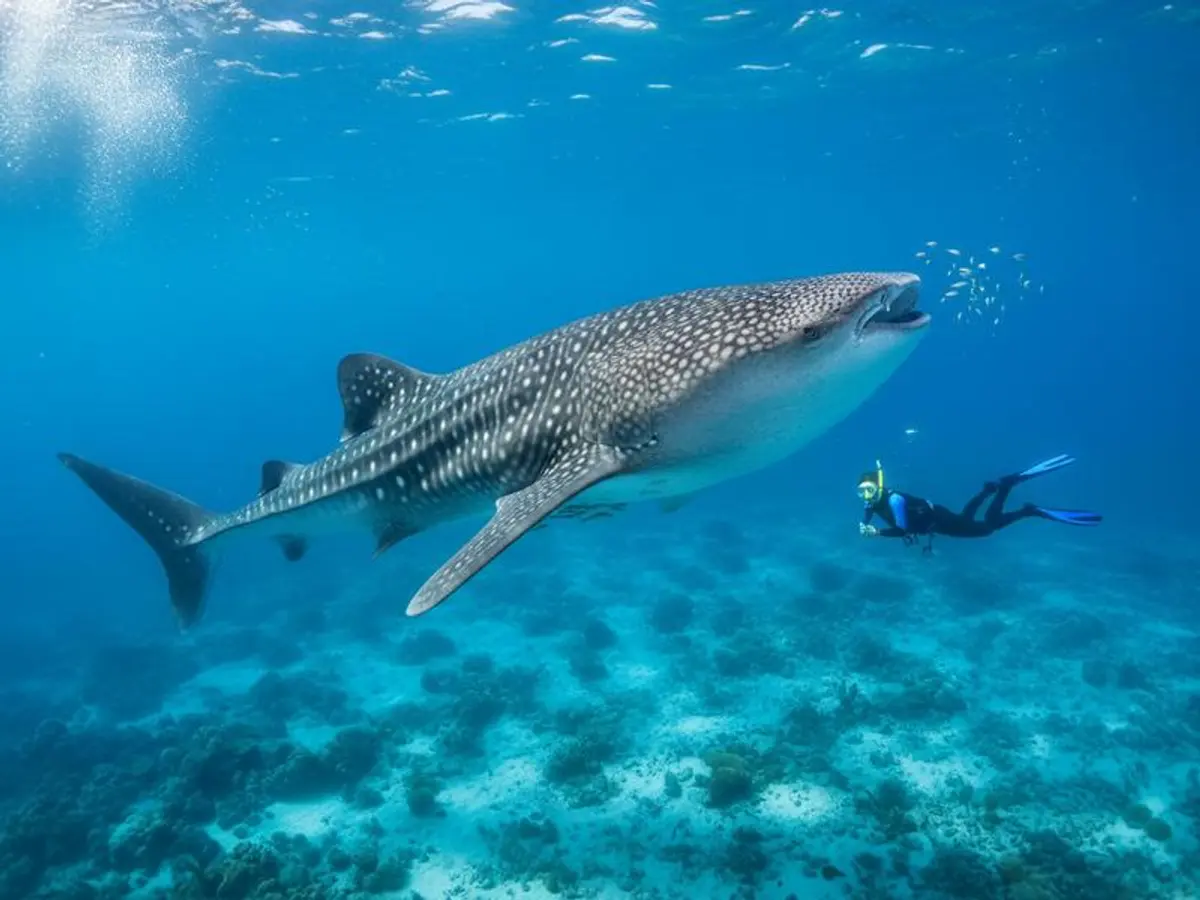
Jacques Cousteau called the Sea of Cortez “the world’s aquarium.” The biodiversity is staggering — whale sharks, sea lions, manta rays, dolphins, and hundreds of fish species in water you can see through clearly.
Getting Around: You Need a Car
This is the most important practical note in this guide. Baja California has almost no public transport between beach destinations.
There are buses between cities (La Paz to Cabo San Lucas, La Paz to Loreto, Ensenada to Tijuana), but these run on main highways and don’t serve the beaches. Getting from La Paz to Balandra, or from Cabo to Cabo Pulmo, requires a car or expensive taxi.
Recommendation: Rent a car in La Paz or in Los Cabos at the airport. The roads in southern Baja are excellent — Baja Highway 1 is paved and well-maintained. Northern Baja roads vary more.
Compare car rental prices in Baja →
La Paz Beaches
Balandra — Mexico’s Most Beautiful Beach
Balandra is a protected bay 24km north of La Paz. The combination of shallow depth, white sand, and the color of the water — which shifts from pale turquoise near shore to deep blue — makes it unlike any other beach in Mexico.
The water is genuinely shallow. Walk 100 meters from shore and you’re still only waist-deep in places. This makes it exceptionally safe for children and non-swimmers, and the warmth (this is enclosed Sea of Cortez water) makes it feel like a bath.
Entry is free — this is a federally protected natural area. There are basic facilities (bathrooms, food stalls on weekends). However, popularity has created a problem: on summer weekends and Mexican holidays, Balandra gets very crowded and a visitor cap may be enforced. Go early, ideally 8–9am. By midday on a weekend, parking can be full and the beach crowded.
Tecolote — Also Free, Plus Whale Sharks
Playa Tecolote is another free public beach north of La Paz, just past Balandra. It’s larger, less enclosed, and gets more wind — which means kitesurfers use it. The main draw beyond the beach itself: whale shark season.
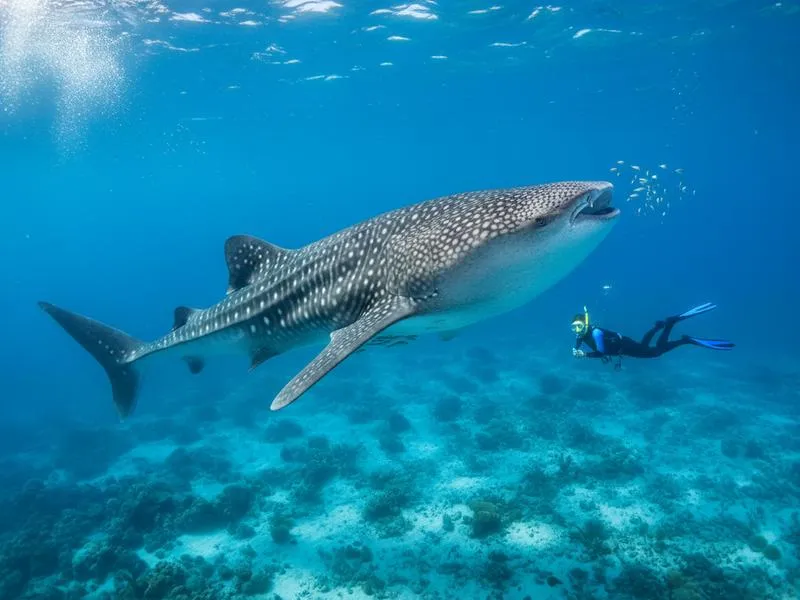
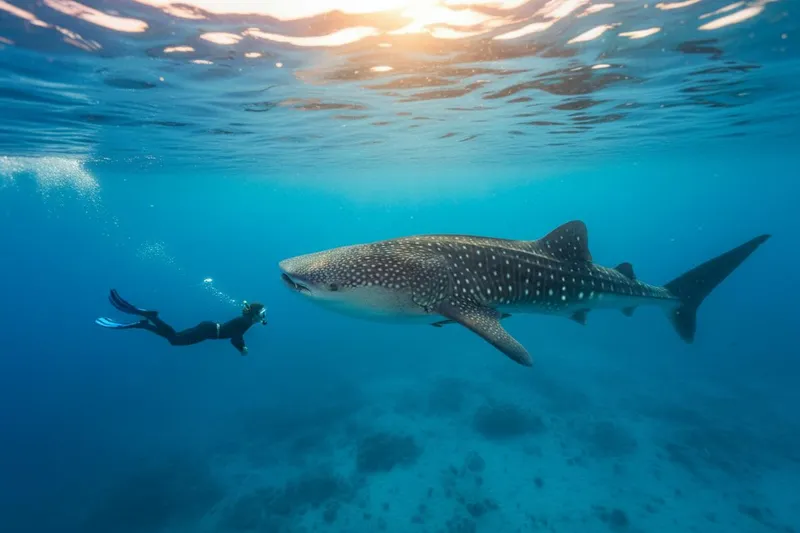
From October through May, whale sharks congregate in the waters just offshore from Tecolote. These are the world’s largest fish — up to 12 meters long — and they’re completely harmless filter feeders. Swimming with whale sharks near La Paz is one of the most popular wildlife experiences in Mexico.
Whale shark tours depart from La Paz’s malecón (waterfront promenade) and from Tecolote itself. Season: October–May, with peak sightings November–March.
El Mogote Spit
El Mogote is a narrow sand spit across the bay from La Paz — reachable by kayak or water taxi. The side facing La Paz is a calm mangrove lagoon; the outer side faces the main bay. It’s a sandbar walk, mangrove kayak, and birdwatching destination more than a sunbathing beach.
Los Cabos Beaches
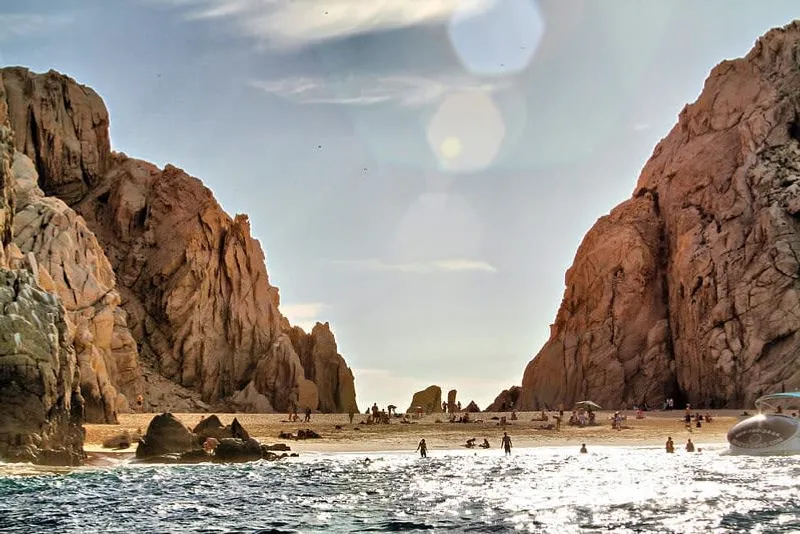
Los Cabos sits at the very tip of the Baja peninsula where the Pacific Ocean meets the Sea of Cortez. This meeting point creates beautiful scenery but also complicated water conditions.
The El Arco arch (the iconic rock formation you see in every Cabo photo) sits right at the meeting of the two oceans. The water here is dangerously rough — the currents where Pacific and Sea of Cortez water collide are not swimmable. Lover’s Beach, on the Sea of Cortez side of El Arco, is reachable only by water taxi and is calm.
Playa Medano — The Only Safe Swimming in Cabo San Lucas
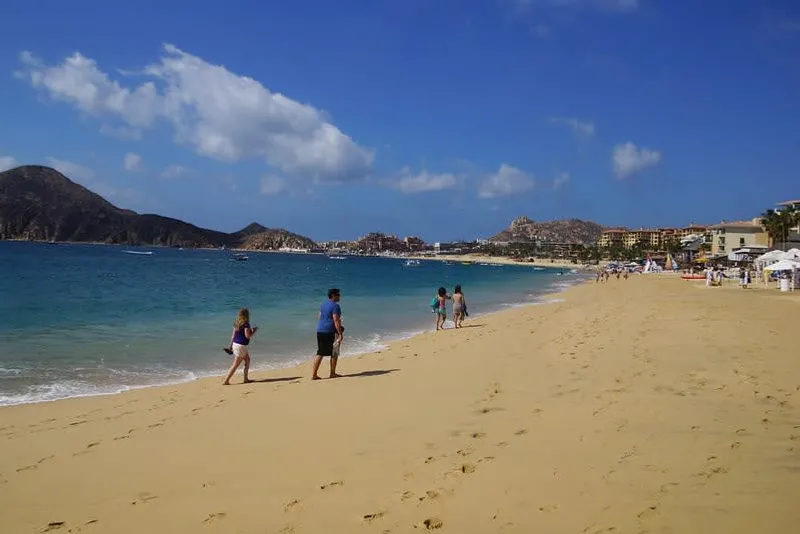
Medano is the main tourist beach in Cabo San Lucas town. It’s the only beach in Cabo center where you can actually swim safely. The bay is protected, the waves are manageable, and the beach is lined with resort hotels, beach clubs, and restaurants.
It’s not a quiet beach. Medano is where the party tourists go — jet skis, loud music, vendors walking the sand. If that’s not your scene, you’ll want to base yourself elsewhere, but if you’re staying in Cabo and want an easy beach day, this is it.
Chileno Bay — Snorkeling and Calm Water
Between Cabo San Lucas and San José del Cabo lies a stretch of coast with several coves. Chileno Bay is one of the best — calm water, a marine reserve with decent snorkeling, and far less crowded than Medano. It’s a public beach (free access) with a small parking lot. The rocky reef at the edges of the bay has good fish and occasional sea turtles.
Palmilla — Calm Cove
Palmilla is another protected cove along the corridor between the two Cabos. It’s calmer than most and popular with kayakers and paddleboarders. The high-end resort One&Only Palmilla sits here, but the beach itself is public.
East Cape
Los Barriles — Kite Surfing Capital
Los Barriles sits on the East Cape, about 70km north of San José del Cabo. It’s the kite surfing capital of Baja — consistent strong winds blow from November through March, and the flat Sea of Cortez water makes it ideal. The world record for kitesurfing speed was set nearby.
Outside kite season (roughly April–October), Los Barriles is a quiet fishing village with excellent sportfishing. The beach itself is long and wild — not a swimming beach due to the wind.
Cabo Pulmo — Marine Reserve Snorkeling and Diving
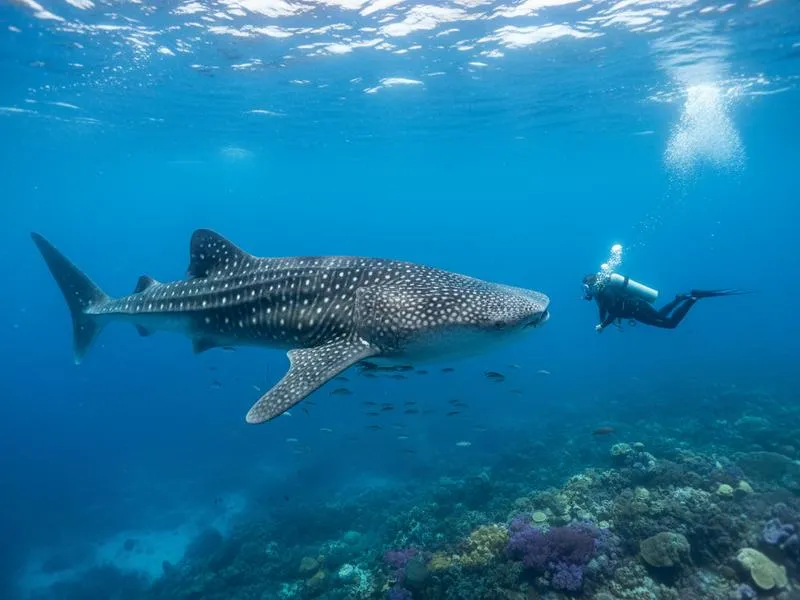
Cabo Pulmo is one of the most important marine reserves in North America. The coral reef here is 20,000 years old — the oldest in the Americas on the Pacific side. After nearly collapsing from overfishing in the 1980s, local fishermen voluntarily created the marine reserve in 1995. By 2009, fish biomass had increased by 463%.
Today, Cabo Pulmo is extraordinary underwater. Massive schools of jacks, eagle rays, reef sharks, sea turtles, whale sharks (seasonal), and hundreds of species make this some of the best snorkeling and diving in Mexico.
Practical: The town of Cabo Pulmo is a small fishing village with basic accommodation and dive operators. Getting there requires driving 40km down an unpaved road from Highway 1 — a 4WD or high-clearance vehicle is recommended, though standard cars often make it in dry season.
Pacific Side of Baja
Cerritos Beach (Todos Santos)
Cerritos is Baja’s most accessible Pacific surf beach — 15km south of Todos Santos town, consistent beach break suitable for beginners and intermediate surfers. Surf schools operate here year-round, and the beach has a small café and parking.
Non-surfers: the beach is visually dramatic (cliffs, big swells, wild Pacific feel) but not for swimming. Currents are strong.
El Pescadero
Further north from Cerritos, El Pescadero is for intermediate to advanced surfers. A few small surf camps and boutique hotels have grown up here over the past decade. Very quiet, very Pacific.
Ensenada Area
The northern Baja Pacific coast near Ensenada is less dramatic for beaches but has:
- La Bufadora — a sea spout (blow hole) rather than a beach, but worth a visit; whale watching tours depart from nearby Punta Banda
- Decent beaches north of Ensenada toward Rosarito, though these are closer to the Tijuana/San Diego corridor and more crowded
Beach Comparison Table: Pacific vs. Sea of Cortez by Month
| Month | Pacific (Todos Santos/Ensenada) | Sea of Cortez (La Paz/Cabo) |
|---|---|---|
| October | Warm, possible swells | Excellent, whale sharks start |
| November | Good surf season starts | Best overall, whale sharks |
| December | Good surf | Excellent, cooler at night |
| January | Good surf, cool | Good, whale sharks peak |
| February | Good surf | Good, calving whale season |
| March | Warming up | Very good |
| April | Warming up | Still good, whale sharks ending |
| May | Hot, some wind | Hot, whale sharks ending |
| June–September | Heat + hurricane risk | Heat + hurricane risk |
Seasonal Guide
October–May: The Season This is when you go to Baja. The Sea of Cortez is warm (24–28°C), skies are clear, whale sharks are in the water, and desert wildflowers bloom after winter rains. Humpback whales pass through January–March. Kite surfers fill Los Barriles November–March.
June–September: Off-Season Heat is extreme (40°C+ in La Paz in August), humidity rises on the Sea of Cortez side, and tropical storms and hurricanes are possible. This isn’t necessarily a reason to avoid Baja — prices drop, crowds thin, and the sea stays warm — but be aware of the weather risk and have travel insurance.
Where to Stay in Baja California
La Paz is the most underrated base in Baja. It’s a real Mexican city (not a resort town), with excellent restaurants on the malecón (waterfront promenade), good budget and mid-range hotels, and easy access to Balandra, Tecolote, and whale shark tours. Hotels range from 700 MXN for a basic room to 3,000+ for seafront boutique options.
Los Cabos (Cabo San Lucas + San José del Cabo) is the major resort area. Cabo San Lucas caters to party tourism and spring break — loud, expensive, and fun if that’s your scene. San José del Cabo is quieter, more artsy, with an art district, better dining scene, and calmer energy. The corridor between the two towns has resort hotels on private beaches.
East Cape / Los Barriles is the spot for kite surfers and sport fishermen. Small, informal, almost no nightlife — exactly right if you want to be close to the water without tourist infrastructure.
Todos Santos on the Pacific side is a small art town turned boutique hotel destination. The famous Hotel California is here (no relation to the Eagles song, but it keeps the myth alive). Good for surfers and travelers who want authenticity with decent accommodation options.
Price reality: Cabo San Lucas resort prices rival US vacation destinations. La Paz is significantly cheaper. The East Cape is cheapest.
What to Eat in Baja California
Baja food deserves more attention than it gets. Several significant dishes originated here:
The Baja fish taco — battered and fried fish in a corn tortilla with cabbage, crema, and salsa. This is where it started, in the fish taco stands of Ensenada and San Felipe. The best are at the Mercado Negro fish market area in Ensenada and at roadside stands throughout the peninsula.
Baja Med cuisine — a culinary movement born in the Guadalupe Valley wine region near Ensenada. Mediterranean techniques with Baja Pacific ingredients (abalone, sea urchin, dungeness crab) and Valle de Guadalupe wine. Restaurants like Corazón de Tierra have put Baja on the international fine dining map.
Chocolate clams (almejas chocolatas) — giant clams found in the Sea of Cortez, often eaten raw with lime and hot sauce, or grilled. A La Paz specialty sold at the malecón waterfront.
Callo de hacha — a large scallop from the Sea of Cortez, usually served raw with lime or as a ceviche. Exceptional quality in La Paz and Loreto.
Street tacos de carne asada — northern Mexico’s contribution to Mexican cuisine. The carne asada in Baja, Sonora, and Sinaloa is grilled differently than in the south — direct flame, simple seasoning, usually served with guacamole, pico de gallo, and fresh corn tortillas.
The Valle de Guadalupe, 30km east of Ensenada, is Mexico’s premier wine region. Over 100 wineries operate in the valley. A day trip from Ensenada for wine tasting and a restaurant lunch is a well-worn Saturday ritual for San Diegans and increasingly for visitors from further afield.
Practical Information
Getting to Baja California: Los Cabos International Airport (SJD) connects to most major US and Canadian cities. La Paz airport (LAP) has fewer direct connections but is improving. Driving from the US border takes 2 days to La Paz via the Transpeninsular Highway (Baja 1). The ferry from Mazatlán or Topolobampo to La Paz is a comfortable overnight crossing if you’re coming from mainland Mexico with a car.
Phone and data: Major Mexican networks (Telcel, AT&T México) have coverage in towns. Remote areas like Cabo Pulmo and East Cape beaches can have limited signal.
Fuel: Gas stations exist in all towns but are sparse in remote areas. Fill up when you can. The Transpeninsular Highway has stations roughly every 100km.
Medical care: Los Cabos has good private hospitals catering to the large US tourist population. La Paz has a solid general hospital. Remote areas are far from medical care — travel insurance with evacuation coverage is worth having.
Safety: The tourist areas of Baja California Sur (Los Cabos, La Paz, Loreto, Todos Santos) are generally safe. The US government has issued advisories for parts of Baja California Norte state (north of Ensenada toward the US border), less relevant for beach tourism.
Book Baja Tours
Viator offers guided snorkeling with whale sharks, Cabo Pulmo diving, El Arco water taxi tours, and East Cape kite surfing lessons. Verified reviews help sort the quality operators from the mediocre ones.
Browse Baja California tours on Viator →
Rent a Car for Baja
Without a car, you’ll miss most of the beaches on this list. Compare prices across all major rental companies and book in advance — prices spike during peak season.
Compare Baja car rental prices →
Travel Insurance
Baja has excellent medical care in La Paz and Los Cabos, but remote beaches like Cabo Pulmo are far from hospitals. Travel insurance with evacuation coverage is worth having.
travel insurance
Related Guides
- La Paz Travel Guide — the full guide to Baja’s most underrated city
- Los Cabos Travel Guide — Cabo San Lucas and San José del Cabo in detail
- Best Time to Visit Los Cabos — month-by-month for the Cape region
- Day Trips from La Paz — Espíritu Santo Island, Balandra, whale sharks
- Best Beaches in Mexico — the national overview