Best Beaches in Tulum 2026: Sargassum Guide & Honest Picks
The best beaches in Tulum in 2026 are Playa Paraiso for the classic turquoise-water beach day, Playa Pescadores for easier free access, and Chemuyil or Akumal when sargassum is heavy on the main Tulum beach zone. Tulum’s coastline is beautiful, but it is also one of the Riviera Maya stretches most exposed to seaweed from April through October.
Best Beaches in Tulum: 30 Seconds Answer
| Best Tulum beach for… | Go here | Why it works |
|---|---|---|
| First-time beach day | Playa Paraiso | The most photogenic sand and water when sargassum is low |
| Lower-cost access | Playa Pescadores | Limited public access near the north end of the beach road |
| Ruins and beach together | Playa Ruinas | Included with Tulum archaeological site entry |
| Less sargassum nearby | Chemuyil | A small protected bay about 15km south of Tulum |
| Turtle snorkeling | Akumal | Calmer protected bay about 20km north of Tulum |
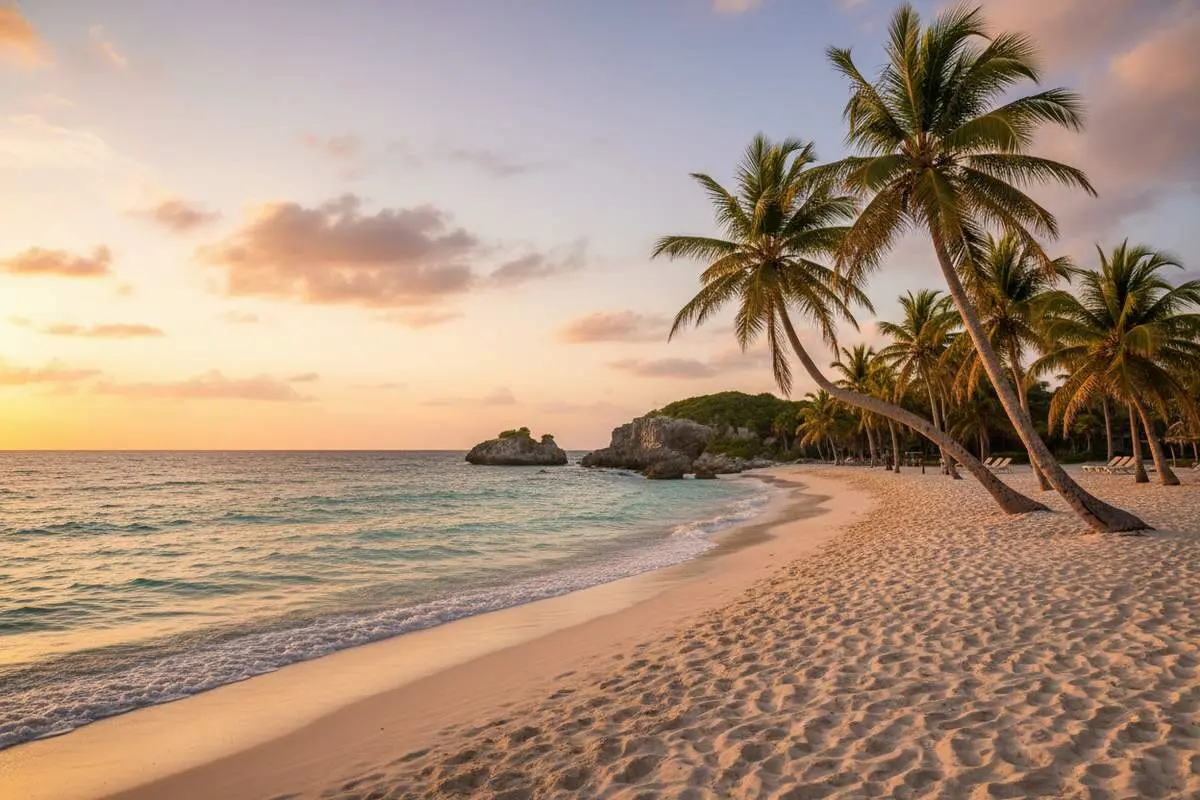
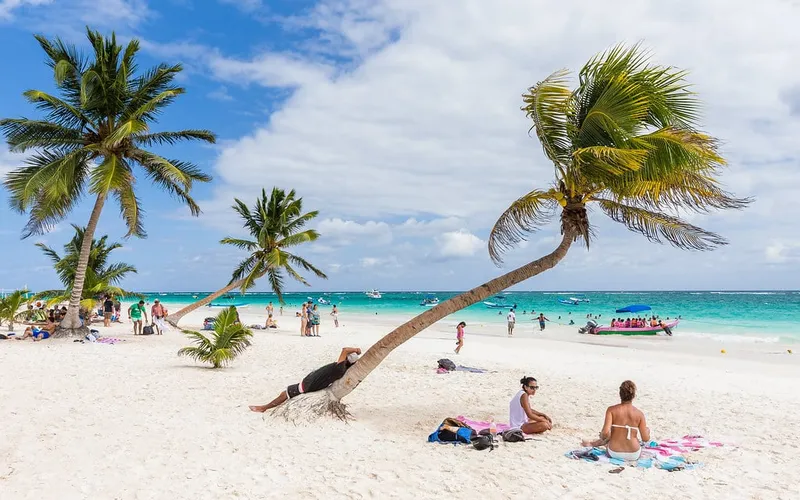
Tulum’s beaches photograph beautifully. The problem is that what you see in those photographs — blindingly white sand, translucent turquoise water, palm trees with zero competition — exists reliably for about four months a year. The rest of the time, the main beach zone is playing a losing game with sargassum.
This guide tells you exactly what you’re getting into: which beaches are worth it, when to go, how to access them without paying a small fortune at a beach club, and where to go when Tulum’s coastline isn’t cooperating.
For the full picture on visiting Tulum, see our Tulum travel guide. For timing, check when to visit Tulum.
The Sargassum Reality: Tulum Faces Southeast
Here’s what most Tulum content doesn’t tell you: Tulum’s coastline faces southeast. This is the worst possible orientation for a Caribbean beach in the sargassum era.
Sargassum — the brown, foul-smelling seaweed that began arriving in mass quantities around 2015 — travels across the Atlantic in a belt that flows along the Caribbean’s eastern shore and deposits on any coast that gets in its way. Southeast-facing coastlines like Tulum’s bear the brunt.
Cancun’s Hotel Zone faces northeast, which means it catches less. Playa del Carmen curves slightly, with sections that face east-northeast. Tulum gets the full southeastern exposure, making it the most consistently affected stretch of the Riviera Maya during sargassum season.
The season runs roughly April through October, peaking June–September. During this window, you can wake up to a pristine beach and return in the afternoon to find three feet of brown seaweed lining the shoreline. Beach clubs do remove it — often overnight, with machines — but they can’t always keep up. When a surge hits, you’re swimming in warm brown tea with a beach club minimum spend.
During December through March, sargassum largely disappears. Water clarity is exceptional, winds are manageable, and the coastline actually looks like the photos. This is definitively the best time to go.
Tools for checking before you go:
- sargazo.mx — real-time sargassum reports by beach
- Facebook group: “Sargasso Watch” — locals post daily photos
- Ask your hotel the day before — they always know
Beach Zone vs. Tulum Town: Understanding the Split
Tulum splits into two distinct areas: Tulum Pueblo (the town, about 3km from the coast) and the Beach Zone (Zona Hotelera), a narrow strip along the coast.
Every beach in the Beach Zone is accessed through a beach club or boutique hotel. There are no open public beaches in the main hotel strip — businesses have claimed the usable shoreline. You either book a room at one of the properties or pay the beach club minimum.
Transport between town and beach: colectivos run infrequently on the beach road, so most people take a taxi (80-120 MXN) or rent a bicycle. There is no Uber in the Beach Zone.
If you’re staying in town and planning beach day trips, budget 160-240 MXN round-trip in taxis plus whatever the beach club charges. It adds up quickly over a week.
Free Beach Access in Tulum
Playa Paraíso (Public Section)
Playa Paraíso is Tulum’s most famous beach stretch — the one in every magazine photo. It does still have a small public access section at its northern end, where you can walk directly onto the sand without paying a beach club.
The catch: the public section is shrinking. Businesses have gradually expanded their footprint, and what was once a wide free beach is now a narrow corridor. You’ll share it with vendors and it fills up by mid-morning. No chairs, no shade unless you bring your own umbrella.
That said, it remains the best free beach access in the zone, and the water here is genuinely spectacular when the sargassum is minimal. Arrive by 8am to claim a spot.
Playa Pescadores (North End)
At the northern end of the hotel strip, near the access road to Punta Piedra, there’s limited public beach access. It’s less manicured than Playa Paraíso and gets less foot traffic. The seaweed situation is similar, but it doesn’t attract the influencer crowd, which makes it quieter.
Playa Ruinas (Under the Ruins)
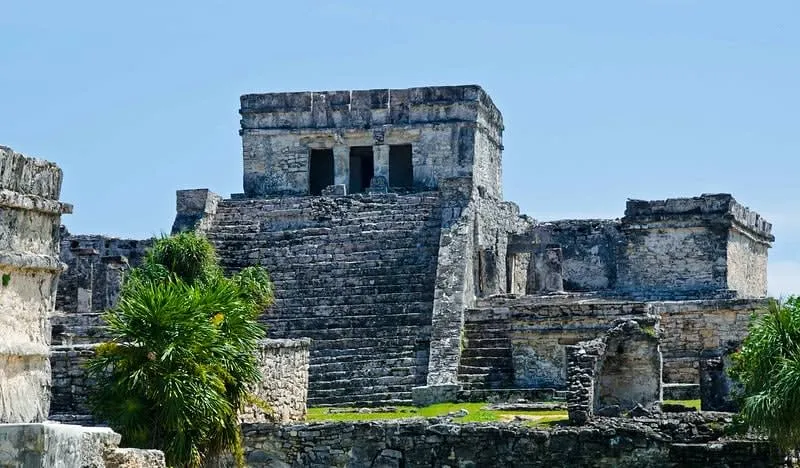
The beach directly below the Tulum archaeological site is public and included with your ruins entrance ticket. The backdrop — Mayan ruins on a cliff above turquoise Caribbean water — is one of the most genuinely spectacular views in Mexico.
The beach itself is small and gets crowded by 10am when tour groups arrive. The water has a rocky bottom in sections. But if you’re already visiting the ruins, it’s worth 20 minutes at the shoreline. The ruins open at 8am — arrive early for both the site and the beach.
Beach Clubs: Honest Review
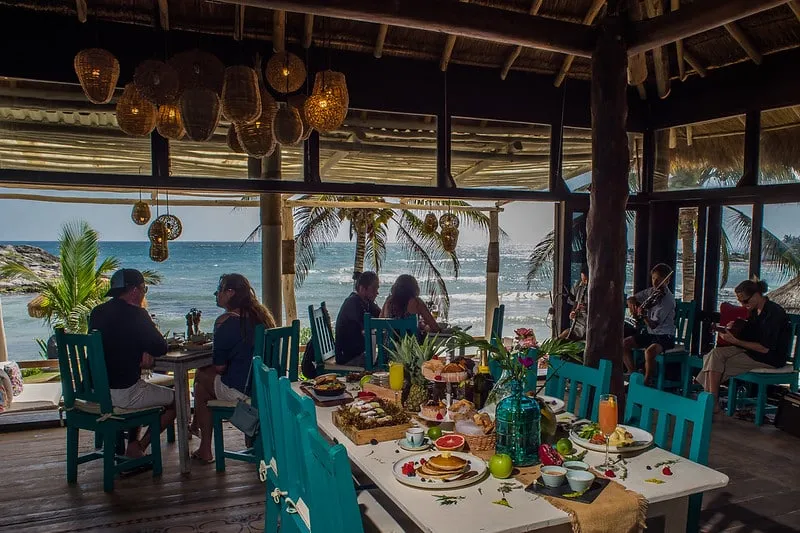
The Tulum beach club model works like this: you pay a minimum charge (sometimes called a “consumo mínimo”), and that amount converts to food and drink credit. You’re not literally throwing money away — you’re pre-paying for what you’d probably spend anyway. The issue is the price point.
Ziggy’s Beach Club
Minimum: ~800-1,000 MXN per person (converts to F&B credit)
The most honest value in the zone. The vibe is relaxed — not a party club, not trying to be. The food is decent, the cocktails are properly made, and the beach chairs are comfortable. This is where locals with budgets go when they want a proper beach day. The sargassum clearing here is reasonably diligent.
Ahau Tulum
Minimum: ~800-1,200 MXN per person
Ahau skews bohemian rather than party. It has a dedicated yoga and wellness crowd and the beach section is calmer than its neighbors. Good for people who want the beach club experience without the EDM soundtrack. The cenote on property is a genuine bonus.
Paradise Beach Club
Minimum: ~1,500-2,000 MXN per person
This is the one that gets the most Instagram coverage. The chairs are right at the waterline, the whole setup is extremely photogenic, and the staff are efficient at removing sargassum. You’re paying for the aesthetic and the social scene. If that’s what you’re after, it delivers. If you just want to swim, it’s expensive.
Papaya Playa Project
Minimum: ~1,500-2,500 MXN per person (higher on event nights)
PPP is primarily a boutique hotel and event venue. Day guests are welcome at the beach club, but this place runs full moon parties and DJ events that can push minimum spends up significantly. Check what’s on before you go. On a quiet weekday, it can be worth it for the vibe. On a party weekend, you’ll be paying for access to a crowd.
Tips for beach clubs:
- Book in advance for December-March — all clubs fill up on good weather weekends
- Arrive at opening (usually 10am) for first choice of chairs
- The minimum spend does NOT include 16% IVA and 10-15% service charge — budget 20-25% on top
- Most clubs stop accepting day guests by early afternoon once capacity is reached
Beach by Sargassum Risk: Monthly Guide
| Month | Risk Level | Notes |
|---|---|---|
| December | Very Low | Best conditions, busy season |
| January | Very Low | Excellent water clarity |
| February | Very Low | Best overall month |
| March | Low | Occasional light sargassum begins late March |
| April | Medium | Season begins, unpredictable |
| May | Medium-High | Increasing arrivals |
| June | High | Peak season beginning |
| July | Very High | Worst window |
| August | Very High | Often the single worst month |
| September | High | Remains heavy |
| October | Medium | Tapering off |
| November | Low-Medium | Mostly clear by end of month |
This table represents historical averages. Sargassum patterns can shift year to year. Always check current conditions before traveling.
Alternatives to Tulum Beaches
When Tulum’s beaches are bad — and sometimes they’re bad — these alternatives are worth the drive.
Chemuyil (15km South)
Chemuyil is the open secret of this coastline. It sits inside a small protected bay that deflects some of the sargassum currents, resulting in consistently cleaner beaches than Tulum even during peak season.
It’s completely free. There’s a small fishing village with cheap seafood restaurants along the road. No beach clubs, no minimums, no velvet ropes. The water inside the bay is calm and shallow, making it excellent for families.
From Tulum, take a taxi south on the Tulum-Chetumal highway — about 150-180 MXN. There’s a colectivo from Tulum Pueblo as well. Chemuyil is also covered in our Chemuyil beach guide.
Akumal (20km North)
Akumal’s claim to fame is sea turtles. The bay consistently hosts green turtles feeding on seagrass, and snorkeling with them (from shore, no boat needed) is one of the genuinely special experiences on this coast.
The beach itself is in a protected bay, which means calmer water and less sargassum than open-coast Tulum. Access requires a small fee (around 50-100 MXN) to help with turtle conservation, paid at the beach entrance.
Beware: Akumal gets extremely crowded with tour groups from Cancun and Playa del Carmen between 10am and 2pm. Go early or go late.
Gran Cenote (4km from Tulum Town)
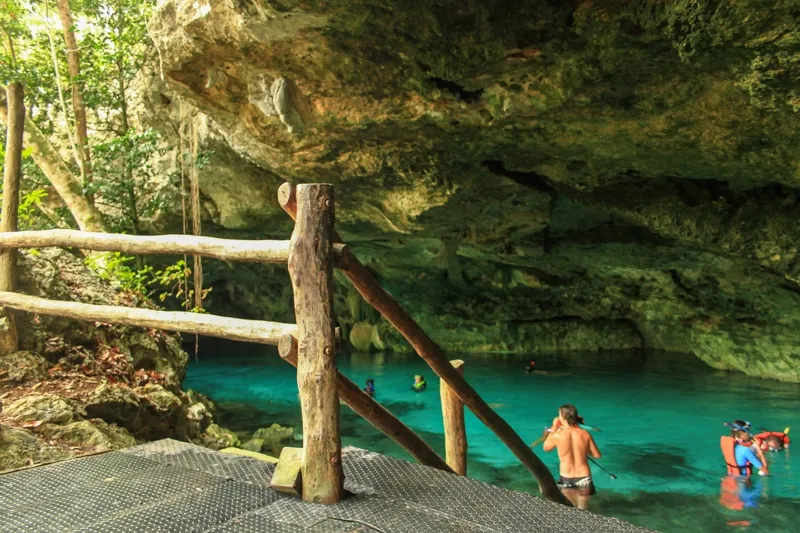
When the ocean is genuinely bad, Gran Cenote is the correct answer. It’s not a beach substitute — it’s a completely different experience — but if you’ve come to Tulum for clear water and you can’t find it on the coast, a cenote gives you that in abundance.
Gran Cenote (about 4km west of Tulum Pueblo, 50 MXN taxi ride) offers open-air swimming in a large freshwater pool surrounded by jungle and stalactites. The water is crystal clear year-round, 24°C year-round, and completely immune to sargassum. Entry runs 450-500 MXN.
For a deeper look at the cenotes worth your time, see things to do in Tulum.
The Ruins Beach (Playa Ruinas): What to Expect
The archaeological site of Tulum sits on a cliff directly above the Caribbean. After walking the ruins, a staircase leads down to a small beach — Playa Ruinas — where you can swim directly below the ancient structures.
Why it’s special: There is nowhere else in Mexico where you swim below a Mayan ruin. The backdrop for photos is unmatched.
The reality check:
- It’s a small beach — roughly 100 meters of usable sand
- It gets overwhelmingly crowded from 10am onward as tour groups arrive
- The bottom is rocky in sections — water shoes recommended
- There are no facilities (no bathrooms, no food) on the beach itself
- Sargassum affects it the same as all Tulum beaches
Plan: Enter the ruins at 8am (they open then), walk the site in the early light, descend to the beach by 9am before the crowds, and be done before 10am. It’s a genuinely beautiful two-hour morning.
Ruins entry is 95 MXN. The beach is included. For logistics on visiting the ruins, see our Tulum travel guide.
Beach Safety in Tulum
There are no lifeguards at most Tulum beaches. This is not a minor caveat — it’s something to take seriously, especially for families.
The Caribbean off Tulum can have strong currents, particularly after storms or during weather events. The open-coast beaches (as opposed to protected bays like Chemuyil) have more wave action than people expect.
Flag system:
- Green: Calm conditions, swimming fine
- Yellow: Use caution, currents present
- Red: Dangerous conditions, no swimming
- Black: Prohibited (no exceptions)
Beach clubs maintain flags on their stretch of beach. On free beach sections, there may be no flag — assume conditions require judgment.
Practical safety rules:
- Never swim alone at unmonitored beaches
- Don’t underestimate waves — the Caribbean can have powerful shore break
- After heavy rain, avoid swimming for 24-48 hours (runoff and stinging jellyfish increase)
- Jellyfish (agua mala) are more common April-September — check before entering
- If caught in a riptide, swim parallel to shore, not against the current
Tulum Beach Zone Logistics: Getting Around
The beach road (Carretera Tulum-Boca Paila) stretches about 10km from north to south. There’s no public transit that reliably covers the whole strip — it’s served by occasional colectivos and private taxis.
From Tulum Pueblo to beach zone: Taxi runs 80-120 MXN one way, 10-15 minutes. Colectivos from the ADO terminal area go to the beach road entrance but don’t run on a fixed schedule.
Renting a bicycle: Multiple shops in Tulum Pueblo rent bikes for 150-200 MXN/day. The bike path from town to the beach zone is mostly flat and shaded. Recommended for the fitness-inclined — and it means you’re not dependent on taxis.
Renting a scooter: 400-600 MXN/day. More convenient for covering the full beach road length. Requires confidence on the road — the beach road has stretches without paved shoulders.
Car rental: Useful if you’re planning day trips to Chemuyil, Akumal, and the surrounding area. Budget 600-900 MXN/day for a basic rental from agencies in Playa del Carmen or Tulum Pueblo. Note: there’s very limited parking at beach clubs during peak hours — arrive early.
Uber: Uber operates in Tulum Pueblo but not reliably on the beach road. Traditional taxis dominate the beach zone. Agree on price before getting in.
What to Pack for Tulum Beaches
The specific conditions at Tulum’s beaches call for a few non-obvious items:
- Water shoes: The rocky entry at Playa Ruinas and some free beach sections. Standard flip-flops won’t cut it on sharp coral limestone.
- Rash guard or sun shirt: The Tulum sun is relentless, especially 10am-2pm. Reef-safe sunscreen is strongly recommended (many cenotes and reef areas prohibit chemical sunscreen).
- Cash: Most beach clubs accept cards but taxis, colectivos, and free beach vendors are cash only.
- A bag that can get wet: Cenotes and beach access involve water. Waterproof dry bags for phones are worth it.
- Mosquito repellent: The mangroves around the Tulum beach zone breed mosquitoes, especially at dawn and dusk. DEET or IR3535-based repellent.
Best Months Summary
| Period | Beach Quality | Sargassum | Crowds | Price |
|---|---|---|---|---|
| Dec-Jan | Excellent | Very Low | High | Peak |
| Feb-Mar | Excellent | Low | High | Peak |
| Apr-May | Good-Fair | Building | Medium | Shoulder |
| Jun-Aug | Variable | Very High | Lower | Off-peak |
| Sep-Oct | Fair | High-Medium | Low | Off-peak |
| Nov | Good | Low-Medium | Low | Shoulder |
The sweet spot for most travelers is late November through early March: good beach conditions, manageable sargassum, and (in November and early December) before the peak-season crowds and prices fully arrive.
For a complete breakdown of Tulum’s seasons and what each month is actually like, see best time to visit Tulum.
Book Your Tulum Beach Activities
For boat snorkeling trips, cenote tours, and guided experiences around Tulum’s coast:
Browse Tulum tours on Viator →
Tours that combine Tulum ruins with a snorkeling or cenote stop often give you the best of both worlds on a single day.
Travel Insurance for Mexico
Comparing Tulum’s Beaches
Choosing between Tulum and Cancun’s beaches? Our Cancun vs Tulum comparison breaks down the differences in beach quality, cost, and vibe so you can pick the right base.
The honest verdict on Tulum’s beaches: they are genuinely beautiful for four months of the year and genuinely frustrating for six. Go in December, January, or February, skip the overpriced beach clubs unless you want the scene, and keep Chemuyil in your back pocket for the days when the sargassum wins.