El Chepe Train 2026: Complete Guide to Mexico's Copper Canyon Railroad
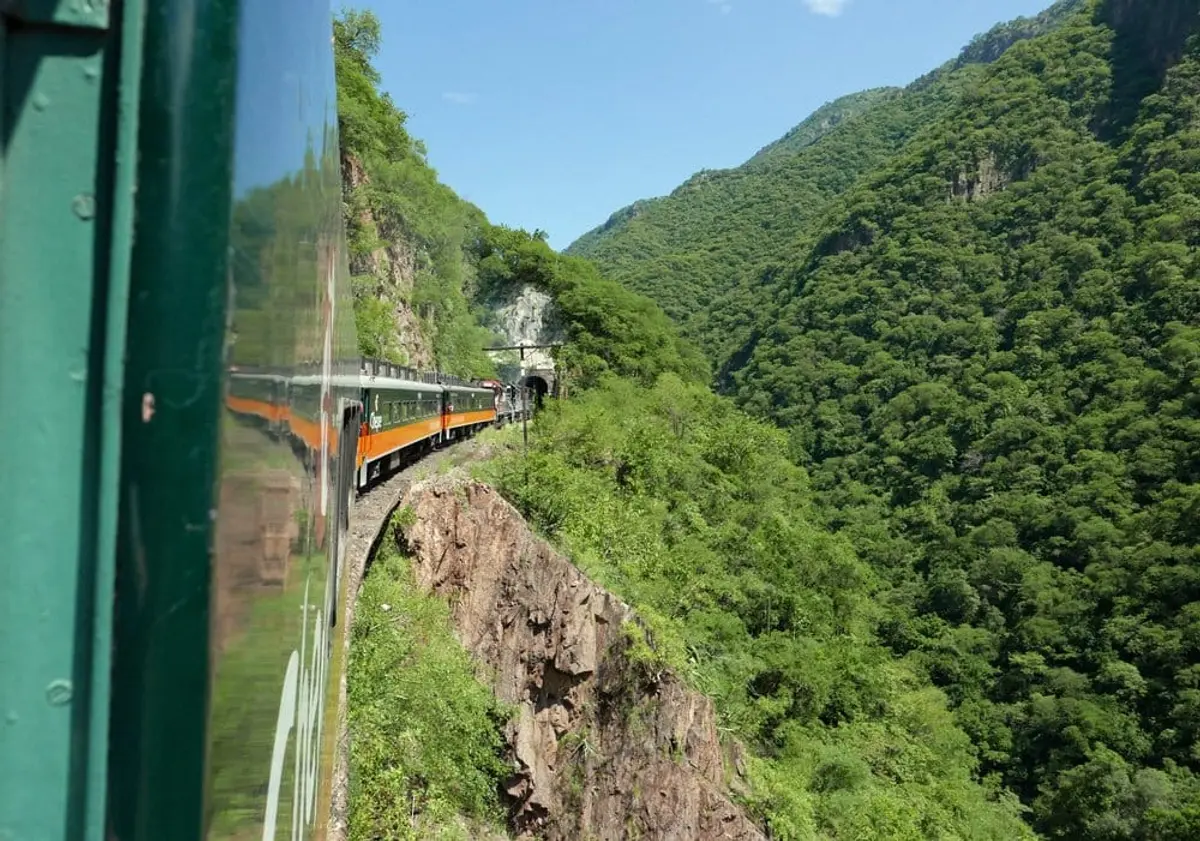
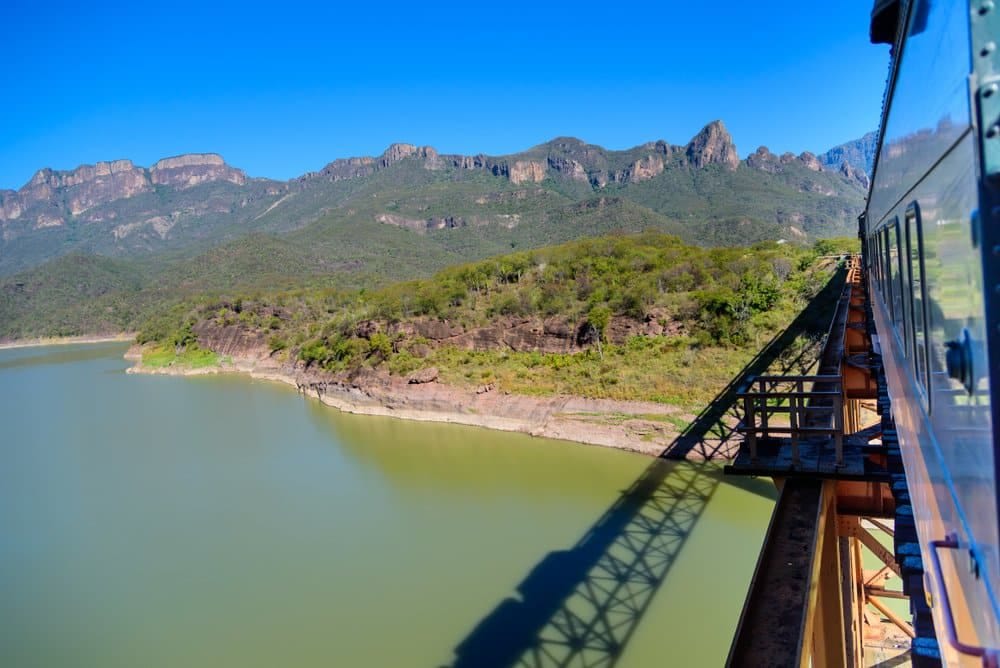
El Chepe — the Ferrocarril Chihuahua Pacífico — is the most spectacular train journey in Mexico and one of the great railroad routes of the world. Over 653 kilometers, the train crosses 86 tunnels, 37 bridges, and climbs from sea level near Los Mochis to 2,400 meters in the Sierra Tarahumara — descending through a canyon system four times larger than the Grand Canyon before reaching the Pacific lowlands.
Almost nobody outside Mexico has heard of it. That’s changing fast.
This guide is based on firsthand experience of the route. It covers the 2026 schedules and prices, which stops are actually worth your time, and the planning decisions that most guides get wrong.
El Chepe Train in 30 Seconds
El Chepe is Mexico’s Copper Canyon train, running between Chihuahua and Los Mochis through the Sierra Tarahumara. Most first-time travelers should ride westbound from Chihuahua, stop in Creel and Divisadero or Posada Barrancas, and allow 4-7 days instead of treating it as one long train day. Choose El Chepe Express for reserved seats and panoramic windows; use Regional only if budget matters more than comfort and schedule certainty.
What Is El Chepe?
El Chepe (officially: Ferrocarril Chihuahua al Pacífico, CHEPE) is a passenger train connecting the city of Chihuahua in northern Mexico with the port of Los Mochis in Sinaloa. It has been running since 1961, when the last section of the line — delayed for decades by the impossibly rugged Sierra Madre Occidental terrain — was finally completed.
The route passes through the Copper Canyon system (Barrancas del Cobre) — a network of six canyon systems including Barranca del Cobre, Barranca Urique, and Barranca Sinforosa. Together they cover an area four times larger than Arizona’s Grand Canyon and in places descend to depths of 1,870 meters (6,135 feet). The copper-green canyon walls that give the system its name are visible from the train for much of the journey.
The train is operated by Ferromex, Mexico’s largest railroad company. It is the only long-distance passenger train in Mexico still in regular operation.
El Chepe Express vs. El Chepe Regional: Which to Choose
Two very different trains serve the same route:
| El Chepe Express (Primera) | El Chepe Regional (Economy) | |
|---|---|---|
| Frequency | Daily, both directions | 3x/week each direction |
| Seats | Reserved, assigned | Unreserved, first-come |
| Restaurant car | Yes (à la carte) | Snack cart only |
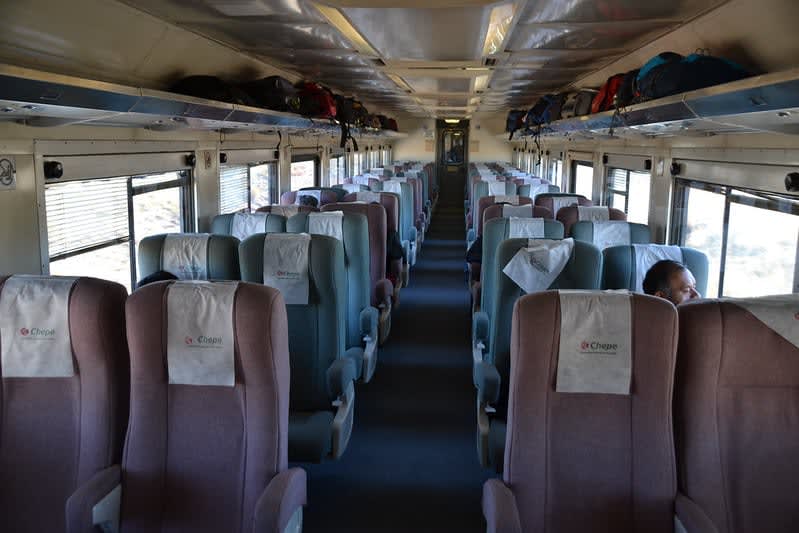
| Windows | Panoramic, large | Standard passenger |
| Duration | 14–16 hours | 16–20 hours |
| Best for | Tourists, groups, families | Budget travelers, locals |
| Price (full route) | 1,855–4,715 MXN | 400–600 MXN |
| Book in advance? | Yes — sells out in high season | No reservation needed |
| Classes | First, Executive, Tourist | Single economy class |
The verdict: Take the Express unless budget is the deciding factor. The reserved window seats make a significant difference on a 14-hour journey through some of Mexico’s most dramatic scenery.
El Chepe Schedule 2026
Primera Express (Daily)
| Direction | Departs | Arrives (approx.) |
|---|---|---|
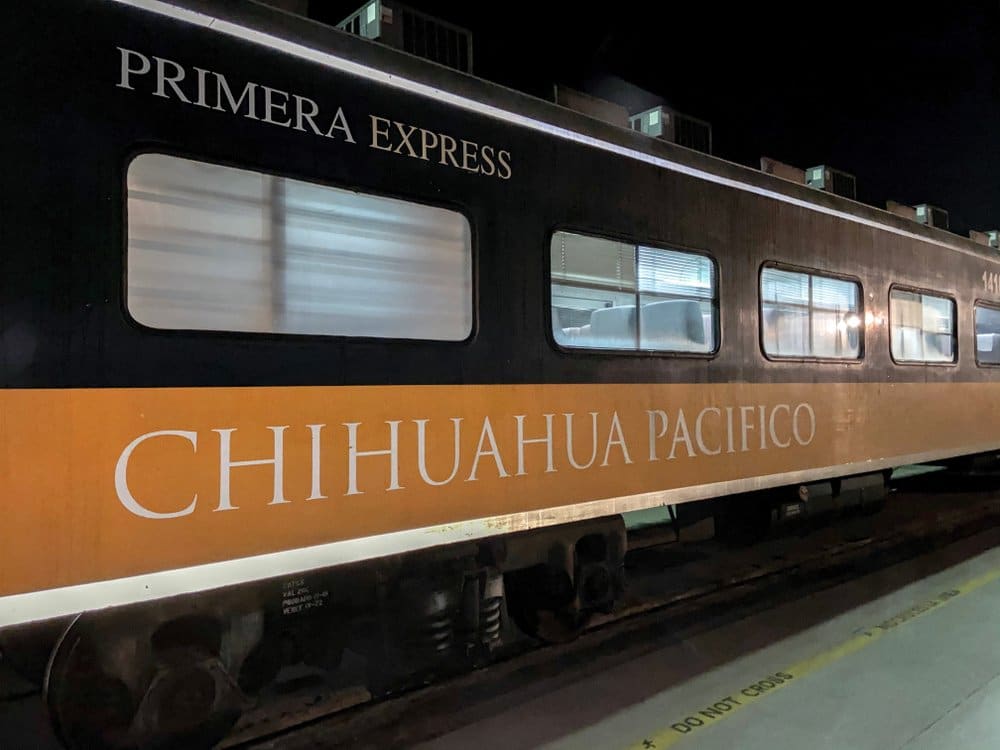
| Chihuahua → Los Mochis | 06:00 AM | 9:30 PM |
| Los Mochis → Chihuahua | 06:00 AM | 8:00 PM |
Key stops along the way (Chihuahua → Los Mochis):
| Stop | Est. Arrival | Duration at Station | Km from Chihuahua |
|---|---|---|---|
| Cuauhtémoc | ~8:30 AM | 15 min | 105 km |
| Creel | ~12:30 PM | 15 min | 306 km |
| Divisadero | ~2:30 PM | 20 min | 374 km |
| Posada Barrancas | ~3:00 PM | 15 min | 384 km |
| Bahuichivo | ~4:30 PM | 15 min | 436 km |
| El Fuerte | ~8:00 PM | 15 min | 595 km |
| Los Mochis | ~9:30 PM | Final stop | 653 km |
Note: Arrival times are approximate — weather and track conditions cause delays. The Temoris–Bahuichivo section (the most spectacular canyon views) falls in late afternoon on westbound journeys — plan accordingly.
El Chepe Regional (Economy)
| Direction | Days | Departs |
|---|---|---|
| Chihuahua → Los Mochis | Mon, Thu, Sat | 06:00 AM |
| Los Mochis → Chihuahua | Tue, Fri, Sun | 07:00 AM |
Economy class is not a separate train — it is additional cars attached to the Express. When the Express is running, economy cars run alongside it on the same schedule. On non-Express days, economy cars run on their own schedule at reduced speed.
El Chepe Prices 2026
Current pricing from chepe.mx (prices subject to seasonal variation — check official site for exact fares):
Primera Express — Chihuahua Eastbound Departures
| Route Section | First Class (MXN) | Tourist Class (MXN) | Approx. USD |
|---|---|---|---|
| Chihuahua → Creel | ~1,355 | ~850 | $67–42 USD |
| Chihuahua → Divisadero | ~1,619 | ~1,020 | $80–50 USD |
| Chihuahua → Bahuichivo | ~2,150 | ~1,350 | $107–67 USD |
| Chihuahua → El Fuerte | ~3,800 | ~2,400 | $188–119 USD |
| Chihuahua → Los Mochis (full) | ~4,715 | ~2,970 | $234–148 USD |
| Creel → Divisadero only | ~264 | ~170 | $13–8 USD |
Regional (economy class): Full route approximately 400–600 MXN ($20–30 USD). Individual segments: 50–200 MXN.
Important: To get current official prices and book tickets, use chepe.mx — the official Ferromex booking portal. Third-party sites charge significant markups.
For the Express, book 3–4 weeks ahead in high season (July–August, Easter week, long weekends). Off-season (September–November, January–February) often has same-week availability.
The Stops: Which Are Worth Getting Off
Creel — The Canyon Base Camp (Must Stop)
Creel is the most popular stop and the best base for exploring the canyon. The town sits at 2,338 meters elevation in the Sierra Tarahumara, surrounded by pine forests and volcanic rock formations. From here, the canyon descends dramatically.
Worth your time in Creel:
- Valle de los Hongos (Valley of the Mushrooms) — volcanic rock formations, 4km from town, taxi or bike
- Lago Arareko — forest lake with Rarámuri community boats, 6km
- Valle de los Monjes (Valley of the Monks) — towering rock spires, similar to Cappadocia
- Cascada Cusarare — 30m waterfall, 22km, accessible by taxi or tour
- Recowata Hot Springs — canyon-bottom thermal pools, 1.5 hours from Creel
Accommodation: Budget hostels from 250 MXN/night; mid-range hotels 600–1,200 MXN. Pueblo Viejo and Cascadas Expediciones both offer organized day tours.
How long: 2–3 nights is the right amount. One night is not enough to see more than one valley.
Divisadero / Posada Barrancas — The Canyon Views
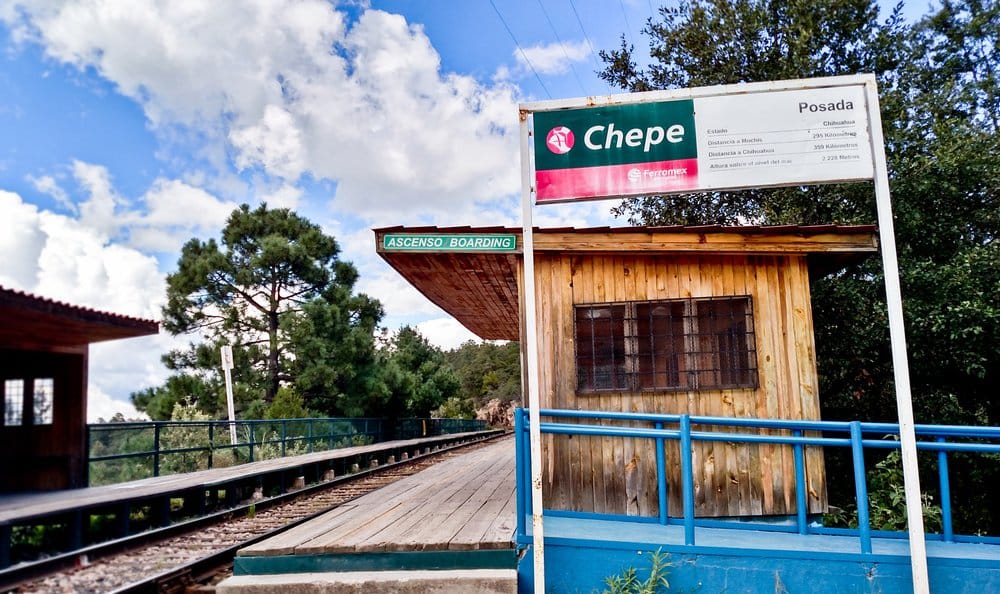
Two adjacent stops (4km apart) perched on the canyon rim at 2,100m. Divisadero offers the most dramatic direct view of Barranca del Cobre — three canyon walls converging below you, depth dropping 1,500m.
The commercial development at Divisadero is aggressive — zip lines, cable car, ATV rentals — but the viewpoint itself remains extraordinary. Go in the morning before tour buses arrive from Creel.
Activities at Divisadero:
- Canyon rim viewpoint (free, 5 minutes from train platform)
- Aventura Barrancas — cable car over the canyon edge
- Paragliding from rim level
- 3-hour hiking loop into the canyon
Stay: Divisadero makes sense if you want sunrise views. Otherwise, day trip from Creel (45 minutes by bus or taxi).
Bahuichivo / Cerocahui — The Hidden Heart
The most undervisited worthwhile stop. Bahuichivo is just a rail stop — the interesting destination is Cerocahui, 20 minutes by taxi.
Cerocahui is a colonial mission village (1694 Jesuit mission) in the canyon interior. The Cerro del Gallego viewpoint above town offers a different canyon perspective than Divisadero — lower, looking across the Urique canyon rather than down from the rim.
From Bahuichivo:
- Cerocahui village + Jesuit mission (1694)
- Cerro del Gallego viewpoint — canyon panorama
- Urique village: 2.5 hours down canyon floor via unpaved road; canyon temperature 20–30°C warmer than rim; river swimming in summer
Stay: 1–2 nights in Cerocahui if you have the time. Hotel Misión Cerocahui or the more budget-friendly Hotel Jade.
El Fuerte — Skip (Or Transit Stop Only)
El Fuerte is a Pueblo Mágico on the edge of the Sierra, with a colonial plaza, Zorro museum, and river tours. It is genuinely pleasant, but after Creel and Cerocahui, it is the weakest stop on the route.
More useful as: A starting point for westbound travelers flying into Los Mochis and wanting to take the train. Start at El Fuerte, not Los Mochis, to maximize the scenic section.
The El Fuerte to Los Mochis stretch has essentially no scenery — flat agricultural plains. If you have reached El Fuerte from the east, take the bus to Los Mochis (70 MXN, 1 hour, departs from Mercado Municipal on Benito Juárez Avenue every 30 minutes). You arrive faster than the train and miss nothing.
Cuauhtémoc — Day Trip Only
Agricultural city in the western foothills, center of Mexico’s Mennonite community (30,000+ Mennonites, several colonies, daily life largely in Plautdietsch). Interesting as a half-day excursion from Chihuahua — not worth an overnight on the Chepe route itself.
Which Direction to Travel
Start in Chihuahua, travel west to Los Mochis. Here’s why:
The most spectacular section — Creel through El Fuerte, particularly the Bahuichivo–Temoris stretch — happens in the afternoon hours on westbound journeys. The train enters Bahuichivo around 4:30 PM, giving you daylight through the deepest canyon crossings. Heading eastbound, you hit this section at 3–4 AM in darkness.
Additionally, Chihuahua is a better city to begin your adventure than Los Mochis (a utilitarian port city with few tourist attractions). And if you fly into Chihuahua, the Pancho Villa Museum and Piña Mora murals in the Palacio de Gobierno justify a 1-night stay before the train.
How to Buy El Chepe Tickets
For Primera Express: Book at chepe.mx — the official website for Ferromex. You can book 1–90 days in advance. You’ll need the passenger name, age, departure city, destination, and date. Payment by Mexican bank card or international card. E-ticket sent by email — you must print it and carry it aboard.
Phone: 01 800 122 4373 (Ferromex customer service) Email: chepe@ferromex.mx (slower; useful if online booking fails)
For Regional (economy class): No advance booking — buy at the station ticket office on the day of travel, or board and pay the conductor. Cash only.
Ticket offices: Chihuahua and Los Mochis stations. Smaller stops (Creel, Divisadero) have limited or no ticket services — if you want to board at Creel, buy your ticket from the conductor or handle it at the start of your journey.
Recommended Itineraries

Minimum (4 days)
| Day | Activity |
|---|---|
| Day 1 | Fly into Chihuahua; city overnight |
| Day 2 | El Chepe Express departs 6 AM; arrive Creel ~12:30 PM; afternoon Valle de los Hongos |
| Day 3 | Divisadero by bus from Creel (45 min); canyon views + activities; return to Creel overnight |
| Day 4 | Bus Creel → Chihuahua (cheaper than train, saves money); fly out |
4 days minimum to see the canyon properly — anything less is just the train ride without the canyon itself.
Recommended (7 days)
| Day | Activity |
|---|---|
| Day 1 | Fly into Chihuahua; Pancho Villa Museum; overnight |
| Day 2 | El Chepe Express 6 AM → Creel (arrive ~12:30 PM); Valle de los Monjes afternoon |
| Day 3 | Creel — Valle de los Hongos, Lago Arareko, Cascada Cusarare tour |
| Day 4 | El Chepe from Creel → Bahuichivo (~4:30 PM); taxi to Cerocahui (20 min); overnight |
| Day 5 | Cerocahui — Cerro del Gallego viewpoint; canyon hike to Urique optional |
| Day 6 | El Chepe from Bahuichivo → El Fuerte (~8 PM); overnight El Fuerte |
| Day 7 | Bus El Fuerte → Los Mochis (1 hr); fly out via Sinaloa |
Budget Version (4 days, Economy Class)
| Day | Activity |
|---|---|
| Day 1 | Overnight bus Chihuahua → Creel (Rápidos Cuauhtémoc or Turísticos del Norte, ~4 hrs) |
| Day 2 | Creel exploration — Valle de los Hongos, Lago Arareko on foot or bike rental |
| Day 3 | Regional train Creel → Divisadero (80 MXN); canyon views; return to Creel |
| Day 4 | Bus back to Chihuahua; fly out |
This approach skips the full train experience but saves 3,000–4,000 MXN on train tickets.
Practical Details
Best Time to Visit
| Season | Conditions | Notes |
|---|---|---|
| Oct–Nov | Ideal — post-rainy lush, cool temps | Best overall: green canyon, waterfalls flowing |
| Dec–Mar | Dry and cool (canyon floor warm) | Good for Urique, cold at Creel elevation |
| Apr–Jun | Dry, warming | Pre-high season — fewer crowds |
| Jul–Sep | Rainy season | Canyon goes emerald green; some roads muddy |
| Easter/Semana Santa | Very crowded | Book Primera Express 4–6 weeks ahead |
| Aug peak | Highest crowds | Book 4 weeks ahead minimum |
Altitude and Temperature
Creel sits at 2,338 meters — bring warm layers even in summer. The canyon floor (Urique, Batopilas) sits at 500–800 meters and is 20–30°C warmer than the rim. The Sierra Tarahumara experiences genuine winters with frost and occasional snow at elevation (December–February).
Getting to Chihuahua
Fly into Chihuahua Roberto Fierro Villalobos International Airport (CUU) — direct flights from Mexico City (1.5 hrs), Guadalajara, and Monterrey. From the US: connections via Phoenix, Dallas, or Houston.
See our Mexico City to Chihuahua guide for transport options.
Getting to Los Mochis (if starting westbound)
Los Mochis has its own airport (LMM), with connections to Mexico City. Alternatively, take the ferry from La Paz (Baja) to Topolobampo (the port adjacent to Los Mochis) — Baja Ferries overnight route.
The Rarámuri: Respectful Engagement
The Sierra Tarahumara is home to the Rarámuri (also called Tarahumara) people — one of Mexico’s largest and most culturally intact indigenous groups, known internationally for their long-distance running tradition. Approximately 100,000 Rarámuri live in the canyon communities along the Chepe route.
In Creel and at canyon-area markets, you will encounter Rarámuri women selling handwoven baskets, carved wooden figures, and embroidered cloth. This is important income for isolated canyon communities — buy directly from the artisans, not from souvenir shops that resell at markup.
Do not photograph Rarámuri people without asking permission (use hand gestures + smile — many don’t speak Spanish). During festivals like Semana Santa and the indigenous equivalent (usually held in the same period), the canyon villages hold their own ceremonies that are not performances for tourists. Observe respectfully if you witness them and do not photograph without explicit permission.
Where to Book Tours
Planning a Copper Canyon trip? Browse Copper Canyon tours on Viator — guided multi-day Chepe packages take the logistics complexity out of the journey.
For rental car options if you want to explore canyon roads independently: Compare car rental rates on RentCars.
El Chepe and the Copper Canyon Cluster
This guide covers the train logistics. For the full canyon experience, our related guides:
- Copper Canyon Mexico — the main planning guide (geography, itineraries, when to go, vs. Grand Canyon)
- Creel Chihuahua — deep guide to the canyon base camp, all day trips from Creel
- Things to Do in Creel — 20 activities ranked, practical getting-around guide
- Chihuahua City Travel Guide — if you’re spending a night before boarding
- Mexico City to Chihuahua — getting to the starting point
- Northern Mexico Travel Guide — context for the broader region