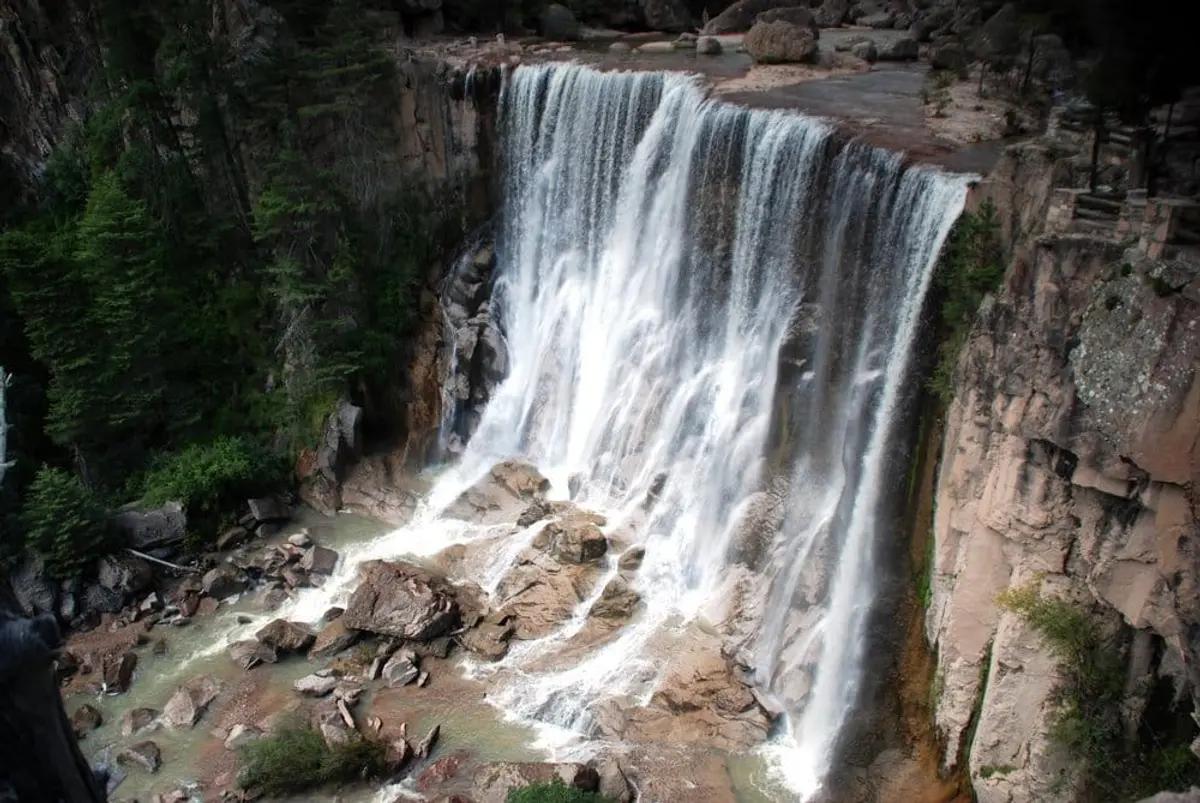
Things to Do in Creel 2026: 20 Best Activities in Mexico's Copper Canyon Gateway
Creel (Estación Creel) is a Pueblo Mágico town at 2,338 meters in Chihuahua’s Sierra Madre Occidental — the primary base camp for exploring the Copper Canyon system, home to some of Mexico’s tallest waterfalls, and the commercial hub where Rarámuri people from 50,000+ surrounding inhabitants come to sell crafts. El Chepe train stops here mid-route, and from this single town, 20 distinct activities fan out in every direction.
Activity Overview
| # | Activity | Category | Distance | Time | Cost (approx) |
|---|---|---|---|---|---|
| 1 | Valle de los Hongos | Nature | 7 km | Half day | 50 MXN |
| 2 | Lago Arareko | Nature | 7 km | Half day | 50 MXN |
| 3 | Valle de los Monjes | Nature | 9 km | 2–3 hrs | 50 MXN |
| 4 | Cascada Cusarare | Nature | 22 km | Half day | Free |
| 5 | San Ignacio Mission | Culture | 22 km | 2 hrs | 20 MXN |
| 6 | Recowata Hot Springs | Adventure | 20 km + hike | Full day | 50 MXN |
| 7 | Tararecua Canyon Lookout | Nature | 25 km | 2 hrs | 50 MXN |
| 8 | Basaseachi Falls (246m) | Nature | 90 km | Full day | 80 MXN |
| 9 | Piedra Volada (453m, seasonal) | Nature | 90 km | Full day | 80 MXN |
| 10 | ATV Valley Circuit | Adventure | Local | Half day | 600–900 MXN |
| 11 | Horse Riding | Adventure | Local | 2–4 hrs | 300–500 MXN |
| 12 | Mountain Biking | Adventure | Local | Half day | 150–250 MXN rental |
| 13 | El Chepe Day Segment | Adventure | 90+ km west | Full day | 450–900 MXN |
| 14 | Divisadero Canyon Rim | Nature | 80 km | Full day | Free (train/bus extra) |
| 15 | Rarámuri Craft Market | Culture | Town center | 1–2 hrs | Free to browse |
| 16 | Museo de Arte Indígena | Culture | Town center | 1–2 hrs | 30–50 MXN |
| 17 | Pinole Tasting & Local Food | Food | Town center | 1 hr | 20–80 MXN |
| 18 | Rarajípari Ceremony | Culture | Town/ejido | Seasonal | Free |
| 19 | Descend to Batopilas | Adventure | 160 km | 2 nights | 200+ MXN |
| 20 | Guachochi & Sinforosa Canyon | Nature | 130 km | Overnight rec | 100 MXN |
Canyon & Nature: Close to Town
1. Valle de los Hongos (Valley of Mushrooms)
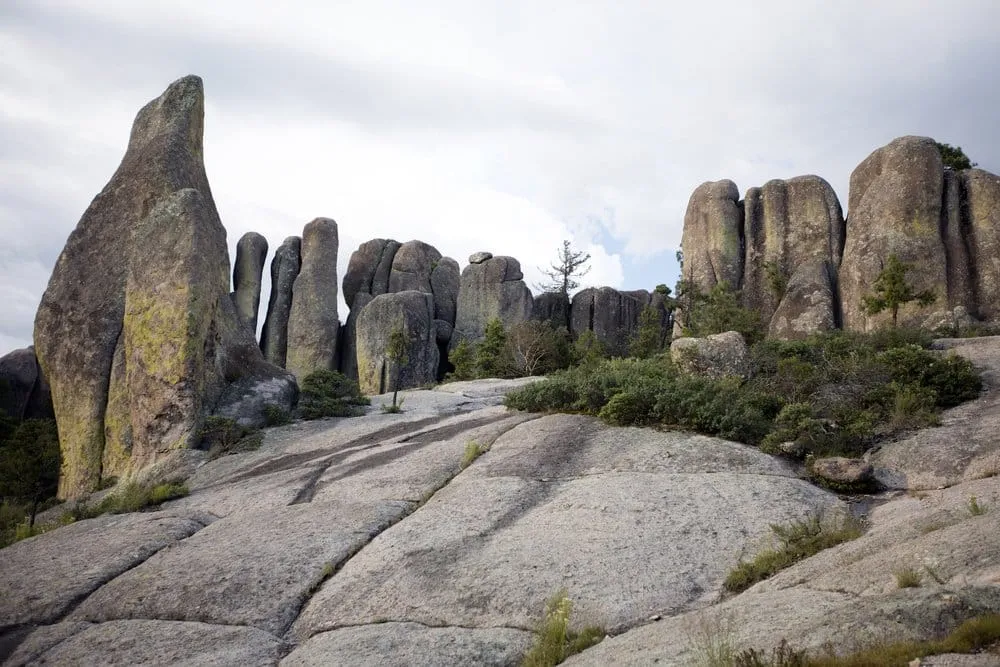
The most-visited attraction within reach of Creel, 7km from town. Millions of years of wind and water erosion have carved granite boulders into mushroom, monk, and frog shapes — some standing 15 meters tall. The formations sit on Rarámuri ejido land; the 50 MXN entry fee goes directly to the San Ignacio de Arareko community.
- Getting there: ATV tour (most common), bicycle rental (30 min each way on dirt road), hired taxi (~200 MXN round trip with waiting), or guided tour
- Time needed: 2–3 hours standalone; half day combined with Lago Arareko
- Best for: Photography, families, first-time visitors
- Tip: Go early morning (8–9 AM) for low-angle light and fewer ATV crowds
2. Lago Arareko (Lake Arareko)
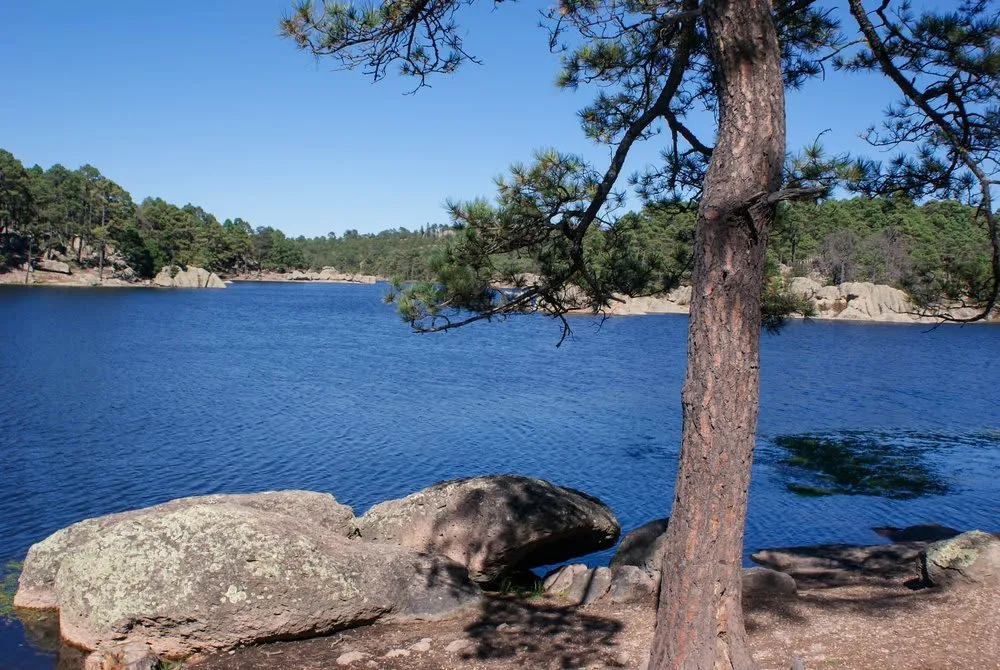
A pine-forested lake on the outskirts of Creel, managed by the Rarámuri ejido San Ignacio de Arareko. Rowboat rentals (100–150 MXN/hour), a 5km hiking circuit around the lake, lakeside fishing, and several community-owned cabins for overnight stays. Often combined with the Valley of Mushrooms — both sit within 2km of each other.
- Entry: 50 MXN (ejido fee, same ticket covers the Valley circuit)
- Rowboat rental: 100–150 MXN/hour
- Cabin stays: 500–800 MXN/night for 2 (Cabañas Las Arareko — book in Creel town)
- Wildlife: American coots, grebes, kingfishers; deer at dawn on the far shore
3. Valle de los Monjes (Valley of the Monks)
Adjacent to the Valley of Mushrooms, usually included in the same circuit. Vertical rock columns rise 50 meters straight up, and the Rarámuri have named them for the profiles they see in stone — monks, deities, ancestor figures. The distinction between “Mushrooms” and “Monks” gets blurred in tour guides; the Mushroom Valley is lower and broader, the Monks Valley is more vertical and dramatic. The latter is worth seeking out specifically.
- Best time to visit: Late afternoon (4–6 PM) for golden-hour shadows on the columns
- Tip: Ask your driver or ATV guide explicitly for the “Valle de los Monjes” — otherwise you may only visit the mushroom formations
4. Cascada Cusarare
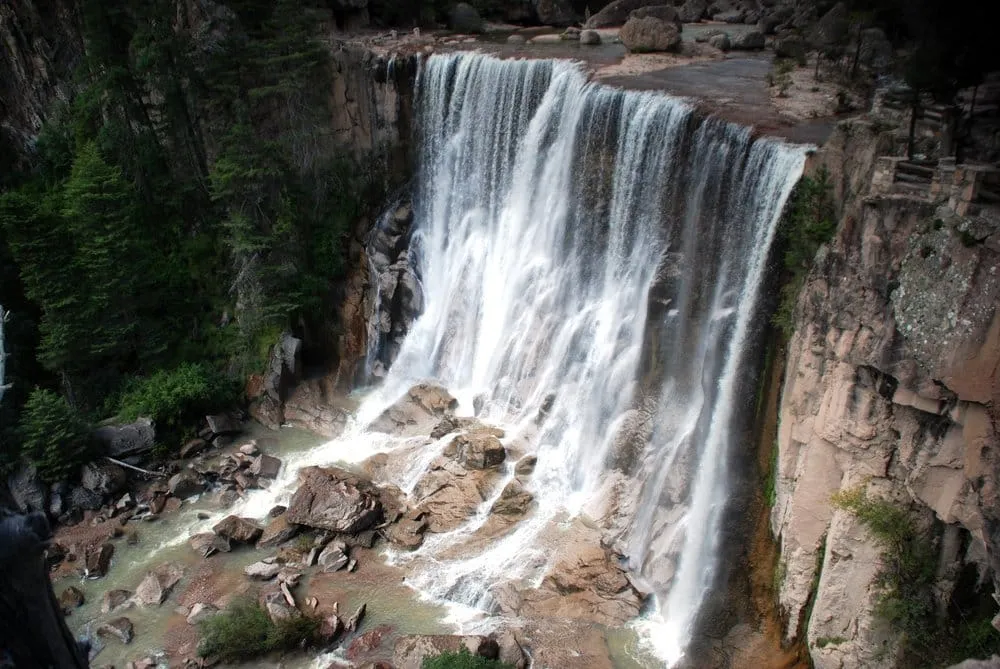
A 30-meter tiered waterfall 22km from Creel, set in dense Tarahumara pine-oak forest. The most accessible of Creel’s waterfalls — no steep hike required (15-minute easy walk from the road). At peak season (July–September), the falls run strong and the forest is lush. In dry months (March–April), flow is reduced but still photogenic.
- How to get there: Guided tour (included in most Valley + Waterfalls packages), taxi (~350 MXN round trip with 1-hour wait), or car rental
- Combine with: San Ignacio Mission is 2km away — do both in a half day
- Best time: July–October for maximum flow; April–May for quieter crowds
5. Recowata Hot Springs (Tararecua Canyon)
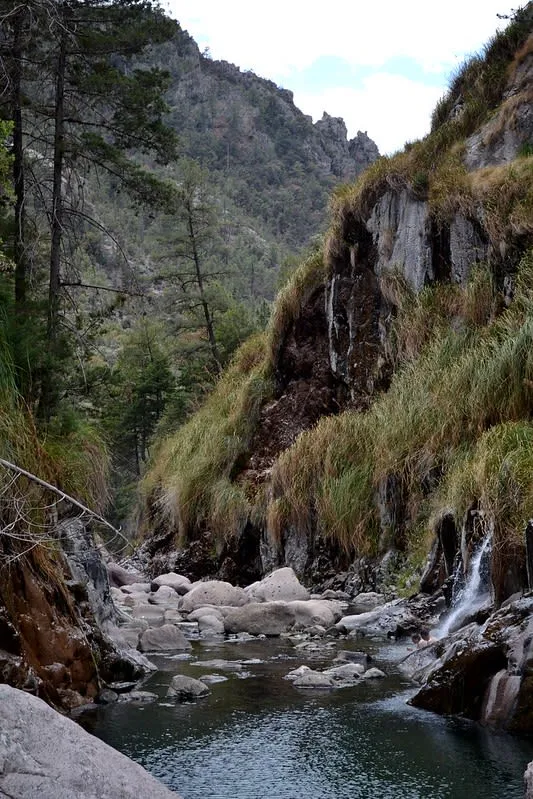
The most adventurous half-day near Creel. Drive 20km to the Tararecua Canyon rim, then hike 45–60 minutes down a steep canyon trail to reach natural thermal pools (37–42°C) carved into the canyon walls by hydrothermal activity. The canyon floor sits 300 meters below the rim — warm, dramatic, unlike anything else in the circuit.
- Access: By car to the trailhead, then hike. Most tour agencies in Creel include it in full-day packages (~700–900 MXN)
- What to bring: Swimwear, water shoes (canyon floor is rocky), 2L of water per person
- Difficulty: Moderate — steep descent. The ascent back up is the harder part
- Entry fee: 50 MXN at the ejido gate
- Caution: Not recommended after heavy rain (slippery trails, flash flood risk)
6. Tararecua Canyon Lookout
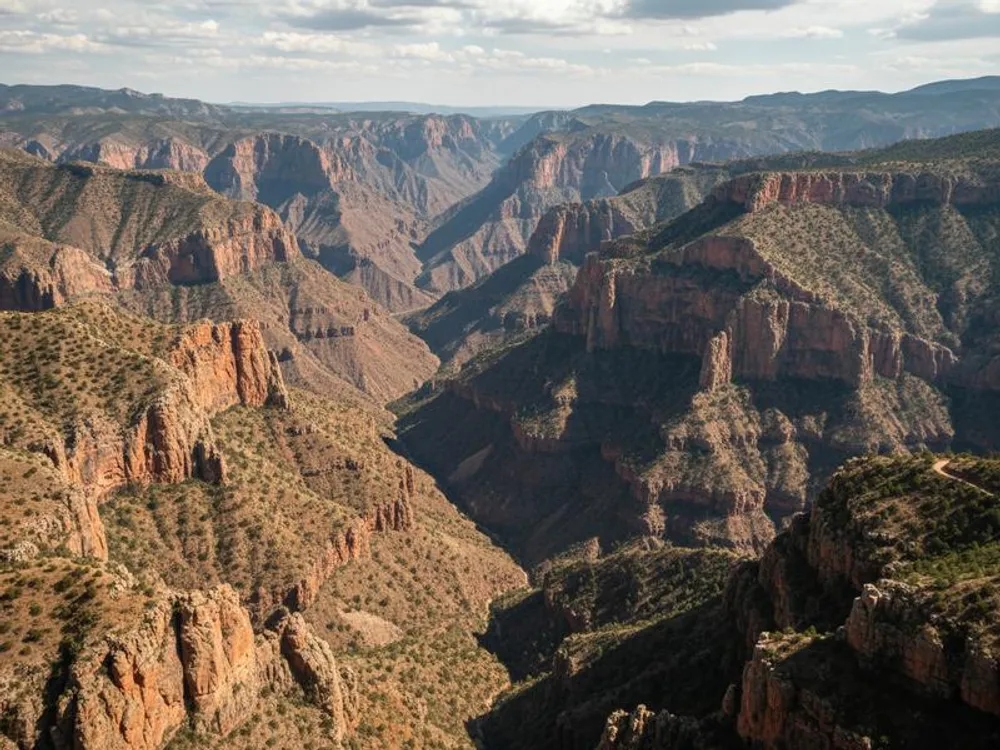
If you don’t want to hike down to Recowata, the Tararecua Canyon rim offers a viewpoint accessible by car. The canyon drops 1,200 meters — deep enough to shift climate zones from pine forest at the top to subtropical vegetation at the bottom. No entry fee. Drive-and-stop viewpoint, 25km from Creel on a dirt road. Often included in ATV circuit tours.
Full-Day Canyon Adventures
7. Basaseachi Falls — 5th Tallest in the Americas
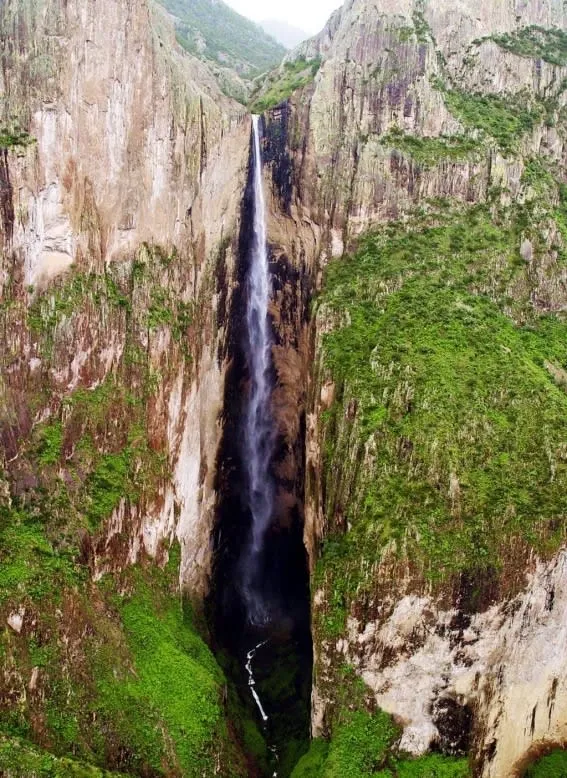
Basaseachi National Park sits 90km northwest of Creel (1.5-hour drive). The main attraction is Basaseachi Falls — 246 meters tall, the 5th tallest waterfall in the Americas, flowing year-round. The viewing trails are well-maintained, with three perspectives: the full-face overlook (10-minute walk from the parking area), the canyon-floor viewpoint (45-minute hike down, views the full column), and Ventana del Diablo (the lookout above the falls, with a cave window framing the canyon).
| Waterfall | Height | Season | Trail Difficulty |
|---|---|---|---|
| Basaseachi | 246m | Year-round | Easy to moderate |
| Piedra Volada | 453m | July–September only | Moderate (1.5km trail from overlook) |
Piedra Volada (453m): The tallest waterfall in Mexico — and 11th tallest in the world. The catch: it only flows after heavy summer rain. Visit in August or September for full flow. The Piedra Volada overlook is a separate trailhead from Basaseachi, about 3km away inside the national park. Most day tours include both; in dry months, guides take you to Basaseachi only.
- Entry: 80 MXN national park fee
- Getting there: Rental car (2WD fine in dry season), shared tour (~800–1,200 MXN from Creel), or private driver
- Full day: Leave Creel by 8 AM, arrive by 9:30 AM, 3 hours exploring, back by 4 PM
- Bring: Water, snacks (no restaurants inside the park), sun protection
8. Divisadero Canyon Rim
Divisadero is the most dramatic viewpoint in the Copper Canyon system — a narrow ridge where you stand between two separate canyon systems simultaneously, with a 1,800-meter drop into the Urique Canyon visible to your left and the Tararecua Canyon to your right. El Chepe trains stop here for 20 minutes (all passengers disembark briefly), but staying overnight or the full day gives you time for the zip-line park, Rarámuri vendors, and canyon views at sunset.
- Distance from Creel: 80km west by road (~1.5 hours), or 45 minutes by El Chepe westbound
- Tarahumara Zip-Line (Parque de Aventura Barrancas del Cobre): Three cables over the canyon, up to 2km long. ~700–1,200 MXN for 1–3 cables
- Combination: Ride El Chepe westbound from Creel, explore Divisadero, return by bus or next-day train
9. Descend to Batopilas (2 Nights Recommended)
For serious canyon explorers: Batopilas is a colonial silver-mining town at the bottom of Batopilas Canyon, 1,800 meters below the rim. The 160km drive from Creel takes 5–6 hours on a famously spectacular (and narrow) mountain road with 250+ switchbacks. The town itself is subtropical while the rim is pine forest — same day, completely different world. The Hacienda San Miguel ruins (abandoned 1912), the Satevó Mission (called “the lost cathedral,” 17km up the canyon), and the river swimming holes make the descent worthwhile.
- Transport: Local bus from Creel (departs 7 AM, not daily — confirm schedule), private driver (~1,500 MXN), or car rental (4WD strongly recommended for the descent)
- Overnights: One night minimum; two nights lets you explore the Satevó Mission and river
- Budget: 400–700 MXN/night for accommodation in Batopilas
Adventure Sports
10. ATV Tours — The Most Popular Creel Activity
Most Creel visitors spend half a day on ATVs covering the Valley of Mushrooms, Lake Arareko, and Valley of the Monks in a single circuit. Multiple operators in town (near the main plaza) rent ATVs independently or offer guided group tours. The dirt roads are manageable for all skill levels.
| Option | Duration | Cost | What’s Included |
|---|---|---|---|
| ATV rental (solo) | 2–4 hours | 600–900 MXN/vehicle | Map, no guide |
| Guided ATV tour | 3 hours | 700–1,000 MXN | Guide, Valley + Arareko circuit |
| Full-day ATV tour | 6 hours | 1,000–1,400 MXN | Valley + Tararecua Canyon rim + Cusarare |
- Tip: Longer guided tours (6 hours) often include Cusarare Falls and the Tararecua lookout — better value than the short circuit
11. Horse Riding
Several hotels and ejido cooperatives offer horse riding through the pine forest around Creel. Routes cover the Valley of Mushrooms, forest trails above Lake Arareko, and canyon overlooks. Better for solitude and silence than ATVs — horses can go on trails ATVs can’t.
- Cost: 300–500 MXN for 2–3 hours
- Book through: Casa Margarita, Hotel Parador de la Montaña, or ejido cooperatives near Lake Arareko
- Best time: Morning (before afternoon ATV traffic on trails)
12. Mountain Biking
Creel’s surrounding terrain — forest paths, dirt roads, valley circuits — is excellent mountain biking country. Rentals are available in town. The Valley of Mushrooms + Lake Arareko circuit is 14km round trip and rideable in 2 hours. More advanced riders can extend to Cusarare Falls (44km round trip).
- Rental cost: 150–250 MXN for half day
- Trail conditions: Unpaved throughout, some rocky sections near canyon rims; generally accessible for intermediate riders
13. El Chepe Day Segment — Train Journey as the Activity
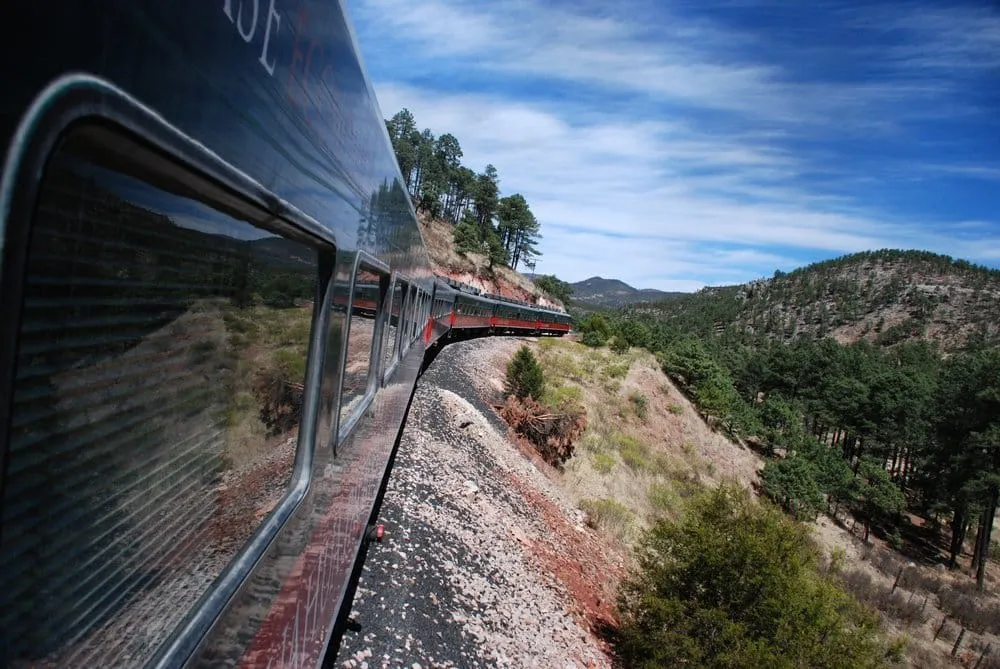
Many visitors in Creel focus entirely on the land-based activities and forget that the El Chepe train journey itself is one of the world’s great rail experiences. From Creel, you can board El Chepe westbound toward Divisadero, Bahuichivo, or El Fuerte — and return by the next available train or bus. The most efficient day use: take the morning train to Divisadero (45 minutes), spend 4–5 hours at the canyon rim and zip-line park, return by afternoon bus to Creel.
| Route from Creel | Train Time | Return Option |
|---|---|---|
| Creel → Divisadero | 45 min | Bus back (2.5 hrs by road) |
| Creel → Bahuichivo | 2.5 hrs | Stay overnight, return next day |
| Creel → El Fuerte | 6.5 hrs | One-way (fly from Los Mochis) |
Check the Chepe schedule at chepe.mx — Express runs Tue/Thu/Sat, Regional runs Mon/Wed/Fri/Sun.
Culture & History
14. Rarámuri Craft Market (Plaza Benito Juárez)
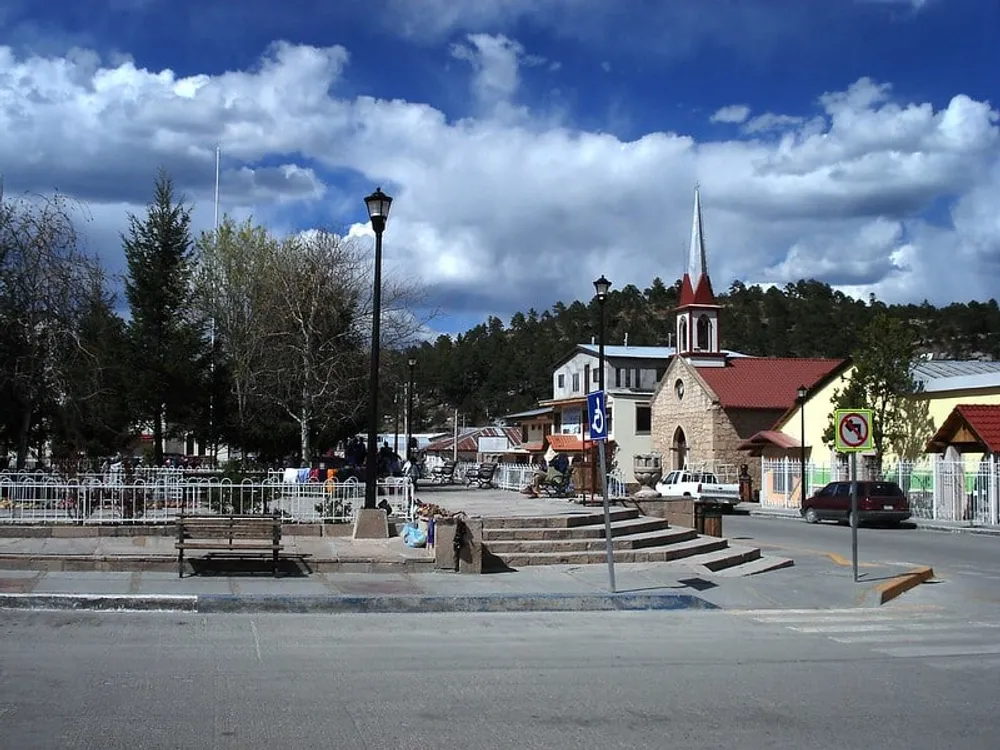
The plaza outside the train station is where Rarámuri women and children come to sell traditional crafts — pine-needle baskets (woven without tools into geometric patterns), carved wooden dolls in traditional dress, handwoven cloth pouches, and small carved figurines. This is the best place in northern Mexico to buy direct-from-artisan Indigenous crafts, with prices a fraction of what you’d pay in Mexico City or US galleries.
Craft guide:
- Pine-needle baskets (canastas): 200–800 MXN depending on size and complexity; made by women over several weeks
- Carved dolls: 100–300 MXN, in Rarámuri traditional dress (white cloth for men, colorful skirts for women)
- Woven pouches: 50–150 MXN
- Painted gourds: 80–200 MXN
Rules:
- Ask before photographing — some women will decline or charge a small fee
- Bargaining is acceptable but not aggressive — these are hand-made pieces requiring days of work
- The museum shop (see below) has quality-verified pieces at slightly higher prices if you’re unsure about authenticity
15. Museo de Arte Indígena Creel
Based in the old 1956 train station building next to the current station. Four permanent rooms cover Rarámuri ethnography (traditional tools, daily life), ceremonial objects, 45 colonial-era sacred paintings from regional missions, and contemporary Rarámuri art. The attached shop is the most reliable place to buy authentic crafts in Creel — all pieces are sourced directly from artisan cooperatives with fair-trade verification.
- Hours: Typically 9 AM–1 PM and 3–6 PM (confirm in town — hours vary seasonally)
- Entry: 30–50 MXN
- Time needed: 1–1.5 hours
16. San Ignacio Mission (Misión San Ignacio Arareko)
An 18th-century Jesuit mission still in active use by the Rarámuri community, 22km from Creel near the Lake Arareko circuit. The church itself is simple — whitewashed adobe, not ornate — but the setting is significant: it sits inside the San Ignacio de Arareko ejido, a 20,000-hectare Rarámuri territory. A small adjacent museum holds colonial-era religious artifacts.
- Entry: 20 MXN (ejido fee)
- Best combined with: Cascada Cusarare, 2km away (same half-day trip)
- Protocol: This is an active place of worship — dress modestly, no photography inside without permission
17. Rarajípari Ball-Running Ceremony
If your visit coincides with Easter (Semana Santa) or Christmas, you may be able to observe the Rarajípari — a Rarámuri ball-running ceremony where teams kick a small wooden ball over a 80–160km course through the canyon. Observers are sometimes welcome; ask your hotel or tour operator about access. This is not a staged performance — it’s a living cultural practice.
- Timing: Easter week and December 24–January 1 primarily
- Location: Various ejido communities around Creel
- Protocol: Attend only with a local guide who has community connections. Never show up uninvited at ejido ceremonies.
18. Rarámuri Running Culture Context
The Rarámuri are famous globally for ultra-distance running — the subject of Christopher McDougall’s Born to Run. This isn’t a tourist attraction. It’s how Rarámuri have communicated across the canyon for centuries, hunting deer by pursuit over multi-day runs. When you see Rarámuri people running on trails near Creel, you’re witnessing a living tradition, not a show for visitors. The appropriate response is respectful observation, not photography.
Food in Creel
19. Pinole and Local Mountain Food
Pinole is roasted, ground corn mixed with water — the Rarámuri trail fuel that sustains 150km runs. It’s sold at the market and in Creel shops as a fine powder (mix with water), pressed bars, or cookies. Mild, nutty, and genuinely energizing. Worth trying as a cultural experience and a snack for your own canyon hikes.
Other local foods:
- Machacado con huevo: Dried shredded beef scrambled with eggs — the standard Sierra Tarahumara breakfast. Available at most Creel restaurants from 7 AM.
- Carne asada norteña: Chihuahua is Mexico’s beef capital. Wood-fired carne asada here has a smoky flavor different from the charcoal-grilled version found in the south.
- Bean and potato burritos: The working-class staple of the sierra, sold at market stalls near the plaza for 25–40 MXN.
- Apple products: The Sierra Tarahumara’s high altitude and cold nights produce excellent apples (October harvest). In season, local vendors sell dried apples, apple jam, and fresh cider.
Where to eat in Creel:
| Restaurant | Budget | Known For |
|---|---|---|
| Casa Margarita | $ (100–180 MXN/meal) | Backpacker classic, set meals, tour booking |
| Restaurant Tío Molcas | $ (80–150 MXN) | Local, hearty portions, machacado |
| El Caballo Bayo | $$ (150–250 MXN) | Best carne asada in Creel |
| Copper Canyon Sierra Lodge | $$$ (200–350 MXN) | Atmospheric setting, pine forest views |
Getting Around Creel
| Option | Cost | Best For |
|---|---|---|
| Taxi (town + nearby sites) | 150–400 MXN round trip with wait | Cusarare, Arareko, Tararecua lookout |
| ATV rental | 600–900 MXN/half day | Valley circuit, forest trails |
| Bicycle rental | 150–250 MXN/half day | Valley circuit, lake, moderate terrain |
| Guided tour (local agency) | 700–1,400 MXN/day | Basaseachi, Recowata, canyon tours |
| El Chepe train | 450–900 MXN (one-way to Divisadero) | Canyon rim, Bahuichivo, El Fuerte |
| Rental car | From $35 USD/day | Basaseachi, Piedra Volada, Batopilas |
Compare car rental prices for Chihuahua City — pick up at CUU airport, drive to Creel, explore the sierra at your own pace.
Local tour agencies in Creel (by the plaza): Several operators cluster around the train station offering standardized packages. Prices are largely similar — compare what’s included (entry fees, meals, waiting time). Book the night before for next-day tours.
Seasonal Calendar
| Month | Best Activity | Weather | Notes |
|---|---|---|---|
| Jan–Feb | Snow scenery, Valle de Hongos | Cold (-5 to 12°C) | Snow at rim; spectacular photos |
| Mar–Apr | Valley circuit, Cusarare | Warming (8–18°C) | Low crowds, low waterfall flow |
| May–Jun | Everything — best conditions | Mild (12–22°C) | Ideal. Pre-rain, clear skies |
| Jul–Sep | Basaseachi + Piedra Volada | Warm but rainy (15–24°C) | Waterfalls at full power; trail mud possible |
| Oct–Nov | Best overall month | Ideal (12–20°C) | Peak season, all activities available |
| Dec | Snow views, Christmas ceremony | Cold (-3 to 10°C) | Rarajípari ceremony around Christmas |
Free Activities in Creel
| Activity | Cost | Notes |
|---|---|---|
| Creel main plaza stroll | Free | Train station, church, Rarámuri vendors (browse for free) |
| Sunset canyon views (Tararecua lookout) | Free (transport extra) | Drive-up overlook, no entry fee |
| Trail walking around town | Free | Pine forest trails begin at the edge of town |
| Watching El Chepe arrive | Free | Train arrives at the station — brief but atmospheric |
| Church of San Ignacio | Free | Colonial church in town center, open daily |
Budget Guide
| Style | Daily Budget | What You Get |
|---|---|---|
| Budget | $40–60 USD | Hostel dorm or guesthouse, market meals, bicycle rental, Valley circuit independently |
| Mid-Range | $70–110 USD | Private room, restaurant meals, one guided tour (Valley or Basaseachi), taxi transport |
| Comfort | $130–200+ USD | Sierra Lodge or equivalent, all meals, car rental or private driver, Basaseachi + Recowata in two separate days |
Plan Your Visit
The Copper Canyon cluster is best planned as a 3–5 day circuit from Chihuahua City, using Creel as the base. Most visitors fly into Chihuahua City (CUU), board El Chepe or drive to Creel, explore for 2–3 nights, and either reverse the trip or continue west to Los Mochis on the train.
Useful links:
- Copper Canyon Complete Guide — full system overview, El Chepe booking, how it compares to the Grand Canyon
- Creel Chihuahua Travel Guide — practical base-camp info, where to stay, getting there, El Chepe schedule
- Day Trips from Chihuahua City — Creel as a day trip vs overnight (we say overnight)
- Things to Do in Chihuahua City — El Chepe departure point and a full day of activities
- Northern Mexico Travel Guide — bigger picture regional context
- Mexico Packing List — what to pack for cold-altitude Mexico
Get travel insurance for the Sierra Tarahumara: travel insurance covers emergency evacuation, which matters in remote canyon country far from hospitals.
Book Copper Canyon tours: Browse Copper Canyon tours on Viator — El Chepe packages, Basaseachi day trips, canyon rim tours.