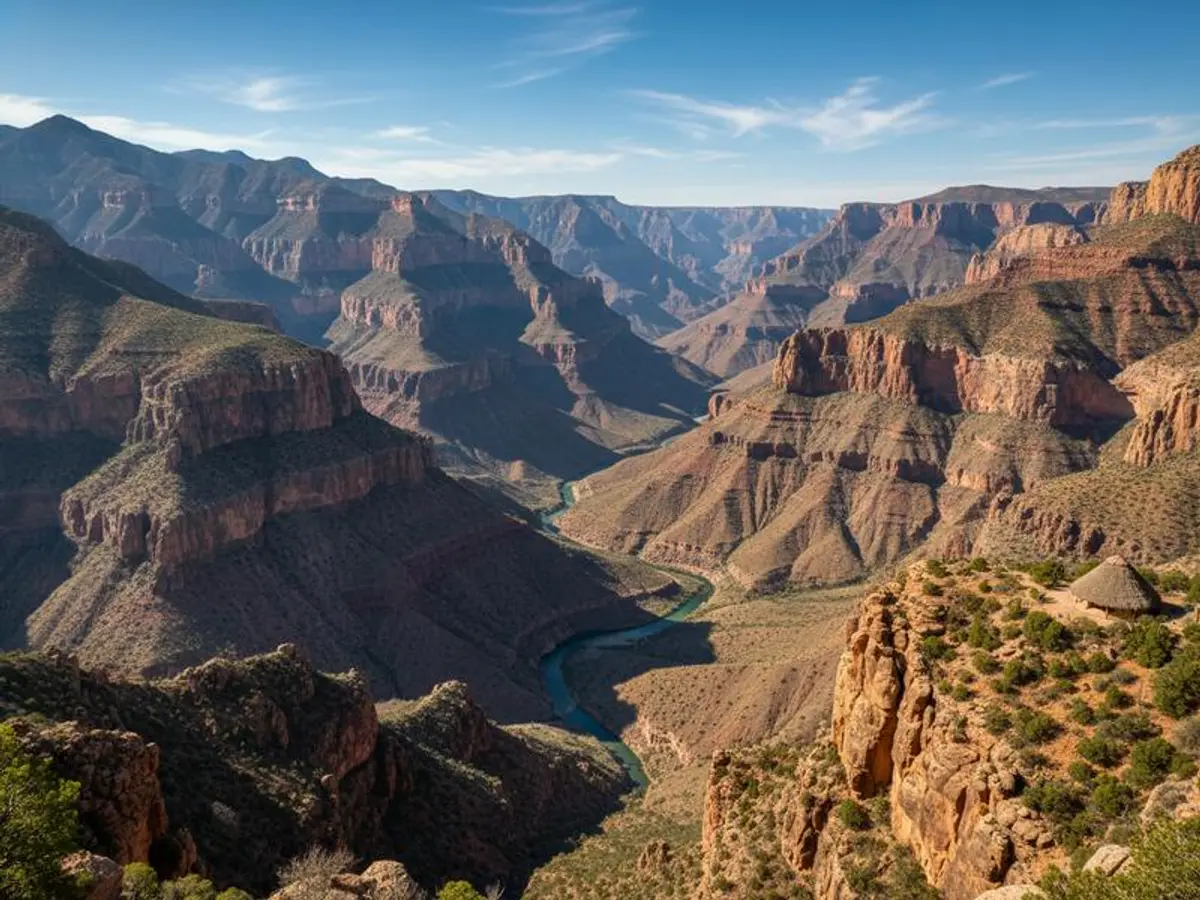
Best Day Trips from Chihuahua City: 8 Easy Ideas for 2026
The best day trips from Chihuahua City are Cuauhtémoc for Mennonite culture, Paquimé for UNESCO ruins, and Creel if you want a first taste of Copper Canyon. If you only want one easy outing, do Cuauhtémoc. If you want the most unique one, do Paquimé plus Mata Ortiz. If you want mountain scenery, Creel works, but it is a very long day and is better with one night in the Sierra.
This guide covers 8 day trips and near-overnight excursions from Chihuahua City, ranked by distance and usefulness for first-time travelers. Chihuahua is huge, so not every place marketed as a “day trip” is a smart same-day return. I’ve called that out clearly, added real drive times, and flagged where an overnight makes the experience much better.
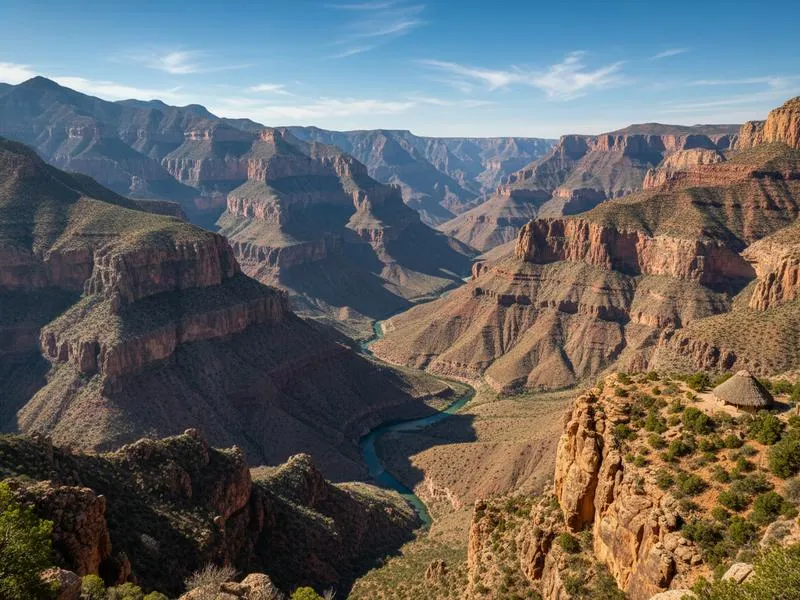
30-Second Answer
| If you want… | Go here | Why it’s the best pick |
|---|---|---|
| The easiest true day trip | Cuauhtémoc | Close, low-stress, and genuinely different because of the Mennonite communities |
| The most memorable culture/history stop | Paquimé + Mata Ortiz | UNESCO ruins plus pottery you can buy directly from artists |
| Mountains and Sierra scenery | Creel | Best intro to Copper Canyon, but much better with an overnight |
| Pancho Villa history | Hidalgo del Parral | Strong museum stop and easy highway drive |
| Waterfall scenery | Basaseachi Falls | Most dramatic nature outing, but too far to rush properly in one day |
Day Trips from Chihuahua City at a Glance
| Destination | Distance | Drive | Best For | Overnight? |
|---|---|---|---|---|
| Cuauhtémoc | 90 km | 1.5 hr | Mennonite colony, queso, unique culture | No |
| Nombre de Dios | 100 km | 1.5 hr | Colonial Franciscan mission, quiet pueblo | No |
| Paquimé + Mata Ortiz | 180–210 km | 2.5–3 hr | UNESCO ruins, world-class pottery | Optional |
| Hidalgo del Parral | 240 km | 3 hr | Pancho Villa assassination, silver mining | Recommended |
| Creel + Sierra Tarahumara | 240 km | 3.5–4 hr | Copper Canyon gateway, Rarámuri culture | Recommended |
| El Chepe Train Day Experience | Departs Chihuahua | 4.5 hr to Creel | Scenic mountain railway | Optional |
| Basaseachi Falls | 255 km | 4 hr | Mexico’s highest free-fall waterfall | Recommended |
| Batopilas | 310 km | 5 hr | Silver ghost town in canyon floor | Yes — 2 nights |
Getting There: Transport Options from Chihuahua City
Rental car is the most flexible option for most day trips. Highways to Cuauhtémoc (Federal 16), Parral (Federal 45), and Paquimé (Federal 10 via Nuevo Casas Grandes) are well-maintained toll roads. Mountain routes toward Creel and Basaseachi are paved but steep and winding — take them slowly, especially in wet or winter conditions.
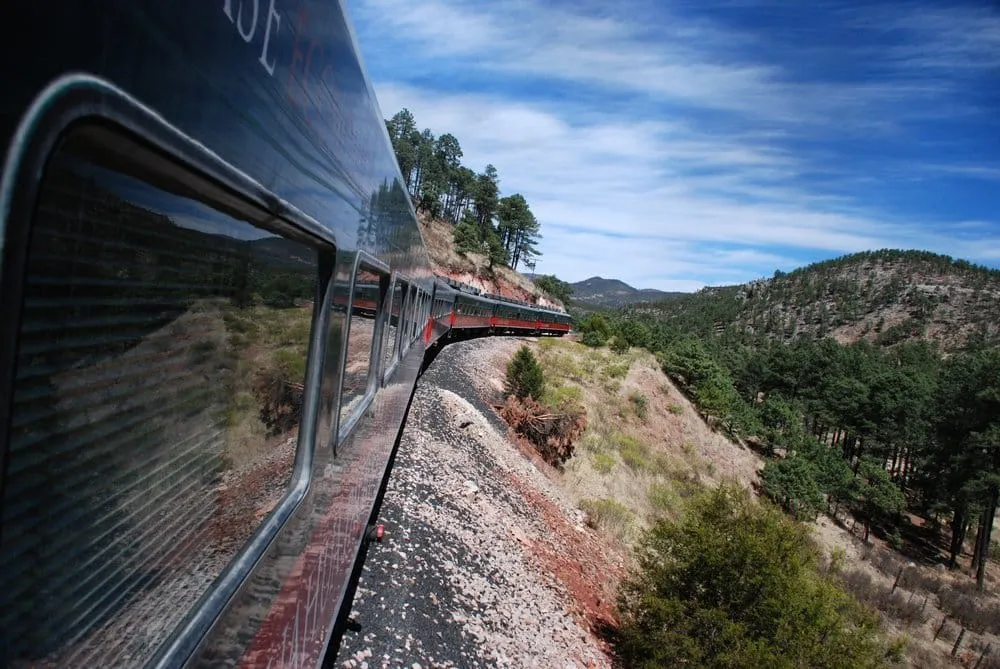
El Chepe train departs Chihuahua’s central train station at 6:00 AM for Creel (arrives ~10:30 AM), Divisadero (arrives ~12:30 PM), and points west. The Express service runs Thursday, Friday, Saturday, and Monday. Return by bus is the practical option for day trippers — multiple daily services from Creel to Chihuahua take 3.5–4 hours (around 300–400 MXN). A full train round-trip requires an overnight.
Long-distance buses (Chihuahua’s Central de Autobuses on Blvd. Juan Pablo II) connect to Cuauhtémoc (1.5 hr, 130–160 MXN), Parral (3 hr, 250–320 MXN), and Creel (4–4.5 hr, 350–450 MXN) via Transportes Chihuahuenses and Estrella Blanca lines.
Organized tours from Chihuahua City operators handle logistics for copper canyon and Paquimé circuits — useful if you don’t want to drive mountain roads.
1. Cuauhtémoc — Mexico’s Low German Colony (90 km, 1.5 Hours)
Distance: 90 km west on Federal Highway 16 | Drive: 1.5 hours | Best day trip? Yes
Cuauhtémoc is Chihuahua’s most culturally disorienting experience. The city itself is unremarkable, but 15 minutes outside town you’ll find Old Colony Mennonite communities — farming settlements established in the 1920s when Mexican President Obregón invited pacifist Mennonites fleeing persecution in Canada. Today, roughly 80,000 Mennonites live in Chihuahua state, speaking Plautdietsch (a Low German dialect) and practicing a way of life largely unchanged for a century.
The Mennonite colony experience centers on Campo 6-B, a model community where visitors can tour a working cheese factory producing queso menonita — the mild, rubbery white cheese sold across Mexico under that name. The tour explains the Dutch/German origin of the cheese tradition and the press-mold production process. The cheese shop sells blocks directly; buy here instead of a supermarket and it’s noticeably fresher.
Beyond the cheese factory, the community sells handmade wooden furniture, canned goods, and baked goods from farmhouse roadside stalls. Dress modestly when visiting — the community is welcoming to tourists but maintains conservative social norms.
What to eat in Cuauhtémoc: The town center has several Mennonite-run restaurants serving Rollkuchen (fried dough squares with jam), Peppernuts (spiced cookies), borscht, and Vereniki (dumplings with sour cream). It’s German farmhouse cooking inside Mexico — deeply strange and completely delicious.
Getting there: Drive Highway 16 west from Chihuahua City — 90 km, no tolls. Buses from Central de Autobuses depart hourly (130–160 MXN, 1.5 hr).
2. Nombre de Dios — Colonial Franciscan Mission (100 km, 1.5 Hours)
Distance: 100 km southeast | Drive: 1.5 hours | Best day trip? Yes — half day
Nombre de Dios is one of Chihuahua’s quietly preserved colonial villages, founded by Franciscan missionaries in 1563 — making it one of the oldest Spanish settlements in northern Mexico. The Ex-Convento de San Francisco de Asís anchors the town: a mission church with original 16th-century stonework, a peaceful atrium garden, and a small museum explaining the Franciscan frontier mission system that stretched from central Mexico into the American Southwest.
The village sits in an agave-covered valley with a small main plaza and traditional weekend market. Unlike Chihuahua’s busier day trip destinations, Nombre de Dios sees very few foreign tourists — it’s a living northern Chihuahua town rather than a polished tourist attraction.
Combine with: Aldama (20 km further east) has a well-preserved colonial plaza and the Cueva del Diablo thermal spring — an unusual hot spring with sulfurous water emerging from a small cave, popular with local families on weekends.
3. Paquimé + Mata Ortiz — UNESCO Ruins & World-Class Pottery (180–210 km, 3 Hours)
Distance: 180 km to Paquimé, 210 km to Mata Ortiz | Drive: 2.5–3 hours | Best day trip? Yes — very full day
This is Chihuahua’s most rewarding full-day excursion. Paquimé (officially Casas Grandes Archaeological Zone) is a UNESCO World Heritage Site unlike any ruin in Mexico — no pyramids, no stelae, just a labyrinthine adobe city that housed up to 2,000 people between 900–1450 AD. The city was the commercial hub connecting Mesoamerican cultures to the south with Pueblo peoples of Arizona and New Mexico to the north: scarlet macaw bones, copper bells, and turquoise from these trading networks were excavated here.
What makes Paquimé visually distinctive is the T-shaped doorways — the same design found at Chaco Canyon and other Southwest Pueblo sites — and the water system: a sophisticated network of stone-lined canals and cisterns that supplied the entire city. The site’s museum displays the extraordinary material culture recovered here, including effigy pots and shell jewelry that traveled hundreds of miles through trade.
Entry fees: 85 MXN (site) + 70 MXN (museum) — about $8 USD total. Open Tuesday–Sunday, 10 AM–5 PM.
Mata Ortiz: Buy Direct from the Artist
Thirty kilometers further into the desert is Mata Ortiz, a village of 2,500 people where roughly 400 residents produce hand-coiled, hand-painted pottery in the ancient Paquimé tradition. In the 1970s, a local cowboy named Juan Quezada taught himself to recreate the Paquimé ceramic style from sherds he found in the desert — and turned an impoverished farming community into one of Mexico’s most celebrated craft centers.
The pottery sells for $30–$300 USD directly from artists’ homes (the same pieces retail for $500–$2,000 in US galleries). There are no set gallery hours — walk the main street and knock on doors. Most families display work through their windows or in front-room showrooms. Ask specifically for Juan Quezada’s workshop (the originator’s family still produces); Lydia Quezada makes geometric blackware; Manuel Olivas specializes in effigy pots.
Getting there: Drive Highway 10 west from Chihuahua to Nuevo Casas Grandes (the base town, 170 km, 2.5 hr), then south 18 km on a paved road to Paquimé, then 30 km further on a good gravel road to Mata Ortiz. Buses from Chihuahua’s Central de Autobuses go to Nuevo Casas Grandes (4 hr, ~350 MXN). Local taxis connect from there.
4. Creel & the Sierra Tarahumara (240 km, 3.5–4 Hours)
Distance: 240 km southwest | Drive: 3.5–4 hours | Best as: Overnight recommended — possible long day trip by car
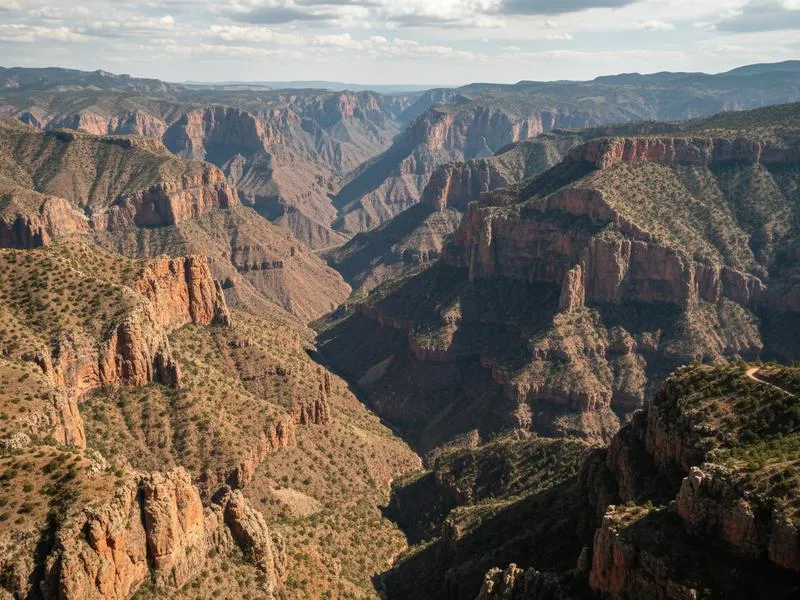
Creel is the main gateway to Copper Canyon and the commercial center of the Sierra Tarahumara. The town itself is a mountain railhead: high-altitude pine forest (2,338m / 7,670ft), cold nights year-round, and a main square where Rarámuri women sell handwoven baskets, carved wooden figures, and hand-painted gourds directly from blankets on the ground.
The canyon viewpoints require going further from Creel — Divisadero (80 km by road or El Chepe) for the standard rim panorama, Urique (85 km down a dramatic switchback road) for the canyon floor. A day trip from Chihuahua to Creel gives you the town, the surrounding Sierra landscapes, and a handful of day activities.
Day activities from Creel:
- Valle de los Hongos (Valley of Mushrooms) — 7 km east of town, bizarre volcanic rock formations resembling giant mushrooms and toadstools, 45-minute hike loop (free)
- Lago Arareko — 7 km south, a pine-ringed mountain lake with 3 km walking circuit, Rarámuri cave dwellings on the far shore (50 MXN entry)
- Cascada de Cusárare — 22 km south, a 30-meter waterfall dropping into a forested ravine, 40-minute walk from the road (80 MXN national park fee)
- Misión Cusárare — 16th century Jesuit mission with original murals, attached to Rarámuri boarding school
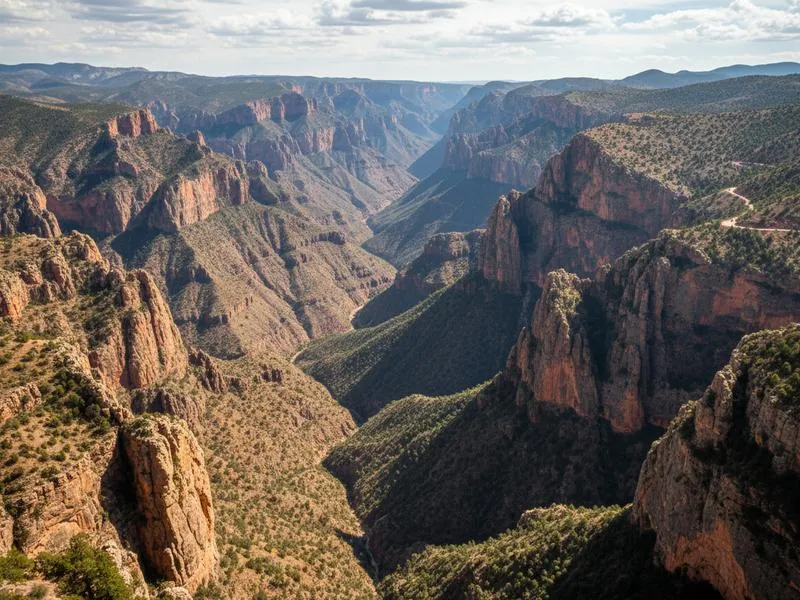
By El Chepe: The train departs Chihuahua at 6:00 AM and arrives Creel around 10:30 AM. Return by bus (3.5–4 hr, 350–450 MXN). This gives you roughly 5–6 hours in Creel before the last bus — enough for the Valle de los Hongos and Lago Arareko.
By car: 3.5–4 hours on Federal 16 west then the Creel turnoff. Road is paved but mountain sections are steep and winding. Drive slowly and do not drive after dark.
If you overnight: One or two nights in Creel opens up canyon-floor excursions (Urique, Batopilas), the full copper canyon railway experience to Divisadero, and guided canyon hikes with Rarámuri guides.
For a complete guide to this region, see our Copper Canyon guide and Creel guide.
5. El Chepe Train Day Experience (Departs Chihuahua at 6:00 AM)
Distance: 200+ km by rail | Journey: 4.5 hours to Creel | Best for: The railway experience itself
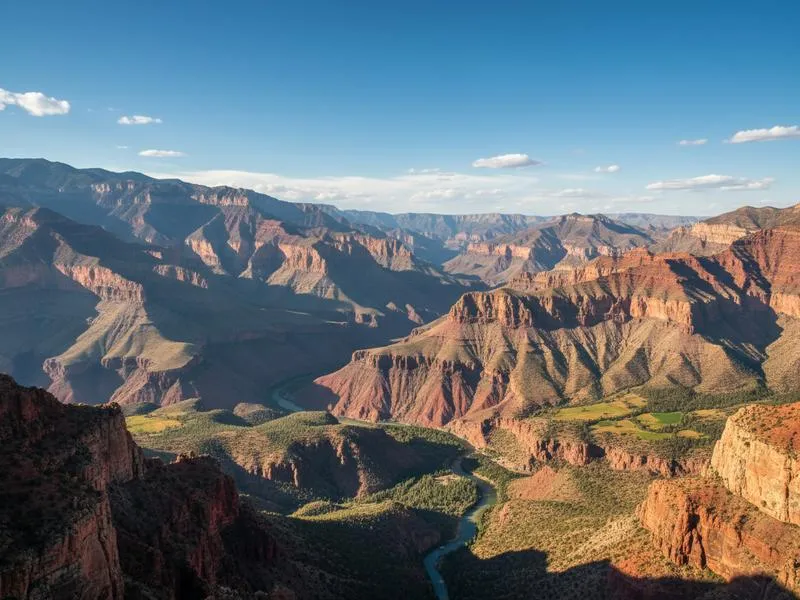
Even if you don’t want to spend the night in the Sierra, riding El Chepe partway and returning by bus is a genuinely memorable experience. The train climbs from Chihuahua’s 1,415m desert floor into 2,500m pine forest through 87 tunnels and 37 bridges, with dramatic canyon views appearing and disappearing as the route winds into the Sierra.
El Chepe timetable from Chihuahua (2026 Express schedule):
- Departs Chihuahua: 6:00 AM (Thu, Fri, Sat, Mon)
- Arrives Creel: ~10:30 AM (4.5 hours)
- Arrives Divisadero: ~12:30 PM (6.5 hours from Chihuahua)
Ticket prices (Express, one-way):
| Class | Chihuahua–Creel | Chihuahua–Divisadero |
|---|---|---|
| Primera Express | 1,250 MXN (~$62 USD) | 1,550 MXN (~$78 USD) |
| Turista | 800 MXN (~$40 USD) | 950 MXN (~$47 USD) |
Book at least 2 weeks ahead in peak season (July–August, Semana Santa). Visit chepe.mx for reservations.
Day trip option: Train from Chihuahua → Creel → return by Chihuahuenses bus (departs Creel mid-afternoon, arrives Chihuahua by 9 PM). Budget about 800 MXN total transport + 500–800 MXN food and activities.
6. Hidalgo del Parral — Where Pancho Villa Was Killed (240 km, 3 Hours)
Distance: 240 km south on Federal Highway 45 | Drive: 3 hours | Best as: Very long day trip or overnight
Parral is where Mexico’s Revolution ended — at least symbolically. On July 20, 1923, Pancho Villa was ambushed and killed in his 1919 Dodge as he drove through town, shot by seven gunmen hired by political rivals who feared his return to public life. The bullet-riddled Dodge is still here, on display at the Museo Francisco Villa (also called the Quinta Luz, Villa’s widow Luz Corral’s home).
The museum is the main attraction: Villa’s original automobile with 150-plus bullet holes, personal correspondence, weapons, and photographs document his life from cattle rustler to Division del Norte commander. Entry is 40 MXN. The spot where the ambush occurred on Calle Juárez has a monument.
Beyond Villa, Parral is a well-preserved colonial silver mining city with a handsome main plaza, the Templo de San José (an ornate 18th-century church), and the La Prieta mine — one of the richest silver deposits in northern Mexico, operational from 1631 to the 20th century. The mine offers guided tours through original shafts (90 MXN).
What to eat in Parral: Northern Chihuahua classics — carne asada, discada (chopped meats cooked on a plow disc), gorditas de harina (flour tortilla pouches), and machacado. Restaurante El Chivato on the main plaza is the local standard.
Drive: 240 km south on Federal 45 (the Panamerican Highway), mostly flat toll road through open desert. About 3 hours each way, making Parral a very long day from Chihuahua. Overnight option: Parral has comfortable mid-range hotels in the 700–1,200 MXN range.
7. Basaseachi Falls — Mexico’s Highest Free-Fall Waterfall (255 km, 4 Hours)
Distance: 255 km west | Drive: 4 hours | Best as: Overnight trip
Cascada de Basaseachi drops 246 meters in a single free fall — one of the tallest waterfalls in North America. The waterfall sits inside Parque Nacional Cascada de Basaseachi in the Sierra Tarahumara, at an elevation of about 1,700 meters surrounded by pine-oak forest. The viewing trail is 3 km each way from the park entrance to the canyon rim overlook.
At peak flow (August–October after summer rains), Basaseachi is spectacular — a white column disappearing into mist 800 feet below. In dry season (March–May), flow is reduced but the canyon itself remains dramatic. Swimming in the pools at the base requires a 3-hour descent trail — plan for a full day or stay overnight at the small park facilities.
The honest assessment: At 4 hours each way, Basaseachi demands an overnight stay to be worthwhile. Drive up in the afternoon, camp or stay at the small park guesthouse, spend the morning at the falls, and drive back. There’s a second waterfall nearby — Piedra Volada at 453m when measured to the bottom — accessible by a more demanding trail.
Getting there: Drive Highway 16 west from Chihuahua through Cuauhtémoc, then turn south on the mountain road toward the park. The final 40 km of mountain road is paved but very winding. No bus service to the park — rental car or organized tour required.
8. Batopilas — Silver Ghost Town on the Canyon Floor (310 km, 5 Hours)
Distance: 310 km | Drive: 5 hours (including the canyon descent) | Best as: 2-night minimum
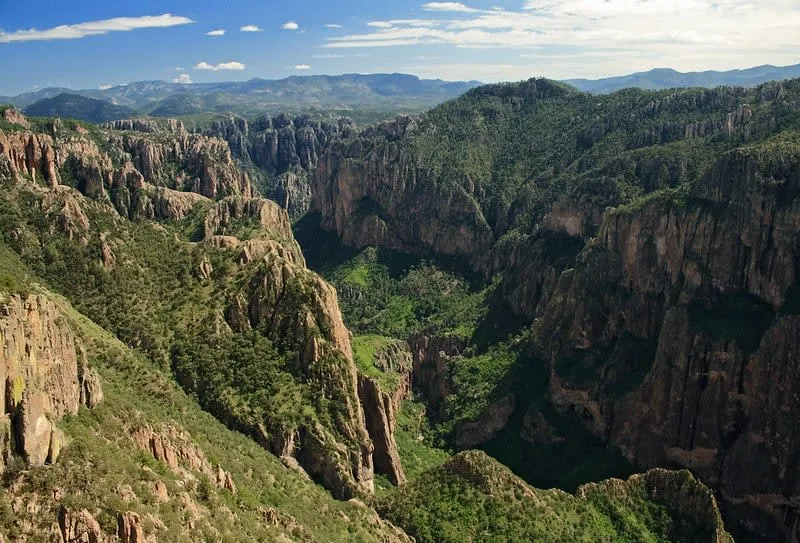
Batopilas is not a day trip — it’s an experience. The former silver capital of Chihuahua sits 1,800 meters below the Sierra Tarahumara rim, accessible only by a single switchback road that descends the canyon wall in 72 km of hairpin turns. Temperature at the bottom is 15–20°C warmer than the rim: palm trees and tropical vegetation in the heart of the Sierra.
During the Porfiriato (1876–1910), Batopilas produced millions of pesos in silver and was wired for electricity before Mexico City. Today, 1,400 people live among the ruins of haciendas, a colonial aqueduct, and a 17th-century church. The Rarámuri people have maintained communities in the surrounding barrancas for centuries; a significant Rarámuri neighborhood sits on the canyon floor below town.
Why go: The drive down is one of Mexico’s most dramatic road experiences. The town itself feels frozen in a more isolated time — no Walmart, one ATM, cobblestone streets, and a population that hasn’t changed significantly in a century. From Batopilas, foot trails connect to Rarámuri ranchos higher in the canyon.
Getting there: Drive to Creel, then take the canyon road to Batopilas (72 km, 3–3.5 hours from Creel due to the road condition). Budget 2 nights minimum. Buses from Creel depart Tuesday, Thursday, and Saturday.
See our full Batopilas guide for complete logistics.
Combination Routes
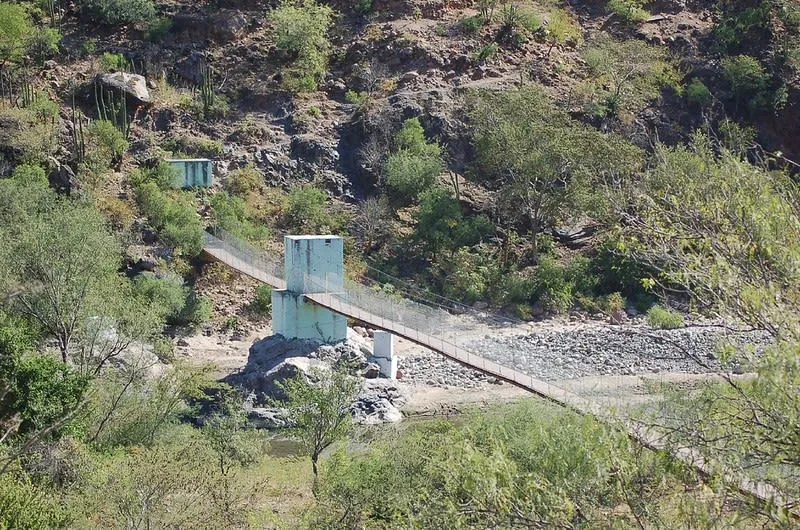
Independence Trail (2 days): Chihuahua → Cuauhtémoc (1.5 hr, lunch and Mennonite colony) → Creel overnight → Valle de los Hongos + Lago Arareko → return next day.
Revolution & Silver Route (2 days): Chihuahua → Parral (3 hr, Villa museum + La Prieta mine + overnight) → return via a different highway loop through colonial towns.
Paquimé Full Day: Depart early, drive to Paquimé (2.5 hr), 2 hours at UNESCO ruins + museum, lunch in Nuevo Casas Grandes, drive 30 km to Mata Ortiz for pottery shopping, return to Chihuahua by 9 PM.
Copper Canyon Circuit (3–4 days): Chihuahua → El Chepe train → Creel (1 night) → Urique or Divisadero canyon views → Batopilas (2 nights) → return to Creel → bus back to Chihuahua.
Seasonal Calendar
| Month | Conditions | Best Destinations |
|---|---|---|
| Jan–Feb | Cold at elevation (0–5°C in Creel), snow possible, Batopilas warm at bottom | Batopilas, Cuauhtémoc, Parral |
| Mar–Apr | Warming up, pre-rain dry season, Basaseachi lower flow | Paquimé, Cuauhtémoc, Creel |
| May–Jun | Dry and hot in valleys, comfortable at elevation | All destinations |
| Jul–Aug | Rainy season begins, Basaseachi/waterfalls at full volume, afternoon thunderstorms | Basaseachi, Creel, Parral |
| Sep–Oct | End of rainy season, waterfalls still strong, autumn colors in Sierra | Best time overall for Copper Canyon |
| Nov–Dec | Cooling fast at elevation, quiet tourism, Creel can get snow by December | Paquimé, Cuauhtémoc, Parral |
Best time for Copper Canyon: October and November — post-rain greenery, cooler temperatures, clear skies, and fewer tourists than summer.
Budget Guide
| Budget | Transport | Food | Activities | Daily Total |
|---|---|---|---|---|
| Budget | Bus (150–350 MXN) | Comidas corridas 80–120 MXN | Sites 40–100 MXN | $15–25 USD/day |
| Mid-Range | Rental car (600–900 MXN/day) | Restaurants 200–400 MXN | El Chepe Express | $40–70 USD/day |
| Comfort | Rental car + guide | Restaurants + craft budget | Train + canyon tours | $100–200 USD/day |
Budget note: Paquimé + Mata Ortiz is the only day trip with significant shopping potential (pottery budget varies widely). El Chepe Express is the biggest single transport expense — book in advance to avoid sold-out departures.
Common Mistakes to Avoid
- Trying to do Copper Canyon viewpoints and Creel as a same-day sprint. You can reach Creel in a day, but Divisadero, Urique, or Batopilas deserve more time.
- Assuming every route is equally easy after dark. Chihuahua’s highways are fine by day, but mountain roads toward Creel and Basaseachi are much more tiring after sunset.
- Leaving Chihuahua City without cash. Mata Ortiz, craft stalls, small restaurants, and remote Sierra stops still work best with cash.
- Skipping fuel and snacks before heading into the Sierra. Distances are long and services thin out fast once you leave the capital.
- Planning Basaseachi or Batopilas as casual half-day outings. Both are better framed as overnight trips, not quick loops.
Practical Tips
- Fuel up in Chihuahua City before mountain routes — gas stations are sparse and sometimes out of stock in smaller towns
- Cash in Chihuahua: ATMs are scarce in Creel (one Bancomer, often long queues), nonexistent in Batopilas, limited in Mata Ortiz — withdraw before leaving
- Mountain roads: Reduce speed on wet Sierra highways; afternoon thunderstorms July–September can make some sections slippery
- Rarámuri etiquette: Ask before photographing Rarámuri people; many prefer not to be photographed; purchase crafts directly from artisans rather than intermediary shops — the extra 20 MXN goes directly to the maker
- El Chepe reservations: Book online at chepe.mx at least 2 weeks ahead during Semana Santa and summer school holiday weeks
Related Guides
- Mexico City to Chihuahua — flights, overnight bus, Terminal Norte guide, El Chepe connection timing
- Chihuahua City Travel Guide — El Chepe logistics, Pancho Villa Museum, where to stay
- Things to Do in Chihuahua City — full activities list for the city itself
- Copper Canyon Travel Guide — full canyon circuit planning, 3-day and 5-day itineraries
- Creel Chihuahua Guide — complete Creel logistics, accommodation, canyon access
- Batopilas Chihuahua Guide — the canyon-floor silver town in detail
- Northern Mexico Travel Guide — Chihuahua in the broader northern Mexico context
- Guachochi, Chihuahua — quieter Sierra alternative if Creel feels too transit-heavy
- Chepe Train Guide — current route, classes, and booking tips for the Sierra run