Chihuahua City Travel Guide 2026: What to Do, Where to Stay & El Chepe Tips
Chihuahua City is worth a night or two if you’re riding El Chepe, heading into Copper Canyon, or want a northern Mexico city break with real history and far fewer tourists than Guadalajara or Mexico City. The short version: stay in the historic center, prioritize the Pancho Villa Museum and cathedral area, use Uber instead of renting a car in town, and treat Chihuahua City as both a practical gateway and a worthwhile stop in its own right.
If you’re only here before El Chepe, arrive the afternoon before, sleep in the center, eat a proper carne asada dinner, and take a 15-minute Uber to the station before dawn. If you have two days, add Quinta Gameros, Paquimé, or a Mennonite-culture side trip to Cuauhtémoc.
| Chihuahua City in 30 Seconds | |
|---|---|
| Best for | El Chepe departures, Pancho Villa history, northern food, Paquimé side trips |
| How long to stay | 1 night before El Chepe, 2 days if you want museums plus a day trip |
| Best area to stay | Historic center |
| Top first stop | Pancho Villa Museum |
| Getting around | Uber in the city, rental car only for Paquimé/Basaseachi/Cuauhtémoc |
| Worth it? | Yes, especially if you want a smarter Copper Canyon start than flying straight through |
Quick Facts
| State | Chihuahua (Mexico’s largest state) |
| Elevation | 1,440 meters (4,724 ft) |
| Population | ~1 million |
| Airport | CUU — General Roberto Fierro Villalobos International |
| El Chepe station | Estación Chihuahua, ~4km from center |
| US Advisory | State Level 3 (border/highways); city center lower risk |
| Currency | MXN; USD widely accepted in tourist areas |
| Best time | March–May, September–October |
| Daily budget | $45–90 USD |
The Pancho Villa Museum
The Museo Ojo de la Riva — popularly called the Museo Pancho Villa or Quinta Luz — is the most important museum in Chihuahua and one of the most significant revolutionary history museums in Mexico. This was the actual home where Villa’s widow Luz Corral lived until her death in 1981, and the main attraction is the 1919 Dodge touring car riddled with 150 bullet holes from the 1923 ambush in Hidalgo del Parral that killed Villa.
The house is entirely original. Villa’s personal bedroom, his wife’s bedroom, and his office are preserved as they were. The División del Norte — a massive steam locomotive used to transport Villa’s army through northern Mexico — is parked in the courtyard. Also in the courtyard: an early 20th-century kitchen, saddles, weapons, and photographs.
Entry: 100 MXN / ~$5 USD
Hours: Tuesday–Saturday 9 AM–7 PM, Sunday 9 AM–5 PM
Address: Calle 10a Norte 3010, Colonia Santa Rosa
Getting there: 10-minute Uber from the Cathedral (~60 MXN); the walk from the center passes through neighborhoods you don’t need to be in at night — take a cab
This museum punches far above its admission price. Plan 1.5–2 hours.
The Historic Center
Cathedral of Chihuahua
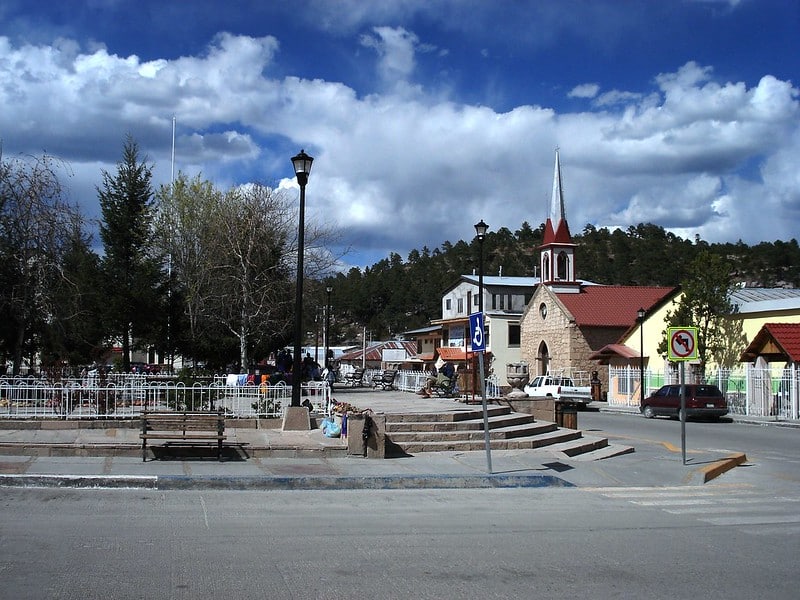
The Catedral de Chihuahua on the main Plaza de Armas is one of the finest baroque facades in northern Mexico. Construction began in 1725 and was completed in 1789 — the towers and ornate stone carvings represent 64 years of work. The interior is relatively simple compared to the exterior, but the scale of the main altar is worth seeing.
Entry: Free
Hours: Daily 7 AM–8 PM
The plaza surrounding the cathedral is the main gathering point for the city. Vendors sell gorditas de harina and local sweets throughout the day.
Palacio de Gobierno — Aarón Piña Mora Murals
The government palace on the main plaza contains a series of dramatic murals by Chihuahuan artist Aarón Piña Mora depicting the history of the state from pre-Hispanic times through the Revolution. These murals are not as well-known as Rivera’s work in Mexico City but are substantive — the scenes of the Revolution and the execution of Miguel Hidalgo y Costilla (who was briefly held in Chihuahua before his execution in 1811) are particularly stark.
Entry: Free
Hours: Monday–Friday 8 AM–8 PM, weekends 9 AM–6 PM
Dungeon of Miguel Hidalgo
Adjacent to the Palacio de Gobierno, the cell where Father Hidalgo was imprisoned before his execution in 1811 is open to visitors. Hidalgo is considered the father of Mexican independence — his arrest in Chihuahua and execution at the Palacio Federal marked the suppression of the first independence movement. The cell is tiny; the exhibition contextualizes the entire independence period.
Entry: Free
Hours: Same as Palacio de Gobierno
Calle Libertad
The pedestrian street connecting the main plaza to the smaller Plaza Hidalgo is the best concentrated stretch of the historic center — cafés, restaurants, regional food stalls, craft shops selling Tarahumara and Mennonite goods. Walk it from north to south in the early evening when it’s most active.
Chihuahua Food Guide
Northern Mexican cuisine is the country’s most beef-centric regional food culture, and Chihuahua is its capital.
| Dish | What It Is | Where to Find It |
|---|---|---|
| Discada | Mixed meat (beef, pork, chorizo, bacon) cooked on a repurposed agricultural plow disc | Restaurants throughout the city; ask for it if not on menu |
| Carne asada | Grilled beef, sliced thin, with machaca beans and flour tortillas | Everywhere — this is the daily protein |
| Machacado con huevo | Dried, shredded beef rehydrated and scrambled with eggs — the northern breakfast | Any breakfast restaurant; La Parilla de Don Pepe |
| Burritos de frijoles | Flour tortilla wrapped around refried beans — the street food baseline | Street vendors near the market; 15–30 MXN |
| Gorditas de harina | Thick flour tortilla pockets stuffed with beans, meat, or cheese | Market stalls, Plaza de Armas area |
| Queso menonita | Mild yellow melting cheese from Mennonite communities (Cuauhtémoc) | Supermarkets, markets, sold everywhere in blocks |
| Pipián | Pumpkin seed sauce over chicken — less common, traditional in homes | Fondas (home-style restaurants) |
Restaurant picks:
- Los Pacos (Calle Aldama 417) — carne asada institution, wood fire, been operating 50+ years
- La Vaca Negra (Centro) — upscale northern meat cuts, good for a dinner before El Chepe
- El Guero (Mercado Municipal) — market food, machacado and gorditas at 7 AM before your train
- El Gobernador Hotel restaurant — safe choice for business travelers or those who want reliable service
El Chepe Train — Departure Guide
The Ferrocarril Chihuahua Pacífico (El Chepe) is the main reason most international tourists visit Chihuahua City. Here’s the practical information:
| Detail | El Chepe Express | El Chepe Regional |
|---|---|---|
| Days | Tue, Thu, Sat | Tue, Thu, Sat |
| Departure time | 6:00 AM | 6:00 AM |
| Station | Estación Chihuahua | Estación Chihuahua |
| Class | First class only | Economy and 1st class |
| Creel arrival | ~10:30 AM | ~1:00–2:00 PM |
| Los Mochis arrival | ~9:00–10:00 PM | Next day |
| Ticket (Chihuahua–Creel) | ~$60–70 USD | ~$25–35 USD |
| Ticket (Chihuahua–Los Mochis) | ~$110–130 USD | ~$55–70 USD |
| Booking | chepe.mx | chepe.mx or at station |
The station is 4km from the historic center. Take an Uber (50–70 MXN, 15 minutes) the night before to confirm it looks functional, or just show up at 5:15 AM for a 6:00 AM train — plenty of time. No need to confirm the station in advance; trains run reliably.
Book tickets in advance during October–February (high season) — the Express fills quickly. The Regional rarely sells out.
For full route details, stops, and Copper Canyon logistics, see our Copper Canyon travel guide.
Day Trips from Chihuahua City
| Destination | Distance | Drive | Highlight |
|---|---|---|---|
| Cuauhtémoc (Mennonite villages) | 100 km | 1 hr | Cheese factories, unique Germanic-Mexican culture |
| Paquimé / Casas Grandes | 300 km | 3 hrs | Pre-Hispanic ruins, UNESCO World Heritage, ancient ceramics still being made |
| Hidalgo del Parral | 230 km | 2.5 hrs | Site of Pancho Villa’s 1923 assassination |
| Las Cascadas de Basaseachi | 260 km | 3 hrs | Mexico’s second-tallest waterfall (246m) |
| Creel (El Chepe day trip) | 300 km | 4 hrs by train or 3.5 hrs by car | Copper Canyon rim, Valle de los Hongos, Lago Arareko |
Paquimé / Casas Grandes (most important day trip)
Paquimé is one of Mexico’s most underrated archaeological sites — a UNESCO World Heritage Site (1998) representing the largest pre-Columbian settlement in northern Mexico and the Southwestern United States cultural zone. The ruins date from approximately 700–1450 CE and show architectural influences from both the Mesoamerican south (ball courts, platforms) and the Pueblo cultures of what is now New Mexico and Arizona (T-shaped doorways, multi-story adobe construction).
The associated Museo de las Culturas del Norte is excellent — some of the finest Casas Grandes polychrome pottery is displayed here. The tradition of geometric black-on-white and red pottery continues in the village of Mata Ortiz, 35km south, where 300+ potters work in pre-Hispanic styles. Buying a Mata Ortiz pot directly from an artist runs $30–300 USD; the same pieces cost 10× more in US galleries.
Budget for the day: 300–500 MXN entry fees + 800–1,200 MXN car rental or tour.
See our Paquimé guide for full details.
Getting to Chihuahua City
By Air
Chihuahua International Airport (CUU) has direct flights from:
- Mexico City (CDMX) — multiple daily, ~1.5 hours, Aeroméxico/VivaAerobus/Volaris (~800–2,000 MXN)
- Monterrey (MTY) — daily, ~1 hour
- Guadalajara (GDL) — several weekly
- US cities — Dallas (AA), Los Angeles (Volaris), Chicago (United) — mostly seasonal or limited frequency
From the airport to the center: Uber (~100–150 MXN, 20 minutes) or taxi (~200 MXN fixed rate from the taxi kiosk).
By Bus
Estación Central de Autobuses Chihuahua is served by:
- CDMX (Terminal Norte — NOT TAPO) — 14–16 hours, AABB/Omnibus de México, ~700–1,000 MXN. Not recommended over flying unless on a budget overnight. Full guide: Mexico City to Chihuahua
- Juárez (border) — 4 hours, frequent departures, useful if crossing from El Paso
- Hermosillo — 7 hours via Sonora corridor
Getting Around Chihuahua City
- Uber works well in Chihuahua City and is the recommended option for tourists. Pool drivers are consistent; expect 40–80 MXN for center-to-center trips.
- Taxis are available but negotiate the fare in advance. From the airport, use the fixed-rate kiosk.
- Walking: The historic center (Cathedral, Palacio, Calle Libertad, Pancho Villa Museum) is walkable in the daytime. The Museum is a 10-minute walk from the Cathedral but through unremarkable neighborhoods — take Uber at night.
- Car rental: Useful for day trips to Paquimé or Cuauhtémoc. International rental agencies at CUU airport.
Where to Stay
If this is your first Chihuahua City trip, stay in the historic center. You’ll be close to the cathedral, Calle Libertad, breakfast spots, and the easiest Uber pickups for the El Chepe station.
| Option | Price/night | Best for | Notes |
|---|---|---|---|
| Hotel El Gobernador | $80–120 USD | First-timers who want comfort | Reliable central pick with large rooms and pool |
| Fiesta Inn Chihuahua | $70–100 USD | Business-style stays | Clean and dependable, but less atmospheric than centro options |
| Hotel San Felipe El Real | $50–80 USD | Boutique feel in the center | Best fit if you want character over chain-hotel sameness |
| Hotel Hacienda | $45–65 USD | Value seekers | Good budget-friendly fallback near the center |
| Budget hostels | $20–30 USD | Backpackers | Limited supply, so check recent reviews carefully |
Where to Stay Before El Chepe
The best move is simple: sleep in the center, not near the station. Estación Chihuahua is only about 15 minutes away by Uber, while the center gives you better restaurants, safer-feeling evening walks, and more hotel choice.
Best setup for El Chepe travelers:
- Eat dinner in centro the night before
- Ask your hotel to call a taxi only if Uber is surging, otherwise use Uber
- Leave around 5:10–5:20 AM for a 6:00 AM departure
- Pack snacks and water the night before so you’re not searching for anything at dawn
Skip this mistake: booking close to the station thinking it saves time. It usually doesn’t, and the area is less convenient than the center for everything else.
Best Time to Visit
| Month | Weather | Notes |
|---|---|---|
| March–May | Warm days 22–28°C, cool nights | Best for the city + Paquimé; pre-summer comfortable |
| June | Hot 30–35°C, early rains | Manageable but getting warm |
| July–August | Hot, afternoon thunderstorms | Rainy season; Copper Canyon gorges flood, El Chepe delays |
| September–October | Perfect 18–25°C, post-rain green | Best overall — canyon is green, skies clear, crowds minimal |
| November–December | Cool 10–20°C | Good; December–January brings snow to Creel (canyon rim) |
| January–February | Cold, 3–15°C | Snow at Creel is spectacular; Chihuahua City itself mild |
Common First-Timer Mistakes to Avoid
- Treating Chihuahua City like a place to sleep and nothing else. You can easily fill a strong afternoon and evening here.
- Booking a station-area hotel for El Chepe. Stay central and take Uber.
- Skipping the Pancho Villa Museum because it sounds niche. It is the city’s best museum by a wide margin.
- Driving long rural routes after dark. Save Paquimé, Creel, or Basaseachi drives for daylight.
- Expecting central Mexico food. This is beef-and-flour-tortilla country, so lean into machacado, discada, and carne asada.
Safety in Chihuahua City
Chihuahua State carries a US State Department Level 3 (Reconsider Travel) advisory, which sounds alarming but requires context:
The Level 3 designation applies primarily to:
- The border zone (Ciudad Juárez and surroundings)
- Rural highways in the western sierra, particularly after dark
- Specific areas of drug cartel territory in municipalities like Madera and Guazapares
Chihuahua City itself is a functioning state capital with 1 million residents. The historic center is routinely visited by international travelers and business visitors. The UK Foreign Commonwealth Office (usually more conservative than the US) classifies Chihuahua City as lower risk than the border zone.
Practical safety rules:
- Stay in the historic center and tourist areas
- Use Uber, not street taxis flagged at night
- Don’t drive rural highways after dark
- The route to Creel (Highway 16) is generally safe in daylight; check current conditions before driving
- The El Chepe train route itself is considered safe
See our Mexico travel advisory guide for full state-by-state context.
Chihuahua City Itinerary (1–2 Days)
Day 1 — The City
Morning:
- 7:00 AM: Breakfast at El Guero in the Mercado Municipal — machacado con huevo + burritos de frijoles
- 8:30 AM: Cathedral of Chihuahua and Plaza de Armas — 45 minutes
- 9:30 AM: Palacio de Gobierno murals + Hidalgo dungeon — 45 minutes
Afternoon:
- 11:00 AM: Walk Calle Libertad pedestrian street — coffee, browse Mennonite cheese vendors
- 12:30 PM: Lunch at Los Pacos (carne asada)
- 2:00 PM: Uber to Pancho Villa Museum — 1.5–2 hours minimum
Evening:
- 5:00 PM: Return to center, sunset walk around Plaza de Armas
- 7:00 PM: Dinner at La Vaca Negra (northern cuts) or hotel restaurant
Day 2 — Day Trip Options
- El Chepe to Creel: Train departs 6 AM, arrives Creel ~10:30 AM. Day at Valle de los Hongos and Lago Arareko, return by Regional at 4 PM (arrives Chihuahua ~8–9 PM). Full guide →
- Paquimé: Car or tour, depart 8 AM, arrive ~11 AM. Ruins + museum + Mata Ortiz pottery village, return by 7 PM. Full guide →
- Cuauhtémoc: Easy half-day, 1 hour west. Mennonite cheese factory tours, unique Germanic communities.
Budget Guide
| Travel Style | Daily Budget (USD) | What It Covers |
|---|---|---|
| Budget | $45–60 | Mid-range guesthouse, market meals, local transport |
| Mid-range | $60–90 | Hotel El Gobernador class, restaurant meals, Uber everywhere |
| Comfortable | $90–130 | Best hotel options, guided Pancho Villa Museum, day trip transport |
Note: El Chepe tickets are an additional $60–130 USD depending on class and route — budget for this separately.
Chihuahua City and the Copper Canyon Cluster
Chihuahua City is the gateway. From here, the cluster expands:
- Copper Canyon Travel Guide — the full system: El Chepe, Rarámuri culture, canyon logistics
- Creel, Chihuahua — the main base town at the canyon rim (2,400m)
- Paquimé / Casas Grandes — UNESCO ruins, 3 hours northwest
- Guachochi — Pueblo Mágico at the canyon’s south rim
- Batopilas — colonial silver town at the canyon bottom
For the full northern Mexico picture: Northern Mexico Travel Guide.
Looking for a full breakdown of every attraction, food experience, and day trip? → Things to Do in Chihuahua City
Ready to explore beyond the city? → Day Trips from Chihuahua City — Paquimé, Mennonite colony, Creel, Parral, and Basaseachi all covered.
Flying in before the train? → Mexico City to Chihuahua for airport and bus context.
Planning the canyon next? → Is Copper Canyon Safe? and Chepe Train Guide for route planning.
Plan Your Trip
Tours and Experiences: Looking for guided El Chepe tours, Copper Canyon adventure packages, or Pancho Villa history tours? Compare options:
Browse Chihuahua City tours on Viator →Car Rental (for Paquimé and day trips): A rental car opens up Paquimé, Cuauhtémoc’s Mennonite communities, and Cascadas de Basaseachi. Compare rates:
Compare rental cars at CUU Airport →Travel Insurance: Chihuahua State’s Level 3 advisory means many basic travel insurance plans require a specific endorsement. Choose travel insurance that explicitly covers emergency medical care and evacuation in higher-advisory regions:
travel insurance