Things to Do in Guachochi, Chihuahua: La Sinforosa, Rarámuri Culture, and When to Go
The best things to do in Guachochi, Chihuahua are La Sinforosa Canyon, Lake Las Garzas, Tónachi, and Norogachi if your trip overlaps with Holy Week. Guachochi is worth visiting if you want a quieter Sierra Tarahumara base with dramatic canyon views, Rarámuri culture, and easier access to La Sinforosa than you get from better-known stops like Creel.
It is a working mountain town at 2,400 meters (7,874 ft) in southern Chihuahua, about 4 hours from Chihuahua City, roughly 3 hours from Parral, and around 2.5 to 3 hours from Creel.
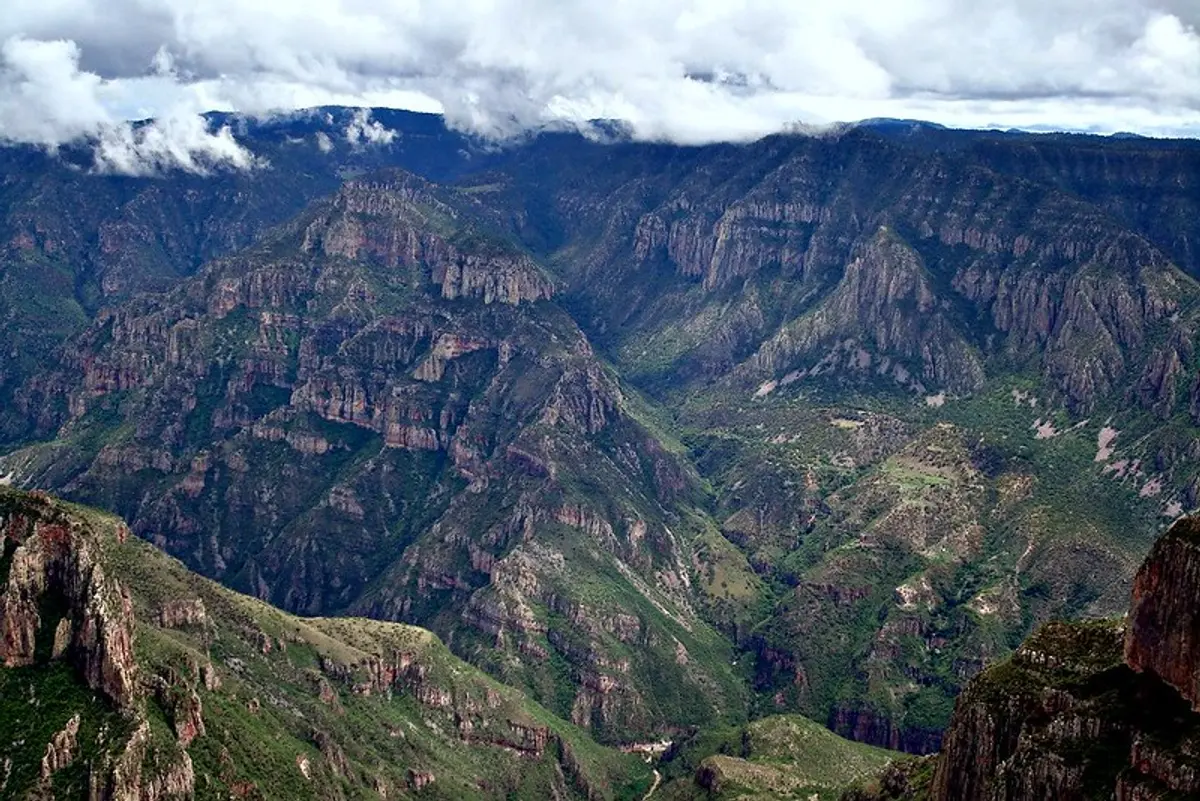
Designated a Pueblo Mágico in 2024, Guachochi sits on the edge of La Sinforosa Canyon, one of the deepest and most impressive ravine systems in the Sierra Tarahumara. The draw here is not polished resort infrastructure. It is pine forest scenery, real mountain-town life, canyon overlooks, trout farms, Rarámuri communities, and a much lower tourist volume than Creel.
Guachochi in 30 Seconds
| Question | Short answer |
|---|---|
| What is Guachochi best for? | La Sinforosa Canyon, Rarámuri culture, and a quieter Sierra Tarahumara base than Creel. |
| Best things to do first? | Start with La Sinforosa, Lake Las Garzas, and one side trip to Tónachi or Norogachi. |
| Is Guachochi worth it? | Yes, especially if Creel feels too obvious and you want deeper Sierra scenery. |
| How many days do you need? | 2 days is enough for the highlights, 3 days is better if you want La Sinforosa plus nearby communities. |
| Best time to go? | April to June and September to October for dry roads, hiking, and cooler weather. |
| Biggest limitation? | Limited tourist infrastructure, patchy cell service, and longer driving times between sights. |
Quick Facts: Guachochi, Chihuahua
| Detail | Info |
|---|---|
| Elevation | 2,400m (7,874 ft) |
| State | Chihuahua |
| Pueblo Mágico | Since 2024 |
| Distance from Chihuahua City | 312 km / ~4 hrs by car |
| Distance from Creel | ~130 km / ~2.5 hrs |
| Distance from Parral | 195 km / ~3 hrs |
| Best time to visit | April–June, September–October |
| Temperature range | 8–26°C (summer) / can reach -15°C (winter) |
| Climate | Extreme semi-humid; significant snowfall possible in winter |
Getting to Guachochi
Most travelers should treat driving as the default option. Guachochi is doable by public transport, but it is slower, less flexible, and not ideal if you want to reach canyon viewpoints, Tónachi, or smaller communities without depending on local lifts.
Best way to get to Guachochi
| Starting point | Best option | Travel time | Notes |
|---|---|---|---|
| Chihuahua City | Rental car | ~4 hours | Best all-around option for first-timers. |
| Parral | Rental car or local connection | ~3 hours | Shorter approach, useful if you are already in southern Chihuahua. |
| Creel | Rental car / private transfer | ~2.5 to 3 hours | Easy add-on if you are already doing the Copper Canyon route. |
| Without a car | Bus to Parral + onward local transport | Usually most of a day | Possible, but not efficient for sightseeing. |
From Chihuahua City: Drive via Cuauhtémoc and into the Sierra Tarahumara. Allow about 4 hours in good conditions, longer if you stop often or if weather turns.
From Parral: The drive is shorter and straightforward by Sierra standards, making Parral the best jumping-off point if you are coming from southern Chihuahua or Durango.
From Creel: Guachochi pairs well with Copper Canyon, Creel, Chihuahua, and things to do in Creel. This is the best add-on route if you already reached the Sierra by road or train.
Compare rental car prices on RentCars if you want the simplest way to move between canyon viewpoints and town.
Which Guachochi Stop Fits Your Trip Best?
| If you want… | Go here first | Why it stands out |
|---|---|---|
| The biggest scenery payoff | La Sinforosa Canyon | This is the reason most travelers make the detour. |
| An easy in-town stop | Lake Las Garzas | Walkable, photogenic, and the simplest first stop after arrival. |
| Rarámuri cultural context | Norogachi | Best cultural add-on, especially around Holy Week. |
| Waterfall + food | Tónachi | Fresh trout, river scenery, and a mission stop in one outing. |
| Soft adventure close to town | Ruta del Toro | Best for hiking and biking without committing to a full canyon descent. |
Best Things to Do in Guachochi
1. La Sinforosa Canyon
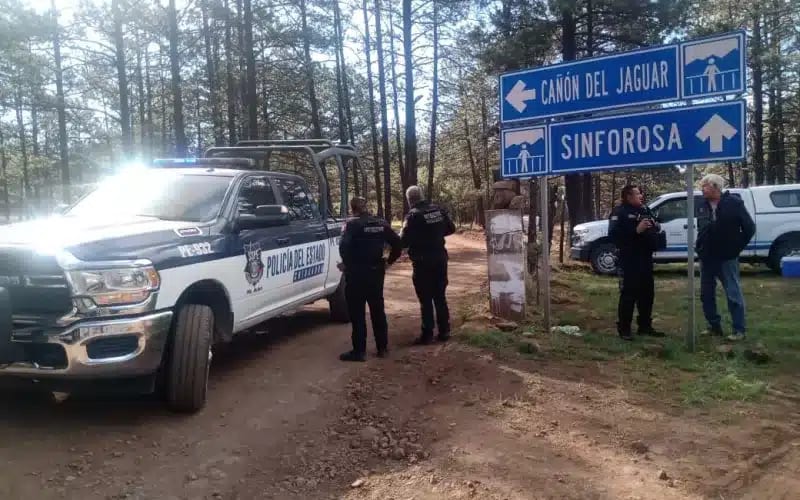
La Sinforosa is the main reason serious visitors come to Guachochi. At 1,840m deep, this canyon system rivals the Copper Canyon in scale — and almost no one outside Mexico knows it exists.
You can explore it on foot along the canyon bottom, following the most dramatic sections. The hiking is challenging due to altitude and terrain. The Jaguar Canyon is part of the same ravine system; the name comes from documented jaguar sightings, one of few locations in northern Mexico where the species still occasionally appears.
2. Ruta del Toro (Bull’s Trail)
The Ruta del Toro is a multi-use trail system outside Guachochi for hiking, mountain biking, climbing, and rappelling. The route passes through pine forest with canyon views and includes sections where you can camp overnight. Physical condition required — the altitude makes exertion noticeably harder.
3. Lake Las Garzas
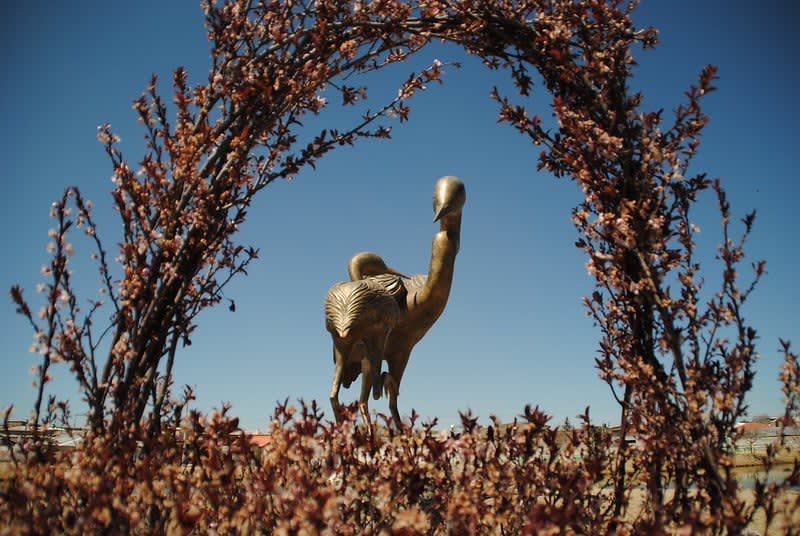
Lake Las Garzas is Guachochi’s most photogenic landmark — a reservoir with boat rides, fishing, and a walkway featuring a sculpture of two bronze herons over 3 meters tall. The wetlands around the lake attract migratory birds including various duck species. It’s an easy walk from the town center and good for a morning or afternoon.
4. Kokoyome Ecotourism Park
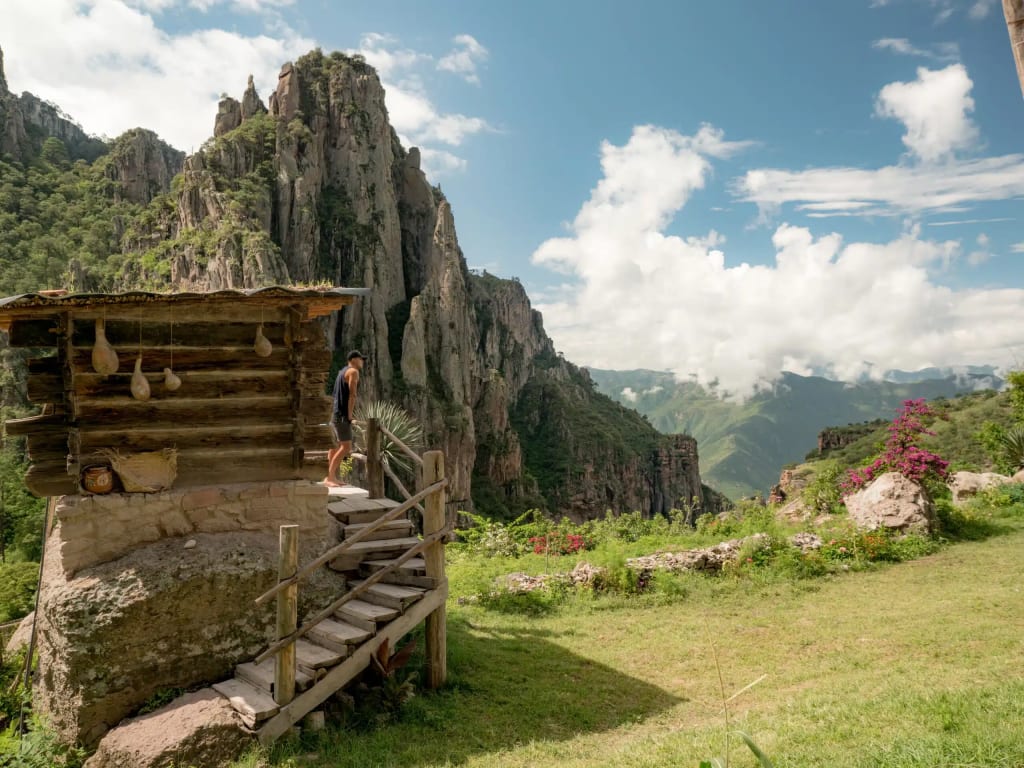
Kokoyome is an ecotourism park on the outskirts of Guachochi with pine forests, subtropical trees (alcatraz, avocado, orange), walking trails, and birdwatching. The mix of alpine pine at elevation and subtropical species lower in the canyon creates an unusual biodiversity for a northern Mexican mountain town.
5. Tónachi — Waterfalls and a Trout Farm
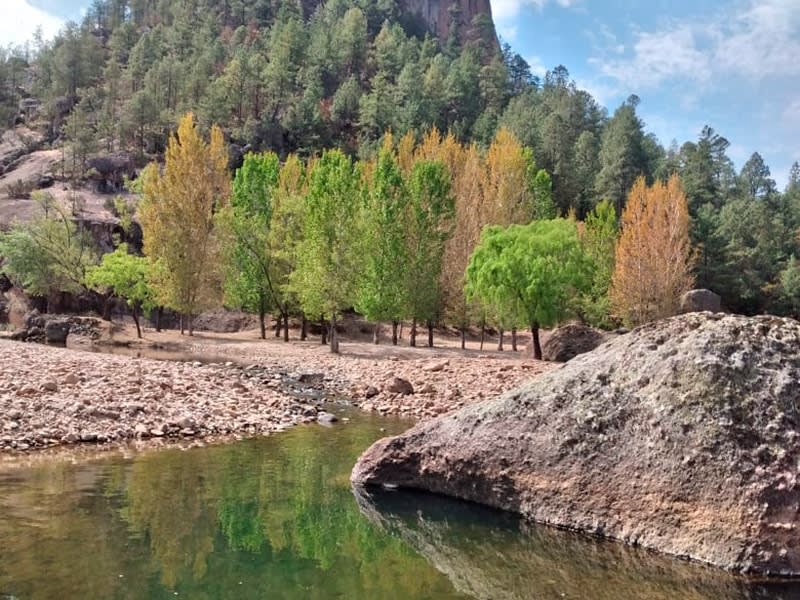
Tónachi is a Rarámuri community about 30 km from Guachochi with a waterfall, a river, and a working trout farm where you can eat fresh rainbow trout on-site. It’s also home to a Jesuit mission church built in 1756. Indigenous celebrations and ceremonies are held here during the year.
6. Rocheachi Dam — Ice Skating in Winter
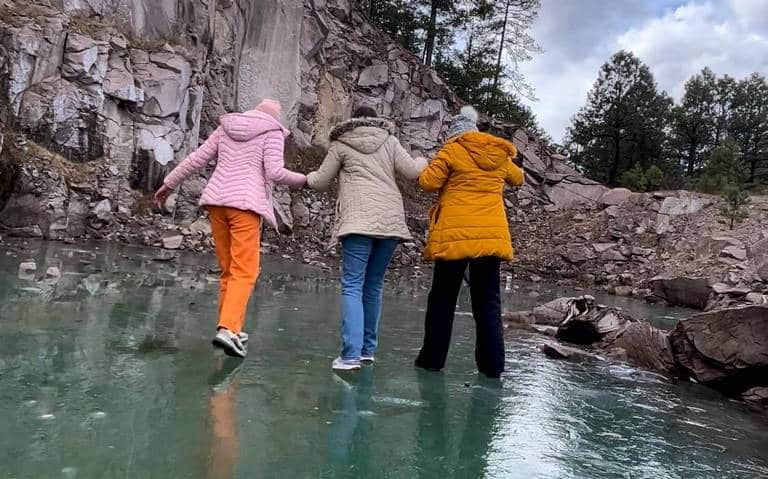
Rocheachi is a larger artificial reservoir where locals fish, hike, boat, and — in hard winters when temperatures drop enough — ice skate directly on the frozen surface. Several ranches in the area produce excellent homemade cheese. This is genuine sierra Mexico, not set-dressed for tourism.
7. Agua Caliente Hot Springs
Agua Caliente has natural hot springs with a basic resort infrastructure — the right kind of place to recover after a day of canyon hiking at altitude. Facilities are simple; the setting is dramatic sierra forest.
8. Norogachi — Rarámuri Holy Week
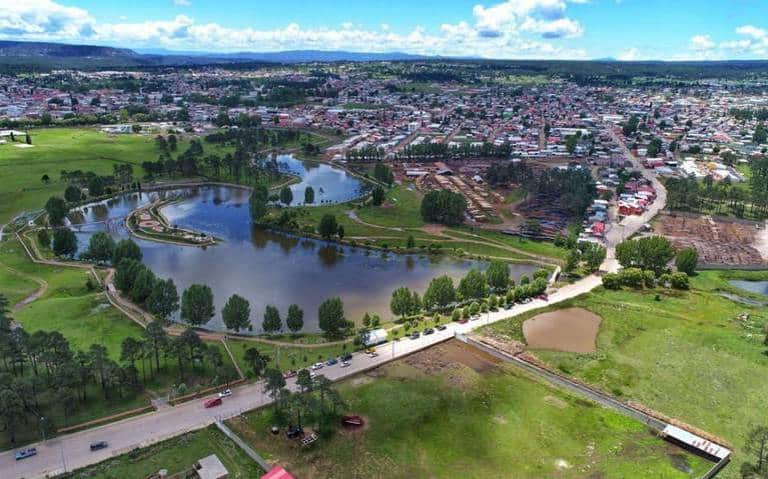
Norogachi, about 30 km from Guachochi, is one of the oldest and most important Rarámuri communities — the name means “round hills” in the Rarámuri language. During Holy Week, up to 500 dancers from surrounding communities gather here in traditional costumes for tewerichic, a Rarámuri ceremony blending pre-Hispanic rites with Catholic observance. If your visit overlaps with Semana Santa, this is a once-in-a-lifetime cultural experience.
9. Cusárare Waterfall
Cusárare is a 30-meter waterfall about 45 minutes northwest of Guachochi (closer to Creel). The waterfall flows from the Cusárare stream through pine forest. There’s a Rarámuri craft market at the entrance where artisans sell hand-woven baskets, wooden figures, and ceramics directly to visitors — no middlemen.
10. Jaguar Canyon Viewpoints
Part of the La Sinforosa system, the Jaguar Canyon viewpoints offer the most accessible dramatic scenery near Guachochi without requiring a full canyon descent. The canyon walls — large mountains cut by chasms — are best in morning light.
Best Things to Do in Guachochi if You Only Have 2 Days
If your time is short, prioritize the places that actually justify the detour:
- La Sinforosa Canyon viewpoints for the biggest scenery payoff.
- Lake Las Garzas for an easy in-town stop.
- Tónachi if you want a rural side trip with trout, water, and mission history.
- Norogachi if your trip overlaps with Holy Week or you want more cultural context.
- Agua Caliente if you want a slower recovery day after hiking or driving.
Rarámuri Culture: What You Should Know
The Rarámuri (also called Tarahumara) people have lived in the Sierra Tarahumara for centuries. Guachochi is one of the main centers of their contemporary life. A few things worth understanding before you visit:
The running tradition: Rarámuri men participate in rarajípari, a ball race where competitors kick a wooden ball over mountain terrain for 100–200 km lasting up to 30 hours. Women compete in arrieta (hoop races) covering 100 km. These aren’t performances for tourists — they’re living traditions.
How to engage respectfully: Rarámuri artisans sell crafts directly from communities around Guachochi and at Cusárare. Buy directly from the artisan when possible. Ask permission before photographing anyone. Don’t enter communities uninvited.
Language: The Rarámuri language is still spoken widely in rural communities. Spanish is common in Guachochi town itself.
Where to Eat in Guachochi
The area has simple but good food based on northern Mexico staples:
- Asado de puerco — pork slow-cooked in chile colorado sauce, a Chihuahua standard
- Machacado — dried shredded beef reconstituted with eggs and chile, the norteño breakfast
- Rainbow trout — from Tónachi and local streams, served fried or grilled
- Gorditas — corn masa rounds stuffed with beans, cheese, or meat
Look for family-run spots around the main plaza. Restaurant infrastructure is limited; don’t expect tourist-grade menus.
Common First-Timer Mistakes in Guachochi
- Treating Guachochi like Creel. It is more remote and less built for plug-and-play tourism.
- Underestimating drive times. Distances look short on a map, but mountain roads and stops stretch the day.
- Arriving without cash. Cards are not a safe assumption outside the main town setup.
- Planning heavy hiking on day one. At 2,400 meters, the altitude hits some travelers harder than expected.
- Assuming every cultural event is for tourists. Rarámuri ceremonies are living traditions, not performances.
Practical Information
| Info | Details |
|---|---|
| Safety | Level 3 state (Chihuahua), but Guachochi is tourist-safe. Normal precautions. |
| Altitude sickness | 2,400m — acclimatize before heavy hiking. Mild headaches possible day 1. |
| Cell coverage | Spotty outside town. Download offline maps. |
| ATMs | Available in Guachochi town, but bring cash reserves |
| Fuel | Fill up before entering the sierra — stations are sparse |
| Roads | Paved to Guachochi; secondary roads to outlying sights may require 4WD |
Travel insurance is worth considering before a Sierra Tarahumara trip because distances, mountain roads, and evacuation logistics are more complicated here than in beach destinations.
Combine Guachochi with the Copper Canyon Route
Guachochi fits naturally into a broader Sierra Tarahumara itinerary:
- Day 1–2: Chihuahua City and things to do in Chihuahua City
- Day 3–4: Creel and Copper Canyon
- Day 5–6: Guachochi — La Sinforosa, Tónachi, Norogachi
- Day 7–8: Return via Parral or keep heading through the Northern Mexico travel guide
Explore Sierra Tarahumara tours on Viator if you want guided access to the deeper canyon routes.
Related: Copper Canyon Mexico Guide · Northern Mexico Travel Guide · Creel, Chihuahua · Things to Do in Creel · Mexico Entry Requirements