Edzná Ruins Guide: Campeche's Ancient Maya City
Edzná: Complete Guide to Campeche’s Extraordinary Ancient Maya City
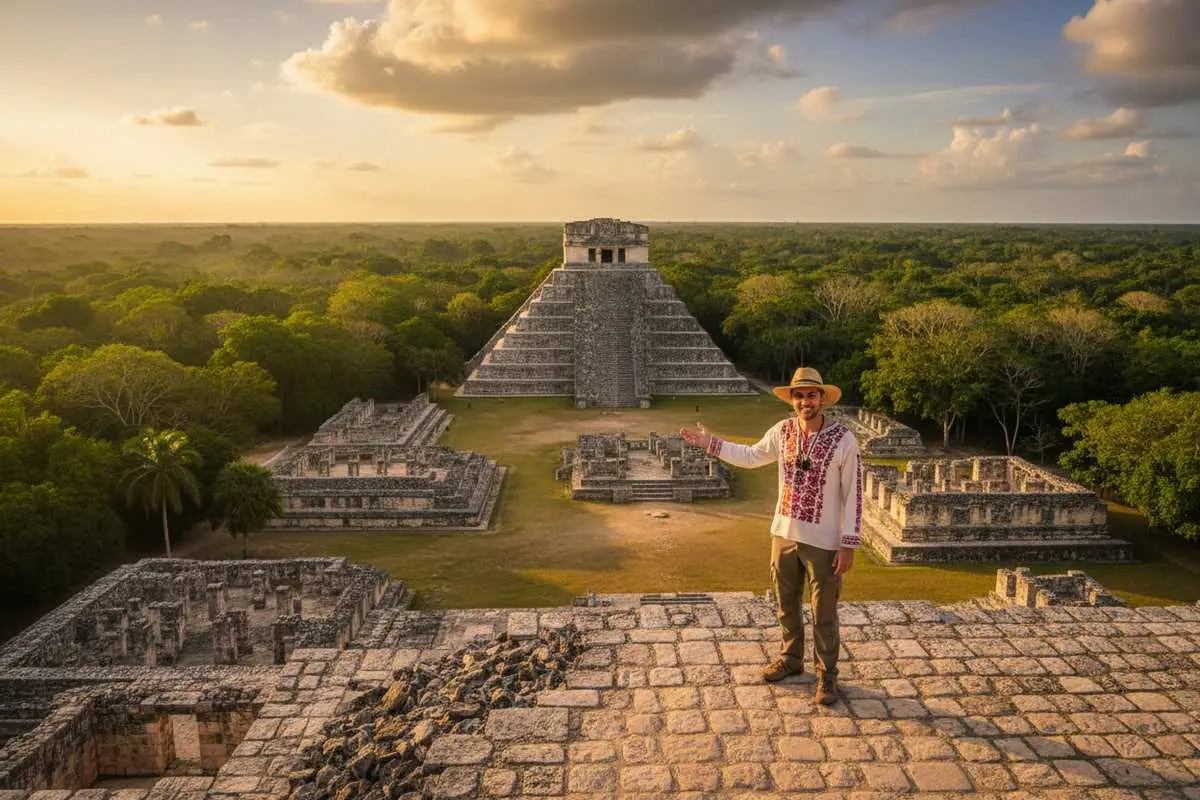
Edzná deserves to be famous. This ancient Maya city, located just an hour from Campeche City, contains one of the most architecturally unique structures in the entire Maya world—the Building of the Five Stories, a pyramid-palace hybrid that has no equal elsewhere. Yet Edzná receives a fraction of the visitors that crowd Chichén Itzá or Tulum, meaning you can explore this 2,400-year-old city in relative solitude.
The site spans 25 square kilometers in total, though the restored ceremonial center that visitors explore covers a more manageable area. What makes Edzná special, beyond its remarkable architecture, is the sophisticated engineering that underpins everything you see: a vast system of canals, reservoirs, and raised causeways that managed water across the entire city, transforming seasonal swampland into a functional urban center supporting tens of thousands of people.
While the world crowds into Chichén Itzá, Edzná offers an equally impressive Maya city where you might have the grand plaza to yourself and the only sounds are birdsong from the surrounding jungle.
History of Edzná
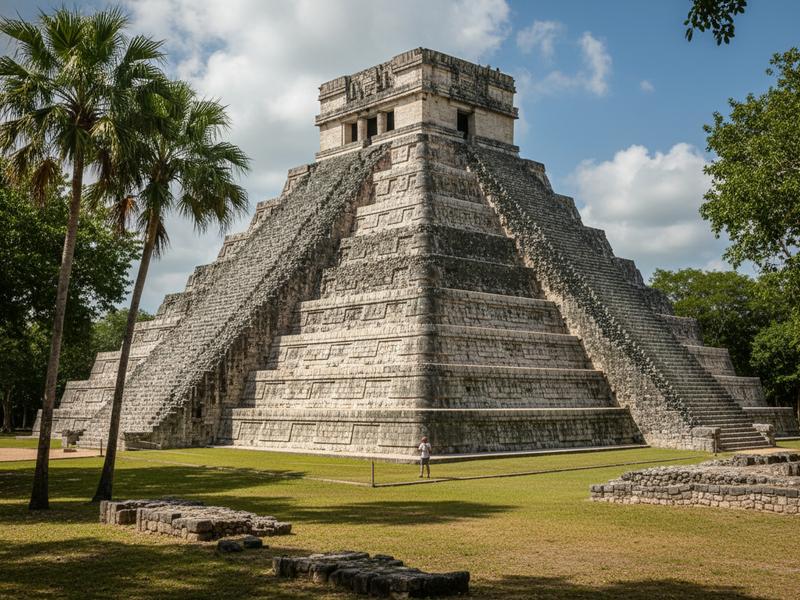
Edzná’s history spans an extraordinary timeframe—from approximately 400 BC to 1500 AD, making it one of the longest continuously occupied cities in the Maya lowlands. The name translates roughly to “House of the Itzáes,” suggesting connections to the Itzá Maya people who also gave their name to Chichén Itzá.
The city reached its peak during the Late Classic period (600-900 AD), when most of the monumental architecture visible today was constructed. At its height, Edzná was the dominant political and economic center of the Campeche coastal plain, controlling agricultural production and trade routes between the Gulf coast and the interior.
Edzná’s architects developed a distinctive style that blends Puuc, Petén, and Chenes architectural traditions—reflecting the city’s position at a cultural crossroads. The famous Five-Story Building combines Petén-style pyramidal massing with Puuc decorative elements, creating something unique in Maya architecture.
The most remarkable achievement was the hydraulic engineering system. Edzná’s engineers constructed a network of canals totaling over 22 kilometers, along with reservoirs capable of holding millions of liters of water. This system served multiple purposes: drainage during the rainy season, irrigation during dry months, aquaculture for fish and other food sources, and transportation between different parts of the city.
Main Structures and Areas
The Great Acropolis and Building of the Five Stories
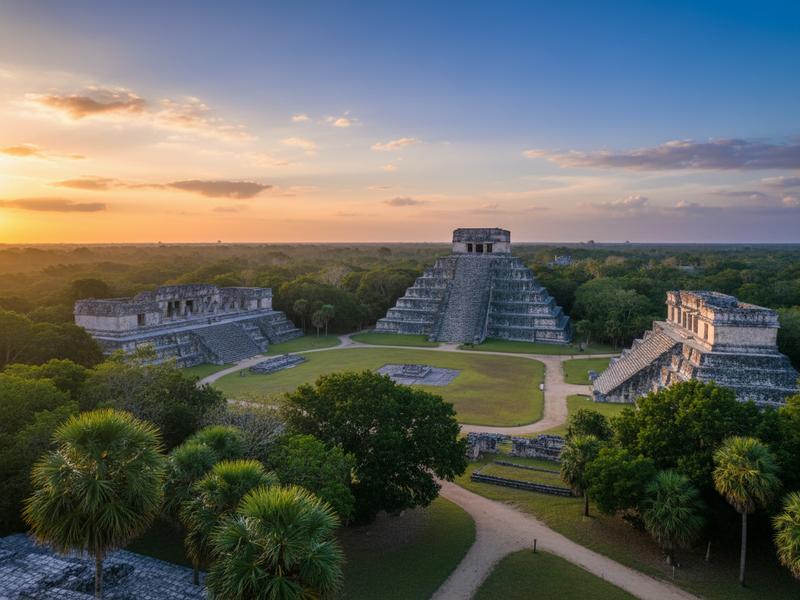
The Gran Acrópolis (Great Acropolis) is the ceremonial heart of Edzná and the area that immediately captures your attention. This massive raised platform supports multiple temples and palaces arranged around courtyards, creating a complex that served as both the political and spiritual center of the city.
Dominating the acropolis is the Edificio de los Cinco Pisos (Building of the Five Stories), Edzná’s masterpiece. This structure rises approximately 31 meters and combines a stepped pyramid base with five levels of palace-like rooms stacked on top of each other, crowned by a roof comb at the summit. The effect is something between a pyramid and a modern apartment building—a vertical palace that is architecturally unprecedented in the Maya world.
Each level contains vaulted rooms that once served administrative and ceremonial functions. The western orientation means the setting sun illuminates the entire facade, and twice a year during the equinoxes, a light effect plays across the stairway—evidence that the Maya builders incorporated astronomical alignment into their design.
The Main Plaza
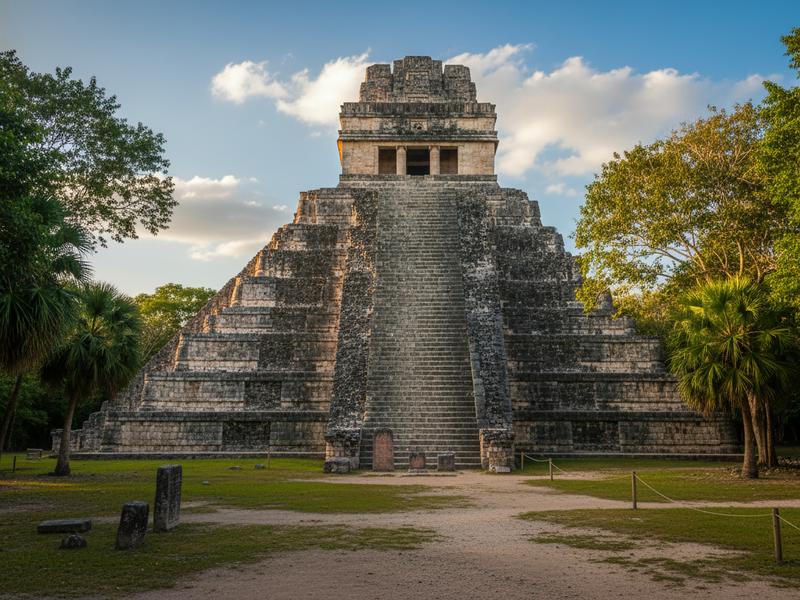
The expansive Main Plaza stretches before the Great Acropolis, a flat ceremonial space where the city’s population would have gathered for religious events, political ceremonies, and markets. The scale is impressive—standing in the center, surrounded by temple mounds on all sides, conveys the grandeur that Edzná’s rulers intended.
The Nohochná (Big House) runs along the western edge, a long structure with a colonnade of thick columns that may have served as a grandstand for observing events in the plaza. The southern edge features the Temple of the South, and various smaller structures punctuate the open space.
The Small Acropolis
The Pequeña Acrópolis (Small Acropolis) is a secondary complex southwest of the main plaza. Less restored than the Great Acropolis, it offers a more atmospheric experience where jungle vegetation still presses close to ancient walls. Structures here show the Chenes architectural style with its characteristic elaborate facade decoration, providing visual contrast to the Puuc elements on the Great Acropolis.
The Platform of the Knives
Named for the obsidian blades found during excavation, this platform north of the main plaza is a residential area that provides insight into non-elite life at Edzná. The obsidian finds indicate long-distance trade networks connecting Edzná to volcanic regions of central Mexico and Guatemala.
The Temple of Masks
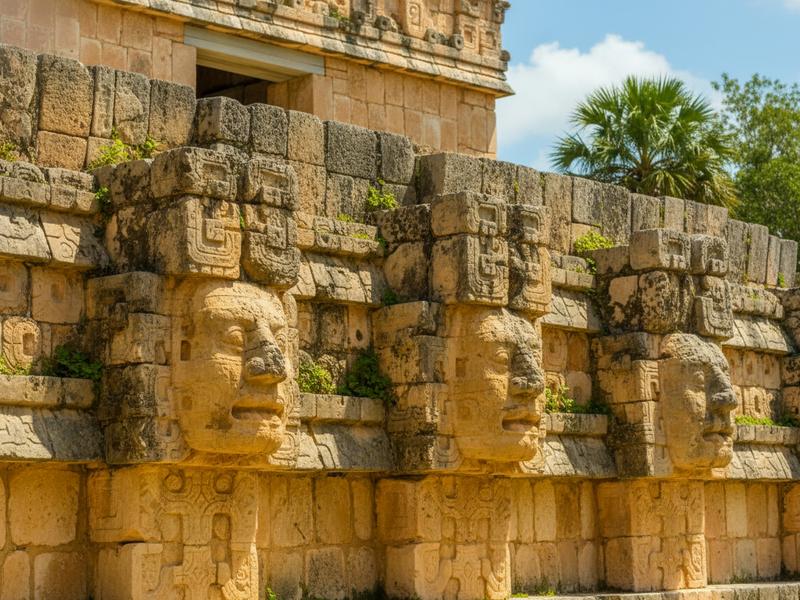
The Templo de los Mascarones features large stucco masks on its stairway that represent the sun god at different stages of the solar cycle. These masks, protected under thatched shelters, are among the best-preserved examples of Maya monumental stucco work in the region. The sunrise and sunset imagery reinforces Edzná’s astronomical orientation.
The Hydraulic System
Edzná’s water management system deserves special attention because it represents one of the most sophisticated engineering achievements in the pre-Columbian Americas. The city sits in a natural depression that collects water during the rainy season but turns swampy and difficult to inhabit without intervention.
Maya engineers responded by constructing an integrated system of canals, reservoirs, and aguadas (artificial ponds) that controlled water flow throughout the year. During rains, canals directed excess water into storage reservoirs. During dry months, this stored water irrigated agricultural fields and supplied the urban population. Some channels doubled as aquaculture ponds where fish were raised as a protein source.
The main canal runs roughly north-south through the site and remains visible today. Walking alongside it, you can appreciate how the ancient city was fundamentally shaped by water management—building placement, agricultural zones, and even the ceremonial center’s orientation all relate to the hydraulic infrastructure.
Light and Sound Show
Edzná offers a nightly light and sound show (espectáculo de luz y sonido) that illuminates the main structures while a narration tells the story of the ancient city. The show runs most evenings (check locally for current schedule and days of operation) and creates a dramatically different experience from daytime visits.
Sitting in the darkened main plaza as colored lights wash over the Five-Story Building and recorded voices echo off the ancient walls is genuinely atmospheric. The show usually runs in Spanish with limited English availability—ask about translation options when purchasing tickets.
Practical Information for Visiting Edzná
Getting There
From Campeche City, take the highway southeast toward Cayal and follow signs for Edzná. The 60-kilometer drive takes approximately one hour on paved roads in good condition. Options include:
- Rental car: The most flexible option, allowing you to combine Edzná with other stops. Free parking at the site.
- Organized tour: Multiple agencies in Campeche City offer half-day tours to Edzná. Some combine the visit with the evening light and sound show.
- Colectivo/combi: Shared vans depart from Campeche’s market area to towns near Edzná. Less frequent and requires some flexibility, but significantly cheaper.
- Taxi: A round-trip taxi from Campeche with waiting time is negotiable—agree on price and waiting time before departing.
Best Time to Visit
Arrive early in the morning (site opens at 8 AM) to explore before the heat intensifies and to have the best chance of solitude. The site faces west, so afternoon light is excellent for photography of the Five-Story Building. If you plan to attend the light and sound show, you’ll need a separate evening visit.
What to Bring
- Water: At least 1-2 liters per person. There’s a small shop at the entrance but selection is limited.
- Sun protection: Hat, sunscreen, and sunglasses. Much of the site is exposed.
- Insect repellent: Mosquitoes can be active, especially in the morning and late afternoon.
- Comfortable shoes: Uneven stone surfaces and optional climbing require good footwear.
- Camera: The Five-Story Building is extraordinarily photogenic, especially in morning or late afternoon light.
On-Site Facilities
Edzná has a small visitor center with restrooms, a modest museum displaying artifacts found at the site, and a gift shop. A few vendors near the parking area sell snacks and beverages. There are no restaurants at the site, so eat before or after your visit—or bring a picnic.
Edzná vs. Other Maya Sites
How does Edzná compare to the more famous sites on the Mayan Route? In terms of sheer architectural uniqueness, Edzná holds its own with anyone. The Five-Story Building is genuinely one-of-a-kind, and the hydraulic engineering system adds a dimension of intellectual sophistication that most sites lack. What Edzná doesn’t have is the scale of Calakmul or the iconic recognition of Chichén Itzá.
Combining Edzná with Other Campeche Attractions
Edzná pairs naturally with other day trip options from Campeche City. A morning at the ruins followed by an afternoon at Seybaplaya beach creates a perfect full-day excursion combining culture and relaxation. For archaeology enthusiasts, consider combining Edzná with a visit to the Chenes-style ruins at Hochob or Dzibilnocac, though this requires more driving and a full day.
Plan your Campeche trip: Complete Guide | City Walking Guide | Where to Stay