Campeche Self-Guided Walking Tour: Best Route in the Walled City
A self-guided Campeche walking tour for first-timers who want the best route through the walled city.
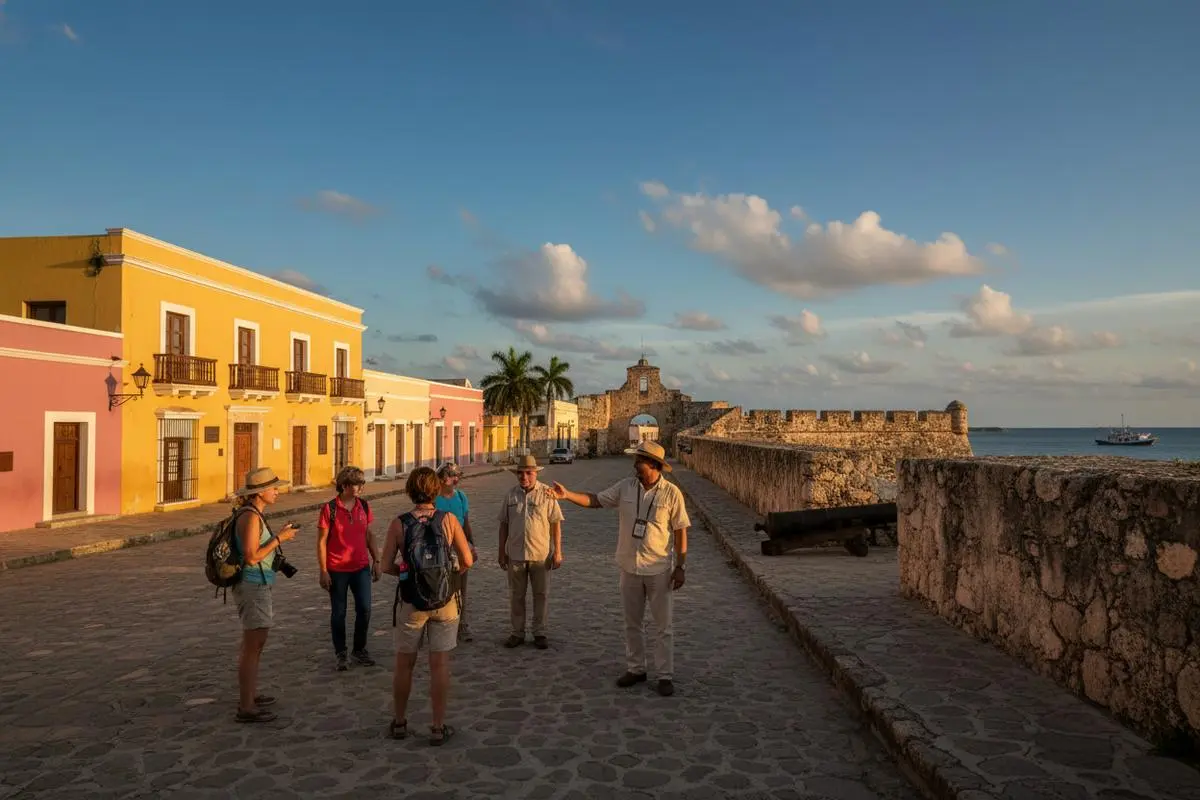
Yes, Campeche is one of the best cities in Mexico to explore on foot. The historic center is compact, flat, and easy to cover without taxis, with pastel colonial streets, seven surviving bastions, two historic gates, shaded plazas, and a malecón sunset walk all within a manageable route.
If you only have half a day, focus on Plaza de la Independencia, Calle 59, the bastion loop, Puerta de Tierra, and the waterfront. If you have a full day, add the hilltop forts and San Román. That structure matches what currently ranks well: a clear self-guided route, practical timing, and faster landmark prioritization.
30-Second Answer
| If you want… | Do this |
|---|---|
| The best short walk | Start at Plaza de la Independencia, follow Calle 59, visit 2 to 3 bastions, then finish at the malecón for sunset |
| The best full-day route | Walk the walled city in the morning, break for lunch, then taxi to Fuerte de San Miguel or San José el Alto |
| The best photo light | Walk just after sunrise or from 5 PM to sunset |
| The quietest experience | Go Tuesday to Thursday and avoid midday cruise-bus timing |
| The most useful add-on | Pair this walk with our Campeche food guide or day trips from Campeche City |
Campeche’s UNESCO World Heritage designation recognizes both the fortification system and the colonial grid preserved within it. Walking these streets, you follow paths laid out by Spanish engineers in the 16th century, pass through gates built to slow pirate attacks, and move between houses, churches, museums, and plazas that still feel like part of a living city instead of an open-air museum.
This guide maps out the best self-guided walking route through Campeche’s historic center, including what to skip if you’re short on time, when to walk for the best light, and which landmarks are genuinely worth the entrance fee. For broader trip planning, see our complete Campeche travel guide.
The Central Plaza: Plaza de la Independencia
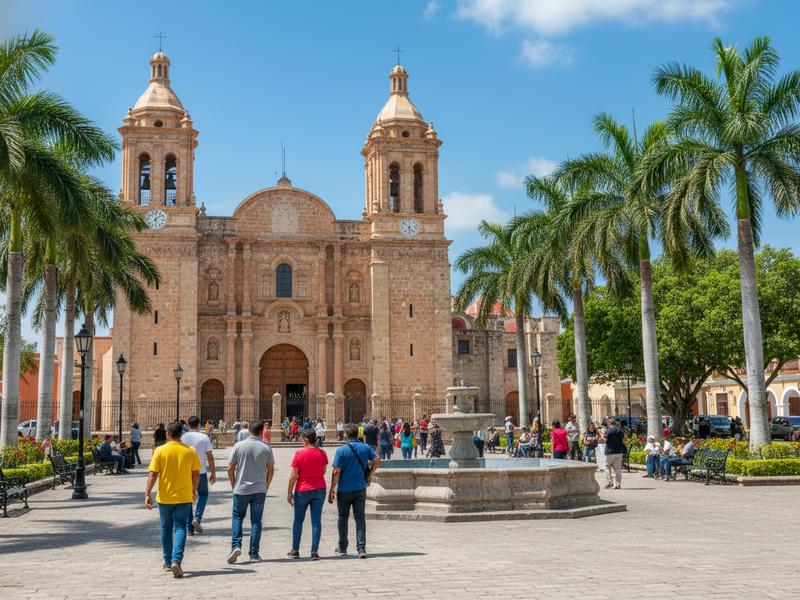
Every Campeche walk begins at the Plaza de la Independencia (also called Plaza Principal or Parque Principal), the city’s beating heart since its founding. This shaded square anchors the colonial grid and serves as the social center where families gather in the evenings, vendors sell elotes and marquesitas, and the yellow-lit cathedral forms a dramatic backdrop.
The Cathedral of Our Lady of the Immaculate Conception dominates the east side of the plaza. Construction began in 1540, making it one of the oldest cathedral foundations on the Yucatan Peninsula, though the current structure dates primarily from the 17th and 18th centuries. The twin bell towers and baroque facade present a restrained elegance typical of colonial Campeche architecture. Step inside for cool relief from the heat and to admire the simple, dignified interior.
On the plaza’s north side, the Centro Cultural Casa Número 6 offers a free look inside a restored colonial-era merchant’s house, complete with period furniture, decorative tiles, and an interior courtyard that demonstrates how Campeche’s elite lived during the city’s prosperous trading era.
The Biblioteca de Campeche (library) and government buildings frame the remaining sides. In the evenings, the plaza comes alive as the day’s heat breaks—this is when Campeche socializes, and joining the paseo (evening stroll) around the square is the best introduction to local life.
The Bastion Route: Walking the Fortress Walls
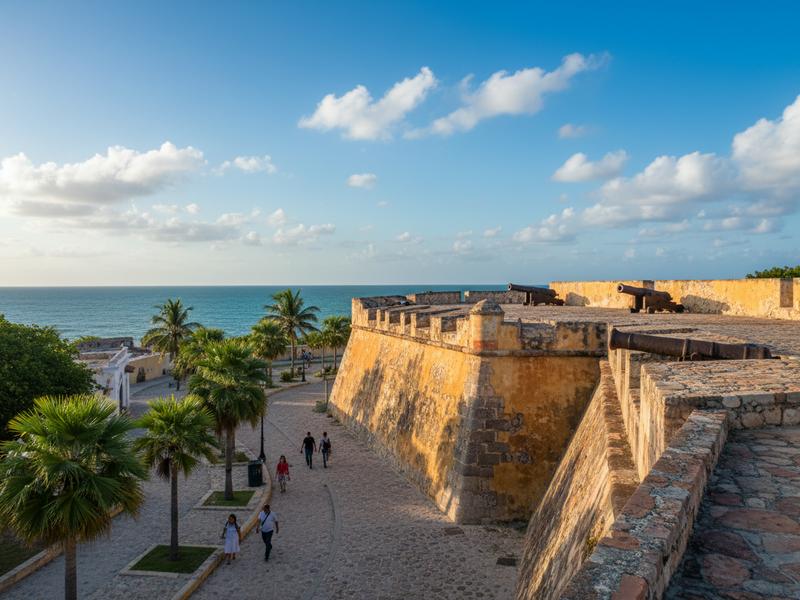
Campeche’s fortification system originally consisted of a complete wall circuit with eight bastions at intervals, two main gates, and two hilltop forts overlooking the city. While sections of the wall have been lost to urban development, seven bastions survive and most now house small museums.
Baluarte de la Soledad
The largest surviving bastion sits on the west side of the plaza facing the sea. Now home to the Museum of Maya Architecture, it displays carved stone stelae and architectural fragments from sites across Campeche state including Edzná, Calakmul, and the Chenes region. The massive stone walls and vaulted rooms provide atmospheric gallery space while giving you a tangible sense of the fortress’s defensive scale.
Baluarte de Santiago
This northwestern bastion has been reimagined as the Xmuch’haltún Botanical Garden, a small but lush tropical garden contained within the fortress walls. The contrast between military stone architecture and flowering tropical plants creates one of Campeche’s most unexpected spaces. It’s a peaceful spot to rest mid-walk.
Baluarte de San Carlos
The oldest bastion, San Carlos houses the City Museum with exhibits on Campeche’s colonial history, pirate raids, and the construction of the fortification system. A scale model of the original walled city helps visualize how the complete defensive system once looked. The bastion’s rooftop offers excellent views over the historic center.
Baluarte de San Pedro and Baluarte de San Juan
These eastern bastions are smaller and often quieter. San Pedro hosts rotating art exhibitions, while San Juan anchors one of the best-preserved sections of connecting wall, giving you a clear sense of the fortification’s original height and thickness. Walking along this wall section connects you to the Puerta de Tierra.
Baluarte de San Francisco and Baluarte de Santa Rosa
The southern bastions complete the circuit. San Francisco is less visited but contains interesting exhibits on Campeche’s maritime heritage. Santa Rosa occasionally hosts cultural events and exhibitions.
The Gates: Puerta de Mar and Puerta de Tierra
Puerta de Mar (Sea Gate)
The Puerta de Mar on the western wall once served as the main entrance from the port. All goods, passengers, and communications arriving by sea passed through this gate. The reconstructed gate now frames views toward the Gulf and the malecón, creating a dramatic threshold between the historic center and the waterfront.
Puerta de Tierra (Land Gate)
On the opposite side, the Puerta de Tierra controlled access from the interior. Better preserved than its counterpart, this gate retains much of its original stonework and defensive features. The nightly light and sound show projected onto the gate dramatizes the pirate attacks and the city’s defensive history. It’s one of Campeche’s signature evening experiences—arrive early for good seats.
The Malecón: Campeche’s Waterfront Promenade
Stretching along the Gulf coast west of the walled center, the malecón is Campeche’s social spine. This broad waterfront promenade runs for several kilometers along the seafront, lined with sculptures, exercise areas, and benches facing west toward the open Gulf.
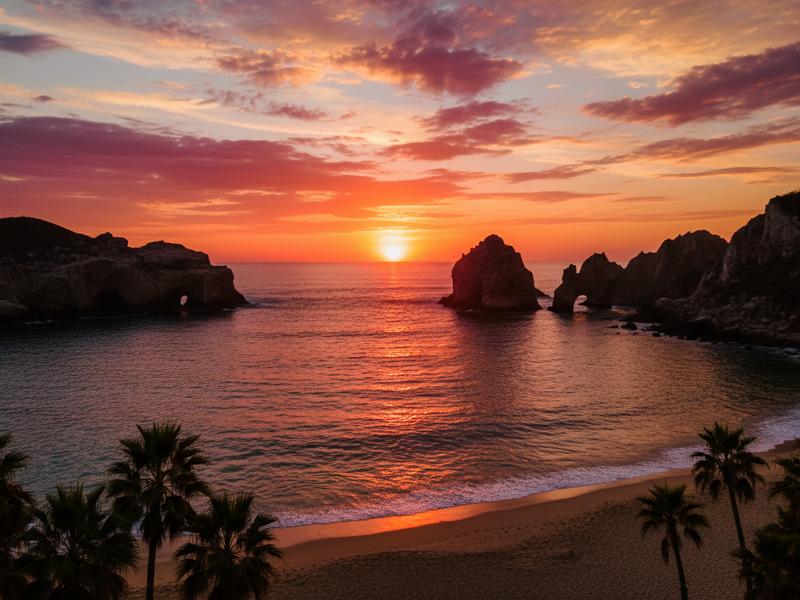
The malecón is at its finest during sunset, when Campechanos and visitors gather to watch the sky transform through shades of orange, pink, and purple over the calm Gulf waters. Street food vendors appear in the evenings, and the breeze off the water provides welcome relief from the day’s heat.
At the southern end, look for the giant Campeche letters that serve as the obligatory photo opportunity. Along the way, public art installations and interpretive panels describe the city’s maritime history and relationship with the Gulf.
Calle 59: The Colorful Heart
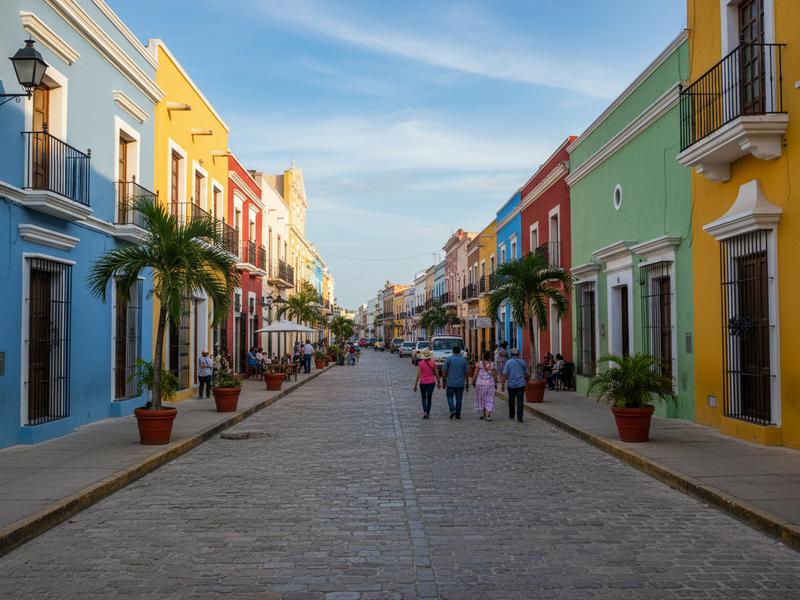
Calle 59 is Campeche’s most photogenic street and the one that appears in most promotional images. Running through the center of the walled city, this narrow pedestrian-friendly street showcases the full spectrum of Campeche’s famous colored facades: deep terracotta reds, sunny yellows, Caribbean blues, forest greens, and soft pinks, each building meticulously restored to colonial-era standards.
The coloring isn’t arbitrary—historical research informed the restoration palette, matching buildings to documented colonial-era color schemes. Walking Calle 59 during golden hour, when the low sun ignites these already vivid colors into something approaching the unreal, is one of Campeche’s essential experiences.
Several of the best restaurants, boutique hotels, and artisan shops occupy buildings along this street. Take your time here. The details reward attention: carved stone doorways, wooden balconies with iron railings, decorative tiles, and interior courtyards glimpsed through open doorways.
Beyond the Walls: San Román and San Francisco
Barrio de San Román
South of the walled center, the Barrio de San Román predates the fortification walls and has a character distinct from the tourist-oriented historic center. The Church of San Román houses the Black Christ of San Román (Cristo Negro de San Román), an ebony-wood crucifix brought from Italy in the 16th century that is the object of deep local devotion. The annual festival in September honoring the Black Christ is one of Campeche’s most important religious celebrations.
San Román’s streets feel more lived-in and less polished than the walled center—this is where you see Campeche as a working city rather than a heritage site. Small neighborhood restaurants here serve excellent, inexpensive food to a purely local clientele.
Barrio de San Francisco
To the northeast, San Francisco is another historic barrio with its own church and neighborhood identity. The Ex-Templo de San Francisquito and surrounding streets offer a quieter walking experience. This neighborhood also contains some of the most interesting street art in the city, with murals appearing on walls and abandoned buildings.
Hilltop Forts: Fuerte de San José and Fuerte de San Miguel
Two hilltop forts were built outside the walls to provide elevated defensive positions overlooking the city and the sea approaches. Both survive as museums and offer panoramic views worth the trip.
Fuerte de San Miguel, south of the city, houses the Museum of Maya Culture with an exceptional collection of jade funerary masks, ceramics, and artifacts from Calakmul and other Campeche sites. The jade masks alone justify the visit—these haunting green faces are among the most remarkable Maya artifacts displayed anywhere. The fort’s ramparts provide sweeping Gulf views.
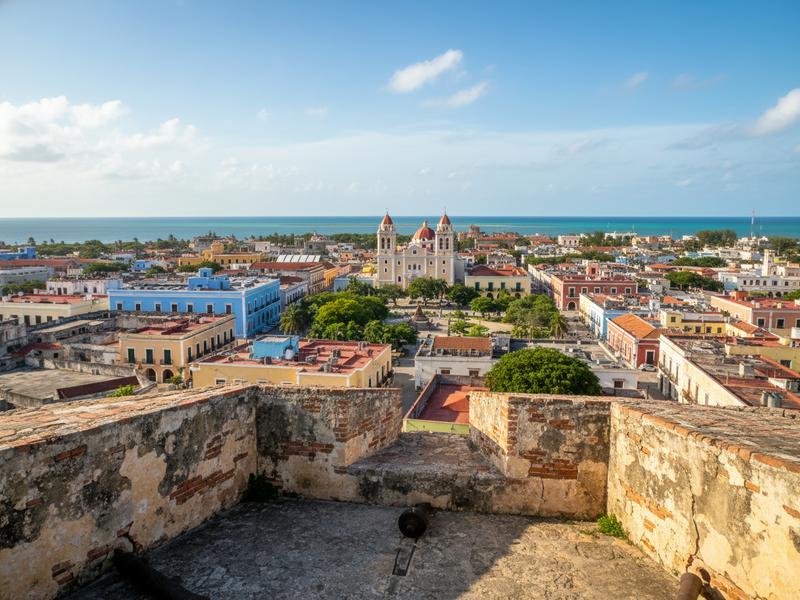
Fuerte de San José el Alto, on a hill north of the center, contains a collection of colonial weapons, ship models, and maritime artifacts. The views from this elevated position show the full extent of the walled city and the Gulf coastline stretching in both directions.
Both forts require transportation to reach—a taxi from the center is inexpensive and the drivers know the route well.
Best Route by Time Budget
| Time you have | Best route |
|---|---|
| 2 hours | Plaza de la Independencia, Cathedral, Calle 59, Baluarte de la Soledad, Puerta de Mar, short malecón walk |
| 4 hours | Add Puerta de Tierra, Baluarte de Santiago, San Carlos, coffee stop, and sunset on the waterfront |
| Full day | Do the full walking route, lunch in the center, then taxi to Fuerte de San Miguel or Fuerte de San José el Alto |
If you’re choosing between landmarks, prioritize the plazas, Calle 59, one bastion museum, Puerta de Tierra, and the malecón. The smaller museums are nice, but the real draw is how the city feels when you move through it on foot.
Walking Tips and Practical Information
- Footwear: Wear comfortable walking shoes with good grip. Many streets are cobblestone or uneven stone, which can be slippery when wet.
- Sun Protection: Bring a hat, sunscreen, and water. The walled city offers some shade from colonial arcades but exposure is significant, especially along the malecón.
- Photography: Early morning and late afternoon light are best. Calle 59 and the cathedral area look strongest when the low Gulf light hits the facades.
- Museums: Most bastion museums close on Mondays. Plan your walking route for Tuesday through Sunday if museum access matters.
- Rest Stops: Plaza de la Independencia, the botanical garden at Baluarte de Santiago, and the cafes around Calle 59 are the easiest places to cool off.
- Common mistake: Visitors often start too late, get hit by midday heat, then rush the best part of the route. Start before 9 AM or after 4 PM if possible.
- When to book a tour instead: If you want deeper pirate-history context, a guided walk can add value, but most travelers can do Campeche very well on a self-guided route.
Suggested Walking Route
- Start at Plaza de la Independencia—visit the Cathedral and Casa Número 6
- Walk to Baluarte de la Soledad for Maya Architecture Museum
- Head north along the wall line to Baluarte de Santiago botanical garden
- Continue to Baluarte de San Pedro and along Calle 59
- Reach Puerta de Tierra—explore the gate and wall section
- Walk south through the center to Baluarte de San Carlos
- Exit through Puerta de Mar to the malecón
- Walk the waterfront south, ending at the sunset viewpoint
Add the hilltop forts by taxi on a separate morning, and explore San Román on a late afternoon stroll when the heat drops. If this is your first Campeche trip, pair this walk with our guides to where to stay in Campeche, what to eat in Campeche, the best day trips from Campeche City, and the best beaches in Campeche.
Continue exploring Campeche: Complete Campeche Guide | Edzná Ruins | Food Guide | Where to Stay