Grutas de Cacahuamilpa: Complete Guide to Mexico's Largest Caves (2026)
Grutas de Cacahuamilpa National Park: Complete 2026 Visitor Guide — Tours, Transport, and Practical Tips We also recommend travel insurance for any Mexico trip.
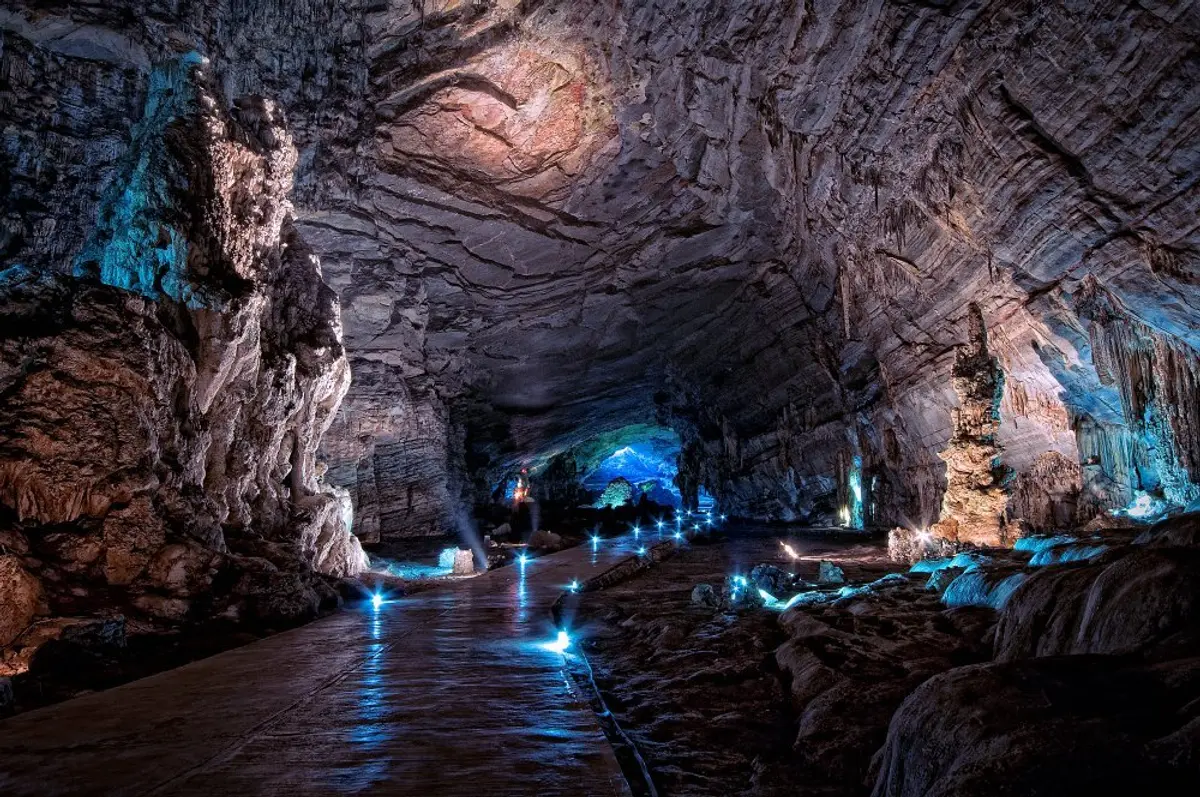
Grutas de Cacahuamilpa is not just the largest cave system in Mexico — it is one of the largest accessible cave systems on Earth. Nineteen illuminated chambers carved over 85 million years, each spanning up to 80 meters wide and 70 meters high, form a 2km underground gallery that leaves even experienced travelers silent. Emperor Maximilian visited in 1864. Andrea Bocelli performed a concert inside these chambers. The caves have been drawing visitors since the 1830s, and they still manage to astonish everyone who descends into them.
Located 160km south of Mexico City in the state of Guerrero — just 30 minutes from the silver town of Taxco — Cacahuamilpa is one of the best day trips from the capital and a standalone destination worth visiting on any Central Mexico itinerary.
The caves were declared a National Protected Area in 1936 by President Lázaro Cárdenas. The rock inside is Cretaceous limestone estimated at 85 million years old — formed when this entire region was an ancient sea floor.
What Makes Cacahuamilpa Remarkable
Most cave systems accessible to tourists offer narrow passages and cramped viewing areas. Cacahuamilpa is the opposite: cathedral-scale chambers with soaring ceilings, formed by the San Jerónimo and Chontalcoatlán underground rivers that carved these enormous spaces over millennia. The rivers still flow through the lower cave levels; the upper galleries where visitors walk were abandoned by the water as the landscape shifted, leaving behind one of the most dramatic natural interiors anywhere in the Americas.
The scale disorients you in the best way. Standing in a hall the size of an aircraft hangar, with geological formations that took 100,000 years to grow a single centimeter, recalibrates your sense of time and geological process.
The 19 Named Halls
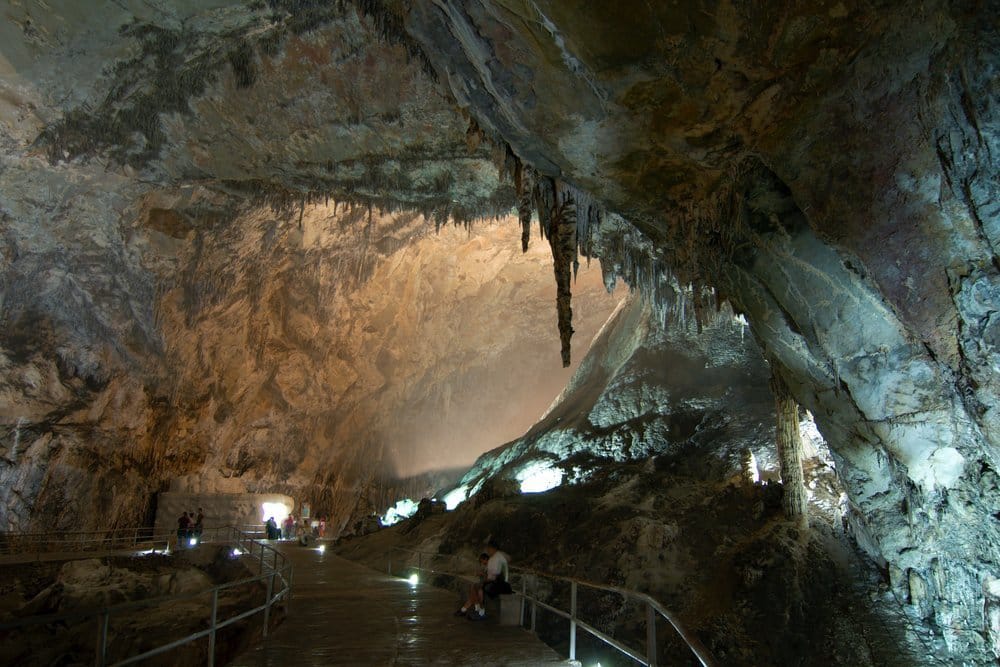
The tour follows a single 2km route through 19 illuminated halls, each named for the geological formations or shapes the guides and early visitors imagined in the rock. The naming tradition dates to the 1850s when European explorers and Mexican naturalists first mapped and documented the caves.
| Hall Name | Spanish | Notable Feature |
|---|---|---|
| The Portico | El Pórtico | Entrance chamber, first views of the scale |
| The Lovers | Los Enamorados | Formation resembling two figures embracing |
| Aurora | La Aurora | Delicate translucent formations, soft coloring |
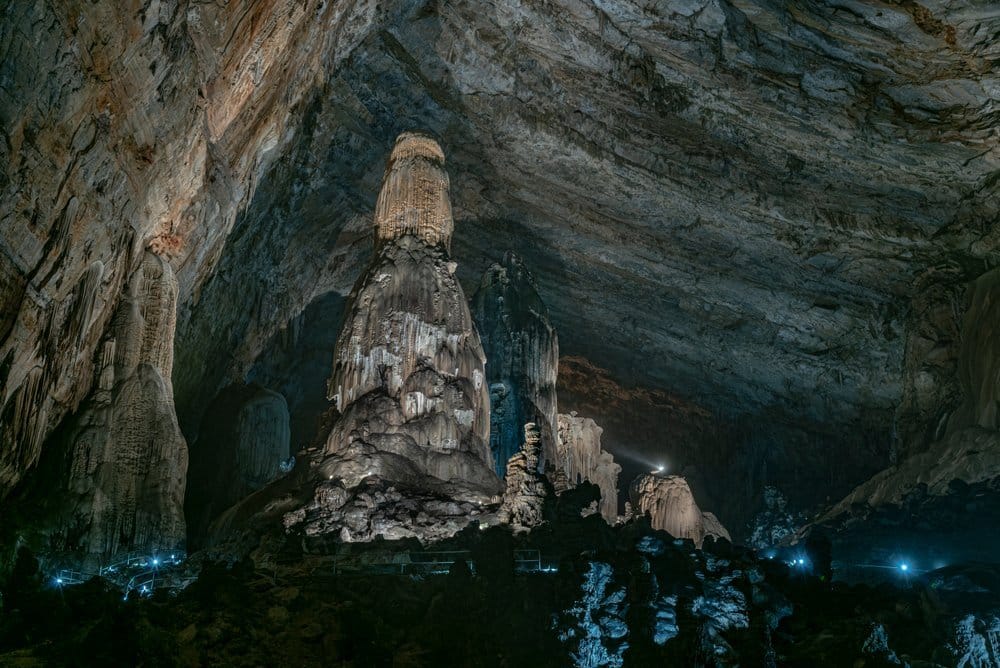
| The Thrones | Los Tronos | Massive stalagmite columns rising from the floor |
| The Cemetery | El Panteón | Formations resembling tombstones and figures |
| Plaza de Armas | Plaza de Armas | Wide open space used for concerts and events |
| The Volcano | El Volcán | Central formation shaped like an erupting cone |
| Elephant’s Trunk | Trompa de Elefante | Hanging stalactite formation, unmistakable shape |
| Champagne Bottle | La Botella de Champán | Narrow formation narrowing at the base |
| Heaven and Hell | La Gloria y El Infierno | Final hall — contrasting light and dark formations |
The tour ends at the far end of the gallery, where the guide turns off the lights momentarily for a complete darkness experience — one of the few places on Earth with true absolute darkness. The silence and the dark together are genuinely disorienting.
Practical Information
| Detail | Info |
|---|---|
| Opening Hours | 10:00 AM – 5:00 PM daily (last tour departs ~4:00 PM) |
| Entrance Fee | ~100–120 MXN adults ($5–7 USD) — verify at entrance, fees updated periodically |
| Tour Duration | ~90–120 minutes for the 2km guided walk |
| Group Size | 15–30 people per tour, departing every 30–60 minutes |
| Language | Guided tours primarily in Spanish; English guides available via private tours |
| Temperature Inside | ~18°C (64°F) year-round — bring a light layer |
| Photography | Permitted; no flash photography inside the halls |
| Accessibility | Paved path, suitable for most walkers; not wheelchair accessible throughout |
| Facilities | Cafeteria, restrooms, souvenir store, free parking |
| Best Time to Visit | Weekday mornings to avoid tour groups; avoid Mexican holidays |
How to Get to Grutas de Cacahuamilpa
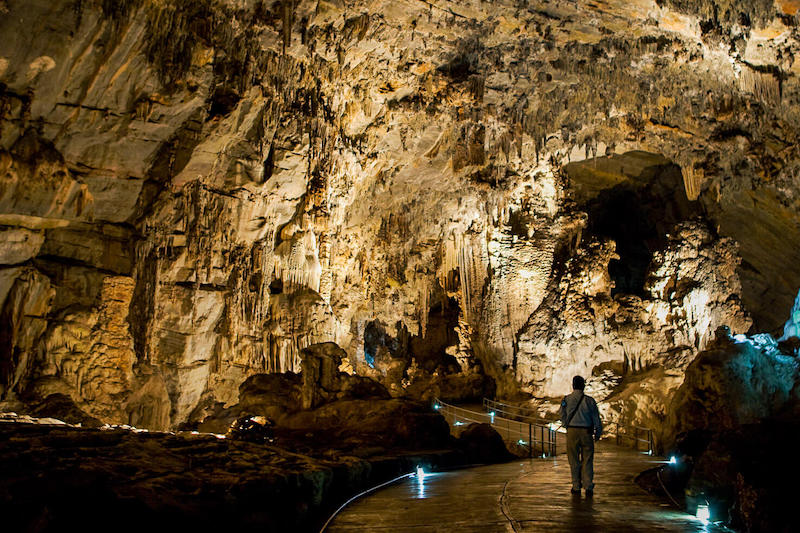
The caves are 160km south of Mexico City, making them one of the most accessible major natural attractions from the capital. Three main transport routes work.
Option 1: From Mexico City via Taxco (Recommended)
Take an Estrella de Oro, Futura, or Flecha Roja bus from Central del Sur (Terminal Tasqueña) direct to Taxco. Journey time: approximately 3 hours. Ticket cost: 250–320 MXN ($13–17 USD) one-way.
From Taxco’s bus station, take a local taxi or colectivo toward Pilcaya. The caves are approximately 30km from Taxco (30–40 minutes by road). Taxi cost: 150–200 MXN ($8–11 USD). Ask for “Las Grutas” or “Cacahuamilpa.”
This route lets you combine the caves with a morning or afternoon in Taxco — Mexico’s silver capital and one of the most beautifully preserved colonial towns in the country.
Option 2: From Mexico City via Cuernavaca
Take a Pullman de Morelos or Estrella Roja bus from Tasqueña to Cuernavaca (~1.5 hours, 150–180 MXN). From Cuernavaca’s main bus station, take a second bus toward Cacahuamilpa (~1.5 hours). The route passes through Alpuyeca and Puente de Ixtla.
This route is slightly longer but works if you want to add Cuernavaca to your itinerary. The “City of Eternal Spring” is worth a half-day on its own.
Option 3: By Car from Mexico City
Drive south on Autopista del Sol (Mexico City–Acapulco highway). Follow signs toward Taxco, then toward Cacahuamilpa/Pilcaya. The caves are signposted off the main highway. Driving time: 2–2.5 hours depending on traffic leaving CDMX. Parking is free at the cave complex. You can compare car rental prices on RentCars for the best deals.
| Route | Time | Cost (Approx.) | Best For |
|---|---|---|---|
| CDMX → Taxco → Caves (bus) | 3.5–4 hrs | 400–520 MXN (~$22–28 USD) roundtrip | Combining with Taxco visit |
| CDMX → Cuernavaca → Caves (bus) | 3.5–4 hrs | 350–480 MXN (~$19–26 USD) roundtrip | Budget travelers, Cuernavaca combo |
| CDMX → Caves (car) | 2–2.5 hrs | Gas + toll | Groups, flexibility, fastest |
| Organized day tour from CDMX | Full day | 700–1,200 MXN/person ($38–65 USD) | Caves + Taxco in one day, no planning |
For organized tours from Mexico City that combine Taxco and Cacahuamilpa in one long day, check operators at the city’s tourism offices or book through your hotel. See our complete guide to day trips from Mexico City for more options.
Activities Beyond the Cave Tour
Amacuzac River Rafting (June–September Only)
During the rainy season, the Amacuzac River runs at a level that makes a 3km rafting run possible through class II–III rapids. The route ends inside a lower cave section not accessible on the standard guided tour on Viator — a genuinely special experience. The operator Terra 3 (based in Cuernavaca) organizes full adventure packages including rafting, rappelling, and cave access.
Important: this activity is strictly seasonal. Outside June–September, water levels are too low for rafting. Check conditions with operators before planning specifically around this activity.
Adventure Activities
The national park infrastructure supports rappelling, zip-lining, rock climbing, and mountain biking in addition to the rafting runs. These are organized by adventure operators rather than the park itself — Terra 3 in Cuernavaca and local Taxco operators offer packages.
Botanical Garden
The park includes a small botanical garden focused on the native flora of this part of Guerrero — lowland jungle species including copal trees, pochotes, amates, nopales, and various bromeliads. This is typically included in the entrance fee or available for a small additional fee.
Concerts and Cultural Events
The Plaza de Armas chamber inside the caves has been used for concerts by artists including Miguel Bosé and Andrea Bocelli — the acoustics of a 70-meter limestone cathedral are extraordinary. The caves host the Jornadas Alarconianas cultural festival in May, with concerts and events inside the chambers. Taxco’s National Silver Fair in late November sometimes includes cave events. Check the park’s schedule when planning a visit around these dates.
When to Visit
The cave temperature stays at approximately 18°C (64°F) year-round — a welcome relief in summer, when outside temperatures regularly hit 30°C+, but cool enough to warrant a layer in winter. The caves themselves have no bad season.
| Season | Conditions | Recommendation |
|---|---|---|
| Nov–May (dry season) | Outside warm, clear; road access good | Best for cave tour + Taxco combo |
| Jun–Sep (rainy season) | Afternoon rains; lush landscape | Only time for Amacuzac River rafting |
| Mexican holidays | Large domestic crowds, queues | Avoid if possible; arrive early (10 AM) |
| Weekday mornings | Quiet, smaller groups | Best overall experience |
Where to Stay Near Cacahuamilpa
Most visitors do Cacahuamilpa as a day trip from Mexico City or as part of a Taxco overnight. If you want to stay close to the caves:
Stay in Taxco (Recommended)
Taxco is 30–40 minutes from the caves by road and one of Mexico’s most scenic towns — cobblestone streets, whitewashed colonial architecture, and silver shops on every corner. Staying here overnight makes the cave visit more relaxed and lets you explore the town properly. See our complete Taxco travel guide.
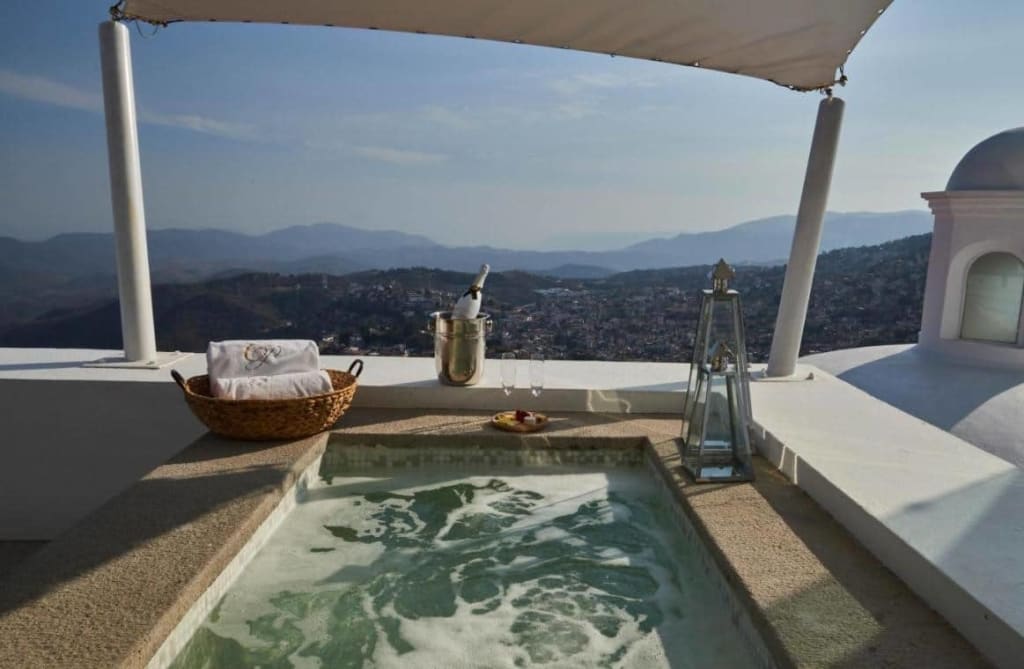
Top options in Taxco:
- De Cantera y Plata Hotel Boutique — Taxco’s most luxurious property, with spa, pool, cable car access, and restaurants. Views over the colonial rooftops.
- Hotel Santa Paula — Mid-range colonial-style hotel with spa and excellent location near Santa Prisca church.
- Posada de Los Castillo — Budget-friendly colonial guesthouse with rooftop views and a central location.
Stay in Cuernavaca (Alternative)
Cuernavaca is ~1.5 hours from the caves and offers significantly more hotel options across all price points, plus its own sights (Cortés Palace, Morelos Cathedral, gardens). A good base if you’re combining caves, Cuernavaca, and Taxco in a multi-day itinerary. See our Cuernavaca guide.
Where to Eat
The cave complex has a cafeteria and food stalls outside the main entrance — basic Mexican food at reasonable prices. The real eating happens in Taxco, 30 minutes away.
In Taxco:
- El Taxqueño — Inside Hotel Montetaxco, traditional Mexican cuisine with panoramic valley views. Best for a proper sit-down meal after the caves.
- Restaurante Punto 925 — At De Cantera y Plata hotel, contemporary Mexican and international cuisine, good wine list.
- Cocina Económica IME — Avenida de Los Plateros 119. Menu on a blackboard, homemade food, fresh tortillas, generous portions, remarkable value. Ask for the daily special.
- Pozolería Tía Calla — Reliable pozole and traditional Guerrero-style food at local prices.
The History of the Caves
The caves were first documented in writing in 1827 when a Mexican military engineer reported their existence. Formal expeditions began in 1834–1850, led by European naturalists and Mexican geographers who mapped the galleries and named the halls.
Emperor Maximilian I of Mexico visited the caves in 1864 during his short-lived reign — a fact that made them famous in Mexico City’s newspapers of the time and drove early tourism from the capital. After the Mexican Revolution, scientific interest intensified, and in 1936, President Lázaro Cárdenas declared the site a national protected area.
The cave rock — Cretaceous limestone estimated at 85 million years old — formed when this entire region was a marine environment. The stalactitic and stalagmitic formations grew through the slow deposition of calcium carbonate from water seeping through the rock above. At the typical growth rate of 1cm per 100 years, the largest formations inside these chambers are hundreds of thousands of years old.
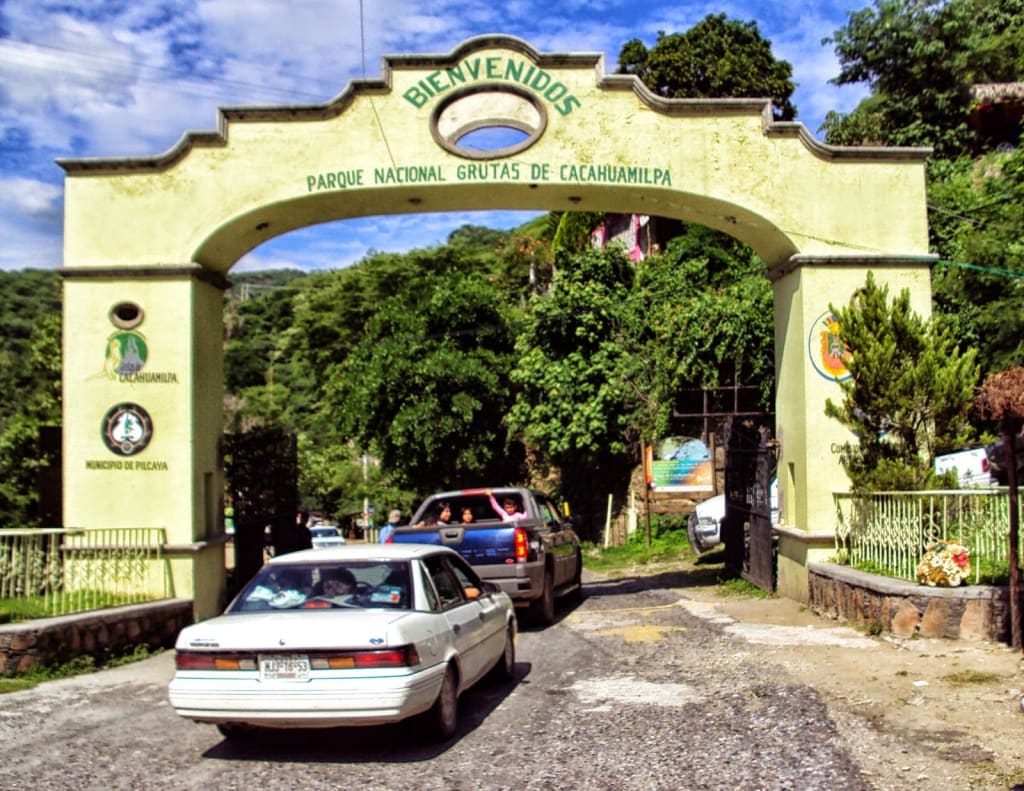
Combining Cacahuamilpa with Nearby Destinations
Cacahuamilpa’s location between Mexico City and Acapulco puts it within easy reach of several excellent destinations. The most natural combinations:
Cacahuamilpa + Taxco (1 Day)
The classic pairing. Start at the caves when they open at 10 AM (beat the tour groups), take the 2-hour guided tour, then drive or take a colectivo to Taxco for the afternoon. Walk the silver market streets, visit Santa Prisca church, have dinner with valley views, stay overnight, and return to Mexico City the next morning. This is the best way to see both properly. See our complete Taxco guide.
Cacahuamilpa + Ixtapan de la Sal (2 Days)
Drive the route through Ixtapan de la Sal — a spa resort town famous for its thermal waters — as a stop on the way from Mexico City. Day 1: Ixtapan de la Sal. Day 2: Cacahuamilpa and Taxco. This circular route avoids backtracking and covers dramatically different landscapes in a weekend.
Compare: Cacahuamilpa vs Tolantongo Caves
Mexico has two famous cave-and-water systems that travelers often compare: Cacahuamilpa (the UNESCO-adjacent cave tour) and Las Grutas de Tolantongo in Hidalgo (hot springs with cave swimming). They’re completely different experiences — Tolantongo is an outdoor adventure with thermal pools and cave swimming; Cacahuamilpa is a dramatic geological spectacle you walk through. Both are worth doing, preferably on separate trips.
Cacahuamilpa + Malinalco (2 Days)
Head west from Taxco toward Malinalco, a Pueblo Mágico known for its mountaintop Aztec ceremonial center carved directly into rock. The contrast between underground limestone chambers and mountain-top carved temples makes for an unusual thematic pair.
Tips for Visiting
- Arrive early — Tours depart every 30–60 minutes starting at 10 AM. The first tour of the day typically has the fewest people. Arriving after noon, especially on weekends, means waiting for a spot.
- Bring a light jacket — 18°C inside feels cold if you’ve been sweating in the summer heat outside. Even in July, a layer is welcome.
- Wear closed-toe shoes — The path is paved but the return walk involves some uneven sections. Sandals and flip-flops work but heels don’t.
- Skip flash photography — Flash is prohibited. A phone camera with a decent low-light mode captures the formations better than expected given the cave lighting.
- Cash only at the entrance — The main entrance fee is typically cash. Have MXN ready.
- Book an English guide in advance — If you need English narration, contact tour operators in Taxco or Mexico City before your visit. Walk-in tours are in Spanish.
- Go on a weekday — Weekend crowds can mean groups of 100+ at the site simultaneously. Tuesday through Thursday is noticeably quieter.
Getting Back to Mexico City
From Taxco: buses back to CDMX (Central del Sur/Tasqueña) run regularly throughout the day and evening. Last buses typically depart around 7–8 PM — verify at the Taxco bus station. The return trip takes the same 3 hours.
If driving, the autopista back to Mexico City can have heavy traffic on Sunday evenings (everyone returning from weekend trips). Leaving Taxco by 4 PM avoids the worst of it. For Mexico City transportation tips once you’re back, see our guide to getting around Mexico City.
Cacahuamilpa fits naturally into a Mexico City itinerary as a day 4 or 5 activity once you’ve covered the city’s main highlights. For a week in Central Mexico, see our 10-day Mexico itinerary, which includes day trips from the capital.
The caves have been making visitors speechless for nearly 200 years. They still do.