Day Trips from Mexico City 2026: 10 Best Escapes from CDMX
Mexico City’s location in the Valley of Mexico places an extraordinary variety of destinations within 1–4 hours. Ancient pyramids, colonial cities, mountain towns, thermal springs, silver markets, and monastery ruins — none of it requires more than a day to reach and return.
This guide covers the 10 best day trips, organized by distance, with transport options, costs, and what to prioritize at each. For full Mexico City trip planning, see our Mexico City Travel Guide 2026.
Quick-Reference: Day Trips by Distance
| Destination | Distance | Travel Time | How | Best For |
|---|---|---|---|---|
| Teotihuacan | 50km NE | 1hr | Bus (100 MXN) or Uber | Pyramids, history |
| Tepoztlan | 75km S | 1.5hr | Bus from Tasqueña | Hiking, markets, magic town |
| Cuernavaca | 85km S | 1.5hr | ADO bus (130 MXN) | History, Diego Rivera murals |
| Puebla + Cholula | 130km E | 2hr | ADO from TAPO (200 MXN) | Food (mole), colonial architecture |
| Tlaxcala | 120km E | 2hr | ADO from TAPO | Authentic culture, murals, no crowds |
| Taxco | 170km SW | 2.5hr | Bus from Sur terminal | Silver shopping, colonial town |
| Valle de Bravo | 150km W | 2.5hr | Bus from Poniente | Lake, paragliding, butterflies (Nov–Mar) |
| Malinalco | 120km SW | 2hr | Bus + taxi | Aztec temple carved in rock |
| Grutas de Tolantongo | 190km N | 4hr | Car or tour | Thermal pools, cave river |
| Querétaro | 210km NW | 3hr | ADO bus (250 MXN) | UNESCO colonial city |
Visiting for Corona Capital? Keep November 20–22 for the festival itself and place a day trip before or after that weekend; even Teotihuacan can become stressful once concert entry and cross-city traffic are added. Use our Corona Capital 2026 itinerary to decide where an excursion fits.
1. Teotihuacan: The Non-Negotiable
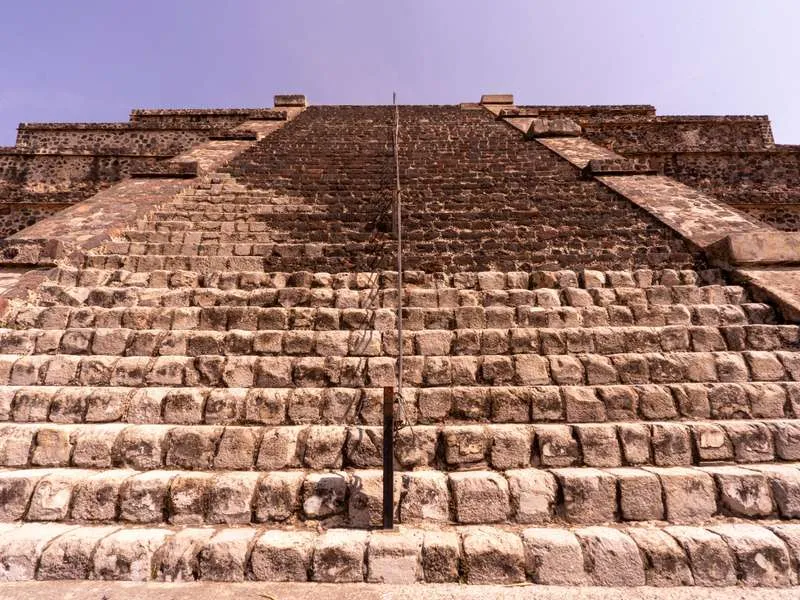
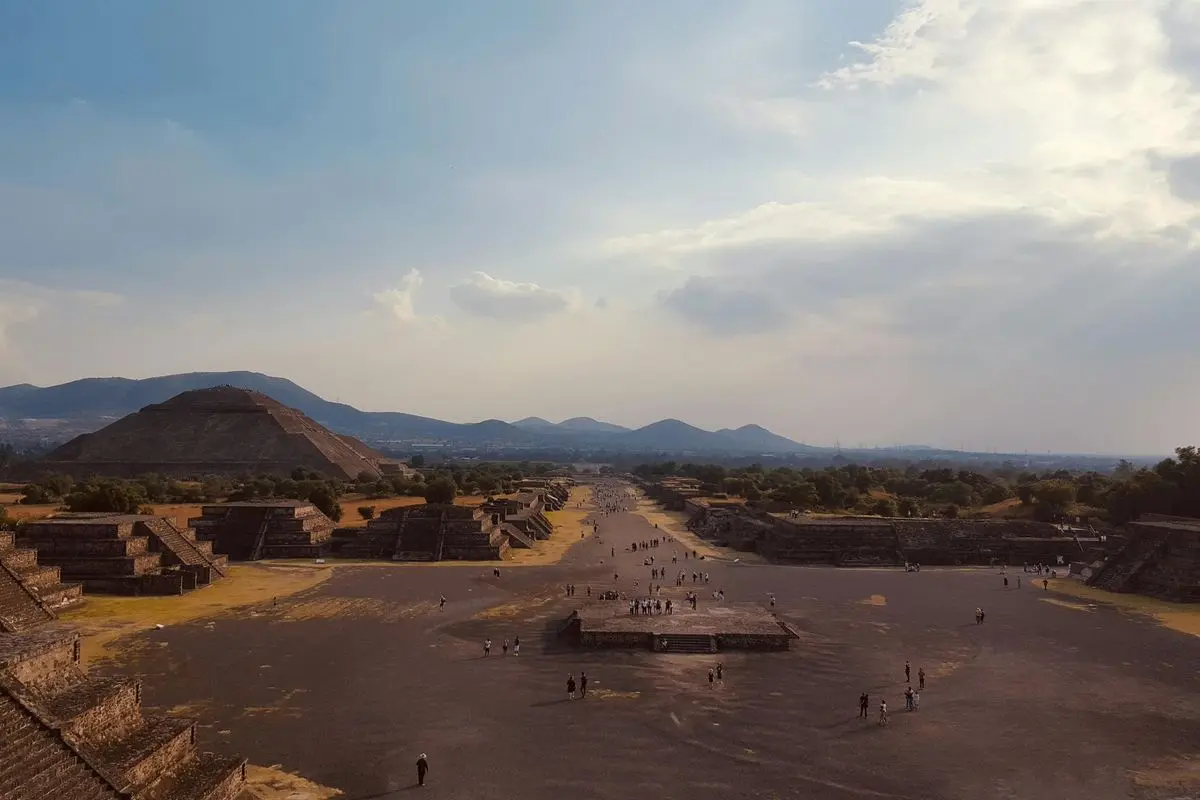
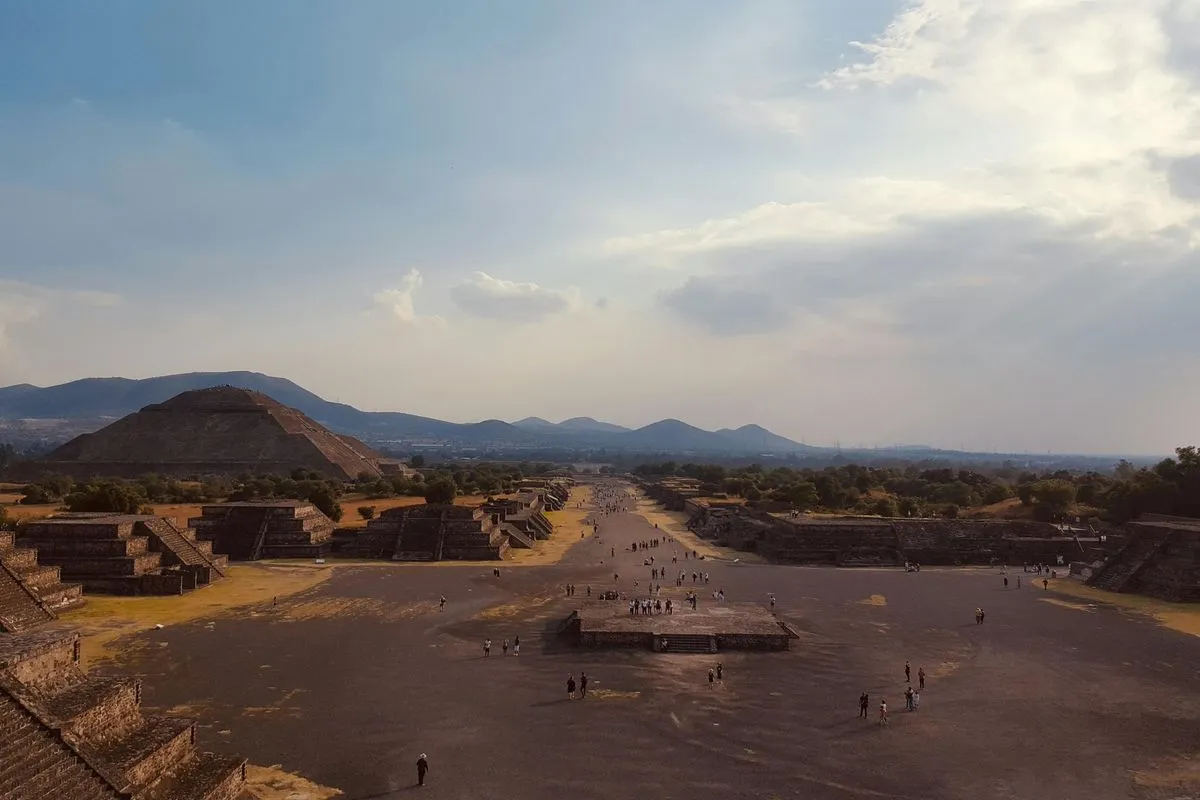
No Mexico City visit is complete without Teotihuacan. This UNESCO World Heritage Site was one of the largest cities in the ancient world — 100,000+ people at its peak around 450 CE. The Pyramid of the Sun is the third-largest pyramid in the world by volume. Climbing it (248 steps) gives views across the ancient city and surrounding Valley of Mexico. Nobody knows who built it.
What to see: Pyramid of the Sun + Pyramid of the Moon + Temple of the Feathered Serpent (Quetzalcoatl). Walk the 4km Avenue of the Dead connecting them.
Getting there: Metro to Autobus del Norte → Gate 8 (buses marked “Piramides”), every 15 minutes, 100 MXN round-trip. Or take Uber (250–400 MXN each way). Browse guided tours on Viator for skip-the-line and sunrise options.
Timing: Gates open 9 AM. Arrive at 9 AM. Leave by noon before heat and crowds peak. Plan 3–4 hours minimum.
Practical: Bring sunscreen, 2L water, hat. Minimal shade. Wear grip shoes for climbing.
Combine with: San Juan Teotihuacan town has restaurants serving barbacoa (slow-cooked lamb) — the regional specialty. Worth a lunch stop on the way back.
Full details: Teotihuacan Guide 2026 · All transport options: Mexico City to Teotihuacan.
2. Puebla + Cholula: The Best Food Day Trip
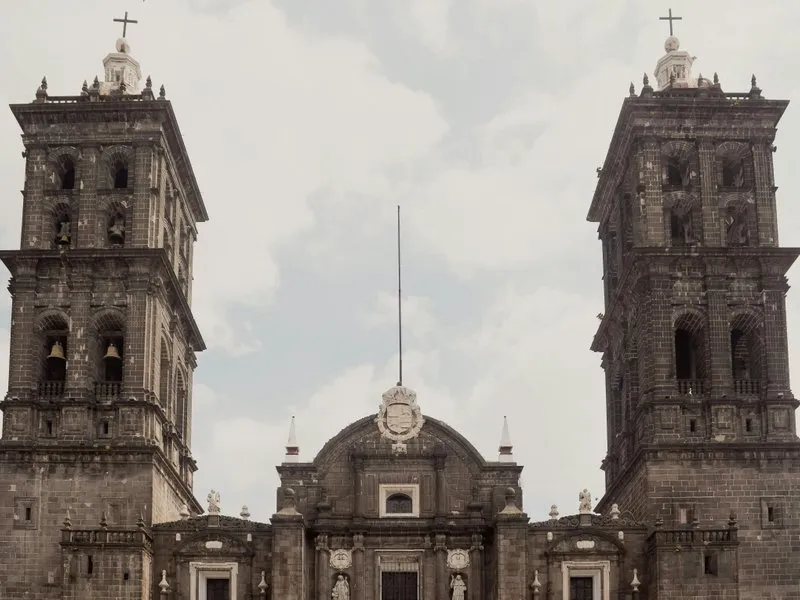
Puebla + Cholula is the best combined day trip from CDMX. Two hours east, the colonial city of Puebla has a UNESCO-designated historic center, spectacular baroque churches, and the birthplace of two of Mexico’s most complex dishes: mole poblano and chiles en nogada.
Cholula (30 minutes from Puebla by colectivo) has the Great Pyramid of Cholula — the largest pyramid in the world by volume (though mostly covered by vegetation). A Spanish colonial church sits on top. Walk through the excavated tunnels beneath the pyramid: 85 MXN entry.
What to see in Puebla: Catedral de Puebla, Rosary Chapel inside Santo Domingo (explosion of gold baroque), Callejón de los Sapos antique district. And eat: Fonda de Santa Clara for mole poblano (200–350 MXN/plate), Mercado de la Acocota for street food.
Getting there: ADO buses from TAPO (Autobuses Oriente) every 20 minutes. 200–250 MXN each way, 2 hours.
Itinerary: Bus 7 AM → Cholula 9 AM (pyramid + church) → colectivo to Puebla 11 AM → Rosary Chapel + Cathedral + lunch → Callejón de los Sapos → bus back 6 PM.
Full details: Cholula pyramid guide and complete Puebla travel guide.
3. Tepoztlan: Mountain Magic Town
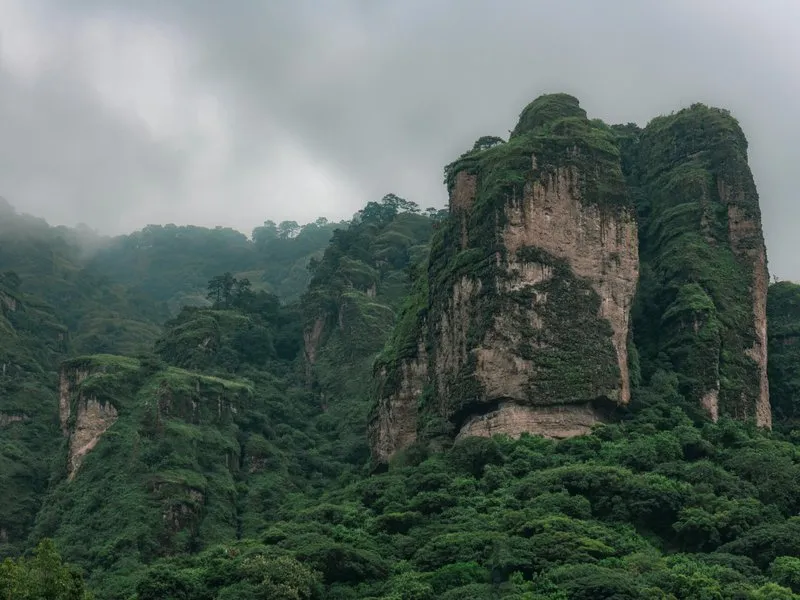
Tepoztlan is a Pueblo Mágico (Magical Town) in Morelos, 75km south, nestled beneath dramatic volcanic cliffs. It’s become a weekend escape for CDMX residents — known for its spiritual energy, craft markets, and the pyramid of El Tepozteco perched high on the mountain above.
What to do:
- Hike to El Tepozteco: 2 hours round-trip, steep but rewarding. The pyramid at the top has views across the Valley of Morelos. Entry: 70 MXN. Bring water — the trail has no shade.
- Weekend market (tianguis): Fills the streets Saturday–Sunday with crafts, food, and produce. Best market day trip from CDMX.
- Temazcal: Traditional sweat lodge ceremonies available. Good for recovery after the hike.
- Ex-Convento: 16th-century Dominican monastery in the town center, free to explore.
- Local food: Try itacates (thick corn tortillas filled with beans and cheese) and regional mezcal.
Getting there: Buses from Terminal del Sur (Metro: Tasqueña). 100–130 MXN, 1.5 hours. Or drive (75km on toll road, ~80 MXN tolls).
Best day: Saturday for the full market + hiking combo. Weekdays for quieter hiking.
More: Tepoztlán Complete Travel Guide | Things to Do in Tepoztlán
4. Taxco: Silver Town
Taxco is Mexico’s silver capital — a stunning colonial town built into steep hillsides in Guerrero, with white buildings, red-tile roofs, and hundreds of silver shops. The dramatic topography creates constantly changing perspectives as you walk narrow cobblestone streets.
What to see:
- Santa Prisca Church: Spectacular Churrigueresque facade — among Mexico’s finest baroque churches. Interior worth seeing.
- Silver shopping: Dozens of shops and workshops. Quality varies widely — look for the “925” hallmark for sterling silver. Bargain at tourist-facing shops; artisan workshops have fixed (better) prices.
- Teleférico (cable car): Ride to a viewpoint overlooking the town — 50 MXN round-trip.
- Casa Borda: Cultural center in a colonial mansion with art exhibitions.
Getting there: ADO or Estrella de Oro buses from Terminal Tasqueña (Metro Line 2: Tasqueña). 190–280 MXN each way, 2.5–3 hours. For full schedules and Semana Santa booking tips, see the Mexico City to Taxco transport guide.
Tips: The town is seriously hilly. Wear comfortable walking shoes. Saturday morning is liveliest; during Semana Santa the town hosts Mexico’s most dramatic Holy Week processions — plan 2 nights if you want to see them.
Full details: Taxco travel guide.
5. Cuernavaca: City of Eternal Spring
Cuernavaca (85km south, 1.5 hours) has been a retreat from Mexico City’s altitude for centuries — both Aztec emperors and Hernán Cortés built palaces here for the warmer climate. Today it offers colonial architecture, excellent museums, and beautiful gardens.
What to see:
- Palacio de Cortés: The conquistador’s 16th-century palace, now a museum with Diego Rivera murals depicting Mexican history. Free entry.
- Jardines de México: Massive flower gardens (one of the world’s largest flower garden parks). Worth visiting in spring (Feb–April) for peak blooms.
- Robert Brady Museum: Eclectic art collection of 1,300 pieces from 31 countries in a colonial house. Excellent for art lovers.
- Xochicalco: Archaeological site 40 minutes south (can combine in a full day). Pre-Aztec ruins with remarkable carvings.
Getting there: Pullman de Morelos buses from Terminal del Sur (Tasqueña Metro). 100–160 MXN, about 1 to 1.5 hours. See the full Mexico City to Cuernavaca guide for bus schedules, driving directions, and Tepoztlán add-on strategy.
Combine with: Tepoztlan is 30 minutes from Cuernavaca — a combined Cuernavaca + Tepoztlan day is doable.
6. Valle de Bravo: Lake Escape
Valle de Bravo (150km west, 2.5 hours) is where wealthy Chilangos escape on weekends — a lake resort town surrounded by pine forests with sailing, kayaking, and paragliding.
What to do:
- Lake activities: Rent kayaks or paddleboards, or take a boat tour of the lake
- Paragliding: Popular tandem launch sites above the lake with spectacular views (1,500–2,500 MXN for a tandem flight)
- Monarch butterflies: November–March, the nearby Piedra Herrada sanctuary hosts millions of monarchs migrating from Canada — one of Mexico’s most spectacular natural events
- Town center: Beautiful colonial streets for wandering, excellent restaurants
Getting there: Buses from Terminal Poniente (Metro: Observatorio). 160–180 MXN, 2.5 hours through scenic mountain roads.
Best time: November–March for butterfly season. Year-round for the town.
Full details: Valle de Bravo guide.
7. Tlaxcala: Authentic and Crowd-Free
Tlaxcala (120km east, 2 hours) is Mexico’s smallest state capital and most underrated colonial city. The Tlaxcalans allied with Cortés against the Aztecs — a history that distinctly shapes the city.
What to see:
- Government Palace murals: Spectacular paintings by Desiderio Hernández Xochitiotzin depicting Tlaxcalan history across the entire palace interior
- Basilica of Ocotlan: Stunning white and blue baroque church on a hilltop — considered one of the finest in Mexico
- Cacaxtla: Archaeological site (20km away) with remarkably preserved pre-Hispanic murals painted in Maya style — unique in central Mexico
Getting there: ADO from TAPO. About 200 MXN, 2 hours. Much less crowded than Puebla but equally rewarding.
8. Grutas de Tolantongo: Thermal Pools
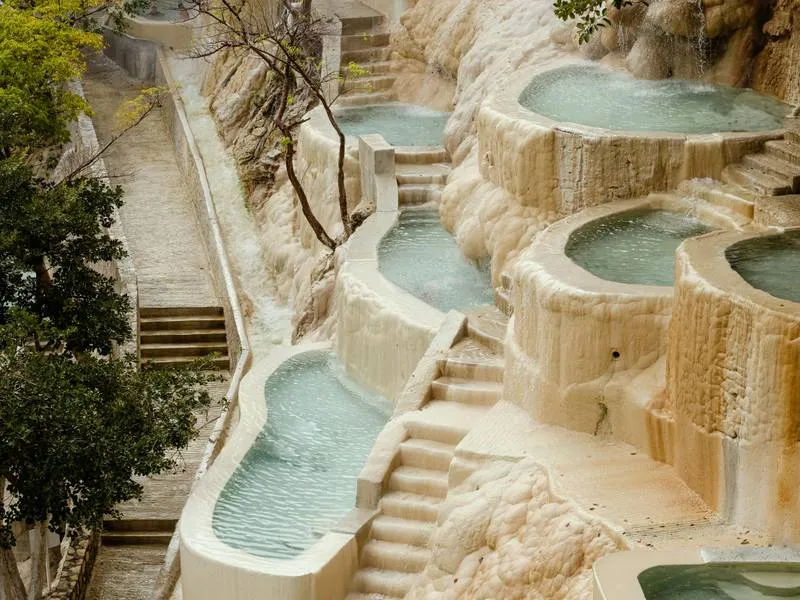
Grutas de Tolantongo has become one of Mexico’s most photographed natural attractions: thermal pools carved into a dramatic canyon, a cave with a warm underground river, and turquoise water against red rock walls.
What to experience:
- Infinity pools: Cascading thermal pools at different temperatures overlooking the canyon — the iconic image
- Cave river: Swim through warm water inside the mountain through a natural cave
- Canyon river: Turquoise river at the canyon bottom for swimming
- Tunnel: Walk through a thermal waterfall-filled tunnel
Getting there: No direct public transport. Options: (1) Drive — 4 hours each way via Highway 85 (toll); (2) Organized day tour from CDMX (handles all logistics, 800–1,500 MXN); (3) Bus to Ixmiquilpan + local transport (difficult, 5 hours total).
Practical: Entry 200 MXN + additional fees for camping/lodging. Arrive before 9 AM on weekdays — it fills rapidly. Weekends are very crowded; overnight stays are ideal.
Full details: Grutas de Tolantongo guide.
9. Malinalco: Hidden Aztec Temple
Malinalco (120km southwest, 2 hours) has one of the most unusual archaeological sites in Mexico: an Aztec temple carved entirely into the living rock of a mountainside. No blocks quarried and transported — the temple IS the mountain. It was used for initiation ceremonies for Jaguar and Eagle warriors.
Getting there: Bus from Observatorio terminal to Chalma, then colectivo to Malinalco. Or drive. About 100 MXN by bus + 30 MXN colectivo. Entry to the archaeological site: 85 MXN.
Combine with: The nearby Chalma pilgrimage site is one of Mexico’s most visited Catholic shrines — an unusual contrast for a combined cultural day.
10. Querétaro: UNESCO Colonial City
Querétaro (210km northwest, 3 hours) is at the edge of day-trip distance from CDMX but worth the journey for the architecture and food. The historic center is a UNESCO World Heritage Site, remarkably well-preserved with aqueduct arches, baroque churches, and a lively central plaza.
What to see: The main zócalo, the Templo de Santa Rosa de Viterbo (most ornate baroque interior in Mexico), the 74-arch aqueduct (built 1726–1738), the Museum of the Restoration of the Republic.
Getting there: ADO direct from Terminal del Norte or TAPO. 250–300 MXN, 3 hours. An overnight stay is preferable but the day trip is manageable.
Planning Your Day Trips
By Interest
| If you love… | Go to… |
|---|---|
| Ancient ruins | Teotihuacan, Cholula, Malinalco, Cacaxtla (near Tlaxcala) |
| Colonial cities | Puebla, Taxco, Querétaro, Tlaxcala, Cuernavaca |
| Nature + hot springs | Grutas de Tolantongo, Valle de Bravo (lake) |
| Hiking + outdoors | Tepoztlan (El Tepozteco pyramid hike), Valle de Bravo (paragliding) |
| Food | Puebla (mole, chiles en nogada), Teotihuacan area (barbacoa) |
| Crowds avoided | Tlaxcala, Malinalco, Cuernavaca on weekdays |
Booking Guided Tours
If you’d rather not manage transport logistics, guided tours from CDMX have hotel pickup and skip-the-line entry. Most useful for Teotihuacan (lines for pyramid entry can be long), Grutas de Tolantongo (complex transport), and Puebla + Cholula combined.
Browse Mexico City day trips on Viator →
Related Mexico City Guides
- Mexico City Travel Guide 2026 — full CDMX planning guide
- Mexico City Neighborhoods — Roma, Condesa, Polanco, Centro
- Best Time to Visit Mexico City — weather, festivals, month-by-month
- Mexico City Food Guide — markets, street food, fine dining
- Mexico City to Oaxaca — flight, overnight bus, or drive? All options with 2026 prices
- Mexico City to Cuernavaca — 1-hour bus from Tasqueña, Diego Rivera murals
- Mexico City to Taxco — 2.5 hours to Mexico’s silver city + Semana Santa
- 10 Days in Mexico Itinerary — CDMX + day trips in context
- Is Mexico Safe? — safety context for central Mexico travel