Taxco Mexico Travel Guide 2026: Silver, Semana Santa & Guerrero
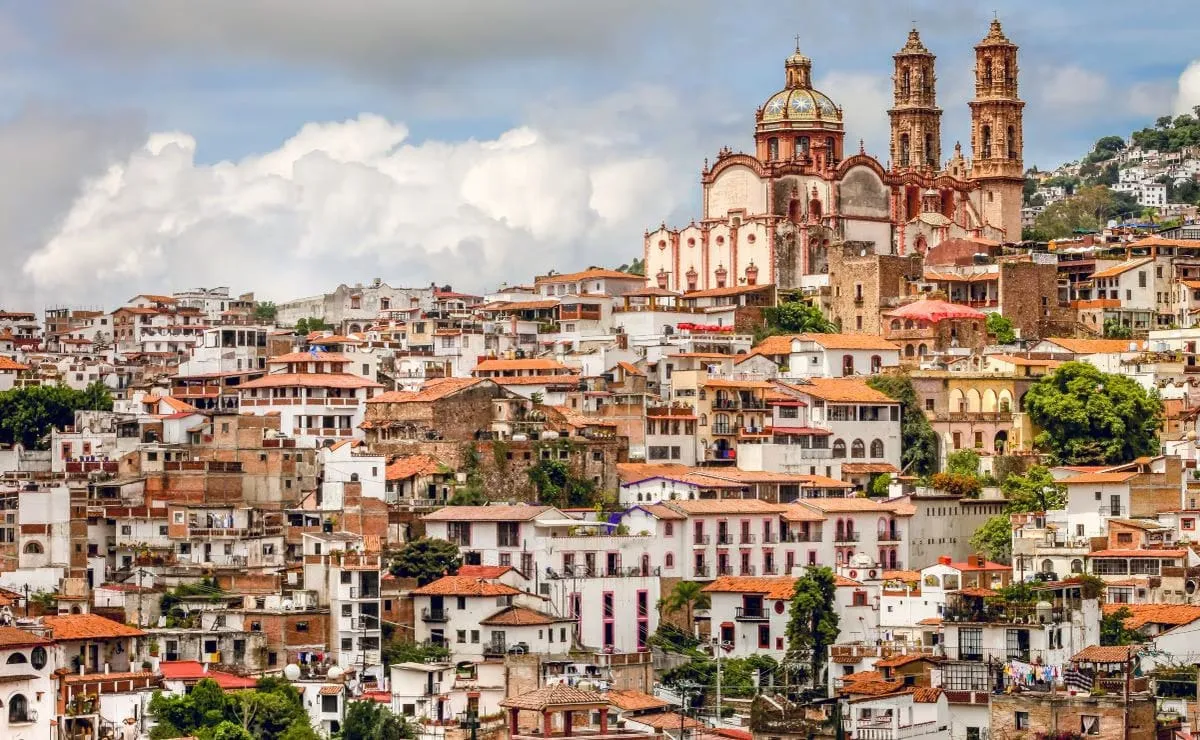
Taxco de Alarcón is a Pueblo Mágico in the mountains of Guerrero state, 172km south of Mexico City at 1,800m elevation, with around 115,000 residents. It is Mexico’s undisputed silver capital — with over 300 silver workshops producing everything from fine jewelry to sculptural art — and home to what many consider Mexico’s most dramatic Semana Santa celebration: silent nighttime processions of flagellant penitents that have taken place every Holy Week for five centuries.
In 2026, Taxco’s Semana Santa runs March 29 through April 5. If you’re planning to witness it, read this guide first and book now — the city sells out.
Why Taxco Is Worth the Trip
Most travelers heading south from Mexico City go straight to Oaxaca or Puebla and never turn off toward Taxco. That’s their loss.
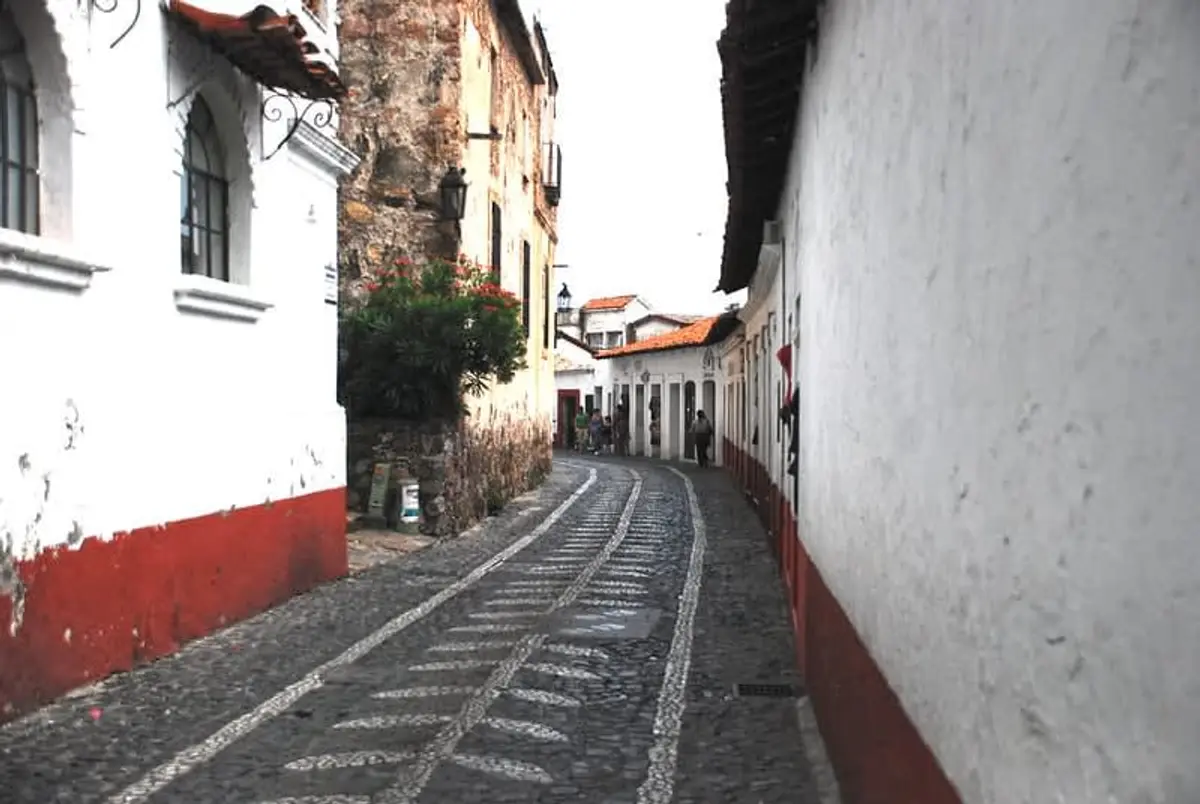
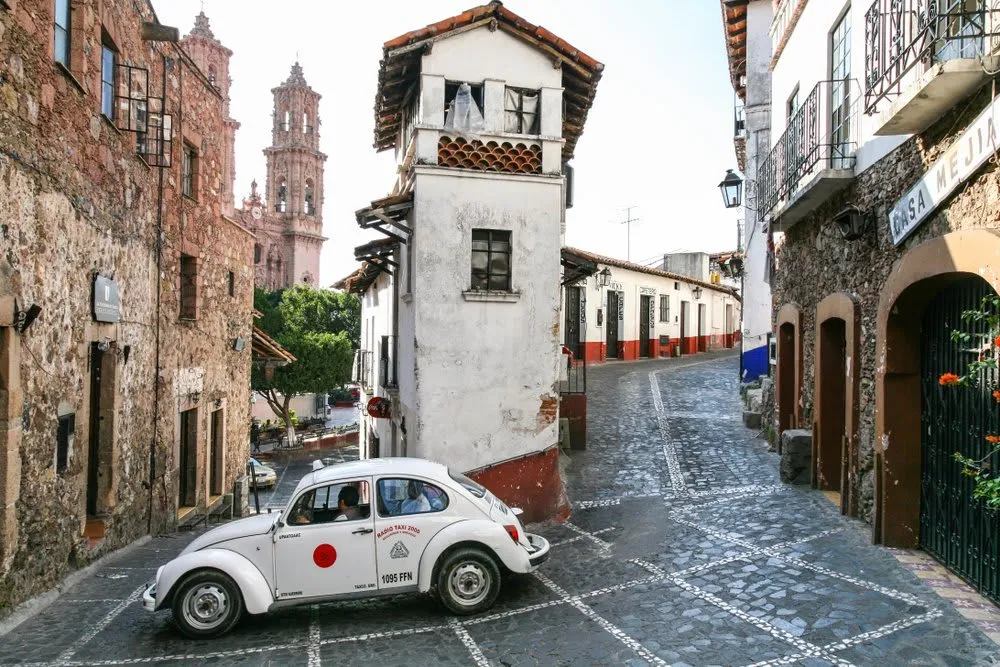
Taxco does something rare: it makes you feel like you’ve stepped into another era without being a museum piece. The cobblestone streets are genuinely too steep and narrow for modern traffic — the city still uses mototaxis (three-wheeled motorcycle taxis) because only they can navigate certain alleys. The marketplace is a maze of silver workshops and hole-in-the-wall pozole joints. The cathedral looms over everything.
What makes Taxco unique:
- Silver at source. Over 300 workshops produce and sell silver directly. Prices are 40–60% lower than jewelry stores in Mexico City for equivalent quality.
- Semana Santa. The processions here are unlike anything else in Mexico — silent, barefoot penitents dragging chains, carrying crosses, or self-flagellating, moving through complete darkness and candlelight. No music. No talking. A five-century-old rite that most tourists never know exists.
- Pozole capital. Taxco makes all three traditional colors of pozole — red, white, and green — in the same city. That’s a culinary distinction no other Mexican town can claim.
- Architecture. The entire historic center is protected. No neon signs, no modern storefronts. 18th-century mansions, original colonial plazas, and a cathedral built by the richest man in the Americas in 1748.
Semana Santa in Taxco 2026
Taxco’s Semana Santa is one of Mexico’s most intense and authentic religious celebrations — and one of the least touristy of the major ones, despite drawing visitors from across Mexico and abroad.
2026 Holy Week Schedule
| Date | Day | Key Events |
|---|---|---|
| March 29 | Palm Sunday | Procession with palm fronds; blessing of palms at Santa Prisca |
| March 30–April 1 | Mon–Wed | Smaller neighborhood processions; church vigils |
| April 2 | Holy Thursday | Procession of the Holy Burial; penitents begin |
| April 3 | Good Friday | Main event: silent penitent processions from midnight |
| April 4 | Holy Saturday | Quema de Judas (burning of Judas effigies) |
| April 5 | Easter Sunday | Easter Mass at Santa Prisca; joyful celebration |
What Actually Happens on Good Friday
From around midnight Thursday into the early hours of Good Friday, groups of penitents (cucuruchos) move through the city in total silence. Some wear black robes with only eyeholes; some are barefoot on the rough cobblestones; some carry wooden crosses; some drag heavy chains. A few engage in self-flagellation.
This is not theater. This is a living devotional practice that has continued without interruption for five centuries.
Spectators line the streets in silence. No photographs inside the procession path. No phone lights. The only illumination comes from candles and lanterns. If you’ve ever wanted to experience what religious practice looked like before tourism arrived, this is as close as it gets.
Practical logistics for Semana Santa:
- Book accommodation 2–3 months ahead. Taxco fills completely for Holy Week.
- Hotel prices double or triple vs. normal rates.
- Arrive by bus Thursday afternoon — the road into Taxco is closed to vehicles from Thursday night.
- The procession routes change slightly year to year; ask your hotel where to position yourself.
For the full Holy Week schedule, photography guide, Ley Seca rules, and accommodation tips: Semana Santa in Taxco 2026.
Santa Prisca Cathedral and Plaza Borda
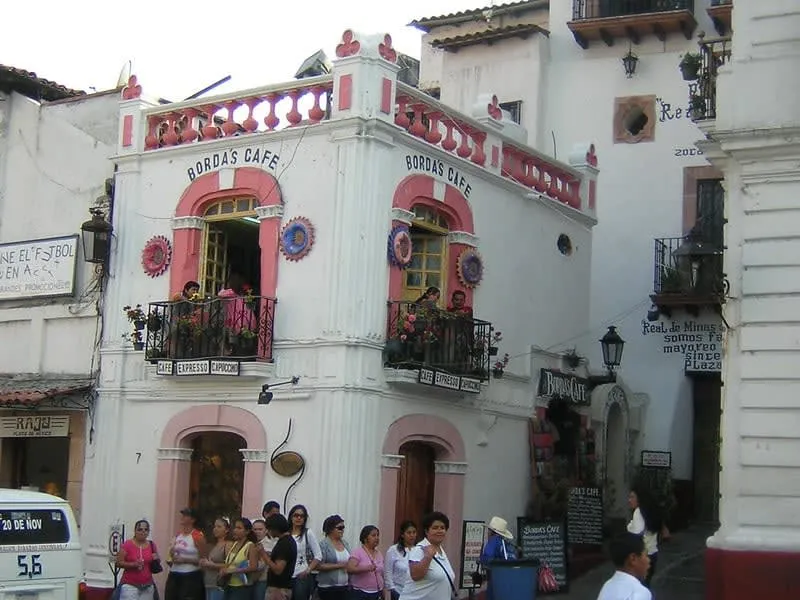
Every visit to Taxco begins at Plaza Borda and the Cathedral of Santa Prisca — not because you’re told to start there, but because the plaza is literally the gravitational center of the city. Every street eventually leads back to it.
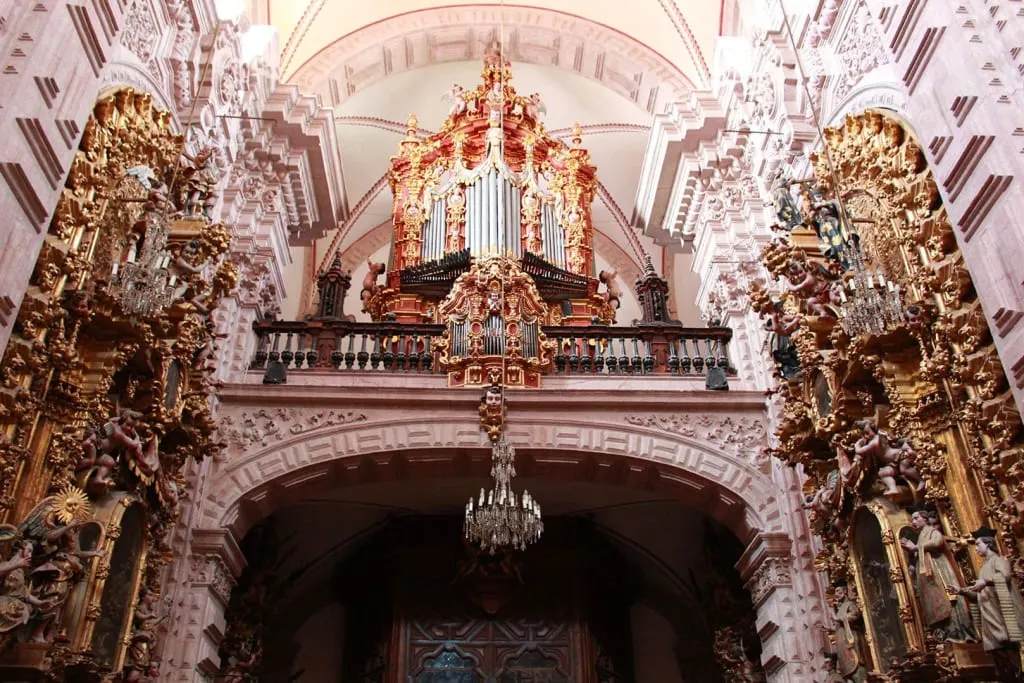
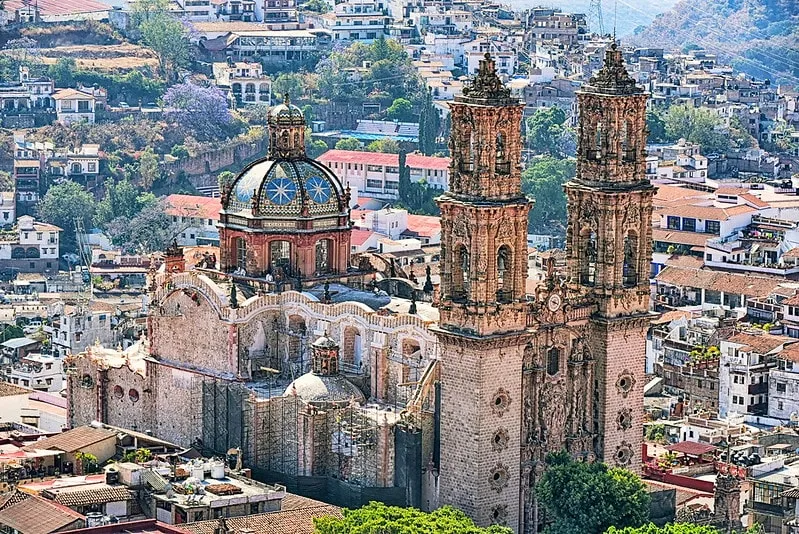
Santa Prisca Cathedral (1748) is the architectural centerpiece of Taxco and one of the finest examples of Churrigueresque (ultra-Baroque) style in the Americas. José de la Borda, who became the wealthiest man in New Spain after striking silver veins in 1743, built the cathedral as an offering to God. Construction took 7 years and cost him a personal fortune.
What makes Santa Prisca unusual:
- Built on a steep hillside, so it has an asymmetrical footprint — the floor plan is forced to adapt to the mountain
- The twin towers dominate the Taxco skyline from every viewpoint in the city
- The interior retains original gilded Churrigueresque altarpieces — extraordinary by Mexican standards
- On the tentative UNESCO World Heritage list since 2001
The cathedral is free to enter and open from 6 AM to 10 PM. Visit early morning or after 5 PM when light comes through the western windows and tour groups have left.
Plaza Borda itself is the city’s living room. Sit at any of the cafes surrounding the square, order a café de olla and a jericalla (a local egg custard), and watch the city happen. Silver vendors work the edges; locals argue about football; tourists figure out which alley leads to their hotel.
The Silver: History, Shopping & Authentication
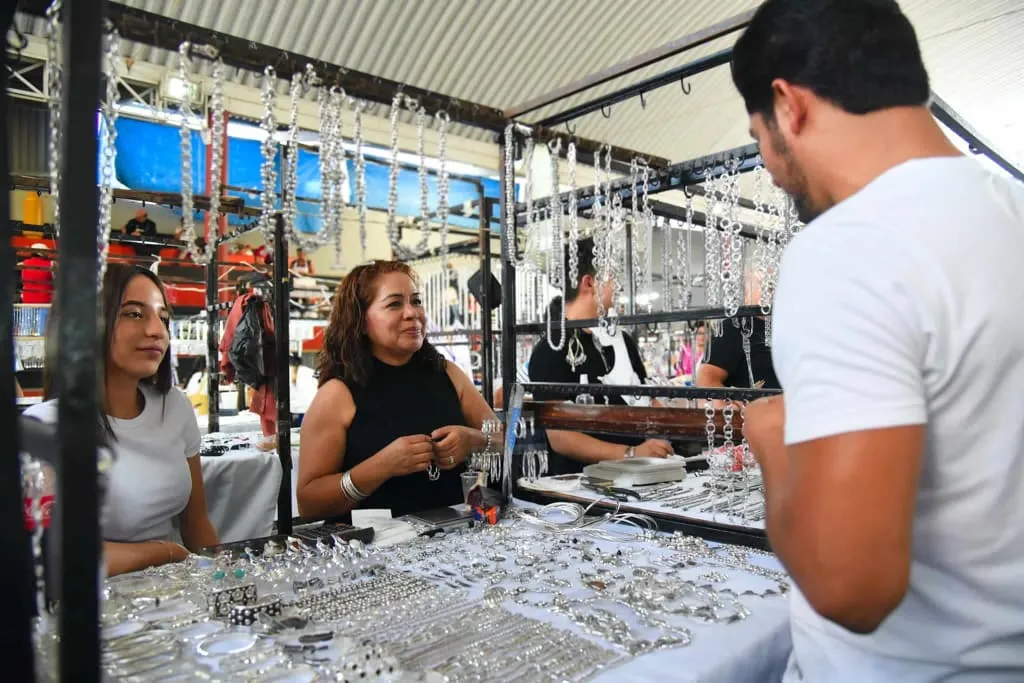
Taxco’s silver story runs in three chapters.
First chapter: Spanish colonizers discovered silver deposits here in 1531. The initial mines were exhausted within a generation, and the town declined.
Second chapter: In 1743, José de la Borda — a Frenchman who had become a successful miner in Zacatecas — struck an extraordinarily rich vein. He became the wealthiest private individual in 18th-century New Spain, built Santa Prisca cathedral as thanks, and funded public works across the city. His fortune built modern Taxco.
Third chapter (the most important for today’s visitor): In 1929, American architect William Spratling — called Guillermo by locals — moved to Taxco and opened a workshop teaching artisans to create silver jewelry using pre-Hispanic design motifs. His students became teachers; their students became jewelers. Today Taxco has over 300 workshops, most still family-owned, producing some of Mexico’s finest silver crafts.
How to Buy Silver in Taxco Without Getting Burned
| Stamp | What It Means | Quality |
|---|---|---|
| 925 | 92.5% silver (sterling standard) | ✅ Buy with confidence |
| 950 | 95% silver (finer, softer) | ✅ Premium quality |
| 999 | 99.9% fine silver | ✅ Investment-grade, rare |
| Alpaca | Silver-colored alloy (no silver) | ❌ Avoid |
| Metal blanco | White metal alloy (no silver) | ❌ Avoid |
| No stamp | Unknown content | ⚠️ Walk away |
Where to shop:
- Mercado de Artesanías (behind Santa Prisca): Dozens of stalls, negotiation expected, prices lowest — but requires you to know your silver.
- Shops on Calle Juan Ruiz de Alarcón (the pedestrian street uphill from the plaza): Fixed prices, no negotiation, but quality is consistent and authenticity is reliable.
- William Spratling Museum shop: Higher-end pieces in the tradition of Taxco’s founding designer.
- Individual workshops in side streets: The best finds — pieces made on-site, prices fair, artisans who’ll show you their work.
Price benchmarks (2026): A simple sterling 925 ring runs 150–300 MXN. A statement necklace: 600–2,000 MXN. Comparable pieces in Mexico City jewelry stores: 2x–3x higher.
Taxco Food Guide: Pozole, Jumiles & Mezcal
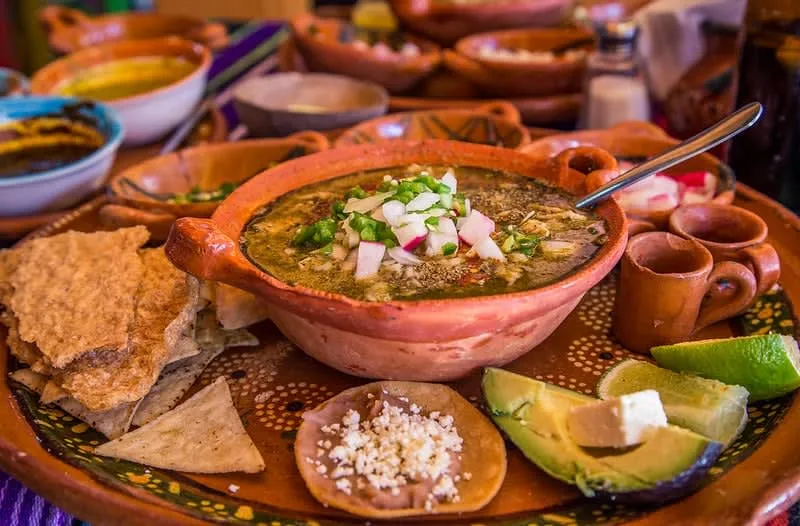
Pozole: All Three Colors
Taxco is the only city in Mexico where you’ll reliably find all three traditional pozole varieties at the same tables. This hominy stew is prepared three ways:
- Pozole rojo: Red chile base (guajillo and ancho), pork, deeply savory. The version most of Mexico knows.
- Pozole blanco: Clear broth, no red chiles, cleaner flavor. The pre-Hispanic ancestor of the dish.
- Pozole verde: Tomatillo, pepitas (pumpkin seeds), cilantro, and sometimes epazote. The Guerrero signature.
Where to eat it: Pozolería Taxqueña near the market is the most cited local institution. El Adobe on the hillside has better views. Both serve large cazuelas (clay bowls) of your choice for 120–160 MXN, with garnishes: oregano, lime, radishes, shredded cabbage, and tostadas on the side.
Jumiles: Taxco’s Insect Delicacy
If you’re here around Day of the Dead (November 1–2), Taxco hosts the Feria del Jumil — a festival dedicated to the stink bug (Jumil or Chumil), a small insect with a distinctive anise-like flavor that locals eat live, in salsa, or ground into a paste.
Jumiles are eaten primarily in Guerrero and neighboring Morelos. In Taxco, they’re a source of genuine local pride. The festival includes a “Queen of the Jumil” pageant. If you’re squeamish, order the salsa version — the flavor is real (peppery, slightly bitter, with anise notes) but less confronting than eating them alive.
Jumil season runs November to early December, but jumil salsa is available in Taxco markets year-round.
Berta’s Bar: The Original Margarita Rival
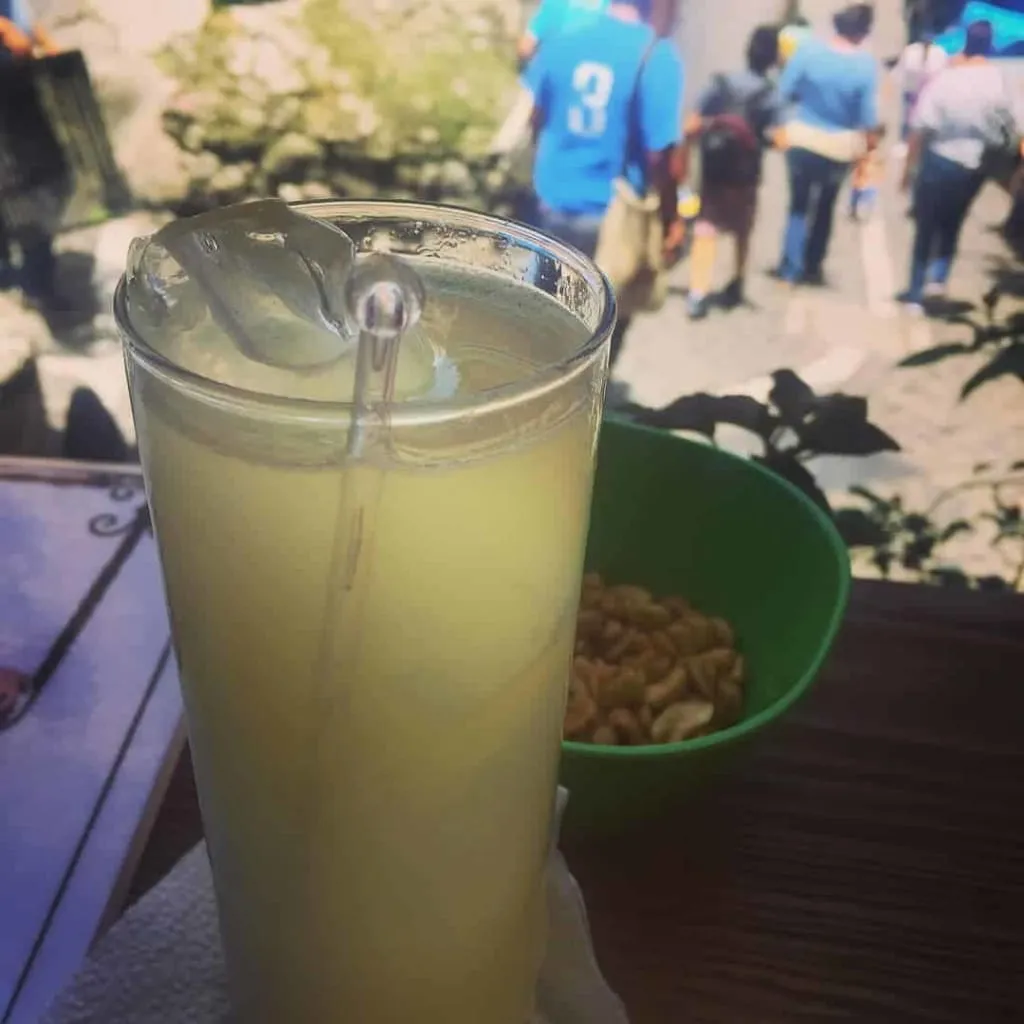
Berta’s Bar, on the corner of Plaza Borda, claims to have invented Mexico’s answer to the margarita: the Berta — a mix of mezcal, honey, lime juice, and soda water, served in a clay cup. The bar has been operating since the 1930s when William Spratling and his artist friends made it their local.
Order the Berta (90 MXN), sit on the balcony overlooking the plaza, and understand why Taxco attracted artists and writers for an entire generation.
Museums in Taxco
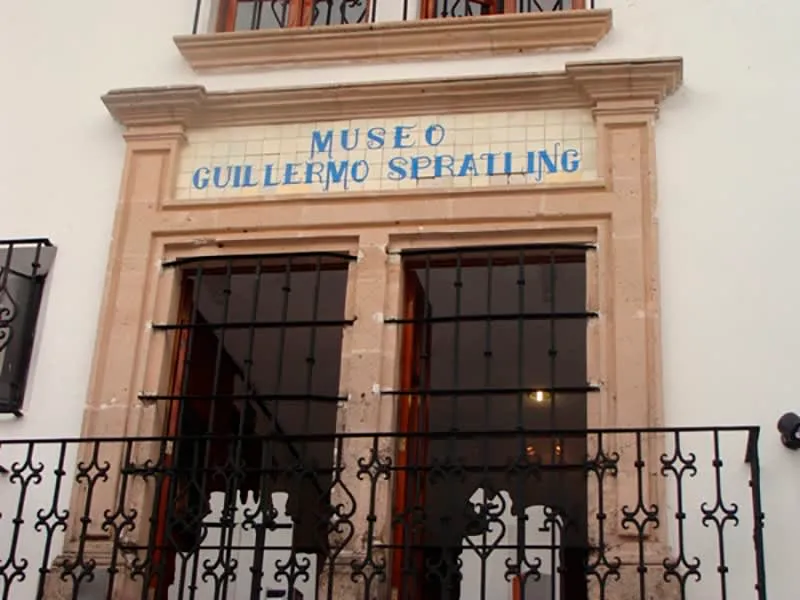
William Spratling Museum (Museo William Spratling) The essential Taxco museum. Located in the city hall building on a side street behind the cathedral, the museum traces both the history of Taxco silver and Spratling’s collection of pre-Hispanic artifacts — primarily from Guerrero’s own rich archaeological tradition. Entry: 85 MXN. Hours: Tue–Sun 9 AM–5 PM.
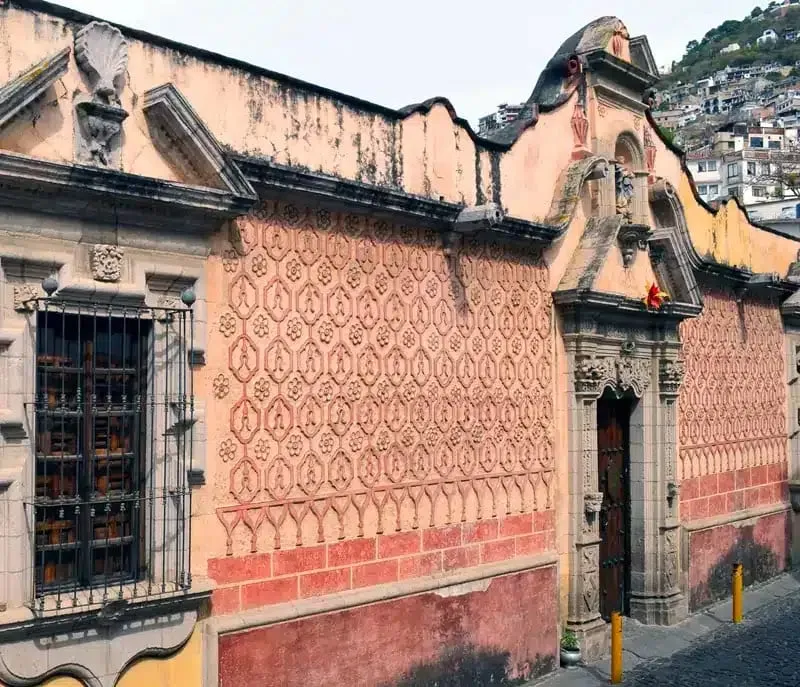
Casa Humboldt (Museo de Arte Virreinal) Named for Alexander von Humboldt, who supposedly spent a night here in 1803. The building dates to 1756 — a former caravanserai where silver merchants lodged their mule trains. Now a museum of viceroyal religious art: gilded altarpieces, ecclesiastical silver, colonial paintings. Entry: 45 MXN.
Museo de la Platería Antonio Pineda Dedicated to the work of Antonio Pineda, one of Spratling’s most celebrated students. The pieces here represent the peak of 20th-century Taxco silversmithing. The collection is small but exceptional. Located on Plaza Borda 1.
Getting Around Taxco
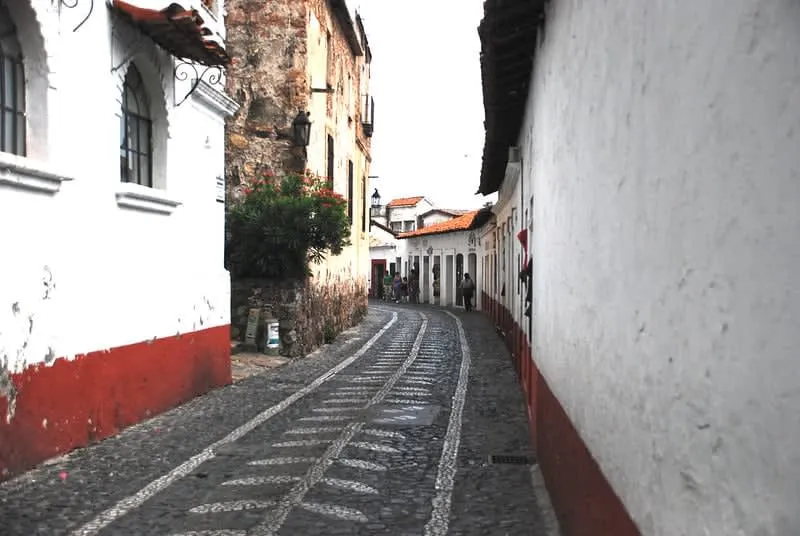
Taxco is built on a steep hillside — and we mean steep. Streets that look like alleys are actually the main roads. Streets that look like stairs often also function as roads. Your shoes need proper grip.
Mototaxis (three-wheeled open-air motorcycle taxis) are the primary local transport. They navigate alleys that cars physically cannot. Rides within the city: 25–35 MXN. Always agree on the price before getting in.
Regular taxis (white sedans) can reach most hotels but can’t access the narrowest streets. Use them for the bus station and the Teleferico.
Walking is the only way to truly experience the historic center. Allow 30–40 minutes to walk from the plaza to any destination — the hillside makes everything feel farther than the map suggests.
The Teleferico (Cable Car): Taxco’s cable car connects the valley base with the Hotel Monte Taxco at the top of the mountain, offering panoramic views of the city spread across the hillside. Cost: 60 MXN each way. The ride takes 4 minutes. Even if you’re not staying at the hotel, you can take the cable car for the views and have a drink at the restaurant. Open daily 7:30 AM–7 PM (earlier on weekends).
Is Taxco Safe?
Taxco sits in Guerrero state, which carries a US Level 2 travel advisory (“Exercise increased caution”) — the same level as France, Germany, and the UK’s advisory for Mexico’s popular tourist cities. The conflicts that earned Guerrero the advisory are concentrated in coastal areas toward Acapulco and Chilpancingo, not in Taxco.
Taxco’s economy runs on silver tourism. The city center has a significant police presence during Semana Santa and tourist season. Travelers report feeling comfortable walking the city at night. The bus route from Mexico City passes through no problematic areas.
What to avoid: Don’t drive from Taxco toward Acapulco or Chilpancingo without checking current conditions. The federal highway toward the coast is where the advisory applies. Taxco to Mexico City is fine.
For current conditions: Mexico Travel Advisory 2026.
Getting to Taxco from Mexico City
| Transport | From | Cost | Time | Notes |
|---|---|---|---|---|
| ADO / Estrella de Oro bus | Tasqueña Terminal (Metro Line 2) | 170–280 MXN | 2.5–3 hr | Most reliable, runs hourly |
| Rental car | CDMX | 500–900 MXN/day + toll 280 MXN | 2.5 hr | Federal 95D toll road. Park at hotel. |
| Viator day tour | Hotel pickup CDMX | $60–95 USD | 11–12 hr total | Includes Cuernavaca; no parking stress |
| Uber from CDMX | Your location | 900–1,400 MXN | 2.5–3 hr | Driver may not want return trip |
Bus logistics: Take Metro Line 2 to Tasqueña (southern terminus). The bus terminal is directly above the metro exit. Buy tickets at the Estrella de Oro counter or ADO counter. Buses drop you in Taxco’s city center, at the zocalo parking area below Plaza Borda. For full schedules, Semana Santa booking strategy, and driving route details, see our dedicated Mexico City to Taxco transport guide.
Day trip vs. overnight: Taxco can be done as a day trip, but it’s rushed. The best of the city — evening silver shopping, a proper pozole dinner, walking the streets at dusk — requires staying the night. Two nights is ideal; three is perfect if you’re here for Semana Santa.
Where to Stay in Taxco
| Budget | Option | Cost/Night | Notes |
|---|---|---|---|
| Budget | Casa de Huéspedes near the market | 400–700 MXN | Basic, central, local experience |
| Mid-range | Boutique guesthouses on side streets | 900–1,600 MXN | Often colonial buildings with courtyards |
| Comfort | Hotel Agua Escondida | 1,200–1,800 MXN | Pool, views, near the plaza |
| Luxury | Hotel Monte Taxco | 2,500–4,500 MXN | Top of the mountain via Teleferico; panoramic views |
Critical tip: Stay away from the main federal highway (Route 95) that passes through the lower city. Traffic noise runs until 2 AM. Request a room facing an interior courtyard or side street.
During Semana Santa: Prices double or triple. Any accommodation not booked by January is likely sold out. If you arrive without a reservation, ask at the bus terminal — locals sometimes rent rooms informally during Holy Week.
Best Time to Visit Taxco
| Season | Weather | Crowds | Notes |
|---|---|---|---|
| Semana Santa (Mar 29–Apr 5) | Warm, dry | Extreme | Book months ahead. Peak cultural event. |
| Nov 1–2 (Day of Dead + Jumil) | Cool, sometimes wet | High | Jumiles festival; authentic celebration |
| Nov–Apr (dry season) | 18–26°C, clear | Low–medium | Best weather; fewer domestic tourists |
| May–Oct (rainy season) | Warm with afternoon storms | Low | Green hills, lower prices, some roads slippery |
| Dec 24–Jan 6 | Cool, clear | High domestic | Lovely but crowded with Mexican families |
Taxco’s altitude (1,800m) keeps temperatures comfortable year-round. Even in summer, evenings are cool. In January, nights can drop to 8–10°C — bring a layer.
Day Trips from Taxco
Grutas de Cacahuamilpa (30km): Mexico’s largest cave system, with 19 halls and an underground river. One of the most impressive geological sites in the country, chronically underrated by foreign travelers. We have a complete guide to Cacahuamilpa caves.
Cuernavaca (70km north): The “City of Eternal Spring” — warmer, lower altitude, famous for its elaborate Day of the Dead altars and Diego Rivera murals in the Palacio de Cortés. Combine with Taxco for a strong 2-city Central Mexico trip.
Ixtapan de la Sal (60km north): Mexico’s premier hot springs resort town. Day passes to the thermal baths: 500–800 MXN. Good as a half-day add-on before heading back to CDMX.
Tepoztlán (110km north): Morelos pueblo mágico famous for its pyramid, organic market, and weekend crowds from Mexico City. A worthwhile detour if you have a rental car. See things to do in Tepoztlán for the full activity guide.
Taxco Budget Guide
| Budget | Daily Cost | What You Get |
|---|---|---|
| Backpacker | $35–45 USD | Guesthouse dorm, pozole for lunch, tacos for dinner, silver shopping window browsing |
| Mid-range | $55–80 USD | Private room, restaurant meals, museum entry, Teleferico, some silver purchases |
| Comfortable | $90–130 USD | Boutique hotel, Berta’s cocktails, full restaurant dining, silver shopping budget |
Most travelers overspend their silver budget. Decide beforehand what you’ll buy and stick to it — the workshops are relentless and beautiful.
What to See: Taxco at a Glance
| Attraction | Category | Cost | Time Needed |
|---|---|---|---|
| Santa Prisca Cathedral | Architecture | Free | 30 min |
| Plaza Borda | Square | Free | 1–2 hr |
| Silver workshops | Shopping | Varies | 2–3 hr |
| William Spratling Museum | History | 85 MXN | 1 hr |
| Casa Humboldt (Arte Virreinal) | Art | 45 MXN | 45 min |
| Museo Antonio Pineda | Silver art | Free | 30 min |
| Teleferico cable car | Views | 60 MXN | 30 min |
| Pozole at Pozolería Taxqueña | Food | 120–160 MXN | 1 hr |
| Berta’s Bar | Cocktails | 80–120 MXN | 1 hr |
| Semana Santa processions | Festival | Free | All night |
| Grutas de Cacahuamilpa | Day trip | 130 MXN + transport | Full day |
Useful Links
- Things to Do in Taxco — 25 activities, silver shopping, Semana Santa guide
- Day Trips from Taxco — Cacahuamilpa caves, Cuernavaca, Ixtapan de la Sal, Tepoztlán
- Semana Santa in Mexico 2026
- Day Trips from Mexico City
Planning Your Taxco Trip
Taxco fits naturally into a Central Mexico itinerary as a stop between Mexico City and Oaxaca — though it requires a small detour from the direct route. It pairs well with Cuernavaca for a “south of CDMX” weekend. It makes an excellent extension to a colonial Mexico circuit that includes Guanajuato, Zacatecas, and San Miguel de Allende.
For Semana Santa specifically: Taxco is the single most intense experience in Mexico for Holy Week, but for a broader view of Mexico’s Holy Week traditions across different cities, see our complete Semana Santa guide.
For safety context, including Guerrero state’s advisory in full, see Mexico Travel Advisory 2026 and Is Mexico Safe?.
Check Mexico entry requirements for US citizens and what to pack for Mexico before you go.
Taxco is one of those places that rewards you for showing up: narrow, vertical, made of silver and stone, best experienced slowly, ideally on Holy Week when the whole city holds its breath in the dark.