Day Trips from Taxco 2026: 8 Best Excursions Ranked
Taxco is 172km south of Mexico City in the mountains of Guerrero, placing it within easy reach of some of central Mexico’s most underrated destinations: the world’s largest stalactite cavern system, Hernán Cortés’ actual palace, volcanic hot springs, and a Pueblo Mágico with a pre-Hispanic pyramid above the rooftops.
This guide covers the 8 best day trips from Taxco, ranked by practical value. A rental car unlocks most of them fully — some destinations have minimal public transport and the mountain roads reward driving.
At-a-Glance: Day Trips from Taxco
| Destination | Distance | Drive Time | Best For | Public Transport? |
|---|---|---|---|---|
| Grutas de Cacahuamilpa | 30km | 40 min | Caves, rappelling | Limited |
| Cuernavaca | 70km | 1–1.5 hr | History, murals, gardens | ✅ Bus (Estrella de Oro) |
| Ixtapan de la Sal | 60km | 1 hr | Hot springs, spa | Limited |
| Xochicalco ruins | 80km | 1.5 hr | Pre-Hispanic ruins, less crowded | Bus to Cuernavaca + taxi |
| Tepoztlán | 110km | 1.5–2 hr | Pyramid, village, market | Bus via Cuernavaca |
| Valle de Bravo | 110km | 1.5–2 hr | Lake, water sports, air sports | Limited |
| Iguala de la Independencia | 55km | 1 hr | Mexican history context | Bus (frequent) |
| Mexico City | 172km | 2.5–3 hr | Museums, restaurants, nightlife | ✅ Bus (ADO/Estrella de Oro) |
1. Grutas de Cacahuamilpa — Mexico’s Largest Cavern System (30km)
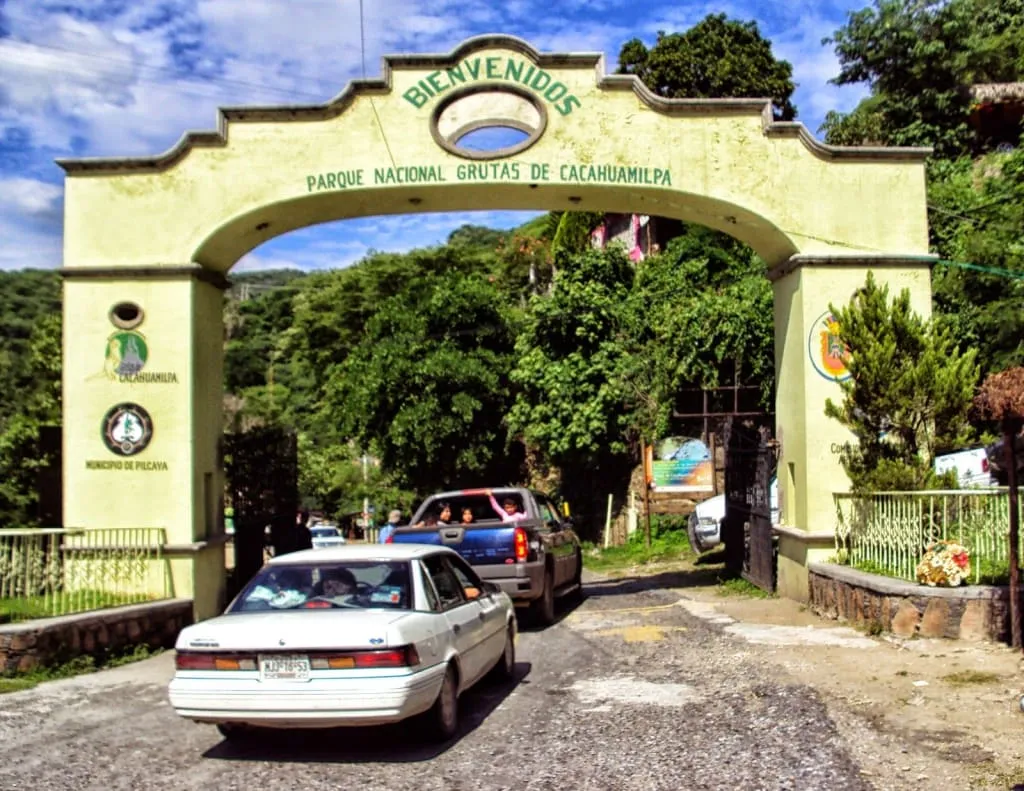
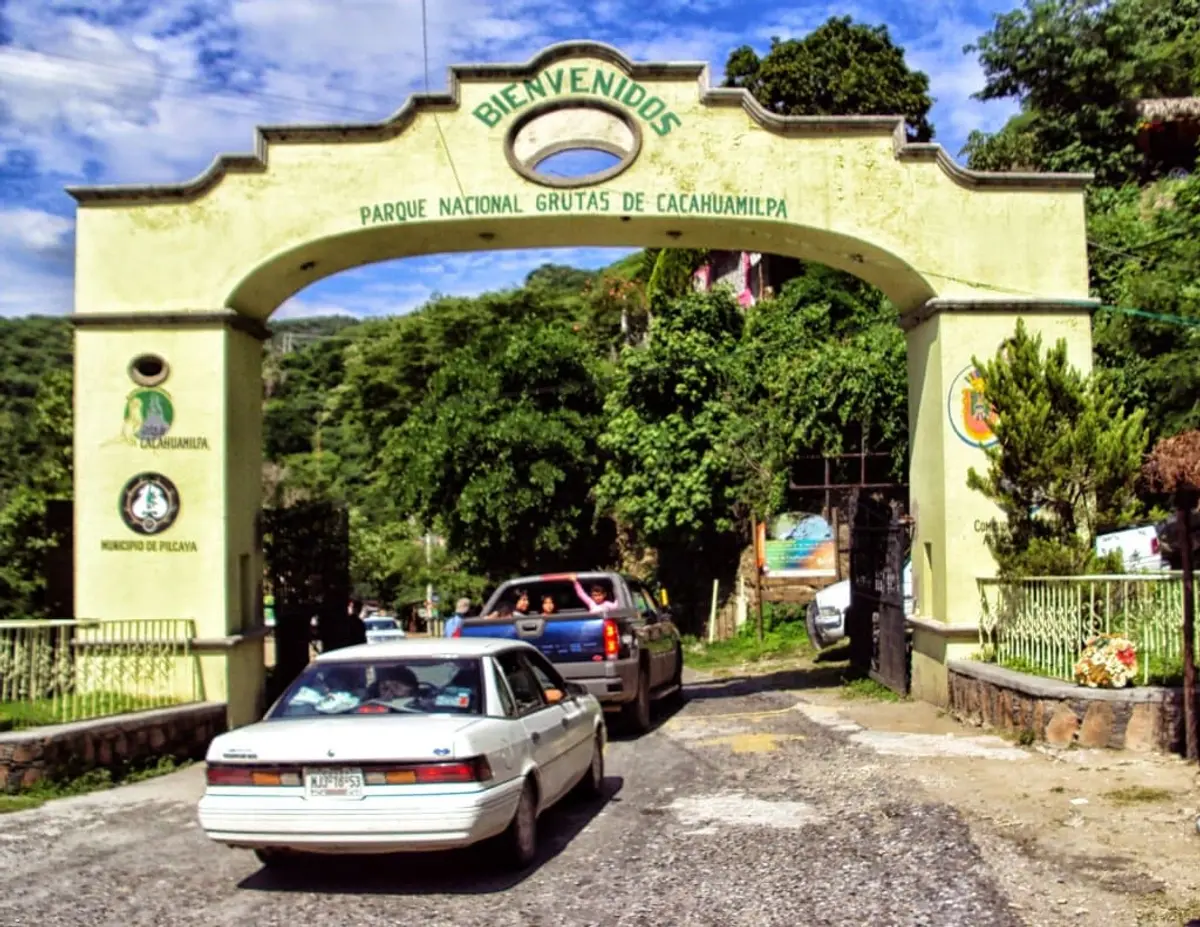
Grutas de Cacahuamilpa (Cacahuamilpa Caverns National Park) is the closest major excursion from Taxco and the most compelling — 30km northwest, reachable in 40 minutes.
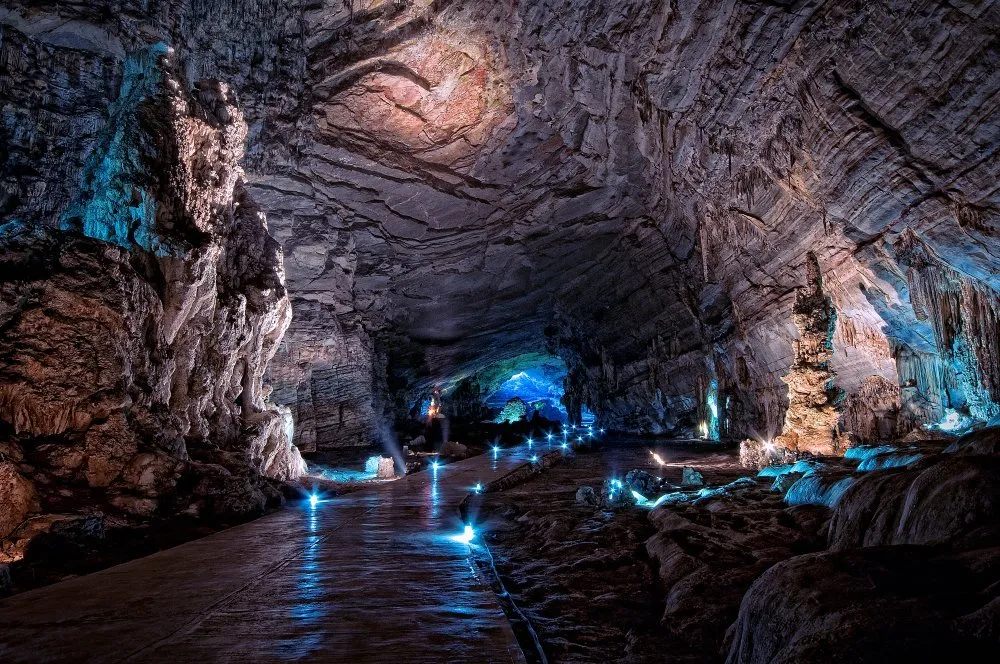
The cave system contains 19 named halls stretching over 2km, with the largest individual chambers reaching 80 meters high and 100 meters wide. The stalactites and stalagmites here are among the largest on earth — formations that took millions of years to build. The park is a national treasure that most international travelers skip entirely because they’ve never heard of it.
What to know:
- Entry: 155 MXN per person (2026 price)
- Guided tours: Mandatory, run every 30 minutes, last 90 minutes
- Language: Guides usually speak Spanish only; English-speaking guides can be arranged ahead
- Photography: Allowed everywhere, no tripods
- Best time: Weekday mornings to avoid groups
Combine with Dos Bocas canyon: 3km past the cave entrance, the Amacuzac River cuts through a dramatic canyon. Operators at the park entrance offer rappelling, zip-lining, and river tubing (200–500 MXN depending on activity).
Getting there: No direct public bus from Taxco; most visitors rent a car or book a guided tour from Taxco. The national park entrance is clearly marked on Google Maps. A half-day at the caves + a half-day of silver shopping in Taxco makes an ideal full day.
For the complete Grutas de Cacahuamilpa guide, see our full page.
2. Cuernavaca — Palace of Cortés and the City of Eternal Spring (70km)
Cuernavaca (capital of Morelos state, 330,000 residents) sits 70km from Taxco at a lower elevation — 1,500m vs. Taxco’s 1,800m — giving it a notably warmer, flower-filled climate that earned it the nickname “the City of Eternal Spring.”
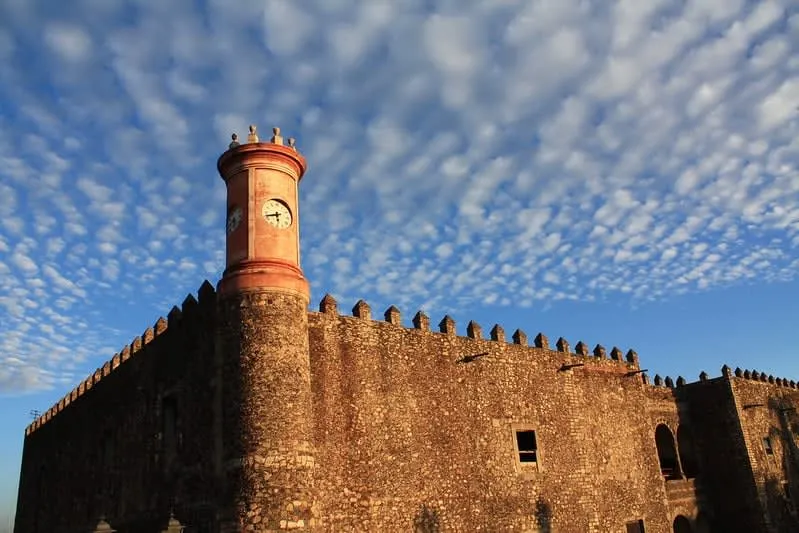
The main draw for history-minded travelers: the Palace of Cortés (Palacio de Cortés). This is not a replica or a reconstruction — it’s the actual fortified palace that Hernán Cortés built in 1526 on top of an Aztec pyramid, using Aztec temple stones as building material. Diego Rivera painted a dramatic mural of the Conquest of Mexico on its upper loggia in 1930. The building also houses the Cuauhnáhuac Regional Museum, with one of the better collections of Aztec and colonial artifacts in central Mexico.
Entry: Free for the palace and museum (combined).
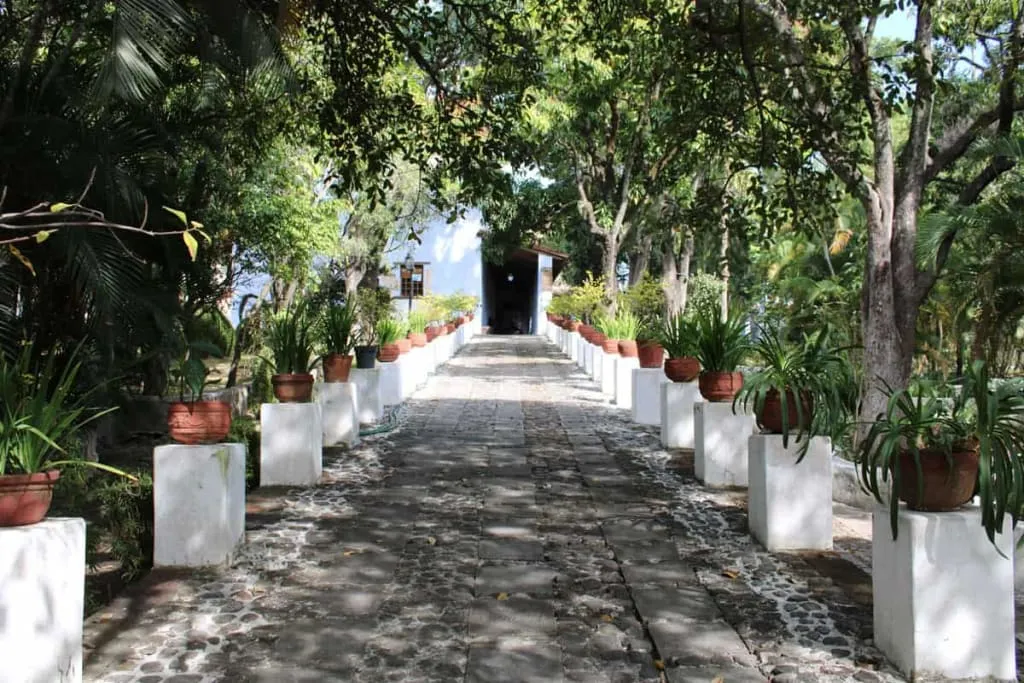
Borda Garden (Jardín Borda): The same José de la Borda who funded Taxco’s Santa Prisca Cathedral also built this botanical garden in Cuernavaca. Emperor Maximilian and Empress Carlota used it as their summer residence in the 1860s. Entry: 30 MXN.
Getting there from Taxco: Estrella de Oro or Pullman de Morelos buses run regularly between Taxco and Cuernavaca (60–90 MXN, 1–1.5 hours). By car: highway 95 north toward Mexico City, then left onto 95D — easy 1-hour drive.
Cuernavaca as a return-to-CDMX stop: If you’re heading back to Mexico City after Taxco, Cuernavaca is directly on the route and adds only 30–45 minutes to your journey. A morning in Taxco, afternoon in Cuernavaca, evening back in Mexico City is efficient.
3. Ixtapan de la Sal — Thermal Hot Springs and Spa Town (60km)
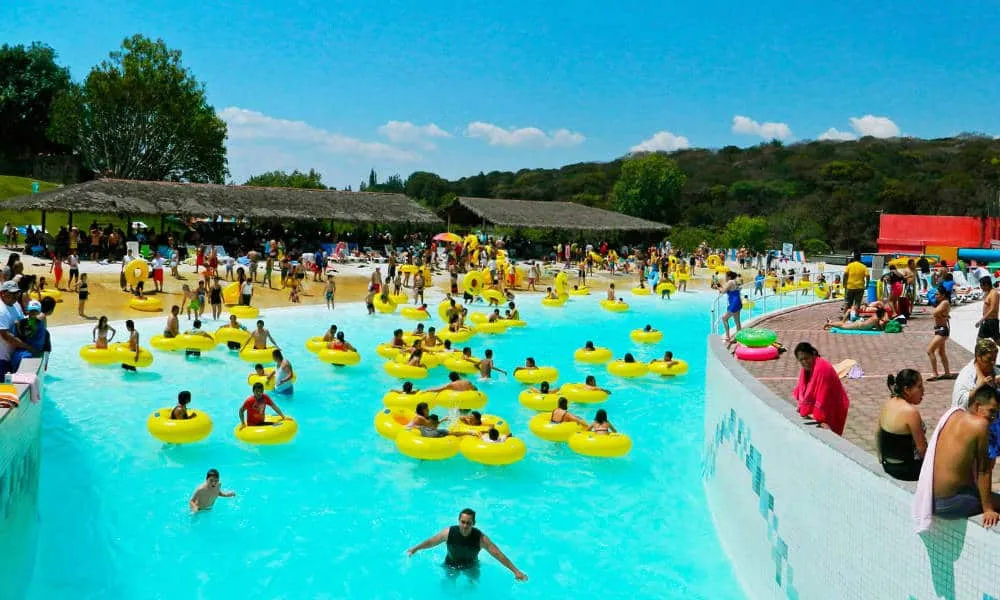
Ixtapan de la Sal is a small spa town in Mexico State, 60km northwest of Taxco through mountain roads, built entirely around thermal mineral springs that have been used since pre-Hispanic times.
The centerpiece is the Ixtapan de la Sal Spa and Water Park — a resort-style complex with thermal pools at various temperatures, a water park section (popular with families), spa treatments, and day-visitor access. There are also public thermal baths in the town center at a fraction of the resort price.
Practical info:
- Day entry (resort complex): 300–500 MXN per person depending on season/day
- Public municipal baths: 60–100 MXN — basic but functional thermal pools
- Best combo: Morning at the thermal baths, afternoon drive back to Taxco for pozole dinner
- Getting there: Car recommended (1 hour via narrow mountain road); infrequent local buses exist but take longer
Ixtapan del Oro (not to be confused): A smaller Pueblo Mágico 30km further from Ixtapan de la Sal, less visited, with a cold-water canyon and waterfall — add it if you have the full day.
4. Xochicalco Archaeological Zone — The Feathered Serpent Pyramid (80km)
Xochicalco is one of central Mexico’s most underrated pre-Hispanic sites — 80km from Taxco (1.5 hours), 40km south of Cuernavaca, and dramatically less crowded than Teotihuacan or Chichen Itzá.
The site was a major commercial and astronomical center from roughly 650–900 CE, where representatives of Teotihuacan, the Maya, and Zapotec cultures apparently met to recalibrate their calendars. The Temple of the Feathered Serpent (Quetzalcóatl) is the architectural centerpiece — its carved stone friezes depicting seated figures within undulating serpent bodies are among the finest in Mesoamerica.
What else to see:
- The underground observatory: A carved shaft descends into the hill; at summer solstice noon, a beam of sunlight illuminates a carved serpent on the floor — a precise astronomical alignment built over 1,300 years ago
- Ball court: One of the best-preserved in central Mexico
- Site museum: Context for the multi-cultural nature of the site
Practical info:
- Entry: 100 MXN (federal INAH zone)
- Hours: Tuesday–Sunday, 9 AM–5 PM
- Getting there: Best by car; alternatively, bus from Taxco to Cuernavaca, then taxi to site (30–40 MXN from Cuernavaca)
Combine with: Cuernavaca (40km away) makes a natural combination — Xochicalco morning, Cuernavaca afternoon.
5. Tepoztlán — Pyramid Above a Pueblo Mágico (110km)
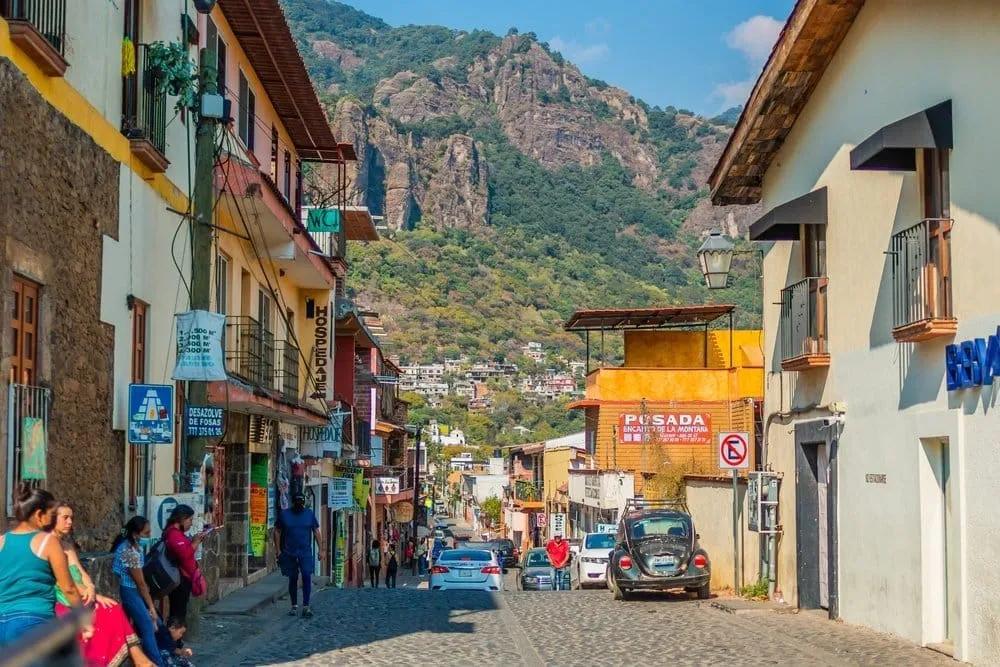
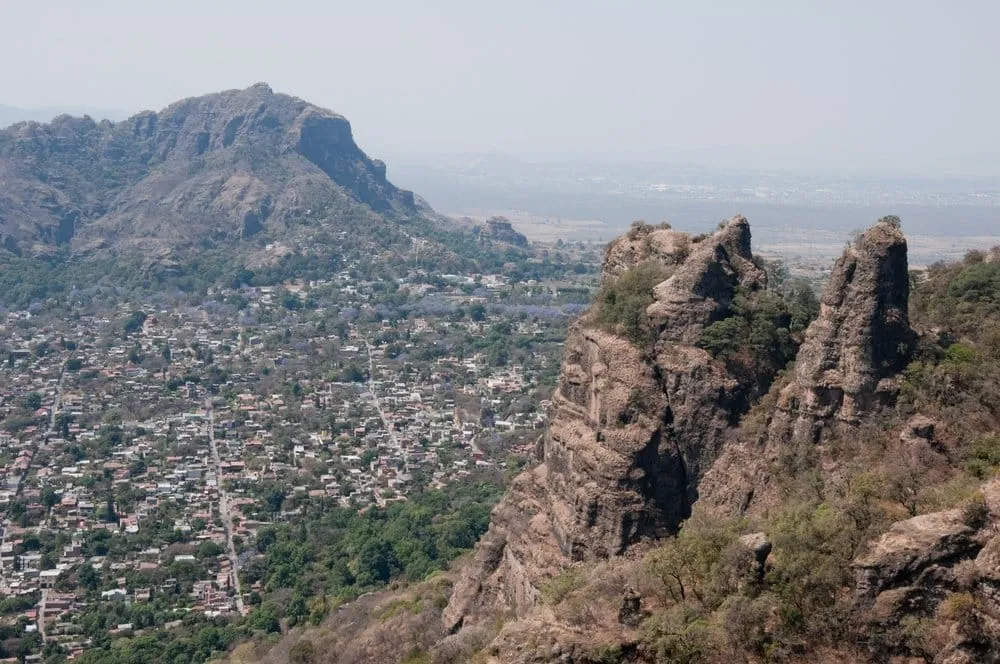
Tepoztlán is a Pueblo Mágico in Morelos, 110km from Taxco, built at the base of dramatic volcanic cliffs with a pre-Hispanic pyramid perched 400 meters above the town on a cliff face.
The pyramid (Tepozteco) requires a moderately strenuous 45-minute hike up the cliff — but the views over the valley from the top are among the best in central Mexico, and the pyramid itself is genuinely dramatic. Entry: 57 MXN.
Below the pyramid:
- Mercado de Tepoztlán (weekend market): One of the most vibrant market experiences in Morelos — organic produce, artisan food, local crafts, street food, herbal medicine vendors. Best on Saturdays and Sundays
- Dominican Convent (1559): Large colonial convent with attached atrium and original murals
- Food: Tlayudas, tepache de maguey, regional sweets, mushroom tacos
When to visit: Tepoztlán gets busy on weekends (especially from CDMX); weekday visits are calmer. The Carnaval de Tepoztlán (February) features the Chinelos dance tradition. See also: things to do in Tepoztlán.
Getting there from Taxco: No direct bus. Options:
- Car (recommended): 1.5–2 hours via Cuernavaca — take highway 95D north to Cuernavaca, then highway 95 / 138D east to Tepoztlán. Clear signage.
- Bus: Taxco → Cuernavaca (Estrella de Oro), then Cuernavaca → Tepoztlán (combi from Central de Autobuses Cuernavaca, 25–35 MXN, 45 min). Return same way.
- Combination route for CDMX travelers: Taxco → Tepoztlán → Mexico City is a perfect 2-day loop that most travelers don’t piece together.
6. Valle de Bravo — Lake Town and Adventure Sports (110km)
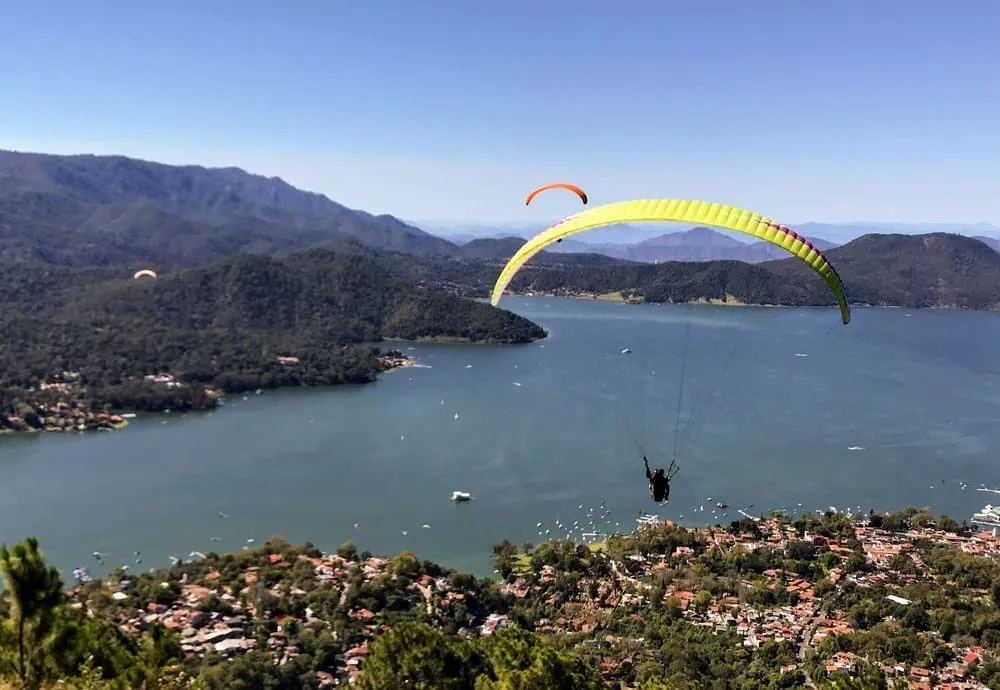
Valle de Bravo is a lakeside Pueblo Mágico in Mexico State, 110km from Taxco, on a reservoir used for sailing, kayaking, and water sports. The town itself is white colonial architecture on hillside cobblestones — similar aesthetics to Taxco but lake-fronted and surrounded by pine forests.
Why visit from Taxco:
- Paragliding: Valle de Bravo is one of Mexico’s top paragliding destinations — the thermals over the lake and surrounding mountains are world-class, hosting international competitions. Tandem flights available for beginners (1,200–1,800 MXN)
- Sailing and kayaking: Boats available for rent at the malecón; day tours on the reservoir
- Monarch butterfly route: From November through March, Valle de Bravo sits within the monarch butterfly migration zone — the forests above the town host millions of butterflies
- White water: The rivers below the dam offer Class III–IV rafting (seasonal)
Getting there: Car is the practical option — the mountain road between Taxco and Valle de Bravo is scenic but winding (1.5–2 hours). No direct bus connection; you’d need a connection through Toluca or CDMX.
7. Iguala de la Independencia — Mexican History Context (55km)
Iguala (55km, 1 hour) sits 50km north of Taxco on the highway toward Mexico City — a working-class city most international travelers skip, but with genuine historical significance: the Plan de Iguala was signed here on February 24, 1821, declaring Mexico’s independence from Spain. The Flag of the Three Guarantees (the precursor to the modern Mexican flag) was proclaimed here.
Iguala is also Mexico’s largest gold jewelry market — an interesting counterpart to Taxco’s silver, though much less touristy. Not a destination in itself, but a logical stop if you’re driving the Taxco–CDMX corridor and want historical context.
8. Mexico City — Museums, Restaurants, Everything (172km)
Mexico City is 172km from Taxco — the nearest major hub and your probable entry and exit point. If you have an extra full day, the day trips from Mexico City list and the CDMX city itself offer everything that Taxco doesn’t: major museums, fine dining, nightlife, world-class infrastructure.
Buses back to CDMX (ADO or Estrella de Oro from Tasqueña) run until midnight. No reason to feel stranded in Taxco.
Transport Comparison
| Option | Best For | Destinations Unlocked |
|---|---|---|
| Rental car | Maximum flexibility | All 8 + combinations |
| Bus (Estrella de Oro) | Cuernavaca, CDMX | Limited to main routes |
| Guided tour | Cacahuamilpa, Taxco area | Specific excursions |
| Combi/local bus | Cuernavaca connections | Secondary destinations via Cuernavaca hub |
Combination Routes
Semana Santa weekend (2 days): Day 1: Taxco Semana Santa (Good Friday processions from midnight) Day 2: Grutas de Cacahuamilpa → afternoon back in Taxco → bus to CDMX
Colonial loop (2 days): Day 1: Taxco silver shopping + Semana Santa or daily exploring Day 2: Xochicalco ruins (morning) → Cuernavaca Palace of Cortés (afternoon) → bus to CDMX
Spa and history (1 day): Morning: Ixtapan de la Sal thermal baths Afternoon: Drive back to Taxco, buy silver, pozole dinner
Return to CDMX via pueblos (2 days): Day 1: Taxco Day 2: Tepoztlán pyramid + market → Mexico City via Cuernavaca highway
Seasonal Calendar
| Season | Best Day Trip | Why |
|---|---|---|
| March–April | Cuernavaca / Cacahuamilpa | Semana Santa in Taxco; explore surroundings after |
| May–October | Valle de Bravo | Paragliding season; green mountains |
| November | All of the above | Monarch butterflies at Valle de Bravo; Jumiles in Taxco; autumn light |
| December–February | Tepoztlán / Cuernavaca | Dry season; cool but comfortable; fewer crowds |
Budget Guide
| Destination | Day Budget (per person) |
|---|---|
| Grutas de Cacahuamilpa | 300–600 MXN (entry + food + activities) |
| Cuernavaca | 200–500 MXN (transport + museum + food) |
| Ixtapan de la Sal | 400–800 MXN (day entry + food) |
| Xochicalco | 200–400 MXN (entry + transport) |
| Tepoztlán | 300–600 MXN (entry + market food + transport) |
| Valle de Bravo | 500–2,000+ MXN (paragliding adds significantly) |
All prices exclude rental car costs.
Plan Your Taxco Visit
For where to stay, Semana Santa logistics, and the complete Taxco activity guide:
- Taxco Mexico Travel Guide 2026
- Things to Do in Taxco
- Semana Santa in Mexico 2026
- Spring Break in Mexico 2026
- Colonial Mexico Travel Guide
- Day Trips from Mexico City