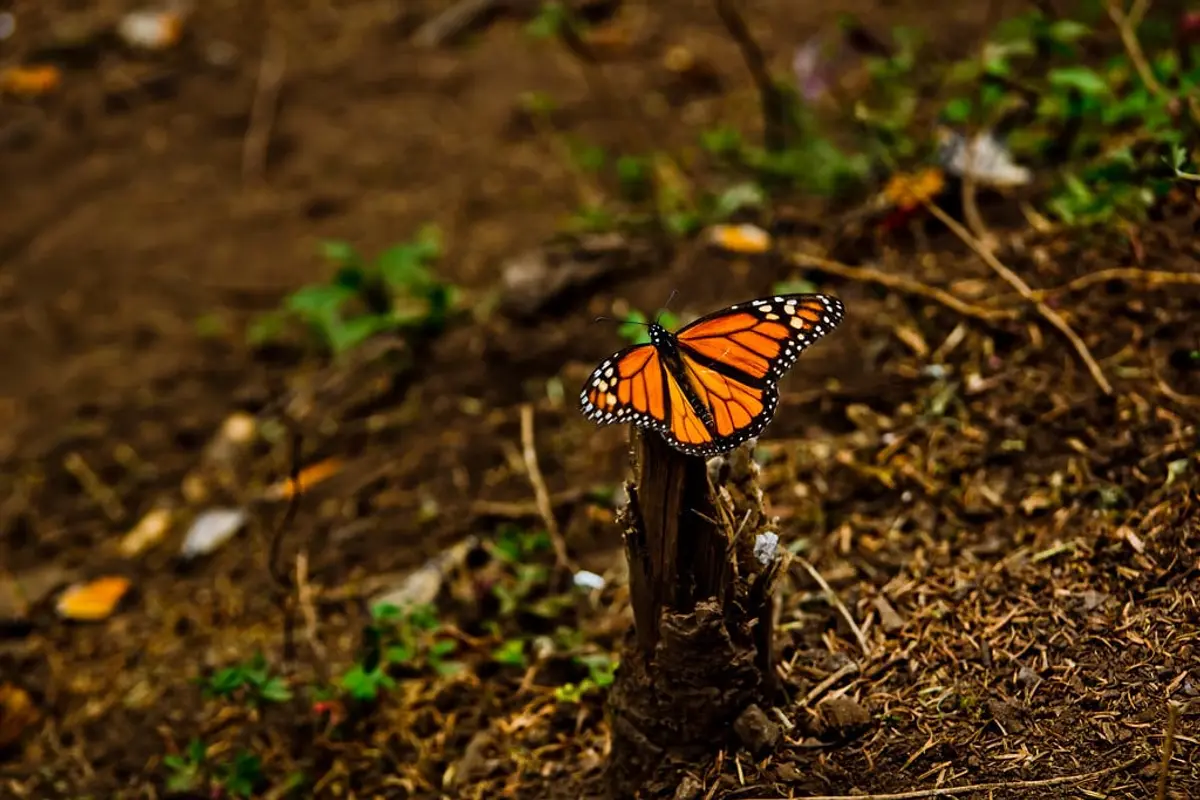
Ecotourism in Mexico 2026: 15 Best Sustainable Travel Experiences
Mexico is one of the world’s 17 megadiverse countries — a small group that together holds roughly 70% of Earth’s biodiversity. It has more species of reptiles than any other country, over 1,000 bird species, and marine ecosystems ranging from the Mesoamerican Barrier Reef to the nutrient-rich cold-water upwellings of Baja California.
For travelers who want to do more than lie on a beach, Mexico offers some of the most extraordinary wildlife and conservation experiences on the planet. This guide covers 15 of the best — organized by type, with practical details on timing, access, and how to make sure your visit actually helps rather than harms.
Wildlife Experiences (6)
1. Monarch Butterfly Reserves — Michoacán
Best time: November through March (peak: January–February) UNESCO Status: World Heritage Site (2008) Location: Sierra Chincua, El Rosario, Cerro Pelón — Angangueo region, Michoacán
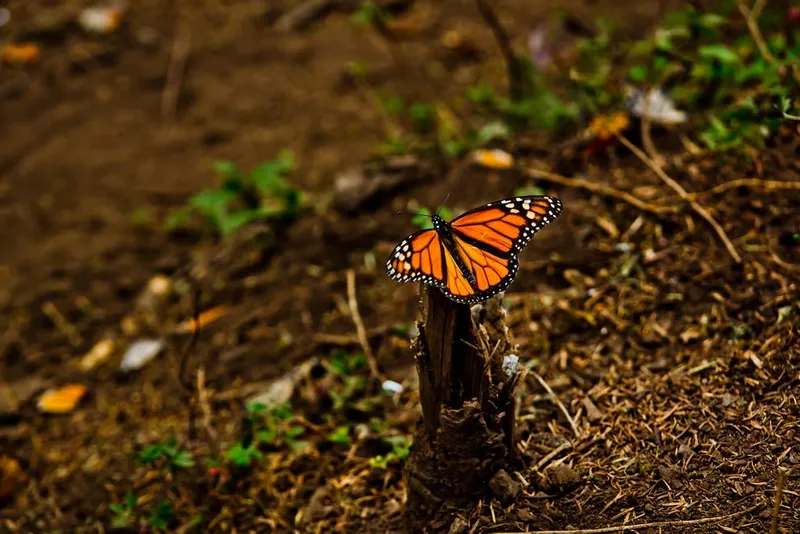
Every October, roughly 150 million monarch butterflies complete a 4,500-kilometer migration from Canada and the US to a handful of oyamel fir forests in the mountains of Michoacán. The concentration is staggering — trees turn orange with roosting butterflies, their combined weight bending branches. When the sun hits, they take flight and the air becomes a living river of wings.
This is one of the great wildlife spectacles on Earth, and it happens in a relatively small area that you can reach from Mexico City in around four hours.
What to know:
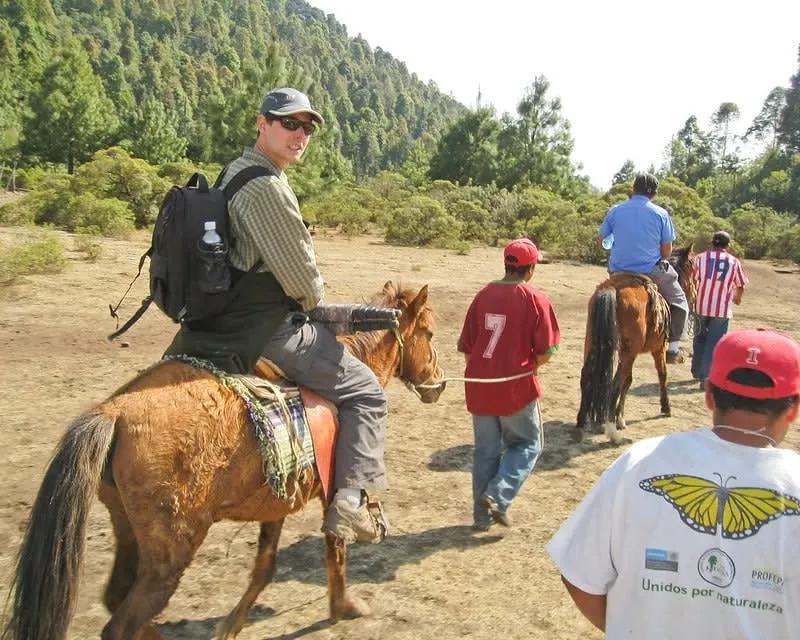
- Entrance to the reserves requires a licensed local guide (mandatory, enforced)
- El Rosario is the most accessible sanctuary; Cerro Pelón offers a wilder, more remote experience
- Altitude is around 3,000 meters — take it easy on arrival
- The migration is climate-sensitive; warmer winters have shifted peak dates; check current conditions before booking
Conservation note: The monarch population fluctuates significantly year to year. Certified community guides depend economically on tourism — your visit funds forest protection.
2. Whale Shark Snorkel — Holbox & Isla Mujeres
Best time: June through September (peak: July–August) Location: Yucatán Peninsula — Holbox Island and Isla Mujeres (Quintana Roo)
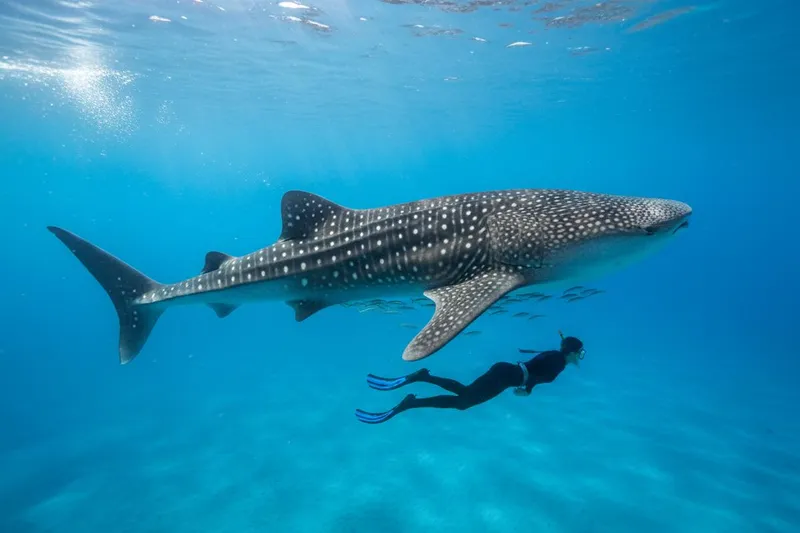
The world’s largest fish gathers off the northern tip of the Yucatán Peninsula every summer to feed on the mass spawning of little tunny. Groups of 50 to 800 whale sharks have been recorded here — the largest whale shark aggregation on the planet.
Swimming with one is the kind of experience that resets your sense of scale. The animal is enormous, entirely unbothered by your presence, and moves with a slow grace that makes the encounter feel surreal.
Read our complete guide to swimming with whale sharks in Mexico for full logistics on both locations, including tour costs and how to choose a responsible operator.
Conservation protocol:
- Two swimmers maximum per shark at any time
- No touching, no flash photography, no chasing
- Boats maintain 30-meter minimum distance
- Swim-only (scuba prohibited)
Reef-safe sunscreen is mandatory — standard chemical sunscreens are banned in this zone.
3. Gray Whale Lagoons — Baja California Sur
Best time: January through March Location: Laguna San Ignacio, Bahía Magdalena, Ojo de Liebre — Baja California Sur
Gray whales migrate 10,000 kilometers from Alaska’s Arctic feeding grounds to breed and calve in the warm, shallow lagoons of Baja California. What makes these lagoons extraordinary isn’t just the whale numbers — it’s the behavior. Baja gray whales are known as “friendly whales”: mothers actively bring their calves to small pangas (fishing boats) to be touched by humans.
This behavior is unique to these lagoons. Nobody fully understands why gray whales here seek human contact. It is, by any measure, one of the most otherworldly wildlife encounters in the world.
Laguna San Ignacio is the gold standard — the most protected, most pristine, and the lagoon where the “friendly whale” behavior is most reliably observed. Camp-based operators offer multi-day stays. The Reserve is part of the UNESCO El Vizcaíno Biosphere Reserve.
What to book: Small-group panga tours only. Day trips from Guerrero Negro access Ojo de Liebre; San Ignacio requires overnight stays.
For the full picture on Mexico’s whale encounters, see our whale watching Mexico guide.
4. Olive Ridley Sea Turtle Arrivals — Playa Escobilla
Best time: June through November (mass arrivals peak August–October) Location: Playa Escobilla, Oaxaca coast
Playa Escobilla hosts some of the world’s largest sea turtle mass nestings — known as arribadas — where 100,000 or more olive ridley turtles arrive on a single night to lay eggs. The beach turns dark with turtles. The sound and scale are hard to describe.
Access is regulated by SEMARNAT (Mexico’s environmental authority). Groups are small, guides are required, and visitors observe from a designated area to avoid disturbing nesting activity. Flashlights are not permitted (red-filtered lights only). Photographs are restricted.
Responsible visit rules:
- Book through certified operators or the local ejido (communal land authority) only
- Do not walk on the beach independently during arribada nights
- Never touch nesting turtles or eggs
5. Pink Flamingos — Celestún, Yucatán
Best time: Year-round (larger concentrations during breeding season, April–June) Location: Celestún Biosphere Reserve, western Yucatán
The Celestún estuary on Yucatán’s Gulf coast hosts a resident population of several thousand American flamingos — one of the largest flamingo colonies in the Americas. Unlike migrant flamingo populations elsewhere, these birds are year-round residents.
Boat tours from Celestún village travel through mangrove tunnels and open estuary to flamingo feeding areas. The birds tolerate boat approaches at moderate distances.
What else is here: Celestún also protects an important freshwater spring system, crocodiles, roseate spoonbills, and over 300 bird species. It’s a full-day birding destination even without flamingos.
6. Jaguars at Calakmul
Best time: Dawn and dusk, year-round (dry season Nov–Apr = better visibility, fewer mosquitoes) Location: Calakmul Biosphere Reserve, southern Campeche
Calakmul holds the highest jaguar density of any site in Mexico. The reserve’s remoteness — it’s the most isolated major Maya ruin complex in the Yucatán — has protected it from the hunting and habitat loss that’s devastated jaguar populations elsewhere.
You will not see a jaguar on demand. But a dawn walk through the forest, guided by a certified local naturalist, through an area with regular jaguar trails and tracks, is a genuine wildlife experience even if the cat doesn’t appear. Tapirs, howler monkeys, and spider monkeys are seen almost daily.
Important: Guides are mandatory for early-morning forest entries. Book accommodation in Xpujil (the nearest town) the night before for pre-dawn access.
Marine Experiences (3)
7. Cozumel Marine Park
Best time: Year-round (visibility best November–May) Location: Cozumel Island, Quintana Roo Reef System: Mesoamerican Barrier Reef (world’s second-largest coral reef system)
Cozumel’s reef system is among the best-preserved in the Caribbean. The island sits on the Mesoamerican Barrier Reef — 1,000 kilometers of living coral stretching from Mexico to Honduras. Cozumel’s protected waters offer drift snorkeling and diving over shallow, healthy coral formations with extraordinary fish diversity.
Reef-safe sunscreen is required by law in all Cozumel marine park waters. Inspectors at dive and snorkel shops check; non-compliant sunscreens are confiscated.
8. Cabo Pulmo — Baja’s Recovery Story
Best time: Year-round; marine life most active June–November (warmer water) Location: Cabo Pulmo National Park, Baja California Sur UNESCO Status: World Heritage Site (2005)
Cabo Pulmo is one of the greatest marine conservation success stories in the world. In 1995, after decades of overfishing that left the reef nearly dead, local fishing families voluntarily banned all fishing in the area and pushed for national park status.
The result: 463% biomass recovery documented by Scripps Institution of Oceanography. Populations of grouper, snapper, sharks, and rays have rebounded from near-zero to some of the highest densities anywhere in the Eastern Pacific.
What you see today — dense schools of jacks surrounding you, bull sharks patrolling the reef wall, massive grouper resting on coral heads — is what Mexican reefs looked like before industrial fishing.
Access: Day trips from Los Cabos (1.5 hours north) or stay in the small village of Cabo Pulmo itself. Only certified local operators can lead tours inside the park.
9. Sian Ka’an Biosphere Reserve
Best time: November through April (dry season; fewer mosquitoes) Location: Tulum area, Quintana Roo UNESCO Status: World Heritage Site (1987)
Sian Ka’an — “where the sky is born” in Mayan — covers 650,000 hectares of tropical forest, mangroves, wetlands, and reef. It protects over 300 bird species, manatees, crocodiles, four sea turtle species, jaguars, and a section of the Mesoamerican Barrier Reef.
Tours from Tulum take visitors into the reserve for mangrove boat tours, snorkeling in cenotes, and bird watching. The ancient Maya used canals through the biosphere for trade — some tours still travel these routes.
What makes it different: Sian Ka’an is active, productive wetland and reef — not a viewing platform. You’re traveling through a living system, not observing from the edge.
Book certified operators only. The reserve entrance is near Tulum — there are many tour sellers in town, not all of them authorized for reserve access.
Land Experiences (3)
10. Pueblos Mancomunados — Sierra Norte, Oaxaca
Best time: October through May (coolest, driest weather for hiking) Location: Sierra Norte mountains, 70km north of Oaxaca City
Eight indigenous Zapotec villages in the Sierra Norte mountains jointly manage one of Mexico’s most successful community-ecotourism operations. “Pueblos Mancomunados” (linked villages) offer over 100 kilometers of maintained hiking and mountain biking trails through pine-oak forest, connecting the villages via a network of dirt roads and footpaths.
What’s available:
- Community-owned cabins in each village (basic but good)
- Guided bird watching (300+ species including resplendent quetzal)
- Mountain biking rentals
- Night-sky viewing at high altitude
The operation is entirely community-owned. Every entrance fee, cabin rental, and guide fee goes directly to the participating villages. This is the model for what good ecotourism looks like.
11. Reserva de la Biosfera El Vizcaíno — Baja
Best time: January through March (gray whale season); October–April for the full reserve Location: Baja California Sur (covers roughly one-quarter of the peninsula)
El Vizcaíno is the largest protected natural area in Latin America — 2.5 million hectares covering some of the most geologically ancient and biologically unique landscape in North America.
Beyond the gray whale lagoons (covered above), the reserve holds:
- Rock paintings from indigenous cultures 10,000 years old (UNESCO)
- The Guerrero Negro salt flats — one of the world’s largest salt operations, surrounded by migrating shorebirds
- Pronghorn antelope (near-extinct subspecies only found here)
- Desert landscapes that feel genuinely other-worldly
Day trips from Guerrero Negro cover the whale lagoon and salt flats. Rock painting visits require multi-day expeditions with permits — arrange through certified operators in San Ignacio.
12. Calakmul Biosphere Reserve
Best time: November through April Location: Southern Campeche, Mexico-Guatemala border Area: Over 800,000 hectares (2 million acres)
Already mentioned for jaguar watching, Calakmul deserves a second entry as a land experience in its own right. The reserve is the largest tropical forest fragment in Mexico and the second largest in Latin America. Combined with adjacent Guatemalan protected areas, it forms the Mesoamerican Biological Corridor — a continuous forest belt critical for jaguar movement across the region.
The ruins at the center of the reserve are among the most atmospheric in Mexico. Unlike Chichen Itza or Tulum, Calakmul has almost no crowds — most days you’ll share it with a few dozen other visitors, not thousands.
The combination of genuine wilderness, massive ruins, and extraordinary wildlife density makes Calakmul arguably the most underrated eco-destination in Mexico.
For the full adventure picture — including Copper Canyon in Chihuahua — Mexico’s land-based eco-experiences cover every type of terrain and ecosystem.
Community Experiences (3)
13. Teotitlán del Valle — Weaving Cooperatives
Best time: Year-round Location: 30km from Oaxaca City, Oaxaca
Teotitlán del Valle has been weaving wool textiles using traditional Zapotec patterns for over 2,000 years. The village operates a system of family workshops and small cooperatives that offer genuine immersion: visitors watch the full process from raw wool to finished rug, learn about natural dyes from plants and insects (the cochineal beetle produces the deep reds), and buy directly from the weavers.
Why this is ecotourism: Natural dye-based textiles have zero synthetic chemical waste. The weaving cooperatives maintain traditional land use, language, and cultural practice that might otherwise disappear. Buying directly from weavers — not from middlemen shops in Oaxaca City — is what makes the economic model work.
14. Cosméticos Naturales Mazunte — Oaxaca Coast
Best time: Year-round Location: Mazunte, Oaxaca coast
Mazunte’s story is one of the more extraordinary community pivots in Mexico. For decades, the village operated a sea turtle slaughterhouse. When the Mexican government banned sea turtle hunting in 1990 and the industry collapsed overnight, the community faced economic collapse.
With support from The Body Shop founder Anita Roddick, the village created Cosméticos Naturales — a cosmetics cooperative using locally sourced plant ingredients (copra, turtle-free products). Today the cooperative employs most of the village and funds turtle conservation — the same turtles the village once harvested.
The cooperative shop is open for visits and purchases. Nearby Playa Mermejita has active sea turtle nesting. This is what economic transformation with conservation outcomes actually looks like.
15. Lacandón Jungle Communities — Chiapas
Best time: November through April (dry season — roads in wet season can be impassable) Location: Lacandón jungle, eastern Chiapas (Metzabok, Lacanjá Chansayab)
The Lacandón Maya are one of the most isolated indigenous groups in Mexico — direct descendants of classic Maya civilization who maintained their jungle homeland through centuries of contact resistance. Their territory covers part of the Lacandón Jungle, the largest remaining tropical rainforest in North America outside the Amazon.
Community visits to villages like Lacanjá Chansayab offer guided walks through primary jungle, canoe trips on jungle rivers, and direct economic support to communities maintaining their forest.
Responsible visit protocols:
- Book only through established community guides — cold-approach tourism is not appropriate
- Photography requires explicit permission (ask before raising the camera)
- Do not bring or distribute gifts to children — it creates extractive dynamics
- Stays should be arranged through ECOSUR or certified Chiapas ecotourism operators
Best Months Timing Table
| Experience | Peak Season | Secondary |
|---|---|---|
| Monarch butterflies (Michoacán) | Jan–Feb | Nov–Mar |
| Whale sharks (Holbox/Isla Mujeres) | Jul–Aug | Jun–Sept |
| Gray whales (Baja lagoons) | Feb | Jan–Mar |
| Sea turtles (Playa Escobilla) | Aug–Oct | Jun–Nov |
| Pink flamingos (Celestún) | Apr–Jun | Year-round |
| Jaguars (Calakmul) | Any (dry season best) | Nov–Apr |
| Cozumel reef snorkel | Nov–May | Year-round |
| Cabo Pulmo | Jun–Nov | Year-round |
| Sian Ka’an | Nov–Apr | Year-round |
| Pueblos Mancomunados hiking | Oct–May | Year-round |
| El Vizcaíno (gray whales + rock art) | Jan–Mar | Oct–Apr |
| Calakmul jungle | Nov–Apr | Avoid Aug–Oct |
| Teotitlán del Valle | Year-round | — |
| Cosméticos Naturales Mazunte | Year-round | — |
| Lacandón communities | Nov–Apr | — |
Responsible Tourism: How to Choose Certified Operators
Red Flags
- “Eco” in the name with no specifics about what that means
- No mention of local community involvement
- Group sizes over 15 for wildlife encounters
- Price is the main selling point
- No safety briefing before wildlife encounters
Green Flags
- SECTUR certification or Rainforest Alliance membership
- Guides from local communities
- Explicit conservation fees or donations included
- Small group size limits enforced
- Written code of conduct for wildlife interactions
Greenwashing vs. Real Ecotourism
The key question is: who benefits economically? If the profits flow to an outside operator while local communities get token employment, it’s tourism with a green label. Real ecotourism creates economic incentives for conservation in the communities that live alongside the wildlife. Ask specifically: what percentage of your revenue stays in this community?
Reef-Safe Sunscreen: What You Need to Know
Why It Matters
Oxybenzone and octinoxate — the active chemicals in most standard sunscreens — cause coral bleaching at concentrations measured in parts per trillion. They also disrupt sea turtle development and have been found in fish tissue throughout the Yucatán’s reef system.
Where It’s Required by Law
- All cenotes in Yucatán and Quintana Roo
- Cozumel Marine Park
- Cabo Pulmo National Park
- All of Sian Ka’an Biosphere Reserve
- Most protected snorkel and dive sites in Baja California
Enforcement is real — inspectors at entry points check bottles and turn back non-compliant sunscreens. Some sites sell approved alternatives at entry.
What “Reef-Safe” Actually Means
Look for mineral-based formulas:
- Zinc oxide (most effective, tends to leave white cast)
- Titanium dioxide (less white cast, slightly less UV coverage)
The label must say “reef-safe” AND the active ingredients must be exclusively zinc oxide or titanium dioxide. “Natural” or “organic” does not mean reef-safe — there are plant-based chemical sunscreens that are equally harmful.
Pack reef-safe sunscreen from home — it’s available in Mexico but at premium prices and limited selection outside major tourist areas.
Plan Your Eco Trip to Mexico
Before booking any wildlife experience, get your travel insurance sorted. Medical evacuation from remote areas like Calakmul or El Vizcaíno can be expensive without coverage. Focus on emergency care and evacuation first if you are building a remote ecotourism itinerary.
For tours and day trips to all 15 destinations in this guide, Viator lists verified operators with reviews: Browse Mexico ecotourism tours on Viator.
Plan Around the Best Season
The timing of your trip determines which experiences are possible. Our best time to visit Mexico guide covers the full seasonal breakdown — including the sargassum situation on the Caribbean coast that affects marine experiences.
For the most detailed coverage of individual experiences:
- Swimming with whale sharks in Mexico — full guide
- Whale watching Mexico — gray whales and humpbacks
- Copper Canyon, Chihuahua — land adventure alternative
- Mexico travel insurance — what you need for remote adventures
Mexico’s biodiversity is extraordinary. The 15 experiences in this guide represent a fraction of what’s here — but they’re a strong starting point for planning a trip that’s memorable, responsible, and genuinely good for the places you visit.