Michoacán Travel Guide 2026: Morelia, Monarch Butterflies & Copper
Michoacán is the underrated center of Mexico that travelers keep overlooking. While San Miguel de Allende fills up with digital nomads and Oaxaca crowds its rooftop mezcal bars, Michoacán sits 30% cheaper, equally beautiful, and far less photographed.
The state has more distinct things to see than almost anywhere in Mexico: the UNESCO cathedral city of Morelia, the most authentic Day of the Dead ceremonies in the country at Pátzcuaro, millions of monarch butterflies arriving on schedule every November, an active volcano from 1943 whose lava field swallowed a village whole, and the copper-working traditions of Santa Clara del Cobre that have continued for five centuries.
This is the guide to understanding and experiencing all of it.
Why Michoacán
Three things make Michoacán worth the trip:
The monarchs. Every autumn, roughly 100 million monarch butterflies complete a 4,500 km migration from Canada and the United States to the oyamel fir forests of Michoacán’s Sierra Chincua. They cluster so densely on trees that branches bend. The sound of wings is audible. It’s one of the natural spectacles of North America and it happens nowhere else.
Morelia and Pátzcuaro. Two UNESCO-listed colonial towns within 60 km of each other. Morelia is pink sandstone and baroque cathedral organs; Pátzcuaro is a smaller lake island town where indigenous Purepecha culture remains most visible. Both are excellent bases.
The depth. Beyond the headline attractions, Michoacán has Paricutín (the volcano that erupted from a cornfield in 1943), Santa Clara del Cobre (copper artisans hammering vessels by hand), Zirahuen lake (pristine, almost no tourists), and Uruapan (the avocado capital of Mexico, with a spectacular waterfall in the center of town).
Morelia: Mexico’s Pink Stone City
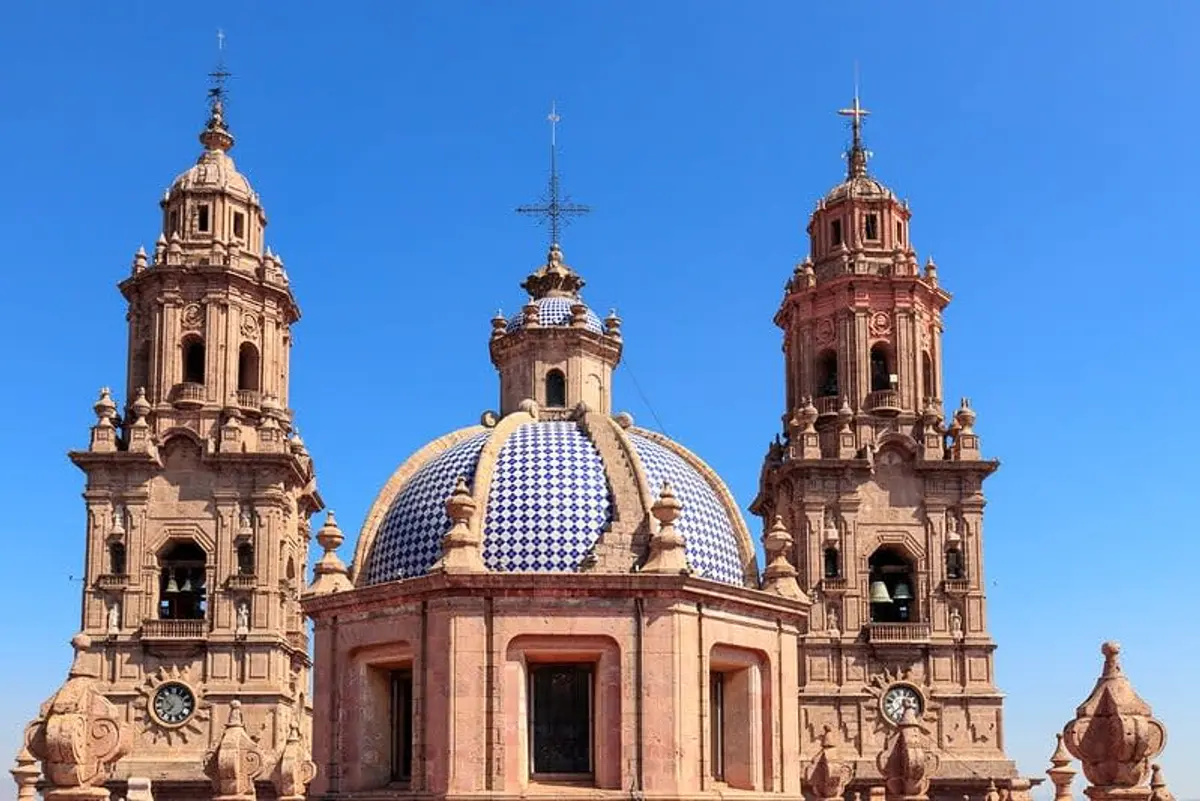
Morelia became a UNESCO World Heritage Site in 1991 — and walking through the historic center explains why immediately. The entire downtown is built from a local pink volcanic stone (cantera rosada) that shifts color throughout the day: pale at noon, golden-orange at sunset, dramatic gray-pink at night when the floodlights come on.
The Cathedral
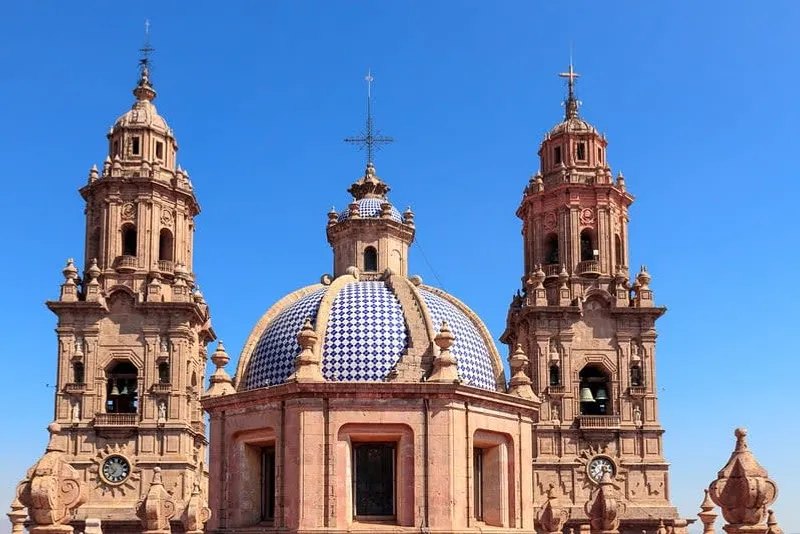
The Catedral de Morelia is the defining structure of the city — twin baroque towers flanking a facade that took 150 years to complete (1640–1744). The interior contains one of the largest and most historically significant pipe organs in Mexico, installed in 1905 and restored in 2005, with 4,600 pipes. Concerts take place regularly; check the tourism office schedule.
The cathedral faces the zócalo (Plaza de Armas), where Morelianos gather in the evenings. The surrounding streets contain the best concentration of colonial architecture in Central Mexico.
Carnitas and Morelia’s Food Scene
Michoacán invented the best version of carnitas in Mexico. Every Sunday, families gather at market carnitas stalls — Mercado Independencia has the most traditional setup — to buy carnitas by the kilogram, wrapped in paper with freshly made tortillas, avocado, cilantro, and salsa.
The cooking method: whole pigs go into massive copper cauldrons (using copper from nearby Santa Clara del Cobre) with lard, orange peel, bay leaves, and milk. Low heat for 4–6 hours. Each cut — maciza (lean), costilla (rib), buche (cheek), surtida (mixed) — has a different texture and devotees.
Beyond carnitas: uchepos (fresh corn tamales, slightly sweet), corundas (triangular tamales wrapped in corn leaf, a Purepecha tradition), and Michoacán’s excellent ice creams (nieves) made with exotic local fruits.

The Aqueduct
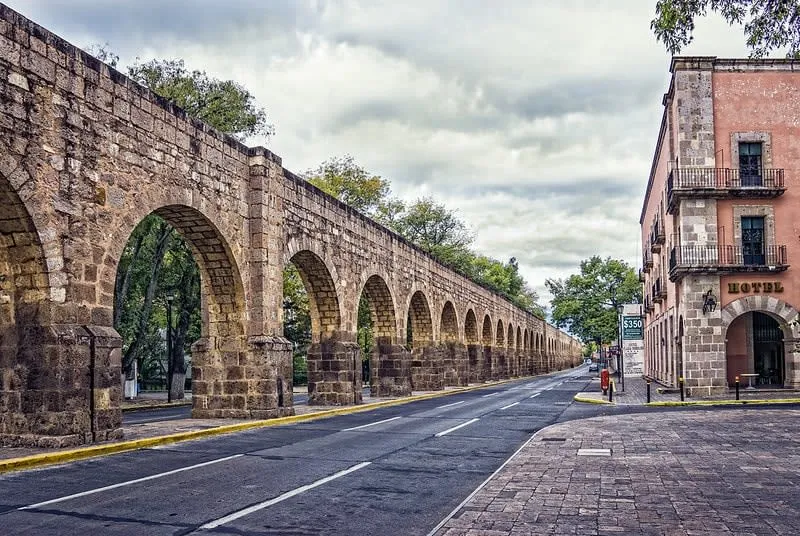
Running along the east side of the historic center, Morelia’s colonial aqueduct stretches 1.6 km with 253 arches — construction completed in 1785 to supply the city with water. Today it’s one of the great urban walkways in Mexico; the arches are illuminated at night, and the road alongside fills with vendors and walkers.
For more: Morelia Michoacán Mexico guide | Things to Do in Morelia | Day Trips from Morelia
Pátzcuaro: The Lake and the Purepecha World
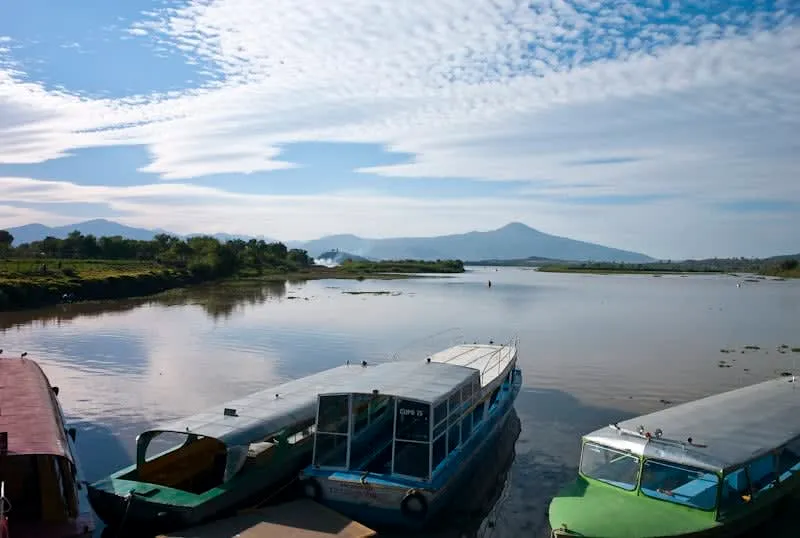
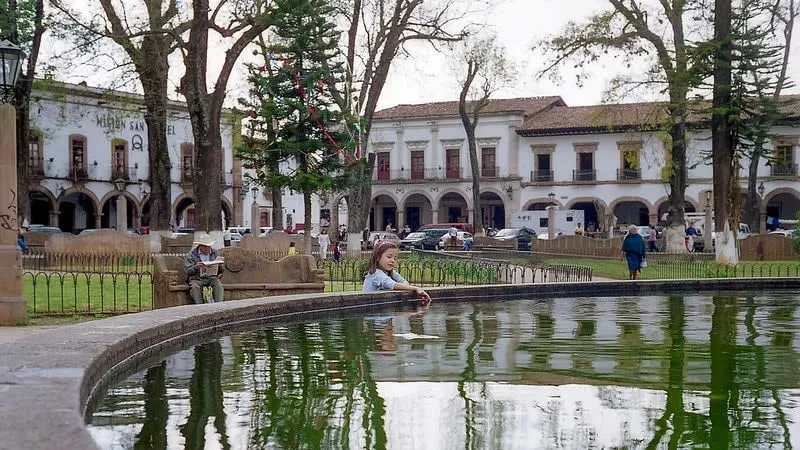
Pátzcuaro is 60 km west of Morelia — close enough for a day trip, worthy of an overnight stay. The town sits at 2,175m above sea level beside Lake Pátzcuaro, a high-altitude volcanic lake with several islands.
Janitzio Island
The most visited of Pátzcuaro’s lake islands, Janitzio is reached by lancha (small boat, about 30–40 MXN round trip) from the town pier. The island’s hill is topped by a monumental statue of José María Morelos, the independence hero — 40 meters tall with an interior staircase that winds through murals depicting the independence movement.
Janitzio itself is a small fishing and craft community. The island’s residents maintain the Purepecha fishing tradition with distinctive butterfly nets (redes mariposa) that are more ceremonial than functional today — you’ll see them demonstrated on the lake.
Day of the Dead at Pátzcuaro
November 1–2 in Pátzcuaro is the most authentic Day of the Dead experience in Mexico. In many Mexican cities, Día de Muertos has become largely a performance for visitors. In Pátzcuaro, it remains a genuinely observed indigenous ceremony.
On the night of November 1, fishermen in dugout canoes cross the dark lake with candles toward Janitzio to visit the cemetery — the procession is photographed worldwide and is deeply moving. The cemeteries in surrounding villages (Tzintzuntzan is excellent) fill with families who spend the night building ofrendas, eating at gravesides, and keeping vigil.
Come to participate respectfully, not to photograph intrusively. The ceremony involves real grief and real spiritual observance.
Pátzcuaro’s Market
The daily market behind the Plaza Chica sells fresh produce, Purepecha ceramics, lacquerware, and the wooden kitchen utensils that Michoacán is known for. Buy here rather than at tourist shops — prices are honest and you’re buying from the producers.
The Monarch Butterfly Reserves
Every year, roughly 100 million monarch butterflies arrive in Michoacán’s Sierra Transvolcánica between October and March. Four sanctuaries are open to visitors:
- El Rosario (most visited, most accessible from Morelia — 3 hours)
- Sierra Chincua (wilder, steeper hike, fewer crowds)
- Cerro Pelón (requires more effort, closer to Estado de México)
- La Mesa (small, quietest)
Logistics from Morelia: Take a bus to Zitácuaro (2 hours), then a shared taxi or tour to the reserves. Or organize a full-day tour from Morelia (tour agencies in the historic center, around 800–1,200 MXN per person including transport).
At the reserve: Bring warm layers — the oyamel forests are at 3,000m and temperatures are cool even midday. Hike the trail into the forest (moderate difficulty). Listen first: you’ll hear the wings before you see the butterflies. When you emerge into the colonies, the trees are entirely orange. Midday is best — as warmth increases, butterflies become active and take flight in clouds.
Season: October arrival through mid-March departure. Peak: November–February. January is often most spectacular. By mid-March the trees are empty.
Guides are mandatory inside the reserves (included in entry fee, around 80–120 MXN). Do not veer off marked paths — the colonies are fragile.
For detailed planning: Monarch Butterflies Mexico guide
Paricutín: The Living Volcano
On February 20, 1943, a corn farmer named Dionisio Pulido was working his field near the town of San Juan Parangaricutiro when the ground began to smoke and fissure. Within 24 hours, a cinder cone had formed. Within a week it was 150 meters tall. The eruption continued for 9 years.
By the time Paricutín finished erupting in 1952, it had grown to 424 meters above the surrounding terrain and had buried two entire towns — San Juan Parangaricutiro and Paricutín — in lava. The only structure that survived was the colonial church of San Juan Parangaricutiro. Its stone walls and bell tower protrude from the hardened black lava like a monument.
Visiting Paricutín:
- Base: the town of Angahuan, 2.5 hours from Morelia by car or bus to Uruapan then collective taxi
- Options: hike or ride horses from Angahuan through the lava field to the buried church (5 km each way)
- Horse + guide: around 500–800 MXN total, worth it for the distance
- Climbing the volcano crater requires a separate permit and guide — check current access conditions
- The hike through hardened lava is otherworldly: black moonscape, pine forest edges, the church steeple rising from the ground
Allow a full day. Leave Morelia early (6–7am). The lava field is hot and exposed at midday.
Santa Clara del Cobre: Copper Workshops
18 km south of Pátzcuaro, the town of Santa Clara del Cobre has practiced copper working since before the Spanish arrived — Purepecha metallurgists were renowned throughout pre-Columbian Mesoamerica. The tradition continues in roughly 500 workshops today, producing handmade copper vessels, pots, lamps, and decorative pieces by hand using techniques that have changed little in centuries.
Walk the workshop streets: most are open to visitors, and you can watch artisans hammering heated copper sheets into bowls and pitchers. The National Copper Fair happens every August — the largest craft fair in Michoacán.
Prices are honest and pieces are genuinely handmade. Good purchases: large serving bowls (plan how to pack them), small decorative plates, and copper kitchenware. A day trip from Pátzcuaro works well (20-minute drive or shared taxi).
Uruapan and Zirahuen
Uruapan (2 hours from Morelia, 40 minutes from Pátzcuaro) is the avocado capital of Mexico — the surrounding region produces a significant portion of the world’s Hass avocados. The city itself is pleasant; more importantly, it contains the Parque Nacional Barranca del Cupatitzio, where the Cupatitzio River emerges from underground springs in a cloud forest setting within the city limits. Swimming isn’t permitted but the walk through the park is lovely.
Uruapan is also the gateway for Paricutín visits — it has better hotels than Angahuan for those staying overnight before the volcano trip.
Zirahuen Lake — 15 minutes from Pátzcuaro — is the local secret. Smaller and higher than Pátzcuaro, surrounded by pine forest, and almost completely undeveloped. A handful of cabañas and one lakeside restaurant. Kayak rentals available. No sargassum, no tours, almost no other visitors. This is where Michoacán people go when they want to disappear.
Safety in Michoacán
The U.S. State Department rates Michoacán at Level 3 (Reconsider Travel) — but this designation applies unevenly across a large state. Here’s what it means specifically:
Safe for tourists:
- Morelia city center and tourist zones
- Pátzcuaro town and lake
- Monarch butterfly reserves (El Rosario, Sierra Chincua)
- Santa Clara del Cobre
- Uruapan city center and national park
Exercise more caution:
- Rural roads between cities, especially at night
- Areas west of Morelia toward Tierra Caliente
- Highway 37 toward the Michoacán coast
Practical rules:
- Don’t drive rural highways after dark
- Use toll highways (autopistas) rather than secondary roads
- Book organized tours to the butterfly reserves rather than self-driving unfamiliar routes
- Ask your hotel about current conditions before renting a car
The tourist corridors in Michoacán are actively managed for visitor safety. Tens of thousands of international visitors come for the monarchs every year without incident.
Getting to Michoacán
By air: Morelia’s Aeropuerto Internacional Francisco J. Mujica (MLM) has direct flights from Mexico City (1 hour, from around 800 MXN on VivaAerobus/Volaris), Tijuana, and seasonal routes. Guadalajara (GDL) is 3 hours by bus and has more flight options if you’re coming from the US.
By bus: ETN Turistar and Primera Plus operate comfortable first-class service from Mexico City (Terminal Poniente, 4 hours, 350–550 MXN). From Guadalajara: 3 hours. From Guanajuato: 2.5 hours.
By car: Mexico City to Morelia via MEX-15D is 3.5–4 hours. The highway is toll (around 350 MXN each way) but fast and safe. Guadalajara to Morelia: 2.5 hours via MEX-43.
Within Michoacán: Colectivos (shared taxis) connect Morelia–Pátzcuaro (1 hour, 60–80 MXN) frequently. For butterfly reserves, Paricutín, and Zirahuen, organized day tours from Morelia are simplest.
Budget Guide
Michoacán is 25–35% cheaper than San Miguel de Allende or Guadalajara equivalents.
| Category | Budget | Mid-Range | Splurge |
|---|---|---|---|
| Accommodation (per night) | 350–600 MXN | 900–1,800 MXN | 2,500–5,000 MXN |
| Meals | 80–150 MXN | 200–350 MXN | 450+ MXN |
| Local colectivos | 15–80 MXN | — | — |
| Butterfly reserve tour | 800–1,200 MXN | — | Private guide 1,800 MXN |
| Paricutín horse + guide | 500–800 MXN | — | — |
Daily budget: Budget traveler 700–1,000 MXN/day (42–60 USD). Mid-range 1,500–2,500 MXN/day.
Best Time to Visit Michoacán
October: The Morelia International Film Festival runs October 16–25 in 2026. Late October also begins the transition into Michoacán’s busiest Day of the Dead period.
November–February: Peak season. Monarchs are in residence, Pátzcuaro hosts Day of the Dead ceremonies on November 1–2, and the Morelia Music Festival runs November 13–22 in 2026. Cool and dry.
March–April: Monarchs departing by mid-March. Holy Week (Semana Santa) brings large Mexican tourist crowds to Pátzcuaro — book ahead.
May–June: Pre-rainy season, warm and less crowded. Avocado harvest begins in surrounding hills.
July–September: Rainy season. Afternoon showers. Countryside is lush green. Fewer tourists, lower prices. Morelia Festival de Jazz in July.
December: Christmas posadas and live music in Morelia’s historic center.
For timing context: Best Time to Visit Mexico